What can the bins of Bristol show us about how decision science is used to change people’s behaviour, and how does that apply to your fundraising?
When trying to change people’s behaviour there are some key questions to ask …Do they have the
- Physical, skills and stamina to be capable of the action? and psychological capability to do the behaviour
- Physical and social opportunity to do the behaviour?
- automatic or reflective motivation to do the behaviour?
((based on the COM-B model designed UCL, Centre for Behaviour Change by Susan Michie, Maartje M van Stralen, and Robert West)
So when trying to reduce littering on the street and encourage bin use … which of these did Bristol address?
- Physical opportunity – simply add more bins and make them more obvious. This is what Bristol did just adding more bins to give people more opportunity to use them. And not just plain black bins but bright colours so they stand out more. Our eyes are drawn to bright colours.
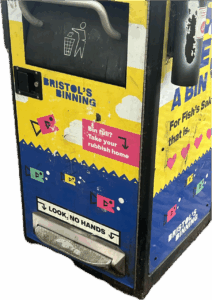
- Physical capability– look no hands – often people don’t want to touch dirty rubbish in bins – the hands-free option of using your feet helps make it easier to use.
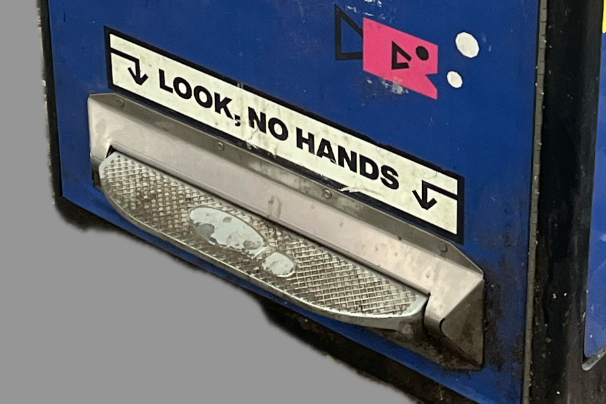
When designing fundraising appeals don’t neglect how physically easy it is for your donor to complete the action – from the size of the font, to the colour of the text and the background, to the reply form – can they read it? and physically write (comfortably and easily) in the boxes provided? As we get older our eyes sight, even with glasses, can decline – think about the audience for the appeal and their age and what they need to make it easy to read and respond.
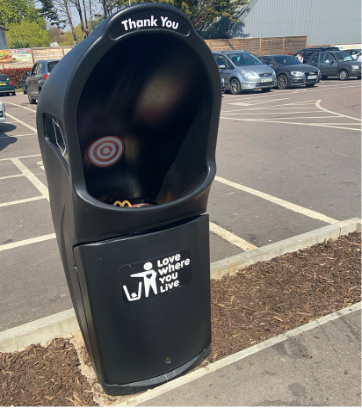
(Another non Bristol example here from MacDonalds – to encourage more people to put the rubbish in the bin and make it fun – they have added a target to the bin giving you something to aim at and make it easier for you to know what to do)
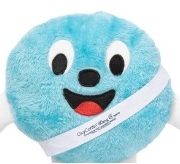
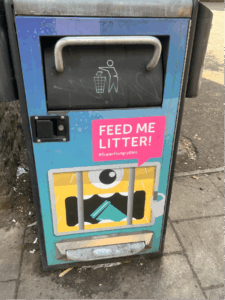
- Feed the monster – makes it fun and salient – our attention is drawn to novelty. Our primitive brains are also drawn to eyes and faces. Our brains have not evolved that much in 200,000 years and we still automatic scan faces trying to work out if it is friend or foe and we process eyes and emotions in eyes quicker. Big friendly monster eyes attract our attention. It is more fun and novel to ‘feed’ a monster that put rubbish in a bin.
- Psychological Motivation – Instead of lots of statistics about the volume of litter and what it was doing to the environment and the city they focussed in on the negative impact on pets.
(There are over 27m pets in the UK and British people spend more on their pets than dating, and many care more about their pet’s welfare than other humans in their life)
By creating this frame of the issue – they made it personal to animals and to the negative impact on people’s beloved pets. This is framing – instead of focussing on the whole issue frames it around something that people care about. This framing also adds emotional dimension. Talking about the damage and harm to pets focuses on one tangible negative aspect of littering.
In fundraising we often try to add to much detail our case for support – we want to detail the geo-political situation, the scale of the programme but by focussing attention on a more human, or in this case feline story, by creating an emotional frame, focusses in on one aspect, we can grab more attention and create more emotional impact.
With this emotional framing we also see the power of faces again, and the power of cute. We have an innate tendency to look at faces and the emotion of the eyes – and want to protect and look after those smaller and more defenceless than us. This kitten and the puppy are looking up at the adult size viewer with pleading eyes. It is part of a primal instinct – our primitive unevolved brains are hard wired to pay immediate attention to our surroundings and assess everything as a potential friend or foe. In the microseconds, it takes our brains to assess whether that fluffy kitten or puppy is a threat or not, quickly and subconsciously we decide it is not a threat, and positive emotions are then triggered which makes us pay more attention, and promote careful or caring behaviours.
Interactions with animals, such as dogs and cats, can also cause a biochemical reactions producing our happy chemicals (Dopamine, Oxytocin, Serotonin and Endorphins). Perhaps the strongest chemical release with animals will be a rise in oxytocin – oxytocin is one of the four feel good hormones often called the ‘love’ or ‘hug drug’. It promotes social bonding and increases empathy. It can be triggered by eye contact – between a mother and baby, between lovers – or even when looking at a beloved pet, or a random kitten or dog on a bin. Eye contact matters. The bigger the eyes the bigger the hit of the oxytocin.
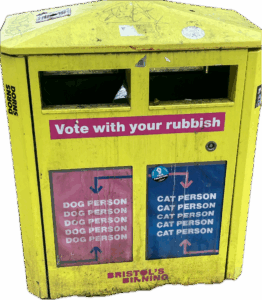
Bristol bins have also added gamification –using game like techniques in a non-gaming setting can make the experience more rewarding. Offering the choice between being a cat person or dog person when putting rubbish in the bin gives the litter depositor the choice to identify as cat person or a dog person, it makes the act of putting the litter into the actual bin more salient as it is a vote about who they care about.
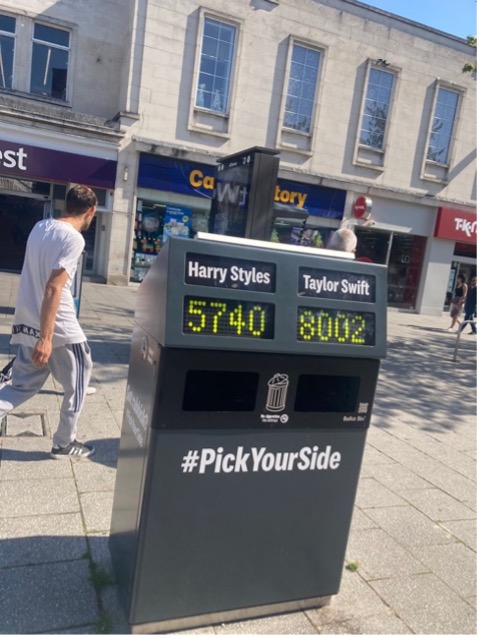
Manchester has taken this to the next level with counters to record the results using multiple ‘controversial’ issues with a score counter – Barbie vs Oppenheimer, Noel vs Liam and Harry Styles vs Taylor Swift are just some examples #PickYourSide
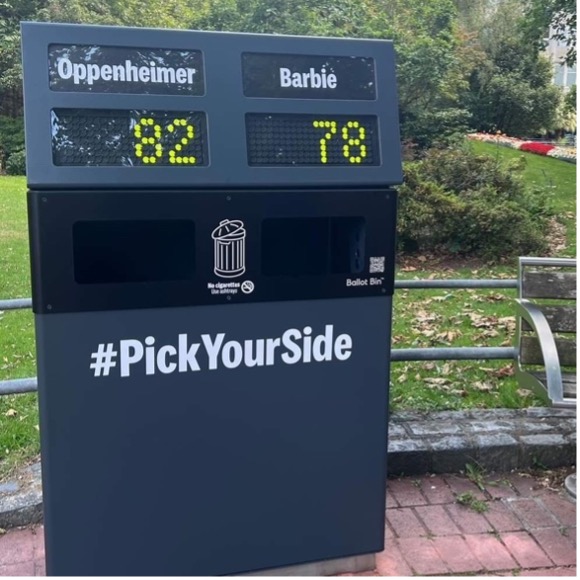
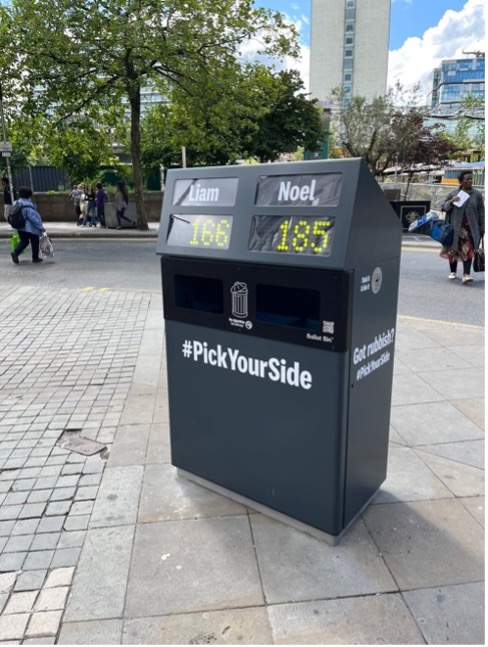
With both the Manchester and Bristol campaigns a hashtag was created #PickYourSide and #LitterHurts to try and create a social sharing and social norm around these actions.
And you can enter a competition to win prizes to adding a further incentive to dispose of your waste.
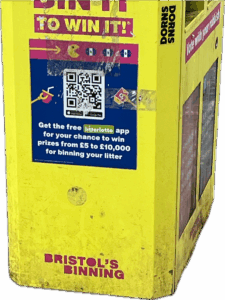
The campaign also uses puns on the lyrics to songs from the early 2000s – with Puns don’t kill puppies wrappers do (from Goldie Looking Chain’s Guns Don’t Kill Rappers Do and I see you baby dropping that glass (from Groove Armada ft Gram’Ma Funk) – both upbeat songs. This plays into a number of heuristics – the familiarity effect / mere exposure effect – just by repeated exposure to things we like them more and they take less mental energy to process.
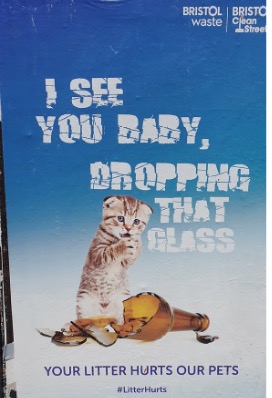
It also plays into the Keats Heuristic is sometimes known as the rhyme as the reason heuristic – our brains believe things to be more true if they rhyme (think of the old adage – an apple a day keeps the doctor away which is more believable than To avoid doctor’s visits ingest one apple every 24 hours). Also British people like puns and that makes it novel, unusual and salient and therefore more memorable (and start hearing the words on the bin to the tune of the song without trying)
(Although the choice of song might speak to a particular demographic who remember it, or the age of the creative team behind it! I am not sure it is targeted at the demographic of most likely litter bugs)
Our lazy brains are always looking for shortcuts and patterns and what is familiar. Using the abbreviation FFS means our brain finds the shortcut for this acronym and fills in what it ought to say. Like the lyrics above it works on familiarity.
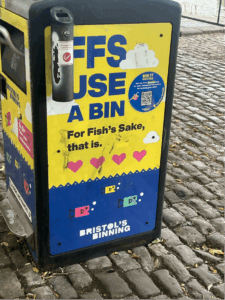
And does it work? For eight years Bristol has topped the charts in recycling statistics – so yes.
And if they can put that much effort into where you put your rubbish, imagine what more you can do to make it easier for your donors to make a gift.
So what can you apply to fundraising?
- Frame the problem – connect with something that people deeply care about
- Think about the use of faces and eyes on the people (or animals) involved in the campaign
- Make it fluent – not all campaigns can (or should) have a rhyming slogan, or rewritten pop lyrics, but the phrases should scan and be simple.
- Make it easy for people to physically take the action you want them to take – whether that is put rubbish in the bin or fill in a form – think about your audience and their needs.
- Make it fun – can you add a gamification angle – people love quizzes and giving their opinion. I have tested this with a giving campaign voting on favourite ice cream flavours as people donate.
- How could you add incentives?
- Make it emotional
- Link to their identity
- Make it visually appealing