• Link to X
  • Link to Instagram
  • Link to LinkedIn
Marina Jones
  • My Thoughts
  • What I’m Reading
  • About Me
  • Contact Me
  • Home Page
  • Click to open the search input field Click to open the search input field Search
  • Menu Menu

Fundraising for an election

August 12, 2024/in Uncategorized/by admin

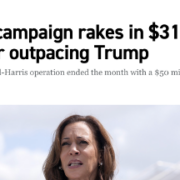
With all the headlines about the impressive fundraising of the Harris/Walz presidential campaign I was wondering about the history of fundraising for US presidential elections. The US political campaign funding landscape is very different to the UK one.

When trying to research the history of campaign fundraising you hit a common barrier in exploring fundraising history – the results of fundraising are clear, but not how the funds were raised. So we have details about campaign speeches, policies, debates and results (state by state, county by county) and various controversies along the way. But fundraising is glossed over as an incidental part of the narrative. The histories record it mostly as an afterthought; that funds were raised to support the campaign. More often than not, it is the introduction of legislation on campaign finance that shows debates about how funds were raised.

What is it possible to see?

Here are a few things that caught my eye as I was researching the history of campaign finance

The first employed fundraiser on a campaign – 1828

Andrew Jackson was the first presidential campaign to fundraise directly. Jackson appealed directly to voters and not just party grandees – and he employed Martin van Buren as a campaign staffer to raise money from a wider support base and support his bid for President. 

There was a clear expectation from wealthy party leaders and establishment figures to be contributing financially to ‘their’ candidate’s election – many with the hope of securing a position in government afterwards.  In 1838 there were debates and proposals for a law that banned federal employees from contributing to campaigns to avoid this buying access and positions. 

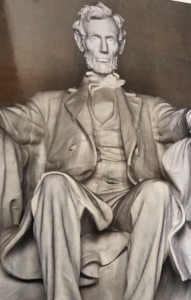
Lincoln’s campaign – 1860 & 1864
How did he raise money?

Like Andrew Jackson, Lincoln had a campaign manager, David Davis, who had an oversight on raising funds to support the campaign and presidential bid. Davis was tasked with securing funds from key Republican party figures. They were expected to give to demonstrate their support. In 1864, members of Lincoln’s cabinet had to give $250 to the campaign to support printed documents, parades and promotional tours. 

(This feels a bit like the modern expectation of the board to be giving at a significant level!) 

As well as prominent party men (and they were all men at this stage) businessmen were also asked to support. There was also a subscription scheme – like a low cost membership to support and demonstrate your political loyalty. 

Lincoln earned speaking fees from various engagements which contributed to campaign funds.

Lincoln himself was a rather reluctant fundraiser and is quoted as saying:

“I could not raise ten thousand dollars if it would save me from the fate of John Brown”

(John Brown was hung after leading a failed anti-slavery uprising in Harpers Creek) 

And various events were used as well to raise funds.

More and more money, more and more legislation

In 1860 the Republicans raised $100,000 for Abraham Lincoln and the Democrats raised $50,000 for Hannibal Hamlin. See here for a comparative chart over the years https://www.motherjones.com/politics/2012/02/historic-price-cost-presidential-elections/

In 1867 the first campaign finance laws were enacted to ensure those contributing could not receive political office in return for their donations. 

With these restrictions corporations became increasingly involved in financing elections including offering subsidised travel on their railways and steamboats.

By 1880 campaigns were regularly raising over $1m, and over $4m was raised by 1892 for each campaign.

Corporations were dominating the election funding landscape with 40% of Republican funds for the 1888 campaign coming from Pennsylvania businesses.

In 1904, 73% of Teddy Roosevelt’s campaign fund came from companies.

In 1907, the Tillman Act made illegal all campaign contributions from corporations. The Tillman Act did not actually have an enforcement clause so company contributions still dominated the campaign financing landscape (eg Clement Stone donated $10m to Nixon’s campaign in 1972.)

First mass direct mailings

Direct mail crept into the political campaign arena in the 1960s and with these early campaigns it is possible to see the ROI on campaigns – spend, response rate and income. 

1964 Republican Barry Goldwater sent 15 million direct mail pieces costing over $1m and raising over $5.8m with a response of 410,000 and an average gift under $100. Before that gifts tended to be over $500 – he deliberately built a grassroots campaign by soliciting every contributor since he first ran for office in 1952. But being organised was key – every donor was recorded on an IBM computer database.

(CRMs have always been important!)

“When a filled-out petition is received at National Headquarters, we will assign a membership number to each new applicant and have all of the information punched into IBM cards. These cards will then be converted to magnetic tape for use on any IBM computer.” 

Goldwater’s Handbook for Victory, 1964

The IBM machine could reproduce the voters’ name and address as it appeared on the voting records making mass mailings more accurate and speedier than handwriting envelopes.

As well as mailings they also sent out stickers saying ‘I’m for Barry’ – two to every registered Republican voter asking them to stick one on their car and give one to a friend.

As well as direct mail, television adverts were also used and Ronald Reagan’s ‘A Time for Choosing’ is credited with raising over $2million for unsuccessful Goldwater’s campaign.

A 1964 report to the  which raised over Congressional Quarterly, Inc stated:

“For the first time in national politics, direct mail and television appeals for funds proved fully successful.”

In the late 1960s there was a novelty to political correspondence with 8% of the population contributing to candidates and political causes in 1968 – with 38% of those solicited for gifts making contributions. (Today just over 1% contribute to political causes)

One of the pioneers of this was Richard Viguerie who founded Richard A. Viguerie Company in 1964. Before data protection laws existed lists of political contributors were open to the public – to build his first list, Richard, along with hired help, copied out the list by hand (photocopying was prohibited) of all 12,500 donors who had given over $50 to Barry Goldwater’s 1964 campaign to start his direct mail agency and political fundraising campaign. Within a year he grew his list tenfold to 125,000. By the late 1970s Viguerie had over 15million names on his IBM database – and kept them securely guarded with the combination lock to the storage facility changing every few days.

Direct mail became an increasingly important part of the political fundraising landscape. In 1972, George McGovern Democratic candidate used a direct mail campaign to solicit many small donations. It was run by Morris Dee from the Southern Poverty Law Center and began

“My Dear Friend, you’re one of a number of people whose help I’m asking in the most important effort any American can undertake….”

Some key factors to its success than we still use today

  • Length of letter – McGovern initially wrote a one page letter with no ask – Dee changed it to a 7 page letter. There is often a debate amongst fundraisers of how long a letter ought to be – a succinct and snappy one page vs longer letters delivering better results. Longer letters allow you to tell the fuller story to those that really care. In the McGovern case – longer was definitely better. 
  • Short sentences – the letter may have been 7 pages long but the sentences were short, the language simple as it spoke of all the troubles facing America from the war in Vietnam to joblessness and poverty. You don’t need to use jargon or fancy words – but speak directly and clearly to your potential supporters.
  • Buying lists – in order to build up supporters they swapped and bought lists from other charities and political organisations. Morris Dee said:
  • “And I added to it some selected names from people who liked to give to things like the ACLU donor list at the time – which wasn’t really big – the progressive and liberal magazines, like Psychology Today, and things like that at the time”
  • Testing – they split the list and tested different segments to see which was the most efficient. 

Did it work?

The letter raised more than $300,000 in ten days including $10,000 from a woman whose son had been killed in Vietnam. The US government gave $10,000 for a dead soldier, and this mother had given this cheque to McGovern who was the first anti Vietnam war candidate. The campaign ultimately raised over $15milion, raising $12million and costing $3.5million. 

In praise of direct mail

Direct mail was seen as the best way to get gifts from the “true believers” said direct mail specialist George Gorton in the 1970s. They did not want access or returns for the gift but wanted to support.

(it’s a great name for a segment in your next direct mail – ‘true believers’)

Make it easy to reply – but don’t make people feel guilty!
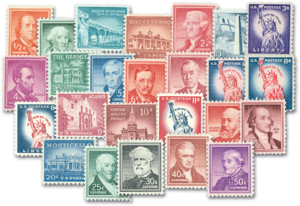
Richard Viguerie highlighted that a good piece of direct mail gave donors “not only the urge to take action, but the means to take action” – a postage paid envelope is provided to make replying easier. No need to search for a stamp, an envelope or card.

There were ethical concerns about using actual stamps on reply envelopes. They thought people would feel wrong or guilty about throwing away an envelope with a ‘live’ stamp on. So postage paid by the charity became the norm in the 1960s.

Concerns about these fundraising methods

Fundraising for political candidates was not without its controversies and as a series of legislation on campaign finance shows. There were other debates – many of which are familiar to fundraisers today- especially around:

  • List saturation & selling of lists – as lists were being developed, bought and sold and swapped there was concerns about “super saturation” and the “incestuousness” of the lists (said George Gorton). The Inland Revenue Service (IRS) was selling lists detailing income figures and zipcodes and UNICEF had sold its list to the Democratic National Committee. This mirrors modern debates and concerns about selling on data and saturation of donors which were highlighted with the Olive Cooke case. 
  • Cost and return on investment – buying lists was expensive, the postage was expensive, computer equipment and printing was expensive. Also consultants, like Richard Viguerie charged high fees to build lists of contributors. For example, $800,000 to prospect for new names in 1973/4 – Viguerie’s no-loss fees were often 50% of the earned income of any campaign.  There were concerns about the costs of creating the lists, how much actually went to the candidates rather than just consultants, and how consultants were charging their fees based on commission as they were not under the jurisdiction of the American Association of Fund Raising Counsel Inc. Some campaigns over 90% of the funds raised going to fundraising and consultant fees. However, the consultants made the argument that break even campaigns were about building up the list of supporters rather than the money that was coming in.

How much were people asking for? And has that really changed?

In 1973 a successful campaign for Sen Jesse Helms netted $174,000 – with a 5.3% response rate and an average gift of $14.03 (the campaign cost $71,000 and was sent to 231,000 people) – the cost to raise each dollar – 41 cents.

In Arizona Rep Sam Steiger raised $170,000 net with an average gift of $19.44 and a 8.2% response rate with the campaign costing $103,000 and the letter being sent to 126,000 people. So 16 cents to raise each dollar.

How does this compare with your campaigns now? Or the amounts we ask for?

Lincoln’s bedroom incentive

Jumping ahead … Reportedly in 1997, a night in the Lincoln Bedroom in the White House was offered in return for donations in excess of $100,000.  

So what does all this tell us?

That for over 200 years funds have been raised to support presidential election campaigns. What do we see

  • We need a great CRM to know who is giving and who to ask again
  • Test what works with different segments
  • We need donors of all sizes – the major philanthropist, the corporate gift, the events, the subscribers but also a wider tribe of allies who will contribute
  • Those contributing smaller gifts are your ‘true believers’ and add value in numerous other ways
  • Letters can be used to give more detail than a short radio or TV advert and true believers will read and respond.
  • Fundraisers always embrace and use the latest technology
  • Ethical concerns and debates – about fees, return on investments, list saturation have been with us for a long time
  • Make it easy for donors to reply to a direct mail – include a postage paid envelope

That fundraising history remains patchy and generally is glimpsed through the history of other major events.

References

https://www.npr.org/2012/08/01/157739995/mcgovern-campaign-marked-beginning-of-direct-mail
https://www.opensecrets.org/resources/learn/timeline
https://www.presidency.ucsb.edu/statistics/data/general-election-campaign-financing
The Crazy Cost of Becoming President, From Lincoln to Obama
https://www.vanityfair.com/news/politics/2012/11/george-mcgovern-richard-nixon-election

‘Public Relations in Direct Mail Political Fundraising’, Haggaerty, B.A., Public Relations Review,
Volume 5, Issue 3, 1979, Pages 10-19,

The World of Richard Viguerie. At 90 “Our work isn’t finished yet.”

Empire of Direct Mail by Takahito Moriyama
https://marinajones.uk/wp-content/uploads/2024/08/Electionfunding.png 216 388 admin https://marinajones.uk/wp-content/uploads/2022/12/f2b903e010104f5aa61ea1821a685913.png admin2024-08-12 19:44:132024-08-12 19:44:13Fundraising for an election

The history of fundraising is more complex than our simple narratives  suggest 

November 9, 2023/0 Comments/in Uncategorized/by admin

Fundraisers and historians have at least one thing in common. They both love a story. For the fundraiser, stories allow them to get a case across simply and effectively – eliciting sympathy, driving action, empathy, and action preferably in monetary, form.  

Conferences are full of workshops on how to tell better and more compelling stories. We know it can be more effective to keep the story simple, info-lite, and negative-but-solvable. Yet the complexity of the needs that our charities try to address, and the efficacy of the solutions offered, do not fit into a neat narrative or case study. Too much information can overwhelm supporters, slow down the decision-making processes, and make our asks less effective. The donor can be placed in the centre of the story as the hero who can provide the solution so we keep it simple, and focus on the story.  

For the historian, stories are about condensing complex social, cultural and political movements of people, power and place into compelling narratives. We want a narrative arc. We want to link an assassination here with a coup there (wider history not fundraising history), or we want to trace the origins of this war in the peace treaty 20 years beforehand. We know it is more complex, and that correlation is not causation, but to make it understandable we tell it as a shorthand of events and moments. As the Cambridge history professor  John H Arnold  says: “History is to society what memory is the to the individual.”  

“When we come to explore to the history of fundraising, we often grasp for the unusual – the fundraising ‘firsts’ – and try to weave them into a narrative arc (the fundraiser’s need for a story dominates!).” 

Both fundraisers and historians stitch together the elements of the available facts that serve the story’s purpose – to raise funds; to try and tell us what has happened and how we got there.  

Is it any wonder, then, that the history of fundraising to date has hooked on to a ‘great story’ – the origin myth of the evolution of fundraising being led by Charles Sumner Ward as the modern father of fundraising. And if you want a recap/reminder (from our  timeline of the 20th and 21st centuries): 

Charles Sumner Ward (1858-1929) is widely credited as the founding father of modern fundraising. In 1900 he was general secretary of a YMCA branch in Michigan, where he spent much of his time fundraising using what we would recognise as standard major donor practices. However, in 1905, given the task of raising $90,000 for a new YMCA building in Washington DC, he decides to achieve this through an ‘intensive’, or ‘whirlwind’ mass appeal public fundraising appeal. He masterminds and oversees many other similar appeals for other cities, using what became known as the ‘Ward Plan’. He repeats his success in England, and throughout World War One he repeats this campaign model for the American Red Cross and United War Works. In 1920 he founds the fundraising firm Ward, Dreshman and Reinhardt in New York. 

Even when we do not have a coherent historical narrative to tell (as is arguably the case with fundraising), we nonetheless like to have a story to tell – both as fundraisers and humans. Stories are stickier and easier to remember. Perhaps that is why the Sumner Ward story has stuck.  

But as with all history, the history (or histories) of fundraising is not that simple. Is there a different story we can tell? 

An alternative historical narrative – women to the fore 

In 1893, it was estimated that there were half a million women working semi-professionally in a full-time capacity in auxiliary societies in the UK. Around 20,000 were paid officials supporting fundraising and soliciting funds. Auxiliary societies were democratic voluntary associations that worked together to finance philanthropic work (from missions to temperance movements). The auxiliary was a regional branch  of a large ‘parent’ society and members paid subscriptions to support the work and additionally raised funds to support the cause they cared about. In America, 30,000 African-American women were active in church-associated clubs similar to auxiliaries.  

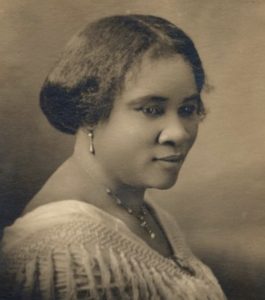
Tyrone McKinley Freeman’s book looks at the role of African-American women through a fundraising lens – one of the few to do so. 

The limited scholarly exploration and the glimpses that we see gives a richer, more nuanced and more female-led approach to raising funds and running charities. This extensive involvement of women in the fundraising in the 18thand 19th centuries calls into question the standard origin myth of modern fundraising as having been driven by a few ‘great men’, such as Charles Sumner Ward and Lyman Pierce, in the early 20th century. 

The alternative historical narrative that emerges from the second fundraising timeline we have constructed as part of  Rogare’s fundraising history/historiography project  (covering the period 1500-1899) shows the much more active role of women to raise funds – as evidenced by the charity bazaar movement (see the entry for 1685) and that the first charity shop was established to sell goods made by women (see 1859). 

Collating entries for this second fundraising history timeline has revealed a much more nuanced, sophisticated and complex fundraising practice existing in the UK and the US. Many of the methods attributed to as firsts by Pierce and Sumner Ward had been used in other campaigns throughout the 18th and 19th centuries by active fundraising professionals in the UK and the US, including segmentation, mass publicity campaigns, short-focused appeals raising big gifts for capital projects, utilising mass printing of pamphlets, and mass mailing.  

As an aside from someone who has been involved in several major capital projects, the level of excitement, size of gift, and ‘noise’ that capital campaigns make may have aided Sumner Ward’s success. Capital projects create physical buildings that come with naming rights and are different to the ongoing and continuing revenue/business-as-usual funding requests. 

“By 1893, there were half a million women working in auxiliary societies in Victorian England – a huge number that bears repeating: Half a million! And 20,000 of them were working and supporting themselves as semi-professional fundraisers.” 

And as with the study of philanthropy, the same is true of fundraising – money talks! We tend to bias our attention towards the major amounts fundraised and the philanthropists who gave those amounts, and ignore the hundreds and thousands of smaller gifts from hundreds and thousands of donors who were asked to give by thousands of fundraisers. Campaigns preceding the major YMCA appeals and British Red Cross of Ward and Pierce were incredibly successful and widely supported (which does not to dismiss or diminish the success of Sumner Ward and his evolution of campaigns and establishment of practice). 

Now to return to the half a million women working in auxiliary societies in Victorian England – a huge number that bears repeating: Half a million! And 20,000 of them were working and supporting themselves as semi-professional fundraisers.  

The challenge with the history of fundraising, as Beth Breeze pointed out in her 2017 book The New Fundraisers, is that too often it is only the fruits of the labour of fundraising are known and recorded – the ultimate outcomes such as the laws changed and the votes won – but not the fundraisers. But this dismisses the work to feed, clothe, educate, and care for those in need, and the lives saved or transformed. 

There are also wider questions of what, and who, has archived this knowledge, and where we can find the evidence for it.  

Suffragettes Annie Kenney and Christabel Pankhurst. It has been argued that well-organised women-led fundraising at the start of the 19th century paved the way for the suffrage movement. 

The substantial literatures on the suffrage movement, the education reform bill, the temperance movement, or the anti-corn law movement have been studied as history and politics, informing us about our political, social and cultural past. But that same literature has not been as systematically studied for what it tells us about the history of fundraising. And that’s despite renowned British social historian Frank Prochaska arguing that the sophisticated organisation of female-led charity collections in the early 19th century paved the way for the suffrage movement.  

Fundraising is seen perhaps an adjunct, a means to an end, and not the focus of the academic or scholarly work to date on this archive. We need to use these well-archived areas to explore our fundraising history.  

But to keep and develop an archive you need to have the power and resources to store and keep records. In the USA, the so-called  Jim Crow Laws banned the right of association, restricted education and curtailed literacy for African Americans. This had a huge impact on the records that were kept about African-American clubwomen, and their role, influence and legacy has been under-explored and under-valued as a result. 

Some of these records of the clubwomen have been explored through the lens of Black studies, women’s studies, and economics, but an explicit fundraising lens or academic practise has not been established or analysed (although that is changing – do read of Tyrone McKinley Freeman’s  Madam CJ Walker’s Gospel of Giving – Black Women’s Philanthropy during Jim Crow). 

One of the reasons for creating the timelines of the histories of fundraising as a first step in Rogare’s  history of fundraising project  is to highlight these missing stories. The stories that are not documented. The stories that are not archived. Issues of intersectionality further enhance the discrepancy of what is recorded and studied.  

As with all historians gathering information, we are drawn to what is novel (the parrot taught to ask for donations in the collecting box), our own time interest, cultural understanding of philanthropy and the importance of philanthropists, and so we find what we were looking for.  

As a result, when we come to explore to the history of fundraising, we often grasp for the unusual – the fundraising ‘firsts’ – and try to weave them into a narrative arc (the fundraiser’s need for a story dominates!).   

Yet it would be as easy to create another timeline of all the under-researched and unknown aspects of fundraising – the missing stories, the lost, the hidden, the non-literate, those working in secret or fearing persecution. This of course includes the aspects of women’s active role in fundraising, which we are trying to correct. But often we lack the points of entry to that research by our own limits and biases, or what has previously been recorded and studied. As Tyrone McKinley Freeman of the Lilly Family School of Philanthropy says: “There is so much more to them and the history they give us access to if we can ask deeper and more historical questions.” 

Embrace the historical complexity 

As we publish the second part of the history of fundraising timeline, it is important to acknowledge its inadequacies and the cultural absences and silences. The short version you can see is only a snapshot, and the whole ever-growing timeline runs to hundreds of entries. It will be shared so you can see it (including the parrot example), and add your own items.  

We’ll continue to include those fundraising firsts – because they are interesting in their own right. But, as we continue exploring our histories of fundraising, let us find ways to find more points of entry to finding these stories. Let’s not shy away from the complexity of these stories in building up a picture of the histories of fundraising and let’s keep asking better and deeper questions about how fundraising has got to where it is now, what the past tells us about our present, and how it should or might develop.  

I’ve already quoted Tyrone McKinley Freeman as saying we need to ask deeper historical questions, and to direct those questions in different areas than we currently do. British historian John H Arnold (who I also quoted previously) says that “history both begins and ends with questions; which is to say it never really ends, but is a process”. 

We often want simplicity in fundraising, which is why we adopt the KISS (Keep it Simple Stupid) approach, because this simplicity often works in our day-to-day practice. We can’t be so simple in our approach to fundraising history. The answer to many historical questions we ask is likely to be “it’s complicated”. Our role as fundraising historians is to acknowledge and embrace that complexity, and to keep asking questions.  

First published November, 2023 on https://criticalfundraising.com/2023/11/07/fundraising-history-is-more-complex-than-we-think/

https://marinajones.uk/wp-content/uploads/2022/12/f2b903e010104f5aa61ea1821a685913.png 0 0 admin https://marinajones.uk/wp-content/uploads/2022/12/f2b903e010104f5aa61ea1821a685913.png admin2023-11-09 13:01:492024-04-09 13:02:22The history of fundraising is more complex than our simple narratives  suggest 

Celebrating donor recognition through history and exploring why it works

February 9, 2023/0 Comments/in Thoughts, Uncategorized/by admin

I love the history of fundraising and discovering that what we think is the latest innovation in fundraising was done 30 years ago, 130 years ago or 530 years ago. I am the volunteer project lead on Rogare, fundraising think tank’s Histories of Fundraising projcet.

It was great to share one of my findings at the tenth anniversary ‘I Wish I Thought of That’ in November 2022 and you can watch my seven minute ‘I wish I thought of that’ presentation on donor recognition:

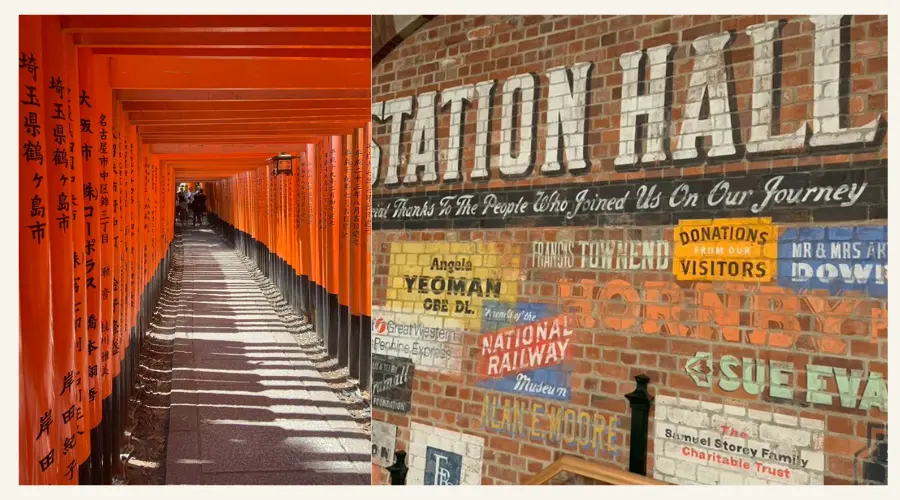
Do your holiday snaps often look like these?

They just scream ‘fundraiser on holiday’, don’t they?

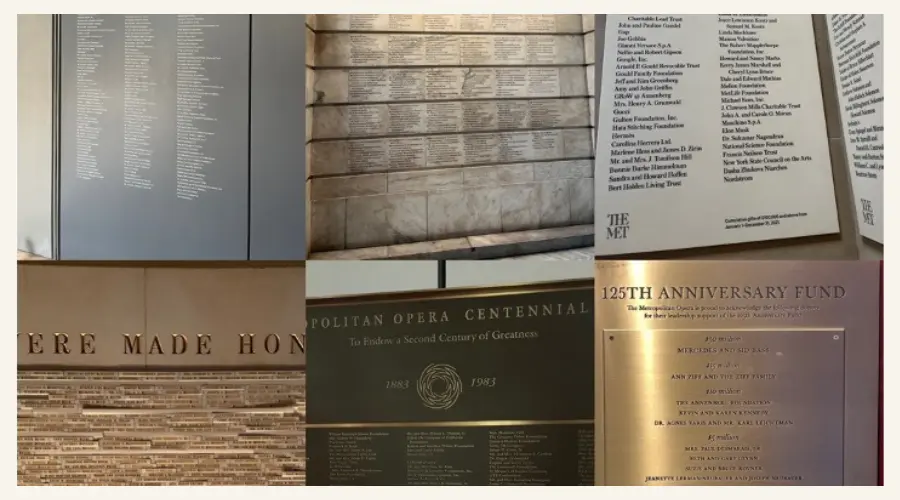
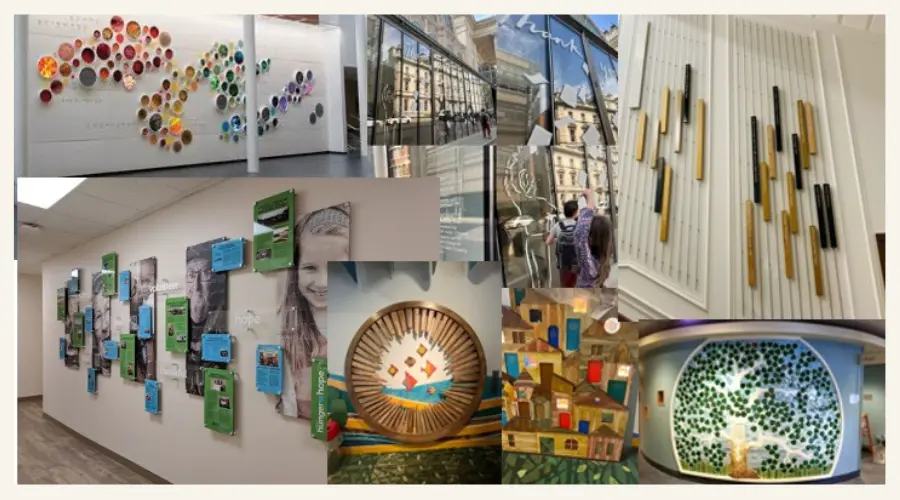
I suppose as these are a selection of my actual holiday snaps, you can tell that I’m talking about something I’m very interested in: donor walls and recognition.

I’m so interested that I photograph a lot of donor walls, plaques and memorials when I’m out and about in London or on my travels. Sometimes, when I look back at the ones I have in my camera roll, there are some that aren’t the best – they are actually quite dull. 

But sometimes… oh sometimes they are quite pretty. 

Then other times they are VERY pretty. 

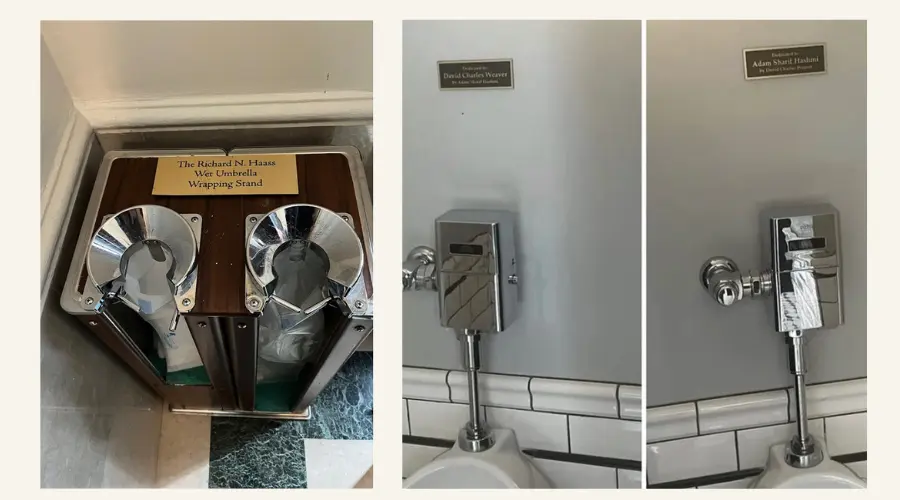
And well, occasionally they are a bit quirky and bizarre. 

Yes those are my very own photos of a named umbrella stand and some named urinals!

I’m involved with Rogare. Rogare is a fundraising and critical thinking think tank and I’m project lead on the history of fundraising project. In this project we explore histories of fundraising and what we can learn from it. We also look at what these insights from the past tell us and how they can inform current practice. 

It’s fascinating and I think you’ll be surprised to learn how many weird and wonderful things there are to see – especially when it comes looking at how organisations have recognised their donors throughout history. 

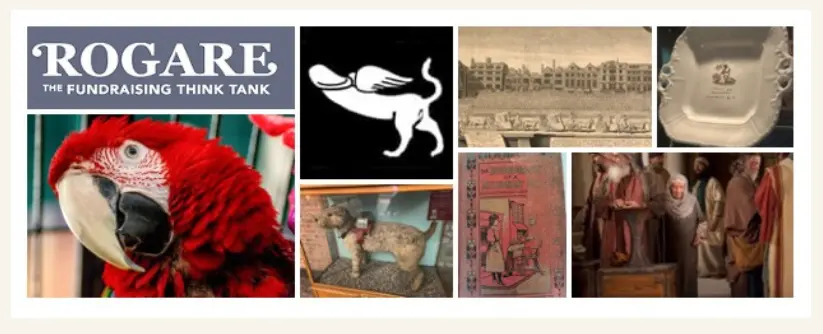
I have so many favourites. There’s a parrot that was trained to say, ‘Put the coin in the box, put the coin in the box.’ 

Or there’s the dog that walked around Waterloo Station in London with a collection box on its back. The dog was fundraising to help local orphans and when the dog passed away, the charity (Southern Railway Orphanage) stuffed the dog and put it on display at Bournemouth Station and it continued to help raising money in years to come. The dog is now in the Bluebell Railway Museum, still fundraising too! 

And there’s Josiah Wedgewood who was raising money for the abolition of the slave trade through selling merchandise. 

Finally, there’s a rather bizarre one which I won’t go into today, a masturbate-athon which was created to raise money for sexual health clinics in the 1980’s! 

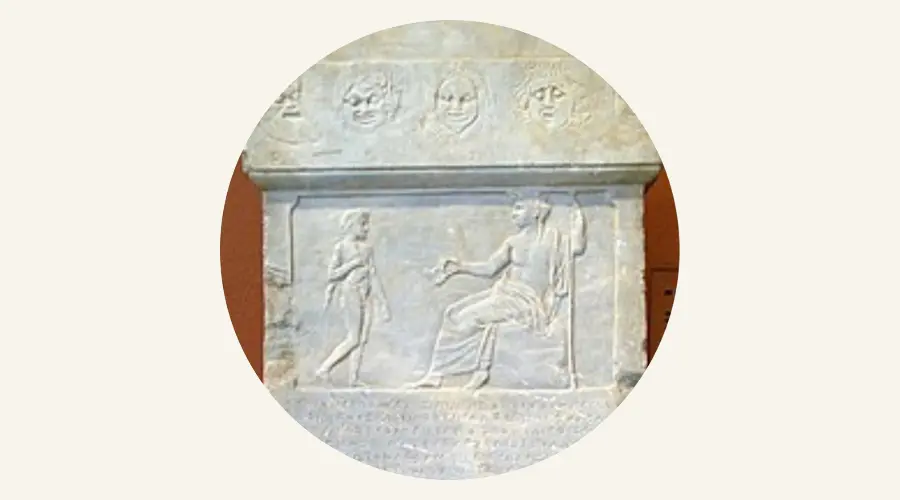
However, one of the earliest examples of donor recognition that I’ve found is this: 

What you see above dates back to 313 BC. It’s public donor recognition for people in Athens, Greece who kindly paid for the costumes and chorus rehearsals in Athenian drama festivals. Donating to this was an expensive but well-respected way for Athenians to use their wealth for the public good.

But today, I really want to talk to you about Nigel, Joan and Robert. 

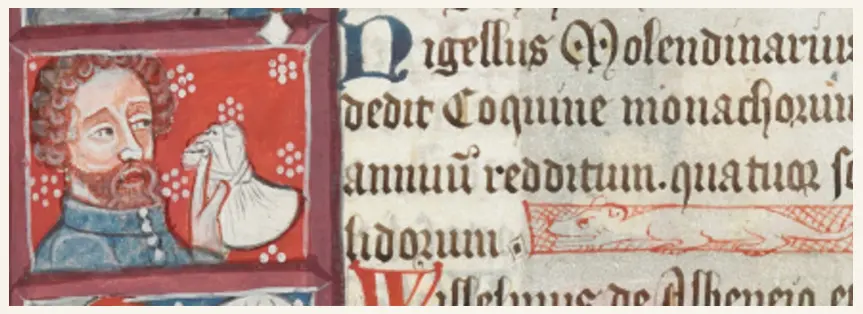
This is Nigel. 

Nigel was a miller in the 14th century and every year he gave a gift of four shillings. You can see his illuminated portrait above, that shows him making his donation.

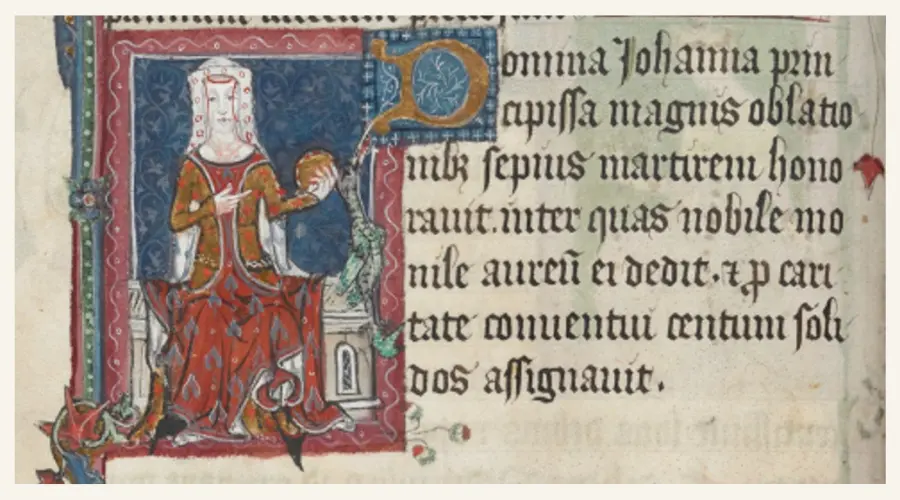
This is Joan. 

Joan was Countess of Kent, as well as the Princess of Wales and of Aquitaine. She gave 100 shillings and a gold necklace. 

Æthelgifu, another donor recorded in the book, donated lands including a herd of pigs with their very own swineherd – 250 sheep, 30 oxen and 20 cows.

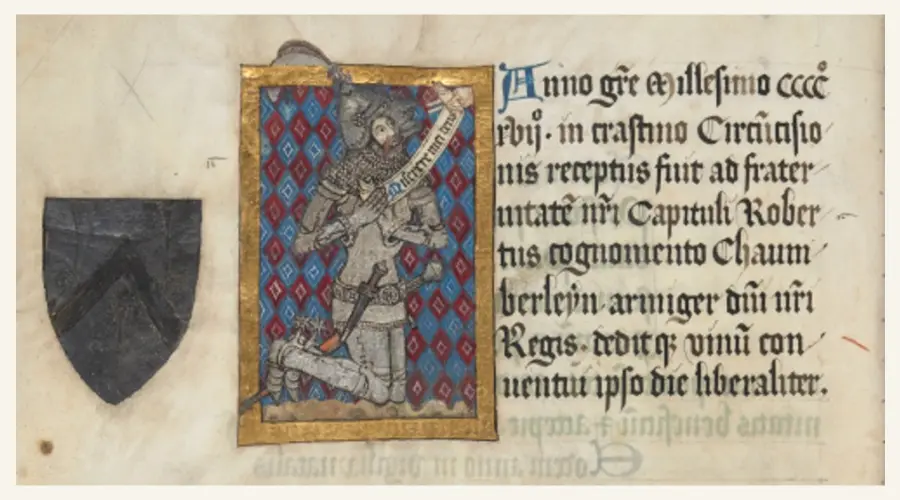
And last, but not least this is Robert. 

Robert gave wine (we like Robert)! So, of course, gifts in kind are really important too. But why do we still know about Nigel, Joan and Robert today? 

It’s because they are all recorded in the benefactor’s book at St Albans Abbey. The book was started in 1380 and everyone who gave a gift was recorded in it – whether that was a little gift (Nigel’s four shillings), a big gift (Joan’s land), or a gift in kind (Robert’s wine). 

All gifts were recognised. All gifts were recorded. 

Yes, there is a hierarchy. The Kings and Queens are top of the list but everyone else is still there too. And it was done in a very personal way. It showed what each donor looked like as well as what their gift was and what their gift did! 

Yet perhaps best of all, each donor was granted a lavish induction ceremony into the benefactor’s society. They were also rewarded with spiritual benefits and, of course, a record in this prestigious book.

But why does it work? Why is donor recognition an important thing to do?

People do more pro-social things when they are rewarded because incentives work. When we give a gift, we get a hit of happy chemicals – dopamine, oxytocin, serotonin and endorphins. And that means it gives our donors joy to be giving money to us.  

It also works for us, as fundraisers. If I give a gift, and you receive that gift – the same bit of your brain is lit up. So, donor recognition should give us the same warm and fuzzy feeling that our donors get when they receive our thanks. 

All of this illustrates why seeing your name on a donor wall is one of the ultimate ego strokes. It provides social reinforcement of your identity as a kind and generous person. 

We’ve all seen our donors go over to a wall of recognition, scan the list with their finger, looking for their name, checking that it is there. 

It’s so important to donors that they are recognised for what they do, and that fundraisers say thank you. 

And while I’ve talked about a number of historical examples of donor recognition and thanking, we know that this is still important today.

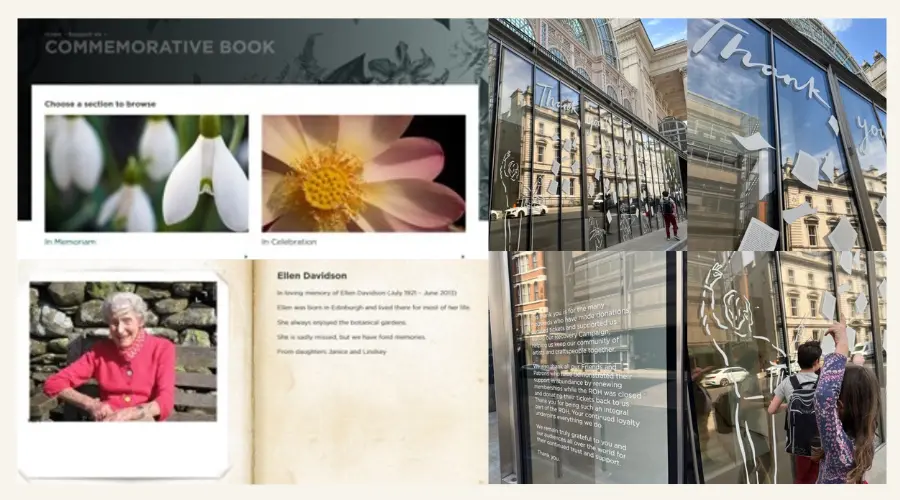
On example you’ll see above was from the Royal Botanical Gardens in Edinburgh, and it is a memorial book that is memorising people who have died and have given gifts in their wills. But it’s also a story about them – what they gave and why they gave it.   

The other example is the front of the Royal Opera House in London. There was a big campaign during the COVID-19 pandemic to keep the opera house going. They showcased donors here who gave gifts large and small. While traditionally they might have a more hierarchical way of showcasing their donors, this was a beautiful etching of every name in the same size, recognising every single gift on the glass windows.  

So, we all know we ought to recognise donors but what can we learn from the examples I have talked about today? 

1)    Celebrate your donors

No matter how big or small their gift, show your donor that every little helps and their kindness is appreciated. Make people feel that they are part of your story – a story and a journey that they can help more forward. Donor recognition does this. 

2)    Build relationships

Donor recognition makes the donor feel warm and fuzzy. It releases all those feel-good chemicals.

3)    Encourage others

Seeing that big list in the book, on the wall encourages donors to want to give. They think, ‘Hey I want to get my name on there, how can I do that?’ 

When people see that their friends, family members or millers are giving to a cause, they’re more likely to believe it’s important enough to get involved themselves.  

4)    Make it personal

Connect it to what they are giving to. We saw how being immortalised in an illuminated portrait for giving four shillings can have a huge impact. After all, we are all still talking about Robert, Joan and Nigel 700 years later!

5)    Future proof your choice

The benefactor’s book at St Albans Abbey has names that have been added from the 11th century all the way up to 16th century… and they still had more room. It was a great choice for how to celebrate all their donors. Make sure you have a future proof way to recognise your donors, because a wall or plaque on its own just might run out of space. 

To sum up, that is why I wish I had thought of donor recognition!

First published on 9th February 2023 SOFII · Celebrating donor recognition through history and exploring why it works

https://marinajones.uk/wp-content/uploads/2023/02/222768-celebrating-donor-recognition4.png 500 900 admin https://marinajones.uk/wp-content/uploads/2022/12/f2b903e010104f5aa61ea1821a685913.png admin2023-02-09 20:39:402024-04-18 16:11:53Celebrating donor recognition through history and exploring why it works
Tweets by meenamtj
All content © Marina Jones 2023
  • Link to X
  • Link to Instagram
  • Link to LinkedIn
Scroll to top Scroll to top Scroll to top

This site uses cookies. By continuing to browse the site, you are agreeing to our use of cookies.

Accept settingsHide notification onlySettings

Cookie and Privacy Settings


How we use cookies

We may request cookies to be set on your device. We use cookies to let us know when you visit our websites, how you interact with us, to enrich your user experience, and to customize your relationship with our website.

Click on the different category headings to find out more. You can also change some of your preferences. Note that blocking some types of cookies may impact your experience on our websites and the services we are able to offer.

Essential Website Cookies

These cookies are strictly necessary to provide you with services available through our website and to use some of its features.

Because these cookies are strictly necessary to deliver the website, refusing them will have impact how our site functions. You always can block or delete cookies by changing your browser settings and force blocking all cookies on this website. But this will always prompt you to accept/refuse cookies when revisiting our site.

We fully respect if you want to refuse cookies but to avoid asking you again and again kindly allow us to store a cookie for that. You are free to opt out any time or opt in for other cookies to get a better experience. If you refuse cookies we will remove all set cookies in our domain.

We provide you with a list of stored cookies on your computer in our domain so you can check what we stored. Due to security reasons we are not able to show or modify cookies from other domains. You can check these in your browser security settings.

Google Analytics Cookies

These cookies collect information that is used either in aggregate form to help us understand how our website is being used or how effective our marketing campaigns are, or to help us customize our website and application for you in order to enhance your experience.

If you do not want that we track your visit to our site you can disable tracking in your browser here:

Other external services

We also use different external services like Google Webfonts, Google Maps, and external Video providers. Since these providers may collect personal data like your IP address we allow you to block them here. Please be aware that this might heavily reduce the functionality and appearance of our site. Changes will take effect once you reload the page.

Google Webfont Settings:

Google Map Settings:

Google reCaptcha Settings:

Vimeo and Youtube video embeds:

Other cookies

The following cookies are also needed - You can choose if you want to allow them:

Privacy Policy

You can read about our cookies and privacy settings in detail on our Privacy Policy Page.

Privacy Policy
Accept settingsHide notification only