Fundraising for an election
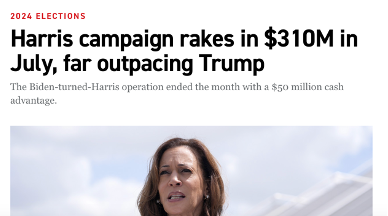
With all the headlines about the impressive fundraising of the Harris/Walz presidential campaign I was wondering about the history of fundraising for US presidential elections. The US political campaign funding landscape is very different to the UK one.
When trying to research the history of campaign fundraising you hit a common barrier in exploring fundraising history – the results of fundraising are clear, but not how the funds were raised. So we have details about campaign speeches, policies, debates and results (state by state, county by county) and various controversies along the way. But fundraising is glossed over as an incidental part of the narrative. The histories record it mostly as an afterthought; that funds were raised to support the campaign. More often than not, it is the introduction of legislation on campaign finance that shows debates about how funds were raised.
What is it possible to see?
Here are a few things that caught my eye as I was researching the history of campaign finance
The first employed fundraiser on a campaign – 1828
Andrew Jackson was the first presidential campaign to fundraise directly. Jackson appealed directly to voters and not just party grandees – and he employed Martin van Buren as a campaign staffer to raise money from a wider support base and support his bid for President.
There was a clear expectation from wealthy party leaders and establishment figures to be contributing financially to ‘their’ candidate’s election – many with the hope of securing a position in government afterwards. In 1838 there were debates and proposals for a law that banned federal employees from contributing to campaigns to avoid this buying access and positions.
Lincoln’s campaign – 1860 & 1864
How did he raise money?
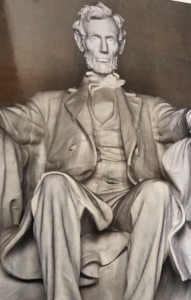
Like Andrew Jackson, Lincoln had a campaign manager, David Davis, who had an oversight on raising funds to support the campaign and presidential bid. Davis was tasked with securing funds from key Republican party figures. They were expected to give to demonstrate their support. In 1864, members of Lincoln’s cabinet had to give $250 to the campaign to support printed documents, parades and promotional tours.
(This feels a bit like the modern expectation of the board to be giving at a significant level!)
As well as prominent party men (and they were all men at this stage) businessmen were also asked to support. There was also a subscription scheme – like a low cost membership to support and demonstrate your political loyalty.
Lincoln earned speaking fees from various engagements which contributed to campaign funds.
Lincoln himself was a rather reluctant fundraiser and is quoted as saying:
“I could not raise ten thousand dollars if it would save me from the fate of John Brown”
(John Brown was hung after leading a failed anti-slavery uprising in Harpers Creek)
And various events were used as well to raise funds.
More and more money, more and more legislation
In 1860 the Republicans raised $100,000 for Abraham Lincoln and the Democrats raised $50,000 for Hannibal Hamlin. See here for a comparative chart over the years https://www.motherjones.com/politics/2012/02/historic-price-cost-presidential-elections/
In 1867 the first campaign finance laws were enacted to ensure those contributing could not receive political office in return for their donations.
With these restrictions corporations became increasingly involved in financing elections including offering subsidised travel on their railways and steamboats.
By 1880 campaigns were regularly raising over $1m, and over $4m was raised by 1892 for each campaign.
Corporations were dominating the election funding landscape with 40% of Republican funds for the 1888 campaign coming from Pennsylvania businesses.
In 1904, 73% of Teddy Roosevelt’s campaign fund came from companies.
In 1907, the Tillman Act made illegal all campaign contributions from corporations. The Tillman Act did not actually have an enforcement clause so company contributions still dominated the campaign financing landscape (eg Clement Stone donated $10m to Nixon’s campaign in 1972.)
First mass direct mailings
Direct mail crept into the political campaign arena in the 1960s and with these early campaigns it is possible to see the ROI on campaigns – spend, response rate and income.
1964 Republican Barry Goldwater sent 15 million direct mail pieces costing over $1m and raising over $5.8m with a response of 410,000 and an average gift under $100. Before that gifts tended to be over $500 – he deliberately built a grassroots campaign by soliciting every contributor since he first ran for office in 1952. But being organised was key – every donor was recorded on an IBM computer database.
(CRMs have always been important!)
“When a filled-out petition is received at National Headquarters, we will assign a membership number to each new applicant and have all of the information punched into IBM cards. These cards will then be converted to magnetic tape for use on any IBM computer.”
Goldwater’s Handbook for Victory, 1964
The IBM machine could reproduce the voters’ name and address as it appeared on the voting records making mass mailings more accurate and speedier than handwriting envelopes.
As well as mailings they also sent out stickers saying ‘I’m for Barry’ – two to every registered Republican voter asking them to stick one on their car and give one to a friend.
As well as direct mail, television adverts were also used and Ronald Reagan’s ‘A Time for Choosing’ is credited with raising over $2million for unsuccessful Goldwater’s campaign.
A 1964 report to the which raised over Congressional Quarterly, Inc stated:
“For the first time in national politics, direct mail and television appeals for funds proved fully successful.”
In the late 1960s there was a novelty to political correspondence with 8% of the population contributing to candidates and political causes in 1968 – with 38% of those solicited for gifts making contributions. (Today just over 1% contribute to political causes)
One of the pioneers of this was Richard Viguerie who founded Richard A. Viguerie Company in 1964. Before data protection laws existed lists of political contributors were open to the public – to build his first list, Richard, along with hired help, copied out the list by hand (photocopying was prohibited) of all 12,500 donors who had given over $50 to Barry Goldwater’s 1964 campaign to start his direct mail agency and political fundraising campaign. Within a year he grew his list tenfold to 125,000. By the late 1970s Viguerie had over 15million names on his IBM database – and kept them securely guarded with the combination lock to the storage facility changing every few days.
Direct mail became an increasingly important part of the political fundraising landscape. In 1972, George McGovern Democratic candidate used a direct mail campaign to solicit many small donations. It was run by Morris Dee from the Southern Poverty Law Center and began
“My Dear Friend, you’re one of a number of people whose help I’m asking in the most important effort any American can undertake….”
Some key factors to its success than we still use today
- Length of letter – McGovern initially wrote a one page letter with no ask – Dee changed it to a 7 page letter. There is often a debate amongst fundraisers of how long a letter ought to be – a succinct and snappy one page vs longer letters delivering better results. Longer letters allow you to tell the fuller story to those that really care. In the McGovern case – longer was definitely better.
- Short sentences – the letter may have been 7 pages long but the sentences were short, the language simple as it spoke of all the troubles facing America from the war in Vietnam to joblessness and poverty. You don’t need to use jargon or fancy words – but speak directly and clearly to your potential supporters.
- Buying lists – in order to build up supporters they swapped and bought lists from other charities and political organisations. Morris Dee said:
- “And I added to it some selected names from people who liked to give to things like the ACLU donor list at the time – which wasn’t really big – the progressive and liberal magazines, like Psychology Today, and things like that at the time”
- Testing – they split the list and tested different segments to see which was the most efficient.
Did it work?
The letter raised more than $300,000 in ten days including $10,000 from a woman whose son had been killed in Vietnam. The US government gave $10,000 for a dead soldier, and this mother had given this cheque to McGovern who was the first anti Vietnam war candidate. The campaign ultimately raised over $15milion, raising $12million and costing $3.5million.
In praise of direct mail
Direct mail was seen as the best way to get gifts from the “true believers” said direct mail specialist George Gorton in the 1970s. They did not want access or returns for the gift but wanted to support.
(it’s a great name for a segment in your next direct mail – ‘true believers’)
Make it easy to reply – but don’t make people feel guilty!
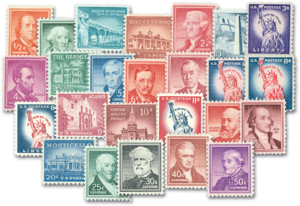
Richard Viguerie highlighted that a good piece of direct mail gave donors “not only the urge to take action, but the means to take action” – a postage paid envelope is provided to make replying easier. No need to search for a stamp, an envelope or card.
There were ethical concerns about using actual stamps on reply envelopes. They thought people would feel wrong or guilty about throwing away an envelope with a ‘live’ stamp on. So postage paid by the charity became the norm in the 1960s.
Concerns about these fundraising methods
Fundraising for political candidates was not without its controversies and as a series of legislation on campaign finance shows. There were other debates – many of which are familiar to fundraisers today- especially around:
- List saturation & selling of lists – as lists were being developed, bought and sold and swapped there was concerns about “super saturation” and the “incestuousness” of the lists (said George Gorton). The Inland Revenue Service (IRS) was selling lists detailing income figures and zipcodes and UNICEF had sold its list to the Democratic National Committee. This mirrors modern debates and concerns about selling on data and saturation of donors which were highlighted with the Olive Cooke case.
- Cost and return on investment – buying lists was expensive, the postage was expensive, computer equipment and printing was expensive. Also consultants, like Richard Viguerie charged high fees to build lists of contributors. For example, $800,000 to prospect for new names in 1973/4 – Viguerie’s no-loss fees were often 50% of the earned income of any campaign. There were concerns about the costs of creating the lists, how much actually went to the candidates rather than just consultants, and how consultants were charging their fees based on commission as they were not under the jurisdiction of the American Association of Fund Raising Counsel Inc. Some campaigns over 90% of the funds raised going to fundraising and consultant fees. However, the consultants made the argument that break even campaigns were about building up the list of supporters rather than the money that was coming in.
How much were people asking for? And has that really changed?
In 1973 a successful campaign for Sen Jesse Helms netted $174,000 – with a 5.3% response rate and an average gift of $14.03 (the campaign cost $71,000 and was sent to 231,000 people) – the cost to raise each dollar – 41 cents.
In Arizona Rep Sam Steiger raised $170,000 net with an average gift of $19.44 and a 8.2% response rate with the campaign costing $103,000 and the letter being sent to 126,000 people. So 16 cents to raise each dollar.
How does this compare with your campaigns now? Or the amounts we ask for?
Lincoln’s bedroom incentive
Jumping ahead … Reportedly in 1997, a night in the Lincoln Bedroom in the White House was offered in return for donations in excess of $100,000.
So what does all this tell us?
That for over 200 years funds have been raised to support presidential election campaigns. What do we see
- We need a great CRM to know who is giving and who to ask again
- Test what works with different segments
- We need donors of all sizes – the major philanthropist, the corporate gift, the events, the subscribers but also a wider tribe of allies who will contribute
- Those contributing smaller gifts are your ‘true believers’ and add value in numerous other ways
- Letters can be used to give more detail than a short radio or TV advert and true believers will read and respond.
- Fundraisers always embrace and use the latest technology
- Ethical concerns and debates – about fees, return on investments, list saturation have been with us for a long time
- Make it easy for donors to reply to a direct mail – include a postage paid envelope
That fundraising history remains patchy and generally is glimpsed through the history of other major events.
References
‘Public Relations in Direct Mail Political Fundraising’, Haggaerty, B.A., Public Relations Review,
Volume 5, Issue 3, 1979, Pages 10-19,
Empire of Direct Mail by Takahito Moriyama