

8 for 43 and the salient power of numbers
Numbers matter
Certain number matter more
For what they mean, what they remind us of, special dates, anniversaries, firsts …
At the Edgbaston Test, on the second day of the Ashes test the ground went Blue for Bob – one of the mechanisms was text to give.
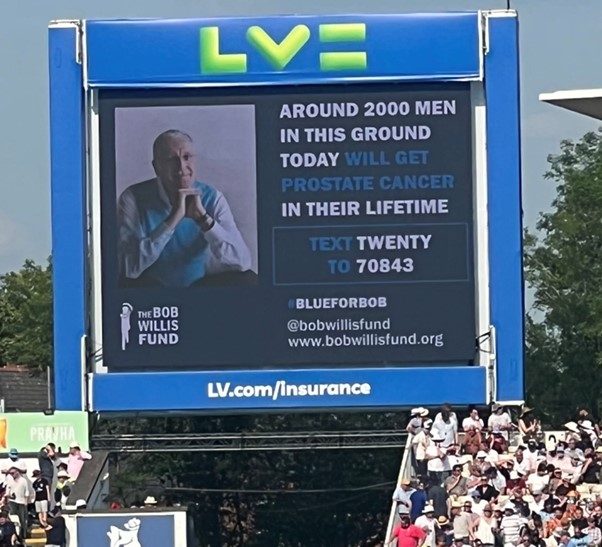
Text 70843
Why is that special? Surely it is just the generic number generated by your SMS to give provider – no the numbers matter.
70 – the age Bob Willis was when he died from aggressive prostrate cancer
843 – 8 wickets for 43 a test match saving record from Headingly in 1981 (when England became only the second team in Test Match history to win a match after being made to follow on)
This makes the number salient, sticky and easy to remember for cricket fans as it has meaning and relevance for the target group (cricket fans in this case). It is a number that connects and causes a reaction – and as our brains are bombarded with millions of pieces of information – a number needs to be salient to stick and be remembered. The use of the celebrated ‘8 for 43’ reducing the friction normally felt when trying to do a text remember the text to give number.
It reminds me of the old rotary phones and 80s TV shows with dial 1-800-SHOWER – make it easy to remember.
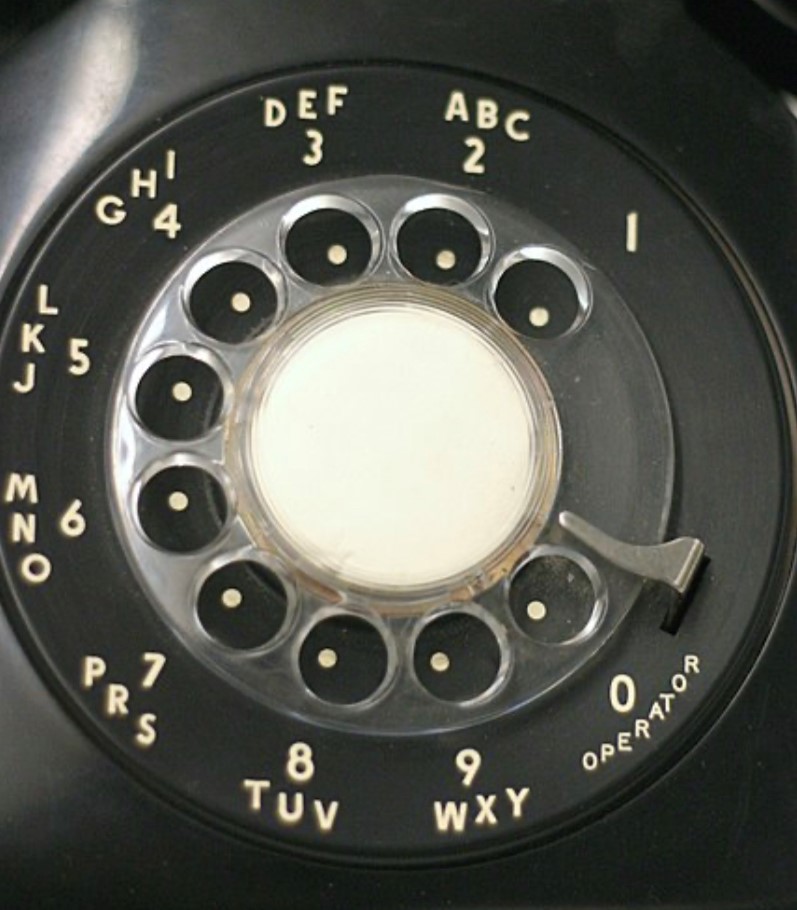
Having salient numbers matters – our attention is drawn to what is novel and what is relevant to us, or to our supporters. And we can use them in smart and fun ways in campaigns and appeals.
Notably in the current US election campaign – the year and the number of the president is used here (as well as social norms of what others are giving)
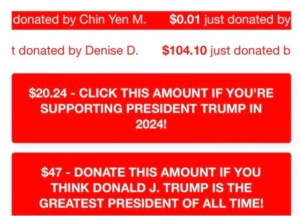
Every day we are overwhelmed with information and our brain uses energy processing it. Our brains are constantly filtering out what it important information and what is not – when a piece of information is unusual, simple or memorable or easy to do it helps our brains conserve energy and processes it faster.
The numbers we choose to use in an appeal matter – how do they connect with our supporters and how are they relevant to the cause? They need to be salient to our target audiences.
The ENO recently celebrated its 92 birthday – the 90th was during the pandemic not so celebrated so we took the opportunity to make a salient ask in our birthday celebrations. As it was our 92nd birthday the giving options were all multiples of 92
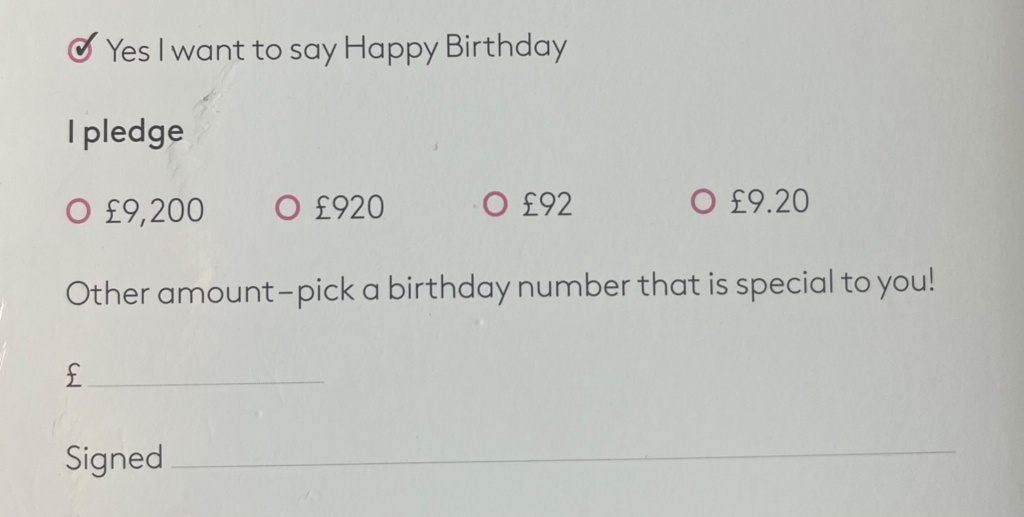
But we also wanted people to have autonomy and choose numbers and dates that were meaningful for them so one of the options was to add a year of your choice. Part of the response mechanism also included space for them to share memories and why they had chosen that year. This connected supporters with their ENO story – and some selected an amount based on the year they first went to the ENO or of a favourite production.
By asking a question you are creating a ‘generation effect‘ – when our brains have to work a bit to fill in the blanks – this little effort exerted makes the answer more memorable. The donor is tasked with giving not just an answer but their answer and therefore is in control of the answer and the action.
Even giving supporters autonomy over the date that a regular gift is taken can increase connection with the gifts being made. Often gifts are made on the 1st of the month or whenever your charity has a banking run – but giving people the choice about the date that a gift is taken can make it more meaningful if it connects to a significant life event or memory.
See this blog on ‘Its not you, its me‘ for more about having freedom in the gift choice.

Similarly donations in memory of someone can create powerful connections and make it a more salient gift. Can you add in an option to dedicate a gift and have a supporter explain why?
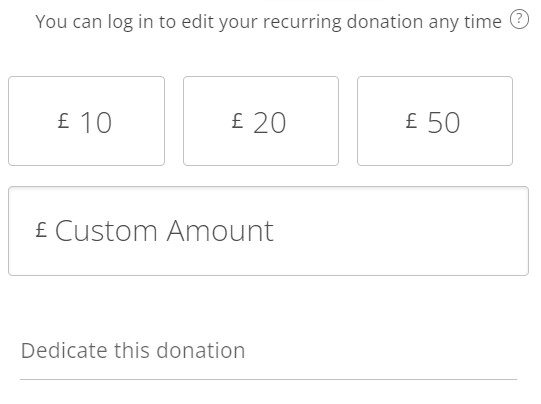
Different cultures value different numbers that are considered to represent wealth and fortune (8 for many Chinese people because its pronunciation closely resembles the phrase for 发 (fā)”making money.) In Hebrew each letter has a numerical value which means every Hebrew word has a value.
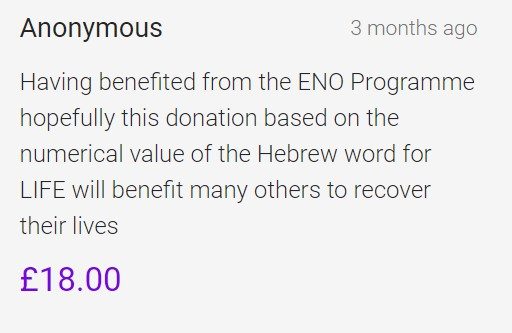
How could you use this to create more salient ways to give?
Or this membership scheme that uses the 1876 year of its founding to offer annual and monthly instalments based on the year.
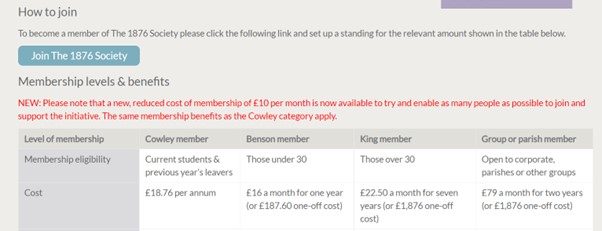
When creating donation forms, as well as salience, the anchors and defaults need to be considered.
Although should it be our charity anniversary – or the donor’s anniversary? How do we frame our giving? https://marinajones.uk/bpframe/
Anchor – the order in which the values appear and the first number that someone sees having a more dominant effect on what they gift (see here for more about the power of anchors)
Default – our lazy brains want to think as little as possible. We like to go with the easiest option and the defaults that we are given can nudge us towards action. By making one option in an ask string the default – by changing the colour, tick we can encourage supporters to give at a certain amount as the easiest option. Defaults can also be used to reinforce a commitment made.
Norms – most people don’t know what a normal amount to give or a socially accepted one – we are herd animals and want to behave as others in our group do. If we can signpost to supporters that ‘most people’ give at this level then we can encourage them (as long as we are being ethical and truthful about what most people do)
See this example
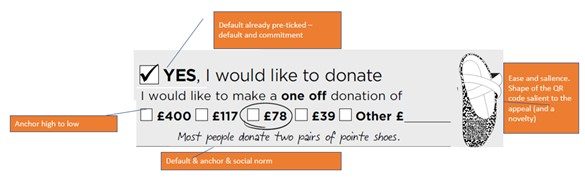
The shape of the QR codes can also be salient and shaped in more exciting and unusual ways than just a square – this one is in the shape of a pointe shoe – but they can be any shape to be more eye catching and relevant to your campaign and target audience.
Charm numbers vs price numbers vs round numbers
With decision science it is always useful to test what works in a real world setting. Some research shows that donors prefer whole round numbers (e.g. £5.00), whereas other research suggests we trust a very specific number as it seems more authentically linked to the cost (e.g. it costs £24 to do the thing).
Test what works with your donors and in different settings and campaigns. Do round numbers work better in tap to give? Precise numbers in campaigns? Many online retailers allow you to round up your purchase to a whole number with a charitable donation so we have made a purchase with a whole number?
Precise numbers can be perceived as more believable and accurate – we can see £5 as a rounded up and somewhat made up number, but the 57 varieties in Heinz is seen as more specific and important to the recipe. Specific numbers used in a campaign, eg, the cost of a vaccination are more noticeable and memorable. They represent the ‘true cost’ (often just the direct cost) of the work and allow supporters to identify with what their gift achieves (‘I have helped vaccinate a child‘ evoking the identifiable victim heuristic as we see the impact of our gift on one individual.)
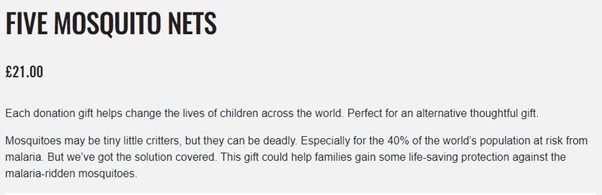
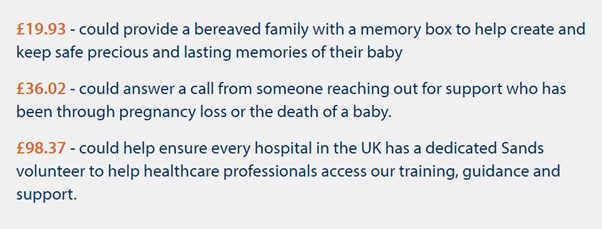
There is also charm pricing – when things end with a .99 they are perceived as better value. Testing whether charm numbers (those ending with 99p) had an impact on the basket donation. The hypothesis was that the use of the charm number (ending .99) would nudge up gifts as people would see the smaller number first – i.e. seeing the 5 not the 6 and increase their giving.
But it proved an inconclusive test – with the charm numbers there was a slight increase in the average donation, but it decreased donations at the higher price options so did not increase the amounts raised.

Other interventions were more effective at increasing the volume and amount of average gifts (although it was also important to look at the effects on different constituencies of supporters making gifts (loyal vs new, occasional vs frequent) and how these tests impacted on their giving)
“making out the million”
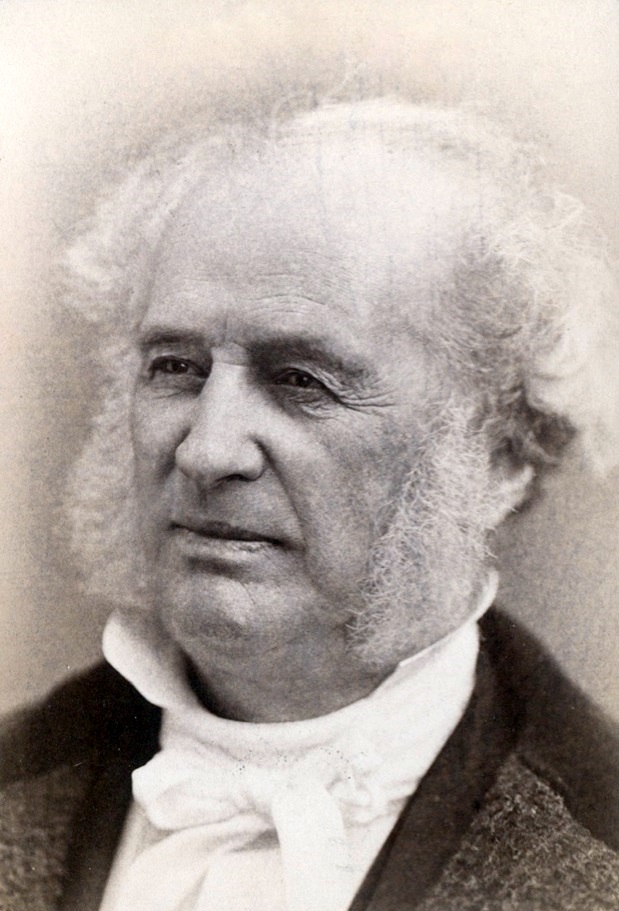
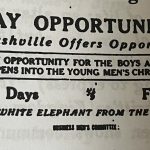
When Cornelius Vanderbilt was dying he made another gift to the university he helped found in Nashville, Tennessee. This final gift to the university made the total he had given to what became the Vanderbilt University $1million. There was a great attraction in reaching the round number.
Can you include that in your campaigns? You might not have that many people able to give a million, but how can you give them a cumulative number to aim for? £2000 over four years?
A 2013 study showed that at self service petrol pumps 56% of transactions ended with 0.00 – so humans are messy – we react to charm numbers, precise numbers and whole numbers in different settings. You need to test what works, have a hypothesis and see how supporters react and engage.
So when designing appeals think about
- How can you use numbers that are meaningful to your audiences? And to sections of your audiences? (A K527 appeal for Mozart fans?)
- How can you give them autonomy to select donation amounts that are meaningful for them?
- How can you test and look at the data at what is more effective for your audiences?
- How can you use the date of the donation to make it more meaningful?
- How can the dedication of a gift increase salience?
- How can defaults, anchors and social norms increase salience and your asks?







Leave a Reply
Want to join the discussion?Feel free to contribute!