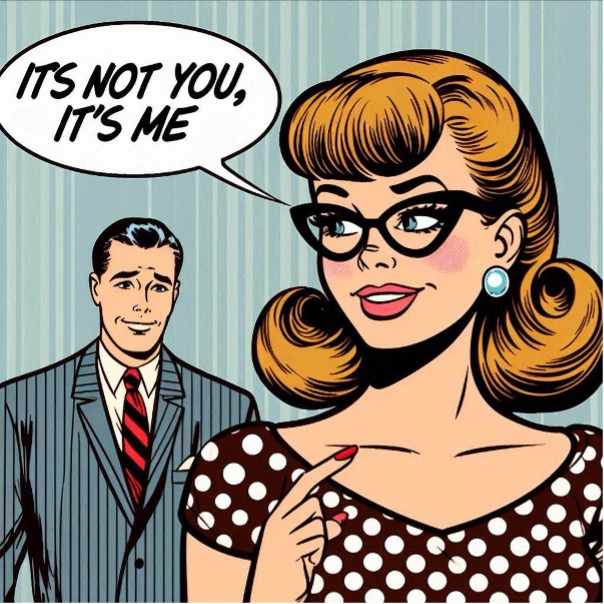
It’s not you, its me
We all know that money appears in funny ways to fundraisers. Funny times and funny amounts.
We also know that donors don’t always know how much we need, what is the most appropriate amount to give, what will make a difference.
To make things easier for a donor and to reduce the brain power needed to process these decisions – we break down gifts into tangible amounts so that the donor can see the impact of what they are giving – a life changing vaccine, a warm meal, restoring a square inch of a Renaissance masterpiece, a new theatre or scanner. Their contribution to the wider problem and how they can help solve it becomes meaningful and concrete (something called then concreteness effect).
From a behavioural insight point of view, we want to keep the process friction free and easy for the donor’s brain to process and make the gift. Our brains are lazy and like to stay in the automatic system one intuitive space – it uses far more energy and slows us down to move into a more analytical space and ask questions about the amount. But sometime friction can be a good thing in the donation process.
This is a powerful and effective tool – and one that we should keep using.
However, this approach also makes it about us and what we need.
It makes it about us the charity, not them the donor.
What if we make it more about the donor?
Their choice of an amount that is meaningful to them.
When testing ask strings – I tested a £20, £50, £100 ask string and then a £100, £50, £20 knowing that the science should show that the higher anchor (starting with £100) generated a higher average donation as donor’s saw the highest number first. 97% of the time we saw people did not change from the preset defaulted numbers. But when the anchors were removed and the donation amount was left empty we saw much higher average donations.
People give in amounts that are salient to them (not always to you and the campaign)
Here are a few historic examples:
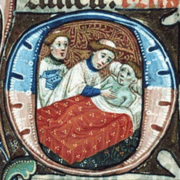
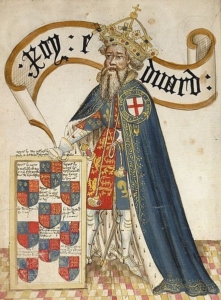
- Edward I on his son’s 14th birthday fed fourteen hundred paupers, and when his son was 17, gave alms to seventeen hundred people
- Edward III on his 50th birthday 50 poor men get shoes to celebrate
- Worth your weight in diamonds. There is an ancient Hindu ritual where individuals were weighed against gold or grain and made a donation equivalent to their weight – this is known as tulabhara and often people did it on their birthdays. There was a custom to weigh the king on his solar and lunar birthdays in precious stones (and in diamonds for a diamond jubilee) and the jewels sold and monies given to charity. You can see the ceremony from 1946 on this newsreel https://www.youtube.com/watch?v=IEkdZlWCd4I&t=116s
- We see these grain offerings in sixth century of Europe as well in the writings of Gregory of Tours which also records the tradition of weighing a donor for gifts. This is also done as a thank offering for recovering from being sick. The Abess of St Servatius was weighed at Our Lady of Buurkeerk in Amsterdam in 1444 to determine the amount the donation.
- Legacy doles of food to the poor often fall on the testator’s birthday, for example, Elizabeth Nickus in c19th Bristol.
- In 1393, wool merchant Marco Carelli signed over his entire fortune to the fabric fund at Milan cathedral living the last two years of his live as a pauper. The date he signed the declaration – the Assumption – the day that Mary, mother of Jesus was taken up to heaven – to reflect his donation to Our Lady that the cathedral was dedicated to. The choice of date matters.
- In Liverpool, during the Second World War, funds were raised to fund Spitfires to fight the Nazis. At a police station a gift was left ‘for the Spitfire Fund’ by a “lady of the night” – the amount? £3 which was the standard fine for soliciting.
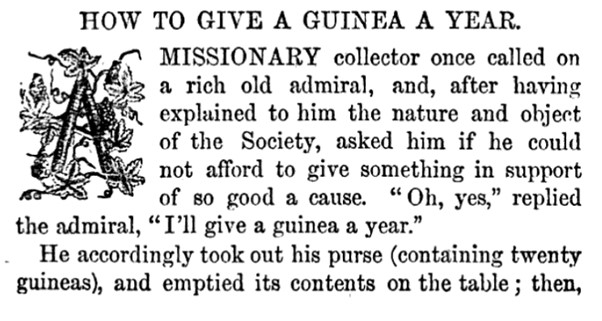
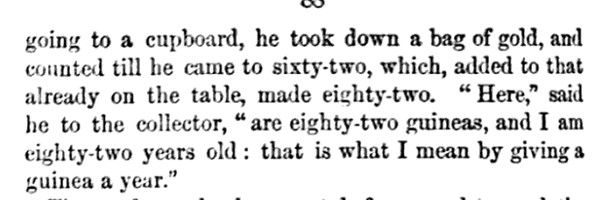
- When we think about annual giving we tend to think of a gift every year – but this 82 year old admiral turned that on its head (in 1867) when asked by a missionary collector for a gift he said “a guinea a year” – he gave 82 guineas one for each year of his life. Again a number salient to him rather than the collection.
- More recently we have seen Swifties (fans of Taylor Swift) support causes close to Taylor’s heart giving in $13 amounts. $13 is Taylor Swift’s favourite number so it an important way of identifying your philanthropy and allying with your ally and what they stand for. Taylor Swift also donates in $1989 amounts – linking to her album and birth date.
- In the National Theatre’s campaign they proposed making annual donations on Shakespeare Day (23 April) to support the creation of the theatre.
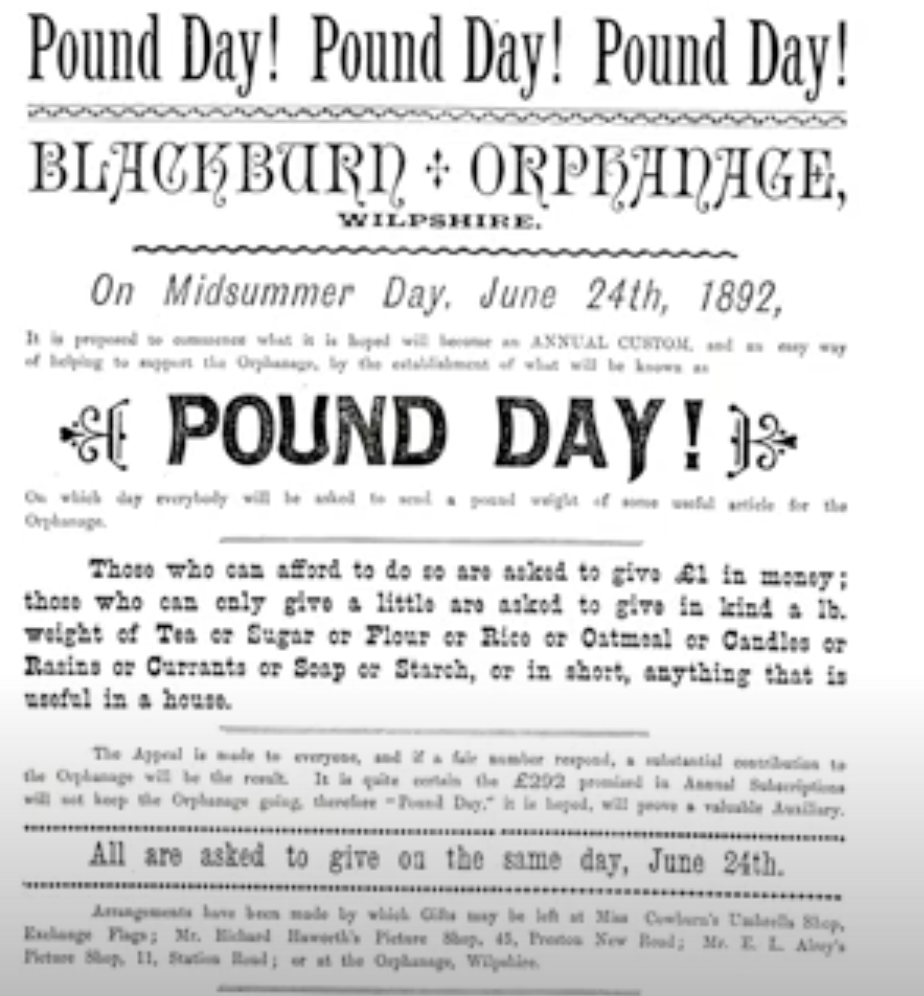
- 1891 Blackburn Orphanage founded and in 1892 started a Pound Day asking people to donate a £1 and those that could not afford to were asked to donate a pound of sugar, tea or flour or whatever they could afford.
What might be going on in a donor’s brain here?
Part of it is there are just numbers that mean something to us and our identity – our age, our favourite number, an important date (I have one charitable direct debit that deliberately goes on a certain date).
There is also an effect known as the Ikea effect – named after the furniture store – where we value something more because we have helped create it. So we value a Billy Bookcase more because of our involvement in constructing it.
How can donors help construct the gifts they give – the amount, the date?
Sometimes too prescriptive a list can cause reactance – when we react against being told what to do. Sometimes the list does not give us the option we want – the options are too small and not meaningful enough, or too big and beyond our capacity.
When we give donor’s the autonomy and empower them to make a choice they can make gifts that are more personally meaningful to them.
People want autonomy and agency and choosing the amount gives them that.
However, how this choice is presented is important. If it is too open an offer such as ‘pay what you feel‘ we might nudge the brain into a system two space and ask ‘how do I feel about this? and what value does that mean? And by pausing to ask these questions we have no frame of reference and can stop and not make the decision.
The frame of the question is important here.
- How could you give your donor’s more autonomy and choice about how they make a gift and how much?
- How can you invite them to make gifts that mean more to them?
So testing what works for your audience and donors works.
When Greenpeace in Argentina ran a telephone campaign seeking one off gifts they tested various options including Mother’s Day, National Argentina day – and the one that got the highest donations was gifts linked to their pet’s birthday.
So perhaps there is a blended way to offer a combination of the standard anchoring, defaults and social norms with some nudging towards a personally meaningful amount.
How do you make it about them?
Not about you?