Lilian Baylis asked boldly, built community and made giving tangible. Her example shows us how to keep opera open to everyone.
Lilian Baylis was one of Britain’s most influential theatre impresarios and entrepreneurs, and the founding pioneer of English National Opera, the Old Vic (which became the foundation of the National Theatre) and the Sadler’s Wells Ballet (which became the Royal Ballet). Her belief that great art belongs to everyone indelibly shaped the country’s cultural landscape. It still shapes ENO today, where under-21s come for free and accessible ticket pricing is key.
On 25th November, we mark 89 years since she died.
Why Baylis still matters
Lilian Baylis was not simply an historic founder. She was a practical, persuasive and deeply entrepreneurial fundraiser. She understood that great art needs people behind it – audiences, artists, advocates, donors, volunteers and friends – and she was never shy about asking them to play their part.
Fundraising can sometimes sound separate from the art, as if the work sits on one side and the money on the other. Lilian never saw it that way.
For Baylis, fundraising was part of the artistic mission. She asked because she believed the work mattered, and because every audience deserved opera of the highest quality. She knew that great art only happens when people stand behind it and put their hands in their pockets. She is said to have wandered around the theatre asking audience members: “Please give us some money, my dears.”She understood that if people love something, they will want to help sustain it.
Her ethos was rooted in access, excellence and shared ownership. She believed that opera, theatre and ballet should belong to everyone, not only to those who could already afford or reach them. That belief remains central to us: we raise funds as an invitation to help keep exceptional art alive – open, accessible and daring.
What Baylis did — and what we still do today
Lilian asked clearly. Baylis’ famous directness reminds us that fundraising works when the need is visible and urgent. We should say plainly what support we need, ask people who care to make it happen, and make the impact clear.
Lilian built a community, not a transaction. The Vic-Wells Association linked audiences, artists and management through regular communications, public acknowledgement and personal thanks, making supporters feel part of the story. Our supporter journeys, events, stewardship, membership communications and personal relationships should do the same, so that people feel part of the company – now and in its future – rather than outside looking in.
Lilian was visible. Baylis fundraised from the stage, in the building, in letters, in speeches and in the wider public conversation. The lesson for us is presence: we should be where the energy is – in the auditorium, at events, in rehearsal rooms, with artists, audiences and partners – ready to turn enthusiasm into action.
Lilian made giving tangible. Baylis understood the power of a concrete need: a building to restore, a salary to fund, a campaign to complete, equipment or support that would make the work possible. Like her, we should turn ambition into specific propositions – a named project, a clear target, a visible result – so that every supporter can see what their generosity unlocks.
Lilian used every channel available. Baylis embraced programmes, magazines, speeches, press stories, celebrity endorsements, commercial income, merchandise, gifts in kind and even new broadcasting opportunities. Long before “multi-channel” was a concept, she told the story of the work, and why it matters, on every channel there was.
Lilian was commercially imaginative. Baylis knew that earned income, partnerships, publicity and philanthropy enabled the artistic mission rather than competing with it. Today, commercial partnerships, gifts in kind, preferred suppliers and brand relationships can all express shared purpose when they align with our values and help us make more art for more people.
Baylis’ call to action
Baylis was bold, direct and unapologetic about asking people to join her mission.
“A prayer would be nice but money would be even better.”
There was no elaborate case for support, no glossy brochure and no carefully constructed donor journey. Just a woman who believed passionately in what she was doing and wasn’t afraid to ask people to help make it happen.
We can be too, because fundraising protects, amplifies and extends the art. It keeps art open, ambitious and alive for the audiences in front of us now, and for those still to come.
To fundraise in the spirit of Lilian Baylis, we should be bold, practical and personal. We should ask with confidence, because the work deserves support. We should thank with warmth, because every gift matters. We should tell stories, because people give when they understand the difference they can make. And we should make it easy for everyone – audiences, artists, trustees, colleagues, partners and friends – to become champions for our future.
This is the Baylis challenge for us now: be visible, be direct, be inventive, be frugal where it matters and ambitious where it counts. Invite people in. Give them something concrete to support. Show them the impact. Celebrate their role. Ask again.
Five ways we can be more Lilian today
Ask proudly: name the need, the target and the impact in every appeal.
Make supporters insiders: share behind-the-scenes stories, artists’ voices and regular moments of thanks.
Use the energy of the moment: connect asks to performances, events and moments when people feel the power of the work.
Think beyond cash: invite gifts in kind, partnerships, introductions, advocacy and volunteer support.
Keep the mission visible: remind people that every gift helps
https://marinajones.uk/wp-content/uploads/2026/11/Old-Vic.jpg.webp5631000adminhttps://marinajones.uk/wp-content/uploads/2022/12/f2b903e010104f5aa61ea1821a685913.pngadmin2026-11-20 17:15:222026-11-20 17:15:56Fundraising in the Spirit of Lilian Baylis
Why is it so difficult to say no to a child collecting for charity? Why do charity images often feature children?
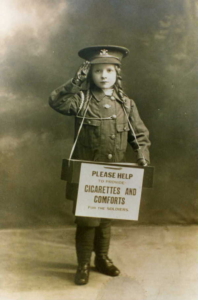
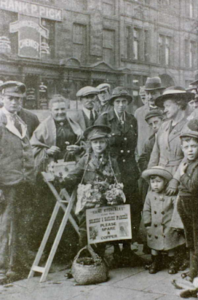
During the First World War a little girl called Jennie Jackson raised thousands for the troops
Why can children be so impactful in fundraising?
Our primitive brains are primed to pay attention to faces. More than half of the brain’s cortex is involved in processing visual information, and faces are among the most compelling things we encounter.
We are remarkably quick at recognising and interpreting faces, instinctively assessing the person in front of us. Friend or foe? Threat or ally? Someone to approach or avoid?
A baby’s or young child’s face tends to trigger a particularly powerful response. Certain facial characteristics – large eyes, a relatively large forehead, rounded cheeks and a small nose and mouth – form what scientists call baby schema, or Kindchenschema. These features can activate nurturing and caregiving responses. We recognise something small, vulnerable and dependent, and are more inclined to protect and care for it. Our primitive brains have evolved to pay attention and care.
Jennie Jackson – Burnley’s “Young Kitchener”
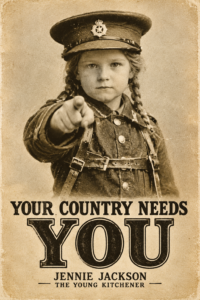
Jennie Jackson was born in Burnley on 27 December 1907, the daughter of John and Kate Jackson. Her father was a miner. Soon after the outbreak of the First World War, Kate reportedly saw two soldiers sharing a cigarette while walking in Towneley Holmes. The sight prompted her to consider how she and her young daughter might provide tobacco and other comforts for men serving in the trenches (a useful reminder that philanthropy is a product of time and culture – no child today would do a fundraiser to generate funds for cigarettes!). Kate painstakingly made Jennie a carefully crafted replica military uniform making her look like Lord Kitchner on the famous ‘Your Country Needs You’ pointing poster. She got permission to dress in military dress from Burnley’s Chief Constable, and began collecting to raise funds for comforts for the troops. Because of her outfit she became known as Young Kitchener.
Jennie stood out for two reasons (1) she was a child fundraiser, and (2) she wore a striking outfit. This illustrates salience – we notice things that are different or unexpected. A uniform attracts attention – a child in uniform attracts even more because the combination is unusual.
Aside: Why is that Lord Kitchener pointing poster so effective and iconic? You may remember from school history lessons. There is a visual trick employed – Kitchener’s eyes and foreshortened finger appears to follow you around the room – you cannot look away and you feel watch. This is called the eye tracking effect.
AI generated image of Jennie mimicking the Your Country Needs YOU poster with Lord Kitchener
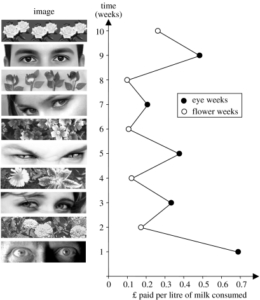
Eyes, as discussed above, attract attention and we are drawn to faces and assessing what they are telling us. Lord Kitchener in the poster is looking directly at us – and he is not happy! In an infamous decision science experiment, pictures were put up by an office coffee point asking for contributions towards the coffee. When the images were of flowers there were fewer donations. When there were eyes there were more donations. However, when the eyes were angrier there was more compliance.
Bateson M, Nettle D, Roberts G. Cues of being watched enhance cooperation in a real-world setting. Biol Lett. 2006 Sep 22;2(3):412-4.
When are observed we want to do the ‘correct’ behaviour – more moral and more pro social. Kitchener’s eyes let you know your behaviour is being watched and judged.
We also pay attention to who the message comes from – the messenger effect – in this case it is coupled with the authority bias effect. Lord Kitchener was not any general, he was a war hero and with a legendary reputation. We are more likely to comply to messages that come from authority figures that we respect and fear.
Back to Jenny and her fundraising. …
Jennie as a mini Lord Kitchener was a brilliant piece of fundraising theatre. The uniform gave Jennie a recognisable identity and made her collection memorable. The novelty of a child collecting in costume, and the salience, of a military uniform encouraged people who might otherwise have walked past a collecting tin to stop, smile and contribute.
Jennie was by no means the only child fundraiser – following in the Victorian tradition of young fundraisers there were thousands of juvenile societies collecting funds pre war for missions. There are many ways that children were involved in fundraising especially in Victorian times, you can read more about them here.
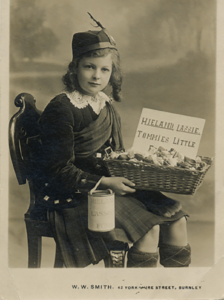
During the Great War, Scouts even collected conkers to be used in explosives. Jennie wasn’t even the only star child fundraiser in Burnley – another local girl Amy Foster, appeared every Saturday dressed in the uniform of the Black Watch, complete with kilt and sporran. She became known as the “Hieland Lassie”.
Jenny was not content with just raising money for comforts and cigarettes. In 1916 she set the herself the goal of raising enough money for an ambulance. She collected over £1,100 in copper coins over twelve months. Of this, £450 paid for a vehicle named the Young Kitchener, while the rest went towards comforts for servicemen.
This shows that the power of naming rights and recognising the donor and their donation. Donors want to see their names on what they have helped purchase – here it was ambulances (see the names they come up with for Spitfires!)
Over the course of the war, Jennie is reported to have raised approximately £4,000. She received the War Medal of the British Red Cross Society.
What else inspired Jenny? Her eldest brother William has been a Dragoon Guard and was killed in 1915 at Loos. Her other two brothers were fighting – Richard with the Shropshire Light Infantry and was decorated for gallantry at Ypres, while John Samuel joined the Royal Field Artillery in October 1915. The personal connections we have and the life experience impact the causes that we feel passionate about and dedicate our time, talent and treasure to.
Jennie’s contribution received national recognition. In 1919, she was reportedly the only child permitted to take part in London’s victory celebrations, the Great March of Peace.
Jennie’s story shows how a child fundraiser could turn public affection into tangible financial support. Her uniform attracted attention, her age made her memorable, and her enthusiasm and persistence encouraged people to give. In effect, she became a miniature fundraising ambassador: her appearance and personality helped her create an emotional connection and translate it into support.
What can fundraisers learn?
Jennie’s story illustrates several enduring principles of fundraising psychology:
Attention comes first. Before someone can give, they need to notice us. A child in a distinctive uniform provides an immediate visual hook.
Distinctiveness matters. Something unexpected interrupts our normal patterns of attention. Jennie’s miniature military outfit made her instantly recognisable.
Emotion influences decisions. We don’t always make giving decisions through a rational calculation of need, impact or financial value. Feelings of affection, empathy and protectiveness can play an important part.
Personal stories create connections. Jennie wasn’t asking people to support an anonymous appeal. Her brother had died – it mattered. She was a local girl with a visible mission, a recognisable identity and a compelling story.
Participation creates ownership. By giving Jennie their pennies, people in Burnley could feel they were contributing to something tangible and worthwhile: an ambulance for the men serving at the front.
Of course, children should never be treated simply as fundraising props. Their involvement and use of their images must be voluntary, appropriate and safeguarded, and their contribution should be valued in its own right.
But Jennie’s story reminds us that fundraising is not simply about presenting people with a logical case for giving. It is about understanding how people notice, feel, connect and respond.
An English country garden? Your granny’s talcum powder? A summer’s day?
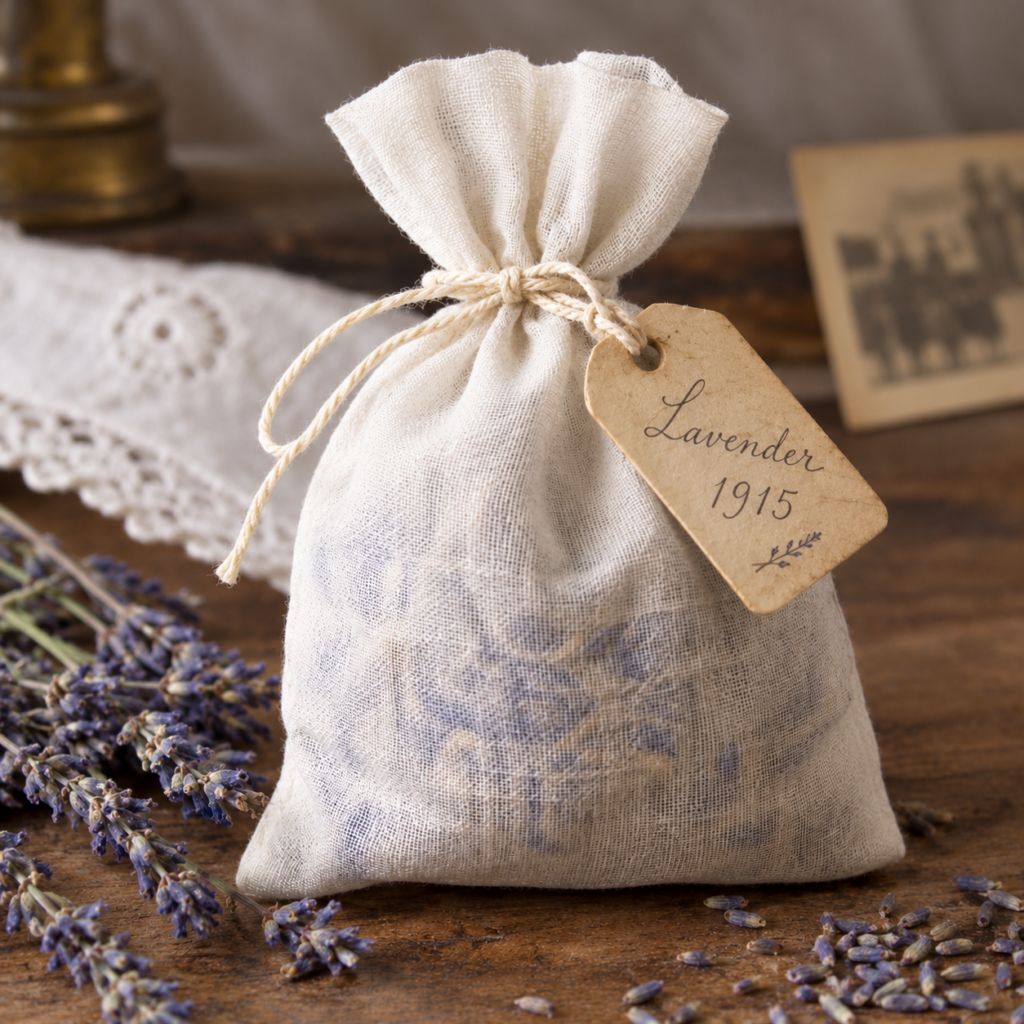
Now imagine a wounded soldier in a field hospital during the First World War, desperately asking for a lavender bag.
Not because he wants his clothes to smell nice. But because the smell of his own wound has become unbearable.
In the midst of the horror of war, a little muslin bag filled with English lavender could offer something extraordinary: comfort, a connection with home and, for a moment, relief.
And it offers fundraisers two fascinating lessons about human behaviour.
1. The power of a smell
During the First World War, people knitted socks, sent parcels and organised countless acts of mutual aid to support soldiers at the front or in field hospitals. Among the comforts sent to wounded servicemen were smellies – homemade items intended to bring comfort.
Lavender bags were particularly popular.
They did more than mask unpleasant odours. They carried an idea of England – the country garden, the family home, the familiar world that soldiers had left behind. At a time when so much seemed alien, frightening and beyond their control, these tiny sachets offered a tangible connection with home.
In her 1917 memoir, A V.A.D. in France, English author Olive Dent recalled a soldier repeatedly asking, “Where’s my lavender bag, sister? My wound does smell so.”
Dent hung sachets around him to mask the stench of his deteriorating wound. She observed that dozens of other soldiers appreciated the lavender bags, particularly those who felt nauseated by the smell of their wounds being dressed.
The appeal extended beyond individual acts of kindness. A Red Cross Day in London in October 1917 included the donation of an entire field of lavender, prompting, according to the Daily Mail on 10 October, a flurry of activity making small muslin bags, filled with lavender and neatly tied with ribbon.
The gesture was practical, but it was also deeply symbolic. A field of English lavender became a way of sending a little piece of England, of home, to the men who were fighting for it.
The bags became so familiar that they were even satirised. Fall In magazine joked about a soldier stuffing lavender bags up his tunic to make his chest stick out and appear more manly and muscly.
Why is smell so evocative?
Of all our senses, smell has a remarkable ability to transport us emotionally.
The olfactory system connects closely with the brain’s emotional and memory systems, including the amygdala and hippocampus. A familiar scent can trigger vivid autobiographical memories and the feelings associated with them, sometimes before we have consciously identified what we are smelling.
A particular perfume, freshly baked bread or the scent of lavender can transport us decades into the past. We do not simply remember a place or a person – we may find ourselves reconnecting with how that place or person made us feel.
This is the phenomenon often associated with Marcel Proust, whose description of tasting a madeleine dipped in tea became famous for the involuntary memories it unleashed.
Smell does not simply remind us of the past. Sometimes, it makes the past feel present again.
For fundraisers, this is worth paying attention to.
Priming occurs when exposure to a cue influences how we subsequently perceive or respond to something. A scent, image, word or sound can make particular associations more accessible, potentially influencing mood, judgement or behaviour. These effects vary with context and are not guaranteed to change what someone does.
But smell offers a particularly interesting route into the emotional worlds of our supporters.
Retailers have experimented with ambient scents to influence how people experience shops, while charities have explored scented direct-mail packs to make an appeal more tangible. The National Trust, for example, has used lavender-infused direct mail to encourage support for garden planting.
Imagine opening an appeal about restoring a historic garden and being greeted by the scent of lavender. Or receiving an invitation to support a woodland project accompanied by the smell of damp earth and leaves.
Suddenly, the appeal is not just something to read. It is something to experience.
The opportunity is not to manipulate donors into giving. It is to help them imagine, remember and feel more deeply connected to the cause.
2. The need to do something practical
There is another lesson in those lavender bags.
When we witness something terrible happening, we can feel powerless and want to do something to help. In this case making and sending lavender bags gave civilians a real and tangible way to help with practical action.
Philanthropy is one way we use our time, talent and treasure to contribute to our own vision of the public good. Yet we often reduce the love of mankind (the route of philanthropy) to the transfer of money.
Our desire to help is much broader than that.
We give clothes, food, books, time, skills and objects that matter to us. We volunteer, knit, bake, sort, pack, deliver and organise. We invest our own effort in making something happen.
There is a psychological dimension to this. Research on the IKEA effect suggests that people can place greater value on things they have helped create. The effort invested in making something can increase its perceived value.
For the people sewing lavender bags, the process itself was part of the gift. They were investing time, attention and care in another human being.
Professor Beth Breeze has written about the importance of practical expressions of solidarity and allyship. Sometimes, people need more than an opportunity to express concern. They need a meaningful way to act on it.
For fundraisers, the question is whether we offer supporters enough opportunities to participate, rather than simply asking them to pay.
Could they help create something? Contribute their expertise? Share their memories? Take part in an activity that makes the outcome tangible?
A financial gift can be profoundly meaningful and often in a disaster situation cash is best as it can be used to buy items that are needed (see https://marinajones.uk/200kippers/). But it is not the only way people want to express generosity.
What could this mean for fundraising today?
The lavender bags of the First World War invite us to think beyond the traditional appeal letter, donation form and thank-you email.
They encourage us to consider the sensory and practical dimensions of giving.
Could we bring the world of the cause into the donor’s world?
Smell – what scents are intrinsic to the cause? Lavender in a garden, the earth of a rewilding project, the paper of an archive, the sea air of a coastal conservation appeal?
Memory – what smells might reconnect supporters with a person, place or experience that matters to them?
Imagination – could a sensory cue help donors picture a future made possible by their generosity?
Participation how might we give supporters something practical to make, contribute, nurture or create? Inciting reciprocity and connection.
Technology – could digital storytelling, audio, interactive experiences or carefully designed physical mailings create a richer sensory world around an appeal?
Relevance – which supporters are likely to find these approaches meaningful? How can we make them personal without making assumptions about people’s memories, identities or preferences?
Of course, sensory fundraising needs to be thoughtful. Scents can be unpleasant, inaccessible or associated with difficult memories, and some people have sensitivities to fragrances. A sensory experience should enrich an appeal, not be a novelty or a barrier to engaging with it.
Nor should we assume that an evocative experience will automatically lead to a donation. The purpose is to create a more meaningful connection between the supporter and the cause.
A final thought
A little bag of lavender could make a wounded soldier feel less alone.
It could bring the memory of home into a field hospital. It could give someone far away a practical way to express care. And it could turn a familiar scent into a powerful symbol of connection.
Perhaps that is the real lesson for fundraisers.
We are not simply asking people to give money. We are inviting them to connect their own memories, identities, values and desire to help with something beyond themselves.
Sometimes, the most powerful appeal is not the one that tells people what a charity needs.
It is the one that helps them feel, remember and imagine why it matters.
And occasionally, it might even smell of lavender.
https://marinajones.uk/wp-content/uploads/2026/10/lav.jpeg416416adminhttps://marinajones.uk/wp-content/uploads/2022/12/f2b903e010104f5aa61ea1821a685913.pngadmin2026-10-26 09:51:122026-10-26 09:51:12Lavender’s Blue, Dilly Dilly: What a Lavender Bag Can Teach Us About Fundraising
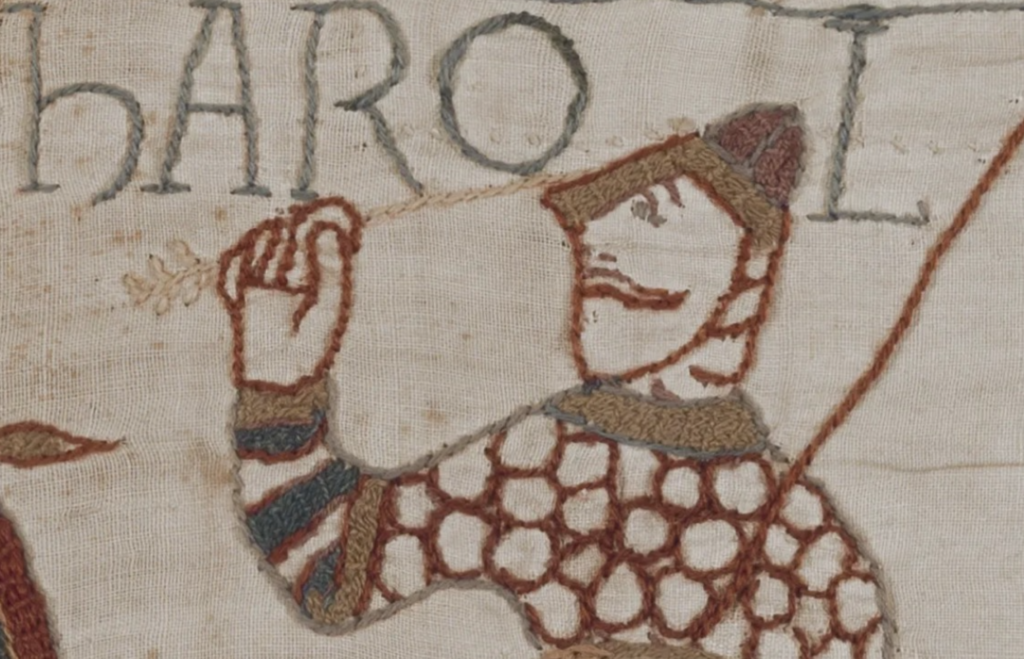
The most famous scene in the Bayeux Tapestry is often described as Harold being struck by an arrow in the eye.
But is it Harold and, it is it an arrow?
The Bayeux Tapestry offers a useful warning for fundraisers: the image we remember is not always the whole truth. The famous arrow-in-the-eye story shows how vivid images dominate our narratives and memories. That matters for fundraising because the stories and images we choose can shape what donors believe, remember and repeat.
What does this image tell us about how we think about history, the history of fundraising, and the lessons we choose to remember?
We are drawn to novelty – even in a bloody battle with arrows flying here, there and everywhere it is unusual to get struck in the eye with a fatal shot.
Today, even when millions of people die in road traffic accidents, a shark attack is news and it sticks with us. The same is true for the arrow – it is unusual and it is vivid which makes it more memorable.
It is not just vivid – but visual. We are visual animals: we often process images faster than words, and vivid images can reach us before careful argument does.
The picture supremacy effect means we also recall images better than words.
So, a Saxon soldier with an arrow in his eye in easier to recall than hundreds of dead soldiers and the complex and disputed facts of a battle nearly 1000 years ago.
However, there are no contemporary writers that say that Harold was killed by an arrow to the eye. Given the uncommon nature of this death – it would be something worth chronicling and writing home about. The myth has grown up around the image on the tapestry. Historians dispute whether the chap with the arrow in the eye is Harold, the two Saxon soldiers next to him are holding spears and it could be some stitching has become unsewn that makes the spear look more arrow-y. One school of thought bases the possibly based on a dodgy eighteenth century sketch.
But the visual is stronger than the facts, and the more powerful image sticks in our mind
Think about this with donors – an image can beat a carefully crafted appeal letter.
The arrow in the eye story sticks – we can see it.
So for fundraisers – there is opportunity and danger. Images help people grasp a story quickly, but they can also simplify it too much, turning a complex reality into a single memorable symbol. But we know that too many facts can be detrimental to our fundraising – too many facts overwhelm our donors, and overwhelm can lead to inaction as there is too much to process. Keeping it simple, makes it memorable.
Use powerful images to make the story stick in your donor’s minds – but be mindful that you consider the power of the images you choose, make or commission. How are you giving agency to those that you are representing?
History is notoriously written by the victors
In the case of the Bayeux tapestry it is commissioned by the victors sewn by those they conquered – potentially by nuns in Canterbury (so conquered victims)
The choices we make about what we present in history help tell the story that we want to tell
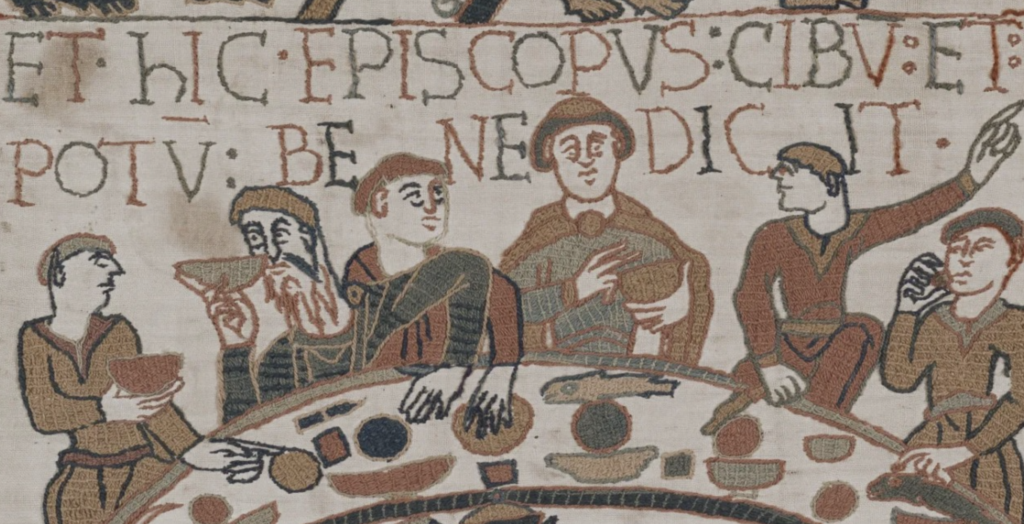
The story the tapestry tells is shaped by who won the battle of Hastings and that narratives that they wanted to land – so who commissioned it? One theory has Bishop Odo as the commissioner of the tapestry giving himself and his influence in the story.
Could the same be said to be true of our charities? When a donor pays for a new building and has their name on it, does that influence how we tell the story? Do we end up celebrating the donor more than the founder’s vision, the staff who carried the work, or the collective effort of a community?
Bishop Odo in the centre of the table
In the tapestry the nuance, the messiness and the competing claims to the English throne can disappear when a single image becomes the story.
When we are telling the history of our organisations, or talking about the history of fundraising we tend to do the same. The narrative is shaped by our current understanding of the world and social mores of the time. But in order to make a story sticky and memorable we simplify it to cause and effect (because he was shot with an arrow, because she she suffered injustice and wanted to change the law, because he had this disease …)
For fundraisers we often need to keep the story simpler to ensure that our donors can see the cause and effect (because you gave, Sara will eat supper tonight…)
What are the fundraising equivalents of an arrow in the eye?
Possible Live Aid being the first charity single
Bob Gedolf and pals coming together to raise money through singing ‘Do they know its Christmas time’ in 1984/5
But look more closely and you see the George Harrison Concert for Bangladesh or the 1969 sponsored walk for Oxfam that ended with a Wembley concert featuring Status Quo, The Love Affiar and many more.
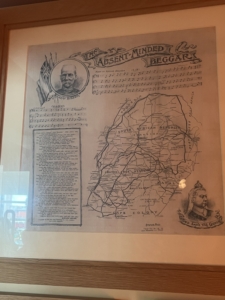
Look even earlier and Arthur Sullivan and Rudyard Kipling (the Geldof of their day!) were creating a charity single raising funds in 1899 for the soldiers returning from fighting the Boer War.
Now this was before Top of the Pops or charts.
Sales of the sheet music (to play at home on your piano) and on handkerchiefs raised over £250,000 (now equivalent to £40m+)
We think of Live Aid as the first. The biggest. The one we remember.
Three lessons for fundraisers
🔹 Make it memorable. Vivid images and simple stories help people understand and remember why their support matters.
🔹 But don’t confuse memorable with true. The neatest fundraising story isn’t always the most complete one. Check the history, challenge the mythology and don’t let a powerful image mislead.
🔹 Ask who gets to tell the story. The Bayeux Tapestry tells the story of the Norman victory – commissioned by the victors and probably made by people on the conquered side. What gets remembered depends partly on who has the power to tell the story.
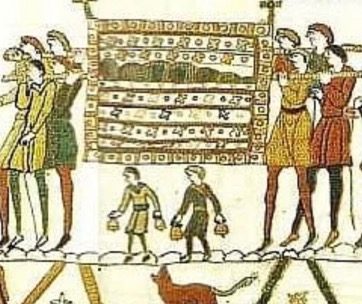
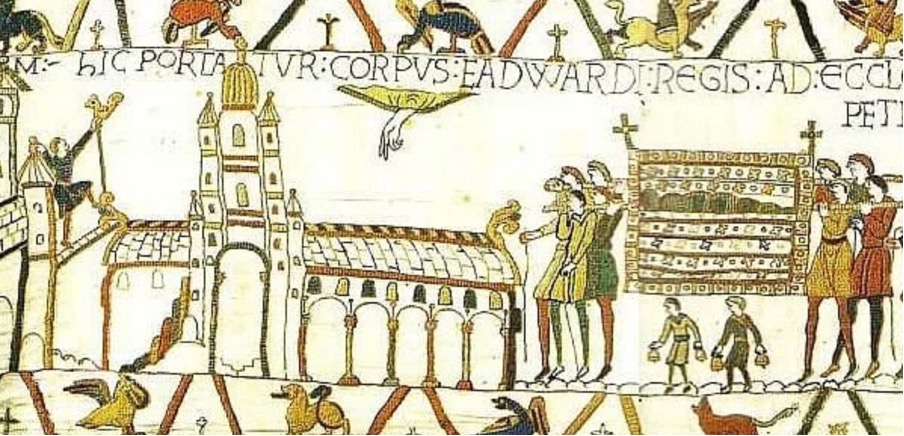
And did you know that there are fundraisers on the Bayeux tapestry?
https://marinajones.uk/wp-content/uploads/2026/09/Screenshot-2026-09-20-at-18.04.41.png14562264adminhttps://marinajones.uk/wp-content/uploads/2022/12/f2b903e010104f5aa61ea1821a685913.pngadmin2026-09-20 18:26:222026-09-20 18:26:23Is that an arrow in the eye?
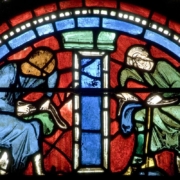
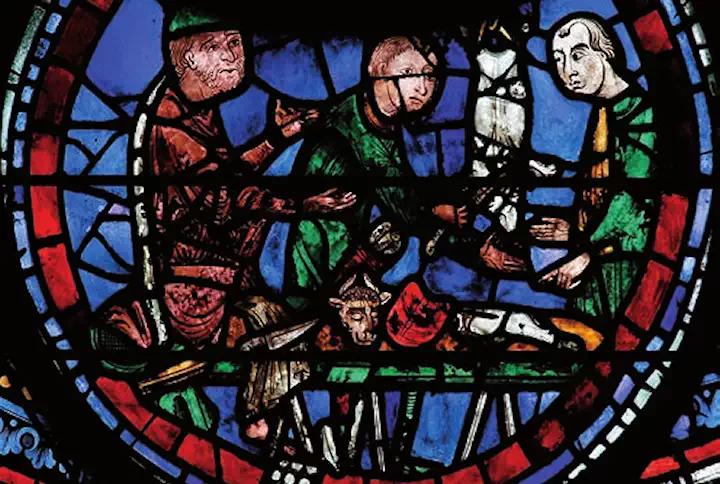
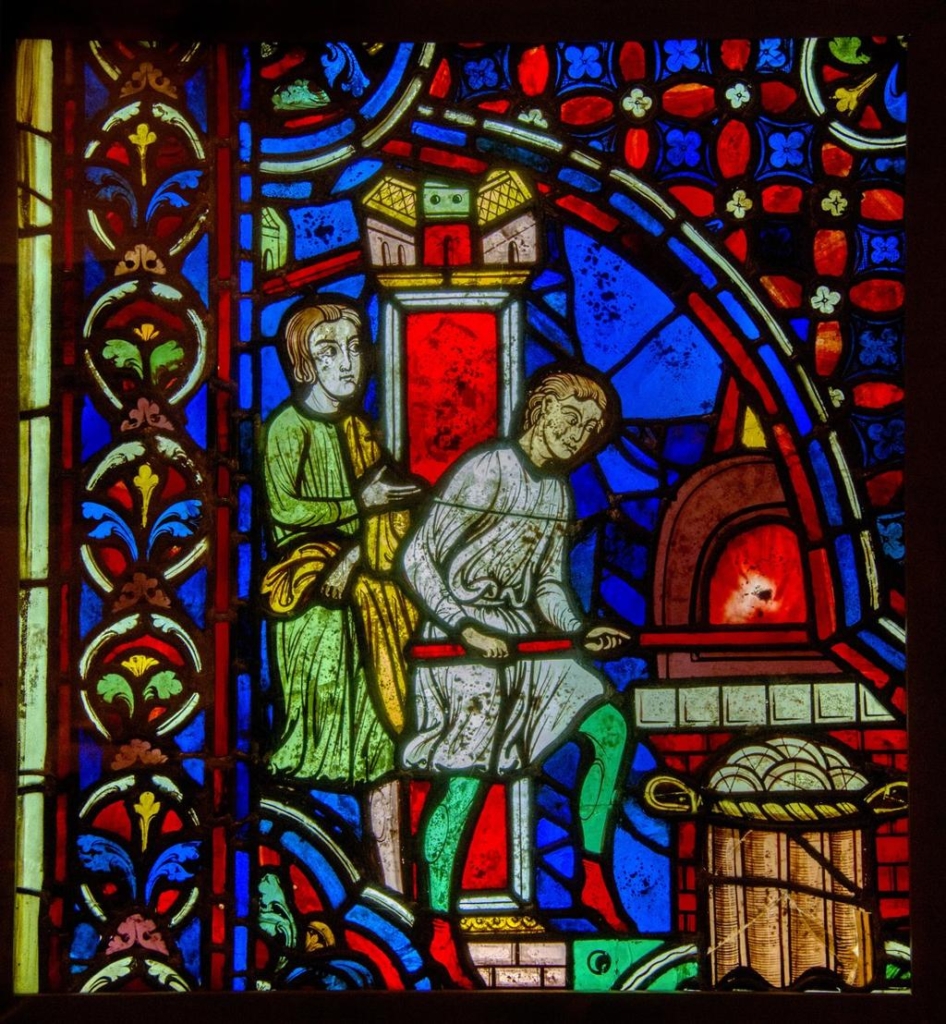
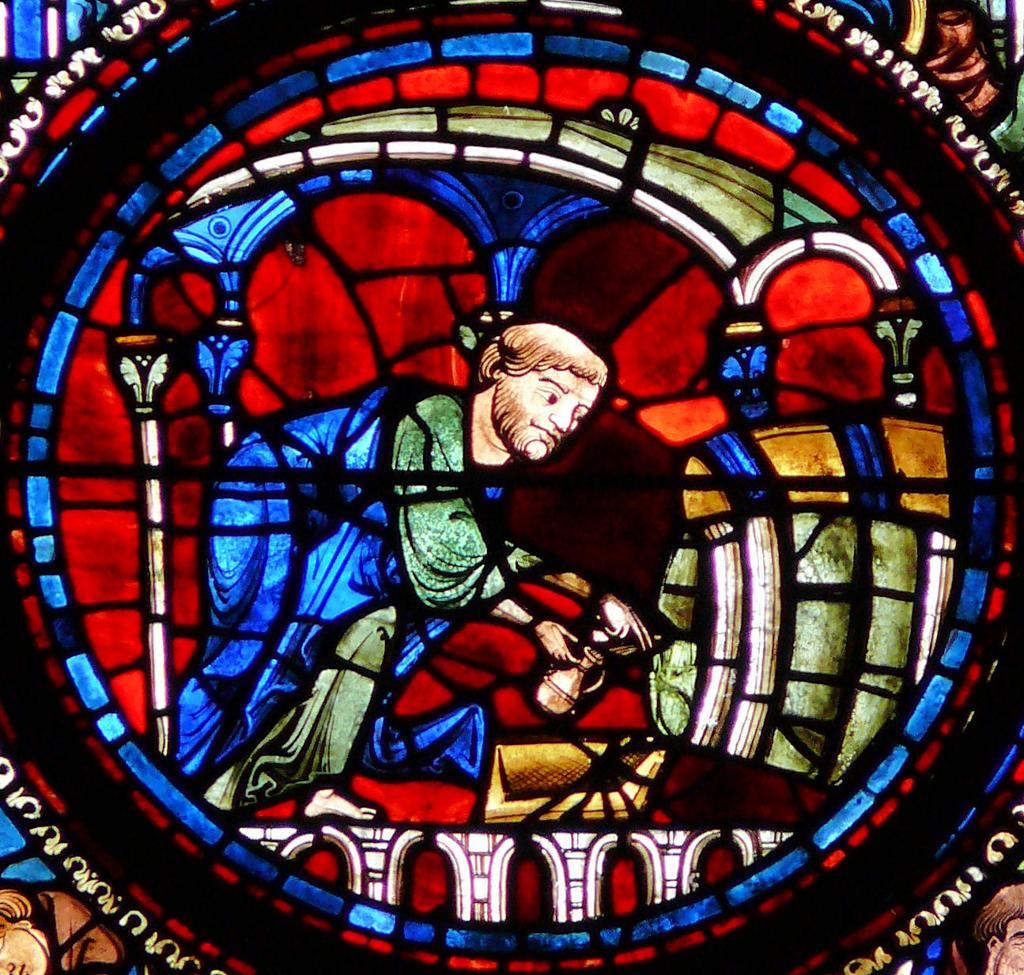
Donors making their donation in art. Not just art, but in stained glass. Here, the shoemakers are shown making their donation of a window at Chartres Cathedral. They are just one of 45 local trades who donated to rebuild the cathedral and represented in the stained glass of Chartres, and a great early example of donor recognition.
Donors want to see the impact of their gift, and in this window they can literally be seen both making the gift, and the impact of the gift (the cathedral).
These windows demonstrate the power of the IKEA effect – we value things more when we have helped create them. The shoemakers, and the other guilds, contributed – financially and physically – to building the cathedral. The stained glass tells their story. Seeing yourself and your trade, which is part of your identity, embodied in stained glass enabled donors to literally say: “I made that.” You become, quite literally, part of the infrastructure.
When we give a gift, we activate the brain’s reward systems – the release of dopamine (associated with reward, motivation and pleasure) gives us the ‘warm glow‘ of giving we get a hit of happy chemicals. Giving can bring donors joy. When we thank donors for the gift and show them the impact it has had, we can reinforce that positive experience: giving another hit of dopamine, giving is good, and we like to repeat behaviours that make us feel good.
Donor recognition further supports this, reinforcing the identity of the donor as someone who gives. In this case, it also reinforces their identity as a member of a valued group of craftsmen who contributed to the cathedral’s construction.
We’ve all seen donors go over to a wall of recognition, scan the list with their finger, looking for their name and checking that it is there (or, heaven forbid, ringing you up to ask why there name isn’t there!) Seeing your name on a donor wall is one of the ultimate ego strokes.
By being so prominently credited, donors may also be encouraged towards ongoing support. We have already invested and tend to want to continue behaving as we have behaved. We seek to be consistent with our previous behaviour, particularly when that behaviour is publicly known. Public recognition can, in effect, hold us accountable to continue doing it.
Guilds also had feast days, with special masses and processions, and at each mass made an offering: another ritualised reason to give.
Their identity as donors and traders has been immortalised in stained glass which, 800 years later, we can still see today.
The window becomes simultaneously:
a gift
a public statement
an act of devotion
an expression of professional identity
a piece of community history
a form of recognition
Butchers windowWinegrowers window
But the windows also tell us more
1. Hierarchy matters
Of the 172 stained-glass windows, 16 were donated by members of the clergy, 44 by sovereigns and nobles, and 45 by trade guilds.
Where donors receive their credit says something about the perceived value of the gift – and about where they are positioned in the hierarchy. The clergy and nobility were higher up in the windows reflecting the values of their gift and their position in society. They were also shown in pious attitudes, praying on their knees.
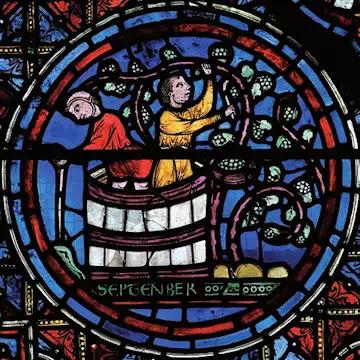
The tradesmen, meanwhile, are generally shown doing their craft: making wine, baking bread and carrying out their work. They are not presented in the same pious way.
The nobles had become wealthy following the sack of Constantinople during the Crusades and were keen to demonstrate that wealth.
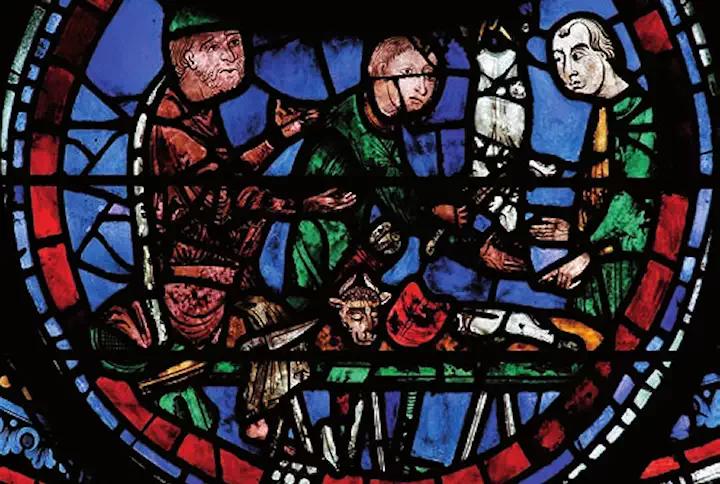
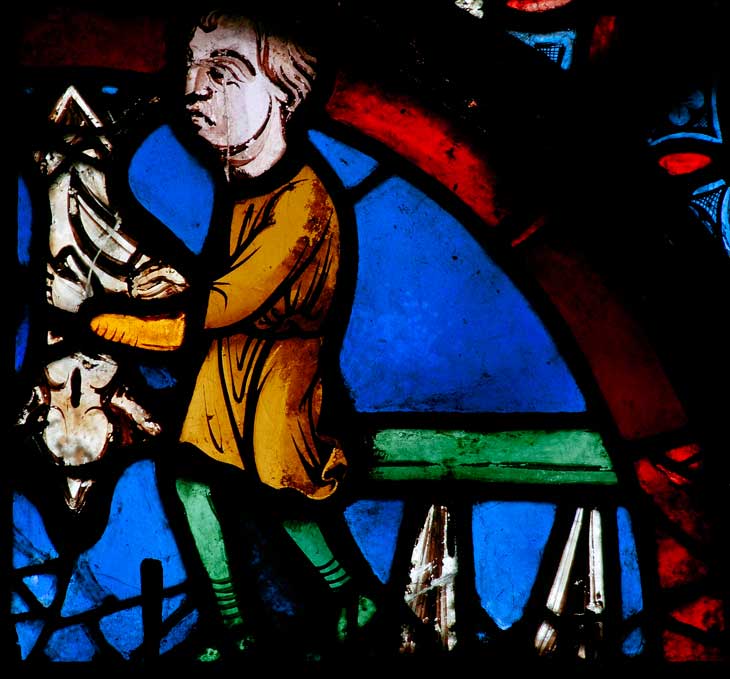
However, the portrayal of particular trades could also be loaded. The butcher, for example, is shown in a yellow tunic against a green background, imagery that has been interpreted as implying an unrepentant sinner who does not respect the Church’s teaching. A rather unflattering way to reflect the donor of the window.
Butcher in green and yellowButcher in green and yellow
The fundraising lesson? Recognition is never neutral. Where, how and alongside whom donors are recognised communicates something about the value and status attached to their gift.
2. Who do you take money from?
When Notre-Dame was being built in Paris in the twelfth century, the bishop reportedly received a request from the guild of prostitutes to install a window – excluding the trade itself from the image, obviously. After much consideration, the gift was refused.
Having an acceptance of gifts policy is clearly not a new idea.
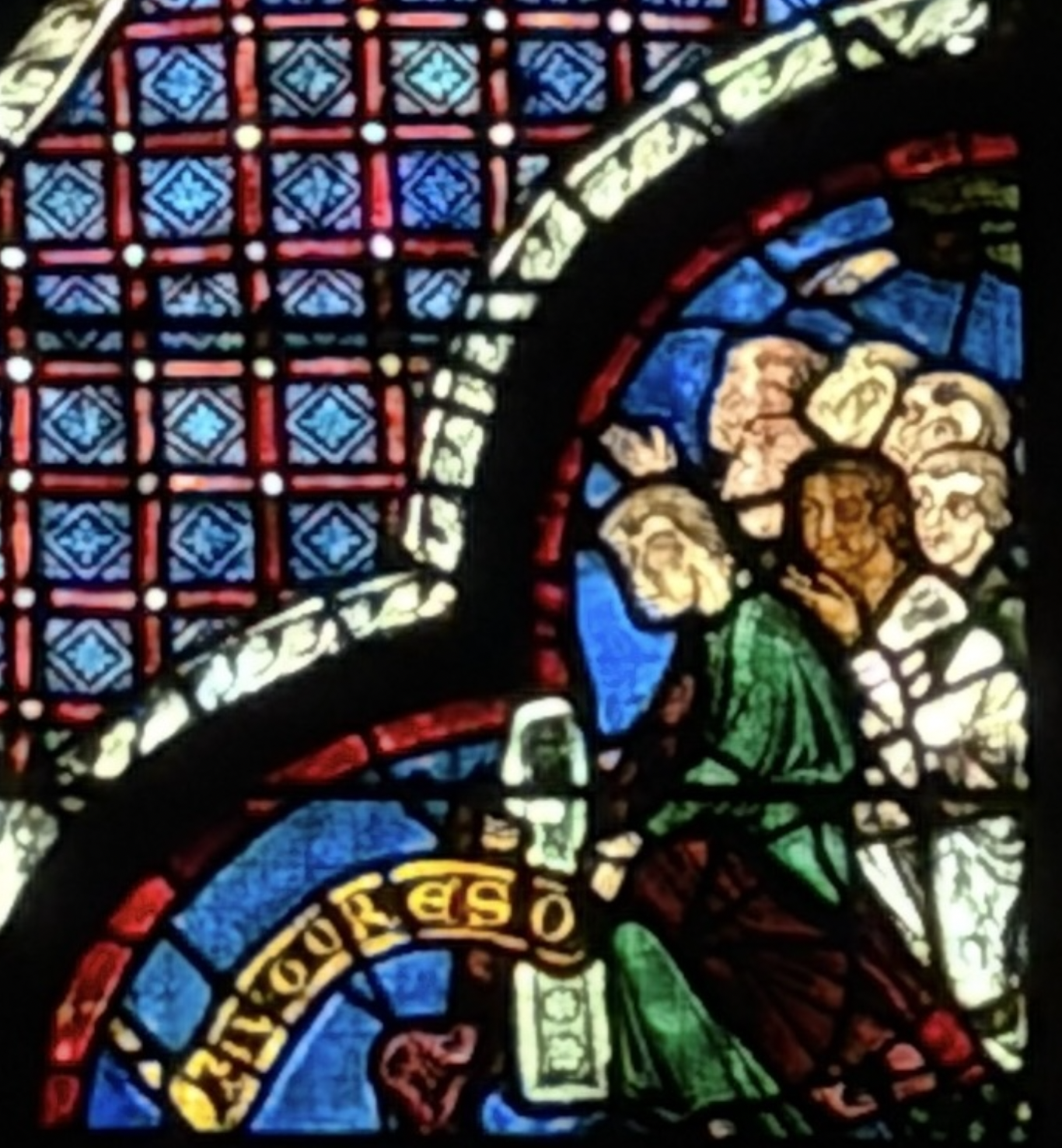
Commentators highlight that butchers, money changers, wine growers and tavern keepers in the Chartres windows were unusual subjects because of their secular and supposedly sinful connotations. Wine growing and taverns were associated with drunkenness and licentiousness. Indeed, the Fourth Lateran Council under Pope Innocent III questors (a medieval term for licensed fundraisers) were banned from taverns.
Like questors, priests were also restricted from certain activities including taverns. Butchery was a violent profession, and it was frowned upon for priests to kill animals. It was also associated with the sins of the flesh and with breaking religious fasts. Believers were required to abstain from meat on key days, and butchers could therefore carry uncomfortable associations.
The point is that fundraising has always involved questions about where money comes from, who is associated with the institution, and what accepting a gift says about both donor and recipient.
Some other lessons from Chartres Cathedral’s twelfth-century rebuild
1. Emergency moments
In 1194, fire destroyed much of the cathedral and a fundraising campaign began.
Never waste a good crisis.
A crisis drives action. It creates urgency and gives people a reason to give now.
Of course, the modern fundraising translation is not to manufacture a crisis, but to recognise that moments of genuine change, threat or opportunity can cut through inertia and create a compelling reason for immediate action.
2. Leadership gifts matter
When approaching someone for a major capital gift, one of the first questions is often: “Who else is giving?”
Being able to demonstrate that your key donors are already committed is important.
Leadership gifts from the bishop and chapter, who committed substantial gifts over three years to finance the rebuild, provided both money and an example. They also helped enable peer-to-peer asking: if the leaders of the campaign have already publicly committed, they can more credibly ask others to do the same.
The lesson remains familiar: leaders should lead with their own giving.
3. Use other sources of income: pilgrims
Chartres Cathedral held a relic associated with Mary, the mother of Jesus – her veil – and became an important site of pilgrimage. Pilgrims helped generate much-needed funds to restore and maintain the fabric of the church.
By committing to a pilgrimage, you were not only living out your faith but also committing to multiple acts of giving: along the route and at the destination. There could be multiple opportunities and donation boxes around the cathedral.
At Basel Cathedral, a lay petitor would reportedly call out loudly when the cathedral doors opened:
“Donate to the construction of Our Lady and earn the great indulgence and great pardon.”
The fundraising lesson is familiar: create multiple opportunities to give, connected to a meaningful journey or experience.
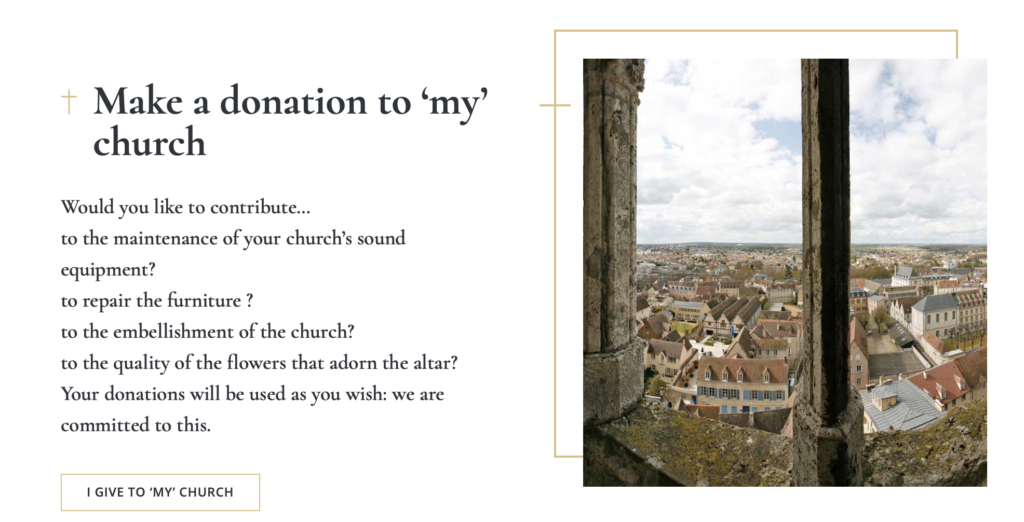
Throughout the pilgrimage visit to the cathedral each donation box was for different aspects of support – the fabric of the building, the poor. Giving donors autonomy and choice in where their gift is allocated. Even today Chartres is offering that opportunity:
Recognise donors and celebrate their achievement and connection
Badges
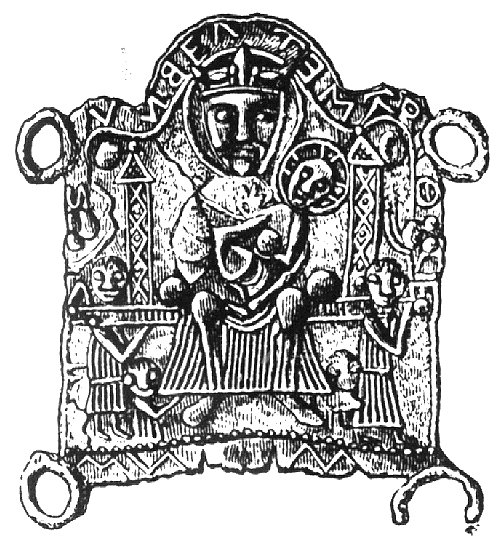
One way to help people demonstrate their loyalty and live out their identity as part of your tribe is through merchandise – and the medieval pilgrim market had this covered with pilgrim badges.
These could be bought as souvenirs to demonstrate your identity as a pilgrim, to show that you had been on pilgrimage, and to raise additional funds. They could be worn on a cloak or hat, put in a prayer book or nailed up at home.
They showed the world that you had been on pilgrimage and, importantly, what tribe you belonged to.
And Chartres had its own pilgrim badge.
Chartres pilgrim badge
The modern lesson? Give people visible ways to demonstrate their connection to your cause.
A badge, pin, T-shirt, membership card or other object can do more than raise money. It can reinforce identity and make affiliation visible to others.
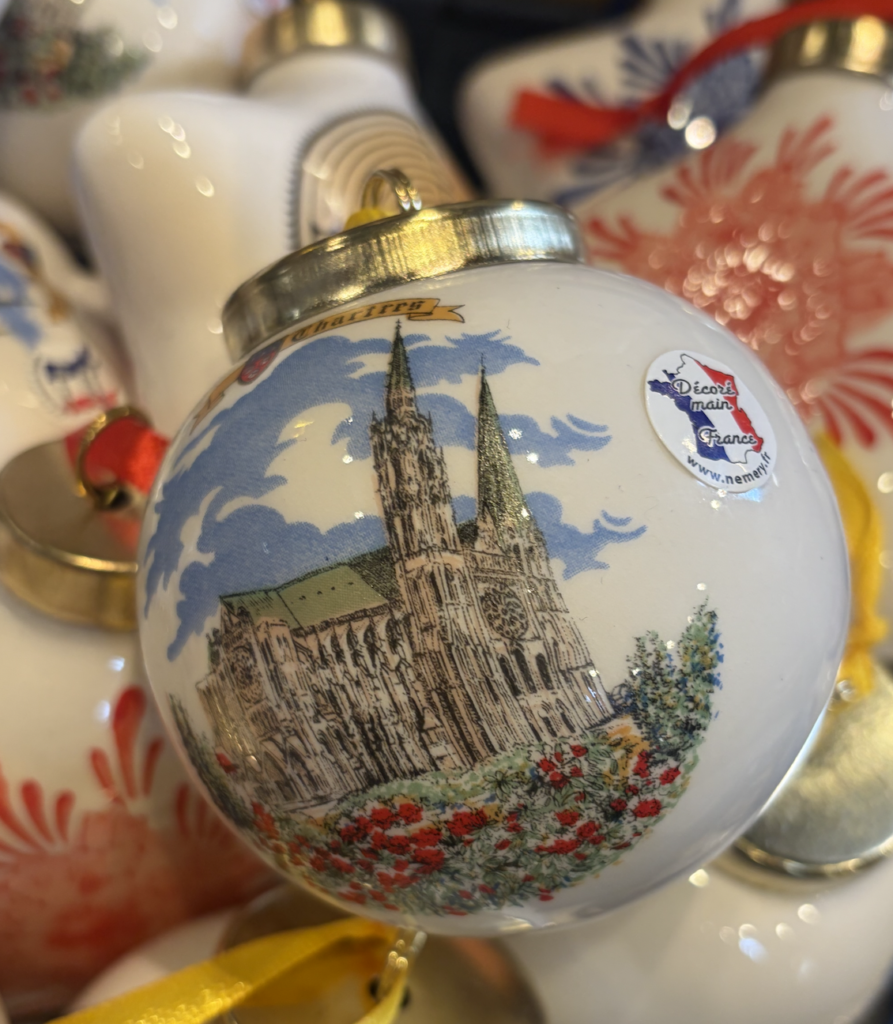
So a snow globe or Christmas ornament it it is?
Help build the cathedral
The Miracles of Notre-Dame, written around 1210 to glorify the miracles performed by the Virgin at Chartres through the veil, tells stories of ordinary people enthusiastically wheelbarrowing stones and helping to build the cathedral themselves.
As well as getting burly people to do the job, this has another potential effect: creating a deeper sense of engagement and commitment to the cause.
The IKEA effect suggests that we value something more if we have been involved in its creation – like flat-pack furniture. Whether armourers, drapers or other trades contributed money, materials or labour, they developed a vested interest in the success and continued use of the cathedral.
There is, however, an important historical caveat. More recent narratives have categorised some of these stories as useful fictions, designed to demonstrate the power of the relics and the piety of the people. In 1210, Chartres also experienced serious tensions and a riot connected to the cathedral’s power in the region.
Perhaps that is a fundraising lesson in itself: sometimes the stories we tell about why people gave become almost as powerful as the gifts themselves.
The three Ts: a royal example
Following the 1210 riots, King Philippe came to Chartres as a pilgrim and to see the damage. He humbly donated funds towards reconstruction and also gave a silk cloth to the church.
In doing so, he arguably delivered the three Ts that we want from our leaders:
Time – through his personal visit.
Talent – through helping to re-establish order following the riots.
Treasure – through his financial and material gifts.
His personal experience as a pilgrim brought practical assistance, but also consequences for those responsible for the unrest. He urged moderation but imposed a fine of 3,000 livres, half of which was assigned to the building of the cathedral.
Today, it is unlikely that a town would be punished with an additional tax to support a public good. But the underlying lesson remains: leadership can combine personal commitment, public example and practical action.
BakersWinegrowers
Giving has always been connected with our experiences and our identity.
Today Chartres Cathedral asks for a donation to ‘my’ church – the use of the ‘my’ is doing some heavy emotional lifting here – linking Chartres to their identity (as a Catholic, as a Christian, as a pilgrim, as a local).
Our experiences help shape our identity. Someone who has lost a parent to cancer may see themselves as a person who supports cancer research. A former student may identify strongly with their university. Someone who grew up going to the theatre may feel that supporting the arts is part of their story. When a request for support connects with one of these identities, it is no longer simply asking, “Will you give?” It is asking, “Is this something a person like you does?”
When a request to give connects with that identity, it can reach much deeper than a simple appeal for money. It becomes an opportunity for donors to express something about themselves and to act in a way that is consistent with who they believe they are.
https://marinajones.uk/wp-content/uploads/2026/08/Shoemakers.jpeg8001338adminhttps://marinajones.uk/wp-content/uploads/2022/12/f2b903e010104f5aa61ea1821a685913.pngadmin2026-08-31 10:39:092026-08-31 10:39:10What Chartres Cathedral Can Teach Us About Fundraising
(Does anyone actually say po-tat-toe?! And not Poh-tay-to)
Are you turning your cause into a potato?
Reading ‘Inside the Nudge Unit’ by David Halpern and how small nudges can make a big difference in everything from speeding, to tax collection and organ donation I was really struck by this story about potatoes. Stay with me…
It all comes down to a Prussian king and a humble root vegetable and leads us to some great lessons on persuasion, nudging and how you can apply that to your fundraising.
So first a Prussian king and a potato
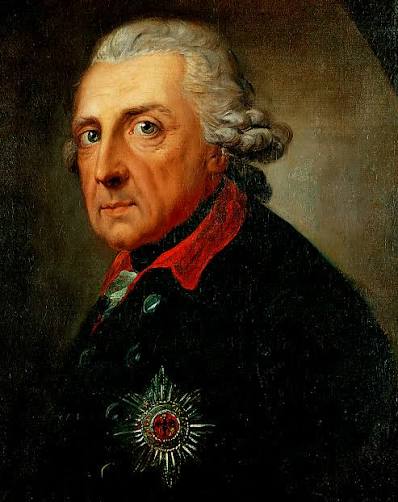
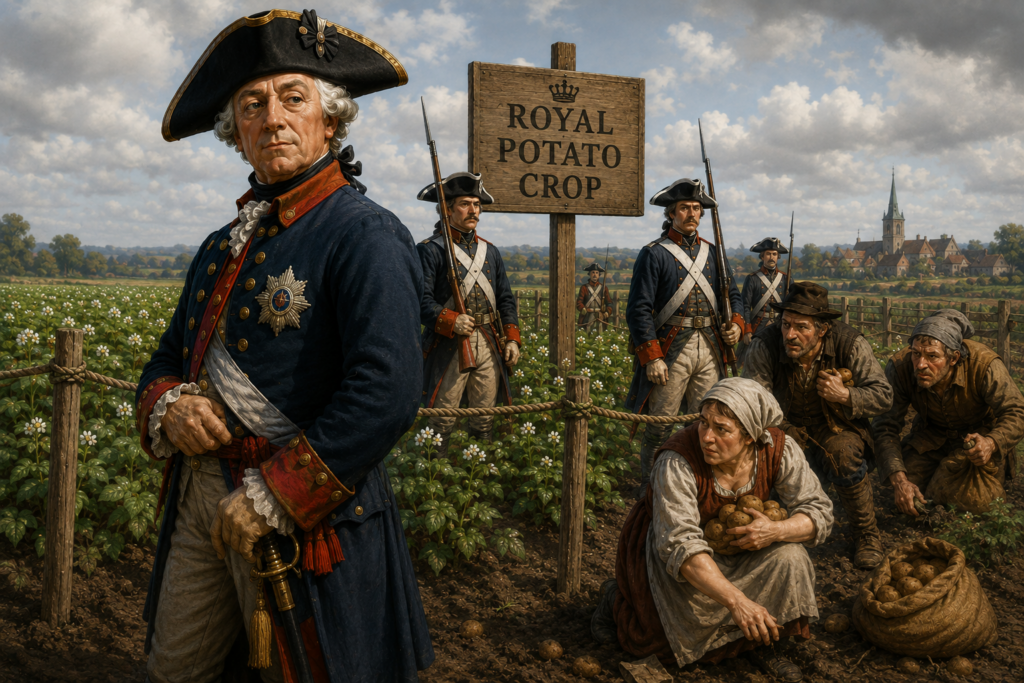
Frederick the Great, eighteenth century Prussian king, wanted his people to grow and eat potatoes. He ordered Kartoffelbefehl – edicts ordering that potatoes were planted and grown. They were nutritious, resilient and could help prevent famine. But there was a problem. People didn’t trust potatoes. They were seen as strange, foreign and even dangerous. So they wouldn’t eat them. Rationally, they answered a need but emotionally they were rejected.
In an infamous (possibly apocryphal) example of the application of decision science and nudging Frederick the Great changed the the whole narrative
Instead of leaning in hard to the rational approach and doing a public education campaign on the nutritional facts about potato or agricultural yield (a classic System 2 approach), he made potatoes appear scarce, royal and desirable. He planted royal potato fields and had them guarded. Not heavily guarded – in fact the guards were encouraged to be lax in their guarding duties. He wanted the guard to signal value to the people – to show that the potatoes were worth guarding na desirable.
What happened?
People began to steal the potatoes.
The same people that had rejected them now wanted them. Why? Because their meaning had changed. Potatoes were no longer “suspicious roots”. They were something the king valued. They were guarded. They became worth stealing.
Behavioural science helps us understand why this worked.
First, scarcity. We place higher value on things that appear limited or restricted. If something is everywhere and freely available, our brains discount it. If it is rare or protected, our brains assign it value and it becomes increasingly attractive.
Second, authority messengers. If the king values something, it must be worth valuing. The messenger who communicates with us influences how we hear the message. In eighteenth century Prussia, the king was a powerful messenger – we can use the authority of the messenger to short circuit whether we ought to listen.
Third, reactance – when something feels restricted or forbidden, we want it more.
“Picture reactance as something that turns your lovely reader into a wilful teenager. One with the tendency to do the exact opposite of what you ask them to do”
– Lisa Sergeant
The guards guarding (but not working too hard at it) created just enough friction to trigger desire without making access impossible.
Fourth, framing. The frame we put around an idea changes how we think about it. We believe the story that we tell ourselves. The potato itself did not change. The story around it did. And that story changed behaviour.
Why should we as fundraisers care about it?
Because this is fundraising.
Too often, we present our causes like the early potato – rational, worthy, full of facts and benefits. We explain reach, impact, efficiency. We assume that if people understand, they will act.
But like the Prussian farmers, our supporters are not making decisions purely on information. They are responding to emotion and to cues about value, meaning and desirability.
The perception of the potato changed – not the potato itself.
What can fundraisers learn from the potato?
1 Make Value visible
If everything is available to everyone, it can feel less valuable. Limited opportunities, exclusive access or matched funding windows can increase perceived importance and urgency.
2.Use signals of importance Leadership gifts, named supporters, or visible champions act like the “royal guard”. They signal that something matters and is worth attention.
3.Frame, don’t just inform The way you present an opportunity matters as much as the opportunity itself. Story, context and symbolism shape behaviour more than raw data.
4.Lean into curiosity People are drawn to what feels slightly out of reach. A sense of discovery or insider access can be more motivating than full transparency upfront.
5. Test, don’t assume What feels logical (telling people potatoes are good for them) may not work. What feels counterintuitive (guarding them) might. The only way to know is to test.
Like many behavioural science insights, the lesson is both simple but powerful.
We think we make decisions based on what somethingis.
In reality, we make decisions based on what it means.
And sometimes, all it takes to change behaviour is not to change the thing itself – but to change the story we tell about it.
https://marinajones.uk/wp-content/uploads/2026/08/Picture-1.jpg462451adminhttps://marinajones.uk/wp-content/uploads/2022/12/f2b903e010104f5aa61ea1821a685913.pngadmin2026-08-07 08:07:312026-08-07 08:07:31Potato, potato – let’s call the whole thing off
In 1876, America was preparing to celebrate its centenary.
Everyone loves an anniversary, right?
To mark the moment, a Centennial Exhibition was planned in Philadelphia. But to deliver something on that scale, you need fundraising.
The campaign began a full decade in advance – large scale capital campaigns need long lead time to create the case for support and secure the donations. Initially, the case for support focused on economic, scientific and industrial prestige. The case did not resonate with donors. Also, they failed to advertise.
And this is an important lesson: a campaign only works if the case for support works for donors. Framing matters.
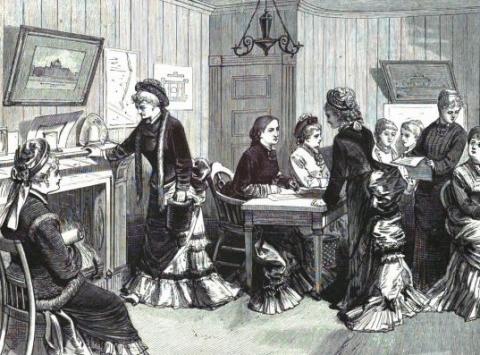
By 1873, in the midst of a financial depression, it was clear a new approach was needed. The (all-male) committee looked to what had worked before and turned to the women who had successfully led the Sanitary Fair campaign. Enter the Women’s Centennial Exhibition Committee (WCEC), led by Elizabeth Duane Gillespie, great-granddaughter of Benjamin Franklin. She had experience raising funds from previous campaigns, and also organising a hospital for wounded soldiers during the Revolutionary wars.
The Women’s Centennial Executive Committee at their headquarters on Walnut Street, Philadelphia. Mrs. E.D. Gillespie, the committee’s president (seated at table), is shown receiving reports from subcommittees. Frank H. Norton, ed., Frank Leslie’s Historical Register of the United States Centennial Exposition, 1876 (New York: Frank Leslie’s Publishing House, 1877).
They reframed everything.
The campaign shifted from industry to identity from economic prestige to patriotism, nostalgia, and national pride. It became not just an exhibition, but a story about America at 100 – where it had come from, who had made it, and especially the women who had made it. The Committee moved it from an intellectual and rational (system two) appeal, to an instinctive and emotional connection (system one).
So how did they fundraise?
To unlock a promised government grant they needed to demonstrate popular support of the scheme – within two days Gillespie and the Committee members had secured 82,000 signatures by going to door by door across the city which unlocked the $1m of federal funds. Being organised and systematic in fundraising is key. They organised a letter writing campaign and letters of support from across the country also unlocked a loan to secure further funds ($1.5m).
Centennial “stock” was sold in $10 units. Gillespie and the committee spread out across the city and went door to door selling the stock. However, the Committee recognised that not all donors had capacity to make a $10 gift – so the option to make $2 instalments was added. The Committee also worked to encourage factory workers to club together to buy units of stock. This lowered the barrier to entry and encouraged wider participation. Buying a unit of stock gave each donor a stake in the Centennial exhibition and by extension America’s future – creating ownership (what we now call the IKEA effect – we value something more when we have helped create)
Events celebrated the past and required attendees to dress as Martha Washington but only those giving at a certain level were allowed to do so. There was scarcity too, Gillespie put a strict limit on ticket purchases which drove up demand and publicity (a classic application of scarcity bias). Events became so oversubscribed that an additional venue was secured, and even an iron bridge built between buildings to accommodate demand – funded by, of course, more fundraising.
They sold merchandise – teacups, napkins, poems all linking to America’s past. Diversifying income is crucial but also giving supporters tangible ways to own and further embed their identity with your campaign.
They lent into national pride and nostalgia and at fundraising events they curated relic displays — objects linked to Washington and Franklin – candle stand of Benjamin Franklin, scraps of Martha Washington’s clothes, Washington’s snuff box and copy of his will, weapons, flags, cannon balls from Yorktown (all with donor credits of who had lent them – you must credit your donors).
They created themed experiences like the Boston Tea Party re-enactments tapping into what we would now call the experience economy. They produced medals (raising over $5,600), embedding commitment and signalling belonging. They even published a National Cookery Book, sourcing recipes from across the states and creating national identity whilst also raising funds.
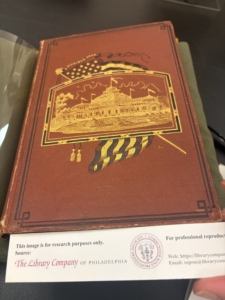
The National Cookery Book
And underpinning it all – timing.
Anniversaries are powerful “temporal landmarks.” Behavioural science shows they prompt reflection, reset identity, and create socially sanctioned moments to act. The centenary combined nostalgia for the past with optimism for the future — a potent dual frame still used in modern capital campaigns and milestone appeals.
Like campaigns today they were even challenged on what they needed the money for as the exhibition was opening:
“What further need have you for money?”
A clear response was forthcoming
“Our insurance, our watchmen and our employees will require money”
A reminder that the core costs are always hard to articulate! And too many people think fundraisers are unpaid volunteers.
Then came a twist.
Despite their success, the women were denied the promised space in the main exhibition due to international demand to be part of the Exhibition. Instead, they were told to fund and build their own pavilion.
So they did.
They raised an additional over $31,000 in jut a few months and created the Women’s Pavilion with a working Kindergarten – not just as a physical space, but as a statement. The exhibition included 74 inventions patented by women as well as examples of women’s arts and science
Who gets to write history?
The WCEC reframed the campaign to be about patriotism, nostalgia, and national pride. This was especially important in America after the Revolutionary War as a way of creating a cohesive national narrative but it was more than that.
“They inserted women into the past as participants rather than as bystanders, but in a non-threatening way that sanitised the violence of the American revolution”1
There was an active and intentional insertion of women’s role in the founding of America that threaded through the campaign.
Although, campaign leader Gillespie was great granddaughter of Benjamin Franklin she did not emphasise this familial connection, but her connection to her grandmother, Sarah Franklin Bache. Her grandmother who led relief effort for soldiers during the American Revolutionary war. Examples like Sarah Franklin Bache emphasised the role that women had played not in direct fighting, but in upholding American ideals. This, and the emphasis on Martha Washington, and other female leaders, shifted and shaped the historical narrative.
“privileged women constructed a classed and gendered historical memory, which aimed to unite women into national historical narrative and present themselves as custodians of history. They constructed a subversive historical account that placed women on equal footing with male historical figures and argued that women played a significant role in shaping the nation’s history”2
Who writes and re-writes history is crucial. There is an African proverb “that until the lion learns to write, every story will glorify the hunter”
History is a constantly shifting thing, and our interpretation is shaped by our interpretation, our times and culture, and what we choose to prioritise and how the stories are told.
“[History is] unending dialogue between the present and the past”
E H Carr
There was a deliberate choice to include women’s stories in the history of America, an influence still felt today in how those narratives are constructed and told. This involved an active widening of the story of the nation, centring it on women’s experiences’ and roles. The role that women played in collecting, keeping and preserving family histories can still be felt today.
Funds raised and legacy
The exhibition itself was a huge success: one fifth of the US population attended. The WCEC campaign raised $93,000 for the general exhibition and $45,000 for kindergarten display in the exhibition. Its legacy includes the founding of the Philadelphia Museum of Art.
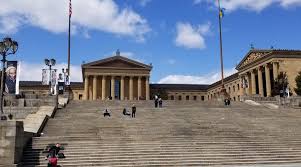
Philadelphia Museum of Art – famous as the Rocky steps
And importantly, structural change followed. After initial exclusion, Elizabeth Duane Gillespie successfully fought for women’s representation at board level — and was elected.
So what are the takeaways for fundraisers today?
Frame the story for the donor, not the institution.
Lead with identity, emotion, and meaning – not just function.
Create ownership.
Use scarcity and social proof.
Design experiences, not just transactions.
Leverage moments in time – anniversaries matter.
And never underestimate the power of who gets to tell the story. Because fundraising doesn’t just respond to history. Sometimes it helps write it.
References:
‘For the Love of One’s Country: The Construction of a Gendered Memory in Philadelphia and Montgomery County, Pennsylvania 1860-1914” by Smadar Shtuhl
‘Remembrance and the American revolution Women and the 1876 Centennial Exhibition’ by Dolores Pfeuffer-Scherer
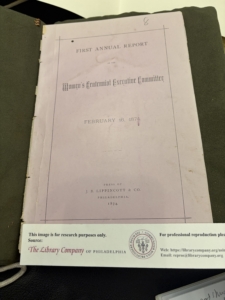
Original materials from The Library Company, Philadelphia
‘Remembrance and the American Revolution Women and the 1876 Centennial Exhibition’ by Dolores Pfeuffer Scherer ↩︎
‘For the Love of One’s Country: The Construction of a Gendered Memory in Philadelphia and Mont Co Pennsylvania 1860-1914’ by Smadar Shtuhl ↩︎
‘
https://marinajones.uk/wp-content/uploads/2026/05/Womens-Centennial-Executive-Committee.jpg355480adminhttps://marinajones.uk/wp-content/uploads/2022/12/f2b903e010104f5aa61ea1821a685913.pngadmin2026-06-01 17:52:402026-06-03 17:41:47When Fundraising Built a Nation’s Memory – the women who fundraised for America’s centenary
As fundraisers we often talk about joy of giving for donors – that it feels good to give. Donors get a hit of happy chemicals (dopamine, oxytocin, serotonin and endorphins) when they make a gift. *
What about joy of the gift for fundraisers?
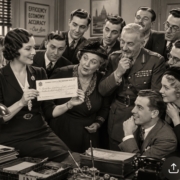
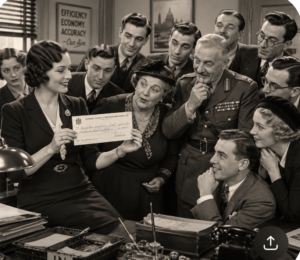
I read about the campaign to secure Ashridge Estate for the National Trust in 1927. One gift represented a quarter of the target – in the post a £20,000 cheque from Miss Courtauld was received in the National Trust office, and it drew crowds of staff in the office simply wanting to see it.
An AI image of a a crowd looking at the cheque
“Miss Spencer Wilkinson, then about thirty, was given the important job of drafting the Ashridge appeal leaflet. As a reward she was able to bank Miss Courtlaud’s cheque for £20,000 … and had the reflected glory of all the staff crowding round to see for themselves this exceptional item”1
During capital campaigns I have had similar moments when a big (monetary not size!) cheque arrives and the team in the office want to see it to see it, hold it, almost verify it physically. There is something about the physicality of the cheque or the offer letter that makes a gift feel more real.
It raises a broader question about the physicality of giving and how in a digital first world we, as fundraisers, experience and celebrate success.
Physical material is more “real” to the brain. It has a meaning, and a place. It is better connected to memory because it engages with spatial memory networks and involves more emotional processing. It is why direct mail is still so powerful. So holding a cheque for £20,000 is more memorable and emotional than reading an email, or opening the banking app and seeing the funds.
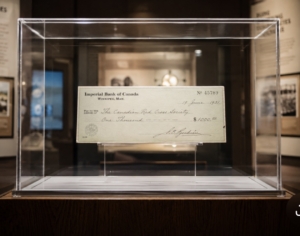
Ten years ago receiving envelopes with the letterhead of a foundation you could feel and guess whether there was a cheque enclosed. Now cheques are almost museum pieces.
An AI generated image of a cheque in a museum
Neuro imaging studies show that the same reward centres light up when you give a gift, and when you make receive a gift. In fMRI research on charitable giving (for example, work by Harbaugh, Mayr and Burghart, 2007), activity is seen in areas such as the ventral striatum and medial prefrontal cortex when people choose to give to others or to a valued cause. Those same regions are also active when people receive something they perceive as a reward or a socially meaningful signal of appreciation.
So even though we are receiving a gift on behalf of the charity we work for – we are still getting some of that reward – that warm glow. But we are also getting a connection to the donor, and a wider connection knowing that there are supporters aligned with our causes, that we are not alone in fighting the good fight and this in turn improves our wellbeing and resilience.
Fundraising work is full of rejection and the “no’s” can land heavily — they are not just operational setbacks, but have an emotional impact.
If when we get gifts as fundraisers we are getting rewarded by a warm glow and a sense of connection and increasing belonging – then the question is how do we design external celebration to reinforce this for ourselves and our teams? Because recognition is not just administrative closure. It is part of the reinforcement loop that can amplify the meaning of the gift and our satisfaction. We (rightly) spend time as fundraisers focussing on how to close the reinforcement loop for donors with meaningful thank yous that recognise their impact and make them the hero. How do we do that for ourselves?
How do we find new ways to have those tangible emotional connections with digital gifts?
And how do we celebrate the success of gifts when there is nothing there to touch?
Fundraising is emotional labour and we are connected and invested in the success of the asks we make. Who hasn’t had a cry when a gift has come in (or failed to come in?)
Lord Beaverbrook burst into tears when Garfield Weston handed him a blank cheque to support buying new Spitfires in World War Two (https://marinajones.uk/spitfirefund/)
As incomes becomes increasingly digital how do we celebrate success in ways that give us the fundraisers the same happy chemical high and create memories that cement what we are achieving.
Fundraising success champions the donors – making them the hero of the story.
How do we make sure we as fundraisers stay still experience the meaning, memory and emotional reward of the gifts we help bring into the world? And be the heroes in our own story?
At a previous place where I worked we had a ‘vase of triumph’ that was filled with flowers and presented in front of the department for exceptional gifts. As a trusts team we had one year when for each gift, we made a paper bird and hung in the office above our desks (where possible trying to theme it to the gift)
How do we celebrate our fundraising success in meaningful and tangible ways?How can we take the principles of donor stewardship and care that we give supporters to make fundraising success meaningful?
*
The ‘warm glow effect’ of giving is not just a nice name for it – research has shown that pro social behaviour raises body temperature – so warm glow is a thermal reality (https://www.nature.com/articles/nclimate2449) .
‘Figures in a Landscape – A History of the National Trust’ by John Gaze ↩︎
https://marinajones.uk/wp-content/uploads/2026/05/IMG_2606.jpeg8901028adminhttps://marinajones.uk/wp-content/uploads/2022/12/f2b903e010104f5aa61ea1821a685913.pngadmin2026-05-30 11:47:072026-06-01 17:44:00Joy of the gift
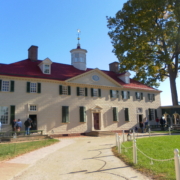
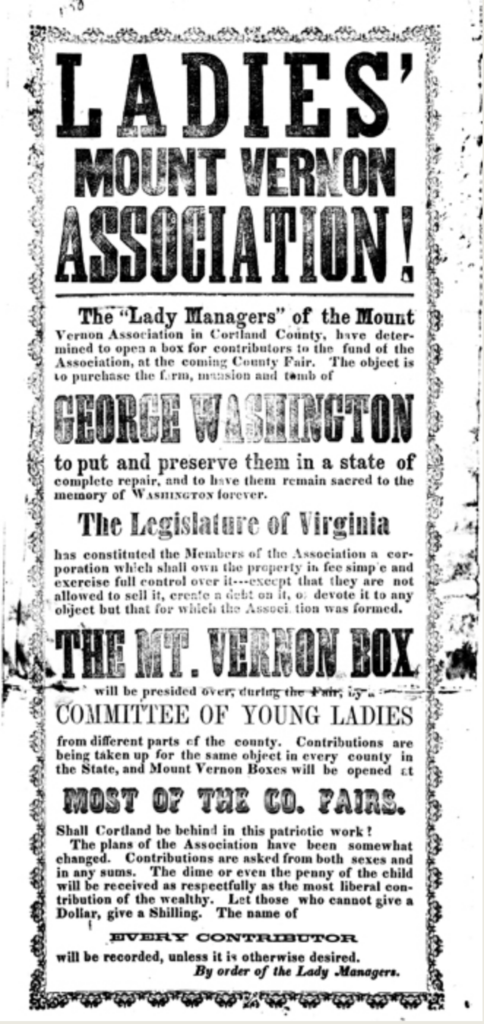
Washington’s home, Mount Vernon, was saved and preserved thanks to the fundraising efforts of women in the 1850s.
Background
George Washington – America’s first President and one of the founding fathers – lived at Mount Vernon, just 15 miles from Washington down the Potomac River. Even during his lifetime, fans of the former President would disturb his day by visiting and ‘trophy-ing’ fruit or soil from the estate. In the years after his death, day trippers would arrive on steamboats to visit, and over 10,000 people a year came.
Over the course of the decades the estate fell into disrepair and his heirs wanted to sell it.
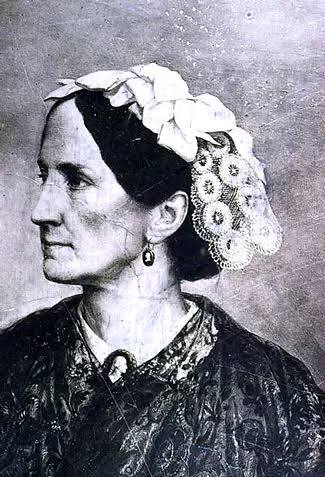
In stepped Ann Pamela Cunningham (following a letter from her mother) to organise the fundraising campaign under the auspices of the newly founded Mount Vernon Ladies Association. This was a female led and run organisation that raised the money to buy, furnish, and run Mount Vernon for the nation. This was one of the first historical preservation efforts in American history, and the methods and structures they developed formed the basis for future campaigns.
What Cunningham innately knew was the power of identity — and her appeals called on donor’s identities as women, as patriots, as citizens with a shared responsibility to history. We now have the science: behavioural economics, decision science, and a growing understanding of what happens in the brain when people give. We use it to shape clearer asks and reduce friction for donors. But the practice came first. History shows that long before these ideas were named or codified, fundraisers were already intuitively applying the same principles to influence behaviour and inspire generosity.
Ann Pamela Cunningham
(On a side note – John A Washington, George’s heir, refused to sell to a group of women, so the State of Virginia had to be the purchaser on the deed)
How did the Mount Vernon Ladies Association raise the money, and what does it show us about donor psychology and how we can fundraise today?
1. Appeal to supporters’ identity
“Let us rise as one woman and in strength of our united womanhood decide that this shall not be”
How you frame your appeal, and how you ask are crucial – you need to target and tailor your ask to your donor’s identities. We give to express who we are, or who we want to be seen to be, and seek to be consistent with that identity. Sargeant and Shang have shown that identity linked appeals outperform ones that only talk about impact.
Cunningham knew this and throughout her appeals she highlights the identity of her supporters – not just one identity (we all contain multitudes!) but the many identities they had – as women, as Southerners and as patriots. For example:
.
“in the name of the mother of Washington, and of Southern feeling and honour to all that is sympathetic and generous
in your nature”
.
“Ladies of the South, can you sit, with closed souls and purses, while the world cries ‘Shame on America’’
.
Although some of the appeals to identity border on psychological coercion.
.
“when you look down at your gorgeous silks and your glittering jewellery remember that a tithe of that expenditure
from each of you would give us the glorious privilege of converting Mount Vernon into the Mecca of America”
.
“let us see whether any hearts are beating under this mass of millinery and upholstery”
.
Fundraisers nowadays, must not place undue pressure on donors, and that includes the misuse of guilt.
Although I do love giving being framed as a ‘glorious privilege’
2. Crowding in support?
.
“Will a people possessing untold wealth, numbering over ten millions of dollars, from whom the contribution of three cents each would bestow $300,000”
.
We often see appeals opting for the ‘every little helps approach’. This is known as ‘crowding in’. Why does crowding in work?
A small gift like three cents makes giving feel easy and affordable.
It creates momentum for social proof and defines the social norm and creates the sense of collective norm.
Crowding in can make it easier to give – but sometimes it can have the opposite effect as we cannot see the power of impact of our individual gift, and our gift feels like a drop in the ocean (what can three cents do?), or we expect others to give, or give more substantially. Think carefully about how you use it, and whether you can add an impactful frame to the three cents and what it achieves.
3. Anchor the gift
How do we know how much to give?
“we only ask one dollar, but we trust to the generosity of those whose means are more abundant”
Although some appeals focussed on the whole of the republic giving three cents. Most asks were more ambitious than that, and $1 became a clear reference point.
One of the biggest hidden barriers in fundraising is uncertainty. Uncertainty can cause indecision – if we don’t know how much to give and what is expected we can spiral into questions of how much should I give? Is that too much? Too little?
Giving a number makes the decision easier- a strong anchor creates reassurance about what is expected.
4. The livestream of the day: Use the latest technology
Fundraisers have always used the latest technology to support their fundraising efforts and use the novelty effect to generate interest and press attention (from NFTs to the camera).
The Mount Vernon Ladies Association was no different. They used the novelty of the telegraph (invented in the 1830s, and gaining in commercial use by the 1850s). At fundraising fairs and festival days they used a live telegraph link up to talk to other fundraising fairs and leaders in statehouses across the country. For example, in 1859 Mount Vernon festival in Augusta, Georgia, delegates sent live telegrams to each other and to supporters in other cities. This novel use of technology made the cause feel urgent and modern.
5. Incentivise giving
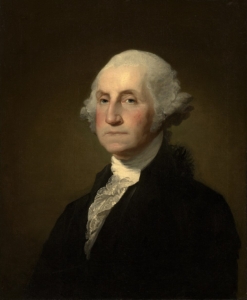
Every $1 donation earned a tangible reward: a portrait of George Washington. This small incentive helped create a constant reminder displayed in their home of their giving and connection to the cause.
Incentives work because they layer reward. The “warm glow” of giving is amplified by the power of a free gift — something tangible that donors receive, keep, and return to.
That object becomes a physical cue of identity and belonging, reinforcing their connection to the cause each time they see or use it.
Today it might be a pin badge or a tote bag — small, but powerful. Not just an incentive to give, but a signal: this is who I am, and this is what I stand for.
The Mount Vernon campaign also sold merchandise, such as medals, a further way to earn money for the campaign and cement supporter identity.
Gilbert Stuart’s portrait of Washington
6. Be organised but not prescriptive – Give ownership to those fundraising on your behalf
Cunningham was organised, but she also delegated. Each state had a Vice Regent who organised the fundraising in their area. But each state was empowered to raise money in their own way – what works in Georgia does not necessarily work in New York, so each evolved and created their own ways of raising money.
These included:
The newsboys of New York city clubbing together their pennies to make a donation of $4.18 to support the cause
A ‘Ladies’ Strawberry Feast in Alabama (raised £334)
Brother of the President assassinating John Wilkes Booth, Edwin Booth held a benefit performance that raised $500
Children in Kansas donating their pennies to support the campaign
Sailors abroad the US Savannah donating $150 as a gesture of patriotism whilst homesick
As well as fairs, fancy dress balls and dinner parties.
This gave agency and autonomy to the supporters and the leaders – giving choice deepens commitment. When people feel they have a choice (about how to give, or how to fundraise) rather than being pushed, they experience stronger motivation, greater satisfaction and deeper long-term commitment.
7. Use the power of anniversaries
It is easy to be cynical about the power of anniversaries, but they can and do work.
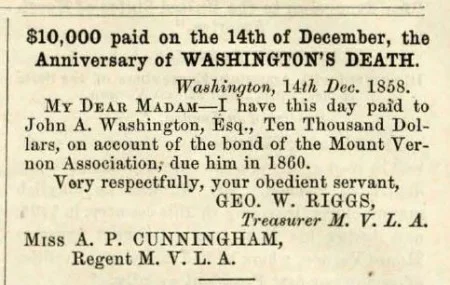
Throughout the campaign, the Mount Vernon Ladies Association used the anniversary of Washington’s birth, and death, to hold fundraising events, and also make significant donations and publicity moments.
Anniversaries are temporal landmarks. They can turn an ask into a meaningful, timely, and socially validated moment to give. They combine the nostalgia with the hope for the future, which was so central in this campaign, looking back to Washington’s glorious work for the Union and the need to preserve the house for the future. Anniversaries have a great focussing effect for donors and campaigns.
8. Celebrity Speakers
Although the campaign was organised and led by women, $69,000 of the $200,000 needed was raised by one man: Edward Everett.
Edward Everett
Senator Everett also spoke on the day of the Gettysburg Address alongside Abraham Lincoln. Lincoln may have used 272 words, but Everett spoke for two hours at Gettysburg. This speaking prowess stood him in good stead; he delivered his lecture on Washington 129 times across the country, charging $1–2 for entry and donating all proceeds to the cause.
9. Recognising Donors
“The names, residence and sums given by every subscriber …. As a record and lasting memorial of patriotism for their descendants”
All donors of $1 or more were listed and publicised.
Why does donor recognition matter? It is about psychological exchange. Recognition reinforces to the donor that what they did matters, has been noticed and appreciated – deepening the emotional payoff. The recognition closes the loop between action, meaning and identity. By reinforcing the identity as a donor you are cementing in your donor’s psyche reaffirming their identity, as a donor.
Campaign lead Cunningham wrote about the importance of naming donors
“The name of every subscriber is to be published in some influential newspaper, appointed to be the organ of the Association for the State. Such publication is not only an announcement that their contributions are received and names registered but a great stimulus in drawing out subscriptions…My own experience has convinced me that the most important step to success is enlisting zealous editors to place the subject in an attractive manner before the people.”
The Mount Vernon Record consistently named donors, a public-recognition tactic. Honor rolls were printed in newspapers, and ceremonies held to award plaques and acknowledge support in speeches.
Did it work?
Yes all the money was raised within 7 years, and the Mount Vernon Ladies Associated purchased the deeds.
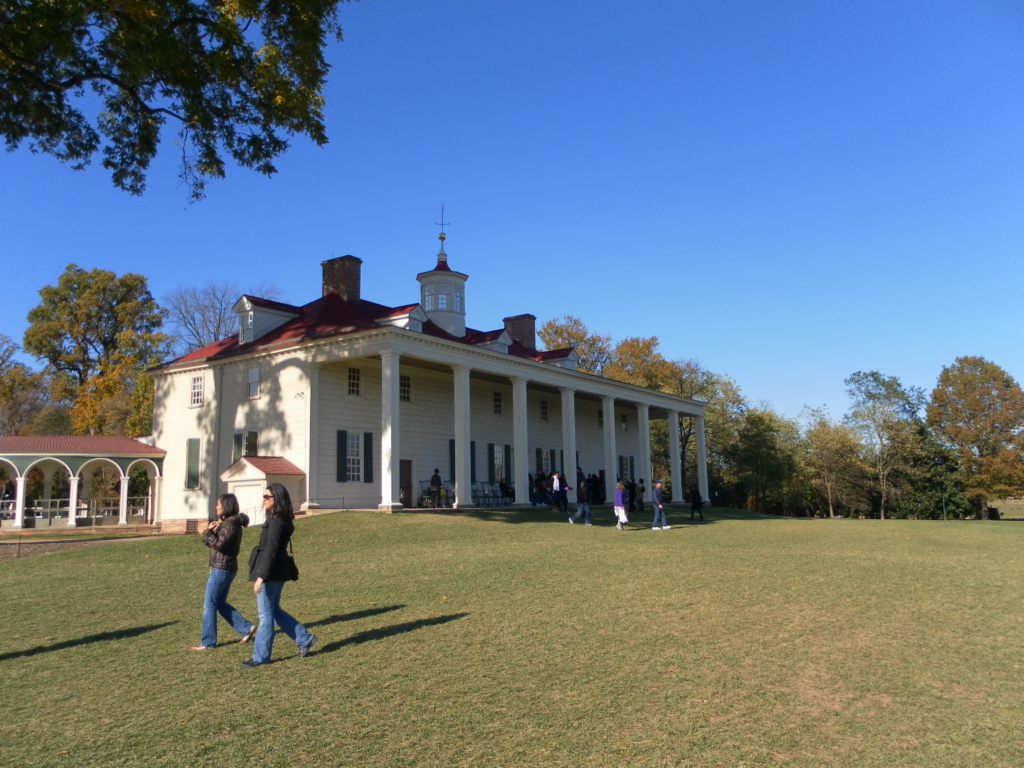
Mount Vernon
And in conclusion…
The techniques that the Mount Vernon Ladies Association used are not new – they are timeless human behaviours and persuasive techniques.
We now call them behavioural economics, decision science, and donor psychology and have codified the heuristics in academic papers, proven them in field studies but the real fundraising lesson is simpler – fundraising works when it aligns with how people already, think, feel and see themselves, and gives them a way to live out who they are and want to be.
References
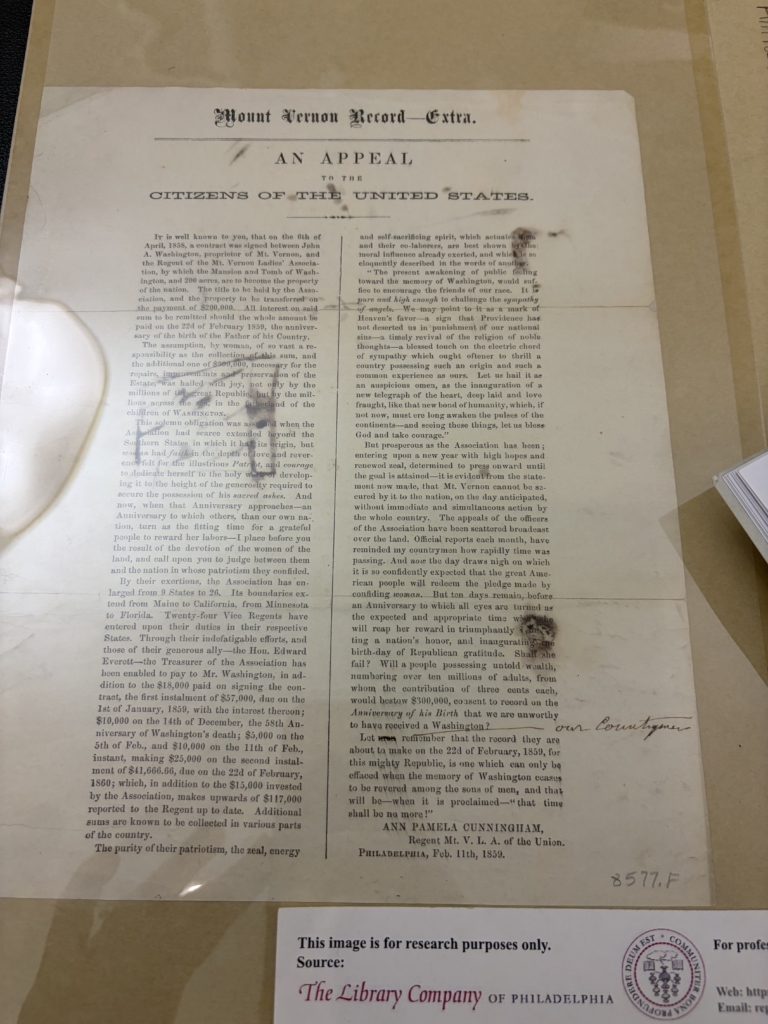
‘An Appeal to the Citizens of the United States’ by Ann Pamela Cunningham, 1859
An Appeal to for the future preservation of the home and grave of Washington’, 1855
‘Two Magazines and the Fight to Save Mount Vernon 1855-1860’ by E J Pribanic-Smith, American Periodicals 26.11
‘Remembrance and the American Revolution: Women and the 1876 Centennial Exhibtion’ phD thesis by Dolores Pfeuffer Schemer, 2016
‘For the Love of One’s Country: The Construction of Gendered Memory in Philadelphia and Montgomery County, Pennsylvania 1860-1914’ phD thesis by Smadar Shtuhl
(And delightful to see some first hand sources at the archives in Philadelphia)
https://marinajones.uk/wp-content/uploads/2026/05/SAM_2558-scaled.jpeg19202560adminhttps://marinajones.uk/wp-content/uploads/2022/12/f2b903e010104f5aa61ea1821a685913.pngadmin2026-05-19 21:34:092026-05-30 16:31:06Ladies to the rescue!
Because of a long term personal connection and how that charity impacted their life and identity.
To pay back a kindness.
To continue supporting a charity that has been part of their philanthropic portfolio.
To immortalise a loved one.
To spite a family member.
To secure the financial future of an institution.
To fund a specific area of work that is meaningful to the donor.
To make a difference beyond their lifetimes for future generations.
Sometimes the executors decide and make in memory gifts
Or are the motives mysterious and unknown, lost in the mist of time
The stories below explore some historic legacies and their motivations – magnanimous, malicious and mysterious
“It’s all there – beautiful sets, great costumes, great music. What more could you want?”
Within the arts and cultural space legacies that connect with someone’s passion are common. As a way of saying thank you for a lifetime of experiences and making sure that they are there for future generations (it is still there today).
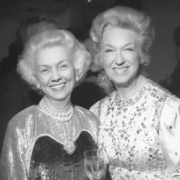
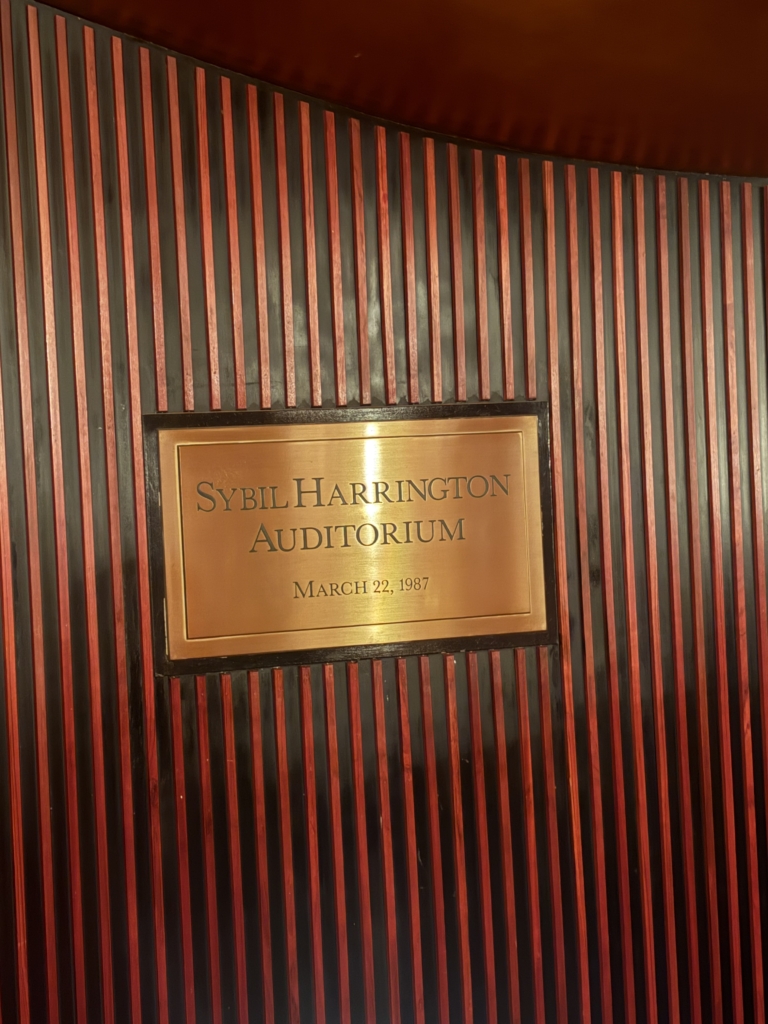
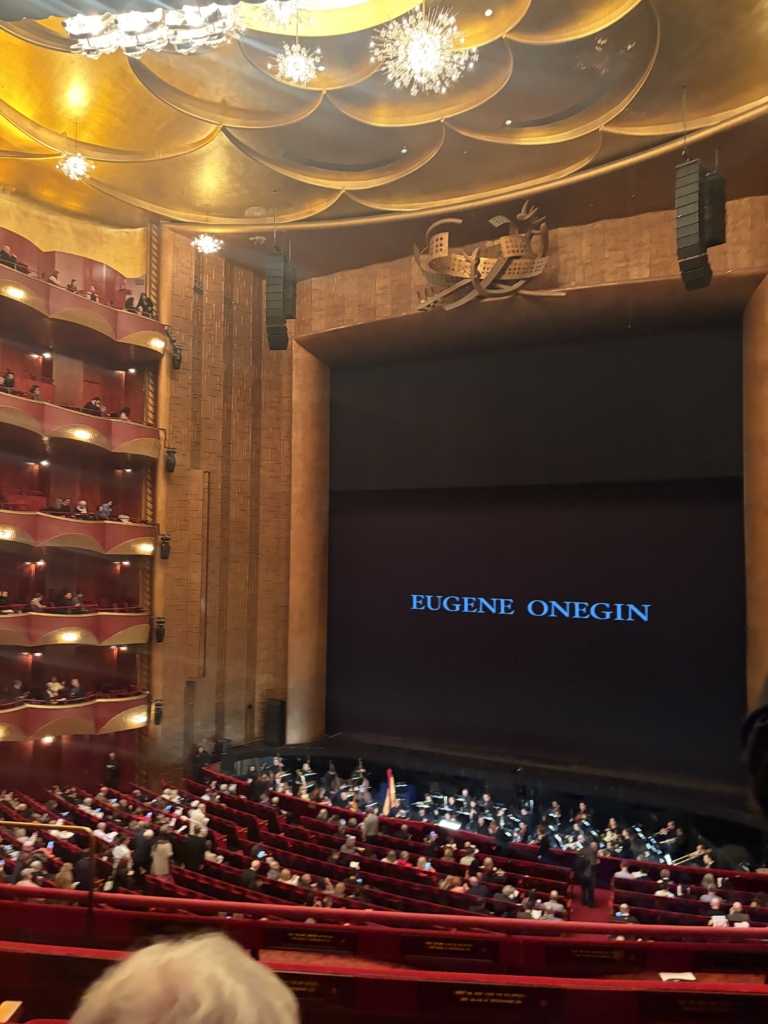
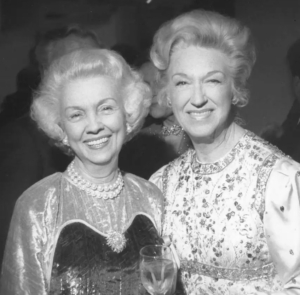
This is the case of Sybil B Harington who has been a major in life donor to the Metropolitan Opera in New York. During her life she gave c$30m to support its work, and the main hall was named in her honour in 1987.
She sat on the board, and funded galas and televised performances and opera. However, she did not just fund any opera, she liked grand opera, done as the original composer and librettist would have wanted (so traditional settings, staging and costumes – think Julius Caesar set in Rome with singers in togas – not in bleak dystopian futures with combat trousers and machine guns).
Sybil B Harrington with mezzo soprano Rise Stevens
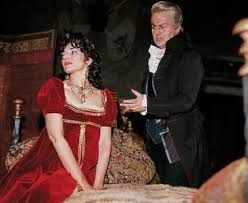
Her gifts supported, amongst others, the iconic but traditional Zeffirelli’s ‘Tosca’ with Maria Callas and Tito Gobbi in the 1960s – a production that was not retired until 2006 (and which I saw several times)
On her death she left a gift of $6m, with $1m to fund young artists, and the rest for “exclusively for the televising of traditional/grand operaproductions of the Metropolitan Opera and for no other purposes” and that “these traditional/grand opera productions shall be set in a place and time and staged as the composer placed it.” Her will stipulated:
“…by composers such as Verdi, Puccini, Bizet, Wagner, Strauss and others whose works have been the core of the repertory of the Metropolitan Operaduring its first century, with each such new production to be staged and performed in a traditional manner that is generally faithful to the intentions of the composer and the librettist.”
(1987 stipulation for her gift)
The money was invested and each year the Met used the funds.
Until 2001.
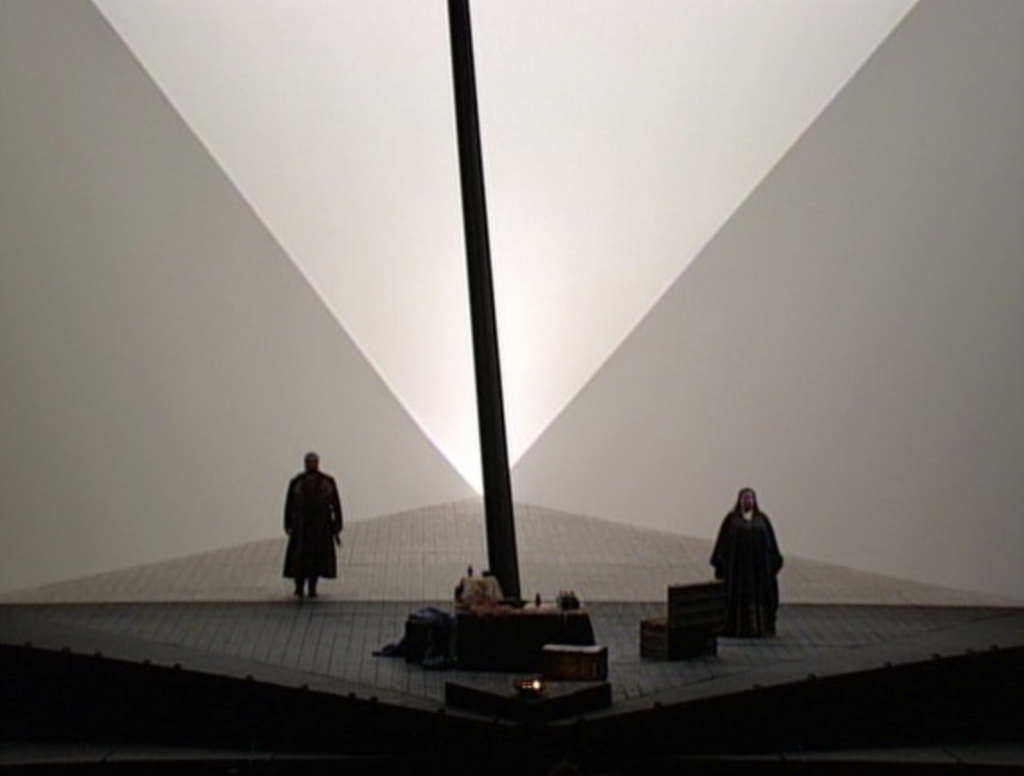
The Met used the fund (which had grown through investments) to televise Dieter Dorn’s production of Wagner’s ‘Tristan and Isolde’. The story is traditionally set in a medieval Celtic world and tells the story of a ship travelling from Cornwall to Brittany. Dorn’s production was minimalist focussing on the emotions and psychology of the characters rather than the ‘visual ballast’ of a boat. Those managing her estate sued the Met claiming that it had breached the terms of the gift and that the production was not traditional and in keeping with the stipulations of the bequest.
Trisatan and IsoldeTristan and Isolde
The Met said in the court papers:
“While not a traditional staging of the opera it was a traditional interpretation and the case was made to the Trust that support of this telecast was in keeping with the wishes of Mrs. Harrington and the stipulation of her estate. We are grateful that the Trustees understood the importance of the ‘Tristan’ telecast and agreed to its funding.”
The estate said: “The Met’s failure to utilize funds in accordance with Mrs. Harrington’s wishes is not inadvertent or even negligent, but is the result of a willful and calculated intent to disregard and evade Mrs. Harrington’s wishes”
General Manager of The Met, Joseph Volpe responded: “The charges are untrue and we will show them to be untrue in court. Sybil Harrington was a beloved member of the Met family and we would never do anything to dishonor her wishes or her legacy.”
Who was right?
The parties settled out of court.
But Sybil B Harrington’s legacy gift continues, and the credit ‘for her ‘Production a gift of The Sybil B. Harrington Endowment Fund’ is on streamed performances for the 2026/27 season at the Met.
Say it with flowers
Another lovely example of a way in which in life giving continued in death is the story of the flowers in the Met Museum in New York. In the late 1960s, Lila Acheson Wallace, philanthropist and founder of heir to Readers Digest set up a fund to change the flowers in the hall of the Met each week and to hold theatrical large starburst displays so that visitors would know
“We’re expecting you—welcome.”
When she died in 1984, her endowment gift continued this donation and it continues to this day. (Thanks to Niamh Walshe for pointing this one out to me).
Unexpected windfalls and spite filled gifts
Sometimes legacy gifts come in and you have no known relationship or connection, this might be a CRM lacking the data, or might be that some of our pledgers engage under the radar (in a theatre, this can mean they are not the ticket buyer and always come with someone else)
In 1904 Jacob S Rogers left $5m to the Metropolitan Art Museum in New York. This was a surprising gift to the museum as he was not a known art fan; he was a wealthy and miserly locomotive entrepreneur. He had visited the Met and given his $10 annual membership fee in by hand, and asked questions about the governance of the museum. Although no one is ever sure if he visited galleries or had any interest in the art.
During his life he was known his miserly ways indeed one of his obituaries said he was an
“a pure animal man, with no sentiments born of human love or human sympathy.“
He frequently threatened to
“If I could convert all my possessions into paper and provide that this paper should be burned after my death I should do so.”
From the obituaries at the time …
Even his friends described him as
“character was anything but loveable.”
Apparently, about 10 years before his death, he had read about a Chicago man who had left his whole estate to an educational institution and cut his family out of this will. He requested a copy of this will and it seems to have acted as an inspiration for this gift to the Met.
However, rather than leave it to the museum to do with what was most needed (often the ideal), the gift was restricted to an endowment, with the gift to remain in tact and the interest to be used to purchase paintings.
“the income only of the fund hereby created, or intended so to be, to be used for the purchase of rare and desirable art objects, and in the purchase of books for the Library of said Museum, and for such purposes exclusively, the principal of said fund is not to be used, diminished or impaired for any purpose whatever”
There was also a condition to focus on non American items which was common at the time as the American art market was considered immature and many looked to Europe for ‘proper’ and ‘collectable’ art.
The Rogers Fund is still going strong and funding the purchase of art for the museum (more than 10.000 entries appear if you search on the Met website)
In memory motivation
Did you know that MOMA in New York was founded by three women?
By Abby Aldrich Rockefeller, Lillie Bliss and Mary Quinn Sullivan.
When Abby Aldrich Rockefeller died – despite her husband, J D Rockeller Jnr, not being a fan of modern art (‘never greatly appealed to me‘ – he preferred porcelain and medieval tapestries) – he gave $4m in securities and land “to preserve for the future the important work of this institution which meant so much [to Abby]”
(Another founder Bliss died leaving a condition in her will that MOMA have enough of an endowment to be financially secure before the gift could be handed over. The executors set a challenge for the museum to raise $1m – this was in the Depression so fundraising was slow and hard. MOMA raised $600,000 at which time the executors lowered the financial threshold and handed over the legacy gift.)
Mysterious motives
In 1869, Elizabeth Lawrence, the widow of Col T Bigelow Lawrence donated his military connection to the Boston Fine Arts Museum,
“Unfortunately her motives are not recorded. Whether she acted out of a desire to memorialise her husband or simply wished to rid herself of the vestiges of his martial enthusiasm remain a matter for speculation“
Kathleen D McCarthy in ‘Women’s Culture’
As a bonus she also gave $25,000 to fund the housing of the collection (whenever you receive an item as part of a legacy it is always handy to have the money to store, conserve and protect it).
However, the collection was destroyed by fire, his widow allowed the insurance money to be used to purchase other items for the museum.
Keep family members engaged – even on the WCs!
When Maria Antoinette Evans’ husband died she wanted to honour his legacy wishes and support the Boston Fine Arts museum. She originally offered a grant to support salaries (fantastic a core costs grant!) but the museum persuaded her to support a new wing with a gift of $1m. Determined to keep her potential giving up, they involved her in the design of the wing including asking for her input on where and at what height her husband’s portrait ought to be hung, which wallpaper and fittings to use and,
“Will you find [an] opportunity some day soon to visit the new building with me and visit the ladies’ rest room? there are one or two points one which I should like your opinion’
Often the smallest details matter most.
How do you know which of these motivations are the real reason?
You can ask.
In your legacy promotional material having a ‘Tell us about why you have included us in your will..” often yields the answer
But be warned about the say:do gap. In terms of social acceptability bias we will not admit that we included charity X because we despise our family and want to disinherit them and could provide a more socially acceptable reason about that it means to us.
What else do these historic examples teach us?
Be clear about what you want and how you want it
The examples above highlight the importance of promoting gifts in will as you are never sure where and when supporters may be inspired to include a gift.
When promoting legacies or talking to potential legators it is important to consider:
how you want to receive gifts
how gifts ought to be worded to allow donor’s wishes to be honoured as well as the evolving needs of the charity (it is complicated to get a legacy gift to a long defunct programme or niche area)
how any endowment gift might be structured to support changing mission over time.
But if there are conditions stick to them and keep the family engaged
https://marinajones.uk/wp-content/uploads/2026/03/IMG_1573.jpeg834848adminhttps://marinajones.uk/wp-content/uploads/2022/12/f2b903e010104f5aa61ea1821a685913.pngadmin2026-05-14 18:31:402026-05-14 18:32:00Magnanimous, malicious or mysterious intentions?
We may request cookies to be set on your device. We use cookies to let us know when you visit our websites, how you interact with us, to enrich your user experience, and to customize your relationship with our website.
Click on the different category headings to find out more. You can also change some of your preferences. Note that blocking some types of cookies may impact your experience on our websites and the services we are able to offer.
Essential Website Cookies
These cookies are strictly necessary to provide you with services available through our website and to use some of its features.
Because these cookies are strictly necessary to deliver the website, refusing them will have impact how our site functions. You always can block or delete cookies by changing your browser settings and force blocking all cookies on this website. But this will always prompt you to accept/refuse cookies when revisiting our site.
We fully respect if you want to refuse cookies but to avoid asking you again and again kindly allow us to store a cookie for that. You are free to opt out any time or opt in for other cookies to get a better experience. If you refuse cookies we will remove all set cookies in our domain.
We provide you with a list of stored cookies on your computer in our domain so you can check what we stored. Due to security reasons we are not able to show or modify cookies from other domains. You can check these in your browser security settings.
Google Analytics Cookies
These cookies collect information that is used either in aggregate form to help us understand how our website is being used or how effective our marketing campaigns are, or to help us customize our website and application for you in order to enhance your experience.
If you do not want that we track your visit to our site you can disable tracking in your browser here:
Other external services
We also use different external services like Google Webfonts, Google Maps, and external Video providers. Since these providers may collect personal data like your IP address we allow you to block them here. Please be aware that this might heavily reduce the functionality and appearance of our site. Changes will take effect once you reload the page.
Google Webfont Settings:
Google Map Settings:
Google reCaptcha Settings:
Vimeo and Youtube video embeds:
Other cookies
The following cookies are also needed - You can choose if you want to allow them:
Privacy Policy
You can read about our cookies and privacy settings in detail on our Privacy Policy Page.