What Chartres Cathedral Can Teach Us About Fundraising
Donors making their donation in art
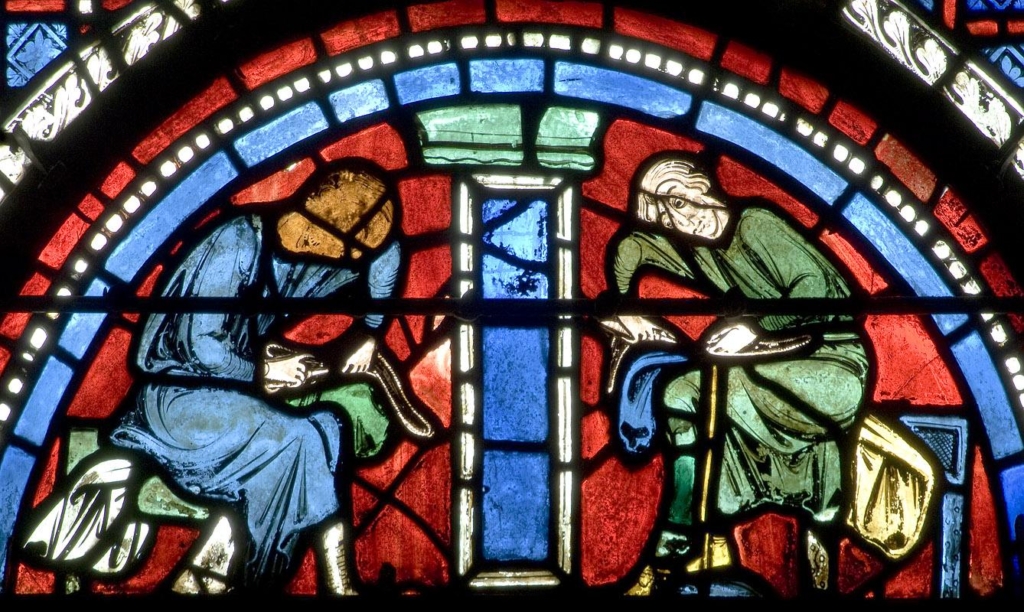
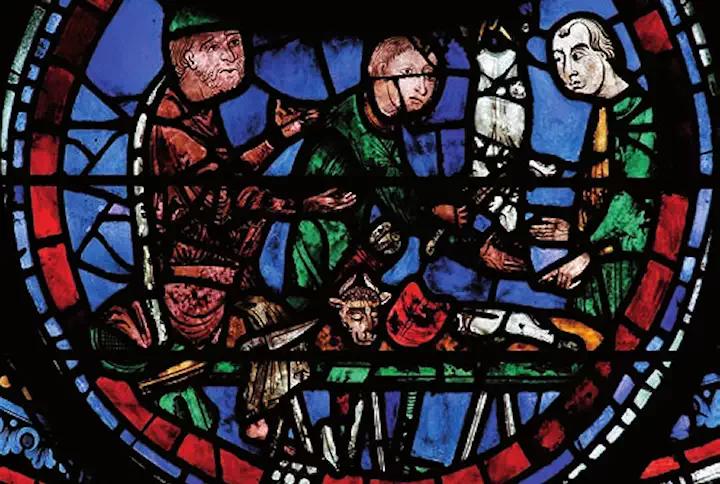
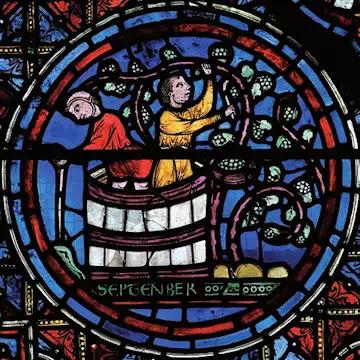
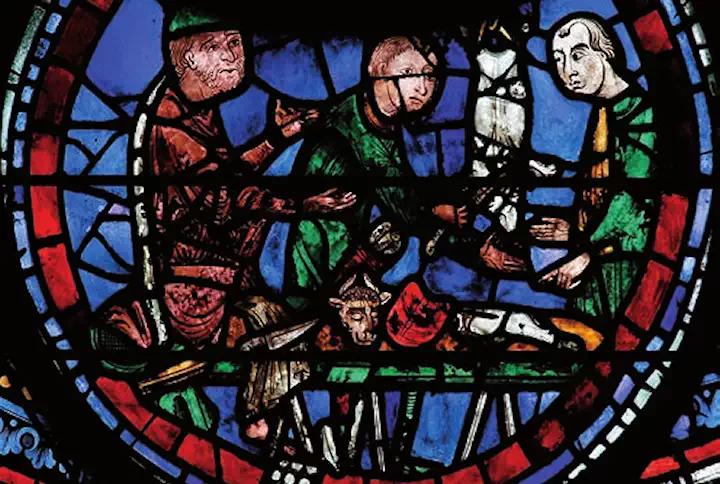
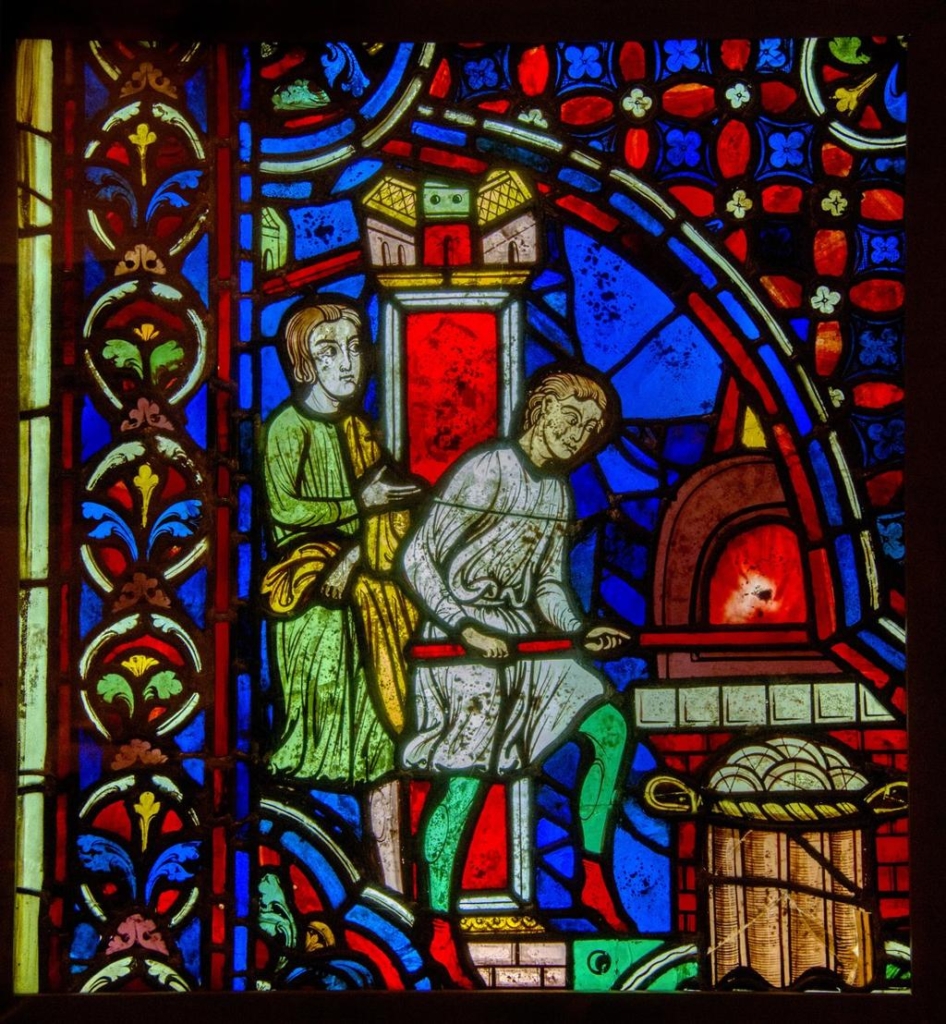
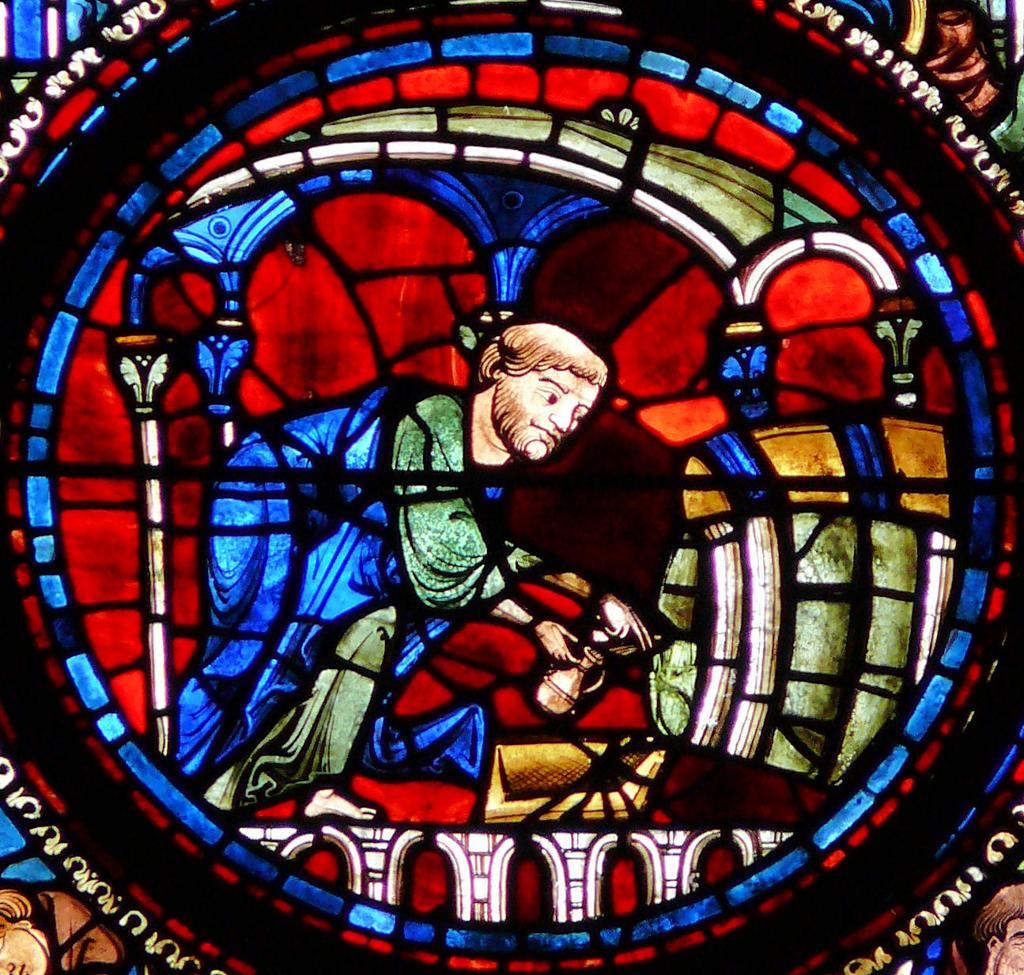
Donors making their donation in art. Not just art, but in stained glass. Here, the shoemakers are shown making their donation of a window at Chartres Cathedral. They are just one of 45 local trades who donated to rebuild the cathedral and represented in the stained glass of Chartres, and a great early example of donor recognition.
Donors want to see the impact of their gift, and in this window they can literally be seen both making the gift, and the impact of the gift (the cathedral).
These windows demonstrate the power of the IKEA effect – we value things more when we have helped create them. The shoemakers, and the other guilds, contributed – financially and physically – to building the cathedral. The stained glass tells their story. Seeing yourself and your trade, which is part of your identity, embodied in stained glass enabled donors to literally say: “I made that.” You become, quite literally, part of the infrastructure.
When we give a gift, we activate the brain’s reward systems – the release of dopamine (associated with reward, motivation and pleasure) gives us the ‘warm glow‘ of giving we get a hit of happy chemicals. Giving can bring donors joy. When we thank donors for the gift and show them the impact it has had, we can reinforce that positive experience: giving another hit of dopamine, giving is good, and we like to repeat behaviours that make us feel good.
Donor recognition further supports this, reinforcing the identity of the donor as someone who gives. In this case, it also reinforces their identity as a member of a valued group of craftsmen who contributed to the cathedral’s construction.
We’ve all seen donors go over to a wall of recognition, scan the list with their finger, looking for their name and checking that it is there (or, heaven forbid, ringing you up to ask why there name isn’t there!) Seeing your name on a donor wall is one of the ultimate ego strokes.
By being so prominently credited, donors may also be encouraged towards ongoing support. We have already invested and tend to want to continue behaving as we have behaved. We seek to be consistent with our previous behaviour, particularly when that behaviour is publicly known. Public recognition can, in effect, hold us accountable to continue doing it.
Guilds also had feast days, with special masses and processions, and at each mass made an offering: another ritualised reason to give.
Their identity as donors and traders has been immortalised in stained glass which, 800 years later, we can still see today.
The window becomes simultaneously:
- a gift
- a public statement
- an act of devotion
- an expression of professional identity
- a piece of community history
- a form of recognition
But the windows also tell us more
1. Hierarchy matters
Of the 172 stained-glass windows, 16 were donated by members of the clergy, 44 by sovereigns and nobles, and 45 by trade guilds.
Where donors receive their credit says something about the perceived value of the gift – and about where they are positioned in the hierarchy. The clergy and nobility were higher up in the windows reflecting the values of their gift and their position in society. They were also shown in pious attitudes, praying on their knees.
The tradesmen, meanwhile, are generally shown doing their craft: making wine, baking bread and carrying out their work. They are not presented in the same pious way.
The nobles had become wealthy following the sack of Constantinople during the Crusades and were keen to demonstrate that wealth.
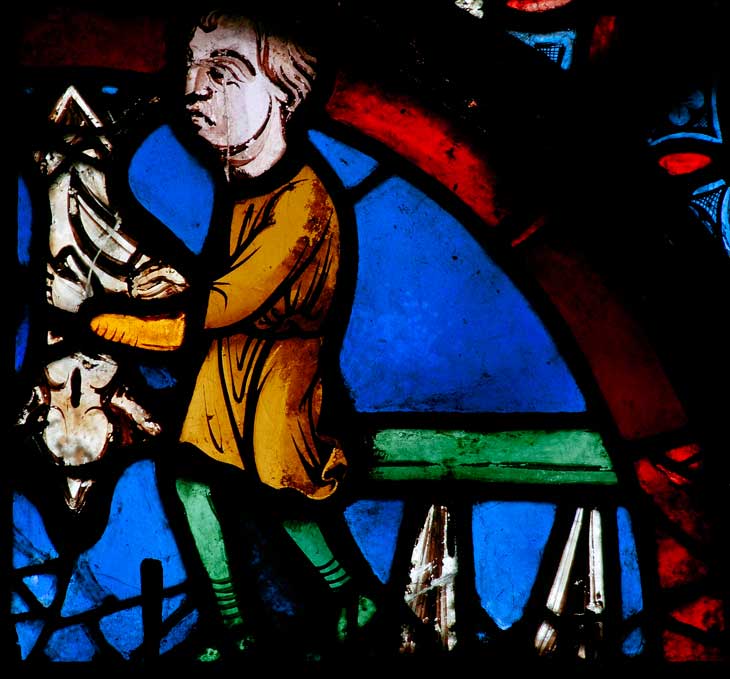
However, the portrayal of particular trades could also be loaded. The butcher, for example, is shown in a yellow tunic against a green background, imagery that has been interpreted as implying an unrepentant sinner who does not respect the Church’s teaching. A rather unflattering way to reflect the donor of the window.
The fundraising lesson? Recognition is never neutral. Where, how and alongside whom donors are recognised communicates something about the value and status attached to their gift.
2. Who do you take money from?
When Notre-Dame was being built in Paris in the twelfth century, the bishop reportedly received a request from the guild of prostitutes to install a window – excluding the trade itself from the image, obviously. After much consideration, the gift was refused.
Having an acceptance of gifts policy is clearly not a new idea.
Commentators highlight that butchers, money changers, wine growers and tavern keepers in the Chartres windows were unusual subjects because of their secular and supposedly sinful connotations. Wine growing and taverns were associated with drunkenness and licentiousness. Indeed, the Fourth Lateran Council under Pope Innocent III questors (a medieval term for licensed fundraisers) were banned from taverns.
Like questors, priests were also restricted from certain activities including taverns. Butchery was a violent profession, and it was frowned upon for priests to kill animals. It was also associated with the sins of the flesh and with breaking religious fasts. Believers were required to abstain from meat on key days, and butchers could therefore carry uncomfortable associations.
The point is that fundraising has always involved questions about where money comes from, who is associated with the institution, and what accepting a gift says about both donor and recipient.
Some other lessons from Chartres Cathedral’s twelfth-century rebuild
1. Emergency moments
In 1194, fire destroyed much of the cathedral and a fundraising campaign began.
Never waste a good crisis.
A crisis drives action. It creates urgency and gives people a reason to give now.
Of course, the modern fundraising translation is not to manufacture a crisis, but to recognise that moments of genuine change, threat or opportunity can cut through inertia and create a compelling reason for immediate action.
2. Leadership gifts matter
When approaching someone for a major capital gift, one of the first questions is often: “Who else is giving?”
Being able to demonstrate that your key donors are already committed is important.
Leadership gifts from the bishop and chapter, who committed substantial gifts over three years to finance the rebuild, provided both money and an example. They also helped enable peer-to-peer asking: if the leaders of the campaign have already publicly committed, they can more credibly ask others to do the same.
The lesson remains familiar: leaders should lead with their own giving.
3. Use other sources of income: pilgrims
Chartres Cathedral held a relic associated with Mary, the mother of Jesus – her veil – and became an important site of pilgrimage. Pilgrims helped generate much-needed funds to restore and maintain the fabric of the church.
By committing to a pilgrimage, you were not only living out your faith but also committing to multiple acts of giving: along the route and at the destination. There could be multiple opportunities and donation boxes around the cathedral.
At Basel Cathedral, a lay petitor would reportedly call out loudly when the cathedral doors opened:
“Donate to the construction of Our Lady and earn the great indulgence and great pardon.”
The fundraising lesson is familiar: create multiple opportunities to give, connected to a meaningful journey or experience.
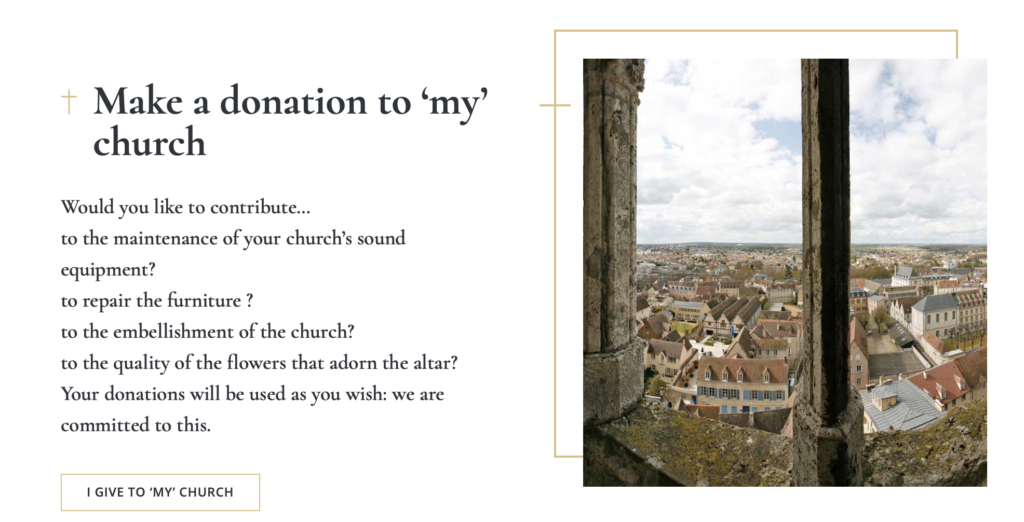
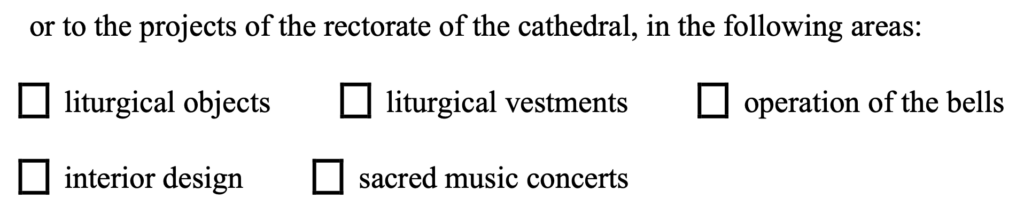
Throughout the pilgrimage visit to the cathedral each donation box was for different aspects of support – the fabric of the building, the poor. Giving donors autonomy and choice in where their gift is allocated. Even today Chartres is offering that opportunity:
Recognise donors and celebrate their achievement and connection
Badges
One way to help people demonstrate their loyalty and live out their identity as part of your tribe is through merchandise – and the medieval pilgrim market had this covered with pilgrim badges.
These could be bought as souvenirs to demonstrate your identity as a pilgrim, to show that you had been on pilgrimage, and to raise additional funds. They could be worn on a cloak or hat, put in a prayer book or nailed up at home.
They showed the world that you had been on pilgrimage and, importantly, what tribe you belonged to.
And Chartres had its own pilgrim badge.
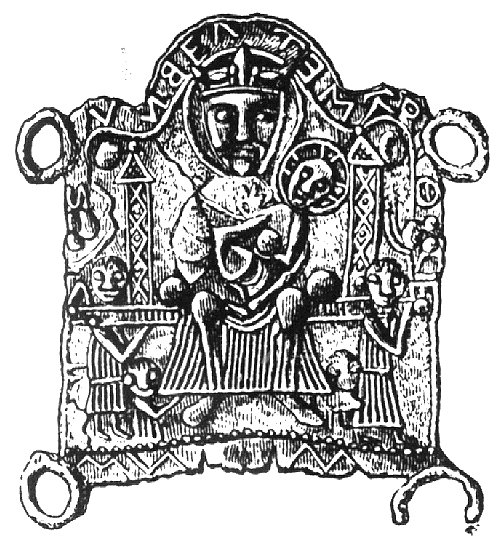
The modern lesson? Give people visible ways to demonstrate their connection to your cause.
A badge, pin, T-shirt, membership card or other object can do more than raise money. It can reinforce identity and make affiliation visible to others.
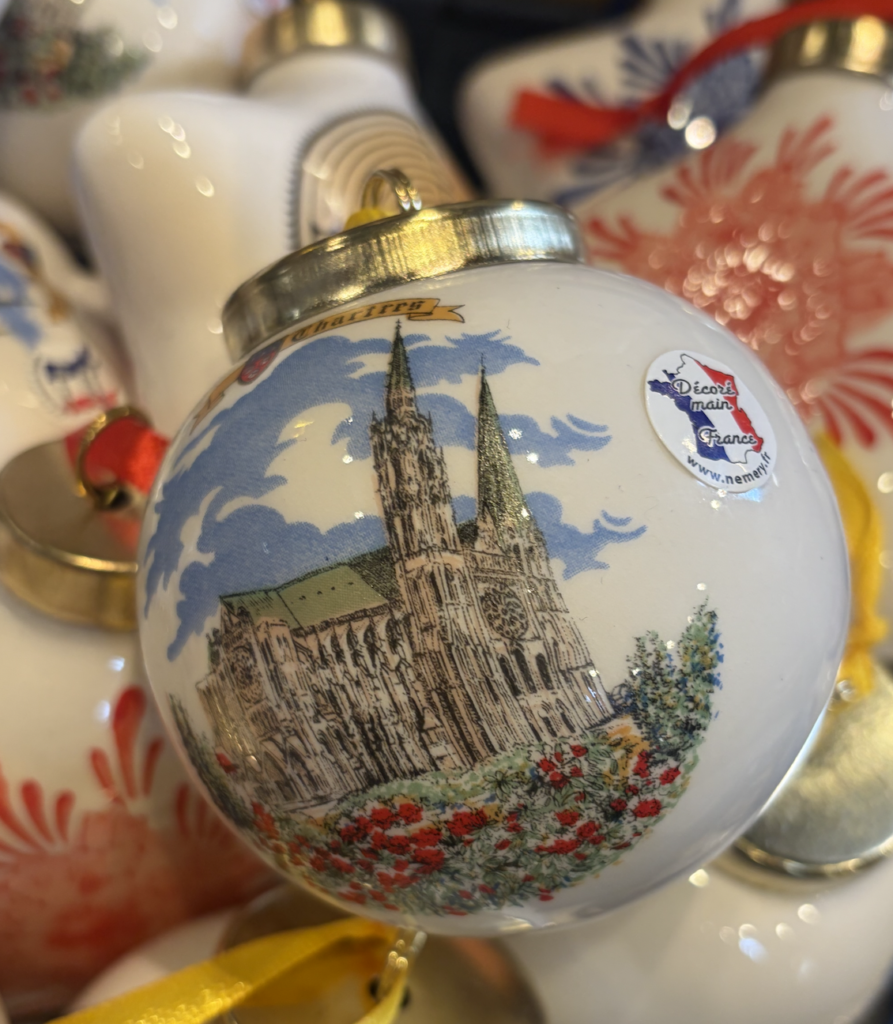
So a snow globe or Christmas ornament it it is?

Help build the cathedral
The Miracles of Notre-Dame, written around 1210 to glorify the miracles performed by the Virgin at Chartres through the veil, tells stories of ordinary people enthusiastically wheelbarrowing stones and helping to build the cathedral themselves.
As well as getting burly people to do the job, this has another potential effect: creating a deeper sense of engagement and commitment to the cause.
The IKEA effect suggests that we value something more if we have been involved in its creation – like flat-pack furniture. Whether armourers, drapers or other trades contributed money, materials or labour, they developed a vested interest in the success and continued use of the cathedral.
There is, however, an important historical caveat. More recent narratives have categorised some of these stories as useful fictions, designed to demonstrate the power of the relics and the piety of the people. In 1210, Chartres also experienced serious tensions and a riot connected to the cathedral’s power in the region.
Perhaps that is a fundraising lesson in itself: sometimes the stories we tell about why people gave become almost as powerful as the gifts themselves.
The three Ts: a royal example
Following the 1210 riots, King Philippe came to Chartres as a pilgrim and to see the damage. He humbly donated funds towards reconstruction and also gave a silk cloth to the church.
In doing so, he arguably delivered the three Ts that we want from our leaders:
- Time – through his personal visit.
- Talent – through helping to re-establish order following the riots.
- Treasure – through his financial and material gifts.
His personal experience as a pilgrim brought practical assistance, but also consequences for those responsible for the unrest. He urged moderation but imposed a fine of 3,000 livres, half of which was assigned to the building of the cathedral.
Today, it is unlikely that a town would be punished with an additional tax to support a public good. But the underlying lesson remains: leadership can combine personal commitment, public example and practical action.
Giving has always been connected with our experiences and our identity.
Today Chartres Cathedral asks for a donation to ‘my’ church – the use of the ‘my’ is doing some heavy emotional lifting here – linking Chartres to their identity (as a Catholic, as a Christian, as a pilgrim, as a local).
Our experiences help shape our identity. Someone who has lost a parent to cancer may see themselves as a person who supports cancer research. A former student may identify strongly with their university. Someone who grew up going to the theatre may feel that supporting the arts is part of their story. When a request for support connects with one of these identities, it is no longer simply asking, “Will you give?” It is asking, “Is this something a person like you does?”
When a request to give connects with that identity, it can reach much deeper than a simple appeal for money. It becomes an opportunity for donors to express something about themselves and to act in a way that is consistent with who they believe they are.