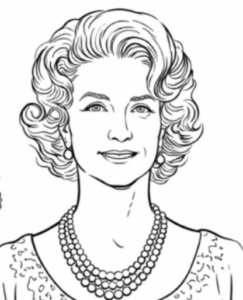
Lilian Baylis asked boldly, built community and made giving tangible. Her example shows us how to keep opera open to everyone.
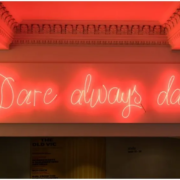
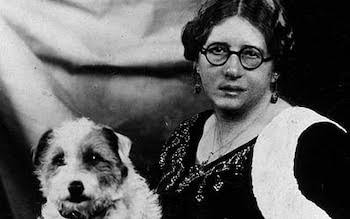
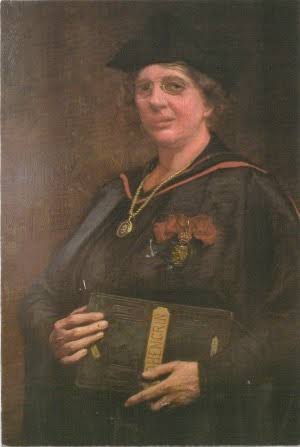
Lilian Baylis was one of Britain’s most influential theatre impresarios and entrepreneurs, and the founding pioneer of English National Opera, the Old Vic (which became the foundation of the National Theatre) and the Sadler’s Wells Ballet (which became the Royal Ballet). Her belief that great art belongs to everyone indelibly shaped the country’s cultural landscape. It still shapes ENO today, where under-21s come for free and accessible ticket pricing is key.
On 25th November, we mark 89 years since she died.
Why Baylis still matters
Lilian Baylis was not simply an historic founder. She was a practical, persuasive and deeply entrepreneurial fundraiser. She understood that great art needs people behind it – audiences, artists, advocates, donors, volunteers and friends – and she was never shy about asking them to play their part.
Fundraising can sometimes sound separate from the art, as if the work sits on one side and the money on the other. Lilian never saw it that way.
For Baylis, fundraising was part of the artistic mission. She asked because she believed the work mattered, and because every audience deserved opera of the highest quality. She knew that great art only happens when people stand behind it and put their hands in their pockets. She is said to have wandered around the theatre asking audience members: “Please give us some money, my dears.”She understood that if people love something, they will want to help sustain it.
Her ethos was rooted in access, excellence and shared ownership. She believed that opera, theatre and ballet should belong to everyone, not only to those who could already afford or reach them. That belief remains central to us: we raise funds as an invitation to help keep exceptional art alive – open, accessible and daring.
What Baylis did — and what we still do today
Lilian asked clearly. Baylis’ famous directness reminds us that fundraising works when the need is visible and urgent. We should say plainly what support we need, ask people who care to make it happen, and make the impact clear.
Lilian built a community, not a transaction. The Vic-Wells Association linked audiences, artists and management through regular communications, public acknowledgement and personal thanks, making supporters feel part of the story. Our supporter journeys, events, stewardship, membership communications and personal relationships should do the same, so that people feel part of the company – now and in its future – rather than outside looking in.
Lilian was visible. Baylis fundraised from the stage, in the building, in letters, in speeches and in the wider public conversation. The lesson for us is presence: we should be where the energy is – in the auditorium, at events, in rehearsal rooms, with artists, audiences and partners – ready to turn enthusiasm into action.
Lilian made giving tangible. Baylis understood the power of a concrete need: a building to restore, a salary to fund, a campaign to complete, equipment or support that would make the work possible. Like her, we should turn ambition into specific propositions – a named project, a clear target, a visible result – so that every supporter can see what their generosity unlocks.
Lilian used every channel available. Baylis embraced programmes, magazines, speeches, press stories, celebrity endorsements, commercial income, merchandise, gifts in kind and even new broadcasting opportunities. Long before “multi-channel” was a concept, she told the story of the work, and why it matters, on every channel there was.
Lilian was commercially imaginative. Baylis knew that earned income, partnerships, publicity and philanthropy enabled the artistic mission rather than competing with it. Today, commercial partnerships, gifts in kind, preferred suppliers and brand relationships can all express shared purpose when they align with our values and help us make more art for more people.
Baylis’ call to action
Baylis was bold, direct and unapologetic about asking people to join her mission.
“A prayer would be nice but money would be even better.”
There was no elaborate case for support, no glossy brochure and no carefully constructed donor journey. Just a woman who believed passionately in what she was doing and wasn’t afraid to ask people to help make it happen.
We can be too, because fundraising protects, amplifies and extends the art. It keeps art open, ambitious and alive for the audiences in front of us now, and for those still to come.
To fundraise in the spirit of Lilian Baylis, we should be bold, practical and personal. We should ask with confidence, because the work deserves support. We should thank with warmth, because every gift matters. We should tell stories, because people give when they understand the difference they can make. And we should make it easy for everyone – audiences, artists, trustees, colleagues, partners and friends – to become champions for our future.
This is the Baylis challenge for us now: be visible, be direct, be inventive, be frugal where it matters and ambitious where it counts. Invite people in. Give them something concrete to support. Show them the impact. Celebrate their role. Ask again.
Five ways we can be more Lilian today
Ask proudly: name the need, the target and the impact in every appeal.
Make supporters insiders: share behind-the-scenes stories, artists’ voices and regular moments of thanks.
Use the energy of the moment: connect asks to performances, events and moments when people feel the power of the work.
Think beyond cash: invite gifts in kind, partnerships, introductions, advocacy and volunteer support.
Keep the mission visible: remind people that every gift helps
https://marinajones.uk/wp-content/uploads/2026/11/Old-Vic.jpg.webp5631000adminhttps://marinajones.uk/wp-content/uploads/2022/12/f2b903e010104f5aa61ea1821a685913.pngadmin2026-11-20 17:15:222026-11-20 17:15:56Fundraising in the Spirit of Lilian Baylis
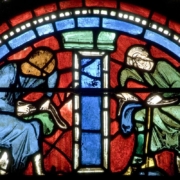
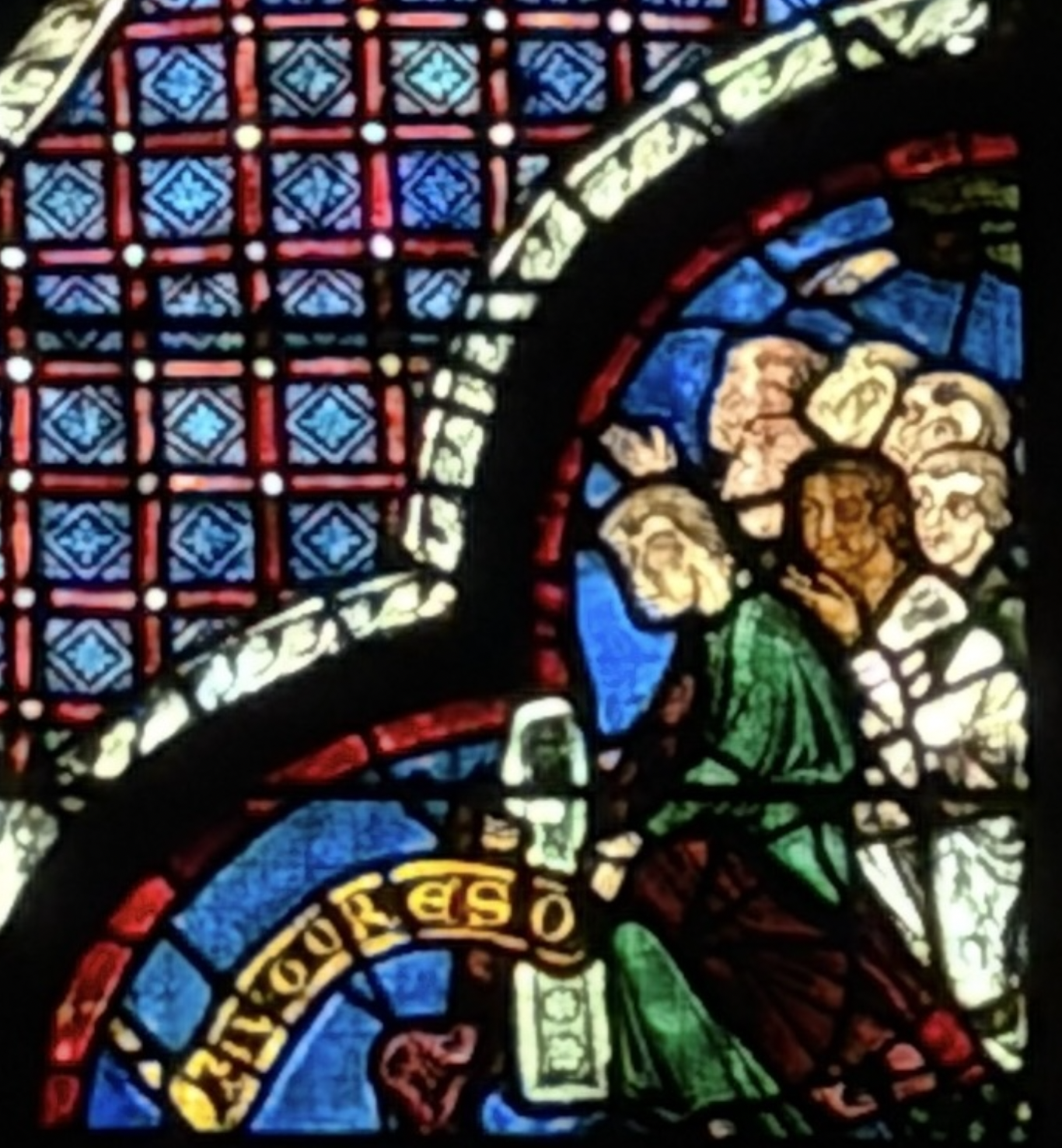
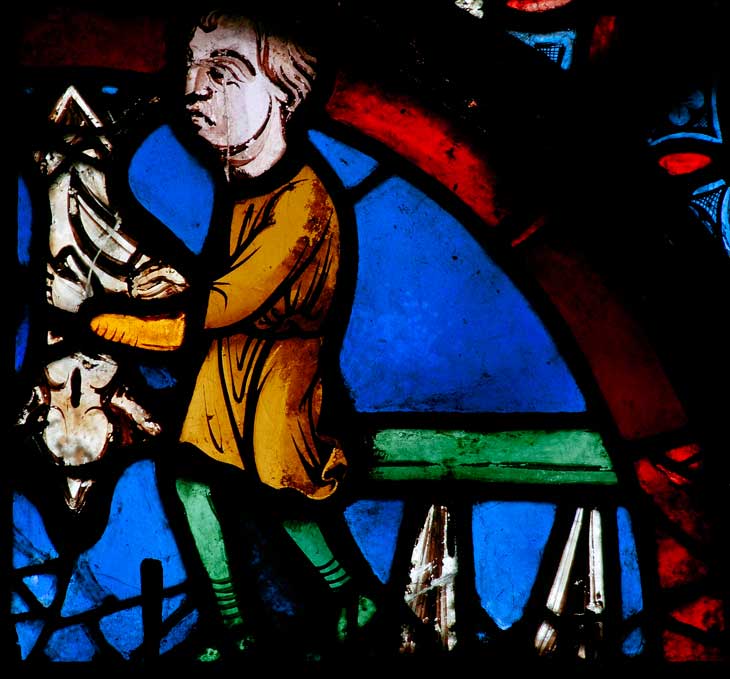
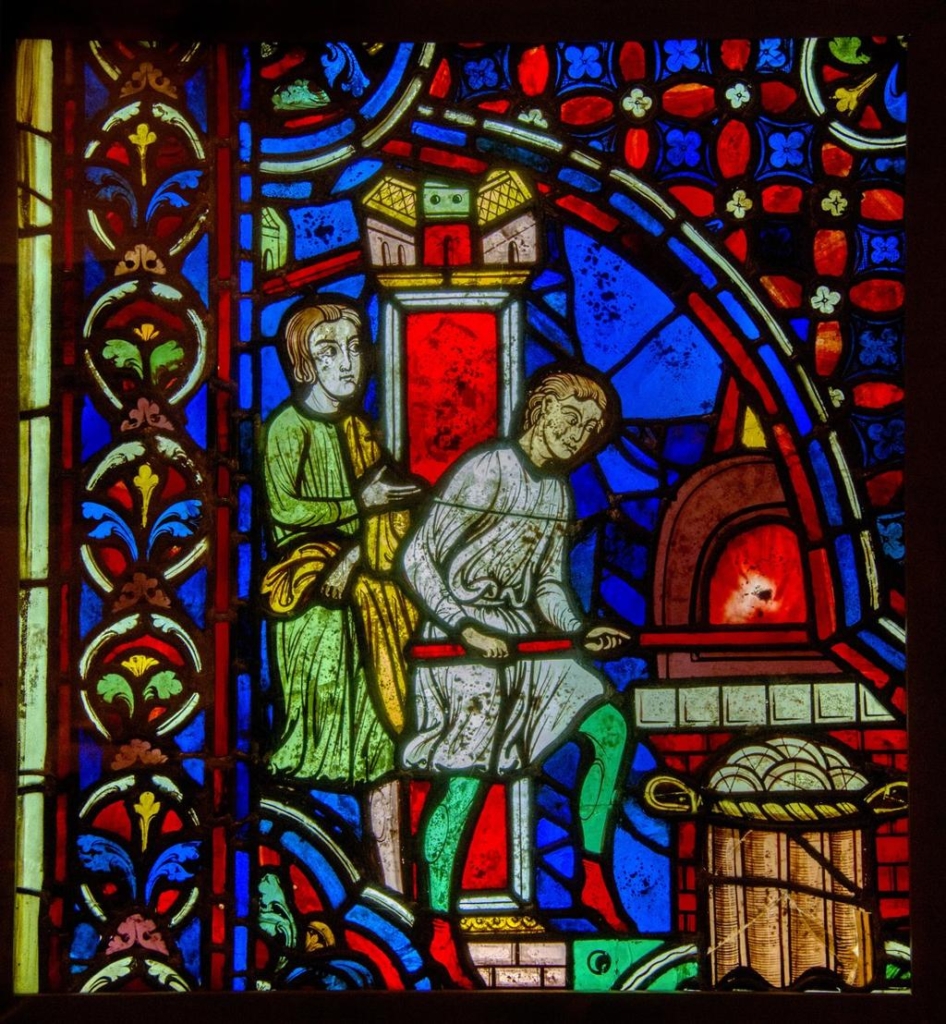
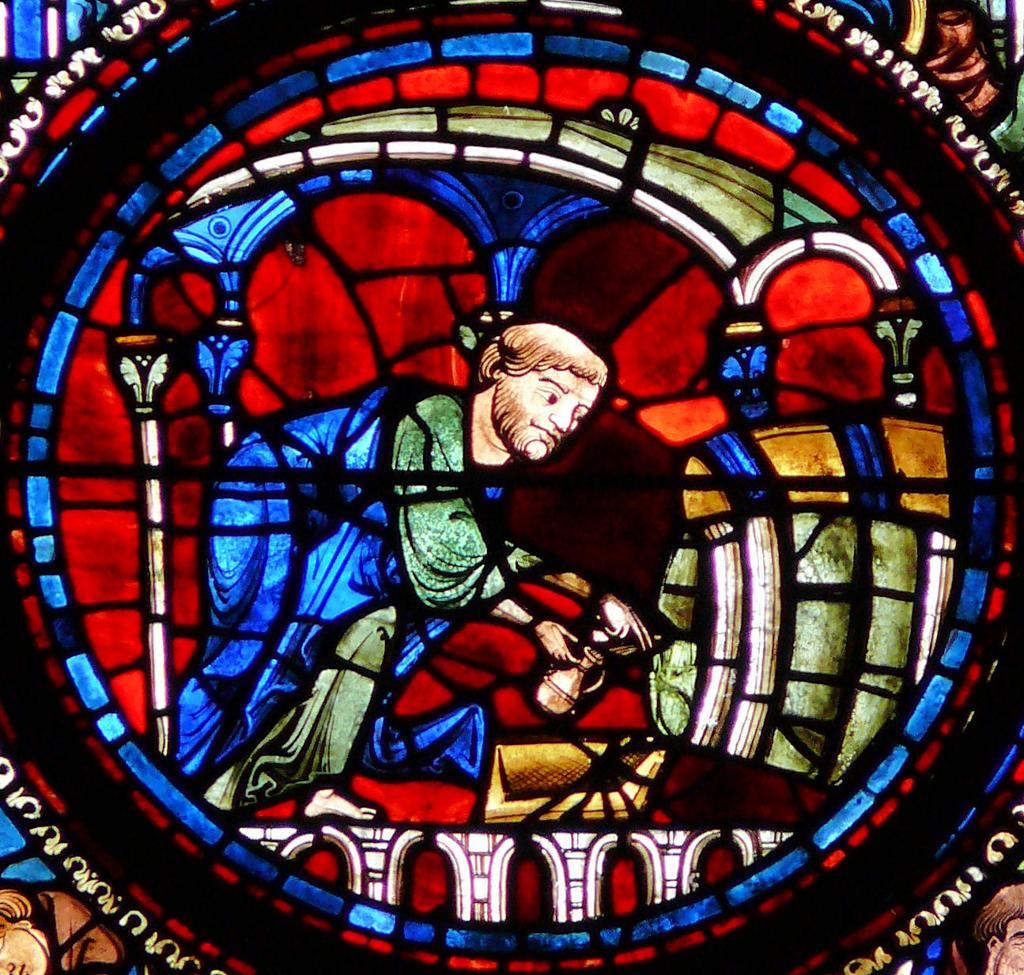
Donors making their donation in art. Not just art, but in stained glass. Here, the shoemakers are shown making their donation of a window at Chartres Cathedral. They are just one of 45 local trades who donated to rebuild the cathedral and represented in the stained glass of Chartres, and a great early example of donor recognition.
Donors want to see the impact of their gift, and in this window they can literally be seen both making the gift, and the impact of the gift (the cathedral).
These windows demonstrate the power of the IKEA effect – we value things more when we have helped create them. The shoemakers, and the other guilds, contributed – financially and physically – to building the cathedral. The stained glass tells their story. Seeing yourself and your trade, which is part of your identity, embodied in stained glass enabled donors to literally say: “I made that.” You become, quite literally, part of the infrastructure.
When we give a gift, we activate the brain’s reward systems – the release of dopamine (associated with reward, motivation and pleasure) gives us the ‘warm glow‘ of giving we get a hit of happy chemicals. Giving can bring donors joy. When we thank donors for the gift and show them the impact it has had, we can reinforce that positive experience: giving another hit of dopamine, giving is good, and we like to repeat behaviours that make us feel good.
Donor recognition further supports this, reinforcing the identity of the donor as someone who gives. In this case, it also reinforces their identity as a member of a valued group of craftsmen who contributed to the cathedral’s construction.
We’ve all seen donors go over to a wall of recognition, scan the list with their finger, looking for their name and checking that it is there (or, heaven forbid, ringing you up to ask why there name isn’t there!) Seeing your name on a donor wall is one of the ultimate ego strokes.
By being so prominently credited, donors may also be encouraged towards ongoing support. We have already invested and tend to want to continue behaving as we have behaved. We seek to be consistent with our previous behaviour, particularly when that behaviour is publicly known. Public recognition can, in effect, hold us accountable to continue doing it.
Guilds also had feast days, with special masses and processions, and at each mass made an offering: another ritualised reason to give.
Their identity as donors and traders has been immortalised in stained glass which, 800 years later, we can still see today.
The window becomes simultaneously:
a gift
a public statement
an act of devotion
an expression of professional identity
a piece of community history
a form of recognition
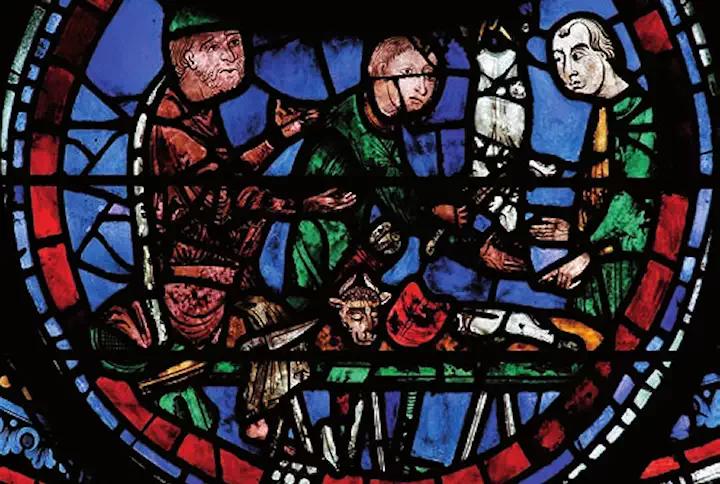
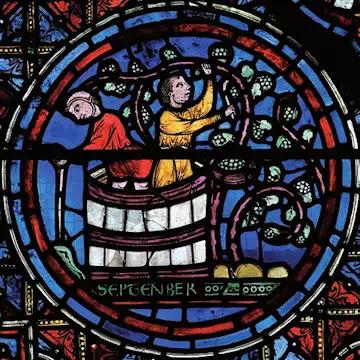
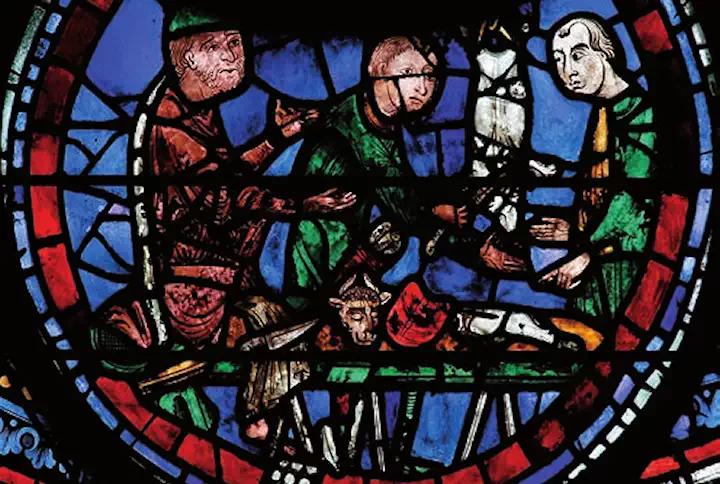
Butchers windowWinegrowers window
But the windows also tell us more
1. Hierarchy matters
Of the 172 stained-glass windows, 16 were donated by members of the clergy, 44 by sovereigns and nobles, and 45 by trade guilds.
Where donors receive their credit says something about the perceived value of the gift – and about where they are positioned in the hierarchy. The clergy and nobility were higher up in the windows reflecting the values of their gift and their position in society. They were also shown in pious attitudes, praying on their knees.
The tradesmen, meanwhile, are generally shown doing their craft: making wine, baking bread and carrying out their work. They are not presented in the same pious way.
The nobles had become wealthy following the sack of Constantinople during the Crusades and were keen to demonstrate that wealth.
However, the portrayal of particular trades could also be loaded. The butcher, for example, is shown in a yellow tunic against a green background, imagery that has been interpreted as implying an unrepentant sinner who does not respect the Church’s teaching. A rather unflattering way to reflect the donor of the window.
Butcher in green and yellowButcher in green and yellow
The fundraising lesson? Recognition is never neutral. Where, how and alongside whom donors are recognised communicates something about the value and status attached to their gift.
2. Who do you take money from?
When Notre-Dame was being built in Paris in the twelfth century, the bishop reportedly received a request from the guild of prostitutes to install a window – excluding the trade itself from the image, obviously. After much consideration, the gift was refused.
Having an acceptance of gifts policy is clearly not a new idea.
Commentators highlight that butchers, money changers, wine growers and tavern keepers in the Chartres windows were unusual subjects because of their secular and supposedly sinful connotations. Wine growing and taverns were associated with drunkenness and licentiousness. Indeed, the Fourth Lateran Council under Pope Innocent III questors (a medieval term for licensed fundraisers) were banned from taverns.
Like questors, priests were also restricted from certain activities including taverns. Butchery was a violent profession, and it was frowned upon for priests to kill animals. It was also associated with the sins of the flesh and with breaking religious fasts. Believers were required to abstain from meat on key days, and butchers could therefore carry uncomfortable associations.
The point is that fundraising has always involved questions about where money comes from, who is associated with the institution, and what accepting a gift says about both donor and recipient.
Some other lessons from Chartres Cathedral’s twelfth-century rebuild
1. Emergency moments
In 1194, fire destroyed much of the cathedral and a fundraising campaign began.
Never waste a good crisis.
A crisis drives action. It creates urgency and gives people a reason to give now.
Of course, the modern fundraising translation is not to manufacture a crisis, but to recognise that moments of genuine change, threat or opportunity can cut through inertia and create a compelling reason for immediate action.
2. Leadership gifts matter
When approaching someone for a major capital gift, one of the first questions is often: “Who else is giving?”
Being able to demonstrate that your key donors are already committed is important.
Leadership gifts from the bishop and chapter, who committed substantial gifts over three years to finance the rebuild, provided both money and an example. They also helped enable peer-to-peer asking: if the leaders of the campaign have already publicly committed, they can more credibly ask others to do the same.
The lesson remains familiar: leaders should lead with their own giving.
3. Use other sources of income: pilgrims
Chartres Cathedral held a relic associated with Mary, the mother of Jesus – her veil – and became an important site of pilgrimage. Pilgrims helped generate much-needed funds to restore and maintain the fabric of the church.
By committing to a pilgrimage, you were not only living out your faith but also committing to multiple acts of giving: along the route and at the destination. There could be multiple opportunities and donation boxes around the cathedral.
At Basel Cathedral, a lay petitor would reportedly call out loudly when the cathedral doors opened:
“Donate to the construction of Our Lady and earn the great indulgence and great pardon.”
The fundraising lesson is familiar: create multiple opportunities to give, connected to a meaningful journey or experience.
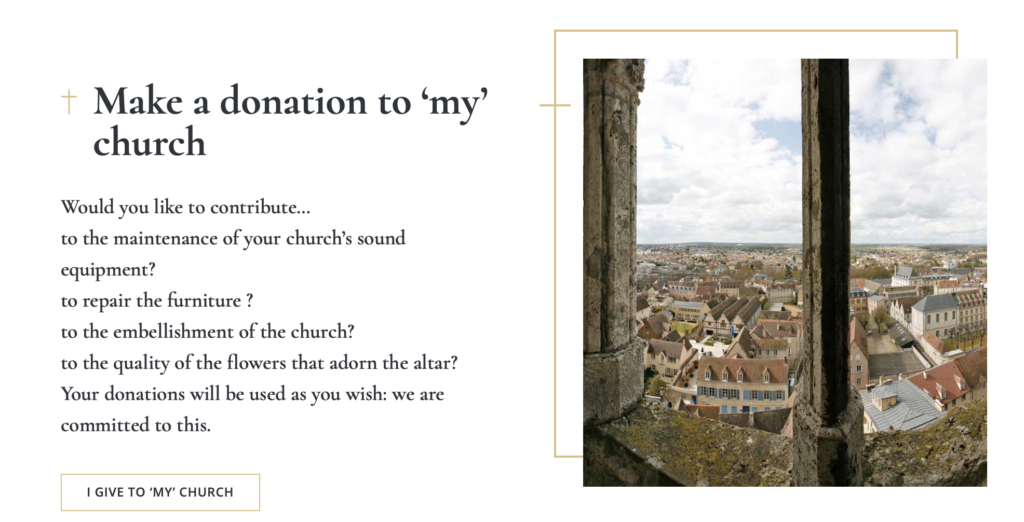
Throughout the pilgrimage visit to the cathedral each donation box was for different aspects of support – the fabric of the building, the poor. Giving donors autonomy and choice in where their gift is allocated. Even today Chartres is offering that opportunity:
Recognise donors and celebrate their achievement and connection
Badges
One way to help people demonstrate their loyalty and live out their identity as part of your tribe is through merchandise – and the medieval pilgrim market had this covered with pilgrim badges.
These could be bought as souvenirs to demonstrate your identity as a pilgrim, to show that you had been on pilgrimage, and to raise additional funds. They could be worn on a cloak or hat, put in a prayer book or nailed up at home.
They showed the world that you had been on pilgrimage and, importantly, what tribe you belonged to.
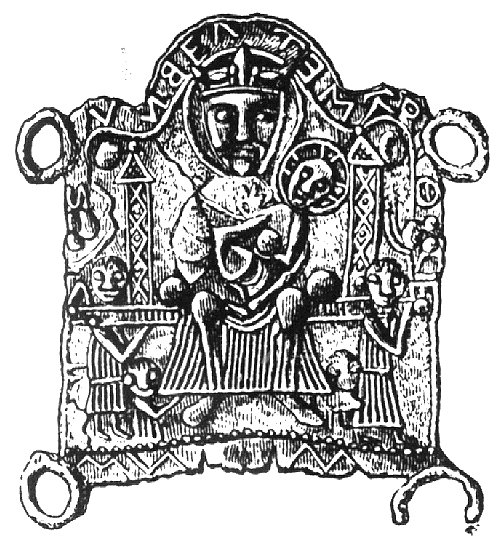
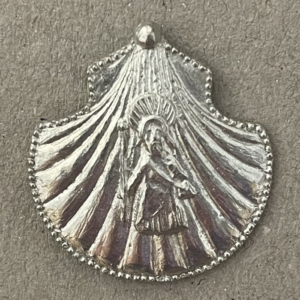
And Chartres had its own pilgrim badge.
Chartres pilgrim badge
The modern lesson? Give people visible ways to demonstrate their connection to your cause.
A badge, pin, T-shirt, membership card or other object can do more than raise money. It can reinforce identity and make affiliation visible to others.
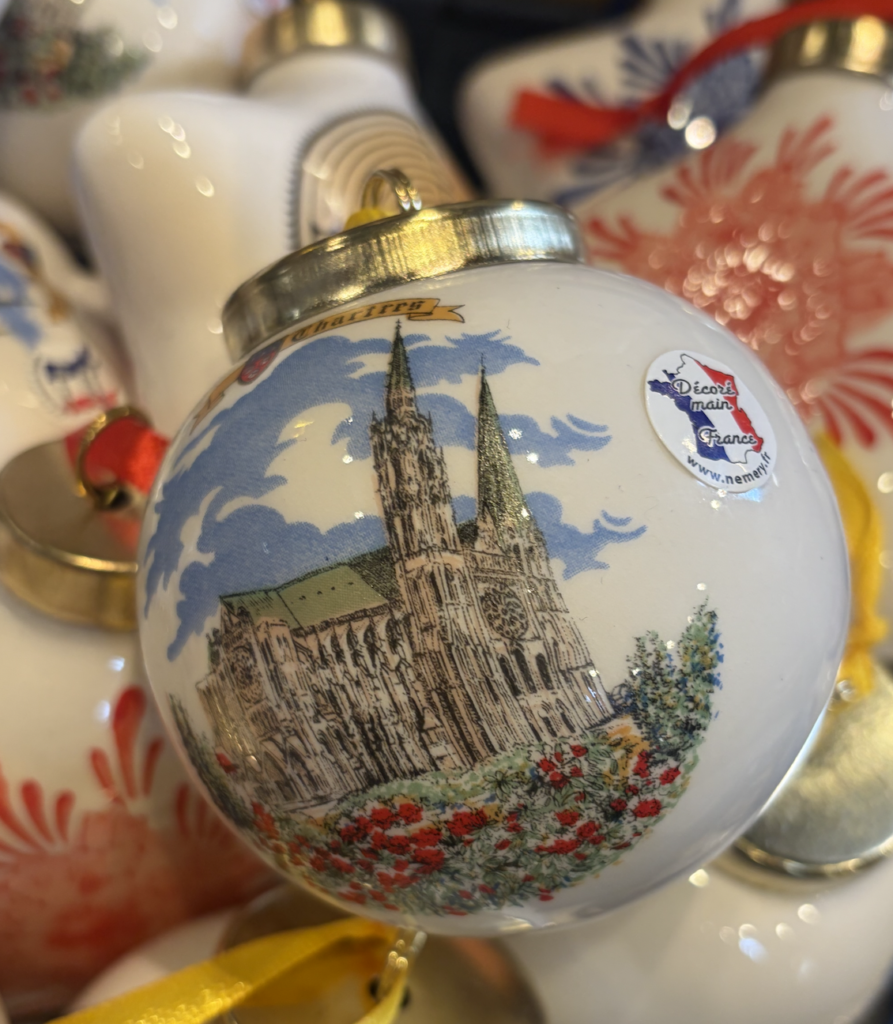
So a snow globe or Christmas ornament it it is?
Help build the cathedral
The Miracles of Notre-Dame, written around 1210 to glorify the miracles performed by the Virgin at Chartres through the veil, tells stories of ordinary people enthusiastically wheelbarrowing stones and helping to build the cathedral themselves.
As well as getting burly people to do the job, this has another potential effect: creating a deeper sense of engagement and commitment to the cause.
The IKEA effect suggests that we value something more if we have been involved in its creation – like flat-pack furniture. Whether armourers, drapers or other trades contributed money, materials or labour, they developed a vested interest in the success and continued use of the cathedral.
There is, however, an important historical caveat. More recent narratives have categorised some of these stories as useful fictions, designed to demonstrate the power of the relics and the piety of the people. In 1210, Chartres also experienced serious tensions and a riot connected to the cathedral’s power in the region.
Perhaps that is a fundraising lesson in itself: sometimes the stories we tell about why people gave become almost as powerful as the gifts themselves.
The three Ts: a royal example
Following the 1210 riots, King Philippe came to Chartres as a pilgrim and to see the damage. He humbly donated funds towards reconstruction and also gave a silk cloth to the church.
In doing so, he arguably delivered the three Ts that we want from our leaders:
Time – through his personal visit.
Talent – through helping to re-establish order following the riots.
Treasure – through his financial and material gifts.
His personal experience as a pilgrim brought practical assistance, but also consequences for those responsible for the unrest. He urged moderation but imposed a fine of 3,000 livres, half of which was assigned to the building of the cathedral.
Today, it is unlikely that a town would be punished with an additional tax to support a public good. But the underlying lesson remains: leadership can combine personal commitment, public example and practical action.
BakersWinegrowers
Giving has always been connected with our experiences and our identity.
Today Chartres Cathedral asks for a donation to ‘my’ church – the use of the ‘my’ is doing some heavy emotional lifting here – linking Chartres to their identity (as a Catholic, as a Christian, as a pilgrim, as a local).
Our experiences help shape our identity. Someone who has lost a parent to cancer may see themselves as a person who supports cancer research. A former student may identify strongly with their university. Someone who grew up going to the theatre may feel that supporting the arts is part of their story. When a request for support connects with one of these identities, it is no longer simply asking, “Will you give?” It is asking, “Is this something a person like you does?”
When a request to give connects with that identity, it can reach much deeper than a simple appeal for money. It becomes an opportunity for donors to express something about themselves and to act in a way that is consistent with who they believe they are.
https://marinajones.uk/wp-content/uploads/2026/08/Shoemakers.jpeg8001338adminhttps://marinajones.uk/wp-content/uploads/2022/12/f2b903e010104f5aa61ea1821a685913.pngadmin2026-08-31 10:39:092026-08-31 10:39:10What Chartres Cathedral Can Teach Us About Fundraising
Fully embracing the ‘time, talent and treasure’ mantra the first female voluntary society founded in 1780 in Philadelphia mobilised women to raise funds by going door to door (time), donate (treasure) and then use the funds to sew shirts for the soldiers (talent).
When something terrible is happening we want to do something to help. To feel agency and control – personally and collectively. The women of Philadelphia founded a Ladies Voluntary Aid Society as they wanted to do something to help in the war (American War of Independence). The Ladies Voluntary Aid Society was led by upper class and wealthy women but they wanted to appeal beyond class boundaries and engage all women in supporting the war effort. Previous fundraising had relied on wealthy women being ‘at home’ to receive donations, but the Aid Society decided to take a different approach, and actively went out and chose to go door-to-door soliciting gifts rather than rely on passive giving. They wanted to signal that there were all in the war together and demonstrate their equality and shared purpose. (There may also have been some authority messenger signalling here – we give to people like us, but also people we respect and want to think well of us so giving can be used to enhance social status within a group)
This was coupled with an “every little helps” principle. Donations of all sizes were actively encouraged – as they expressed it, even “the shilling offered by the widow or young girl” was as welcome as larger sums, reinforcing inclusion and broad participation. Gifts were received ranging from $1 to $10,000.
This inclusive framing tapped into social identity and collective action. Giving became a way for women to express their patriotism. Supporting the cause was not just financial, it was symbolic of belonging and shared values.
The campaign proved popular and successful with widespread participation. It was common at the time to list all subscribers in the newspapers but the scheme was so popular the newspaper stated:
“was so great that it would exceed the limits of a newspaper”
With the desire to do something they had begun collecting but not decided how best to use the funds. Often when crisis hits we want to help and giving us gives us a sense of agency, what Beth Breeze has called ‘practical allyship’ demonstrating that we are with those in criss and doing something to support. However, in a crisis, it is not always clear what help is needed and where. So they consulted George Washington, at that time commander of the Continental Army, who advised that soldiers most needed shirts.
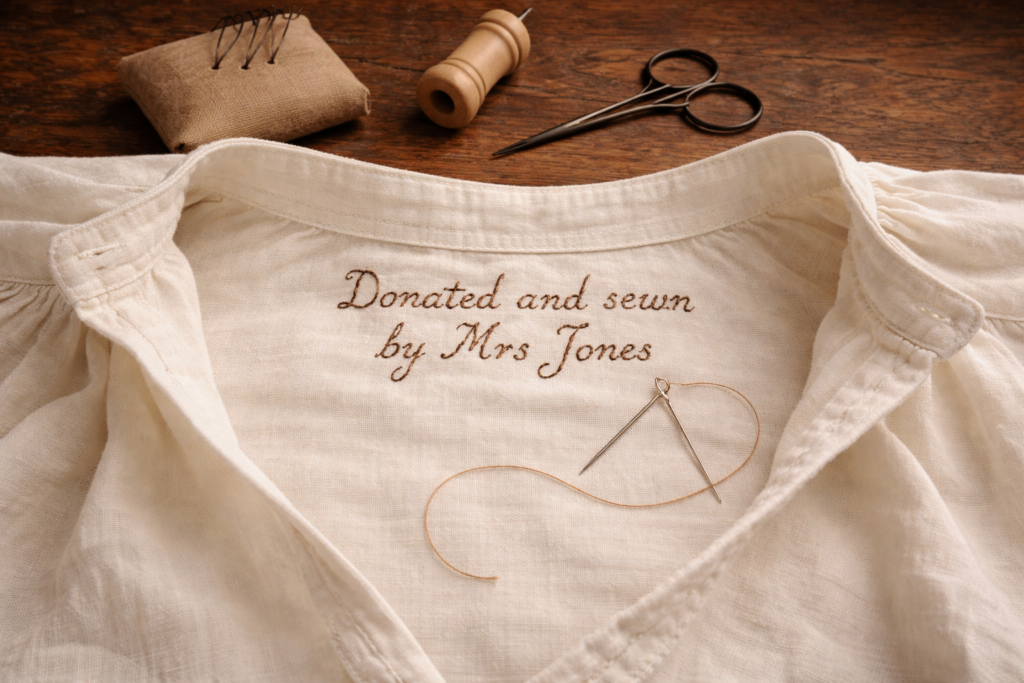
Rather than outsourcing production (and spending more of their donated funds on creating these garments), the women chose to make the shirts themselves, purchasing linen from the funds they had raised and sewing the shirts. a
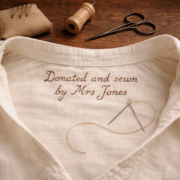
They did not just sew the shirts but they sewed their own donor credit into each shirt.
“bought the linen from their own private purses, and took pleasure in cutting them out, and sewing them themselves. On each shirt was the name of the married, or unmarried lady who made it”
AI generated image of a 1780s shirt with a donor credit sewn in
This illustrates the IKEA effect – people place higher value on things they help create – what better way of creating that connection that sewing your donor credit inyouself?
It also creates the endowment effect, where personal involvement increases perceived worth. Sewing the shirt for a soldier and personalising it with your name reinforces their identity as a patriot, a donor and emotional engagement. It is a tangible and real commitment to the cause.
The act of making and giving also generated emotional rewards. Donors likely experienced both an endorphin “helper’s high” from doing good and a dopamine-driven anticipation of impact, captured in the idea that the shirts would “be worn with as much pleasure as they were made.”
The campaign’s success led to replication in other states, including Maryland, Virginia, and New Jersey, showing how successful fundraising models are often copied, especially when they combine emotional engagement with visible impact.
Challenges
The initiative was not without controversy. Some criticised the women for “going about for money,” revealing social tensions about the expectations of women and their role outside the home.
There were also concerns about the methods used to secure donations. In some cases, social pressure bordered on coercion, with threats of reputational damage for those who refused to give (with one potential subscriber being told that if they did not give then they would ‘hand his name down to posterity with infamy‘) The female fundraisers sometimes relied on gendered behavioural tactics, such as flirtation or scolding, to persuade donors.
“they relied about hyper feminized forms of behaviour – flirting, and failing that, scolding – to induce support from those who for economic or political reasons would otherwise not donate”
While potentially effective, these approaches raise ethical questions about manipulation and the reinforcement of stereotypes.
What this should make us think about today
Effective fundraising today should combine
agency – giving people something meaningful to do
inclusivity – valuing all gifts
identity – connecting giving to who people are
& tangible impact – showing exactly what donations achieve
while maintaining clear ethical boundaries around how influence and social pressure are used.
References:
‘Ladies going about for money’ Female voluntary associations and civic consciousness in the American revolution’ ‘by Emily J Arendt
https://marinajones.uk/wp-content/uploads/2026/04/ChatGPT-Image-Mar-31-2026-at-05_06_56-PM.png10241536adminhttps://marinajones.uk/wp-content/uploads/2022/12/f2b903e010104f5aa61ea1821a685913.pngadmin2026-04-09 12:27:362026-04-09 12:29:06BYOB – Bring your own bobbin
The campaign for a National Theatre for England began in 1848 and often aligned with the desire for a national monument for Shakespeare, however, it was not until 1949 that an Act of Parliament established the theatre. For over hundred years various schemes and fundraisers tried to raise enough public support and funds to make it a reality
Prologue
“We few, we happy few, we band of brothers”
Henry V
Have a fan base. To get your charity and your project going you need a group of committed talented people (think of the infamous Margaret Mead quote). This is what the National Theatre had. A group refreshed over the decades that it took to secure the site(s) and build the theatre.
First you need the believers. From there you can build your tribe of supporters and champions.
Act One
“We’ll hear a play tomorrow.”
Hamlet
Use the art that people love to connect with your fundraising.
How?
Get the playwright of the day to write a fundraising propaganda play promoting your cause. That’s what George Bernard Shaw did in 1910 – a one act play called ‘The Dark Lady of the Sonnets’ which was put on to raise funds for the campaign. In the play, William Shakespeare asks Elizabeth I to create a national theatre
“But the boon I crave is that you do endow a great playhouse, or, if I may make bold to coin a scholarly name for it, a National Theatre, for the better instruction and gracing of your Majesty’s subjects.”
Elizabeth I says .. “there be a thousand things to be done in this London of mine before your poetry can have its penny from the general purse”
[plus ca change!]
but she goes on to speak to future generations pleading: “that if I could speak across the ages to our descendants, I should heartily recommend them to fulfil your wish” (full play text here – https://lnkd.in/ecz2DgxG)
How can you use the art to get your donors giving and closer?
We pay more attention to things that are salient (relevant) to us. Connecting your charity with how it resonates with your supporters, their passions, interests and knowledge makes it stand out for them. They feel connected and ‘seen’ by your charity and it brings their identity and yours closer together and generates more income.
Act Two
“All things are ready if our minds be so.”
Henry V
To be able to fundraise you need to be organised.
Scene 1: Have a good CRM
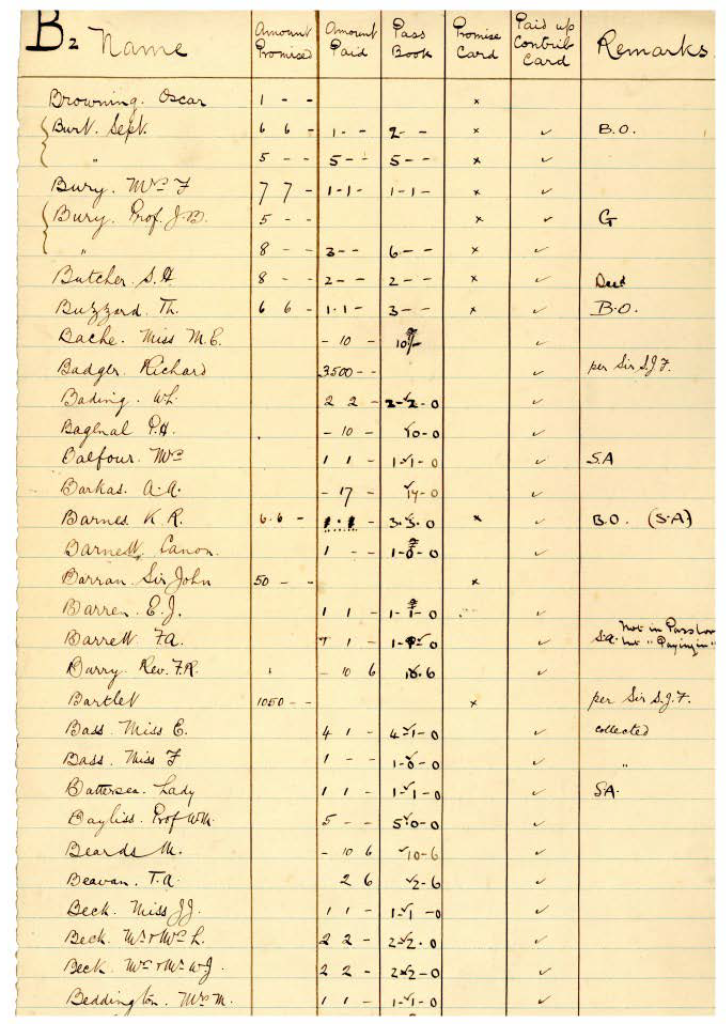
You need to know what is pledged, asked for and paid. Before complex computer systems this entry shows how they were tracking what was paid (and where) and pledged as well as the notes function to record other information.
A sample from the CRM in the 1930s showing what was promised, paid and whether they had the promise card.
From the National Theatre archives
Scene 2: Wait for the right time to make an ask – and trust your fundraisers to know when that is
There is a letter in the archives to Oliver Lyttelton in 1947 (after whom the Lyttelton theatre is named) about a donation that they are all waiting for. Lord Esher says that the intermediary has told him:
‘He has repeatedly told me that at the right psychological moment he is quite sure the donor will come across in a big way’
Fundraisers know when the right time in the fundraising journey to make the big ask. Asking too soon can get a no, or even, a small ‘go away’ gift. Lord Esher who is writing to Oliver Lyttelton expresses his impatience with this approach but trust your fundraiser to know when the time is right to make the best ask of each donor.
Act Three
“Is the chair empty?”
Richard III
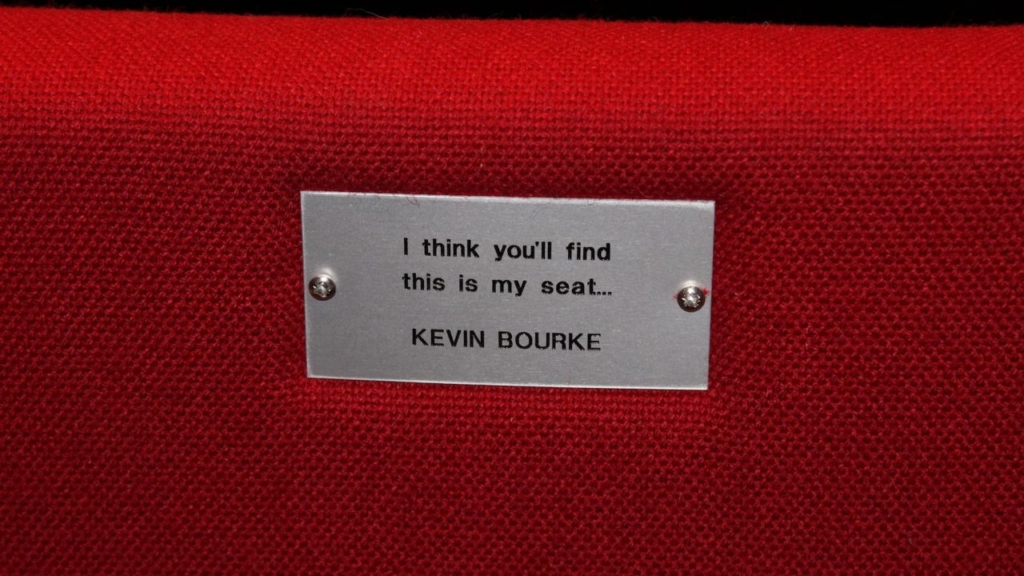
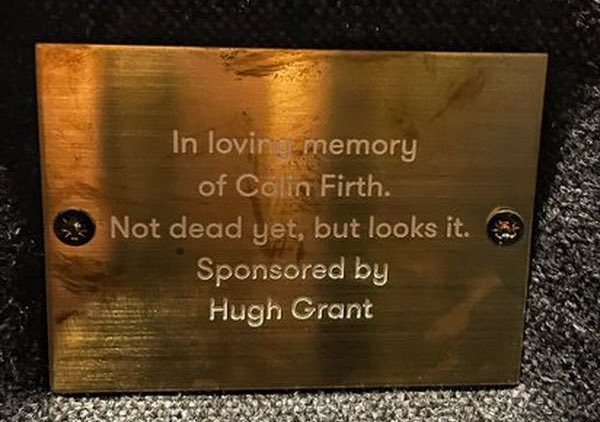
A default often used in theatre is to run a ‘name a seat’ campaign. The committee began this decades before the theatre opened with a campaign to endow seats for £100 in the 1930s. Seats could be named for yourself, your city, or for a favourite and famous actor or even a virtue.
‘buying the right to dedicate one seat either in the name of a person, a society, a township or in the name of some historic act, ambition or ideal, in exchange for £100”
Dame Sybil Thorndike
All the records of those that named seats were lost in the war following a bombing raid during World War Two, and in the 1950s they had to advertise for their lost donors (read more about how to find your lost donors https://marinajones.uk/lostdonors/)
People love having their name on seats, and often go and visit their seat every time they go to the theatre.
Why?
Naming seats is about converting a transaction into identity and permanence.
The endowment effect (named by Richard Thaler) suggests we place higher value on things once they are ‘ours’. Our name on a seat asserts a psychological ownership – it moves from a seat in the theatre to myseat. Our identity is extended into the seat – and it becomes a social and visible symbol that I belong here, I am part of the fabric of this place. It demonstrates a commitment to the organisation. It provides social reinforcement of your identity as a kind and generous person.
How can you recognise your donors and reinforce their generosity and kindness?
Act Four
Scene One
“Lord, what fools these mortals be!”
A Midsummer Night’s Dream
We never know what the future holds and what new products come on the market that may help or hinder our fundraising. Is it cryptocurrency, NFTs or crowdfunding?
In 1954, the author of the newly published ‘Guide to Trusts and Foundations’ wrote to the Secretary of the Committee suggesting they purchase a copy to aid their fundraising. The reply:
“at the moment we are not contemplating any trusts or foundations for funds”
How times have changed.
Scene Two
“I have had a most rare vision. I had a dream, past the wit of man to say what dream it was…”
A Midsummer Night’s Dream
Financial security and endowments that support the long term investment remain a dream for most…
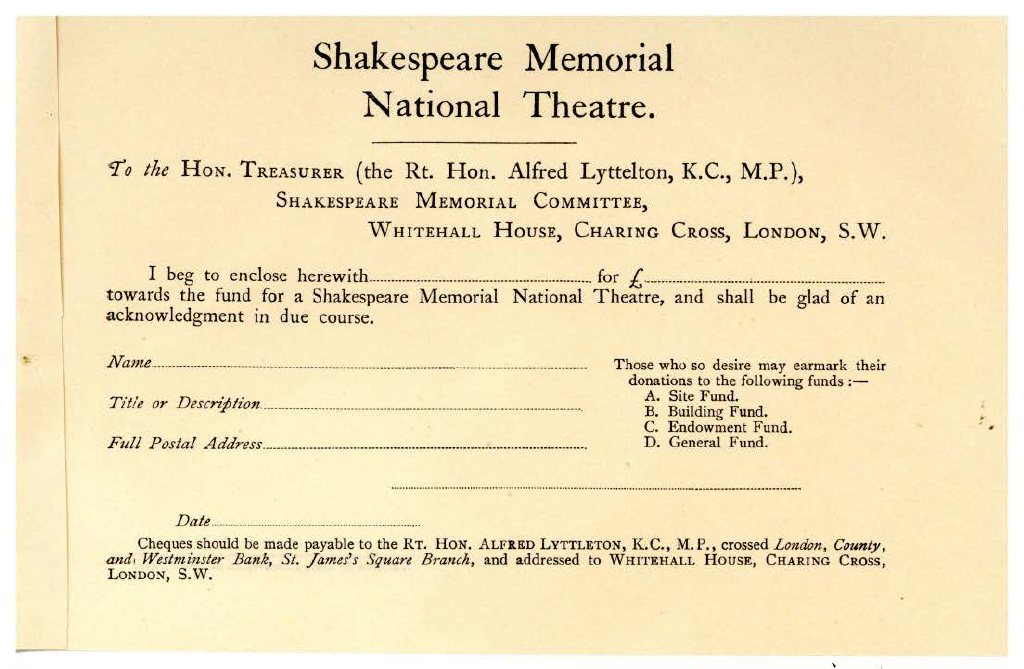
In 1923 the brochure raising funds states:
“a theatre should be owned by the nation and placed, by some form of endowment, above the necessity of constant and immediate profit making’
The financial plan involved £100,000 for the site, £150,000 for the building and an ambitious £250,000 for this endowment.
From the National Theatre archive
I have known several capital campaigns that begin with the dream of endowment, a dream that never materialises.
Keep dreaming big.
Act Five
“Love sought is good, but given unsought is better.”
Twelfth Night
You have fans everywhere – and you can get unexpected gifts. Throughout the campaign there were generous and often unexpected gifts. Theatre groups disbanded sent in remainder of their funds
A group of school children saw an article about the proposed theatre in 1946 and sent it £2 as the proceeds of their amateur play after seeing an article in a magazine.
Who are your fans? And how do they know what you are doing and that you need funds?
Epilogue
“Will it please you to see the Epilogue or to hear a Bergomask dance between two of our company?”
A Midsummer Night’s Dream
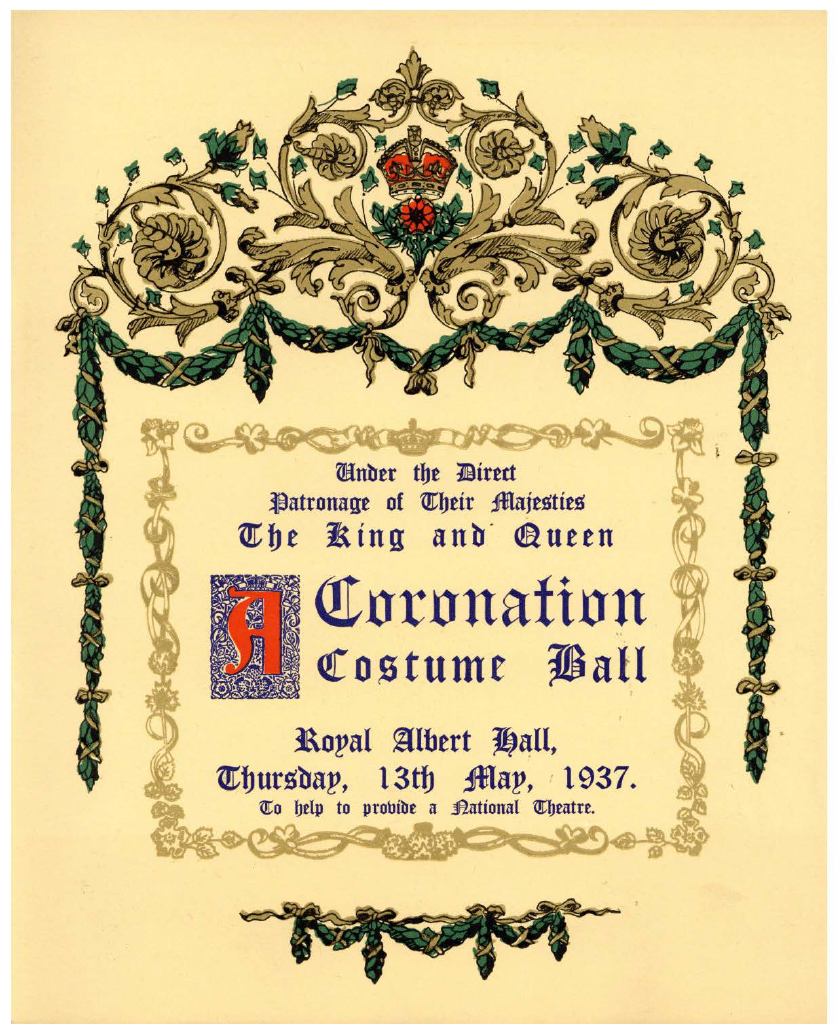
Like a Shakespeare play we finish with a dance – and this time a ball – proving not much has changed. George VI coronation ball was a fancy dress and a procession of theatre from Greek tragedy through medieval and Shakespeare to modern day with a setting of ‘A Midsummer Night’s Dream’. And like the 2026 a gala and star-studded celebrity affair.
From the National Theatre archive
Events fundraising and celebrity connections continues to be a foundational way to raise funds.
So what does that mean for fundraisers today
Build a core group of committed champions first.
Fundraising is strongest when it aligns with what audiences already love – when it is emotional, relevant and compelling
Create ways to build identity and connection – make the donors part of the fabric of the organisation
Make it easy for anyone to feel part of the story
The operational side also needs to work – as well as the inspiration.
Fundraisers manage pace, patience, and psychology.
It’s never just about money – it’s about building a movement people want to belong to.
https://marinajones.uk/wp-content/uploads/2026/02/IMG_1887-scaled.jpeg19202560adminhttps://marinajones.uk/wp-content/uploads/2022/12/f2b903e010104f5aa61ea1821a685913.pngadmin2026-03-22 19:46:332026-03-25 11:42:45Lessons on how to raise money for a theatre from the National Theatre archives
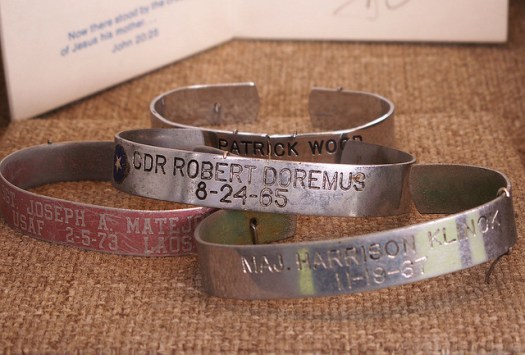
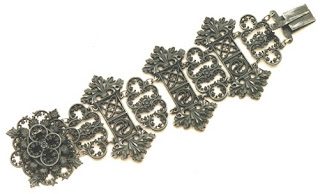
In the early 1970s, millions of Americans wore thin aluminium bracelets engraved with the name of a man they had never met.
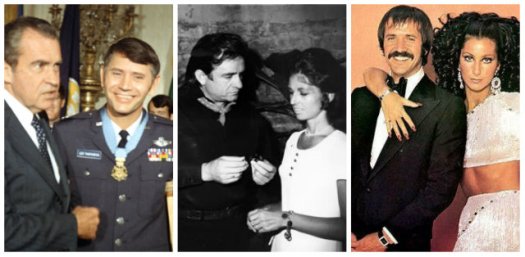
They wore them in classrooms, on television, on red carpets and at kitchen tables. Johnny Cash wore one. Sonny and Cher wore them. John Wayne wore one. So did Princess Grace of Monaco. So did students who could barely afford the $2.50 donation that came with it.
Each bracelet carried the name and date of capture of a single prisoner of war or missing serviceman in Vietnam. You wore the bracelet until the man named on it returned, or until the truth of his fate was known.
The bracelets worked because they exploited something deeply human: a personal connection. It connected you with one individual, one missing serviceman – they became yours. This is called the identifiable victim effect the tendency to feel greater empathy and act more decisively when a single, specific person is identified, rather than an anonymous group. The POW/MIA bracelets replaced a collective of anonymous prisoners with one named individual.
Development of the idea …
Congressman Bob Dornan wore a bracelet made from scrap aluminium, given to him by a Montagnard tribesman in the Vietnamese highlands in 1966. It came with the plea – ‘do not take it off until my people are free‘.
Bob did not take it off. He wore it every day. Every time his arm hit a wall the bracelet clinked, every time he saw it, every time it got caught in his sleeve – he was reminded of the suffering and why he was wearing it.
The story of Bob Dornan’s bracelet inspired Carol Bates and other students involved in Voices in Vital America (VIVA) to do something to raise awareness of the prisoners of war in the Vietnam war. The first batch of bracelets was intended for students, priced to match the cost of a cinema ticket.
Visibility as commitment
Behavioural economics tells us that public commitments change behaviour. Once we signal who we are, and especially when we do that visibly with an outward sign, like a bracelet or badge, we want to stay consistentto that identity. The bracelet didn’t just express alignment, it showed and embodied commitment.
What started as a kitchen table enterprise caught the imagination.
Demand jumped from hundreds a week, to tens of thousands. Nearly five million were eventually sold raising over $7m.
This is the behavioural hinge – once support becomes visible, it stops being individual and starts being social.
Wearing the bracelet did three things at once.
It personalised an abstract war.
It signalled allegiance to others.
And it made non-participation noticeable.
When objects become norms
The POW/MIA bracelets didn’t just raise money. They changed the atmosphere.
The bracelet turned support into a default behaviour. If everyone else was wearing one, not wearing one became a decision.
It was not just a fundraiser. It became social norming made tangible.
This is the same dynamic we use as charities with badges, donor walls, name plaques, digital badges and public thank yous. Visibility creates legitimacy. Legitimacy creates momentum.
The difference is that the bracelet didn’t say I donated. It said I’m part of this.
Wearing as giving
Psychologists call this social proof. Fundraisers call it recognition. Donors experience it as belonging.
We know from decades of research that people give more, and more often, when generosity is visible. Donation boxes that show visible gifts drive more donations – the social proof of others donating reassures us that this is the normal thing to do and encourages more gifts, more belonging. Public donor lists can increase participation by crowding in support (although be careful not to crowd it out). Badges, ribbons and pins turn our private values and identities into shared social norms.
But the bracelet did something more sophisticated. It fused identity, sacrifice and time.
You didn’t just buy a bracelet. You lived with it. Every day reminded of your soldier, your prisoner of war, your connection and your commitment.
From bracelets to badges
This logic has repeated itself across centuries. The bracelet was not a new way to belong and to embody commitment and identity.
Medieval pilgrims wore badges showing the shrine they had visited. These could be bought as souvenirs to demonstrate your identity as a pilgrim, to show you had been on pilgrimage (and helped also raise additional funds). You wore them on your cloak or hat, put them in your prayer book or could nail them up at home. They showed to the world that they had been on pilgrimage and what tribe they belonged to. Each shrine had its own badges so you could collect them from various shrines demonstrating your piety and connection.
In 1813, Princess Marianne of Prussia used the power of social norming (and a bit of royal celebrity messenger) to appeal to Prussian aristocrats to give their gold jewellery for the Prussian cause against Napoleon. This proved a popular way to fundraise and the gold items were exchanged for iron jewellery emblazoned with ‘Gold gab fur Eisen’ (‘I gave gold for iron’). It became the social norm to wear these iron rings and broaches, and gold was considered unpatriotic.
Our brains have evolved to feel social rejection in the same way that we feel real pain – as our primitive selves needed to be with the group to get food and shelter – that is why doing what is normal for the group is so important. What we know now about how our brains work helps us to understand what is happening inside our brains and why social norming and embodied commitment are such a powerful drivers of behaviour.
Why we want the badge or the sticker everyone else has got.
We want to do what people like us are doing.
We want to belong to the tribe.
From tote bags to pin badges, from poppies to daffodils and forget-me-nots – charities continue to give supporters the chance to demonstrate their belonging and identity as a supporter. To belong to that supporter tribe. Each turns the body into a message, and the donor into a carrier.
Wear what you feel
Objects work when they carry emotional weight. When they ask something of the wearer. When they make values visible without making them performative.
The most powerful fundraising symbols don’t reward generosity — they enrol it.
They say: If you care, wear it. If you wear it, live up to it. If enough of us do, it becomes normal.
And once something is normal, it no longer needs to shout. It just needs to be seen.
References:
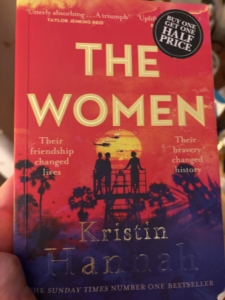
I found out about these bracelets by reading ‘The Women’ by Kristin Hannah – which tells the powerful story of American female nurses working in Vietnam, friendship and the aftermath of the war.
https://marinajones.uk/wp-content/uploads/2026/01/image-4.jpeg355525adminhttps://marinajones.uk/wp-content/uploads/2022/12/f2b903e010104f5aa61ea1821a685913.pngadmin2026-01-27 19:52:292026-01-30 20:33:34Why did five million people wear the same bracelet?
… you put my name on the building, that I decide who comes to this university, that I choose the art you do…
🚩 Red flag?
What if this was also about forcing another agenda? What if it was about equity?
Can coercive philanthropy ever be a good thing?
Three scenarios
After being a major sponsor of this ballet company for several years, I want to rename the company to include my name and have influence on the art. 🚩
As a donor, I want to rename this university college to include my name 🚩
I will only give you money to fund a new medical school if you let me influence the admissions criteria 🚩
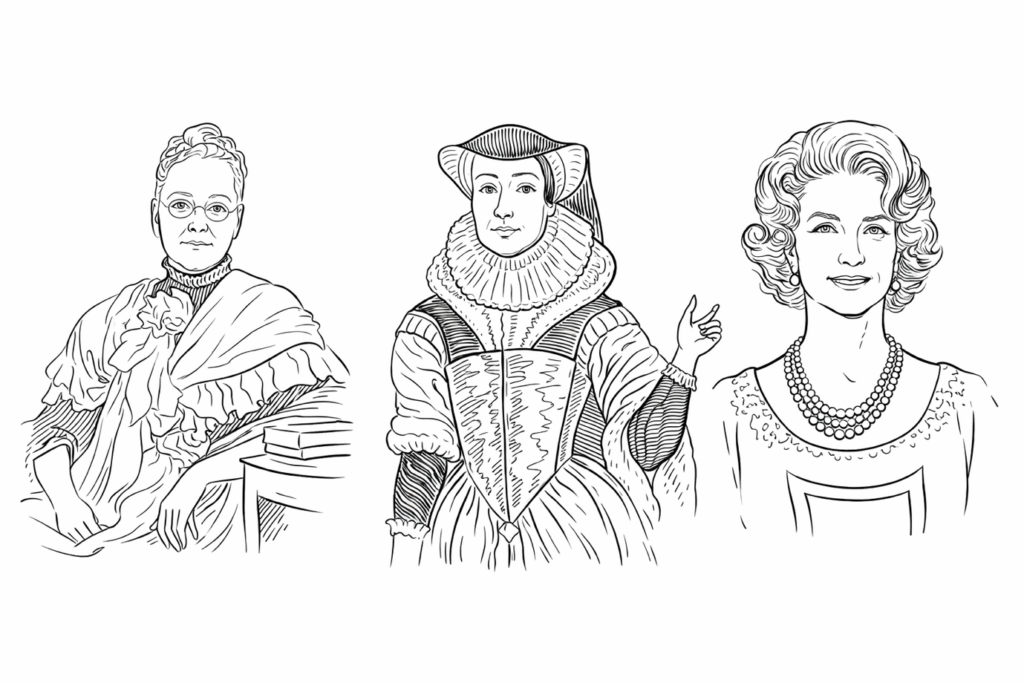
Here are three historical examples of female philanthropists offering gifts with conditions – one where they accepted the money and conditions, one where they said no and nothing happened, and one where they said no and it happened anyway.
What would you do?
How would you react accordingto your acceptance of gifts policy?
In the UK the Charity Commission has a clause that saysthat donations with conditions, “may undermine your charity’s independence’ and that trustees can refuse them. But might there be bigger issues at stake?
1. After being a major sponsor of this ballet company for several years, I want to rename the company to include my name and have influence on the art.
The first scenario is from Joffrey Ballet in the US. Founded in 1956 by Robert Joffrey and Gerald Alprino, the ballet company was initially funded through ticket sales, and fees from Joffrey’s teaching. In 1962 they were offered the chance to tour aboard but needed funds to make it happen. Enter the Rebecca Harkness Foundation.
Harkness took ballet lessons as a child and had been fascinated by it and wanted to support.
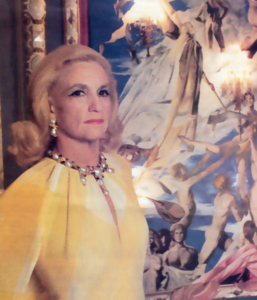
From 1962, Rebecca Harkness through her Foundation funded workshops, new choreographers (including Twyla Tharp and Alvin Ailey) and the dancers themselves. Harkness composed for some of their pieces using her musical background and each morning took two hours of private ballet class saying “I must do it myself or else I’d just sit back and write out checks.”. She was a devoted and knowledge balletomane.
“When I first decided to form a ballet company, Mother said: ‘Dear, why don’t you just see a psychiatrist?’ I told her it would be cheaper to form a ballet company.”
In 1964, the Foundation demanded that, in return for their financial contribution, the company be renamed the Harkness Ballet, that Rebecca Harkness would influence the artistic programme, with Joffrey remaining its Artistic Director.
🚩 Red flag? What’s in a name? Compromising artistic freedom?
This offer was further complicated by the fact that the Foundation through its funding paid and owned the contracts on many of the dancers, the scores, the sets and rights to many of the company’s ballets.
What happened? Joffrey refused and maintained its independence, and in 2025 the company celebrated its 75thanniversary.
But Harkness took the dancers, sets, scores and set up Harkness Ballet. She bought a theatre, just by the Lincoln Center naming its Harkness Theatre and spending over $5m to create “the first and only major theatre in the U.S. specifically designed for dance”. The theatre included an infamous mural with the trainee dancers all painted naked as gods and goddesses and Rebecca Harkness painted (clothed) as the goddess of dance. Patrick Swayze had a Ballet scholarship and trained at the Harkness House for Ballet Arts.
The 1974 stock market crash contributed to the company’sdecline, and it closed in 1975. The theatre auctioned off its chandeliers, fixtures, and fittings to recoup losses.
(Rebecca Harkness is the inspiration behind the Taylor Swift song ‘The Last Great American Dynasty’ and the lyrics include a line about ‘And blew through the money on the boys and the ballet’)
2. As a donor, I want to rename this university college to include my name
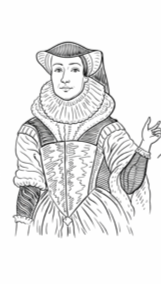
This scenario comes from 1570s when widow to Lord Mayor of London, Mary Dale used her inherited wealth to become an active philanthropist. She founded two Fellowships at Peterhouse college in Cambridge. She offered to give the College lands to the value of £500 a year if they would rename the college ‘the college of Peter and Mary’. This offer of a gift was refused and the Master of the College saying ‘Peter, who so long lived single, was now too old to have a Feminine Partner.’
Mary Dale stopped supporting the college after that (although they do continue to have a financial fund in her married name, Lady Mary Ramsey). But that did not stop her giving, as Thomas Fuller relates in Worthies of England ‘This not succeeding the stream of her Charity was not peevishly dried up’ and she turned her philanthropy to Christ’s Church Hospital (and without demanding naming rights), grammar schools in Essex and poor and destitute soldiers.
3. I will only give you money to fund a new medical school if you let me influence the admissions criteria and curriculum
🚩Red flag? Straight no, right?
John Hopkins died in 1873 leaving $7m to be used to establish a university, school and hospital. In 1890s the dividends from the investment in the B&O railroad stock had dried up and there was not enough investment income to fund the medical school. The President, Daniel Gilman, in response to this fundraising gap said that $100,000 was needed to fund the medical school. The President sought a “man of large means” to fund the school.
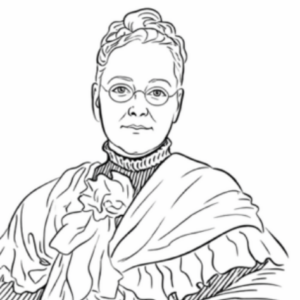
Raising the money: Mary Elizabeth Garrett and M Carey Thomas (who had tried to enrol as a student at John Hopkins in the 1870s) created the Women’s Medical Fund Committee raise the $100,000 and wanted to give the money on condition that qualified women allowed to be admitted on the same terms as men. They also used the committee to try and influence public opinion on the issue – at this time most universities were single sex and access to higher education to women was limited.
“The avowed purpose of the committee was to raise a sum of money sufficient to establish the School of Medicine and to offer it to the Trustees of the University on condition that women be admitted to the school on the same basis as men.” Alan Chesney, MD, Dean and Archivist at John Hopkins.
They raised the $100,000. Garrett contributed over half herself, and other donors included Mr J Pierpont Morgan, Mrs Leland Stanford and First Lady Mrs. Benjamin Harrison.
In 1890 they offered $100,000, which the trustees of John Hopkins accepted to invest — but they stated that $500,000 was needed to found the medical school, effectively moving the fundraising goalposts.
M Carey Thompson said of Daniel Gilman:
“many of the trustees, and Gilman above all, seemed to prefer not to open the school at all if it meant that women were to be admitted.”
By 1892, the initial donation of $100,000 had grown to $193k through additional gifts and investment income. Mary Elizabeth Garrett pledged the $306k needed to reach the $500,000 target.
Margaret Putnam Jocobi, the first female graduate of pharmacy college and suffragist commented:
“It is astonishing how many inviolate objections [to co-education] on the score of feasibility, modesty, propriety and prejudice melt away before the charmed touch of a few thousand dollars”
However, the $500,000 was a conditional gift with not one stipulation but many. They were carefully negotiated and included:
all admitted students needed an undergraduate degree in science (this was not usual for other medical schools)
Clauses codifying women’s place and on the same terms as men
Rigorous scientific curriculum
Four-year course
Publish the funding agreement annually in the school catalogue
But she agreed that she would not interfere in the day to operations of the university.
Any breach of these conditions would mean the money returned to her. She used the power of her wealth to give the gift on her own terms and advance the cause of female education.
“That in the event of any violation of any of the aforesaid stipulations the said sum of $306,977 shall revert to me, or such person or persons, institution or institutions, as I by testament or otherwise may hereafter appoint.” Part of the grant agreement
Mary Elizabeth Garrett’s gift ultimately founded the Johns Hopkins Medical School. Her conditions did more than secure funding, it cemented women’s equal place within the institution and established rigorous standards for both the curriculum and the quality of medical training. Her insistence and use of financial leverage forced the hand of the university to accept the gift on her terms.
In hindsight, the results of her intervention are an example of using power for the public good. The long-term benefits to women’s education, professional equality and the modernization of medical training have been substantial and enduring. While her methods may be ethically uncomfortable, the outcomes have been profoundly positive.
Garrett’s gift has been named ‘coercive philanthropy’ by historian Margaret Rossiter. William Osler one of the founding physicians of the medical school had a different take:
“It was a pleasure to be bought.”
🚩
.
Reflection
Using the force of the gift to demand equality places Garett’s gift on the right side of history – but what would we do today?
These three scenarios were all from female philanthropists, would the outcome have been different if it had been a man?
As fundraisers we often fear the coercive nature of the gifts that we receive and how they might divert us from core mission and purpose. A gift that came with so many specific conditions in would be unlikely to pass through a modern acceptance of gifts policy.
How might we assess what transformational gift pushes our charities or trustees to take radical steps forward for the greater good?
How might history judge our acceptance or declining of gifts? (Might there be gifts that are the equivalent of the record producer who turned down The Beatles?)
Should these gifts be judged by their intentions or methods?
https://marinajones.uk/wp-content/uploads/2026/01/Red-flag.png10241536adminhttps://marinajones.uk/wp-content/uploads/2022/12/f2b903e010104f5aa61ea1821a685913.pngadmin2026-01-21 18:49:482026-01-21 18:49:51🚩 I will give you money on condition that…
Our brains are wired to emotionally respond to music which is why certain songs have a power to transport us physically and emotionally to a moment – a university bar, a crush, a city, a holiday, a road trip, childhood, someone we love. Familiar music, especially music with vocals, causes a psychological response (increased heart rate & blood pressure) – music is wired to our memory.
Sounds can prime our moods and emotions. Research has shown that listening to ‘Hakuna Matata’ from The Lion King primed a good mood and people were more generous.
Working in opera I often ask audiences to remember a particular musical moment, or their favourite moments in communications.
Sound is one of the most powerful senses we have, but one often under used in fundraising.
Listening to music can give you thrills and produces endorphins and activates the brains reward circuits.
“Music does a lot of things for a lot of people. It’s transporting, for sure. It can take you right back, years back, to the very moment certain things happened in your life. It’s uplifting, it’s encouraging, it’s strengthening.”
Aretha Franklin
The power and embodiment of music can be seen in this former ballet dancer with Alzheimer’s hearing Swan Lake and recreating the steps
Mood music
The cues music can give us are subliminal nudges, that can impact our mood, but also our behaviour, how fast and what we eat, and what we buy.
Music with a faster tempo makes us eat faster, and people tend to spend more money and eat slower when jazz or classical music is played. Think about the ambient background music you might have in a restaurant – fast and pop for somewhere that wants to turn tables, and more mellow and chilled for a restaurant that wants to encourage you to spend longer, spend more and enjoy the experience. (Although music can also be used as a deterrent, a Welsh branch of MacDonalds plays classical music after 17.00 to deter anti social behaviour)
This real life experiment in an East Midlands supermarket shows how the background music has more impact that we might think it would
When French music was played 75% bought French wine
When German music was played 73% bought German wine
When asked about their choice of wine, and whether the music had impacted their choice, only one of those surveyed noted the impact. (North, A. C., Hargreaves, D. J., & McKendrick, J. (1999))
What does your brand sound like?
Brands use sounds, known as sonic branding, to help us readily recognise them:-
Coca Cola used this image and the slogan ‘try not to hear this’ to evoke the sound of the fizz of the bubbles (there were also adverts showing a detailed close up of the ring pull being pulled back, and a bottle opener opening a bottle). The advert invites us to hear the remembered sound and trick our brains to almost hear it.
We know sound (and taste/smell – think Proust and the madeleines) are some of the most powerful senses but unless you have the budget for a TV ad (or create a ‘scratch’n’sniff appeal) they can be underused in fundraising appeals (in direct mail or adverts.)
We know that we and our supporters receive information in many ways – that the words are only part of it, and that the real and imagined images we use have an impact – as does the weight of the paper, the design of the piece, the feel of appeal in the hand, the order we present information (touching something soft primes us to be kinder). We know that appealing to many of the donor’s senses can make our appeals more vivid and effective. So, we might appeal to donors to remember a sound (children crying) or imagine a future sound (children laughing), but we largely rely on the words and the visual of the design of the pack – letter, the lift letter, response mechanism, the call to action.
For someone working in opera and fundraising, the sounds created and remembered are key – the emotions they stir in audiences from the dopamine of anticipating what it will feel like to hear that music again, to the oxytocin of the emotional engagement with the story – music is so important. And not just the music, but the whole holistic and acoustic experience of the performance, of being together, with an audience, inside a theatre. The hubbub in the bars before hand, the orchestra tuning up as you take your seats, the silent anticipation with the audience holding its breath before the curtain rises and the applause at the end.
How can we integrate soundscapes into an appeal?
How can we create appeals that bring more of the sound world – real, remembered or future created by the donor’s action into our appeals?
How can technology help us integrate and create an immersive sound world?
How could we use sound to provide a richer and deeper connection with our donors? To their memory? To their identity?
What segments of donors will this soundscape be most effective with?
https://marinajones.uk/wp-content/uploads/2024/01/heaer.png94178adminhttps://marinajones.uk/wp-content/uploads/2022/12/f2b903e010104f5aa61ea1821a685913.pngadmin2025-10-19 20:36:282025-10-19 20:36:29Extraordinary How Potent Cheap Music is – sensory priming
As fundraisers and communicators it is more powerful to show than to tell – to show through actions, words, subtext and images the stories we want to share.
Chekhov said:
“Don’t tell me the moon is shining. Show me the glint of light on broken glass.”
Humans are hard wired to notice what other humans are doing. The Social Hypothesis Theory shows us that human actions are processed quicker. So if we show humans in the images we use in our fundraising it can give our audiences a short cut to show audiences a desired behaviour or action. Show don’t tell engages the reader more, and becomes a more memorable way to demonstrate the help needed, the desired behaviour and the impact of the gift.
Here are a 5 historic examples of where – show don’t tell was used to powerful effect.
1. When you want people to adopt a new behaviour – show don’t tell
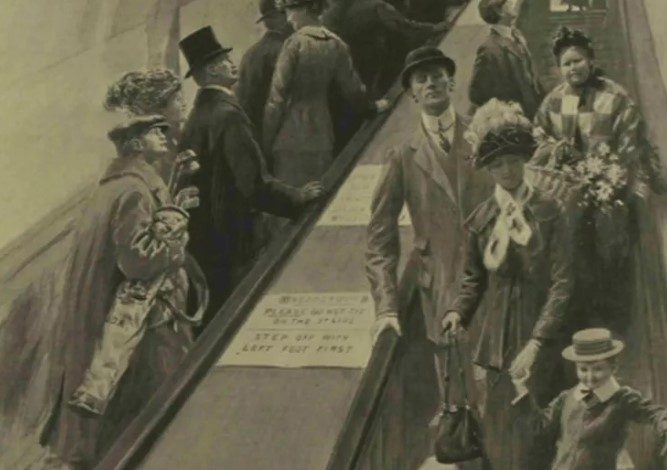
Escalators were introduced to the underground in 1911 but treated with suspicion.
One legged engineer William ‘Bumper’ Harris was employed at Earl’s Court station to ride up and down the escalator. We take our cues from the social behaviours of others around us and mimic it – Bumper Harris demonstrating how easy and enjoyable the moving escalator was reassured passengers. If a one legged man could easily and successfully navigate this moving staircase they could do too.
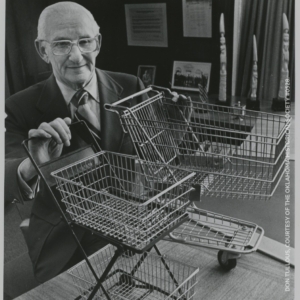
In 1937 when super market trolleys were introduced the same thing happened. People did not use them. Men thought they were unmanly. Women thought they were like baby pushchairs. Models were hired to walk around using them in the shop to make them socially acceptable.
2. When you want to get donors to give – show don’t tell
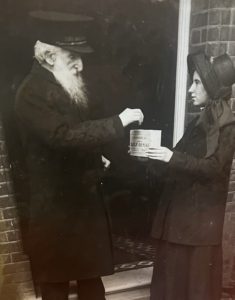
General William Booth the founder and leader of the Salvation Army was often depicted on postcards making contributions to the self denial week. Having a visual clue of what we want donors to do – put money in the donation box shows them what to do. It is also leading by example – denying self and contributing. It gives him the authority to ask others to join in supporting the cause.
A 2010 lab study verifies this and shows that when a person observes someone giving money away they are more likely to give money themselves, and that this effect ripples out to other people (from person to person to person to person), (Fowler and Christakus, 2010). It creates a powerful social norm that encourages others to join in.
3. When you want to show how awful something is – show don’t tell
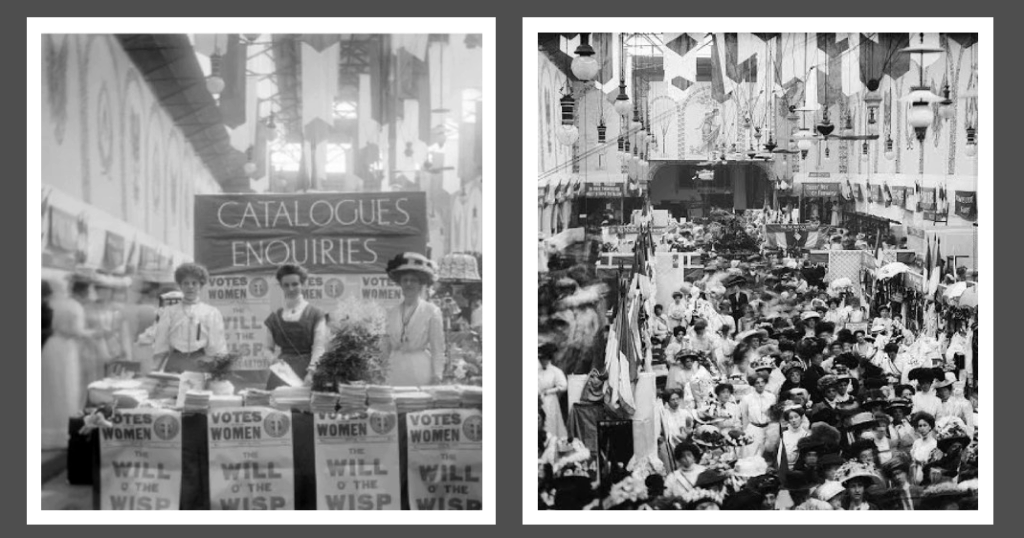
To demonstrate the horrors and trauma of being arrested and force fed the suffragettes had replica jail cells in their 1909 Exhibition.
Before the advent of VR and AR headsets the Suffragettes created an immersive and interactive experience. The tours of the cells were led by women who had been imprisoned. The cells demonstrated clearly the difference between the male and female prisoners. Men, even if imprisoned for treason or murder, had bigger cells and better treatment. Women were in smaller and treated as common criminals. By the time of this exhibition over 400 women had been imprisoned for the cause.
Bing AI generated image of a Suffragette using VR googles
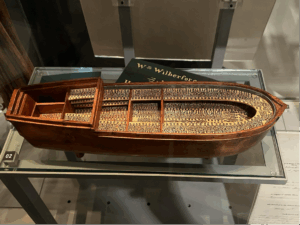
This was a model of a Liverpool slave ship created in 1780s. There is something very tangible about seeing the bodies packed in like this that words cannot capture (it was turned into a famous print).
A a copy of model this was given to prominent Abolitionist William Wilberforce who used it in parliament to demonstrate the awful conditions of enslaved Africans on the ships. Visual impact can demonstrate more than words
4. Put the impact on display – show don’t tell
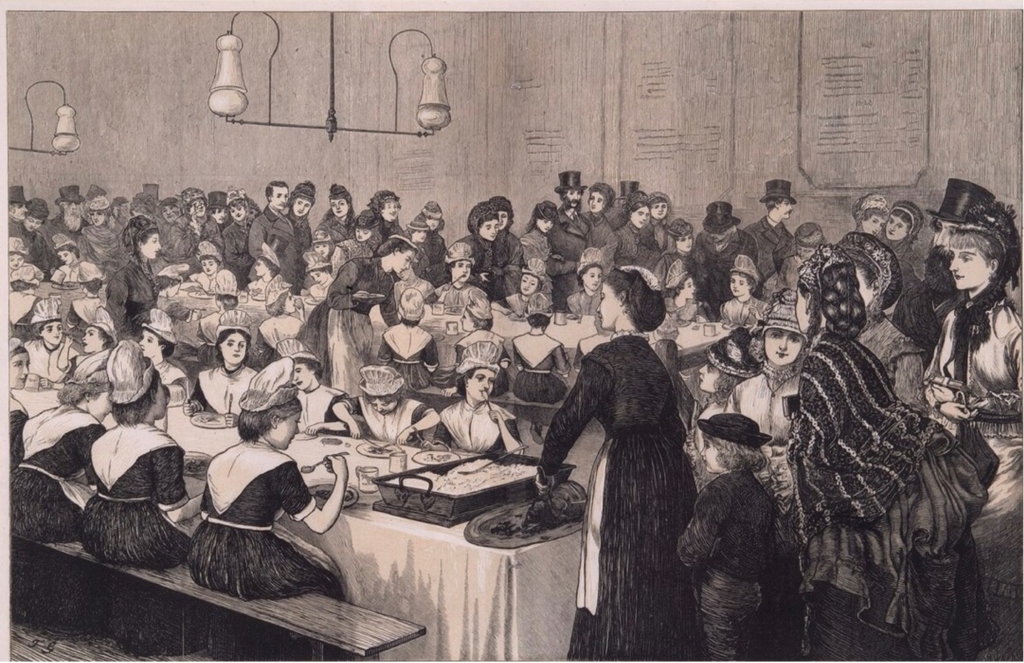
The Foundling Hospital which opened in 1739 became a fashionable place for benefactors to come and see the impact of their donations. Supporters could come and see the children sing in Church on Sunday and then buy a ticket and see formerly destitute children dressed and eating well.
In 1837 the boys of the Queen Elizabeth Hospital in Bristol processed through the city ‘The object .. was the shew off the poor children as being under the patronage of the Liberal Trustees’. They also lined the Clifton Suspension Bridge on its opening in 1864, against showing what the philanthropic support had achieved.
5. The before and after photograph to demonstrate your impact – show don’t tell
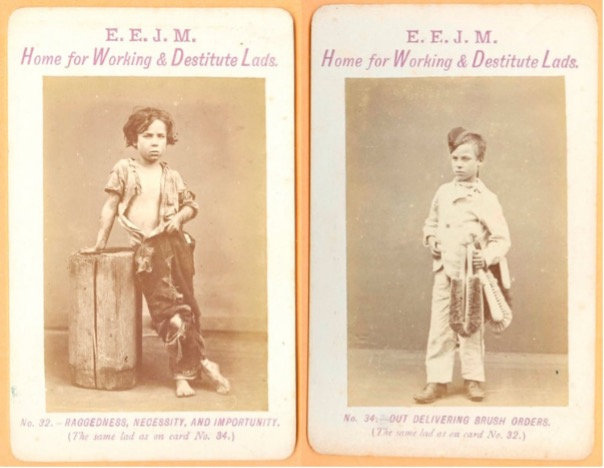
Dr Barnardo’s opened his first homes for rescued children in the 1860s with an est 30,000 destitute or orphaned children in London following a cholera outbreak – the need was urgent
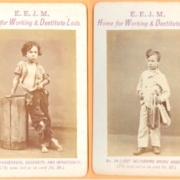
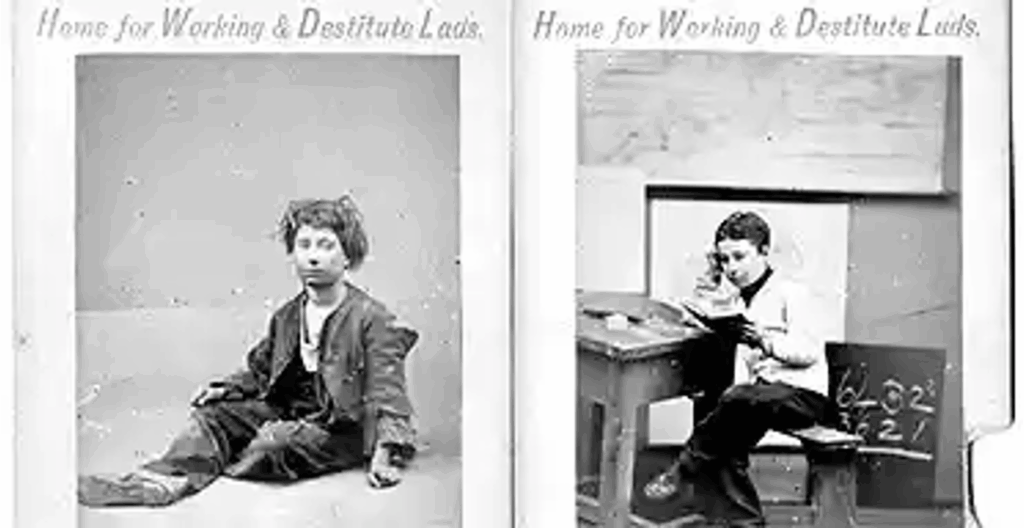
In 1874 he opened a photography studio in his Stepney Boys Home. Every child who came in was photographed when they entered for the next 30 years
The photographs were kept as case history for the charity
And they were also sold as postcards (twenty for 5 shillings or 6d for one) to raise funds for the charity (Salvation Army and others did as well). As well as photography being a new technology printing had become cheaper and easier and charities like Dr Barnardos and Salvation Army embraced these commercial opportunities to grow revenue.
Dr Barnardo used photography to great effect and became a champion of the before and after photo
Now the before and after photo has become a fundraising staple – detailing powerfully visually what your support has done.
The before photos showed children as they arrived at the homes
The after demonstrated the impact of your donation and how their life had been transformed by the charity.
But in 1877 these photographs ended up with Dr Barnardo in court.The issue – the photos – were criticised for being faked and for being exploitative of the children pictured – showing bare arms and legs and the bodies of children (we are in Victorian times) They were criticised for being staged and emotionally manipulative.
Why was it so controversial?
Photography was a new science and seen to reveal the truth of a situation in a more realistic way – the fact that it did not reveal but was artificial and this perceived manipoulation alarmed people. There was concern that if the photo was fake then the charity itself might also be fake. We know how important trust is to charities nowadays for donors making decisions.
A minister -George Reynolds criticised the pictures and the charity in a pamphlet called ‘Startling Revelations’ them saying
“[Barnardo] tears their clothes, so as to make them appear worse than they really are. A lad named Fletcher is taken with a shoeblack’s box upon his back, although he never was a shoeblack.”
And that this exploitation destroyed the ‘better feelings” of the children.
In court Dr Barnardo admitted that they were portraits rather than realistic and he was using artistic licence
This is what he said in defence of the images used:
“we are often compelled to seize the most favorable opportunities of fine weather, and the reception of some boy or girl of a less destitute class whose expression of face, form, and general carriage may, if aided by suitable additions or subtractions of clothing … convey a truthful picture … of the class of children received in unfavourable weather, whom we could not … photograph immediately”.
He went on to say that the images:
”not intended so much to represent the individual boy or girl whose face is depicted, as a whole class of street children, of whom very many have been rescued, but from some one or other of the following causes could not at the time be photographed in the condition in which they were received.”
Dr Barnardo was cleared of most of the charges however his methods were criticised in the judgment which said t
“This use of artistic fiction to represent actual facts is, in our opinion, not only morally wrong as thus employed, but might, in the absence of a very strict control, grow into a system of deception dangerous to the cause on behalf of which it is practised.”
The Times reassured the public that the homes were “real and valuable charities, worthy of public confidence and support“.
So a cautionary tale about the adoption of new technologies and ensuring that when we use it, we are transparent about how we are using it so that we don’t abuse or loose the trust of our supporters.
So how could you apply this in your fundraising?
Show, don’t tell: It’s more powerful to demonstrate than describe.
Human behavior is contagious: We’re wired to notice and mirror others’ actions.
Social Hypothesis Theory: People process actions faster than words—seeing behavior prompts imitation.
Boost engagement: Visual cues are more memorable and emotionally impactful.
Drive action: Showing need, behavior, and impact makes fundraising messages more compelling.
When we think about social change we think in terms of great leaders, of the justice of the change, of the collective action of many to be effect the change they want to see in the world.
We celebrate the individuals and what happened. We think about being on the right side of history, of moral fibre, of progression.
We don’t want to think about the logistics. We don’t want to talk about the money. We don’t think about the fundraising.
We just talk about the injustice overcame.
This speaks to the taboos in our society talking about money.
Social change does not happen in a vacuum and however much we want to think change happens because of well meaning people doing the right thing. To get change you need to organize. To organize you need money. And to get money you need to ask. As academics Bekkers & Wipeking (2007) say the main reason that someone gives to a charitable cause is because they were aware of the need and were asked.
So how were these social change movements funded?
Even when you start digging into how these movements were funded is obscured – partly through what is recorded in the archives from social change, and that within that fundraising is not prioritized.
When we think of the civil rights leaders and the activists – we think of Martin Luther King, Rosa Parks on the bus, we think of the ‘I have a dream speech’, we think of the hundreds of thousands marching on Washington, the sit ins and the civil disobedience, the horror of Jim Crow laws, we think of an organized nonviolent movement
As historian Tanisha C Ford says
“The civil rights movement has become crystalized in our collective and national consciousness as this ideal movement, led by principled and charismatic male leaders that showed the power of racial liberation”
but as with all history it is
“never simple, never perfect and new never obedient”
We don’t think about how that change was funded. We prefer a narrative of passion good people making that social change. Of civil rights won, voting rights gained, a step towards equality – rather than a fundraising campaign, donor segments for targeted asks, fundraising events and securing grants. To make these things happen didn’t just take guts and determination. It took organization. It took donor lists. It took asking. It took preparation, passion, persuasion. It took stewardship.
It took fundraisers.
And today I want to share and celebrate some of those stories of fundraising for social change
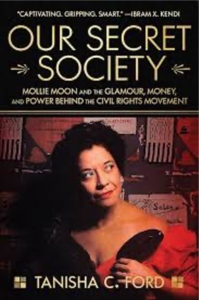
Let me introduce you to Mollie Moon a fundraiser who I learned about in Tanisha C Ford’s book Our Secret Society.
Mollie was a fundraiser and activist who played a crucial role in the civil rights movements raising money from African American grassroots supporters and also courting the wealthy New York philanthropists and grant givers
Ford notes that Mollie Moon had the fundraisers skill of choreography and
“bringing the right people – politicians, artists, European aristocrats and philanthropists together in the right rooms”
As we understand and study more about history, the history of the civil rights movements and the role that women played we are increasingly finding active and involved women who played pivotal roles in social change and as fundraisers.
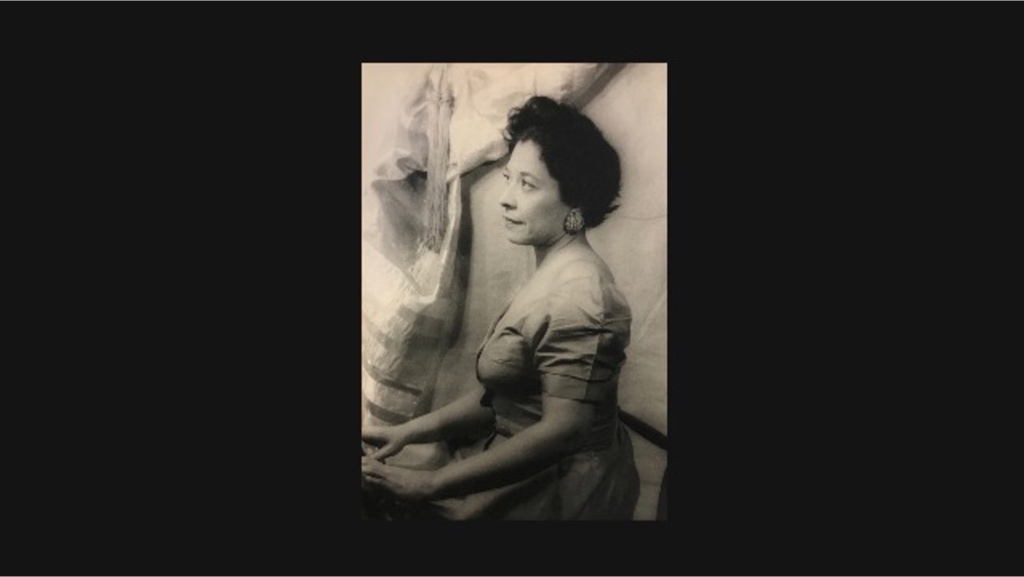
Mollie Moon was born in 1912 in Ohio. She trained to be a pharmacist at college before her interest in social work and moved to New York. She went to Moscow with a bit part in a propaganda film (the communist equated the cause of civil rights with workers’ rights) and returned home via a few years in Berlin. On returning to New York, she worked at the Department of Social Services. The National Urban League was founded to “to enable African Americans to secure economic self-reliance, parity, power and civil rights.”. Mollie founded the National Urban League Guild – one of the key fundraising arms of the League and for decades was a leading fundraiser, activist and campaigner.
So what did Mollie do? Why is she so important in the civil rights movement?
What lessons can fundraisers learn from her about fundraising, and fundraising for social change?
1. Create the event that everyone wants to be at – and that all your supporters can afford to attend
In 1941 Mollie founded the Beaux Arts Ball – a major fundraiser.
Now events fundraising has been around since Biblical times so what did Mollie do differently?
The Beaux Arts Ball was the equivalent of today’s Met Gala. This was the must go to / must be seen at society event. The ball was costumed and the costumes allowed a certain level of licentiousness and risqué skimpy outfits.
Mollie recognized that within this type of event the audience attending had very different motivations
the great night out gala guest
the support the artists gala guest
the support the cause
and she catered for all of these.
The gala model was criticized by some as all events fundraisers is for costing too much vs its ROI and perpetuating the conspicuous consumerism of the Gilded Age. Detractors saw it as at odds with the needs of the League’s work to help the poorest amongst them struggling to get by.
There was concern that these types of glamourous social events would price out in the grassroots community supporters. But Mollie ensured that there was a sliding scale of prices to suit all purses. This made sure that the grassroot community supporters and the white philanthropists could attend and paid proportionally according to their means.
Mollie was pressurized to take the event downtown into Manhattan (from Uptown Harlem) to appeal more to wealthy white elites but held her ground. She wanted to keep it in Harlem and keep its grassroots origins. There was a home court advantage of making whites come to a traditionally black space
These balls raised thousands of dollars for the Guild and its work. Throughout the decades it evolved in terms of location (from Harlem to South Bronx to the Waldorf Astoria in Manhattan) and themes (from costume to fashion) as every fundraiser knows you want to have the calendar highlight event but you need to keep it fresh and your loyal audience coming back for more.
Her work on the balls was trivialized as being a socialite (she was called ‘a beauty with a social mission’ by the Pittsburgh Courier) bringing in both racist and sexist assumptions about the breadth, approach and strategy involved in raising this money.
2. Fundraising – is also education
Mollie spent a lot of telling rich white Americans why racism is bad and how it impacted on her day-to-day life. If you cannot see something happening you cannot understand that it is happening or what it means. Telling the truth and giving powerful testimony is an important but also an emotional labour for fundraisers. And Mollie had to do that. She also, as many fundraisers do, had a guiding role in understanding what the donor wants and finding the right project for them to support. This match making of matching the donor to the project is a key fundraising attribute.
3. The power of an emergency appeal
Mollie knew the power of urgency and the need to act now. She rebranded appeals to create a sense of urgency to get people to come
“Unless the citizens of Harlem respond to this call, the continuation of the cultural program at the center will cease and the community will cease and the community lose one of the most progressive institutions of its kind”
Tanisha C Ford
4. Celebrity endorsers
We listen to the message more when it is someone likeable and with authority that is endorsing it – so from Beaux Arts Ball to the other events – having the names of prominent sponsors on the event advertisement was crucial. And Mollie used this to her advantage – the adverts in the papers for the balls contained lists of celebrity patrons and endorsers including Orson Welles, Paul Robeson, Katherine Dunham, Billie Holliday and Marlon Brando.
It was not just their endorsement she also wanted their talent. She arranged fundraisers of Paintings by Famous Amateurs getting Dwight Eisenhower and Bojangles amongst others to paint pictures and auctioning them for the League.
5. Power of press
Mollie used her networks and contacts to get stories of the fundraisers and the League’s work into the press. She didn’t just focus on the news section but also society and fashion.
6. Importance of CPD
Like every good fundraiser Mollie understood the power of professional development and training. She ran programmes to train and inspire volunteers to go out asking.
7. Importance of being organized
fundraising doesn’t happen in a vacuum. You need to be organized. You need to know who has given and when, who knows who, who asked who. Mollie and the Guild had donor rolls, lists of last donation and last contact like any good fundraisers CRM system.
Mollie Moon
But fundraising for social change – like any kind of fundraising – is not easy.
It raises questions about who you work with.
So who did Mollie work with?
One of the key people was Winthtrop Rockefeller – known as Win – grandson of John D Rockefeller. He positioned himself as a rebel. A former a soldier, expelled from Yale, worked Texan oilfields. Win Rockefeller did not want to trade on family name, but had cash and connections (and perhaps an element of rebelling against the establishment family by supporting civil rights)
Win was known for saying:
“its not enough to contribute money. People must make the gift of themselves of their own time, their creative talent and spiritual strength”
A precursor of the 3 TS of fundraising – treasure, time and talent
How you treat donors differently? (They aways know)
The National Urban League suffered controversy in 1949 when a newspaper leaked the existence of separate donor lists. A list for downtown Manhattan white donors offered exclusive events and a list of uptown Harlem African American supporters invited to engage in the struggle. This caused their membership to drop 150,000.
This feeds into an issue at the centre of funding for social change
Who do you take the money from and if you take money from certain people does that change what you are fighting for?
Are there more ‘donor friendly’ projects that are less radical projects and therefore more palatable? Within the civil rights movement was education for African Americans more fundable than voting rights? How do you know what cause to focus on when there are so many urgent needs? How led are you by where the money is vs the cause you are fighting for?
Ebony magazine said that taking white money reproduced white supremacy and racial hierarchy and for many within the movement taking money from wealthy philanthropists or foundations for many perpetuated the capitalist structure that had so benefited from slavery.
Do you like Greenpeace say you wont solicit corporate money? Or like the Mackenzie Scott grant recipients, Frida- the young feminist fund, take the money and then release a statement saying how you fundamentally disagree with the wealth that created it? Take it and hold your nose? Have more money for the education programme but not enough for the activist work?
These were fundamental challenges for those fighting for social change – and social change is not just one agenda item, it is a broad movement, some want fast radical change – you have to hold the collective together as well as get the money.
When there are mixed motives for giving, do you take the cash or question the principles?
Many businesses supported civil rights movement and made donations because it was good for business. Companies like General Electric and American Airlines wanted to attract the new wealth African American professional classes to spend their money with them.
Although there were those that genuinely supported the cause and championed it, in 1962 a business man’s lunch aim to raise $3m for the League and a business man stood up to say cost of racial prejudice costing business $7.5bn
Competition for limited resources – but play to your unique strengths
There was competition between different organsiations trying to achieve the same aim – sounds familiar? There have always been arguments about too many similar charities doing the same thing. The National Urban League and the NAACP (National Association for the Advancement of Coloured People) were in competition for donors and resources. However they each played to their strengths and structures – the National Urban League was 501c3 so had structure to receive grants and tax efficient giving but could not be politically active – the NAACP was a 501c4 so could lead on sits ins and strikes.
Things change – do you?
Funding models change and evolve over time. Can you and the movement you are funding?
In 1963 a new president of the National Urban League, Whitney Young declared they would no longer be a ‘nickel and dime’ outfit signifying a strategic shift from small grassroots membership to major philanthropic contributions. This strategy had a powerful impact shifting the funding model – from being 18% foundations to 75% and pushing down the grassroots membership support. By the end of 60s 14% of annual income coming from African American donors. It is worth noting that the money from African American donors came without restriction but often the money from philanthropists comes directed towards programme.
Legacy fundraising for social change? Social change always feels immediate and urgent – so you would not be thinking about legacies for it. Your ideals and aspirations would be that the problem has been solved by the time that the legacy is realised. But there were two substantial legacies that helped support the civil rights movement – which speak to sophistication of the methods used by the fundraising divisions of the movement (and that somewhere in an archive the legacy brochures might exist…)
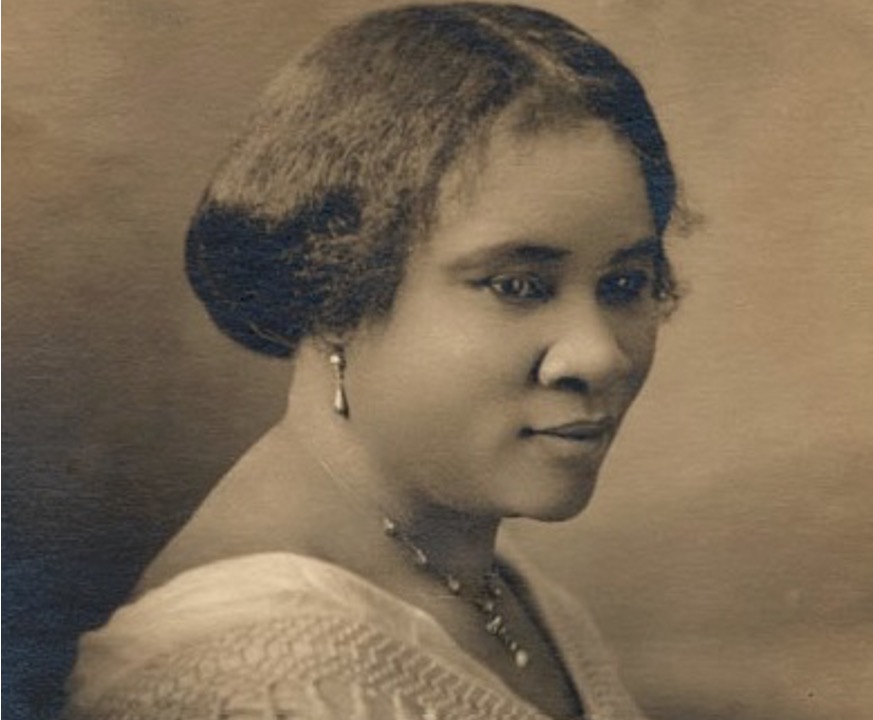
Dorothy ParkerMadam CJ Walker
Dorothy Parker left her literary estate to Martin Luther King having been a funder and supporter of civil rights in her lifetime, which got her put on the FBI watchlist. After he was assassinated the copyright for her works moved to the NAACP which still approves use of her work and benefits from her estate.
Madam CJ Walker left a left legacy to the NAACP against the advise of her financial advisors who thought that it was a nascent organisation that wouldn’t last. The Secretary of the NAACP Walter White said in the 1950s that ‘Madam Walker’s generosity virtually saved the NAACP in the dark days of depression.’
As with any legacy gift you never know what it may go on to accomplish …
With fundraising for social change and with the history of fundraising there is a challenge of what gets recorded and how we record history.
What does the academic world regard as historic? Where are gendered and racial lens applied to what ‘counts’ as what is worth recording.
With most history we rely on written records. And when you are campaigning to change laws less is written down.
Fundraising history hidden at the best of times – and especially within social change movements. We don’t want to talk about the money that made change happen. And that means the history of fundraising, social change is poorer – we don’t get to hear the impact of powerful players and fundraisers like Mollie Moon.
And with all fundraising history – money talks. Major foundations have archives that record what was given and to which organizations. This fails to record and recognize the many small gifts by hundreds of thousands – the National Urban League did have 501c3 status but many campaigning organisations didn’t so there are not records of these gifts.
Where we look for the items that form this history is also different. In writing the history of Mollie Moon Tanisha C Ford has used ephemera – menus from gala, newspaper reports not just traditional
“recognizing that Black women’s documents, objects and keepsakes are rarely housed in brick-and-mortar archives. To tell our stories we must be willing to dig in unexpected places, to utilise objects and other materials that archives and museums might consider of little use. And we must approach this work with an ethic of care that honours our subjects.”
Even in Mollie’s lifetime we see how history gets forgotten, remembered and retold. At the 1972 at the Beaux Arts Ball was led by all male board celebrating the history of the National Urban League. Mollie was present but there was no mention of her contribution and work and this led to a backlash from a new generation of activists who sought to get Mollie’s place and skills recognized.
When we tell our history we are always as Tanisha C Ford says
“how we choose to remember people, how we choose to forget, what we omit and distort’
changes the narrative of how the fundraising for social change happens.
We can be too close to an event to see it – we may need to reevaluate it and see the complexity
Philanthropy is always historically and culturally placed . They raised funds to keep slavery, to stop women getting the vote and to marry off unmarried ladies.
What is right side of history now that we will look at differently in 100 years and be shocked that there was an anti side?
And where will that fundraising appear in the history of social change?
https://marinajones.uk/wp-content/uploads/2025/04/Cover-Book.jpg1052698adminhttps://marinajones.uk/wp-content/uploads/2022/12/f2b903e010104f5aa61ea1821a685913.pngadmin2025-04-25 18:35:242025-04-25 20:31:26Mollie Moon – fundraising for social change
At church we have just got a new set of hymn books and a member of the congregation donated the funds for them. She wanted to share why.
She had chosen to donate in memory of her late husband and spoke so beautifully about the reasons – because he had loved music, and for many years played viola in the local orchestra. He had also loved Ralph Vaughan Williams (who worked on compiling the first English Hymnal). He had been a dedicated worshiper at the church, and member of the PCC. An opportunity and a need arose, new hymn books needed to be purchased; so she explained that she had made the gift to purchase the hymn books in his memory.
As fundraisers too often we focus on the story we tell to secure the gift, and not the story that the donor has to share about their why.
This why can have many different aspects, including
Every donation tells a story – it reflects different parts of someone’s life and the connections they have – to beliefs, to music, to favourite things, to memories, to people, to their professional life, to your charity, to the specific fundraiser. Just knowing that it was ‘in memory of’ is not the same as hearing the story, and the multiple reasons, connections and layers as to why this gift was made – to this, at this time and why it was meaningful and important.
Every donation tells a story – how can we encourage donors to share that story?
There are many ways we do this as fundraisers:-
Many charity runs allow you to personalise your running bib to say who you are running for and why ‘For mum’, or ‘For David’ or ‘To fight cancer’.
Seat dedications in a theatre can do the same – and tell some amazing and personal stories including a seat dedicated to an opera loving cat or a volunteer who had dedicated decades to a theatre or a chance for a bit of fun.
Memorial benches, can do the same as well. Sometimes they add a flavour of the character or hint at a further stories.
However the limited character count of these often limits the donor being able to tell the full story of their why.
So allowing that story to be told fully in the donor’s words can create greater connection, and there is evidence that it increases donation and conversion rates.
In legacy materials, adding in the option which allows someone to tell you why they are leaving a gift in their will gives you the loveliest stories. Even without a formal invitation to tell their why, I have found that legacy pledges can be accompanied by letters that detail their history with your charity and their favourite memories.
I remember one example, how a couple met at the theatre through joint friends, seeing Fonteyn and Nureyev ‘I was hooked in more ways than one, in the group was a beautiful lass in a green dress’. Five years later they were married and enjoyed a lifetime as members going to the ballet together. The letter detailed a life time of memories together, of sitting in the cheap seats, to being able to sit in the stalls, and how social groups were formed around attending. She had died and this legacy gift reflected their shared passion, but the letter also shared the oddness and mixed emotions of returning to the theatre without her to see the latest production of Swan Lake which they had first seen together with Fonteyn and Nureyev.
During the pandemic, we added an option with online donations asking people the reason that people were making the gift now. This produced some extraordinarily powerful reasons and stories. We categorised the common themes of these messages to create five different social norms. We then, with permission, used this feedback from supporters for to further support the campaign. There were five common reasons that came out – creating five ‘people like you’ norms to encourage further gifts.
Yes these (with permission) form amazing testimonies that may encourage other donors to give as we did for the pandemic ones. But it also makes the very act of giving more personal and more powerful for your supporters.
Why is that?
Daniel Kahneman in Thinking Fast and Slow talks about the two selves – the experiencing self and the remembering self.
The experiencing self is the one answering the direct question of the experience right now, and the remembering self that answers the questions ‘how was it, on the whole?’. The remembering self is the “one that keeps score and governs what we learn from living” – so it the remembering self that catalogues and keeps the memory and how we remember an experience is stronger than the actual experience itself.
Inviting, encouraging and providing the opportunity for supporters to be able to share their why and build their story is therefore really important. By articulating their story – either through telling you, or writing it down – you are cementing it as part of their story, their narrative, their identity and their memory. It becomes embedded as a memory.
“Memories are all we get to keep from our experience of living, and the only perspective that we can adopt is as think about our lives is therefore that of the remembering self”
Daniel Kahneman
By a supporter sharing their story it becomes part of their remembering self
Fundraisers are told to be storytellers and create stories in which the donor can be the hero, and their gift is making that transformation. As Daniel Kahneman says:
“we all care intensely for the narrative on our own life, and very much want it to be a good story, with a decent hero”
But sometimes we miss out the chance for them to share their story and their why in a meaningful and nuanced way.
And sometimes that story might be mundane
Because I was asked
Because I wanted to help
Because I like Eileen and she asked me
Because I am doing a fundraiser next year and I want people to support my cause
Because I can
Because I wanted to say thank you
But sometimes it can be very rich and very personal.
How can you find out your donors whys?
Why this
Why now
Why in this way
Why this much
Why you
And by giving them both the opportunity to give and the opportunity to share their story we are making the giving process and connection much deeper.
Every donation tells a story … what’s yours?
And how can you help your supporters to tell you their why?
The new hym books at church dedicated in memory of Robin Williamson
https://marinajones.uk/wp-content/uploads/2024/12/every.jpg604604adminhttps://marinajones.uk/wp-content/uploads/2022/12/f2b903e010104f5aa61ea1821a685913.pngadmin2025-01-09 09:24:012025-01-09 15:22:29Every donation tells a story
We may request cookies to be set on your device. We use cookies to let us know when you visit our websites, how you interact with us, to enrich your user experience, and to customize your relationship with our website.
Click on the different category headings to find out more. You can also change some of your preferences. Note that blocking some types of cookies may impact your experience on our websites and the services we are able to offer.
Essential Website Cookies
These cookies are strictly necessary to provide you with services available through our website and to use some of its features.
Because these cookies are strictly necessary to deliver the website, refusing them will have impact how our site functions. You always can block or delete cookies by changing your browser settings and force blocking all cookies on this website. But this will always prompt you to accept/refuse cookies when revisiting our site.
We fully respect if you want to refuse cookies but to avoid asking you again and again kindly allow us to store a cookie for that. You are free to opt out any time or opt in for other cookies to get a better experience. If you refuse cookies we will remove all set cookies in our domain.
We provide you with a list of stored cookies on your computer in our domain so you can check what we stored. Due to security reasons we are not able to show or modify cookies from other domains. You can check these in your browser security settings.
Google Analytics Cookies
These cookies collect information that is used either in aggregate form to help us understand how our website is being used or how effective our marketing campaigns are, or to help us customize our website and application for you in order to enhance your experience.
If you do not want that we track your visit to our site you can disable tracking in your browser here:
Other external services
We also use different external services like Google Webfonts, Google Maps, and external Video providers. Since these providers may collect personal data like your IP address we allow you to block them here. Please be aware that this might heavily reduce the functionality and appearance of our site. Changes will take effect once you reload the page.
Google Webfont Settings:
Google Map Settings:
Google reCaptcha Settings:
Vimeo and Youtube video embeds:
Other cookies
The following cookies are also needed - You can choose if you want to allow them:
Privacy Policy
You can read about our cookies and privacy settings in detail on our Privacy Policy Page.