🚩 I will give you money on condition that…
… you put my name on the building, that I decide who comes to this university, that I choose the art you do…
🚩 Red flag?
What if this was also about forcing another agenda? What if it was about equity?
Can coercive philanthropy ever be a good thing?
Three scenarios
- After being a major sponsor of this ballet company for several years, I want to rename the company to include my name and have influence on the art. 🚩
- As a donor, I want to rename this university college to include my name 🚩
- I will only give you money to fund a new medical school if you let me influence the admissions criteria 🚩
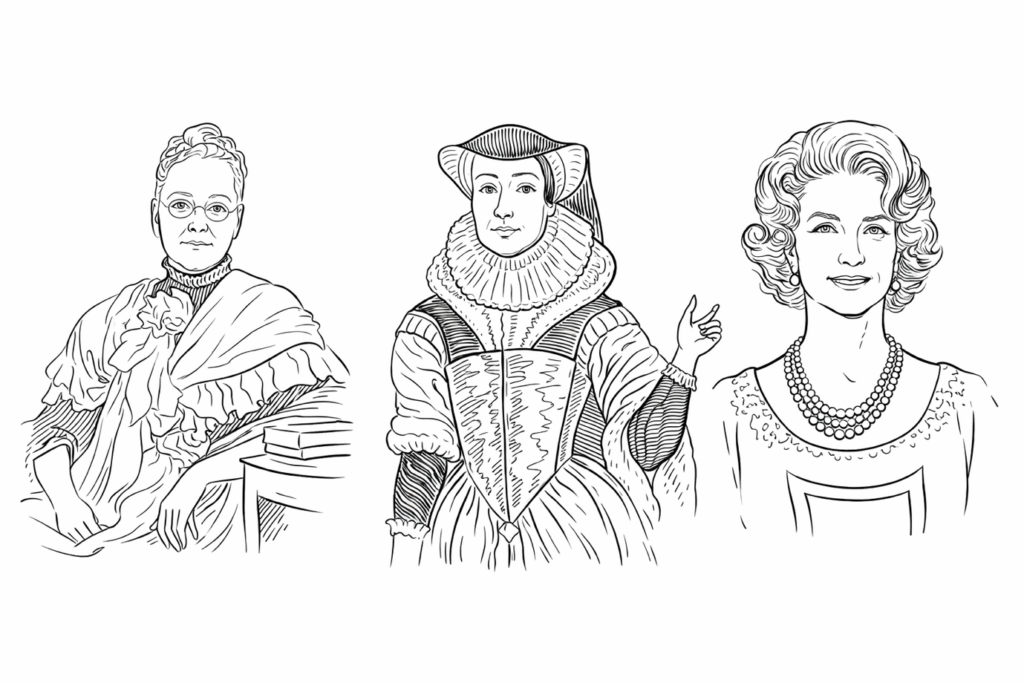
Here are three historical examples of female philanthropists offering gifts with conditions – one where they accepted the money and conditions, one where they said no and nothing happened, and one where they said no and it happened anyway.
What would you do?
How would you react according to your acceptance of gifts policy?
In the UK the Charity Commission has a clause that says that donations with conditions, “may undermine your charity’s independence’ and that trustees can refuse them. But might there be bigger issues at stake?
1. After being a major sponsor of this ballet company for several years, I want to rename the company to include my name and have influence on the art.
The first scenario is from Joffrey Ballet in the US. Founded in 1956 by Robert Joffrey and Gerald Alprino, the ballet company was initially funded through ticket sales, and fees from Joffrey’s teaching. In 1962 they were offered the chance to tour aboard but needed funds to make it happen. Enter the Rebecca Harkness Foundation.
Harkness took ballet lessons as a child and had been fascinated by it and wanted to support.
From 1962, Rebecca Harkness through her Foundation funded workshops, new choreographers (including Twyla Tharp and Alvin Ailey) and the dancers themselves. Harkness composed for some of their pieces using her musical background and each morning took two hours of private ballet class saying “I must do it myself or else I’d just sit back and write out checks.”. She was a devoted and knowledge balletomane.
“When I first decided to form a ballet company, Mother said: ‘Dear, why don’t you just see a psychiatrist?’ I told her it would be cheaper to form a ballet company.”
In 1964, the Foundation demanded that, in return for their financial contribution, the company be renamed the Harkness Ballet, that Rebecca Harkness would influence the artistic programme, with Joffrey remaining its Artistic Director.
🚩 Red flag? What’s in a name? Compromising artistic freedom?
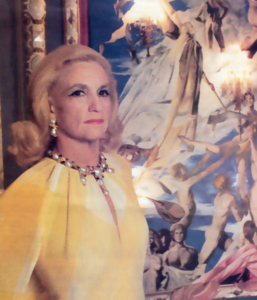
This offer was further complicated by the fact that the Foundation through its funding paid and owned the contracts on many of the dancers, the scores, the sets and rights to many of the company’s ballets.
What happened? Joffrey refused and maintained its independence, and in 2025 the company celebrated its 75thanniversary.
But Harkness took the dancers, sets, scores and set up Harkness Ballet. She bought a theatre, just by the Lincoln Center naming its Harkness Theatre and spending over $5m to create “the first and only major theatre in the U.S. specifically designed for dance”. The theatre included an infamous mural with the trainee dancers all painted naked as gods and goddesses and Rebecca Harkness painted (clothed) as the goddess of dance. Patrick Swayze had a Ballet scholarship and trained at the Harkness House for Ballet Arts.
The 1974 stock market crash contributed to the company’s decline, and it closed in 1975. The theatre auctioned off its chandeliers, fixtures, and fittings to recoup losses.
(Rebecca Harkness is the inspiration behind the Taylor Swift song ‘The Last Great American Dynasty’ and the lyrics include a line about ‘And blew through the money on the boys and the ballet’)

2. As a donor, I want to rename this university college to include my name
This scenario comes from 1570s when widow to Lord Mayor of London, Mary Dale used her inherited wealth to become an active philanthropist. She founded two Fellowships at Peterhouse college in Cambridge. She offered to give the College lands to the value of £500 a year if they would rename the college ‘the college of Peter and Mary’. This offer of a gift was refused and the Master of the College saying ‘Peter, who so long lived single, was now too old to have a Feminine Partner.’
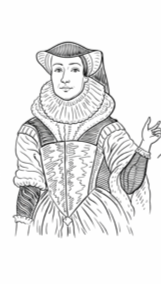
Mary Dale stopped supporting the college after that (although they do continue to have a financial fund in her married name, Lady Mary Ramsey). But that did not stop her giving, as Thomas Fuller relates in Worthies of England ‘This not succeeding the stream of her Charity was not peevishly dried up’ and she turned her philanthropy to Christ’s Church Hospital (and without demanding naming rights), grammar schools in Essex and poor and destitute soldiers.
3. I will only give you money to fund a new medical school if you let me influence the admissions criteria and curriculum
🚩Red flag? Straight no, right?
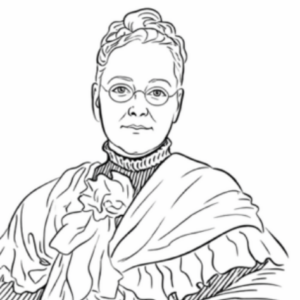
John Hopkins died in 1873 leaving $7m to be used to establish a university, school and hospital. In 1890s the dividends from the investment in the B&O railroad stock had dried up and there was not enough investment income to fund the medical school. The President, Daniel Gilman, in response to this fundraising gap said that $100,000 was needed to fund the medical school. The President sought a “man of large means” to fund the school.
Raising the money: Mary Elizabeth Garrett and M Carey Thomas (who had tried to enrol as a student at John Hopkins in the 1870s) created the Women’s Medical Fund Committee raise the $100,000 and wanted to give the money on condition that qualified women allowed to be admitted on the same terms as men. They also used the committee to try and influence public opinion on the issue – at this time most universities were single sex and access to higher education to women was limited.
“The avowed purpose of the committee was to raise a sum of money sufficient to establish the School of Medicine and to offer it to the Trustees of the University on condition that women be admitted to the school on the same basis as men.” Alan Chesney, MD, Dean and Archivist at John Hopkins.
They raised the $100,000. Garrett contributed over half herself, and other donors included Mr J Pierpont Morgan, Mrs Leland Stanford and First Lady Mrs. Benjamin Harrison.
In 1890 they offered $100,000, which the trustees of John Hopkins accepted to invest — but they stated that $500,000 was needed to found the medical school, effectively moving the fundraising goalposts.
M Carey Thompson said of Daniel Gilman:
“many of the trustees, and Gilman above all, seemed to prefer not to open the school at all if it meant that women were to be admitted.”
By 1892, the initial donation of $100,000 had grown to $193k through additional gifts and investment income. Mary Elizabeth Garrett pledged the $306k needed to reach the $500,000 target.
Margaret Putnam Jocobi, the first female graduate of pharmacy college and suffragist commented:
“It is astonishing how many inviolate objections [to co-education] on the score of feasibility, modesty, propriety and prejudice melt away before the charmed touch of a few thousand dollars”
However, the $500,000 was a conditional gift with not one stipulation but many. They were carefully negotiated and included:
- all admitted students needed an undergraduate degree in science (this was not usual for other medical schools)
- Clauses codifying women’s place and on the same terms as men
- Rigorous scientific curriculum
- Four-year course
- Publish the funding agreement annually in the school catalogue
- But she agreed that she would not interfere in the day to operations of the university.
Any breach of these conditions would mean the money returned to her. She used the power of her wealth to give the gift on her own terms and advance the cause of female education.
“That in the event of any violation of any of the aforesaid stipulations the said sum of $306,977 shall revert to me, or such person or persons, institution or institutions, as I by testament or otherwise may hereafter appoint.” Part of the grant agreement
Mary Elizabeth Garrett’s gift ultimately founded the Johns Hopkins Medical School. Her conditions did more than secure funding, it cemented women’s equal place within the institution and established rigorous standards for both the curriculum and the quality of medical training. Her insistence and use of financial leverage forced the hand of the university to accept the gift on her terms.
In hindsight, the results of her intervention are an example of using power for the public good. The long-term benefits to women’s education, professional equality and the modernization of medical training have been substantial and enduring. While her methods may be ethically uncomfortable, the outcomes have been profoundly positive.
Garrett’s gift has been named ‘coercive philanthropy’ by historian Margaret Rossiter. William Osler one of the founding physicians of the medical school had a different take:
“It was a pleasure to be bought.”
🚩
.
Reflection
Using the force of the gift to demand equality places Garett’s gift on the right side of history – but what would we do today?
These three scenarios were all from female philanthropists, would the outcome have been different if it had been a man?
As fundraisers we often fear the coercive nature of the gifts that we receive and how they might divert us from core mission and purpose. A gift that came with so many specific conditions in would be unlikely to pass through a modern acceptance of gifts policy.
- How might we assess what transformational gift pushes our charities or trustees to take radical steps forward for the greater good?
- How might history judge our acceptance or declining of gifts? (Might there be gifts that are the equivalent of the record producer who turned down The Beatles?)
- Should these gifts be judged by their intentions or methods?

References:
https://pages.jh.edu/gazette/2001/feb1201/12garret.html
The Need to Give The Patrons and the Arts – Andrew Sinclair
Funding Feminism– Joan Marie Johnson
Worthies of England – Thomas Fuller