

How do you say thank you for 32 million eggs?
At the start of the World War One, only 40% of UK food was home grown with Britain relying on imports from America and Europe. In November 1914, contributor to Poultry World Frederick Carl proposed a scheme to send 20,000 fresh eggs to the front to boost morale. This was the start of an international movement that saw 32 million eggs donated – an altruistic act and fundraising campaign with some interesting lessons for fundraisers today.
“There is no more valuable nutrient of recuperative food than a fresh egg’
The War Office
In 1915 villages across England had set up their own Egg Collection Depots and were recording the weekly tally of donated eggs. On 20th January 1915 an article headed ‘New laid eggs for wounded soldiers; who will help?’ in the Chichester Observer and West Sussex Recorder launched the local scheme. It announced the opening of the Chichester Egg Collection Depot and that Mrs Close, the coordinator ‘hopes to find someone from each village to undertake to collect the eggs and convey them’ to Chichester.
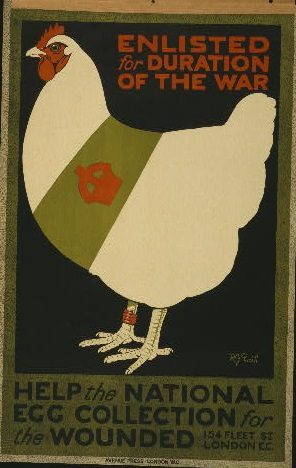
By January 1918 over 41 million eggs had been collected for soldiers and sailors, with 32 million being sent to Europe to hospitals . Poultry World even suggested that chickens should all be on active service.
So what can fundraisers & campaigners learn from this egg movement ?
Giving agency and power to those that want to help
At times of crisis people want to be doing something to help. They want to do something that feels relevant and useful to what is happening.
Often we want to give something personal (see blog on 200 kippers and our desire to give things not cash and why that is not always best – What do 200 boxes of kippers, one girl’s comic collection, handbags, blankets, 1,000 bears and 14 cows have in common? Stuff not cash – Marina Jones)
In WW1, donating eggs was a practical way to help – the eggs were being sent to soldiers, sailors and those recovering from injury.
The egg campaign really fits into the sweet spot in the centre of this ven diagram from Bluefrog and Mark Phillips about what and why donors want to support. The eggs solve a problem together.

When crisis strikes how can our calls to action empower people to connect with our cause and feel that they are making a difference and solving the problem.
Support in your own way
People could donate eggs but could also donate money – people were asked to spare one egg a week or one penny. (At the end of the war over £5,000 was left in the funds). People want agency and choice about what they are doing to help.
Power of celebrity (and royal) patron
We react strongly to who asks us to help – who the messenger is. We are more likely to respond to someone we respect and trust – and a royal patron – as a symbol of the nation during war – was the perfect messenger for this campaign.
In 1915, the National Egg Collection acquired a Royal Patron, Queen Alexandra, wife of George V, and the number of donated eggs jumped up to over 1m.
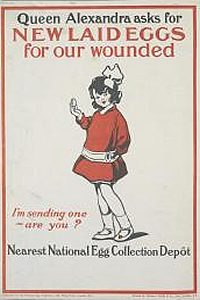
Letters of appreciation were also published from Lloyd George and Field Marshall Hague expressing gratitude for the eggs. The messenger also really matters for the thank you.
Which messengers are you using in your campaigns to ask for support? Are they likeable and relatable? Do they have celebrity pulling power, or are they authentically linked to the cause? Who are the messengers for the ask? But also who ought to send the thank you message?
Social power of giving
As herd animals we like to do what other people are doing, and know what is the normal expected of us (in a fMRI scanner social rejection is seen to be just as painful as physical pain – so staying with the group is best).
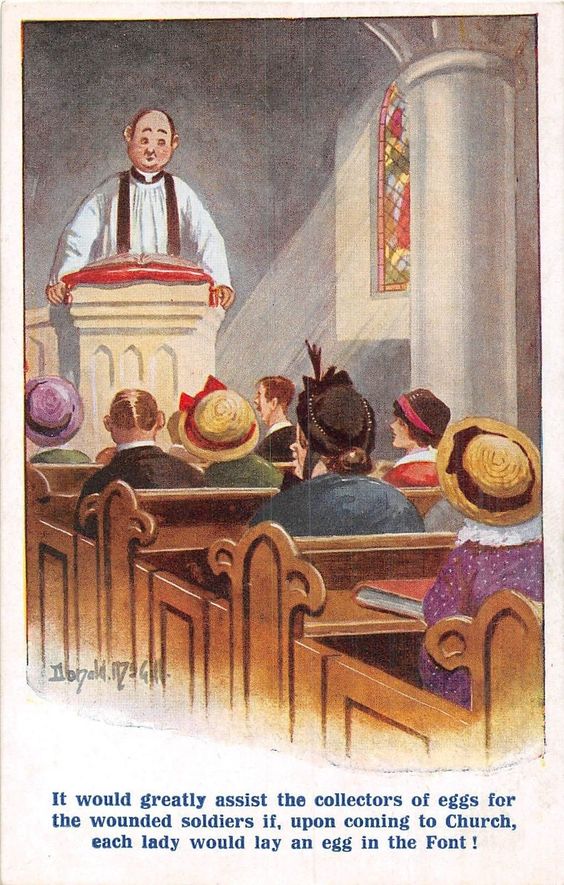
There were egg services at church where everyone was encouraged to bring their egg donation. This uses the power of social norming – if everyone is turning up to church with an egg you will look unchristian, uncharitable or unpatriotic if you are not making your contribution. This poster highlights the campaign
What can you do to promote the social aspect of giving? Or show that other people, like them, are also giving in this way?
Targeted campaigns
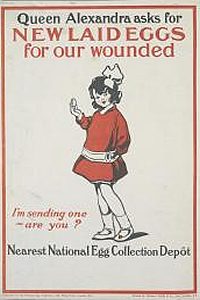
As well as posters for churches, there were also poster campaigns targeted at children and engaging them as altruistic givers – and creating a social norm and peer pressure to donate.
How can the same target different segments of your potential donor base?
Personalisation & connection
Egg donors were encouraged to write messages on their eggs to the soldiers that they were sending them to. These became known as ‘eggograms’ – and sometimes got replies.
In 1915, 13 year old Vida Sheppard in Somerset sent an egg with the message
“Health and luck to dear Tommy God bless him”.
Private Devall, Royal Army Medical Corps received the egg, ate it and then returned the egg with a letter saying he had sent the egg back as a ‘souvenir of this terrible war’ but had ‘enjoyed very much’ eating the egg and ‘I must conclude thanking you for your kind wishes and please accept the same from me in return.’
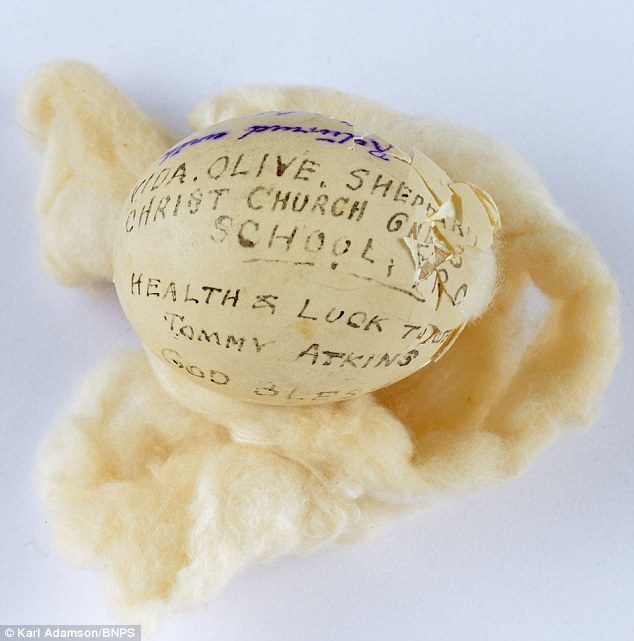
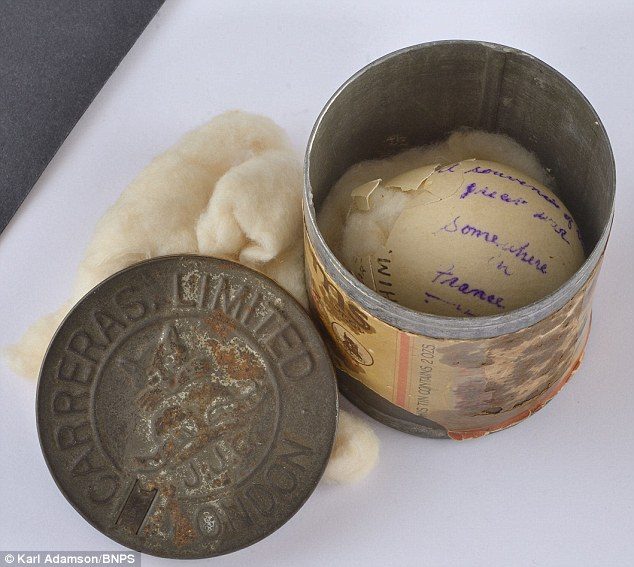
Vida kept the egg was for the rest of her life.
After being hospitalised in a gas attack, Private McMillan (9th Argyll and Sutherland Highlanders at the Australian Base Hospital in France) received an egg from Nora Freeman, a pupil at Englefield Green Schools. He wrote back to Nora to say:
“You people in your comfortable homes have not the remotest idea what the eggs mean to us out here, to say nothing of the pleasure they give. A chap’s been out in the trenches for a year, eighteen months, perhaps 2 years; he’s never seen an egg! He wakes up one morning and finds himself in a clean and comfortable hospital bed. Someone comes along with one of your fine newly laid eggs. I should just like your girls to see the delight on that fellow’s face.”
Hatfield Parish Magazine, 1914-18 British Journal of Nursing
And another wrote
In the battle of … I had the misfortune to be shot through the head; I was taken to hospital, and after being made comfortable in bed my first meal consisted of an egg bearing your address, and as I come from Wootton Bassett I thought I must write and thank you for it. I wish you could see the joy on the poor fellows’ faces when they get the eggs; it would fully repay you for all your trouble. Again thanking you, Yours truly, T. Tucker.
Adding a ‘tell us why you made this donation today’ text box to a donor journey increased donations by 30% when I added it to a campaign – people want to share their reasons for giving with you. It makes them more connected and gives you great insight into their why (and why at this time, and why this campaign).
Create a sense of urgency – there were also ‘autograph a egg weeks’ driving donations up.
How can we build a real connection between donors and recipients?
Showing donors that the donation has been received and has had a positive impact in the lives of those that need is important and builds connection, trust and encourages an ongoing philanthropic relationship.
Donor recognition
Recognising the support of those you have helped is really important to campaigners and fundraisers.
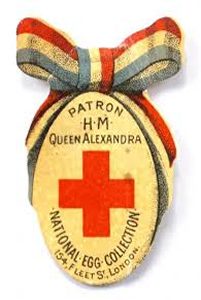
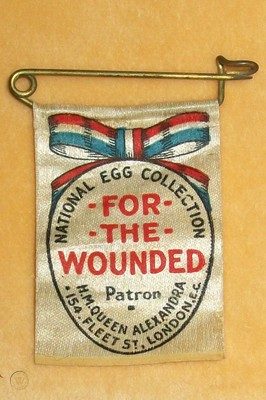
For the National Egg Council there were flag days where people could buy small flags (like pin badges) or ribbons to wear and show their support. The importance of a visual way to show support of a campaign is a useful one. We still have badges, stickers, bracelets or poppies and social media banners now to show support of campaigns.
But how can you recognise and thank millions of people who have donated over 32 million eggs?
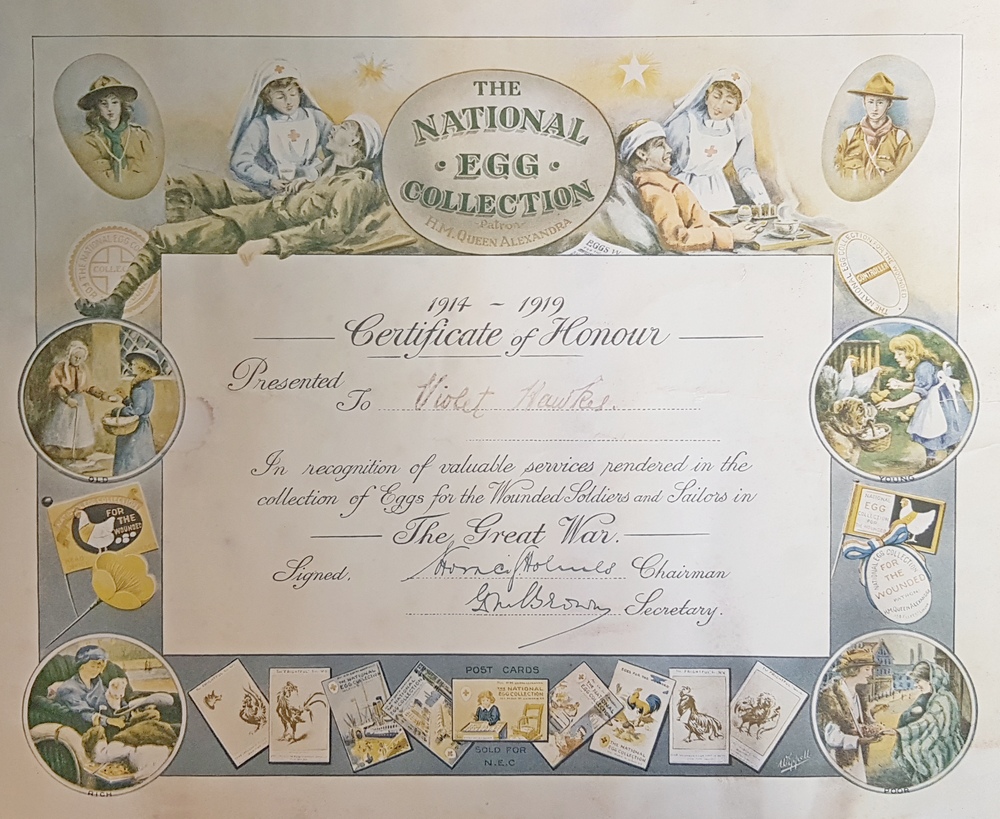
In order to make those who altruistically and patriotically were part of a campaign feel valued and connected, The National Egg Council found a solution. They printed Certificates of Honour recognising the “valuable services rendered in the collection of eggs for the wounded soldiers and sailors in the Great War”
The newspapers also reprinted the letter of thanks and appreciation from Field Marshall Hague specifically ‘reproduced in facsimile upon paper suitable for framing’ so everyone could have their ‘cut out and keep’ thank you letter.
Donors don’t need fancy and expensive recognition – they want to feel appreciated and connected to the cause and valued for their contribution. How are your thank yous and recognition programme building that sense of connectedness and community?
Activate supporter’s identity
The national egg campaign used emotive and patriotic language evoking their patriotic duty to help.
‘Do your duty by the wounded men. You cannot eat eggs and feel that the wounded are going without.’
There is no substitute for eggs in maintaining a man’s vitality, hastening his convalescence or even in preserving life.’
This patriotic and emotive language might not resonate as strongly today, but we can activate our supporters’ identity – as a parent, as a campaigner for justice, as a lover of the arts. Or we can look at activating their national, regional or even more local identity – as can be seen by the competitive element also introduced in the campaign…
Competition
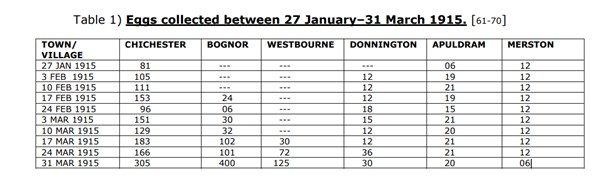
A certain amount of inter-village rivalry can be seen in the publishing of number of donations of eggs by villages in local papers. People want to be seen to do good (and perhaps more good than their neighbours). A letter from a Mr W E Humley in the Chichester Observer publicly shamed the people of Bognor for not donating as many the people of Chichester. The letter clearly had an effect and the Bognor egg donations went up – and a friendly rivalry sprang up between the Chichester, Westbourne and Bognor communities to be seen as the most generous.
Humans are competitive – how you can harness that competitiveness for good in a campaign?
If it works once, it can work again
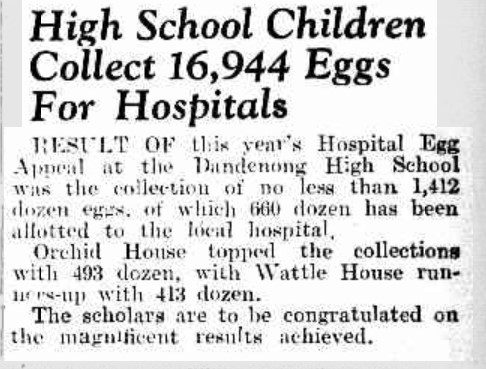
The egg collection scheme was repeated in World War Two with High School Students collecting eggs in Australia. If a campaign is successful you can always repeat it (but learn from it too – and don’t just keep doing it forever – do it because it is needed and works)
So when planning your campaign, think about
- How can your donors solve a problem that you both care about
- The messengers for your campaign
- The social norms you want to create
- How do you trigger important identities to your donor?
- How people can show their loyalty (badges, ribbons, bracelets)?
- Can you use competition to encourage donations?
- How will you make it personal to the donor – how can they share their why and their story
- Letting the donor know that the gift has been received and see the impact it has made
- How will you say thank you
References
Eggs for the Wounded (westsussex.gov.uk)
Rare WW1 ‘National Egg Collection’ For The Wounded Silk Mascot Pin | #277027884 (worthpoint.com)
Lemsford Local History Group WW1 | Lest We Forget (lemsfordww1.co.uk)
To read more about the importance of messengers, social norms and other decision science interventions read Mindspace-Helping-Supporters-Choose-Book.pdf (decisionscience.org.uk)



Leave a Reply
Want to join the discussion?Feel free to contribute!