A tale of courage, ingenuity, and sheer British pluck … and fundraising success against all the odds
In researching the Spitfire Fund fundraising campaign, I came across a great piece of fundraising history which is crying out to be turned into a film.
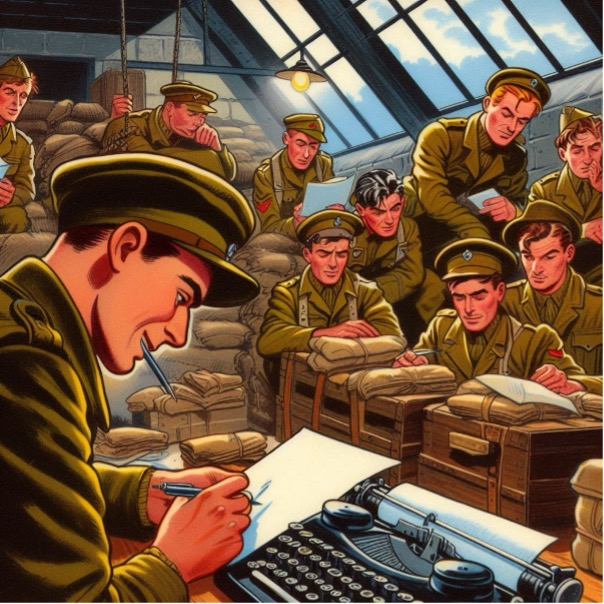
A group of Prisoners of War in Germany who made up a fake charity to send German money to England to help buy a Spitfire and fight the war.
If people want to donate they will find a way
Sergeant Miles-Osborne was shot down and imprisoned in the prisoner of war camp Stalag 383. He organised fellow prisoners of war to donate towards the Spitfire Fund. The Spitfire Fund was a national campaign to raise funds for Spitfires.
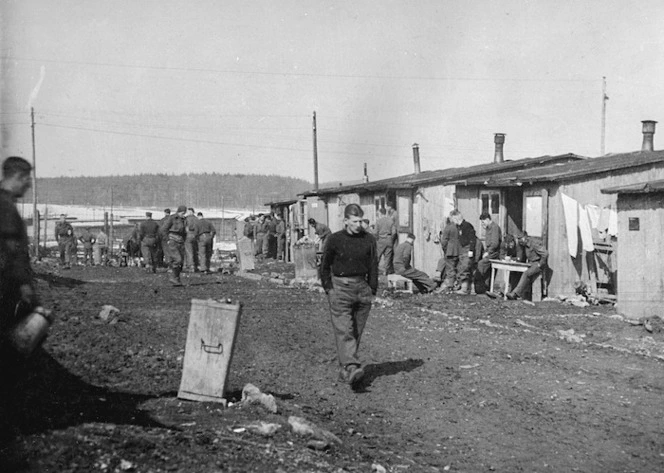
Now where did prisoners of war get money to donate to charity?
In prison prisoners still received their army pay, but also ordinary soldiers also received payments (minimum wage) from the Germans for manual work that they did in the camps, and these funds were credited to their army accounts. So, the soldiers used these funds to donate and via the great bureaucratic machine these could be used for donations.
How did their scheme work?
And it really was a scheme – working in coded messages and avoiding the censors to get messages to England about what they wanted to do and where the money was coming from.
Miles-Osborne worked with soldiers, airman and sailors from across the forces imprisoned at Stalag 383. They decided that they wanted to donate towards the Spitfire Appeal. Each Spitfire nominally cost £5,000 so that was their target. They could not just write to say they wanted to support the war effort in this way as it would never have got through the censors.
But how to get the money and communicate with the UK?
Sergeant Miles-Osborne had previously been a soldier with Duncan Sandys who was now an MP and working in the Ministry of Supply.
But he could not just write and say him and his fellow prisoners wanted to buy a Spitfire as all letters were read and their contents censored.
So they made up a fake charity.
So Miles-Osborne wrote Duncan Sandys a letter in Spring 1943 saying that £5,085 had been collected for the Duncan Sandys Welfare Fund. It listed 108 different military units and the payment from each
- Royal Horse Guards £3
- Royal Navy £4
- Royal Marines £27
- Gordon Highlanders £82 etc.,
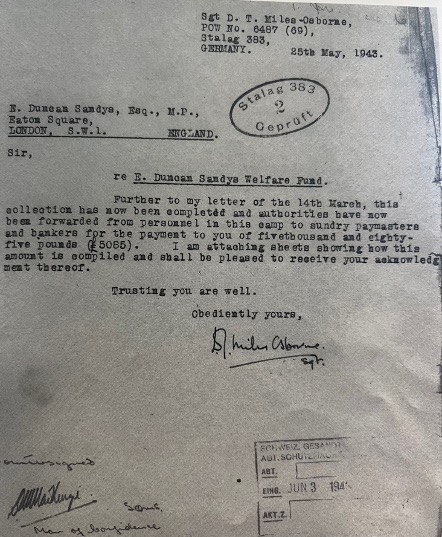
This confused Duncan Sandys who had no idea what this fund was for and why monies were being directed to it. Miles-Osborne had written a previous letter that was lost in transit.
Cheques and postcards from the prisoner of war camp with pledges started arriving at the Ministry of Supply for the Duncan Sandys Welfare Fund.
This Duncan Sandys Fund was a fictitious Welfare Fund used to hide their true intention. They could not say what the funds were for as all letters were read and censored.
The pledges continued to come in but Duncan had no idea what the funds were for.
In September 1943, Regimental Sergeant Major Cooper was released as a prisoner of war on medical grounds he carried with him a message
“The so called Duncan Sandys Welfare Fund provides over £5,000. It is the wishes of the warrant officers and non-commissioned officers of our empire at Stalag 383 to present a Spitfire to the Wings for Victory Fund”
Cooper was unable to deliver this message until February 1943
In the meantime, one of Miles-Osborne’s postcards (with some help from M19 and the War Office) managed to crack the code of where they wanted the money to go. There was a reference to ‘w for v’ – wings for victory.
So the Spitfire was commissioned.
There followed a complicated administrative process to get the funds in from all branches of the military which with war and admin process took some time.
(Getting the pledged money in always takes time & effort!)
But the prisoners had achieved their mission from a German prisoner of war camp they had raised the funds to buy a Spitfire.
Duncan Sandys wrote to Miles-Osborne to confirm that they knew what the funds were for
“I am going ahead with the necessary arrangements. I shall be glad to know whether you wish an inscription of any kind painted on the vehicle.”
(always important to ask about donor crediting!)
An answer on the name from Stalag 383 was not forthcoming and many were thought about to capture the spirit of this unusual gift – and they settled on Unshackled Spirit.
His Secretary noted in the letter informing the Ministry of Aircraft Production
“Mr Sandys has now decided on the name Unshackled Spirit. He thinks that, while the significance of this name will be obvious to all concerned with the fund, it would not be in anyway connected with prisoners of war if the aircraft should fall into enemy hands”
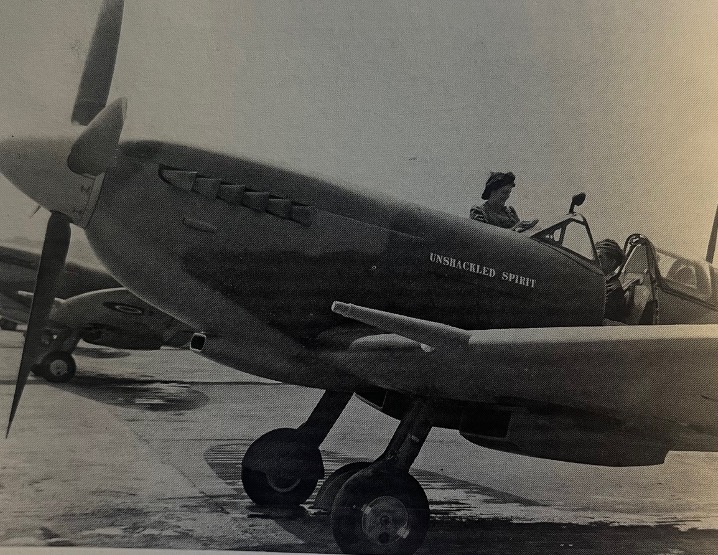
Two photographs were taken – one sent to Duncan Sandys and one to Cooper the medically repatriated officer who was asked if they could safely send the picture to the camp without getting the prisoners in trouble and revealing what the Welfare Fund had really been raising funds for.
In the end a telegram was sent to the camp saying:
“Your spitfire which as christened quote unshackled spirit unquote – has been in battle over German tell Miles Osborne”
As fundraisers it can be easy to focus on the money and to follow the 80/20 rule and know that you get most from your major donors and you get a higher ROI.
But you have fans everywhere and every contribution does matter. We can shy away from asking those impacted by issues. Maybe because we think as those in need they will not have the resources to help.
But they can be our biggest supporters and be desperate to help in any way they can.
And can help us financially as well as with stories of the impact of our charity’s work.
So the moral of this story – people will find a way to give to causes they care about
Reference
The detail from this comes from Colin Pateman’s book Unshackled Spirit Prisoners of War and the Secret Spitfire