Ladies to the rescue!
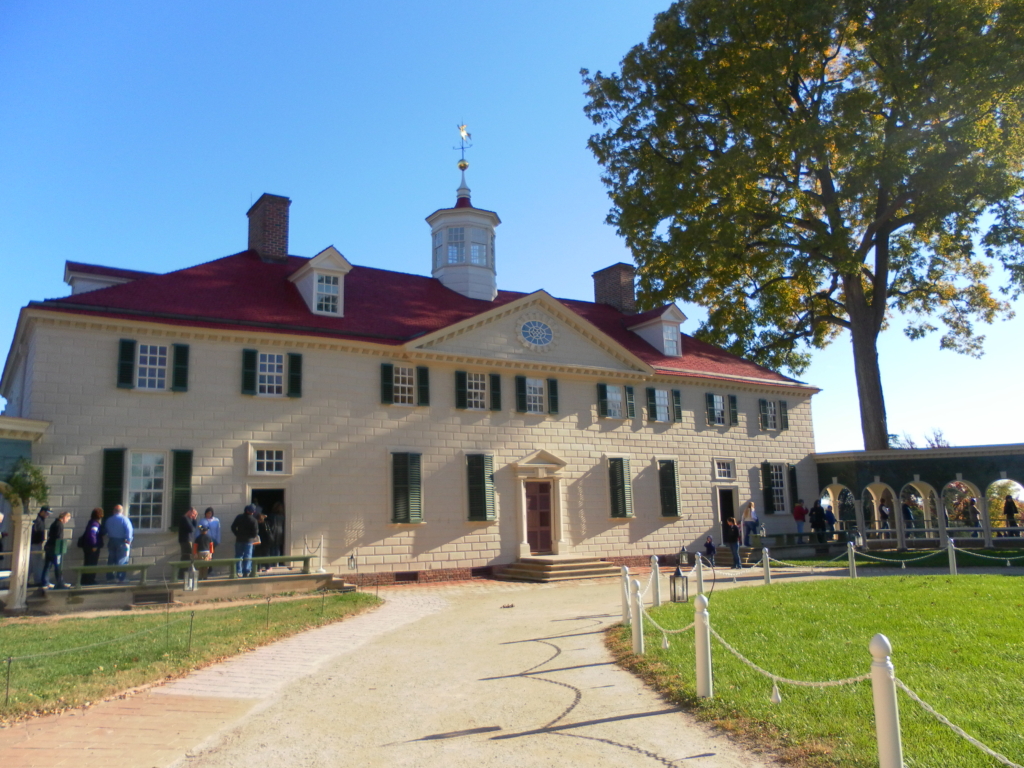
Washington’s home, Mount Vernon, was saved and preserved thanks to the fundraising efforts of women in the 1850s.
Background
George Washington – America’s first President and one of the founding fathers – lived at Mount Vernon, just 15 miles from Washington down the Potomac River. Even during his lifetime, fans of the former President would disturb his day by visiting and ‘trophy-ing’ fruit or soil from the estate. In the years after his death, day trippers would arrive on steamboats to visit, and over 10,000 people a year came.
Over the course of the decades the estate fell into disrepair and his heirs wanted to sell it.
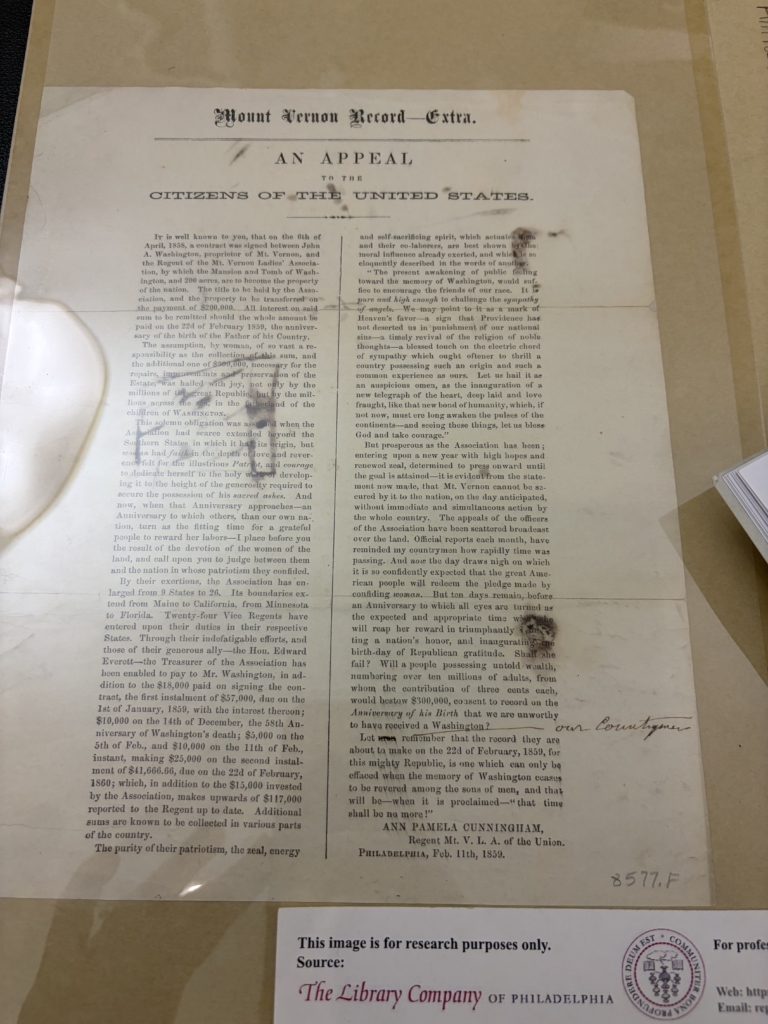
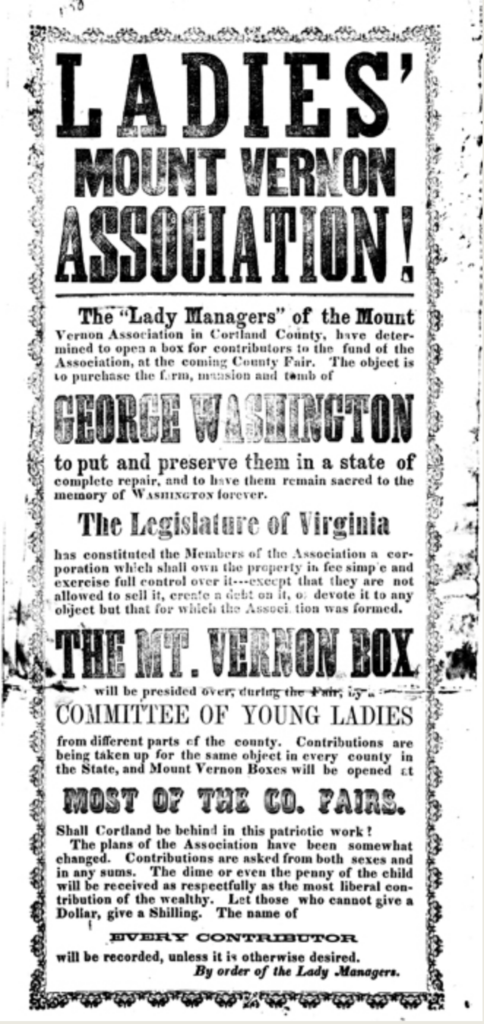
In stepped Ann Pamela Cunningham (following a letter from her mother) to organise the fundraising campaign under the auspices of the newly founded Mount Vernon Ladies Association. This was a female led and run organisation that raised the money to buy, furnish, and run Mount Vernon for the nation. This was one of the first historical preservation efforts in American history, and the methods and structures they developed formed the basis for future campaigns.
What Cunningham innately knew was the power of identity — and her appeals called on donor’s identities as women, as patriots, as citizens with a shared responsibility to history. We now have the science: behavioural economics, decision science, and a growing understanding of what happens in the brain when people give. We use it to shape clearer asks and reduce friction for donors. But the practice came first. History shows that long before these ideas were named or codified, fundraisers were already intuitively applying the same principles to influence behaviour and inspire generosity.
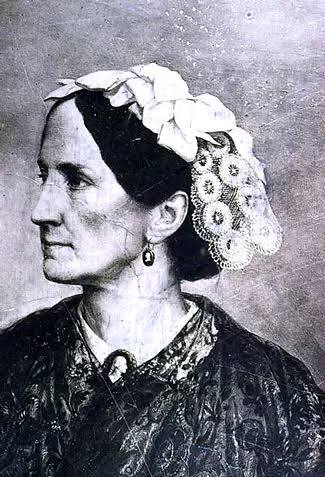
(On a side note – John A Washington, George’s heir, refused to sell to a group of women, so the State of Virginia had to be the purchaser on the deed)
How did the Mount Vernon Ladies Association raise the money, and what does it show us about donor psychology and how we can fundraise today?
1. Appeal to supporters’ identity
“Let us rise as one woman and in strength of our united womanhood decide that this shall not be”
How you frame your appeal, and how you ask are crucial – you need to target and tailor your ask to your donor’s identities. We give to express who we are, or who we want to be seen to be, and seek to be consistent with that identity. Sargeant and Shang have shown that identity linked appeals outperform ones that only talk about impact.
Cunningham knew this and throughout her appeals she highlights the identity of her supporters – not just one identity (we all contain multitudes!) but the many identities they had – as women, as Southerners and as patriots. For example:
.
“in the name of the mother of Washington, and of Southern feeling and honour to all that is sympathetic and generous
in your nature”
.
“Ladies of the South, can you sit, with closed souls and purses, while the world cries ‘Shame on America’’
.
Although some of the appeals to identity border on psychological coercion.
.
“when you look down at your gorgeous silks and your glittering jewellery remember that a tithe of that expenditure
from each of you would give us the glorious privilege of converting Mount Vernon into the Mecca of America”
.
“let us see whether any hearts are beating under this mass of millinery and upholstery”
.
Fundraisers nowadays, must not place undue pressure on donors, and that includes the misuse of guilt.
Although I do love giving being framed as a ‘glorious privilege’
2. Crowding in support?
.
“Will a people possessing untold wealth, numbering over ten millions of dollars, from whom the contribution of three cents each would bestow $300,000”
.
We often see appeals opting for the ‘every little helps approach’. This is known as ‘crowding in’. Why does crowding in work?
- A small gift like three cents makes giving feel easy and affordable.
- It creates momentum for social proof and defines the social norm and creates the sense of collective norm.
Crowding in can make it easier to give – but sometimes it can have the opposite effect as we cannot see the power of impact of our individual gift, and our gift feels like a drop in the ocean (what can three cents do?), or we expect others to give, or give more substantially. Think carefully about how you use it, and whether you can add an impactful frame to the three cents and what it achieves.
3. Anchor the gift
How do we know how much to give?
“we only ask one dollar, but we trust to the generosity of those whose means are more abundant”
Although some appeals focussed on the whole of the republic giving three cents. Most asks were more ambitious than that, and $1 became a clear reference point.
One of the biggest hidden barriers in fundraising is uncertainty. Uncertainty can cause indecision – if we don’t know how much to give and what is expected we can spiral into questions of how much should I give? Is that too much? Too little?
Giving a number makes the decision easier- a strong anchor creates reassurance about what is expected.
4. The livestream of the day: Use the latest technology
Fundraisers have always used the latest technology to support their fundraising efforts and use the novelty effect to generate interest and press attention (from NFTs to the camera).
The Mount Vernon Ladies Association was no different. They used the novelty of the telegraph (invented in the 1830s, and gaining in commercial use by the 1850s). At fundraising fairs and festival days they used a live telegraph link up to talk to other fundraising fairs and leaders in statehouses across the country. For example, in 1859 Mount Vernon festival in Augusta, Georgia, delegates sent live telegrams to each other and to supporters in other cities. This novel use of technology made the cause feel urgent and modern.
5. Incentivise giving
Every $1 donation earned a tangible reward: a portrait of George Washington. This small incentive helped create a constant reminder displayed in their home of their giving and connection to the cause.
Incentives work because they layer reward. The “warm glow” of giving is amplified by the power of a free gift — something tangible that donors receive, keep, and return to.
That object becomes a physical cue of identity and belonging, reinforcing their connection to the cause each time they see or use it.
Today it might be a pin badge or a tote bag — small, but powerful. Not just an incentive to give, but a signal: this is who I am, and this is what I stand for.
The Mount Vernon campaign also sold merchandise, such as medals, a further way to earn money for the campaign and cement supporter identity.
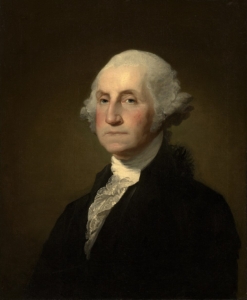
6. Be organised but not prescriptive – Give ownership to those fundraising on your behalf
Cunningham was organised, but she also delegated. Each state had a Vice Regent who organised the fundraising in their area. But each state was empowered to raise money in their own way – what works in Georgia does not necessarily work in New York, so each evolved and created their own ways of raising money.
These included:
- The newsboys of New York city clubbing together their pennies to make a donation of $4.18 to support the cause
- A ‘Ladies’ Strawberry Feast in Alabama (raised £334)
- Brother of the President assassinating John Wilkes Booth, Edwin Booth held a benefit performance that raised $500
- Children in Kansas donating their pennies to support the campaign
- Sailors abroad the US Savannah donating $150 as a gesture of patriotism whilst homesick
- As well as fairs, fancy dress balls and dinner parties.
This gave agency and autonomy to the supporters and the leaders – giving choice deepens commitment. When people feel they have a choice (about how to give, or how to fundraise) rather than being pushed, they experience stronger motivation, greater satisfaction and deeper long-term commitment.
7. Use the power of anniversaries
It is easy to be cynical about the power of anniversaries, but they can and do work.
Throughout the campaign, the Mount Vernon Ladies Association used the anniversary of Washington’s birth, and death, to hold fundraising events, and also make significant donations and publicity moments.
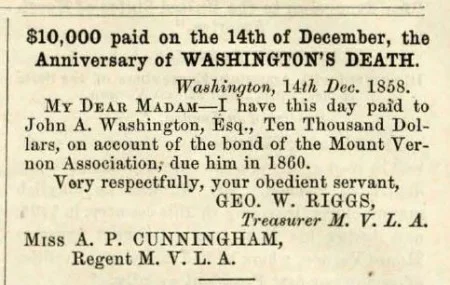
Anniversaries are temporal landmarks. They can turn an ask into a meaningful, timely, and socially validated moment to give. They combine the nostalgia with the hope for the future, which was so central in this campaign, looking back to Washington’s glorious work for the Union and the need to preserve the house for the future. Anniversaries have a great focussing effect for donors and campaigns.
8. Celebrity Speakers
Although the campaign was organised and led by women, $69,000 of the $200,000 needed was raised by one man: Edward Everett.

Senator Everett also spoke on the day of the Gettysburg Address alongside Abraham Lincoln. Lincoln may have used 272 words, but Everett spoke for two hours at Gettysburg. This speaking prowess stood him in good stead; he delivered his lecture on Washington 129 times across the country, charging $1–2 for entry and donating all proceeds to the cause.
9. Recognising Donors
“The names, residence and sums given by every subscriber …. As a record and lasting memorial of patriotism for their descendants”
All donors of $1 or more were listed and publicised.
Why does donor recognition matter? It is about psychological exchange. Recognition reinforces to the donor that what they did matters, has been noticed and appreciated – deepening the emotional payoff. The recognition closes the loop between action, meaning and identity. By reinforcing the identity as a donor you are cementing in your donor’s psyche reaffirming their identity, as a donor.
Campaign lead Cunningham wrote about the importance of naming donors
“The name of every subscriber is to be published in some influential newspaper, appointed to be the organ of the Association for the State. Such publication is not only an announcement that their contributions are received and names registered but a great stimulus in drawing out subscriptions…My own experience has convinced me that the most important step to success is enlisting zealous editors to place the subject in an attractive manner before the people.”
The Mount Vernon Record consistently named donors, a public-recognition tactic. Honor rolls were printed in newspapers, and ceremonies held to award plaques and acknowledge support in speeches.
Did it work?
Yes all the money was raised within 7 years, and the Mount Vernon Ladies Associated purchased the deeds.
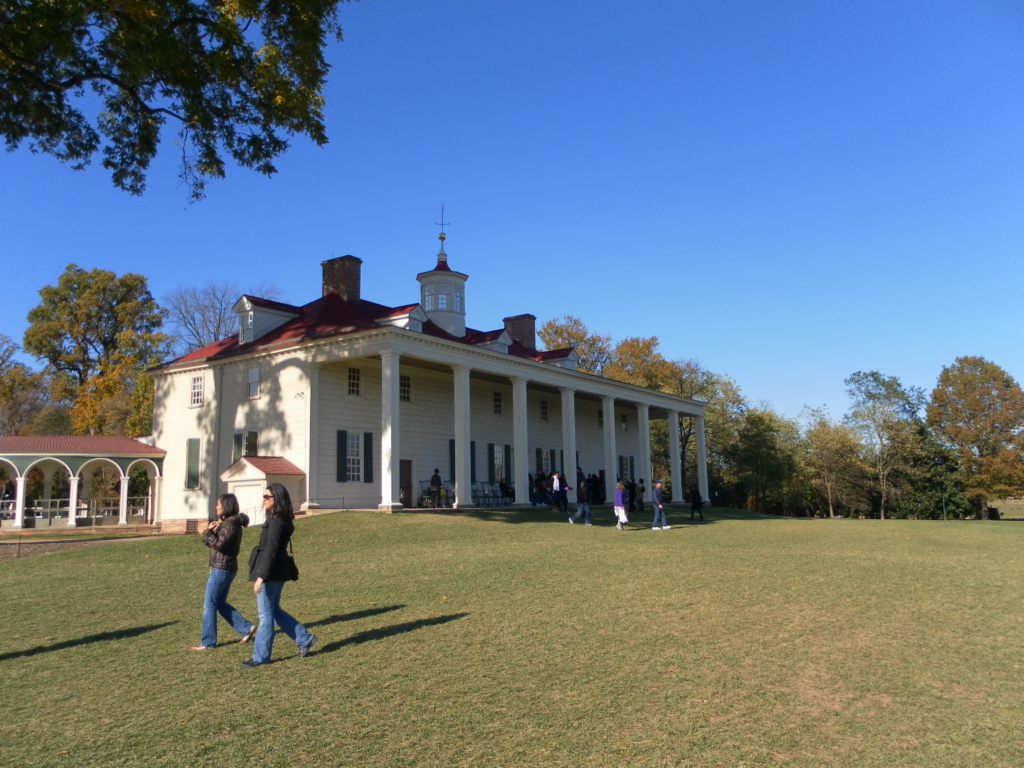
And in conclusion…
The techniques that the Mount Vernon Ladies Association used are not new – they are timeless human behaviours and persuasive techniques.
We now call them behavioural economics, decision science, and donor psychology and have codified the heuristics in academic papers, proven them in field studies but the real fundraising lesson is simpler – fundraising works when it aligns with how people already, think, feel and see themselves, and gives them a way to live out who they are and want to be.
References
‘An Appeal to the Citizens of the United States’ by Ann Pamela Cunningham, 1859
An Appeal to for the future preservation of the home and grave of Washington’, 1855
‘Two Magazines and the Fight to Save Mount Vernon 1855-1860’ by E J Pribanic-Smith, American Periodicals 26.11
‘Remembrance and the American Revolution: Women and the 1876 Centennial Exhibtion’ phD thesis by Dolores Pfeuffer Schemer, 2016
‘For the Love of One’s Country: The Construction of Gendered Memory in Philadelphia and Montgomery County, Pennsylvania 1860-1914’ phD thesis by Smadar Shtuhl
(And delightful to see some first hand sources at the archives in Philadelphia)