Joy of the gift
As fundraisers we often talk about joy of giving for donors – that it feels good to give. Donors get a hit of happy chemicals (dopamine, oxytocin, serotonin and endorphins) when they make a gift. *
What about joy of the gift for fundraisers?
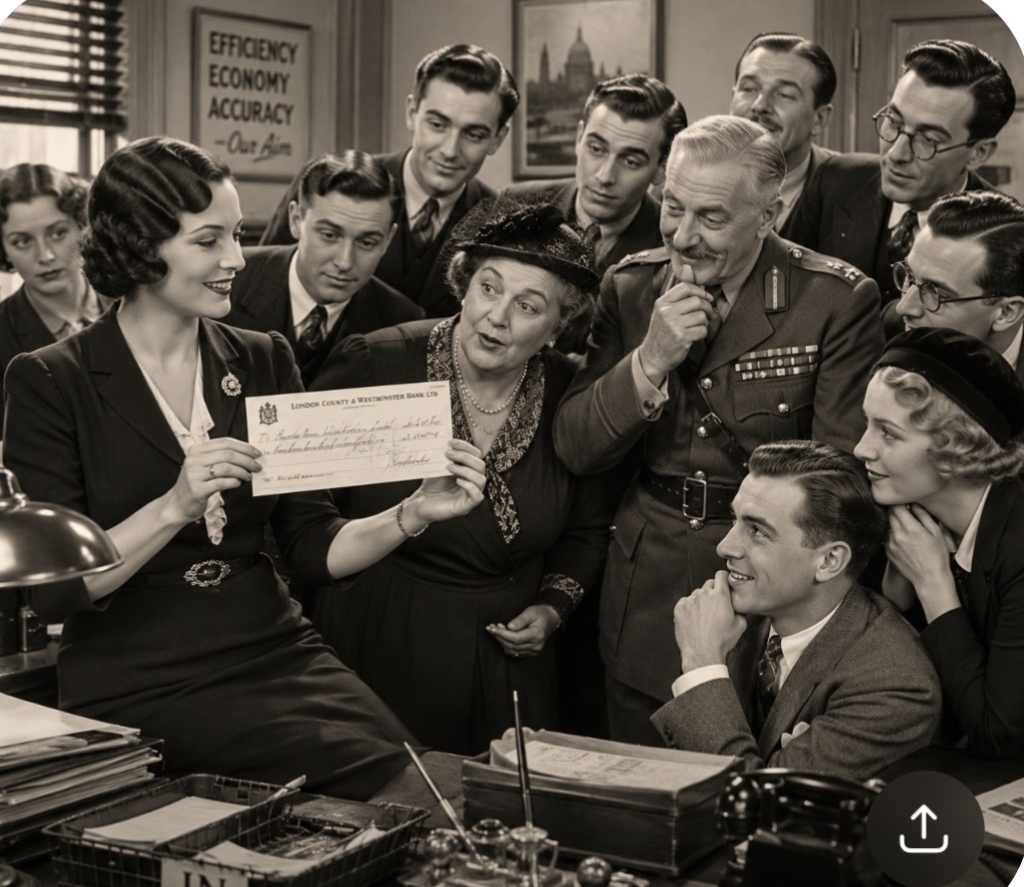
I read about the campaign to secure Ashridge Estate for the National Trust in 1927. One gift represented a quarter of the target – in the post a £20,000 cheque from Miss Courtauld was received in the National Trust office, and it drew crowds of staff in the office simply wanting to see it.
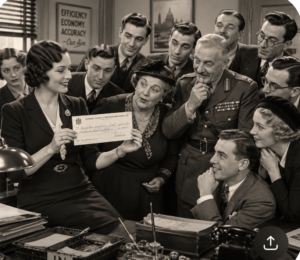
“Miss Spencer Wilkinson, then about thirty, was given the important job of drafting the Ashridge appeal leaflet. As a reward she was able to bank Miss Courtlaud’s cheque for £20,000 … and had the reflected glory of all the staff crowding round to see for themselves this exceptional item”1
During capital campaigns I have had similar moments when a big (monetary not size!) cheque arrives and the team in the office want to see it to see it, hold it, almost verify it physically. There is something about the physicality of the cheque or the offer letter that makes a gift feel more real.
It raises a broader question about the physicality of giving and how in a digital first world we, as fundraisers, experience and celebrate success.
Physical material is more “real” to the brain. It has a meaning, and a place. It is better connected to memory because it engages with spatial memory networks and involves more emotional processing. It is why direct mail is still so powerful. So holding a cheque for £20,000 is more memorable and emotional than reading an email, or opening the banking app and seeing the funds.
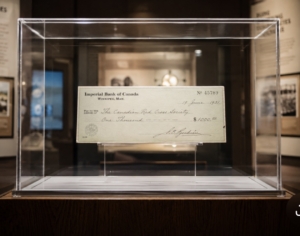
Ten years ago receiving envelopes with the letterhead of a foundation you could feel and guess whether there was a cheque enclosed. Now cheques are almost museum pieces.
Neuro imaging studies show that the same reward centres light up when you give a gift, and when you make receive a gift. In fMRI research on charitable giving (for example, work by Harbaugh, Mayr and Burghart, 2007), activity is seen in areas such as the ventral striatum and medial prefrontal cortex when people choose to give to others or to a valued cause. Those same regions are also active when people receive something they perceive as a reward or a socially meaningful signal of appreciation.
So even though we are receiving a gift on behalf of the charity we work for – we are still getting some of that reward – that warm glow. But we are also getting a connection to the donor, and a wider connection knowing that there are supporters aligned with our causes, that we are not alone in fighting the good fight and this in turn improves our wellbeing and resilience.
Fundraising work is full of rejection and the “no’s” can land heavily — they are not just operational setbacks, but have an emotional impact.
If when we get gifts as fundraisers we are getting rewarded by a warm glow and a sense of connection and increasing belonging – then the question is how do we design external celebration to reinforce this for ourselves and our teams? Because recognition is not just administrative closure. It is part of the reinforcement loop that can amplify the meaning of the gift and our satisfaction. We (rightly) spend time as fundraisers focussing on how to close the reinforcement loop for donors with meaningful thank yous that recognise their impact and make them the hero. How do we do that for ourselves?
How do we find new ways to have those tangible emotional connections with digital gifts?
And how do we celebrate the success of gifts when there is nothing there to touch?
Fundraising is emotional labour and we are connected and invested in the success of the asks we make. Who hasn’t had a cry when a gift has come in (or failed to come in?)
Lord Beaverbrook burst into tears when Garfield Weston handed him a blank cheque to support buying new Spitfires in World War Two (https://marinajones.uk/spitfirefund/)
As incomes becomes increasingly digital how do we celebrate success in ways that give us the fundraisers the same happy chemical high and create memories that cement what we are achieving.
Fundraising success champions the donors – making them the hero of the story.
How do we make sure we as fundraisers stay still experience the meaning, memory and emotional reward of the gifts we help bring into the world? And be the heroes in our own story?
At a previous place where I worked we had a ‘vase of triumph’ that was filled with flowers and presented in front of the department for exceptional gifts. As a trusts team we had one year when for each gift, we made a paper bird and hung in the office above our desks (where possible trying to theme it to the gift)
How do we celebrate our fundraising success in meaningful and tangible ways? How can we take the principles of donor stewardship and care that we give supporters to make fundraising success meaningful?
*
The ‘warm glow effect’ of giving is not just a nice name for it – research has shown that pro social behaviour raises body temperature – so warm glow is a thermal reality (https://www.nature.com/articles/nclimate2449) .
- ‘Figures in a Landscape – A History of the National Trust’ by John Gaze ↩︎