Show Don’t tell
As fundraisers and communicators it is more powerful to show than to tell – to show through actions, words, subtext and images the stories we want to share.
Chekhov said:
“Don’t tell me the moon is shining. Show me the glint of light on broken glass.”
Humans are hard wired to notice what other humans are doing. The Social Hypothesis Theory shows us that human actions are processed quicker. So if we show humans in the images we use in our fundraising it can give our audiences a short cut to show audiences a desired behaviour or action. Show don’t tell engages the reader more, and becomes a more memorable way to demonstrate the help needed, the desired behaviour and the impact of the gift.
Here are a 5 historic examples of where – show don’t tell was used to powerful effect.
1. When you want people to adopt a new behaviour – show don’t tell
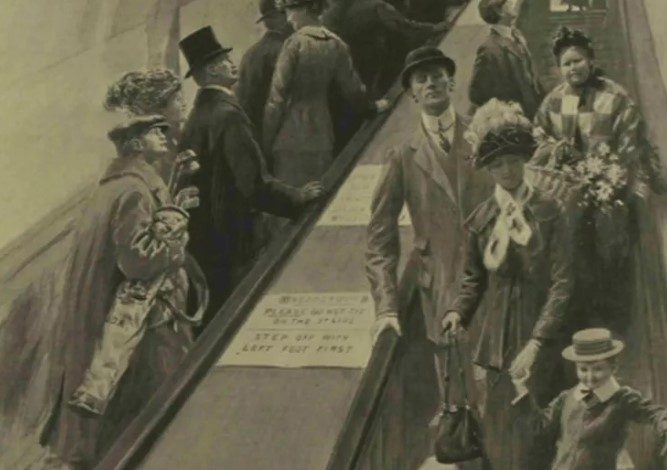
Escalators were introduced to the underground in 1911 but treated with suspicion.
One legged engineer William ‘Bumper’ Harris was employed at Earl’s Court station to ride up and down the escalator. We take our cues from the social behaviours of others around us and mimic it – Bumper Harris demonstrating how easy and enjoyable the moving escalator was reassured passengers. If a one legged man could easily and successfully navigate this moving staircase they could do too.
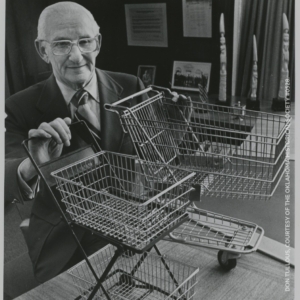
In 1937 when super market trolleys were introduced the same thing happened. People did not use them. Men thought they were unmanly. Women thought they were like baby pushchairs. Models were hired to walk around using them in the shop to make them socially acceptable.
2. When you want to get donors to give – show don’t tell
General William Booth the founder and leader of the Salvation Army was often depicted on postcards making contributions to the self denial week. Having a visual clue of what we want donors to do – put money in the donation box shows them what to do. It is also leading by example – denying self and contributing. It gives him the authority to ask others to join in supporting the cause.
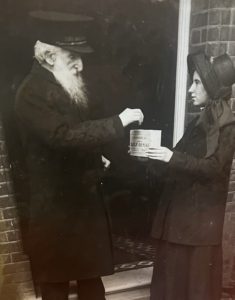
A 2010 lab study verifies this and shows that when a person observes someone giving money away they are more likely to give money themselves, and that this effect ripples out to other people (from person to person to person to person), (Fowler and Christakus, 2010). It creates a powerful social norm that encourages others to join in.
3. When you want to show how awful something is – show don’t tell
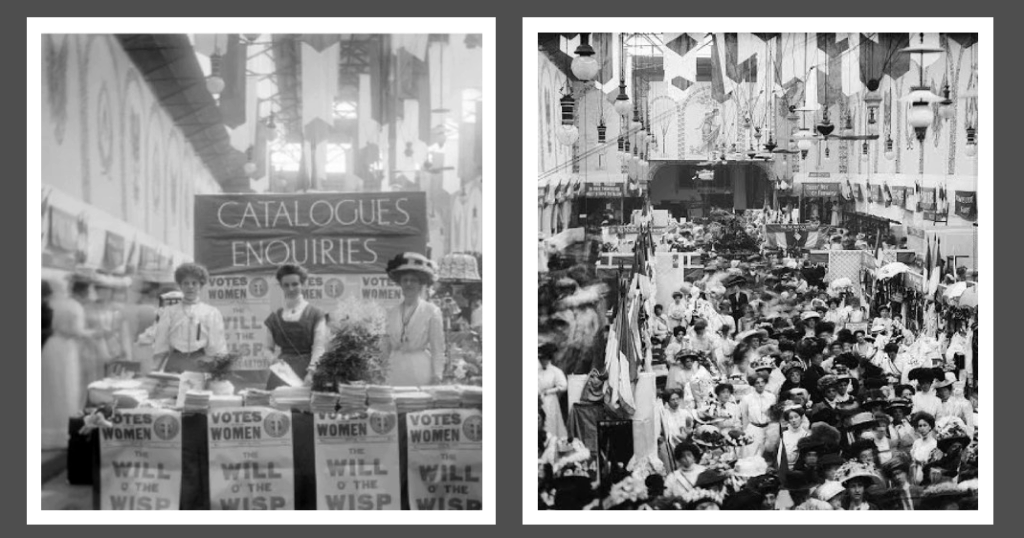
To demonstrate the horrors and trauma of being arrested and force fed the suffragettes had replica jail cells in their 1909 Exhibition.
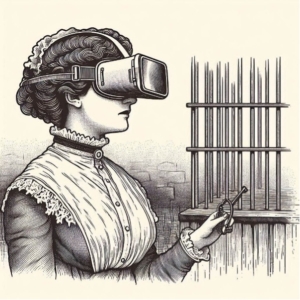
Before the advent of VR and AR headsets the Suffragettes created an immersive and interactive experience. The tours of the cells were led by women who had been imprisoned. The cells demonstrated clearly the difference between the male and female prisoners. Men, even if imprisoned for treason or murder, had bigger cells and better treatment. Women were in smaller and treated as common criminals. By the time of this exhibition over 400 women had been imprisoned for the cause.
This was a model of a Liverpool slave ship created in 1780s. There is something very tangible about seeing the bodies packed in like this that words cannot capture (it was turned into a famous print).
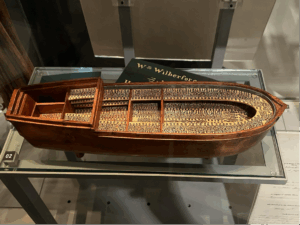
A a copy of model this was given to prominent Abolitionist William Wilberforce who used it in parliament to demonstrate the awful conditions of enslaved Africans on the ships. Visual impact can demonstrate more than words
4. Put the impact on display – show don’t tell
The Foundling Hospital which opened in 1739 became a fashionable place for benefactors to come and see the impact of their donations. Supporters could come and see the children sing in Church on Sunday and then buy a ticket and see formerly destitute children dressed and eating well.
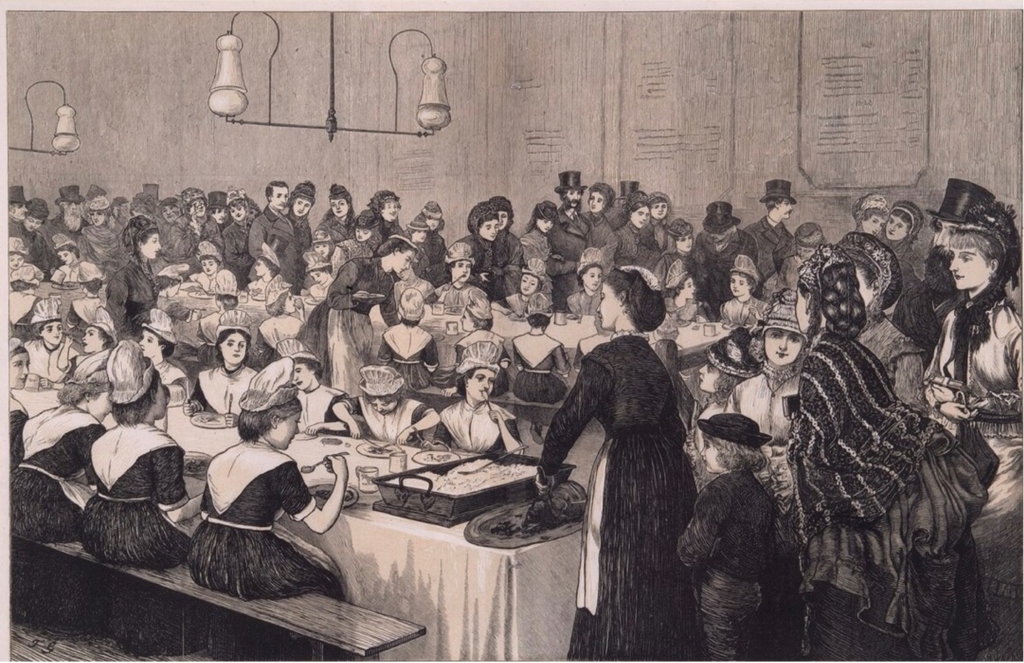
In 1837 the boys of the Queen Elizabeth Hospital in Bristol processed through the city ‘The object .. was the shew off the poor children as being under the patronage of the Liberal Trustees’. They also lined the Clifton Suspension Bridge on its opening in 1864, against showing what the philanthropic support had achieved.
5. The before and after photograph to demonstrate your impact – show don’t tell
Dr Barnardo’s opened his first homes for rescued children in the 1860s with an est 30,000 destitute or orphaned children in London following a cholera outbreak – the need was urgent
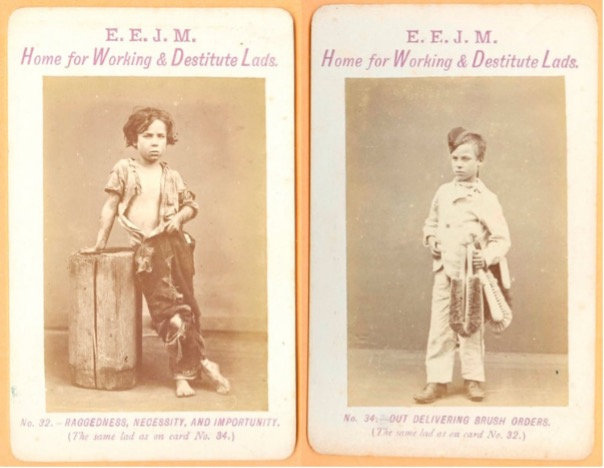
In 1874 he opened a photography studio in his Stepney Boys Home. Every child who came in was photographed when they entered for the next 30 years
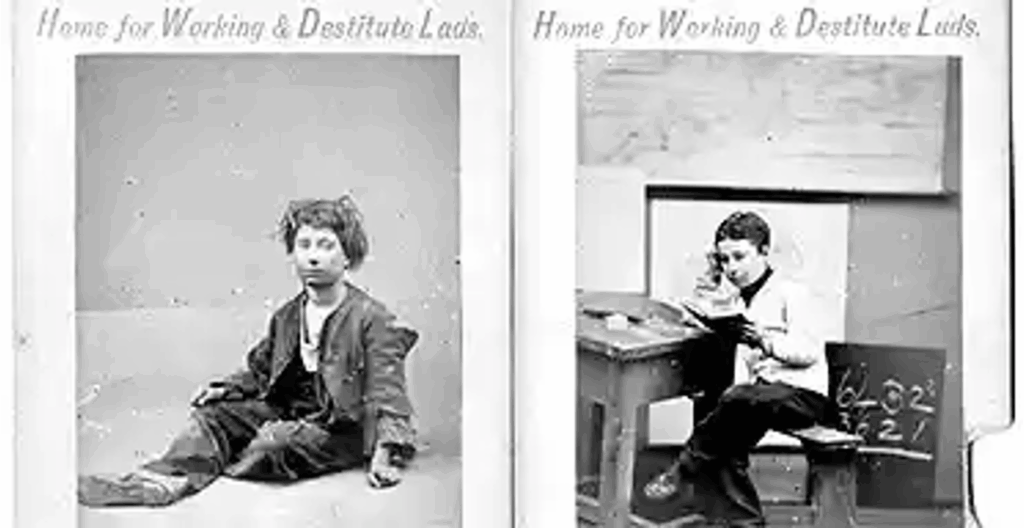
The photographs were kept as case history for the charity
And they were also sold as postcards (twenty for 5 shillings or 6d for one) to raise funds for the charity (Salvation Army and others did as well). As well as photography being a new technology printing had become cheaper and easier and charities like Dr Barnardos and Salvation Army embraced these commercial opportunities to grow revenue.
Dr Barnardo used photography to great effect and became a champion of the before and after photo
Now the before and after photo has become a fundraising staple – detailing powerfully visually what your support has done.
The before photos showed children as they arrived at the homes
The after demonstrated the impact of your donation and how their life had been transformed by the charity.
But in 1877 these photographs ended up with Dr Barnardo in court.The issue – the photos – were criticised for being faked and for being exploitative of the children pictured – showing bare arms and legs and the bodies of children (we are in Victorian times) They were criticised for being staged and emotionally manipulative.
Why was it so controversial?
Photography was a new science and seen to reveal the truth of a situation in a more realistic way – the fact that it did not reveal but was artificial and this perceived manipoulation alarmed people. There was concern that if the photo was fake then the charity itself might also be fake. We know how important trust is to charities nowadays for donors making decisions.
A minister -George Reynolds criticised the pictures and the charity in a pamphlet called ‘Startling Revelations’ them saying
“[Barnardo] tears their clothes, so as to make them appear worse than they really are. A lad named Fletcher is taken with a shoeblack’s box upon his back, although he never was a shoeblack.”
And that this exploitation destroyed the ‘better feelings” of the children.
In court Dr Barnardo admitted that they were portraits rather than realistic and he was using artistic licence
This is what he said in defence of the images used:
“we are often compelled to seize the most favorable opportunities of fine weather, and the reception of some boy or girl of a less destitute class whose expression of face, form, and general carriage may, if aided by suitable additions or subtractions of clothing … convey a truthful picture … of the class of children received in unfavourable weather, whom we could not … photograph immediately”.
He went on to say that the images:
”not intended so much to represent the individual boy or girl whose face is depicted, as a whole class of street children, of whom very many have been rescued, but from some one or other of the following causes could not at the time be photographed in the condition in which they were received.”
Dr Barnardo was cleared of most of the charges however his methods were criticised in the judgment which said t
“This use of artistic fiction to represent actual facts is, in our opinion, not only morally wrong as thus employed, but might, in the absence of a very strict control, grow into a system of deception dangerous to the cause on behalf of which it is practised.”
The Times reassured the public that the homes were “real and valuable charities, worthy of public confidence and support“.
So a cautionary tale about the adoption of new technologies and ensuring that when we use it, we are transparent about how we are using it so that we don’t abuse or loose the trust of our supporters.
So how could you apply this in your fundraising?
Show, don’t tell: It’s more powerful to demonstrate than describe.
Human behavior is contagious: We’re wired to notice and mirror others’ actions.
Social Hypothesis Theory: People process actions faster than words—seeing behavior prompts imitation.
Boost engagement: Visual cues are more memorable and emotionally impactful.
Drive action: Showing need, behavior, and impact makes fundraising messages more compelling.