BYOB – Bring your own bobbin
Fully embracing the ‘time, talent and treasure’ mantra the first female voluntary society founded in 1780 in Philadelphia mobilised women to raise funds by going door to door (time), donate (treasure) and then use the funds to sew shirts for the soldiers (talent).
When something terrible is happening we want to do something to help. To feel agency and control – personally and collectively. The women of Philadelphia founded a Ladies Voluntary Aid Society as they wanted to do something to help in the war (American War of Independence). The Ladies Voluntary Aid Society was led by upper class and wealthy women but they wanted to appeal beyond class boundaries and engage all women in supporting the war effort. Previous fundraising had relied on wealthy women being ‘at home’ to receive donations, but the Aid Society decided to take a different approach, and actively went out and chose to go door-to-door soliciting gifts rather than rely on passive giving. They wanted to signal that there were all in the war together and demonstrate their equality and shared purpose. (There may also have been some authority messenger signalling here – we give to people like us, but also people we respect and want to think well of us so giving can be used to enhance social status within a group)
This was coupled with an “every little helps” principle. Donations of all sizes were actively encouraged – as they expressed it, even “the shilling offered by the widow or young girl” was as welcome as larger sums, reinforcing inclusion and broad participation. Gifts were received ranging from $1 to $10,000.
This inclusive framing tapped into social identity and collective action. Giving became a way for women to express their patriotism. Supporting the cause was not just financial, it was symbolic of belonging and shared values.
The campaign proved popular and successful with widespread participation. It was common at the time to list all subscribers in the newspapers but the scheme was so popular the newspaper stated:
“was so great that it would exceed the limits of a newspaper”
With the desire to do something they had begun collecting but not decided how best to use the funds. Often when crisis hits we want to help and giving us gives us a sense of agency, what Beth Breeze has called ‘practical allyship’ demonstrating that we are with those in criss and doing something to support. However, in a crisis, it is not always clear what help is needed and where. So they consulted George Washington, at that time commander of the Continental Army, who advised that soldiers most needed shirts.
Rather than outsourcing production (and spending more of their donated funds on creating these garments), the women chose to make the shirts themselves, purchasing linen from the funds they had raised and sewing the shirts. a
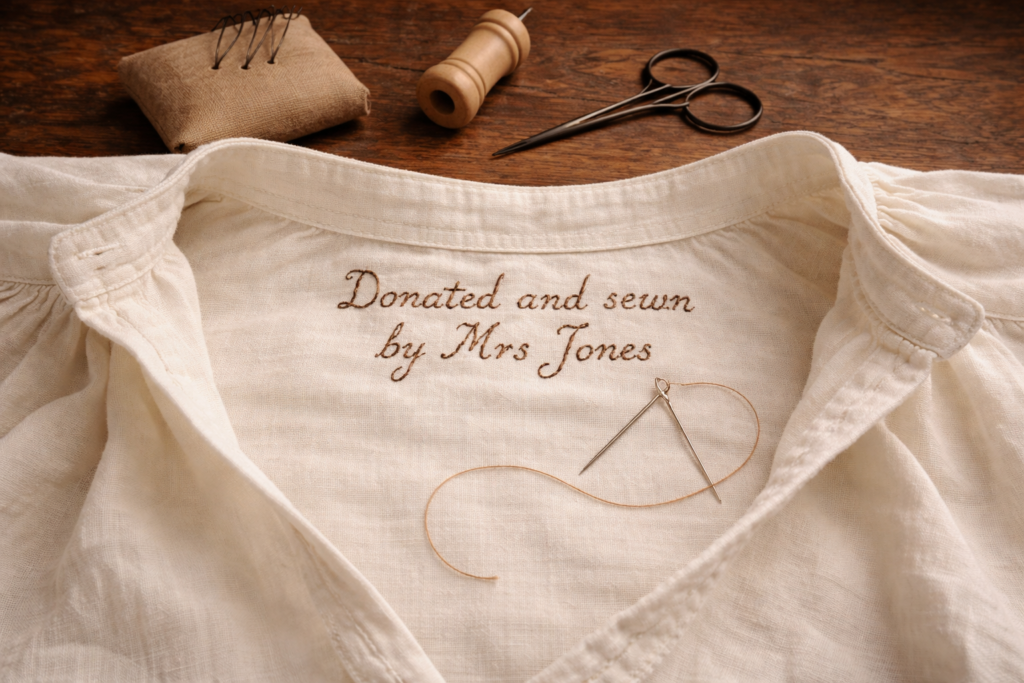
They did not just sew the shirts but they sewed their own donor credit into each shirt.
“bought the linen from their own private purses, and took pleasure in cutting them out, and sewing them themselves. On each shirt was the name of the married, or unmarried lady who made it”
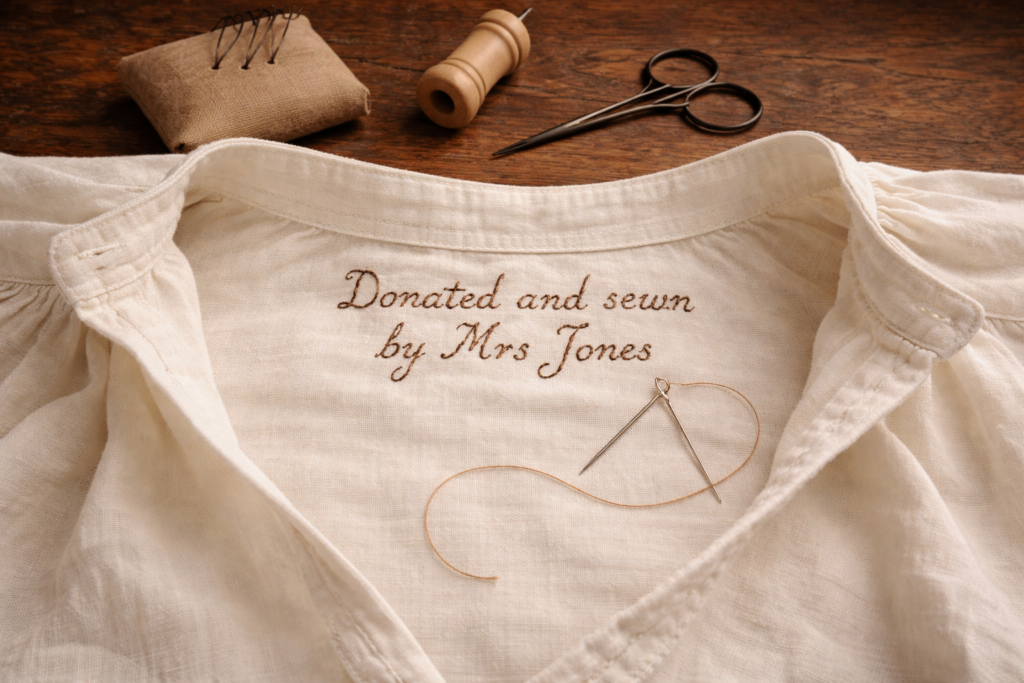
This illustrates the IKEA effect – people place higher value on things they help create – what better way of creating that connection that sewing your donor credit inyouself?
It also creates the endowment effect, where personal involvement increases perceived worth. Sewing the shirt for a soldier and personalising it with your name reinforces their identity as a patriot, a donor and emotional engagement. It is a tangible and real commitment to the cause.
The act of making and giving also generated emotional rewards. Donors likely experienced both an endorphin “helper’s high” from doing good and a dopamine-driven anticipation of impact, captured in the idea that the shirts would “be worn with as much pleasure as they were made.”
The campaign’s success led to replication in other states, including Maryland, Virginia, and New Jersey, showing how successful fundraising models are often copied, especially when they combine emotional engagement with visible impact.
Challenges
The initiative was not without controversy. Some criticised the women for “going about for money,” revealing social tensions about the expectations of women and their role outside the home.
There were also concerns about the methods used to secure donations. In some cases, social pressure bordered on coercion, with threats of reputational damage for those who refused to give (with one potential subscriber being told that if they did not give then they would ‘hand his name down to posterity with infamy‘) The female fundraisers sometimes relied on gendered behavioural tactics, such as flirtation or scolding, to persuade donors.
“they relied about hyper feminized forms of behaviour – flirting, and failing that, scolding – to induce support from those who for economic or political reasons would otherwise not donate”
While potentially effective, these approaches raise ethical questions about manipulation and the reinforcement of stereotypes.
What this should make us think about today
Effective fundraising today should combine
- agency – giving people something meaningful to do
- inclusivity – valuing all gifts
- identity – connecting giving to who people are
- & tangible impact – showing exactly what donations achieve
while maintaining clear ethical boundaries around how influence and social pressure are used.
References:
‘Ladies going about for money’ Female voluntary associations and civic consciousness in the American revolution’ ‘by Emily J Arendt