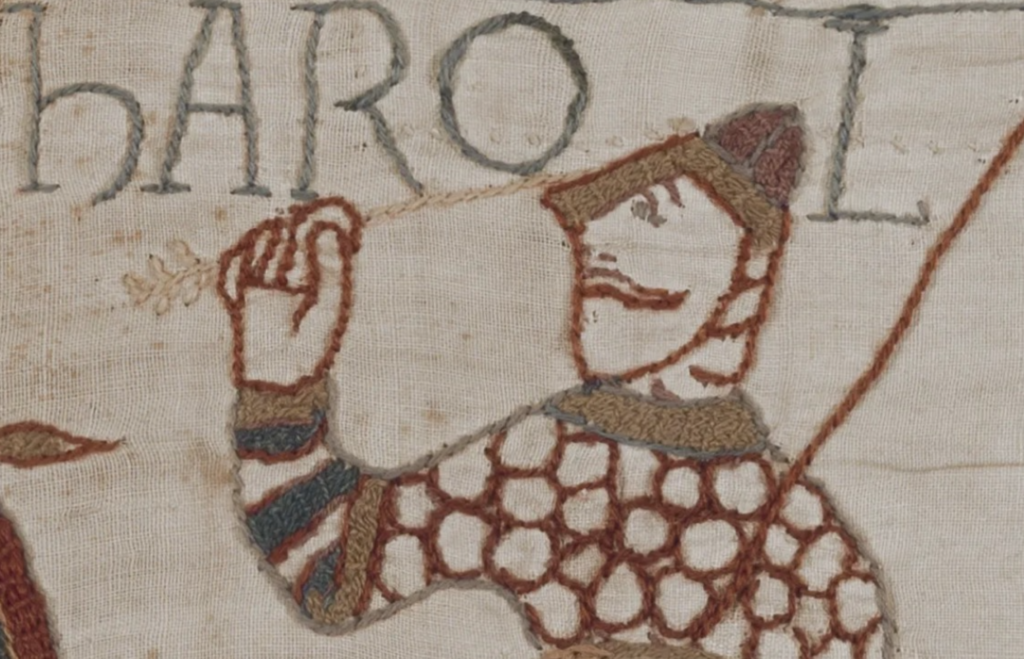
Is that an arrow in the eye?
The most famous scene in the Bayeux Tapestry is often described as Harold being struck by an arrow in the eye.
But is it Harold and, it is it an arrow?
The Bayeux Tapestry offers a useful warning for fundraisers: the image we remember is not always the whole truth. The famous arrow-in-the-eye story shows how vivid images dominate our narratives and memories. That matters for fundraising because the stories and images we choose can shape what donors believe, remember and repeat.
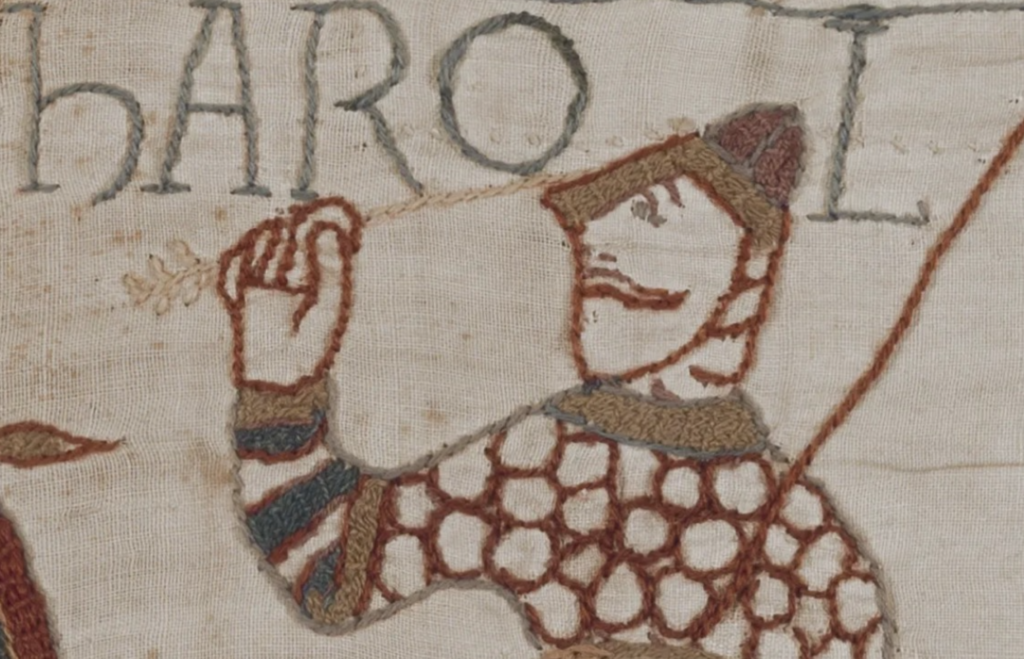
What does this image tell us about how we think about history, the history of fundraising, and the lessons we choose to remember?
We are drawn to novelty – even in a bloody battle with arrows flying here, there and everywhere it is unusual to get struck in the eye with a fatal shot.
Today, even when millions of people die in road traffic accidents, a shark attack is news and it sticks with us. The same is true for the arrow – it is unusual and it is vivid which makes it more memorable.
It is not just vivid – but visual. We are visual animals: we often process images faster than words, and vivid images can reach us before careful argument does.
The picture supremacy effect means we also recall images better than words.
So, a Saxon soldier with an arrow in his eye in easier to recall than hundreds of dead soldiers and the complex and disputed facts of a battle nearly 1000 years ago.
However, there are no contemporary writers that say that Harold was killed by an arrow to the eye. Given the uncommon nature of this death – it would be something worth chronicling and writing home about. The myth has grown up around the image on the tapestry. Historians dispute whether the chap with the arrow in the eye is Harold, the two Saxon soldiers next to him are holding spears and it could be some stitching has become unsewn that makes the spear look more arrow-y. One school of thought bases the possibly based on a dodgy eighteenth century sketch.
But the visual is stronger than the facts, and the more powerful image sticks in our mind
Think about this with donors – an image can beat a carefully crafted appeal letter.
The arrow in the eye story sticks – we can see it.
So for fundraisers – there is opportunity and danger. Images help people grasp a story quickly, but they can also simplify it too much, turning a complex reality into a single memorable symbol. But we know that too many facts can be detrimental to our fundraising – too many facts overwhelm our donors, and overwhelm can lead to inaction as there is too much to process. Keeping it simple, makes it memorable.
Use powerful images to make the story stick in your donor’s minds – but be mindful that you consider the power of the images you choose, make or commission. How are you giving agency to those that you are representing?
History is notoriously written by the victors
In the case of the Bayeux tapestry it is commissioned by the victors sewn by those they conquered – potentially by nuns in Canterbury (so conquered victims)
The choices we make about what we present in history help tell the story that we want to tell
The story the tapestry tells is shaped by who won the battle of Hastings and that narratives that they wanted to land – so who commissioned it? One theory has Bishop Odo as the commissioner of the tapestry giving himself and his influence in the story.
Could the same be said to be true of our charities? When a donor pays for a new building and has their name on it, does that influence how we tell the story? Do we end up celebrating the donor more than the founder’s vision, the staff who carried the work, or the collective effort of a community?
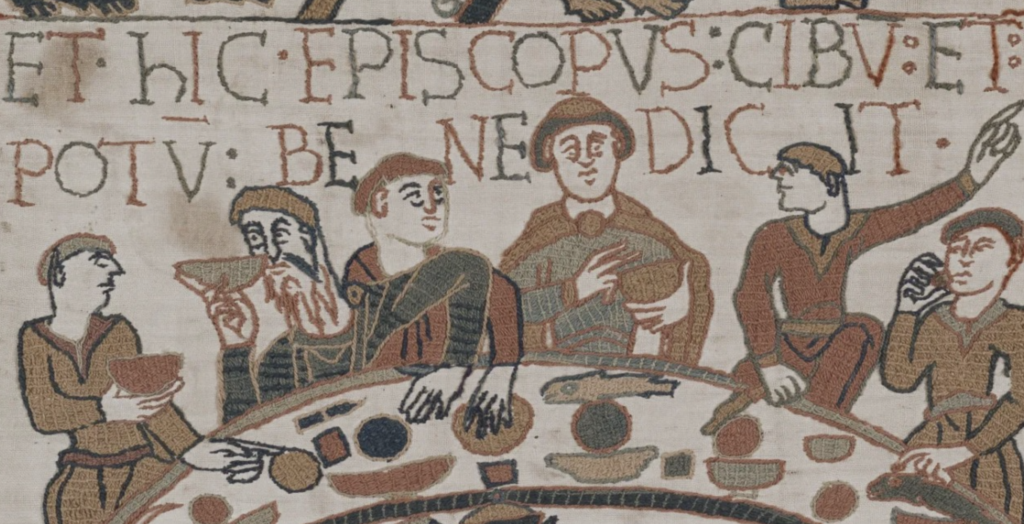
In the tapestry the nuance, the messiness and the competing claims to the English throne can disappear when a single image becomes the story.
When we are telling the history of our organisations, or talking about the history of fundraising we tend to do the same. The narrative is shaped by our current understanding of the world and social mores of the time. But in order to make a story sticky and memorable we simplify it to cause and effect (because he was shot with an arrow, because she she suffered injustice and wanted to change the law, because he had this disease …)
For fundraisers we often need to keep the story simpler to ensure that our donors can see the cause and effect (because you gave, Sara will eat supper tonight…)
What are the fundraising equivalents of an arrow in the eye?
Possible Live Aid being the first charity single
Bob Gedolf and pals coming together to raise money through singing ‘Do they know its Christmas time’ in 1984/5
But look more closely and you see the George Harrison Concert for Bangladesh or the 1969 sponsored walk for Oxfam that ended with a Wembley concert featuring Status Quo, The Love Affiar and many more.
Look even earlier and Arthur Sullivan and Rudyard Kipling (the Geldof of their day!) were creating a charity single raising funds in 1899 for the soldiers returning from fighting the Boer War.
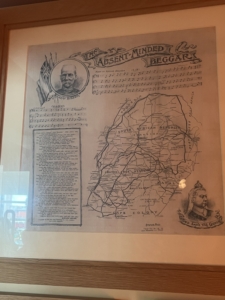
Now this was before Top of the Pops or charts.
Sales of the sheet music (to play at home on your piano) and on handkerchiefs raised over £250,000 (now equivalent to £40m+)
We think of Live Aid as the first. The biggest. The one we remember.
Three lessons for fundraisers
🔹 Make it memorable.
Vivid images and simple stories help people understand and remember why their support matters.
🔹 But don’t confuse memorable with true.
The neatest fundraising story isn’t always the most complete one. Check the history, challenge the mythology and don’t let a powerful image mislead.
🔹 Ask who gets to tell the story.
The Bayeux Tapestry tells the story of the Norman victory – commissioned by the victors and probably made by people on the conquered side. What gets remembered depends partly on who has the power to tell the story.
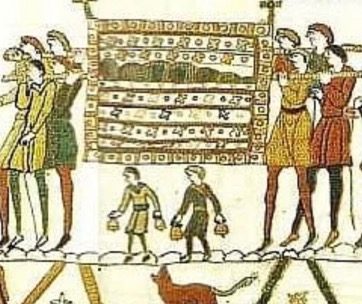
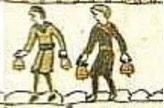
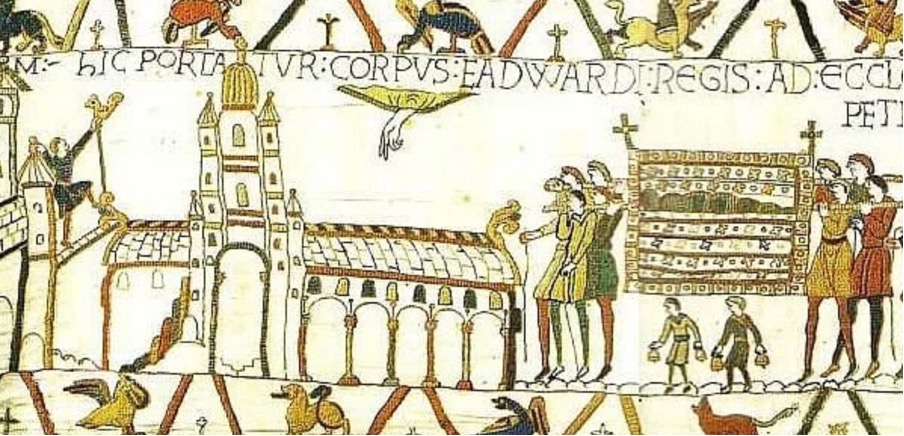
And did you know that there are fundraisers on the Bayeux tapestry?
Read more about them here https://marinajones.uk/bayeaux/