Fake charity – sometimes a good idea?
Fundraising has been plagued with a history of fake fundraisers, and fundraising for charities that never existed, or donations not going where they should.
Did you know the first fundraising regulation came in at the Lateran Council IV in 1215 in the wake of scandals about fake fundraisers collecting money for cathedral capital campaigns? Pope Innocent III decreed that all questors (those that asked for funds) needed a licence from the Pope and permission from the local diocesan bishop, or king, to be travelling around with relics and soliciting gifts.
This shows that concerns about fundraising have been with us a long time.
We trust charities – even now, charities are the second most trusted public organisation, and there has been little change in that over time.
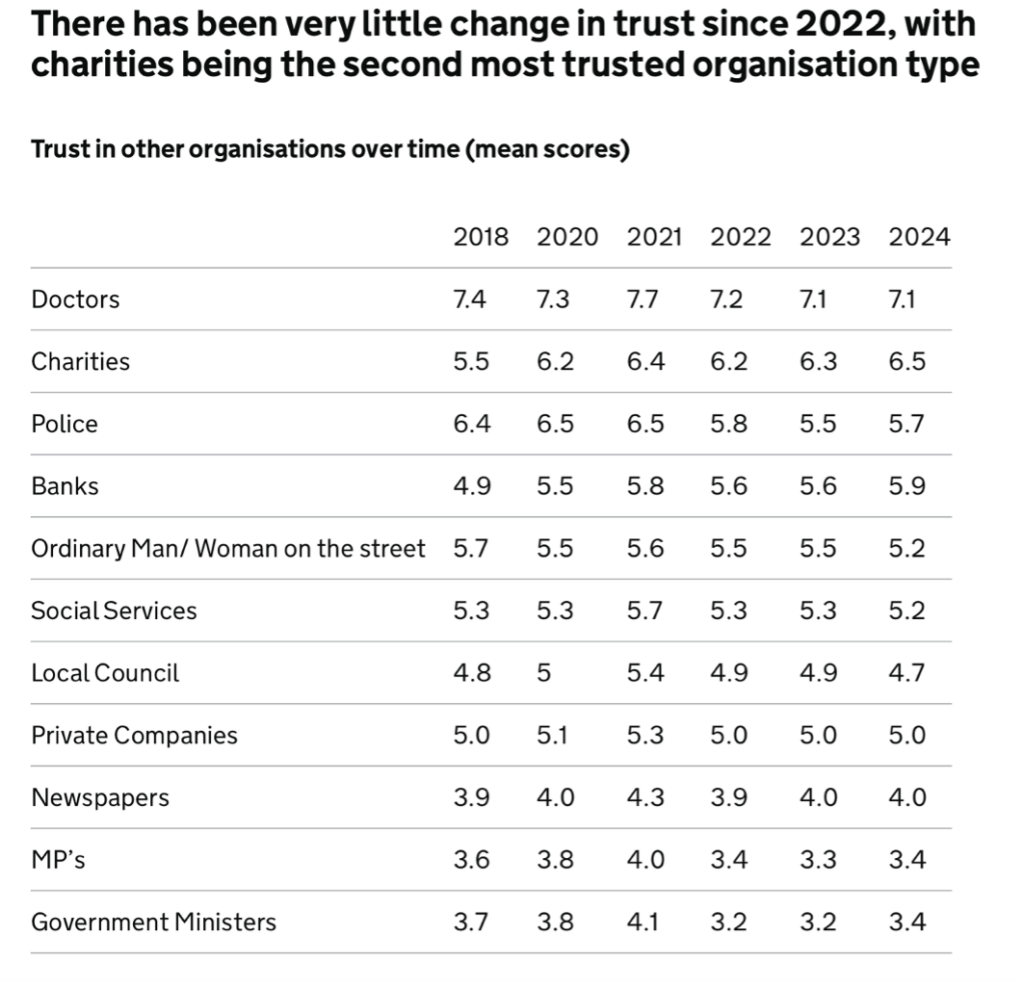
We want to trust charities. We see them as mission aligned organisations, doing good in the world, and as bodies that have integrity. So we trust that the money given to them, and their representatives, is used appropriately.
There is a bigger and more wide reaching debate to be had about trust in charities and its impact and how all charities can be tarred with the brush of bad actors using the veneer of charity for their personal gain.
But when might using the veneer of charity, and creating a fake charity, actually help the greater good?
Here are two historical examples. Fake charities created to deceive but for a wider societal benefit. In both cases the deception was not revealed until years, or decades, after the ‘fraud’ was perpetrated.
Monopoly
Yes the board game. How is that connected with a fake charity?
Well during World War Two, prisoners of war were allowed by the Geneva Convention to have board and card games to occupy their time. These were sent by the Red Cross and other charities.
However, some very special sets of Monopoly were created by British Secret Service and game makers Waddingtons and sent to prisoners by fake charities to help prisoners escape.
This was the brainchild of Christopher Clayton Hutton who worked with the game makers Waddingtons. He has been likened to Q in James Bond and met Harry Houdini as a child. He had the idea to use the pieces and game of Monopoly to hide items in to assist prisoners to escape.
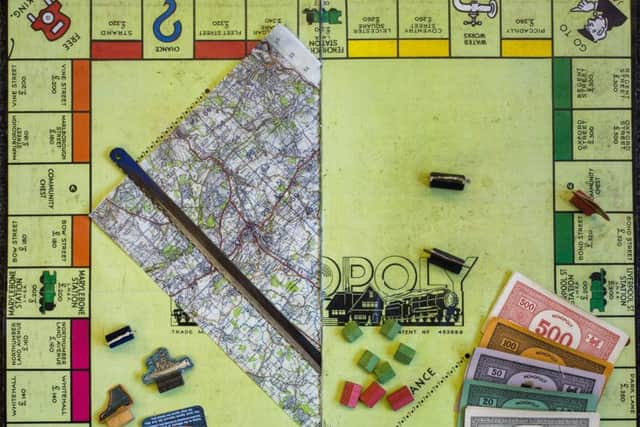
To the uninformed these boards looked like any other Monopoly board – same pieces, same weight. But a few subtle details alerted people that these were special ‘escape boards’.
And how did you know which map you had? A certain full stop on the map gave a clue to its secrets
- a full stop after Mayfair – map of Norway and Sweden
- after Free Parking – maps of Northern France
- after Marylebone – map of Italy
British Secret Service and Waddingtons introduced compasses, ropes, knives and metal files all cleverly hidden and disguised within the playing pieces. Some playing tokens were made of pure gold so that the escaped prisoners could use it for safe passage during their escape.
And perhaps most ingenious (and Bond-esque) of all were the maps. Printed on silk so that it could be folded into playing pieces. Silk was chosen as it would not rustle or attract attention of prison guards, or disintegrate when wet.
Once the scheme had been successfully tired Monopoly money was substituted for local currency as well to make escape easier.
However, British Secret Service did not want to send them through the Red Cross, or any other established charity, in case they were discovered and real items of support and welfare did not get through. So they created a series of fake charities called:
- Licensed Victuallers’ Sports Association
- Prisoners’ Leisure Hour Fund
- Licensed Victuallers’ Prisoners Relief Fund.
As well as sending through the games, to add veracity to their cover, these fake charities also sent parcels of clothes. These fake charities were based in address in bombed out buildings.
And did it work? Yes. There was no suspicion of the Monopoly boards. A 19 year old RAF prisoner of war reported that the sets were destroyed before the escapes were enacted so the secret was not revealed.
It is estimated over 10,000 Allied prisoners of war were assisted in some way by these escape kit Monopoly sets. This story was not declassified until 2007 and all those that escaped had to swear to uphold the Official Secrets Act in case the trick was needed in future wars.
Spitfires
A group of Prisoners of War in Germany made up a fake British charity to send German money to England to help buy a Spitfire and fight the Nazis.
Sergeant Miles-Osborne was shot down and imprisoned in the prisoner of war camp Stalag 383. He organised fellow prisoners of war to donate towards the Spitfire Fund. The Spitfire Fund was a national campaign to raise funds for Spitfires.
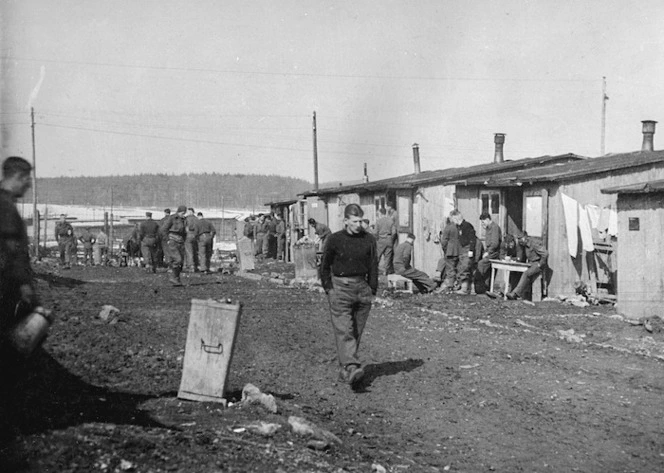
But to do this they had to do it through a fake charity
Miles-Osborne wanted to fund a spitfire – but knew that all the letter he sent would be censored so he wrote to a friend, now Duncan Sandys MP. This letter established a fake charity – the Duncan Sandys Welfare Fund. Miles-Osbourne and prisoners raised £5,085 and listed 108 different military units and the payment from each
- Royal Horse Guards £3
- Royal Navy £4
- Royal Marines £27
- Gordon Highlanders £82 etc.,
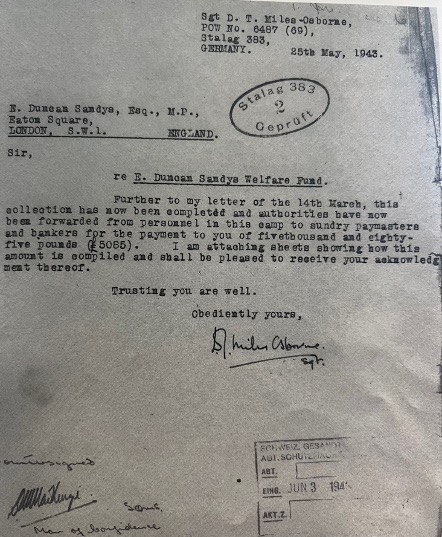
(Now you may be wondering where prisoners got money to donate to charity – fake or not. Well, in prison prisoners still received their army pay, but also ordinary soldiers also received payments (minimum wage) from the Germans for manual work that they did in the camps, and these funds were credited to their army accounts. So, the soldiers used these funds to donate and via the great bureaucratic machine these could be used for donations.)
The above letter confused Duncan Sandys who had no idea what this Welfare Fund was or why monies were being directed to it. Miles-Osborne had written a previous letter that was lost in transit.
Cheques and postcards from the prisoner of war camp with pledges started arriving at the Ministry of Supply for the Duncan Sandys Welfare Fund. This Duncan Sandys Fund was a fake – under the ruse of contributing to a welfare fund (of undetermined nature) the prisoners were funding a spitfire to fight the war. They could not say what the funds were for as all letters were read and censored by their German guards.
The pledges continued to come in but Duncan Sandys had no idea what the funds were for. It took many months before he cracked the coded messages to realise that they were funds were for a spitfire – and all through the guise of a fake charity.
So sometimes faking it can be for the greater good.
Reference
The detail for the Spitfire story comes from Colin Pateman’s book Unshackled Spirit Prisoners of War and the Secret Spitfire