Don’t be the charity that gets pruned
You have heard of natural selection? And the survival of the fittest?
What about ‘socioemotional selection’?
Have you ever done it?
What does it mean?
When time is unlimited we follow knowledge based goals, but when time is limited – as you near the end of a job, college, university, or your life – emotional goals become more important. This impacts on who you want to spend that limited time with, and which relationships you hold onto.
So, as you near the end of a degree, you are not so interested in meeting and spending time with first years, and want to enjoy the final moments with those you have been with for the last three years. Or as you finish a job that you have had for many years, you want to spend time with those closest to you rather than meeting lots of new people.
Think back to when you have been in this situation – did you start to select like this? Focus on those nearest and dearest?
That is socioemotional selectivity. A theory proposed and tested by social scientists Laura T Cartesen, Derek M Issacowitz and Susan T Charles.
It links to behavioural economics Kahmenan and Tvesky’s prospect theory where we weigh up the potential losses or gains of any decision we make.
When time is open ended then new relationships hold more potential for gains – but when time is limited then there is no such gain and we focus on the known gains from the known relationships.
And it is important to recognise it in ourselves, and also in our donors.
And knowing more about it can help you think about fundraising?
There is a commonly held myth about older people. That as they get older there social networks shrink as their friends die off.
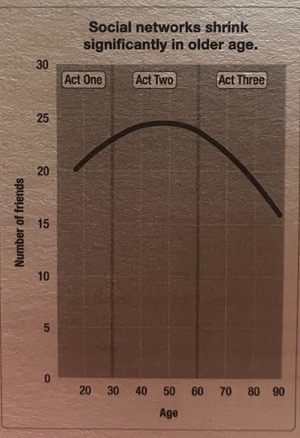
However, more focussed studies of social networks in older people show a more nuanced pattern. When mapped in more detail to show those social networks divided into the inner friendship group and the outer friendship group – the inner circle remains pretty constant throughout our life cycle in terms of size of network. It is the outer circle that starts to shrink. When time is limited we prioritise those that we have a closer relationship with.
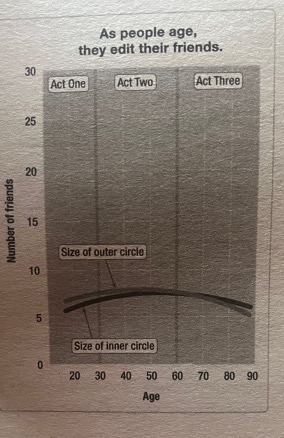
This is an active elimination of the outer circle.
A pruning of relationships.
“When time is constrained and limited, as it is at act three [final act], we attune to the now. We pursue different goals – emotional satisfaction, an appreciation for life, a sense of meaning”
‘When’ by Daniel H Pink
So when the end if near, and its time to face the final curtain. We don’t want lots of new transitory relationships or acquaintances – we want the ones that mean something
“We edit relationships. We omit needless people. We choose to spend our remaining years with networks that are small, tight and populated with those that satisfy our higher needs”
‘When’ by Daniel H Pink
Are older or younger people more able to remember emotional material?
The older you are the more emotional recall you have.
‘older people recall more than younger people about their thoughts and feelings’
Laura T Cartesen, Derek M Issacowitz and Susan T Charles
When older people took part in a memory paradigm test – a test involving reading a two page summary of a novel and then recalling the information. Older people recalled more of the emotional material than the non-emotional material (so younger people remembered more facts and less feelings.) So remember to keep communicating the emotions to your older supporters. The more emotional = the more memorable.
Time to prune?
So back to socioemotional selection – this findings struck a chord with me as I have seen donors and supporters do it – in life, and with final gifts in legacies.

We had a very lovely donor in her 80s who was philanthropically very active supporting a number of charities that were important to her – cultural, civil rights, medical. As she became older, and her 90th birthday was approaching, there was a conscious and active pruning of the causes that she could support. She did not have the time, or the energy (even though she was out at the theatre several times a week!) to continue to support all of the charities she had done. She made choices about who retained her support – these were connected to her enjoyment, her profession, and how those in the fundraising teams made her feel. As we can see, when time is limited, we focus on the relationships that mean the most.
There was also a practical element in this pruning –as a great theatre lover and as she was aging, her mobility decreased and she could only attend venues where a taxi could take her to the main entrance and the lack of access provided by some venues made attendance impossible. This stopped her going to some places that she had been going all her life (and performed in) and consequently stopped her giving. Not all these things are in your control, but they are important, and how older supporters might perceive or experience your services from physical access to fonts matters.
Socioemotional selection is also important when it comes to legacy giving. Being in the will is important, but being in the last and final will is crucial. Often charities have been told that they are in the will, and they may have been. But data shows a real gap between those that thought they are in the will, and those that get a gift – Legacy Foresight sighting 50% of gifts pledged in will are never realised (2019). One reason is socioemotional selection and this pruning stage. On average people write three wills in their lifetime, the final one being aged 80+. At this stage, with time being limited, the charities that are still meaningful, that have made an impact, that have stayed in touch, that are stewarding, that they still engage with and that there is a sense of relationship are more likely to make the final cut. That is why continued stewardship of your supporters is so crucial.
A historic bad example of failing to maintain the relationship from New York
Super fans, super loyal but also need super care
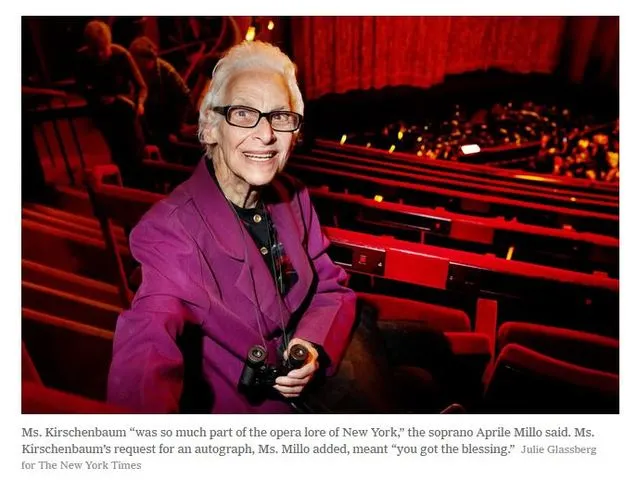
Since the 1950s Lois Kirschenbaum attended nearly every performance and always hung around stage door to get her programme or ticket signed. She was an opera super fan, although the data collected would not have shown her up as a potential major legacy giver. Lois Kirschenbaum bought standing places. She was legally blind and watched the opera through big binoculars. She lived in a rent controlled apartment, worked for a charity and caught the bus to the opera. However the lived frugally and left $4m to 18 charities giving $1.7m to the arts but not to the Met Opera because of a decision 30 yrs ago not to let her backstage to continue to gather the signatures she loved. Often legacy pledgers are not big donors in their lifetime but their gifts reflect a lifetime of connection.
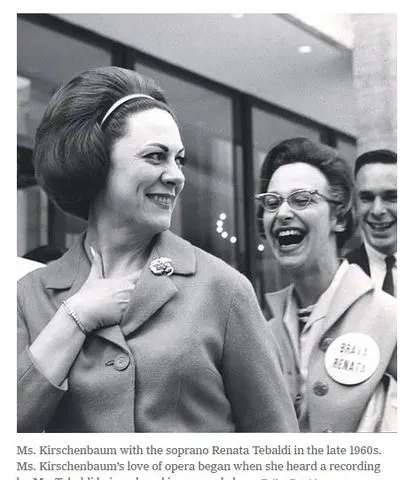
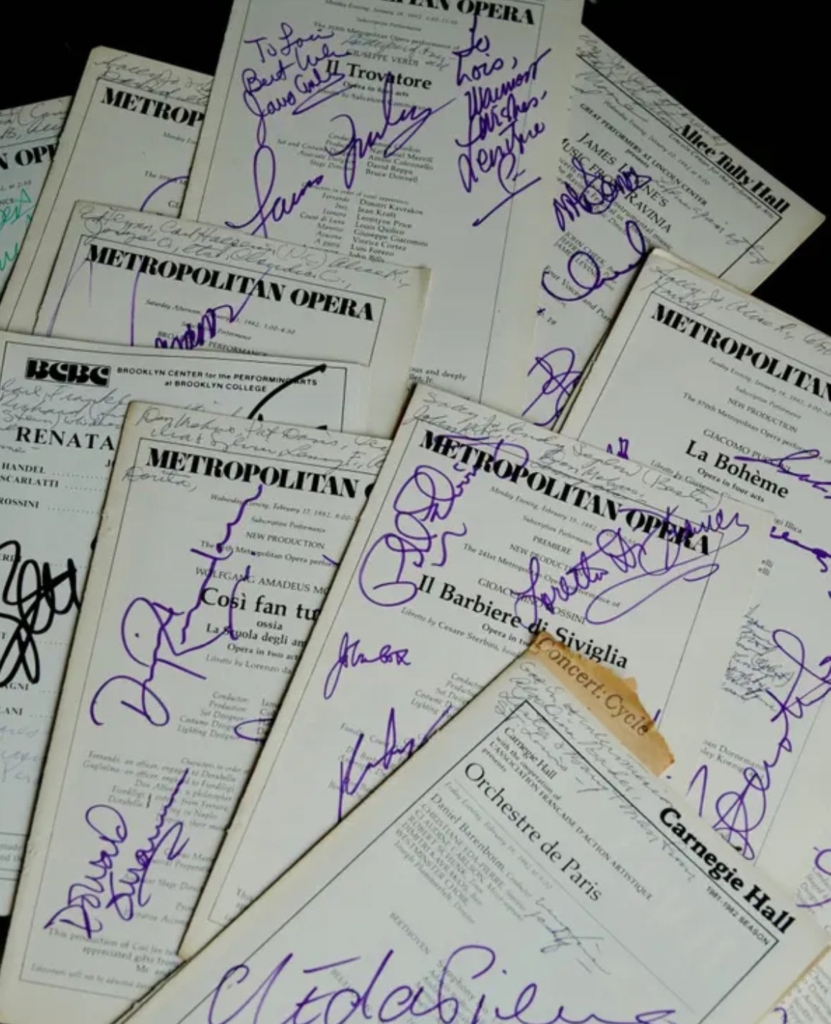
And an important reminder that those who have already made a commitment to you with a gift in their will, have made a mental adjustment of how they see you, that you are already a more meaningful and more deeply help connection as they start to give more in their lifetime. Including that bequest has drawn you closer to them but even then you can fall out in this pruning stage
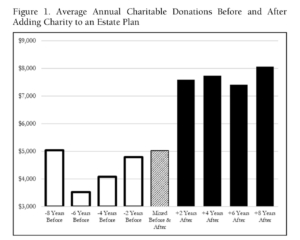
Thinking about your supporters, would you survive a socioemotional selection cut?
How can how you look after your donors and the connections that you make mean that yours is the charity that they stay supporting – in life and in death?