The revolution will be fundraised for …
A few photos from a recent trip to the People’s History Museum in Manchester and the importance of fundraising to make change happen.
1899 – London Dock Strike
A fundraising poster asking for support for the Strike Relief Fund to support the striking dock workers. The dockers went on strike over wages, with the dockers requesting to get a tanner (6d) an hour – this was London’s first living wage. The strikes spread with other workers coming out in sympathy with the dockers. The unions helped fund those on strike but they needed extra funds to support a prolonged strike, and this is where the donations came in,
The Strike Relief Fund raised over £46,000. Tom Mann, one of the organisers of the strike, collected donations in the brown bag below.
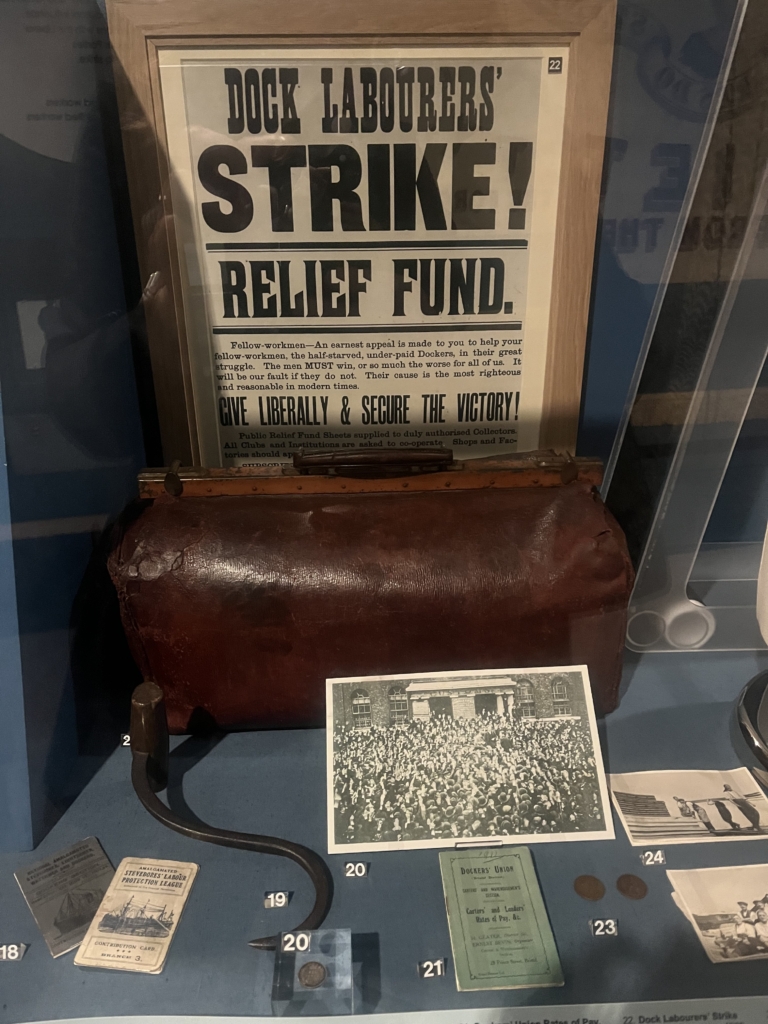
£30,000 of the £46,000 raised which came from Australia. Sympathetic dockers in Australia and other trade unions including the timber yards, football clubs sent donations – a shared affinity across countries often inspires gifts.
This shared affinity can be seen throughout history. A great example is the Choctaw Nation who after a difficult period of migration had recently arrived in Oklahoma in 1847, and sent a donation to Ireland for those impacted by famine – as they too had experienced hunger. This has developed into a reciprocal relationship with the people of Ireland sending the Choctaw Nation donations during the pandemic when the community was particularly affected.
It was not just the affiliated dockers and trade unions but also the Melbourne police and archbishop donated to support the dockers. The funds raised in England and Australia ensured that the strikers could hold on and negotiate for better conditions.
The Dockers had been inspired by the Match Girls of the Bryant & May match factory who had gone on strike in 1888 previously in protest over their dangerous working conditions. The phosphorus used in the production of matches was harmful and caused their jaws and bones to deteriorate. Social campaigner and Fabian, Annie Besant supported them, and with George Bernard Shaw, raised money to support their strike (and as an aside I played Annie Besant in an amateur production of the musical of ‘The Match Girls’ by Bill Owen and Tony Russell, and directed a production in Sixth Form). To counteract this unethical production methods the Salvation Army created more ethical matches which you can read about here.
.
Early Gamificiation – Pank-a-squith
Gamification has become a popular way to raise funds but it is nothing new in fundraising.
This board game from the 1910s with a board game called Pank-a-squith used to raise funds and awareness of the Suffragettes and their cause
It had one space on the board dedicated to raising funds.
“Any player landing on this space must send a penny to the Suffragette funds”
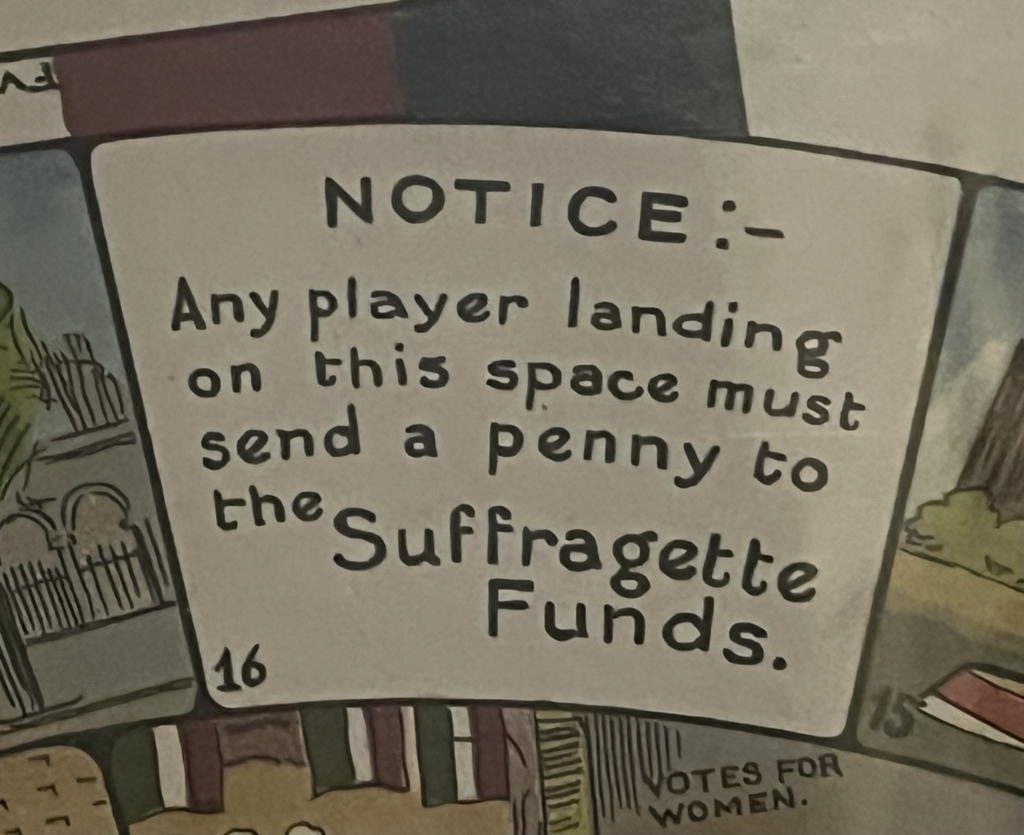
And the whole game, which involves moving from home towards Westminster and includes spaces throwing rocks at the British Home Offices.
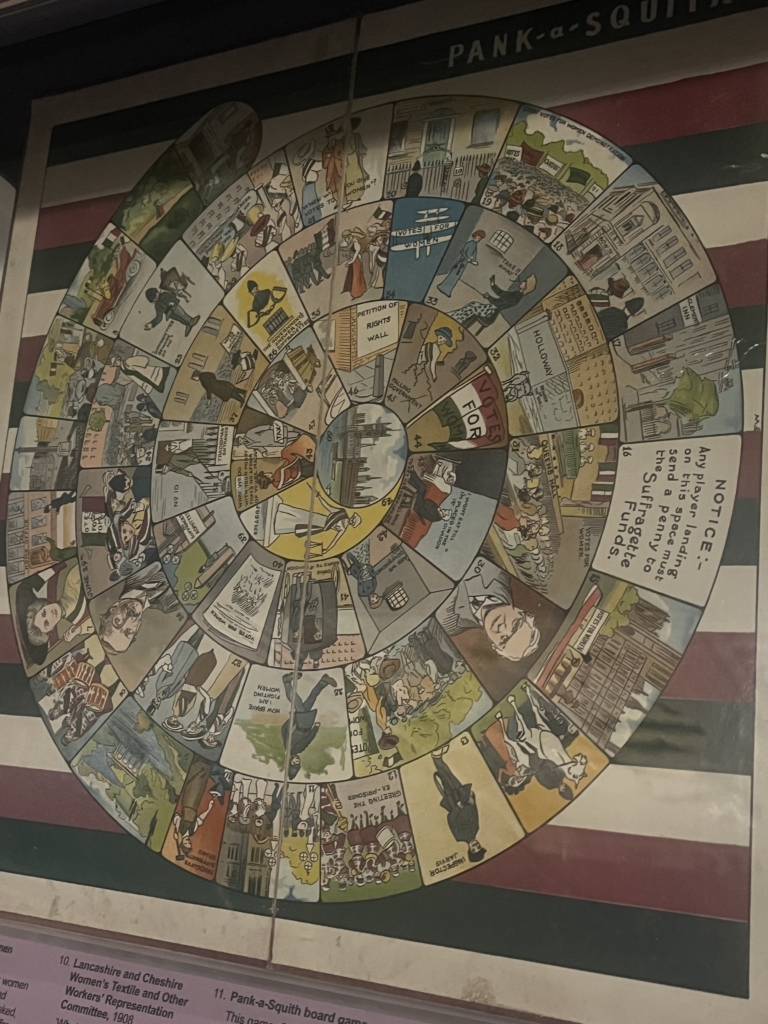
They also sold card games called Suffragette and other board games – again to raise funds and awareness.
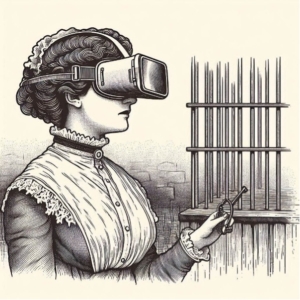
As well as early adopters of gamification, the Suffragettes also sold merchandise and in 1909 ran a two week Women’s Exhibition which had an immersive exhibit. So before VR headsets they created an interactive and immersive experience. They had a replicas of a jail cell clearly demonstrating the difference between the treatment and size of male and female prisons. Men, even if imprisoned for treason or murder, had bigger cells and better treatment. Women were in smaller and treated as common criminals. A suffragette who had been imprisoned in one of these cells led tours at the Exhibit.
Demonstrating the importance of show don’t tell!
Emmeline Pankhurst wrote in the programme
‘This Exhibition is intended to help the most wonderful movement the world has ever seen. A movement to set free that half of the human race that has always been in bondage, to give women the power to work out their own salvation – political, social and industrial.’
The event raised over £5,000 in its two weeks and Emmeline Pankhurst also noted that
‘although it usually happens that the women who have worked to raise the money are not in any way consulted as to how the money raised shall be spent.’
And wrote operas to raise awareness and funds
We need more games with donation options!
Unions & Friendly Societies
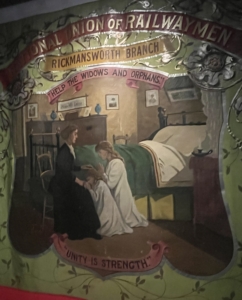
Before the welfare state, friendly societies and unions looked after their members and their dependents. This union banner emphasises the important work of the unions in supporting and caring for those left behind with its promise to “Help the Widows and Orphans.”
Spain’s Civil War
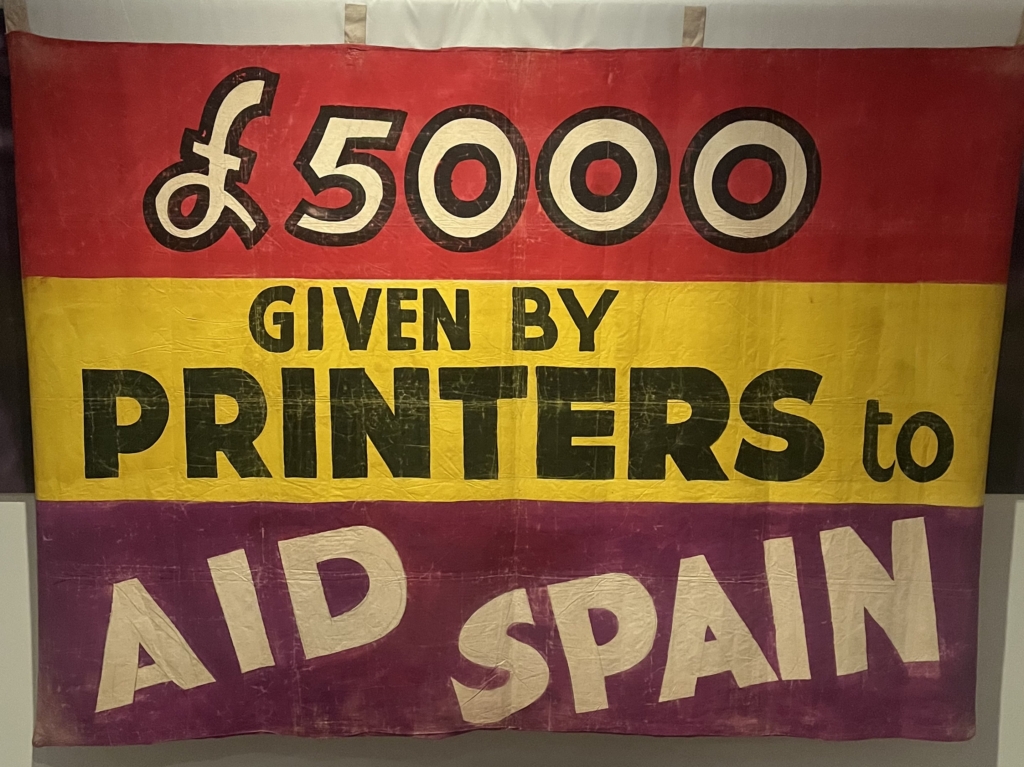
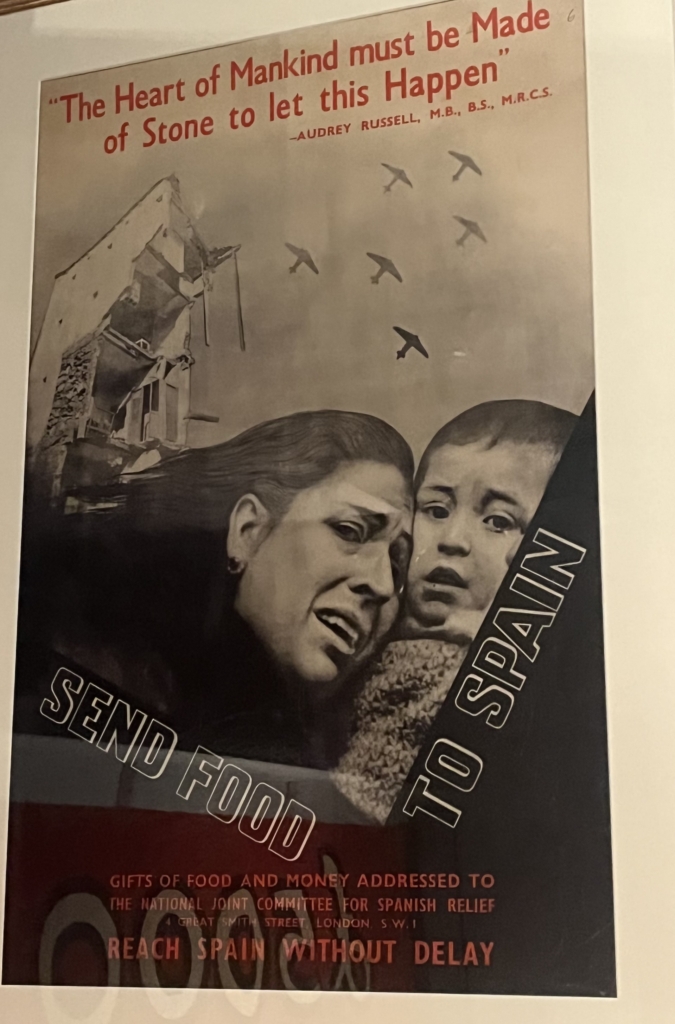
In 1937 the Spanish Civil War the printing trade and other unions sent money to Spain
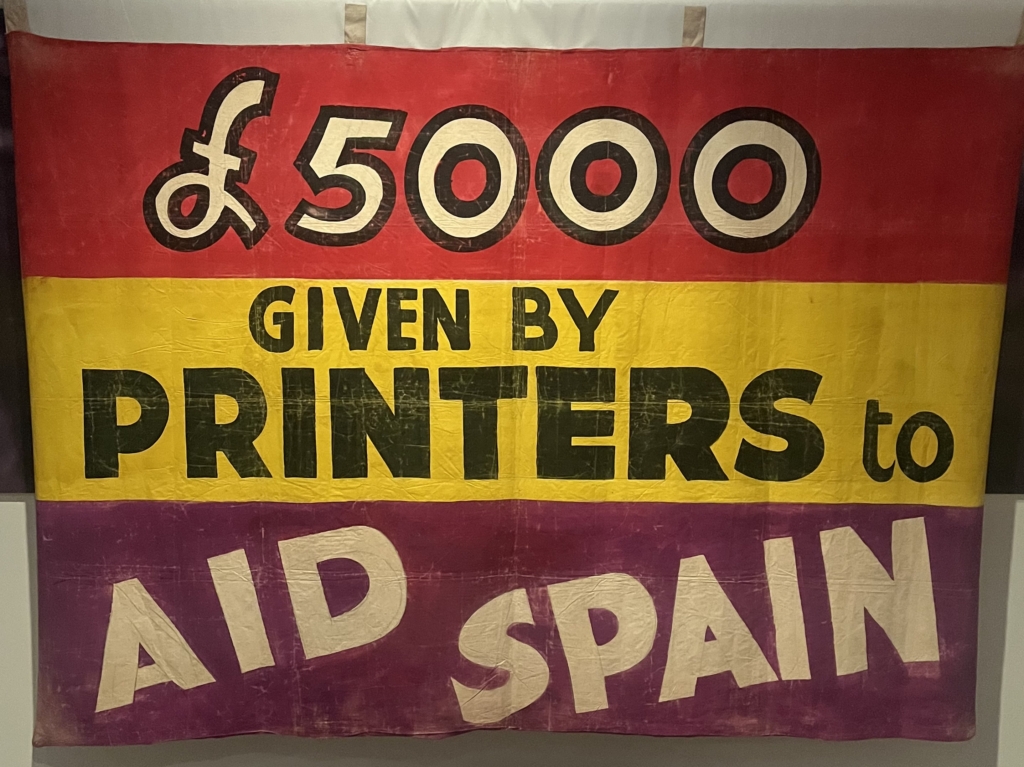
The printers union raised £5,000 to provide aid.
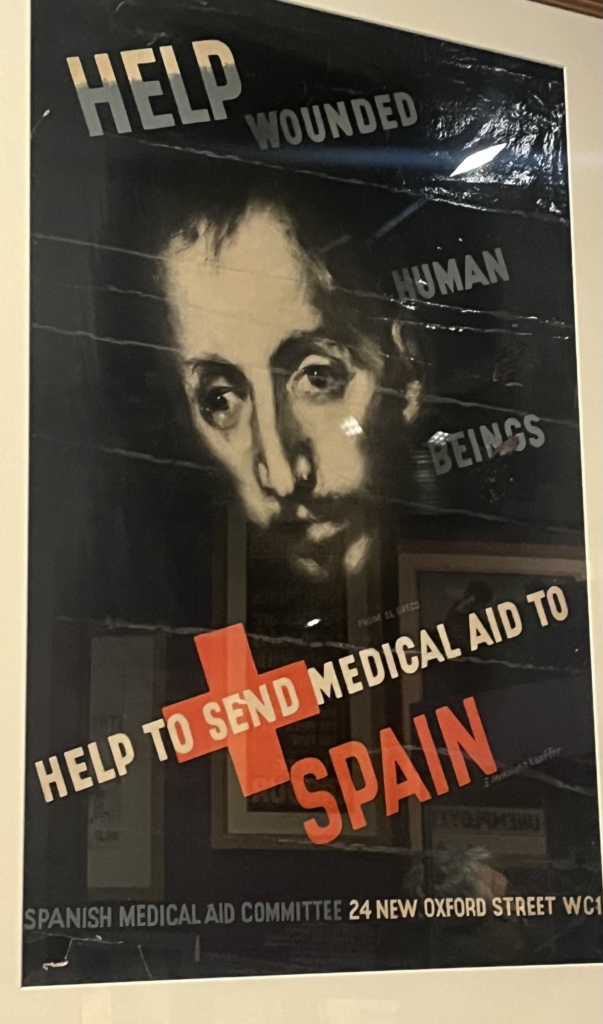
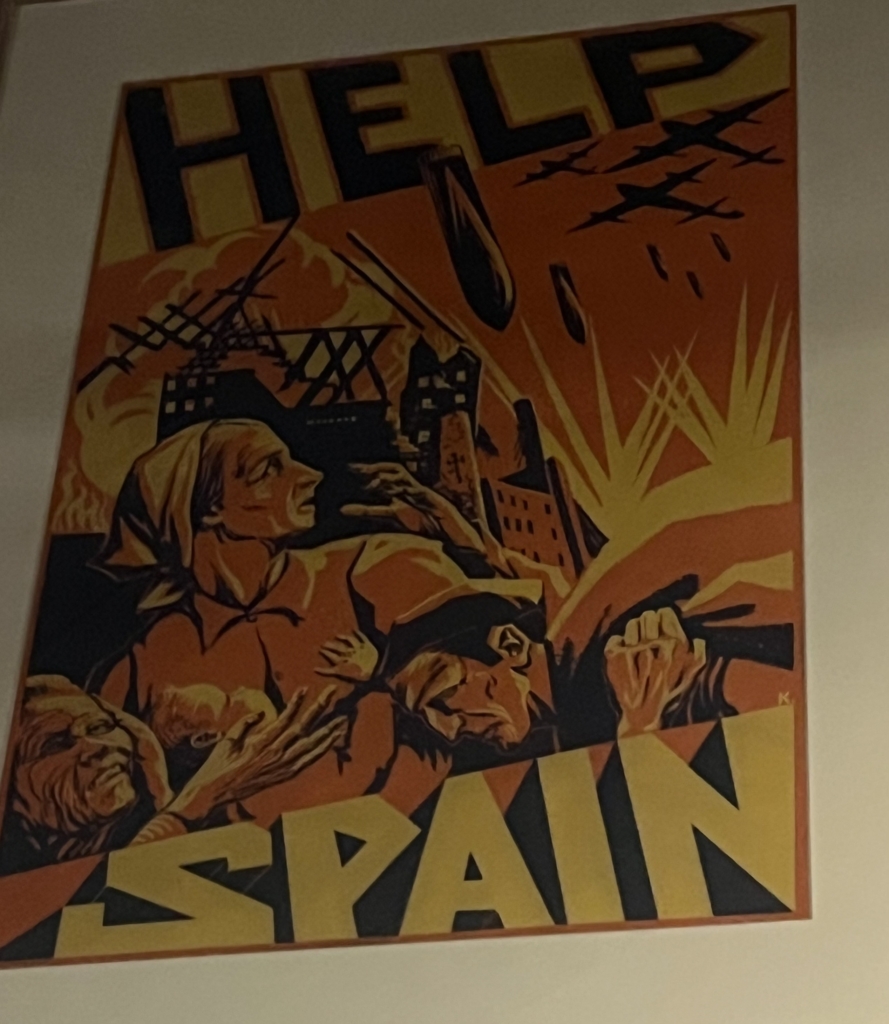
Here is a selection of campaign posters to promote charitable giving to support those impacted by the civil war from the late 1930s. I always find it interesting to look at older charity adverts and see how little has changed.
Rose Queen Pageants
A North West tradition, these pageants were used to raise money and support local causes. A Rose Queen was elected every year – a girl aged 8-14. More research needed to find out more about this tradition.
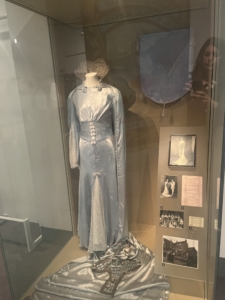
The first charity single
Forget Band Aid! Think Arthur Sullivan and Rudyard Kipling and the 1899 hit ‘The Absent Minded Beggar’ – raising money for soldiers fighting and returning from the Boer War. Sales from the sheet m
Sales of the sheet music raise £250,000 (best part of £40m/US$49m/€46m) at today’s values) to support soldiers fighting in and returning from the Boer War.
With the advances in modern technology not just popular as printed sheet music (raising over £250,000 – best part of £40m/US$49m/€46m) at today’s values) but also printed on handkerchiefs!
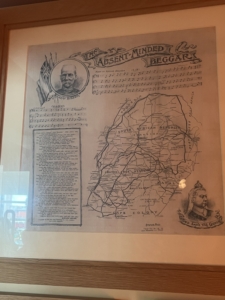
The lyrics to the poem/song include the lines:
Each of ’em doing his country’s work
(and what have you got to spare?)
Pass the hat for your credit’s sake,
and pay—pay—pay!
Encouraging donations.
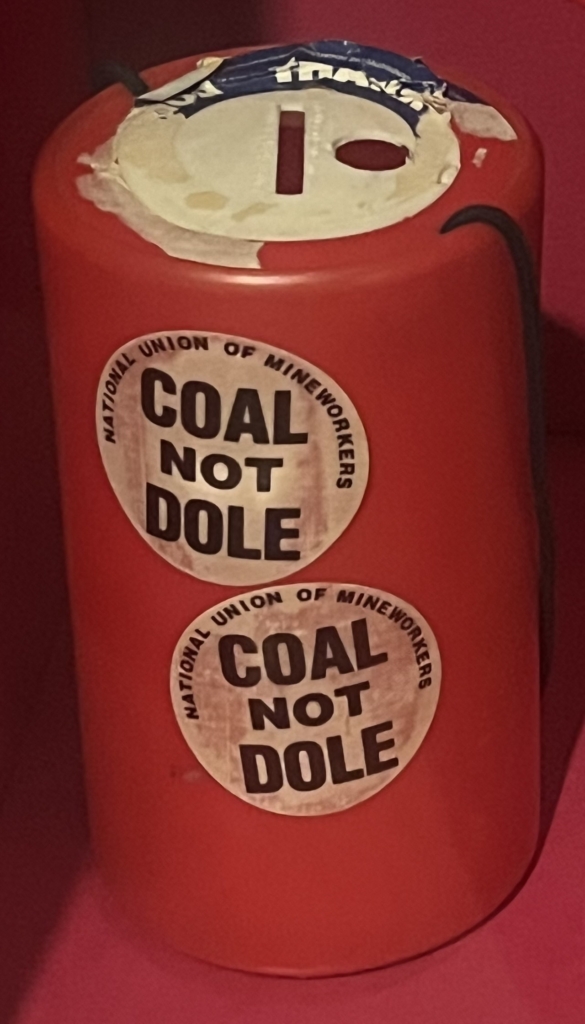
Miners’ strikes
A collecting box from the miners’ strikes
I am sure I missed lots of other examples but a useful reminder of the power of. philanthropy, powered by fundraising and fundraisers, supporting social change.