Lavender’s Blue, Dilly Dilly: What a Lavender Bag Can Teach Us About Fundraising
What do you think of when you think of lavender?
An English country garden? Your granny’s talcum powder? A summer’s day?
Now imagine a wounded soldier in a field hospital during the First World War, desperately asking for a lavender bag.
Not because he wants his clothes to smell nice. But because the smell of his own wound has become unbearable.
In the midst of the horror of war, a little muslin bag filled with English lavender could offer something extraordinary: comfort, a connection with home and, for a moment, relief.
And it offers fundraisers two fascinating lessons about human behaviour.

1. The power of a smell
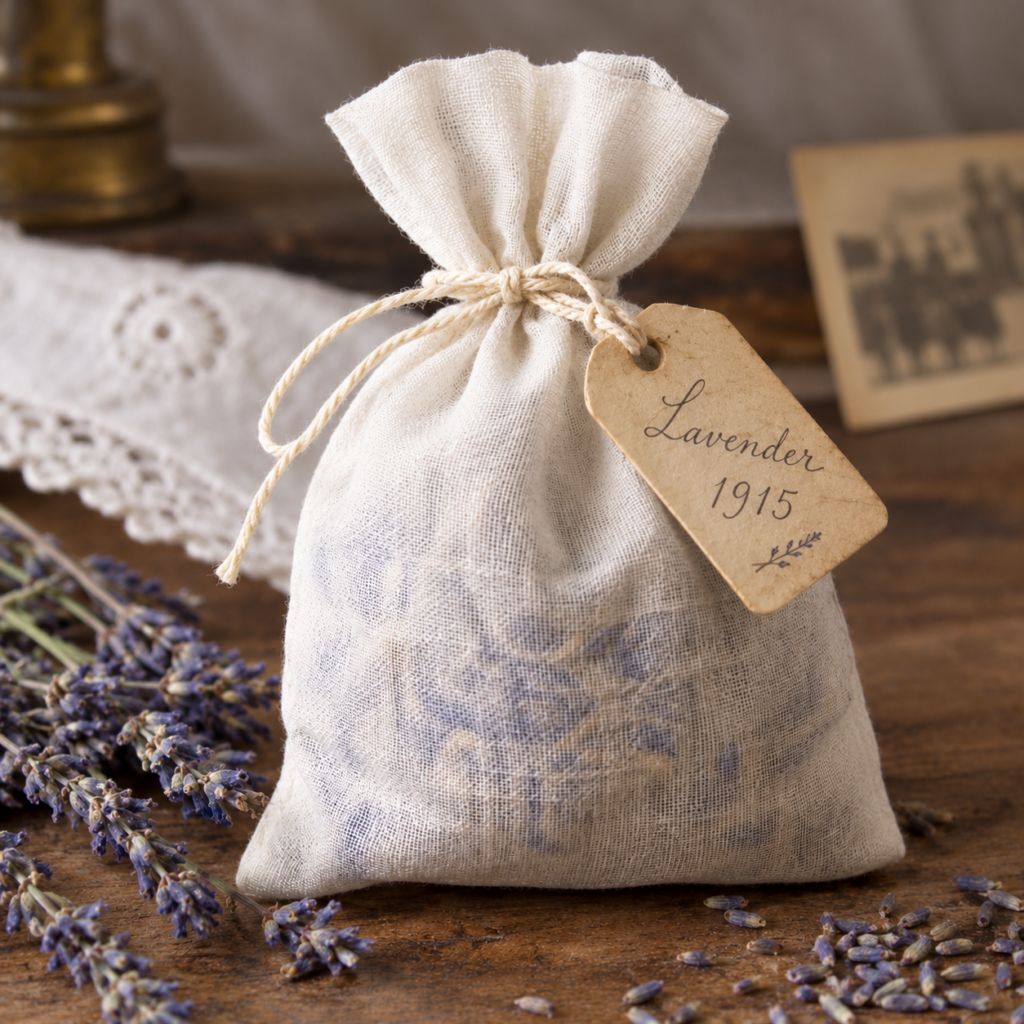
During the First World War, people knitted socks, sent parcels and organised countless acts of mutual aid to support soldiers at the front or in field hospitals. Among the comforts sent to wounded servicemen were smellies – homemade items intended to bring comfort.
Lavender bags were particularly popular.
They did more than mask unpleasant odours. They carried an idea of England – the country garden, the family home, the familiar world that soldiers had left behind. At a time when so much seemed alien, frightening and beyond their control, these tiny sachets offered a tangible connection with home.
In her 1917 memoir, A V.A.D. in France, English author Olive Dent recalled a soldier repeatedly asking, “Where’s my lavender bag, sister? My wound does smell so.”
Dent hung sachets around him to mask the stench of his deteriorating wound. She observed that dozens of other soldiers appreciated the lavender bags, particularly those who felt nauseated by the smell of their wounds being dressed.
The appeal extended beyond individual acts of kindness. A Red Cross Day in London in October 1917 included the donation of an entire field of lavender, prompting, according to the Daily Mail on 10 October, a flurry of activity making small muslin bags, filled with lavender and neatly tied with ribbon.
The gesture was practical, but it was also deeply symbolic. A field of English lavender became a way of sending a little piece of England, of home, to the men who were fighting for it.
The bags became so familiar that they were even satirised. Fall In magazine joked about a soldier stuffing lavender bags up his tunic to make his chest stick out and appear more manly and muscly.
Why is smell so evocative?
Of all our senses, smell has a remarkable ability to transport us emotionally.
The olfactory system connects closely with the brain’s emotional and memory systems, including the amygdala and hippocampus. A familiar scent can trigger vivid autobiographical memories and the feelings associated with them, sometimes before we have consciously identified what we are smelling.
A particular perfume, freshly baked bread or the scent of lavender can transport us decades into the past. We do not simply remember a place or a person – we may find ourselves reconnecting with how that place or person made us feel.
This is the phenomenon often associated with Marcel Proust, whose description of tasting a madeleine dipped in tea became famous for the involuntary memories it unleashed.
Smell does not simply remind us of the past. Sometimes, it makes the past feel present again.
For fundraisers, this is worth paying attention to.
Priming occurs when exposure to a cue influences how we subsequently perceive or respond to something. A scent, image, word or sound can make particular associations more accessible, potentially influencing mood, judgement or behaviour. These effects vary with context and are not guaranteed to change what someone does.
But smell offers a particularly interesting route into the emotional worlds of our supporters.
Retailers have experimented with ambient scents to influence how people experience shops, while charities have explored scented direct-mail packs to make an appeal more tangible. The National Trust, for example, has used lavender-infused direct mail to encourage support for garden planting.
Imagine opening an appeal about restoring a historic garden and being greeted by the scent of lavender. Or receiving an invitation to support a woodland project accompanied by the smell of damp earth and leaves.
Suddenly, the appeal is not just something to read. It is something to experience.
The opportunity is not to manipulate donors into giving. It is to help them imagine, remember and feel more deeply connected to the cause.

2. The need to do something practical
There is another lesson in those lavender bags.
When we witness something terrible happening, we can feel powerless and want to do something to help. In this case making and sending lavender bags gave civilians a real and tangible way to help with practical action.
Philanthropy is one way we use our time, talent and treasure to contribute to our own vision of the public good. Yet we often reduce the love of mankind (the route of philanthropy) to the transfer of money.
Our desire to help is much broader than that.
We give clothes, food, books, time, skills and objects that matter to us. We volunteer, knit, bake, sort, pack, deliver and organise. We invest our own effort in making something happen.
There is a psychological dimension to this. Research on the IKEA effect suggests that people can place greater value on things they have helped create. The effort invested in making something can increase its perceived value.
For the people sewing lavender bags, the process itself was part of the gift. They were investing time, attention and care in another human being.
Professor Beth Breeze has written about the importance of practical expressions of solidarity and allyship. Sometimes, people need more than an opportunity to express concern. They need a meaningful way to act on it.
For fundraisers, the question is whether we offer supporters enough opportunities to participate, rather than simply asking them to pay.
Could they help create something? Contribute their expertise? Share their memories? Take part in an activity that makes the outcome tangible?
A financial gift can be profoundly meaningful and often in a disaster situation cash is best as it can be used to buy items that are needed (see https://marinajones.uk/200kippers/). But it is not the only way people want to express generosity.
What could this mean for fundraising today?
The lavender bags of the First World War invite us to think beyond the traditional appeal letter, donation form and thank-you email.
They encourage us to consider the sensory and practical dimensions of giving.
Could we bring the world of the cause into the donor’s world?
- Smell – what scents are intrinsic to the cause? Lavender in a garden, the earth of a rewilding project, the paper of an archive, the sea air of a coastal conservation appeal?
- Memory – what smells might reconnect supporters with a person, place or experience that matters to them?
- Imagination – could a sensory cue help donors picture a future made possible by their generosity?
- Participation how might we give supporters something practical to make, contribute, nurture or create? Inciting reciprocity and connection.
- Technology – could digital storytelling, audio, interactive experiences or carefully designed physical mailings create a richer sensory world around an appeal?
- Relevance – which supporters are likely to find these approaches meaningful? How can we make them personal without making assumptions about people’s memories, identities or preferences?
Of course, sensory fundraising needs to be thoughtful. Scents can be unpleasant, inaccessible or associated with difficult memories, and some people have sensitivities to fragrances. A sensory experience should enrich an appeal, not be a novelty or a barrier to engaging with it.
Nor should we assume that an evocative experience will automatically lead to a donation. The purpose is to create a more meaningful connection between the supporter and the cause.
A final thought
A little bag of lavender could make a wounded soldier feel less alone.
It could bring the memory of home into a field hospital. It could give someone far away a practical way to express care. And it could turn a familiar scent into a powerful symbol of connection.
Perhaps that is the real lesson for fundraisers.
We are not simply asking people to give money. We are inviting them to connect their own memories, identities, values and desire to help with something beyond themselves.
Sometimes, the most powerful appeal is not the one that tells people what a charity needs.
It is the one that helps them feel, remember and imagine why it matters.
And occasionally, it might even smell of lavender.