Great Fire of London – disaster relief fundraising
Disaster fundraising is nothing new.
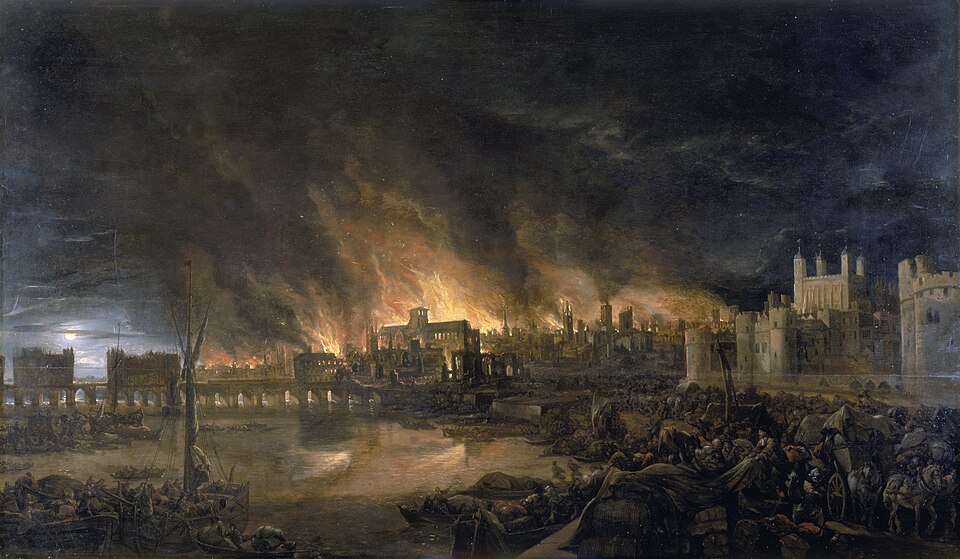
How was the Great Fire of London used to raise funds to care for those impacted and rebuild the city? A three day fire decimated the city leaving 100,000 were left without homes and livelihoods
And what can we learn about fundraising from it?
Lessons
- Act quickly whilst the situation is salient and live in people’s minds – the fire took place 2-5 September 1666, and on 13 September King Charles II declared a national fast that ( a day without eating) that would ask God for forgiveness of sins, but also be used to donate to those ‘poor Sufferers by this fire‘. (When Notre Dame burnt down in 2019 over one million euros was raised in two days.) Acting quickly in a disaster maximises the money we can raise.
- People give to people not buildings – the fundraising brief (proclamation to be read out in every church in the kingdom) to raise funds for those impacted by the fire raised more than the brief to rebuild St Paul’s (which made just over £7k). How can you make your asks about people?
- Follow up your asks – sometimes however well intentioned donors are, they do not give. They need reminding … and reminding again. Repetition works. As well as the brief read out at local parishes, the request was followed up by door to door asks. On 16 October, in Asthon-in-Makerfield in Lancashire, Roger Lowe records in his diary that the parish priest came collecting on (6 days after brief issues) ‘towards the reliefe of such needie psons as had sustained losse by the great fire in London and to set their names down’. After the first ask, what is your follow up plan?
- Who asks matters. Celebrity and influential patrons matter – having a Royal Patron makes a difference when asking (see King Charles II fasting proclamation). When the funds had been collected and those impacted by the fire were seeking individual grants to rebuild their lives and livelihoods having a titled patron make the ask on their behalf increased the grants they got given. The messenger matters. For example, the Bishop of Norwich wrote letter detailing personal circumstances of a deserving victim could get £20 grant (whilst the average grant was just under £5). Who asks matters. Who is making your ask?
- Connection matters – when people have a personal connection to the cause they are more likely to give. In 1666, there were more gifts from urban areas of the country who had previously been impacted by fire themselves. Their direct experience of fire inspired their gifts – a direct experience with the cause matters to people. This reminds me of the Choctaw nation of making a donation of $170 to help Irish sufferers of the Potato Famine in 1847. The Choctaw had suffered with starvation and famine on their enforced relocation and March of Tears and wanted to help – connection and direct experience matters. (This gift has sparked reciprocal gifts of support – with Irish pilgrims re-walking the March of Tears to raise funds for the Somalian famine in 1992, and financial support in excess of $2m to support the Choctaw during Covid 19 from Ireland). How can you inspire connection?
- Diversify your fundraising – don’t rely on one source of income. As well as the fundraising briefs issued in all parish churches, a tax on coal entering London was used to raised funds to rebuild roads, buildings and the cathedral. Low cost loans from citizens. How can you find other fundraising or earned income streams?
- Corruption is nothing new – the Lord Mayor of London, Sir William Bolton, was in charge of collecting and distributing the funds. He was found guilty of embezzling money given for the victims of the fire (£1,800 could not be accounted for) and this ended his career and diarist Pepys said ‘the greatest piece of roguery that they say was ever found in a Lord Mayor’. (the allegations were never proved.)
How was the money raised spent
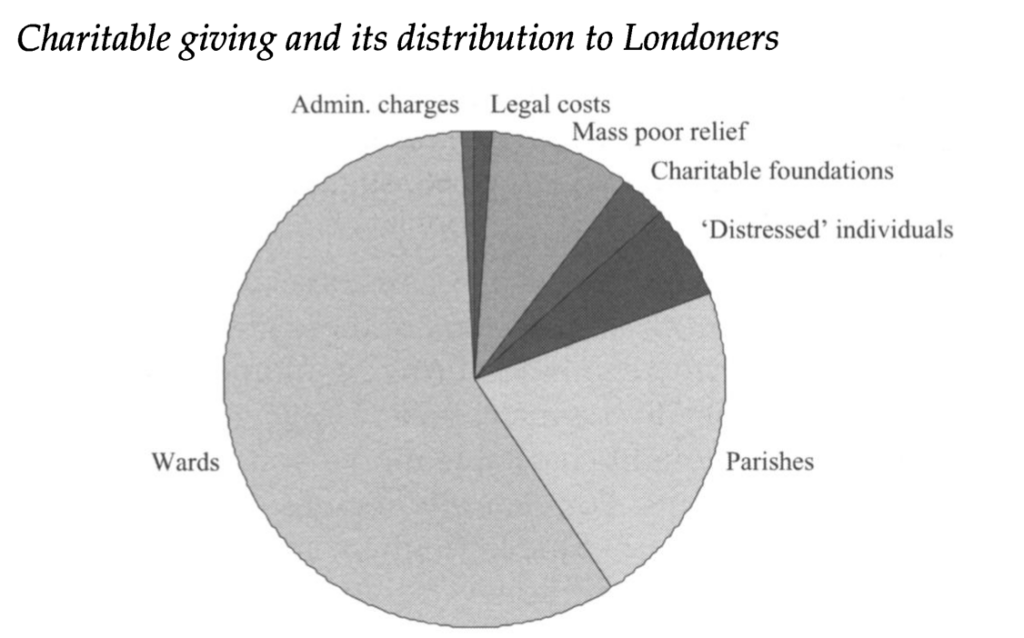
Interesting to see that administration of the brief and lobbying included in the chart showing how the money was spent. Even in 1666 you needed advocacy and admin costs (and there was no issue with the admin costs spent on print, stationary and sending our proclamations to raise the money!)
And one lesson we wont be taking forward – naming and shaming donors that don’t give – the parish records also record who didn’t give.
So …
- Ask quickly – in an emergency getting an ask out as soon as possible increases income
- People give to people
- Ask and ask again – repeat your asks, follow up the initial ask, busy well intentioned people need a nudge
- Use the power of celebrity (or royalty) – the messenger matters.
- Diversify your fundraising – don’t just rely on one source of income
Reference:
Field, J F (2010) Charitable giving and its distribution to Londoners after the Great Fire, 1666–1676