
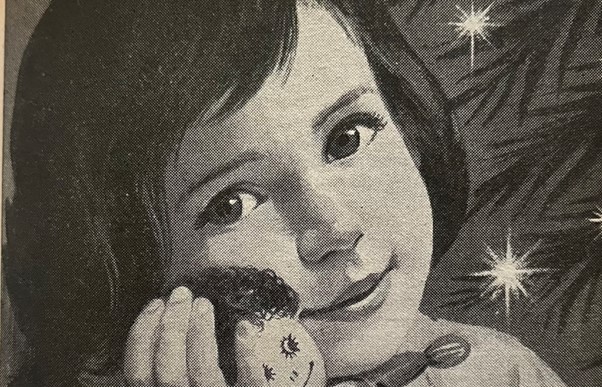
Here’s Looking at you Kid
WC Fields said never work with children or animals.
Part one looked at quirky historical animal fundraisers and how and why they grab our attention.
This second part looks at children – and how they have been used as fundraisers.
Children like animals also steal the limelight in fundraising moments – but why?
Our primitive brains are primed to pay attention to two things – faces and food.
More than 50% of the brain’s cortex is used to interpret and process visual stimuli. So, faces – human or animal – attract our attention and automatically we are assessing subconsciously whether that face represents a friend or foe. When seeing a baby or child’s face we can speedily assess that it is not a threat but a member of our species that is smaller, more vulnerable, and perhaps in need of care, protection, or support. Maybe this is why it is hard to say no to a child fundraiser?
Now the UK’s Fundraising Regulator’s Code of Practice Section 6 deals with fundraising to do with children. It states that no child under 16 should handle money, and in the UK there are country (and even City of London specific) age restrictions on what age young people can solicit charity funds for door-to-door collections and parent/carer permission must be sought to use images of children in fundraising.
But that is a relatively modern introduction. So here are a few (mostly) Victorian ways in which children were actively involved as fundraisers themselves including the guidance they were given, and how they raised money. And a brief exploration of how children have been used in photographs and other images in fundraising campaigns and the evolving ethics of it.
In Victorian times – apart from training parrots to solicit donations (see part one – on animals stealing the fundraising limelight) – children were much more active in actively fundraising. To continue with the animal theme, children auctioned pigs, sold rabbits and hens, hived bees to sell honey for funds and held working parties to make items to sell at Charity Bazars. But they also sought gifts, collected money and ran fundraising organisations.
In 1883 a young girl called Katherine started an empire wide campaign to raise funds for the repair and restoration of the tomb of Katherine of Aragon at Peterborough Cathedral with a letter to The Evening Telegraph (see here for more details What links Henry VIII’s first wife, a Victorian Duchess and a 13 year old student from Manhattan in 2005? – Marina Jones )
Show don’t tell – demonstrating the impact of your charity gift
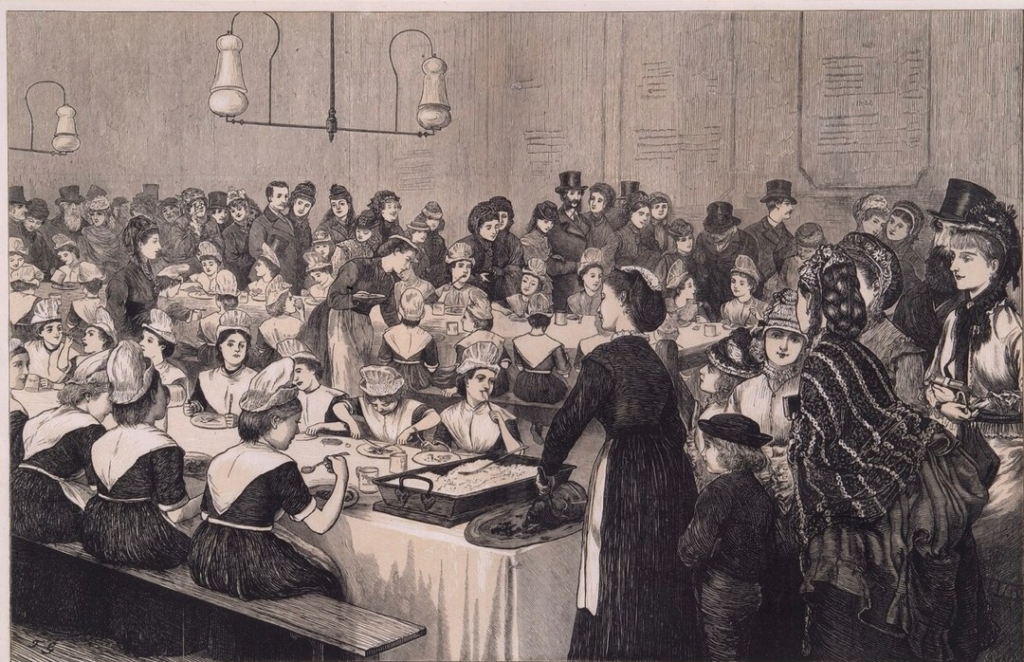
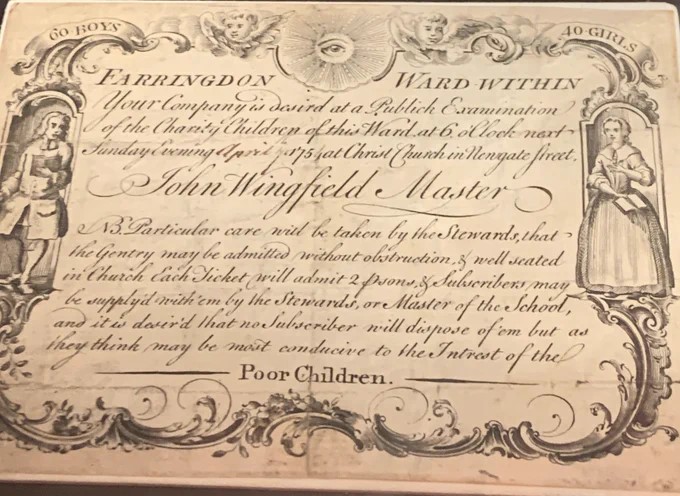
Public parades and public examinations of poor children such as the children from the Foundling Hospital were common place. They were used as a way to solicit contributions, thank donors and demonstrate the impact of the gifts in rehabilitating and training children. Attending Sunday lunch at the Foundling Hospital was a fashionable Sunday outing. Male children were trained to enter military service and patrons were invited to watch demonstrations of military prowess (like assembling a canon).
Child labour
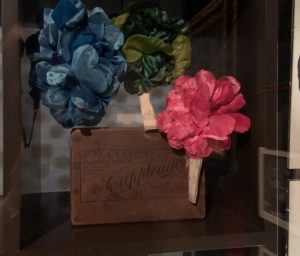
Children in these hospital or homes were often put to work creating ‘useful’ items – such as paper flowers or toys that could be sold to support their care. Below you can see paper flowers made by children from the Watercress & Flower Girls Christian Mission to raise funds to support their care. These were on display at the Museum of London before it closed for refurbishment.
Learn with mother, and Sunday School
In Victorian Britain, children’s philanthropy mirrored the patterns of their parents’ philanthropy. Charity as a key Christian virtue was part of a children’s education. Mother’s in particular were in charge of the domestic sphere and instilling faith and values and for many Victorian women charity work and philanthropy gave them agency, influence and access to a life away from the domestic sphere. These charitable values were reiterated through Sunday school education which for many children was their only formal education. With the church dominating the delivery of education in these values there was a corresponding link to the charities supported, and missions, domestic and overseas were commonly supported.
1804 is the earliest cited young people association when Catherine Elliott, aged 15, gave a penny for Bibles for the poor and with her friends formed the Sheffield Juvenile Society. There were Junior Associations of Missionary Societies and other charities established where children regularly went door to door collecting asking for support.
At Sunday Schools children were also taught (and it was practically an obligation) to become contributors (1d a week) to various schemes. Talks from speakers each week introduced campaigns that needed their support. The Sunday Schools and Juvenile societies were armed with missionary boxes, pledge cards and subscription lists – mirroring the many Victorian charities run by adults. The donation boxes were shaped like the missionary ships they were fundraising for. Reward certificates were issued to children.
The work of the Juvenile Societies were supported by mass publications (45,000 copies of the Baptist Missionary Society magazine for young people were sold in 1846). These journals had articles, hymns and stories promoting giving, the virtue of charity and also advice for young fundraisers, including:
- “you are not a beggar” The Juvenile Missionary Herald
- “Be courteous to your subscribers” A Quarterly Token for Juvenile Subscribers
- “collect early and you are sure to collect well” The Juvenile Missionary Herald
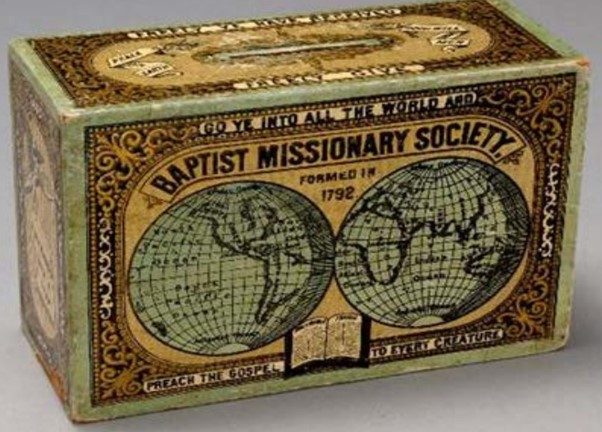
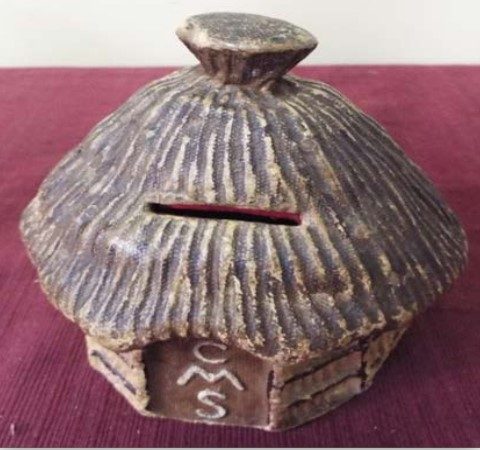
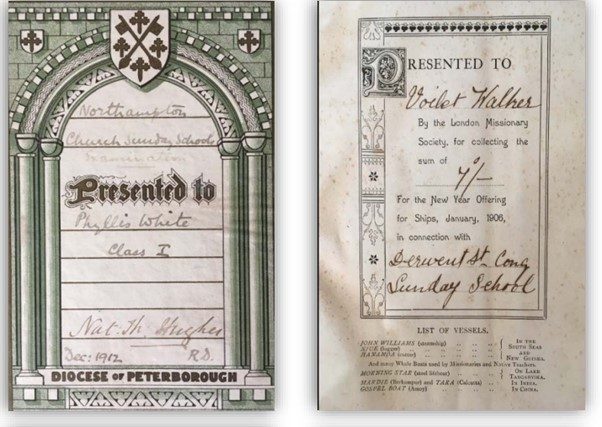
How much were they raising? It is often hard to differentiate their collections from general church collections but in 1841-5 children raised £16,451 Methodist Missionary Society, and by 1901, 20% of their annual income came from children.
It is an interesting question about how children are socialised and taught about philanthropy and civil action today – beyond the family home, through school experiences? Dr Alison Body has published many papers on developing philanthropic citizenship and how it is taught in schools. See Developing a children’s rights approach to fundraising with children in primary schools and the ethics of cultivating philanthropic citizenship – Body – Journal of Philanthropy and Marketing – Wiley Online Library for more information.
The images we use
Nowadays we would not invite supporters to a ‘public examination of the charity children’ but there is always an interesting internal discussion about how, and when it is appropriate, to show donors the impact of their work with young or vulnerable people – that keeps the dignity of the beneficiaries.
It also applies to how we use images of children and people supported by our work today, and what and how they should be depicted and how that, and is, evolving.
So how have children been depicted in campaigns:-
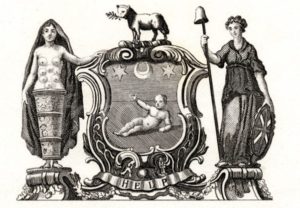
- In 1737 painter William Hogarth designed the Foundling Hospital’s logo with a vulnerable baby surrounded by Britannia and Nature with the words ‘Help’ emblazoned on it aiming to elicit sympathy and support from wealthy donors.
- In 1858, missionary fundraiser Dwight L Moody used a before and after picture of young people who had been impacted by attending Sunday School. He bribed them to attend a whole term of Sunday school with the promise of new suits if they attended every session. The incentive worked and they did – but before they got their new suits he took a before picture, and then used the ‘after’ of them in their new suits to demonstrate the impact of Sunday schools on the youth with the caption ‘does it pay?’ ‘yes it pays’
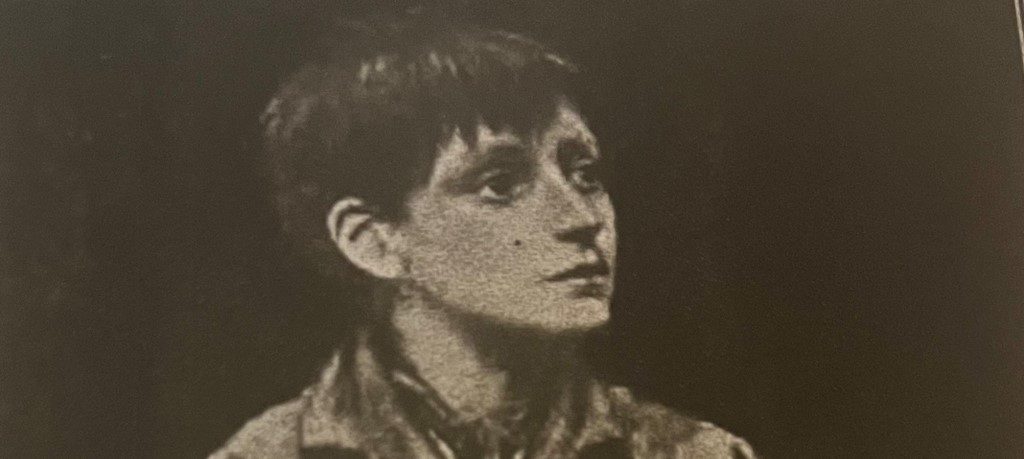
- In 1902 this image was used by the New York Association for Improving the Condition of the Poor. It was criticised as being created in a photographer’s studio rather than depicting a real poor and needy child. However, they did recognise the importance of focussing the attention of the potential donor on one child they could help
“by focussing attention upon one child”
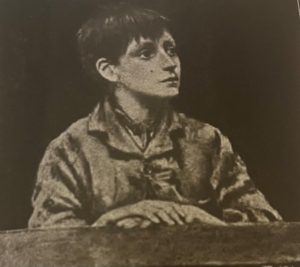
This is called the ‘identifiable victim effect’ and means our asks our more powerful if we focus our supporters onto one person that they can help. We can identify and see the impact of our gift on that individual and once more people are added gifts decrease. The identifiable victim effect was not formally described until 1968, and its efficacy only proved in charitable appeals in the last twenty years. As fundraisers we often instinctively know what makes a powerful appeal, but the more recent evolutions in behavioural science unpack and explain why they work in appeals.
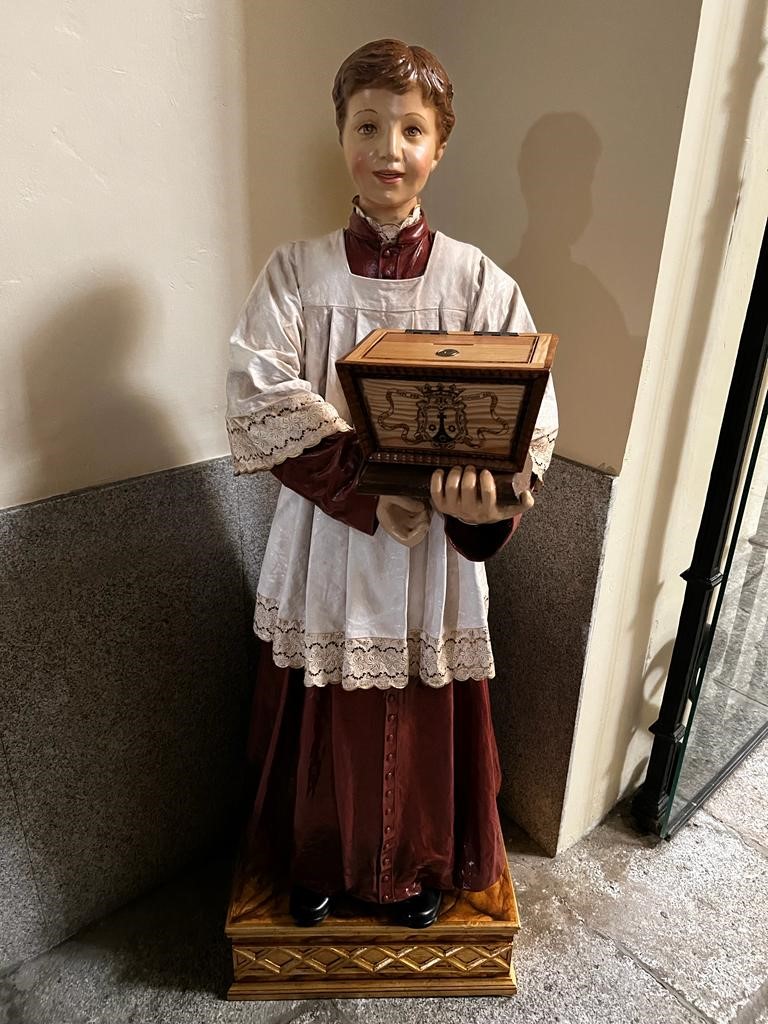
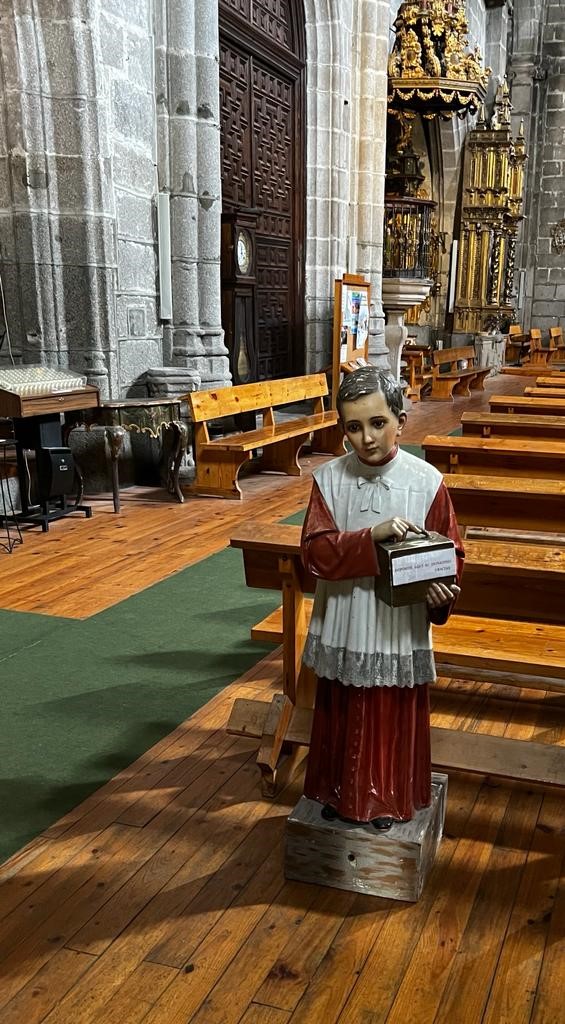
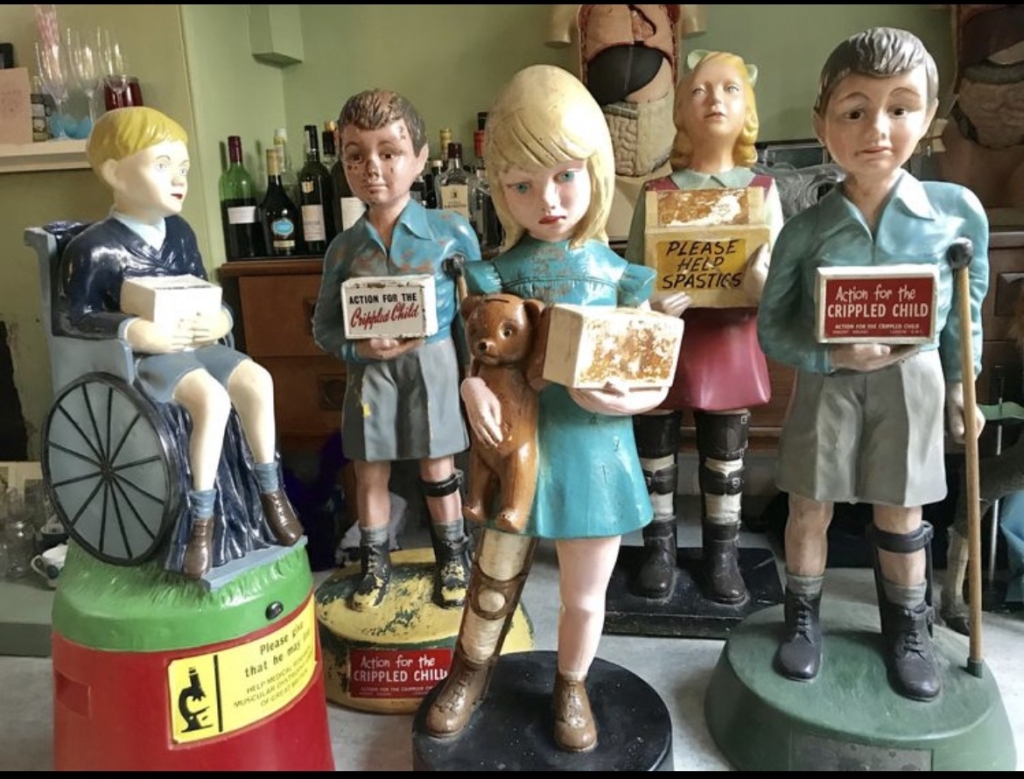
- Donation boxes themselves can be anthropomorphic and look like a child – these from Spain are hard to date but used in multiple locations, and are reminiscent of donation boxes that were used in the UK until the 80s or 90s.
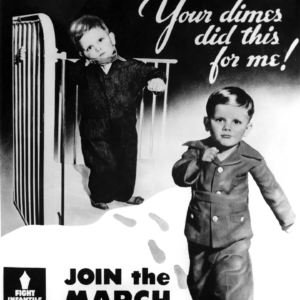
- The one identifiable victim, or beneficiary, model was used in 1947 for the first ‘poster child’ campaign. Poster child has become a commonly used phrase, and not just in fundraising. The first was Donald Eugene Anderson who was featured in a March of Dimes campaign raising funds to cure polio – the poster demonstrates the impact of your gift showing Donald first in a cot with a collar around his neck supporting him and with the slogan ‘your dimes did this for me’ a healthy Donald is striding out towards the viewer. A before and after picture demonstrating the impact of their gift.
- Images focusing on one child in need (photographs and illustrations) have continued to be popular with children’s charities.
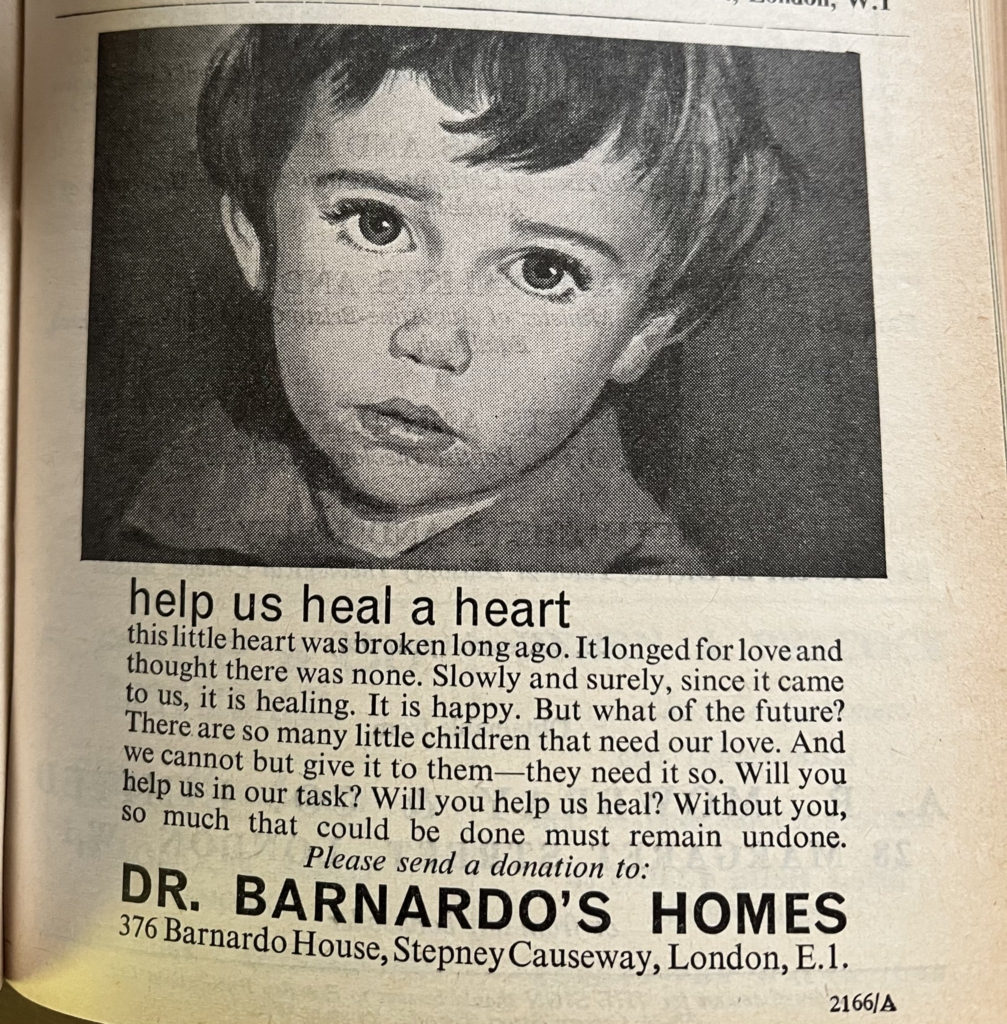
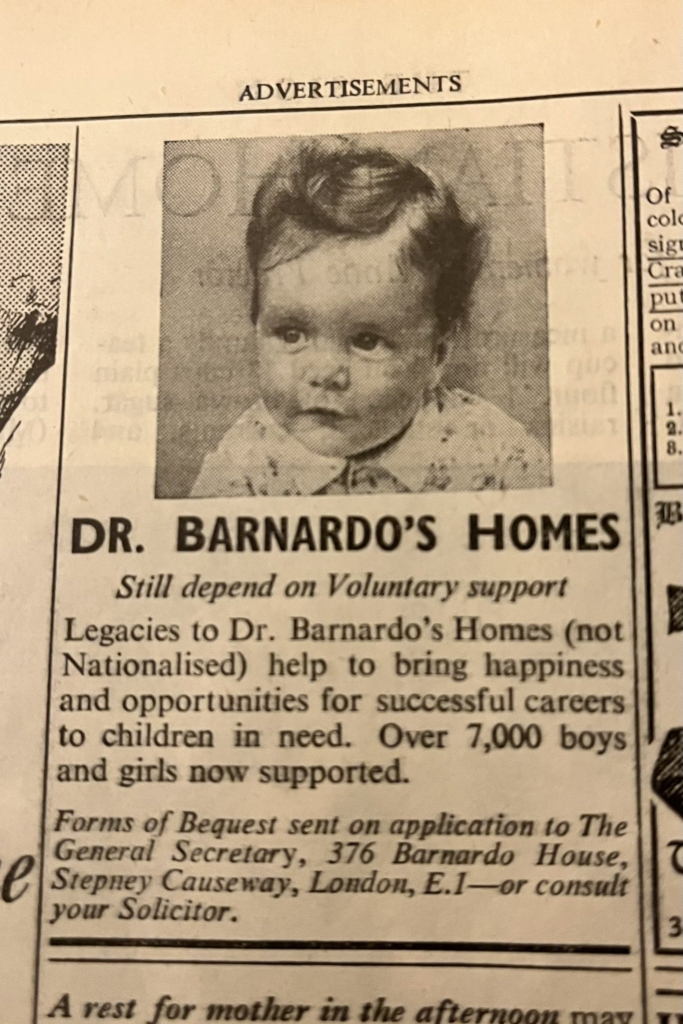
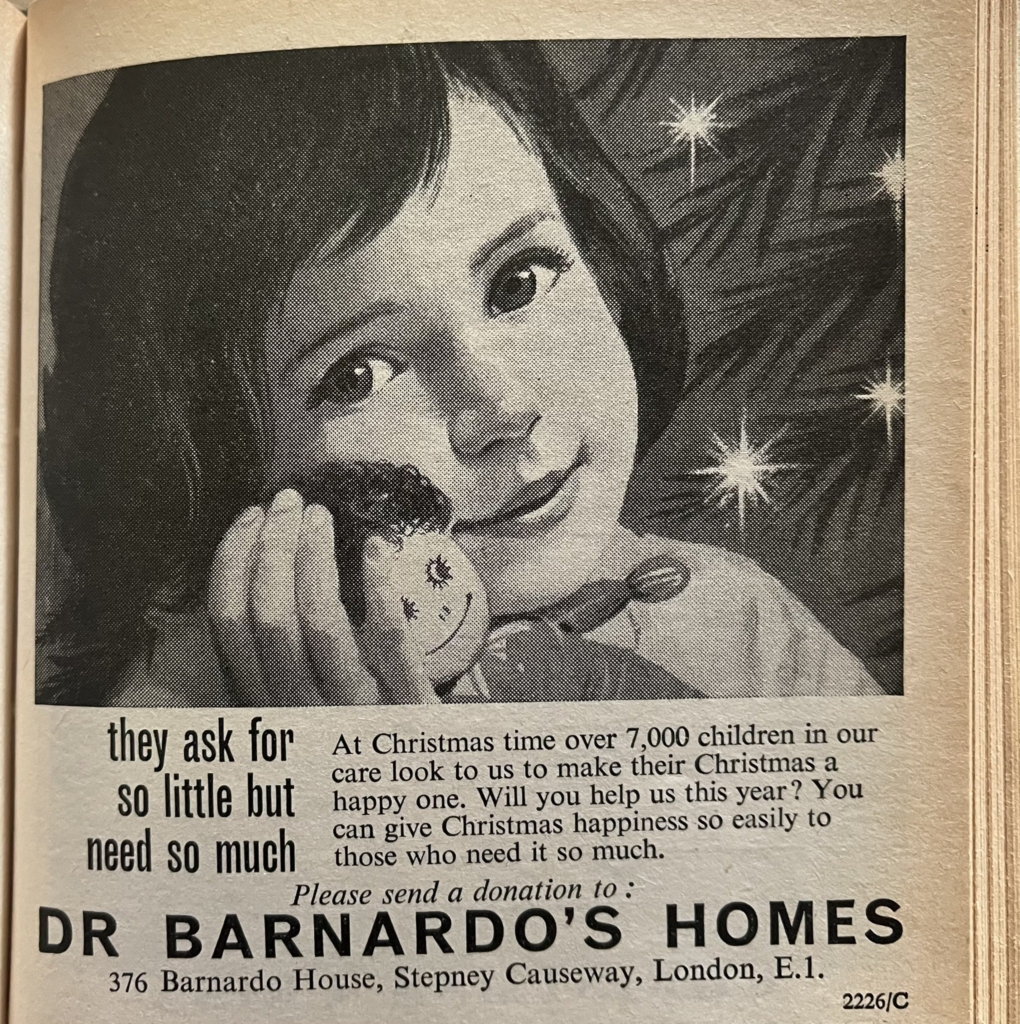
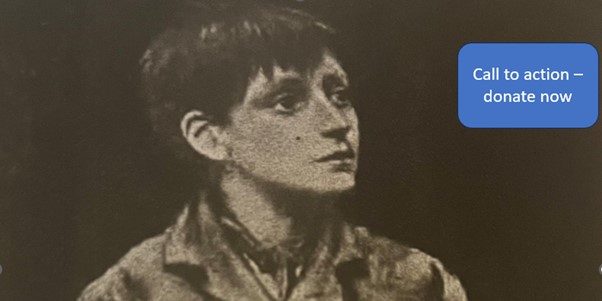
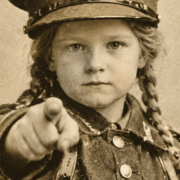
Most of these images focus on a single child looking directly at you. When humans see faces they look to the eyes first. The direct gaze elicits an emotional and sympathetic response – direct eye contact produces oxytocin (one of the happy chemicals) and promotes trust.
However, eye tracking in neuro marketing labs shows that naturally our eyes look first at the eyes in the picture (human or animal) and then our gaze is drawn to look to where the eyes are looking.
So a child looking at a ‘donate now‘ button on a website would draw the eye first to its face, its eyes and then the gaze would follow to the button where the child is looking. As demonstrated below:
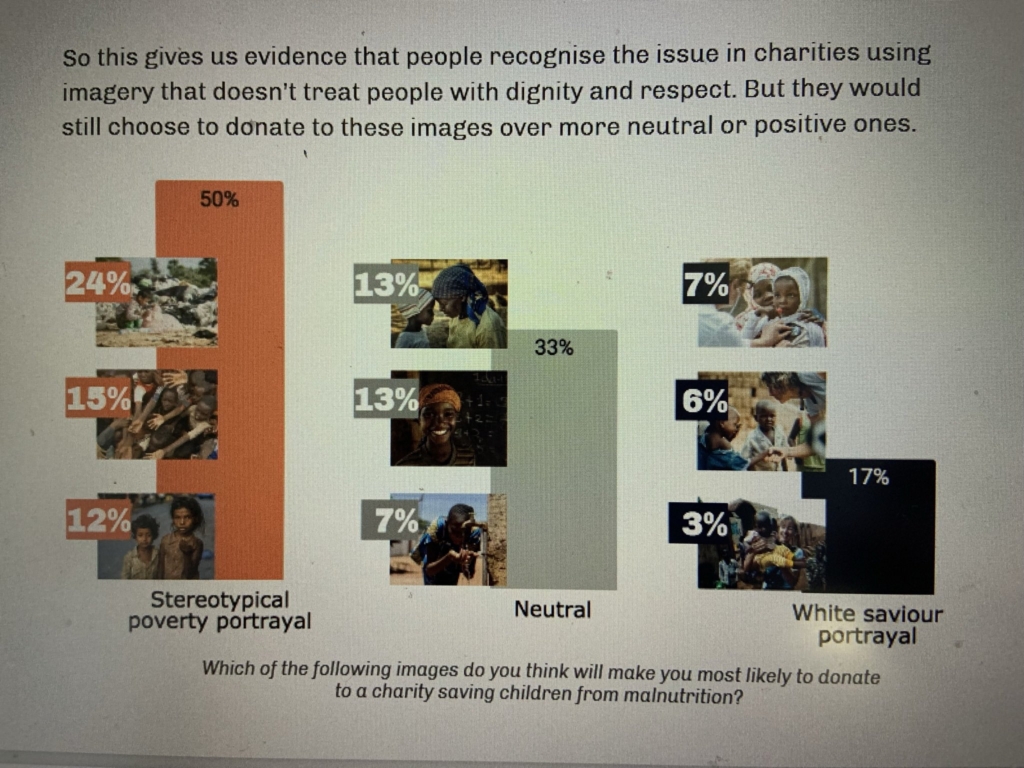
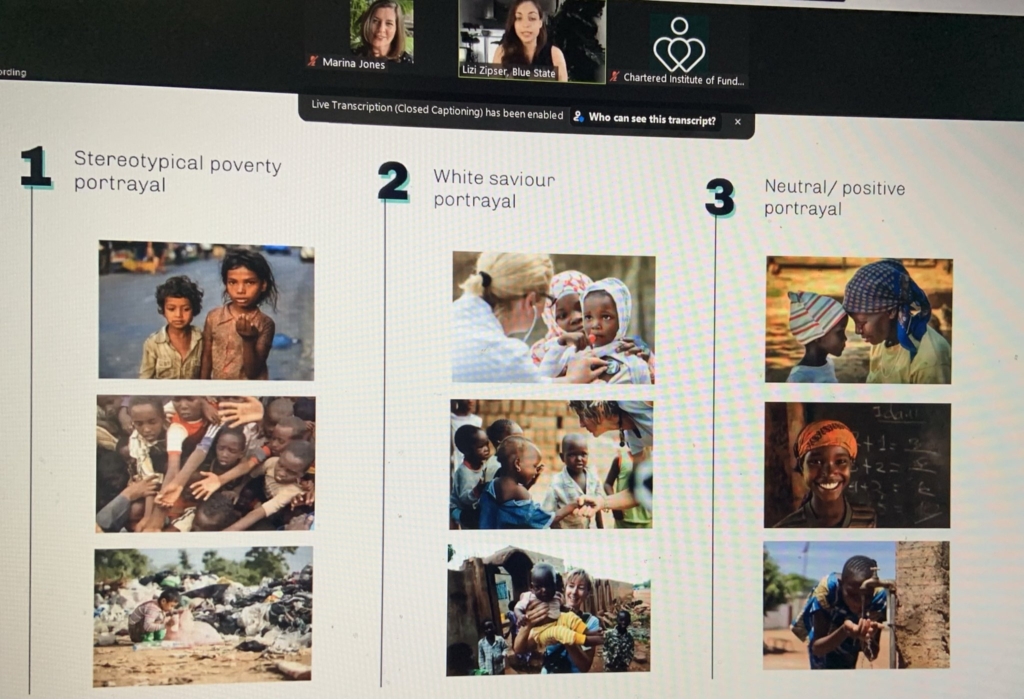
- In 2021 Blue State research explored the images that were used to depict beneficiaries for international development charities. Many international charities feature children heavily in their campaigns. The research explored reactions to traditional poverty issues and images, testing reactions to stereotypical poverty portrays, white saviour depictions and more neutral issues. The research explored whether people could identify problematic issues with the images used – but went further to explore which images were more likely to elicit a donation. Despite having moments ago identified the images as stereotypical and removing dignity and agency from those portrayed the negative stereotypes generated more intent to give. The full report can be accessed here. So changing the images we use could have a detrimental impact on the amounts of money raised by a campaign…
- Medecins san frontiers took an ethical stance on the images it used in its fundraising and actively stated that they would not be using traditional stereotypical images or white saviour medical personnel in its adverts – although I have not seen a public assessment on the impact of fundraising.
- More recently a homeless charity in Canada used AI generated images for a fundraising campaign. (see this article AI-generated images raise money for charity. What’s wrong? | The Star).
And else what might be possible in AI now? Could it tailor specifically targeted images to each individual? Knowing that we react to people who look like us, could AI generate specifically targeted fundraising marketing where the children in need look like you?
Since the first children were used in the 1850s in publicity images the debates and discussions about the ethics of the images we use and why need careful and thoughtful consideration – and our understandings and approaches continue to evolve.
What can we learn from all of this?
- Using single images of one child can have a powerful effect – it attracts attention of supporters.
- What reaction do you want from your audience? Do you want to elicit sympathy or drive action? Where should the eyes be looking.
- The ethics of those used in any situation need consideration and it is easy to fall into stereotypes.






Leave a Reply
Want to join the discussion?Feel free to contribute!