
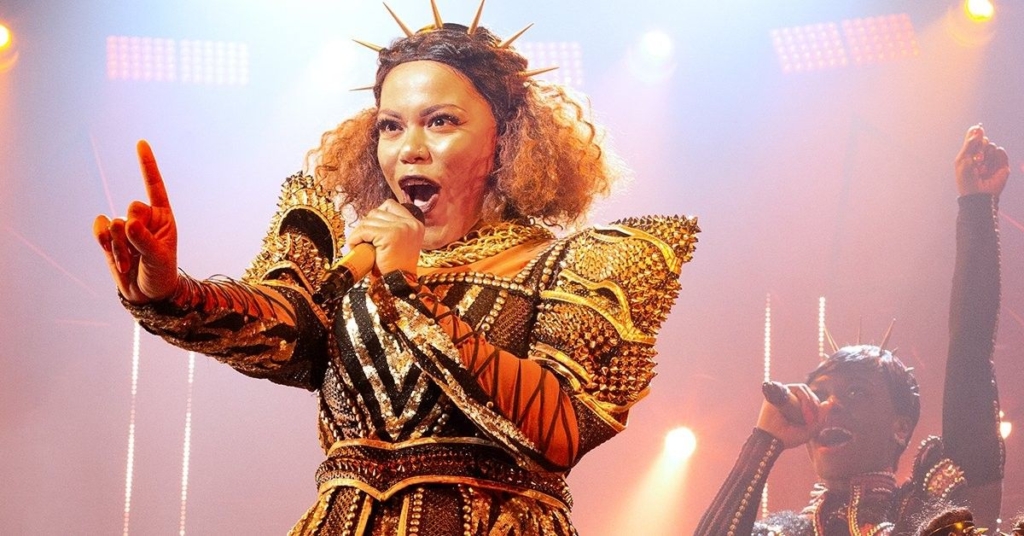
What links Henry VIII’s first wife, a Victorian Duchess and a 13 year old student from Manhattan in 2005?
“What’s in a name? That which we call a rose by any other name would smell as sweet”
Romeo & Juliet
As a Marina you don’t get to meet many other Marinas.
Growing up there was one – a friend of my grandparents who always gave me small presents as another member of small and select ‘Marina club’.
In the early days of Facebook, I joined a group of the other Marina Campbells (Campbell was my maiden name) from around the world to celebrate the shared name and its uniqueness.
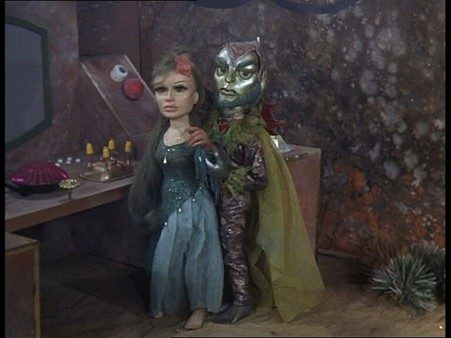
Since, I have met philanthropists and opera singers called Marina. And more recently Marina Abramovic. There are also Princesses and artists (and a Stingray character) but your own name always has a specific power. And your name has a power in unexpected ways – in the products you buy, the causes you support and your identity – and also in fundraising.
So what links a Tudor queen, a Victorian Duchess, and a teenager in New York in 2005?
They are all called Katharine (or Katarina) and used their names to raise money,
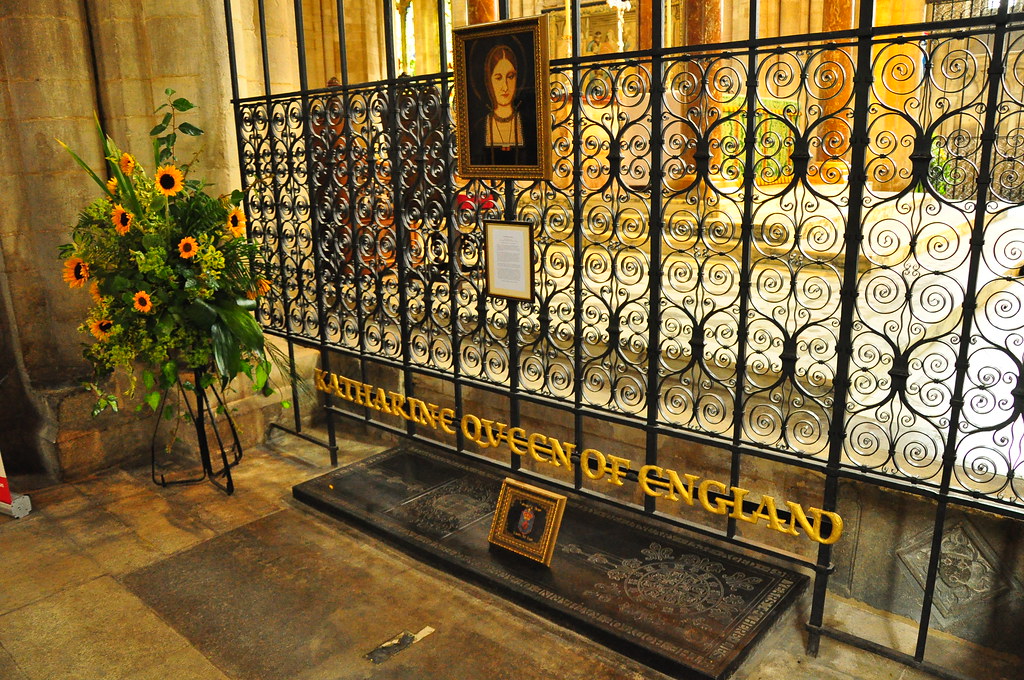
In early 1883 an article appeared in the newspaper lamenting the state of disrepair of the tomb of Katherine of Aragon, king Henry VIII’s first wife. In 1643 Queen Katherine’s tomb had been vandalized by Oliver Cromwell’s soldiers who stole the gilding. Since then one of the cathedral clergy had reused the original tomb stone in his summerhouse. And the tomb inside the cathedral remained vandalised.
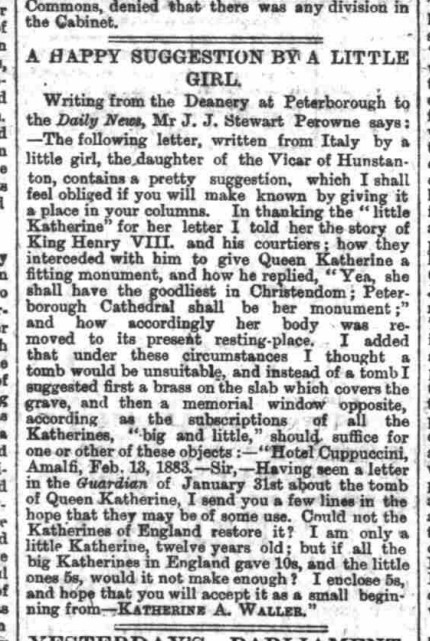
A 12 year old girl called suggested an answer.
“Could not all the Katherine’s of England restore it? I am only a little Katherine, twelve years old; but if all the big Katherines in England gave 10s an, the little ones 5s would it not be enough?
The Evening Telegraph, 13 March 1883
Her name was Katherine Waller.
So went up the call to arms, in 1882 to ‘every girl called Kate’ to support Queen Katharine’s memorial.
This letter sparked a campaign, led by another Katharine – Katharine Clayton. Katharine wrote to wealthy ladies called Kate and sought funds from ‘ladies of the name of Catharine resident in all parts of the world’ to support by this campaign with donations. Katharine Clayton was later awarded Freeman of the City of Peterborough for her services to philanthropy for her support of this campaign and lifetime of charitable works.
With the help of an aristocratic patron (yes another Catherine) this time a Duchess – the Duchess of Westminster, Catherine Caroline Cavendish the campaign grew. The newspaper campaign requested “all liege ladies called Catharine are requested each to send a shilling to the Dead on Peterborough for this pious object.” In 1888, they had raised half the funds needed.
Another aspect of the campaign was sales of a book entitled ‘The Catherine’s of History’ written by Rev H J Swallow – again capitalising on the power of the name.
The campaign was successful, and a replacement tomb was put in place in 1895 with newspaper reports claiming that the Katherines of England, America and Australia had made it possible.
In 1924, nearly 30 years after the completion of the campaign, Katherine Clayton received a visit from the Spanish Ambassador and the Secretary of the Royal Academy of History of Madrid to thank her for her ‘kind undertaking’ in preserving the memory of a Spanish queen. They offered their ‘warmest expression of admiration and thanks’ for creating this memorial. (29 years to receive thanks for raising the money…..is that a record?)
And a 13 year girl in Manhattan in 2005…?
13 year old Manhattan student Katrina Petrillo raised $1,000 for Hurricane Katrina victims by selling lemonade to raise funds for the Red Cross after Hurricane Katrina. Katrina had been teased by classmates for being Hurricane Katrina and decided with friends to do something positive when asked why she said “I realized my name is going to go down in history as one of the biggest storms ever” (Salkin, 2005).
So, why did this work?
Because of something called the ‘cocktail party effect’ .
Katherine Waller’s suggestion taken up by Katherine Clayton and the Catherine, Duchess of Cavendish campaign drew on an innate understanding of our psychology and which has only more recently been scientifically demonstrated.
Cocktail party effect
In behavioral science the ‘cocktail party effect’ is essentially selective attention. At a cocktail party or any loud social setting, we can hear our own name amongst the hubbub – we are the most important to ourselves and we pay attention to things that resonate with our sense of self.
This draws on a deep identity connection to our own name. Ever since we were born our neurons have been trained to react and fire together when they hear our own name (or names similar to our own).
So as a Katherine you are wired to hear and pay attention to Katherine.
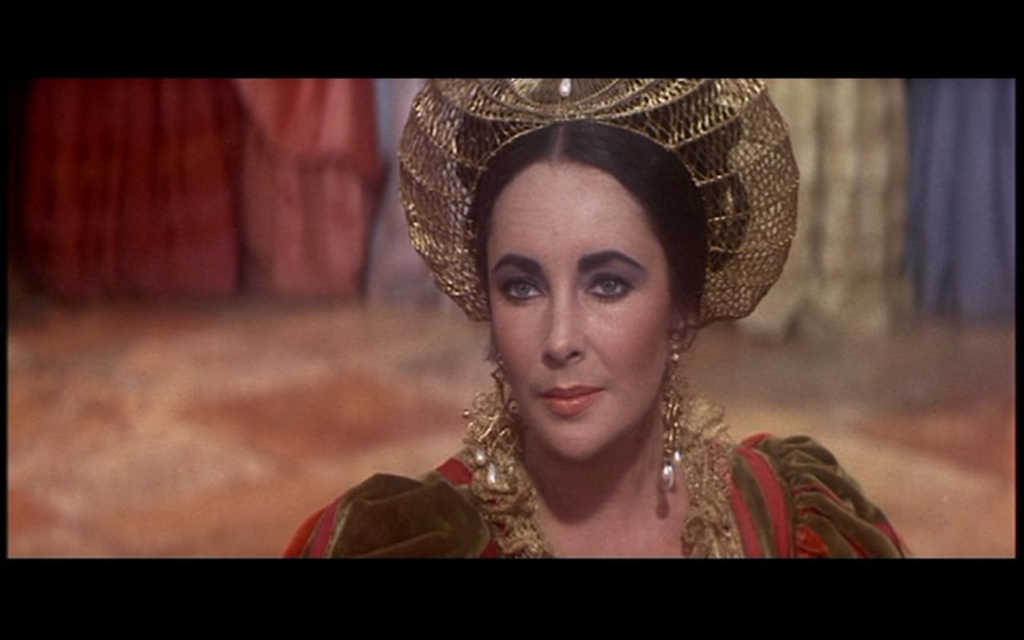
But Kate, the prettiest Kate in Christendom, Kate of Kate Hall, my super-dainty Kate” The Taming of the Shrew
As a Marina I am wired to hear and react.
Marketing teams use it all the time, which is why so many marketing communications use your name in the subject line and look like this:

Hearing our names means that our ears prick up, we pay more attention to what is being said.
There is also another phenomena – the name letter effect – another form of implicit egotism. The name letter effect was discovered in the 1980s by Belgian researcher Jozef Nuttin (Nuttin, 1987). It means that we are subconsciously drawn to people or things that share the same initial letter (or the same letters as are in our name, or same birthday month). So in Lab tests – Hank did like Honda more than non-matching brands. These links are subconscious and Hank could not tell you why he likes Hondas – a post rational (system 2) explanation would see him talk about its features or miles per gallon etc., but the real recent might just be the name letter effect. As founding father of behavioural science, Daniel Kahmenan says “you will believe the story you make up.”
(So do I buy Mac products because I am a Marina or am I making up a story as to why I like them?)
So what does this mean for fundraising?
In 2008, data from seven emergency hurricane appeals were examined including Hurricanes Katrina, Mitch and Rita. Researchers Chandler, Griffin, and Sorensen found donors who shared an initial with the hurricane were overrepresented in the donors. So donors beginning with ‘K’ were 31% more likely to have given to support Hurricane Katrina relief in the 6 months after the hurricane.
‘M’ named people made up 30% more of the donor population during the two months period after Mitch devastated Honduras and Nicaragua in 1998.
Sharing the same first name or letter has also been shown to help donors identify more with fundraisers (Burger, Messian, Patel, del Prado& Anderson, 2004 and Bekkers, 2010 in an article entitled ‘George gives to geology Jane’)
A lab experiment showed a request to give to a child in need resulted in 61% giving but adding the name, age and a picture increased giving rates to 90% (Kogut, Ritow, 2005)
Learning the fundraisers’ name increased the average gift size by 50% (Bohnet and Frey, 1999) For alumni fundraisers donors were more likely to give when their first name was similar to the name of the university.
Knowing someone’s name builds a connection, a relationship, when we know the name – the name of the beneficiary – even the name of the fundraiser we are more likely to give (people give to people!)
So 12 year old Katharine Waller was using this effect over a hundred years before it was names and proved to work. Katherine knew the innate and personal call – the cocktail party effect of asking someone with the same or similar name to make a gift. (This is one of the reasons why decision science is fascinating – we know these things work, we have seen them used, maybe unconsciously used them ourselves, but as our understanding of the science develops we can prove they work, and test how they work and see what is happening inside our brains as these things work)
How could this work for you in your fundraising?
How can you use the cocktail party effect in your communications?
- Can you tie your campaigns to names?
- Segment by name and test a campaigns on them (or for someone special with the same letter, we often like to do things for those we love more than ourselves, try parents or pets.)
- In theory you could assign your portfolio of all your donors along name letter lines, so David would look after the Dawns, Daniels and Dianas. Or Claire could fundraise for capital.
- Use stories with named beneficiaries.
- Send emails from people at the organisation not just the charity – and make sure they are signed by a real person.
- Test other identity factors (birthday)
A bit more history
There is more to be written about our fundraising Katherines.
Katherine of Aragon was known for her philanthropy, supporting education and women’s education and her patronage of the arts.
Katharine Clayton (1847 – 1933) was awarded Freeman of the City of Peterborough for her services to philanthropy. Her father was a social reformer who passionately believed in proportional representation. He stood down as a Conservative MP but could not quite align with the Liberal party enough to join but was friends and held similar positions with political philosopher John Stuart Mill.
Katharine was a member of Kensington Society a discussion group for women along with her sister Louise Clayton. Katharine attended suffrage meetings with Emmeline Pankhurst and was the founder of the National Union of Women’s Workers which exists today as the National Council for Women. This was founded with her and the Bishop’s wife, Louise Crichton. Louise was anti-suffrage during the Bishop’s lifetime but changed her mind after his death.
Katharine sat on 21 local committees in Peterborough, including
- Mother’s Union – involved for over 29 years as President and Secretary and an embroidered banner she made is displayed in St John the Baptist church in Peterborough
- Board of Governors for a local school for poor working class boys
- City Education Committee
- Public Library Committee
- Social Purity League
- League of Nations
- Flower Show (Secretary)
- Peterborough District Music Festival
- British & Foreign Bible Society
- Florence Saunders Nursing Association – Florence Saunders was a canon’s daughter and was one of the first women to train as a nurse. After her London training she came back and trained up other women to work as district nurses and work in the slums. The 1898 inaugural Peterborough Trade Union march raised money to support her work. Again more research needed on Florence Saunders and her fundraising activities.
Work in philanthropy, as fundraisers and on organising committees, often gave women a place and role outside of the home in Victorian times.
There is a portrait of Katherine, Duchess of Cavendish in the National Portrait Gallery and more to be discovered about her philanthropic activities NPG x75261; Katherine Caroline (née Cavendish), Duchess of Westminster – Portrait – National Portrait Gallery
With thanks to Hazel Perry for sharing her research into Peterborough, Katherine Clayton, Katherine Waller and the campaign.






Leave a Reply
Want to join the discussion?Feel free to contribute!