
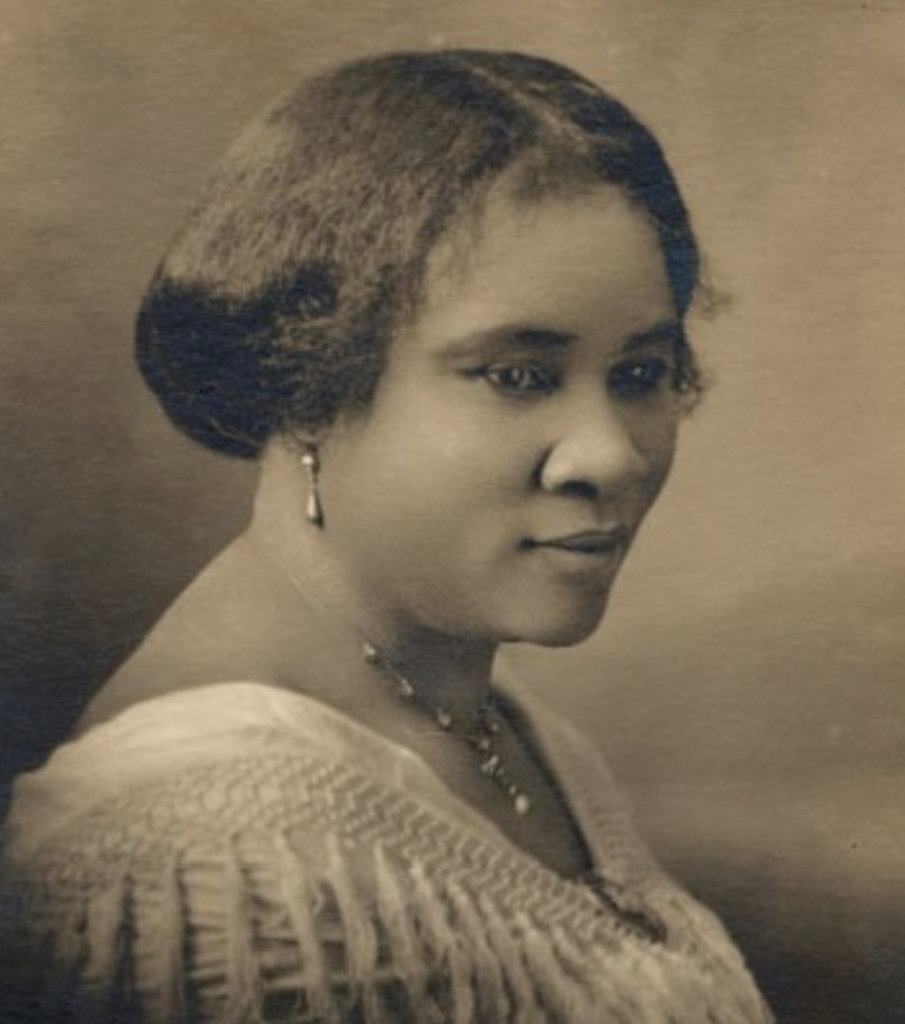
In Celebration of Madam C J Walker – Philanthropist, fundraiser, activist, entrepreneur and so much more
I have just finished Tyrone McKinley Freeman’s book Madam C J Walker’s Gospel of Giving Black Women’s Philanthropy during Jim Crow and thoroughly recommend it. I first heard about it on Rhodri Davies’ podcast with an interview with Tyrone McKinley Freeman. and was surprised that she was not more known and celebrated. Too often our knowledge of philanthropy reflects our own cultural biases.
So a few reflections in celebration of Madam C J Walker.
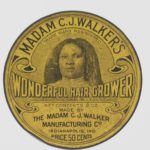
Madam C J Walker was a noted philanthropist, activist and business entrepreneur becoming American’s first self-made female millionaire. Her parents were slaves, and she was the first in her family to be freeborn. Orphaned at seven, widowed at twenty, with her young daughter she moved to St Louis and worked as a washerwoman. She suffered with severe dandruff and lost her hair. After working selling hair care products for a rival hair culturist, she moved to Denver and began her own hair care business, the Walker Company, selling products for African American women and trained an empire of agents to sell the products across the country. Contemporary with Rockefeller and Carnegie, Madam C J Walker’s philanthropy came from and was lived out due to her experiences as an orphan, widow and African American woman.
The stereotype version of a philanthropist would be a probably bearded male industrialist who comes from relatively modest background, makes a fortune and then from their wealth and success begins a second career in philanthropy. Doing good and naming lots of buildings and creating a philanthropic empire to rival their business one. The female philanthropist is someone who inherits or marries into wealth and dabbles helping the poor or artists and is generally mentioned in a list of names and recognised by husband/father’s name. They are giving out of surplus wealth and their philanthropy is generally to others unknown to them.
Madam C J Walker was different. Her model for philanthropy blended Christian duty, activism, practical assistance as well as money and encompassed her whole approach to business. The ethos of the Walker Company was built on racial uplift by offering employment, independence and respectability to African American women. African American women were paid 60% less than white women, who were paid significantly less than men. Work at the Walker Company gave employment, pride and autonomy.
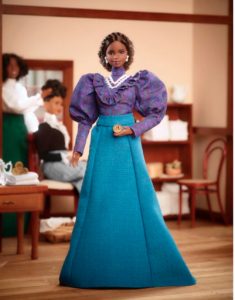
There were not the clear lines between charity and business that are usually seen. In her philanthropic model, there is less distance between those helping and those needing assistance, and the assistance given might be practical or financial. Her approach offers a challenge to the traditional Western/WEIRD perceptions of philanthropist and philanthropy. She deserves to be more well known and celebrated for her philanthropy – as well as her work for African American women. She has even been celebrated and immortalised as a Barbie.
She said of her philanthropy in 1914
“I am unlike your white friends who have waited until they were rich and then help but have in proportion to my success, I have reached out and helped others.”
Tyrone McKinley Freeman says
“In the African American experience, philanthropy did not originate in wealth but rather in resourceful efforts to meet social needs in the face of overwhelming societal constraints and impositions.”
Perhaps a great illustration of this is found in the woman’s club movement which started in the 1790s (the first recorded African American branch dates from 1793 and was the Female Benevolent Society of St Thomas in Philadelphia.) Clubs of women gathered to try and improve society and drive change – some focussing on temperance or library creation. African Americans were excluded from the white female clubs, so they developed their own model answering their specific communities’ needs such as women’s suffrage or anti lynching. In 1900, 30,000 African American women were members of these clubs. Charity was inherent in the clubs DNA with an expectation, that as members, they would make the world a better place – not just for the members paying subscription, but for all. Weekly subscriptions were due, and they provided mutual aid, financial assistance and scholarships but also actively ran orphanages and old people’s homes.
The widow’s mite
Madam Walker was involved with several of these clubs, including the Missionary Mite Society. The title of this comes from the Bible and Mark’s gospel. Jesus is seated in The Temple watching people make contributions. A poor widow came and put two small coins in and “this poor widow put in more than all the other contributors to the treasury. For they have all contributed out of their surplus wealth, but she, from her poverty, has contributed all she had”. As a widow herself Walker was giving according to her ability and not out of her surplus wealth. Giving for Walker and many of these clubwomen was “grounded in the fierce urgency of the times and the lifeblood of generosity itself.” (Tyrone McKinley Freeman)
Madam Walker’s daughter received education and was cared for at an orphanage run and funded by the clubwomen, this allowed Walker to earn a living by working.
“Through her giving, Walker expressed her greatest aspiration for herself, her race and her gender”
Tyrone McKinley Freeman
She gave lead financial gifts for major capital campaigns, donated fees from her lecture tours, ran collections at lectures, donated regular smaller amounts of $5 and $10 to local charities, created Christmas food baskets and supported the unemployable by employing them (for example, an 85 year old mute woman)
The test gift
Sometimes donors like to give a small test gift to see how the relationship goes and how the charity delivers on its promise.
Madam Walker offered $50 of the $98 scholarship fees for students at Booker T Washington’s Tuskegee Institute. This was partly as it was all she could afford to do, and she was giving in proportion to what she had. But it also came with the offer that if the gift was well used there would be more money.
How can we help donors make these gifts? And value gifts even if they cannot fund the whole amount?
Joy of giving
After reading about an elderly man in need, Madam Walker organised a financial collection from friends and neighbours. The newspaper reported that she was:
“so pleased with the joy manifest by giving that she felt herself not only well paid in this instance, but well enough to enlist her future sympathy she felt it was her duty to do even more for the poor people spoken of”
Giving is a joy and a habit – how we can make it joyful and habitual for our supporters?
Everyone a Fundraiser at the Walker Company
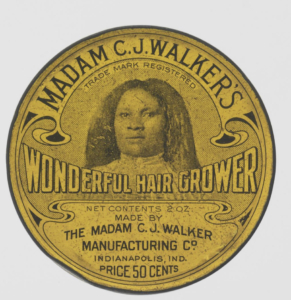
Fundraisers are always charged with creating a culture of philanthropy within their organisations and inspiring and getting all members of the charity to understand the role and impact of philanthropy. For Madame Walker, giving and being involved in the community were inherent in the nature of her work and her business, and through her work training agents to work for the Walker Company the expectations around philanthropy were indoctrinated and instilled within the teams.
“Madam Walker envisaged her agents performing charitable work in their communities as they sold products and advanced beauty products”
Tyrone McKinley Freeman
To become a Walker agent you had to enrol in a $25 correspondence course. Philanthropy was on the curriculum and “The curriculum emphases philanthropy and the expectation that agents would continue Walker’s legacy of generosity and racial uplift”. You learned how to use the products, received a starter set of products, uniform and a certificate. But were also taught the expectations of a ‘women’s duty to women’ to be actively raising money and supporting the community as they sold products.
[Aside – How many inductions would place the culture of philanthropy and need to give so high?]
The 1920 publication The Ritual for the Local Bodies of the Natural Beauty Culturalists and Benevolent Association of Madam C J Walker Agents Inc detailed the format of a meeting which included starting exactly on time, wearing badges, gavel banging, singing an ‘Ode to Hairdressers’ to the tune of Onward Christian Soldiers
“Onward Walker Hair Dressers
Outward to the fray
Have your combs all sterilised”
They also read psalms and collectively recited a poem called ‘The Secret to a Happy Life’ on their Christian duty to help others. The subscription would include gifts to charity as well as sickness benefits and burial insurance. Charity work included care for the sick, funding furniture for black colleges, raising money for Christmas baskets, Christmas carolling or supporting the NCAAP financially. Madam Walker rewarded the most charitable clubs – both the volume of gifts (a penny a day per member scheme) and the value.
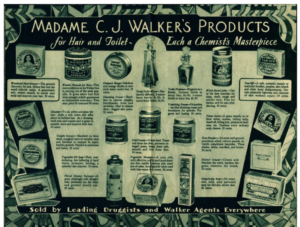
Helping create the world you want to see
Philanthropy is often about the moral imagination of the donor and the world that they want to see and how their donations can help create that world. A great deal of Madam Walker’s philanthropy focussed on racial uplift through her business ethos and providing work, dignity, autonomy for African American women, but also through her work directly as an activist in the causes she supported and practical support she provided (accommodation for those on marches). In 1919, Madam Walker give $1000 to an anti-lynching conference and then $5000 towards legal battles.
In 1918, Madam Walker donated the final $500 needed to buy Cedar Hill the former house of abolitionist Frederick Douglas. This was a symbolic purchase and motivated by the desire to own this house and to celebrate black success. It also highlights something useful about the psychology of giving – donors like to be the first or the last to make a gift. People are keen to give at the start of the campaign and then donations pick up as you near your goal and people are incentivised to help you complete the task.
And in a wonderful piece of donor recognition and theatre. Madam C J Walker got to burn the mortgage papers as celebration of the achievement.
What would today’s equivalent be? How can we celebrate the final gift that achieves the campaign goal?
Final thoughts
As we seek to explore more about the history of fundraising, figures like Madam Walker and her approach to philanthropy should be explored and celebrated more.
Too often the historical examples that we find are wealthy white men and we need to actively seek out more stories of women, of global majority fundraisers and philanthropists and challenge our preconceptions about what it means to be a philanthropist. Madam Walker’s approach offers a broader and more blended approach for trying to make the world a better place. Other cultural understanding of philanthropy are broader and more integrated and less top down, this can be seen in the African word and concept of unbuntu which can be defined as humanity to others.
The term philanthropist even today conjures up and usually refers to the mega wealthy (McKenzie Scott or Gates or Buffett) but it could have more universal application. How would you answer if someone asked if you were a philanthropist? Prevaricate, talk about helping where and when you can?
Maybe if we all leant into Madam Walker’s approach and give in proportion to what we have (which many of us do), encourage others to be joyful givers, work to support the causes we care about, mutual aid to those in need (foodbanks) and organise our business and income on ethical lines, then we could more proudly claim the title philanthropist? Maybe we all need to be a little more Madam Walker.
Want to read more …
Then read Tyrone McKinley Freeman’s book
You can read more about what Madam CJ Walker’s will said and how that could help you with your legacy and in memory fundraising here.






Leave a Reply
Want to join the discussion?Feel free to contribute!