
A brief selection of charity merch from the archives
So your email is probably bombarded with charities and various Christmas catalogues and ways you can support them through purchases gifts or Christmas cards.
The first Oxfam Charity Christmas card was in 1957 but the tradition goes back further than that
So a short festive look at some of the charity merch that you could have bought in times gone by and why it has an enduring appeal – for charities and donors.
Epistolary scandal novels (1799)
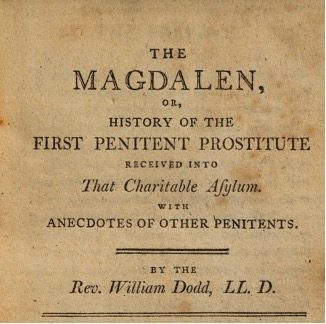
In the 1799, you could buy the sensational novel (price one shilling) entitled ‘The Magdalen or the History of the First Penitent Prostitute received into that charitable asylum with anecdotes of other penitents‘ (what a title!).
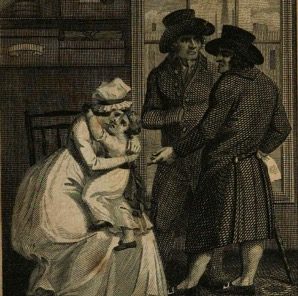
These were written in letter form and detailed the fallen women – in this case a clergy daughter seduced by a charming older man who finds herself abandoned. They perhaps veered a little towards the sensational and were enjoyed more for the scandal of the story than improving moral purpose.
You could also buy published popular sermons to support various causes.
Abolitionist Plates and Medals (1780s)
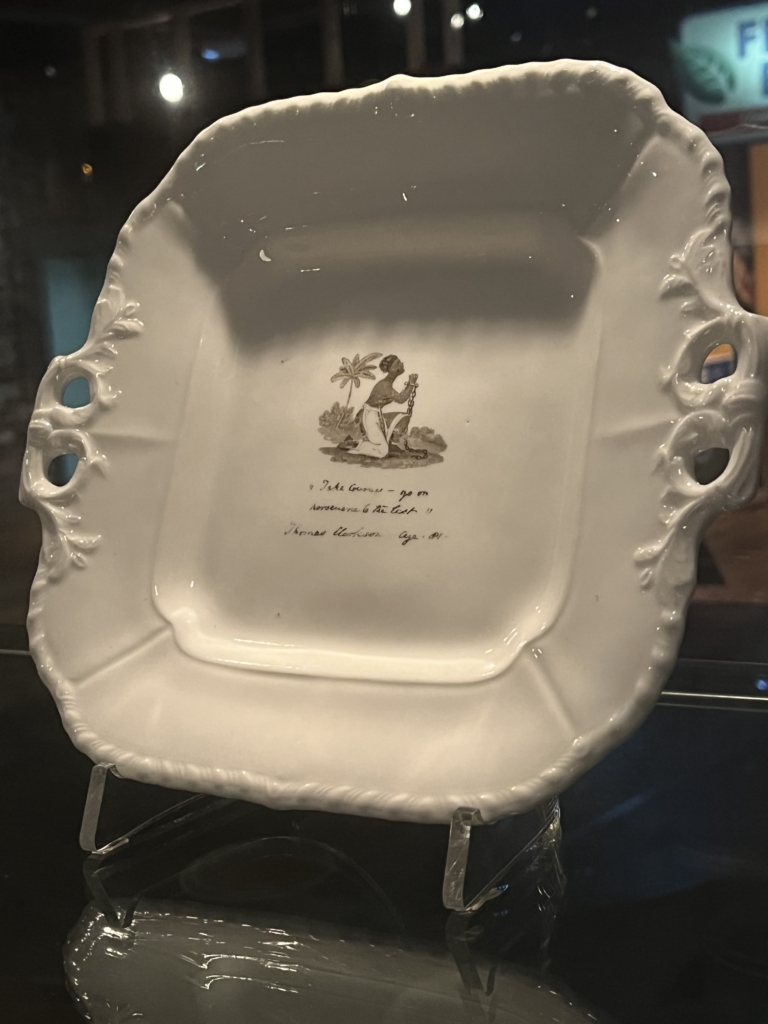
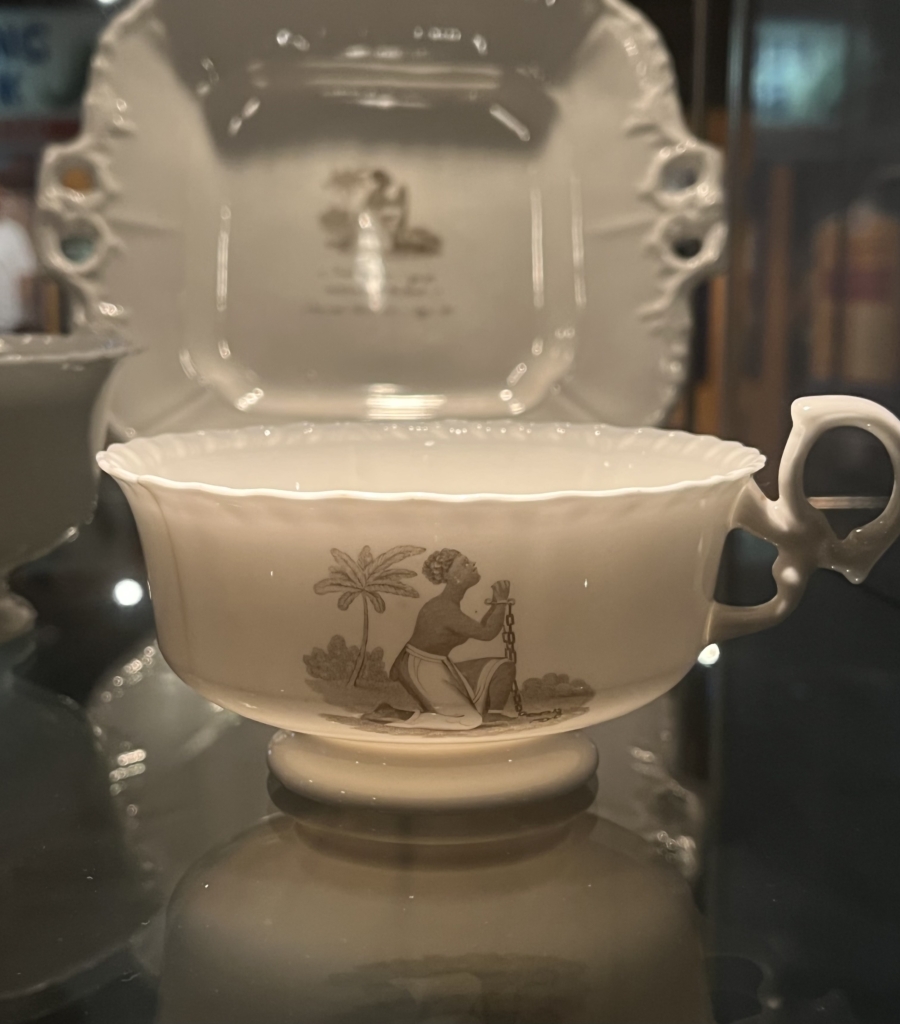
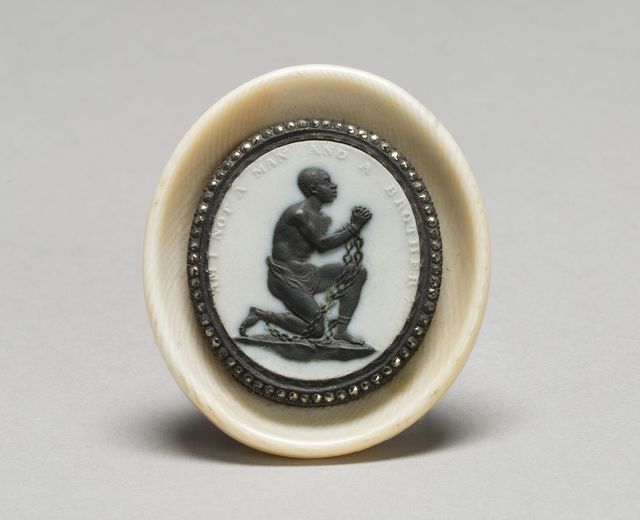
Abolitionist, industrial entrepreneur and potter Josiah Wedgewood created tableware to support the anti slavery movement. He also designed the anti slavery medallion which became a highly fashionable item to wear.
“ladies wore them in bracelets, and others had them fitted up in an ornamental manner as pins for their hair. At length the taste for wearing them became general, and thus fashion, which usually confines itself to worthless things, was seen for once in the honourable office of promoting the cause of justice, humanity and freedom”
The tableware and the medallion were sold to raise funds for the cause and Wedgewood donated directly to the cause himself.
Iron for Gold (1813)
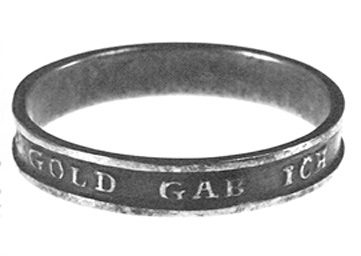
This item doesn’t have a price and sits somewhere between a charity merch item and a donor thank you. During the Napoleonic wars Princess Marianne of Prussia asked the nobility to give up gold and it they were given iron jewellery emblazoned with ‘I gave gold for iron‘ and became the fashion of the court.
Typewriter ribbons, lampshades and much more (1890s)
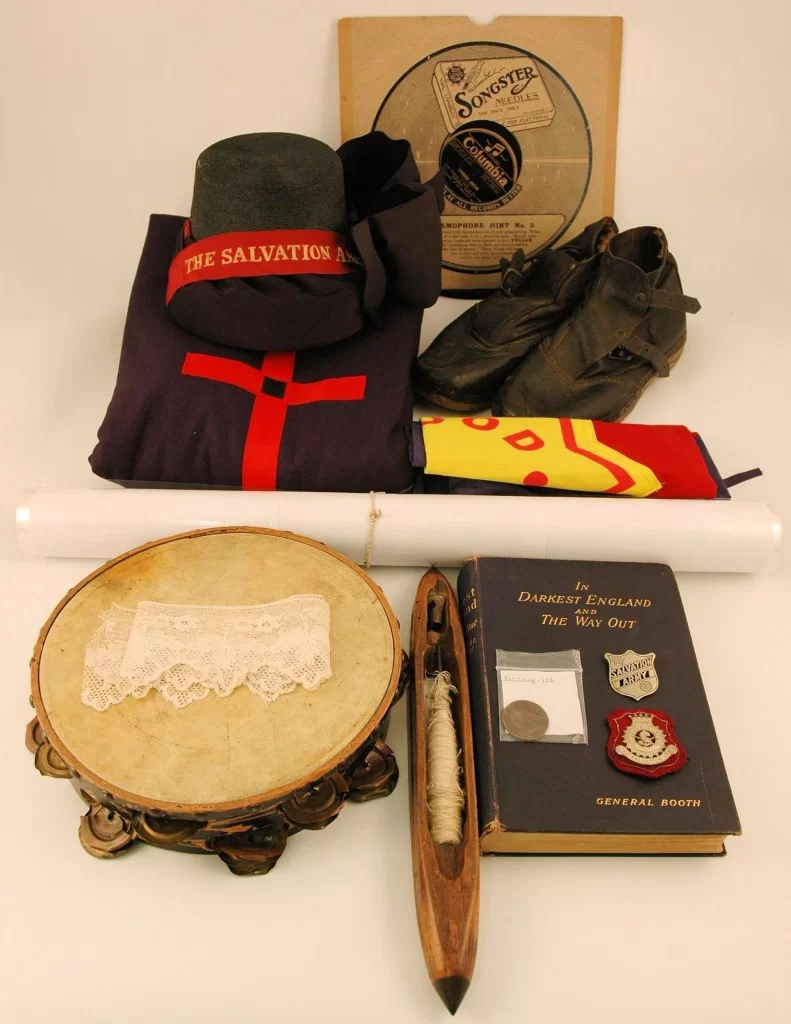
The Salvation Army used modern printing technology for the best advantage. They turned attractive soldiers (members of the Salvation Army not real soldiers), fundraising events in New Zealand, the famous officers of the day into postcards to sell to raise funds.
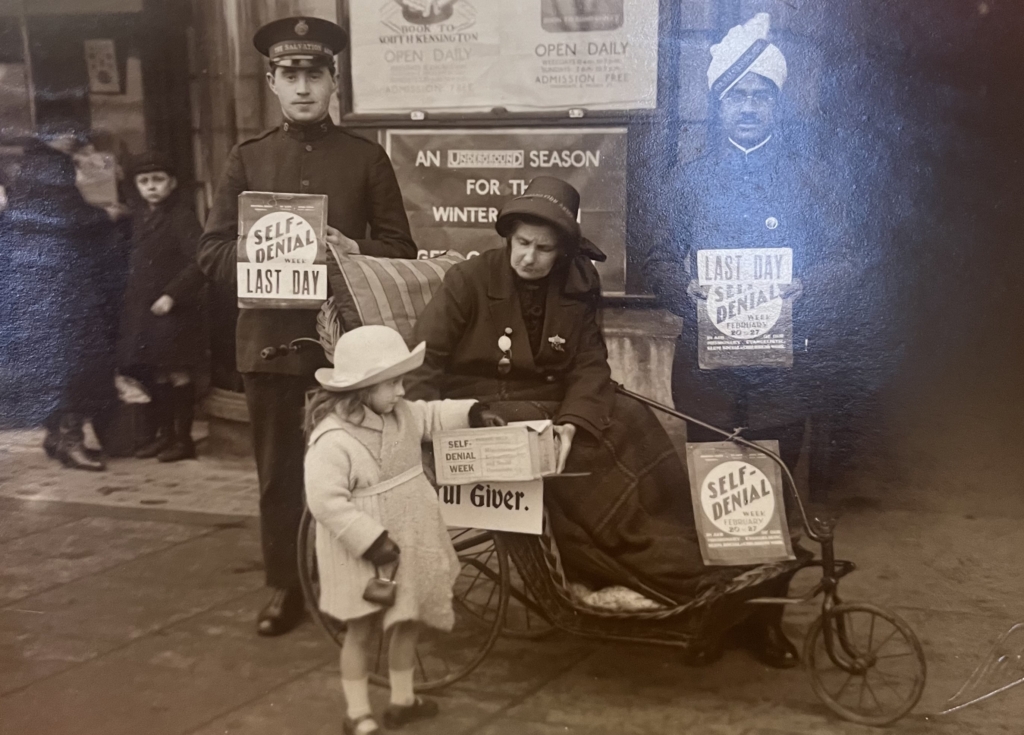
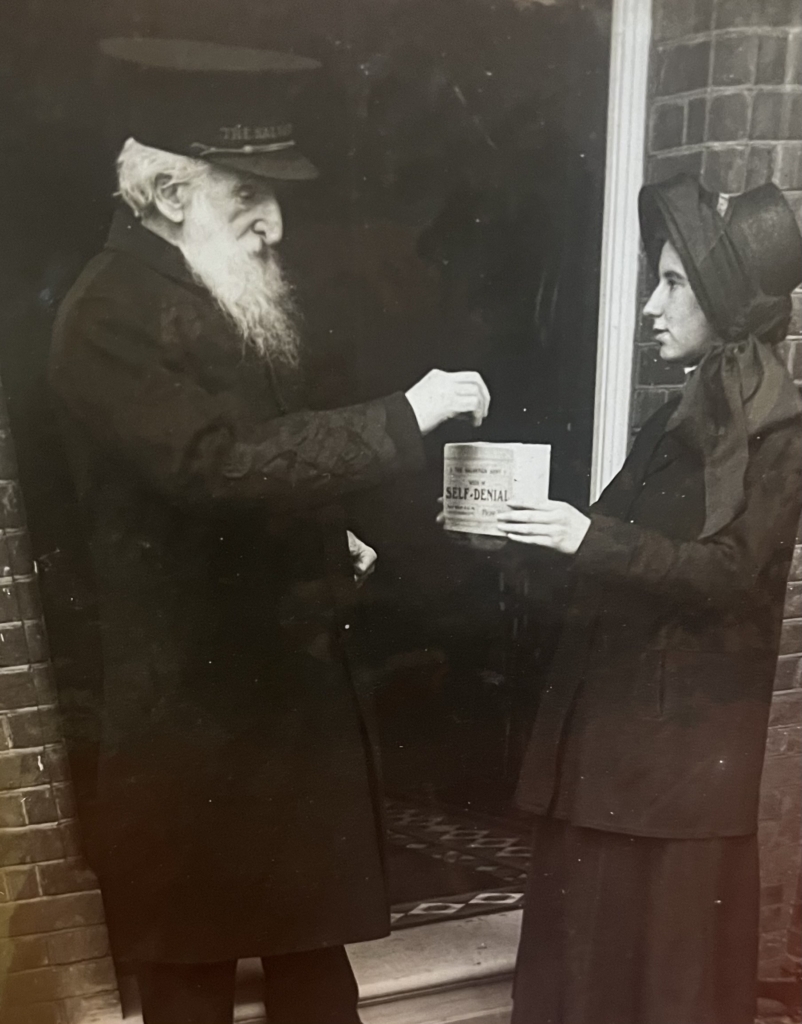
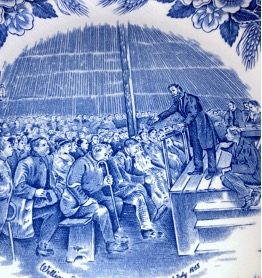
The leader of the Salvation Army was the General and the founding General – General William Booth. General Booth’s image was on tea cups, crockery, lampshades, playing cards, glue, typewriter ribbons and everyday items with all profits going to the Army. His voice was recorded on photograph and recordings of him sold.
Sheet music, commemorative handkerchiefs and napkins (1899)
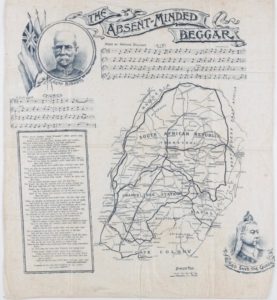
Rudyard Kipling’s poem The Absent Minded Beggar was set to music by Arthur Sullivan and became the UK’s first charity single raising for funds for soldiers returning from the Boer War. People bought the sheet music to support the war effort, but could also purchase the matching handkerchief (seen below).
Suffragette crockery (1909)
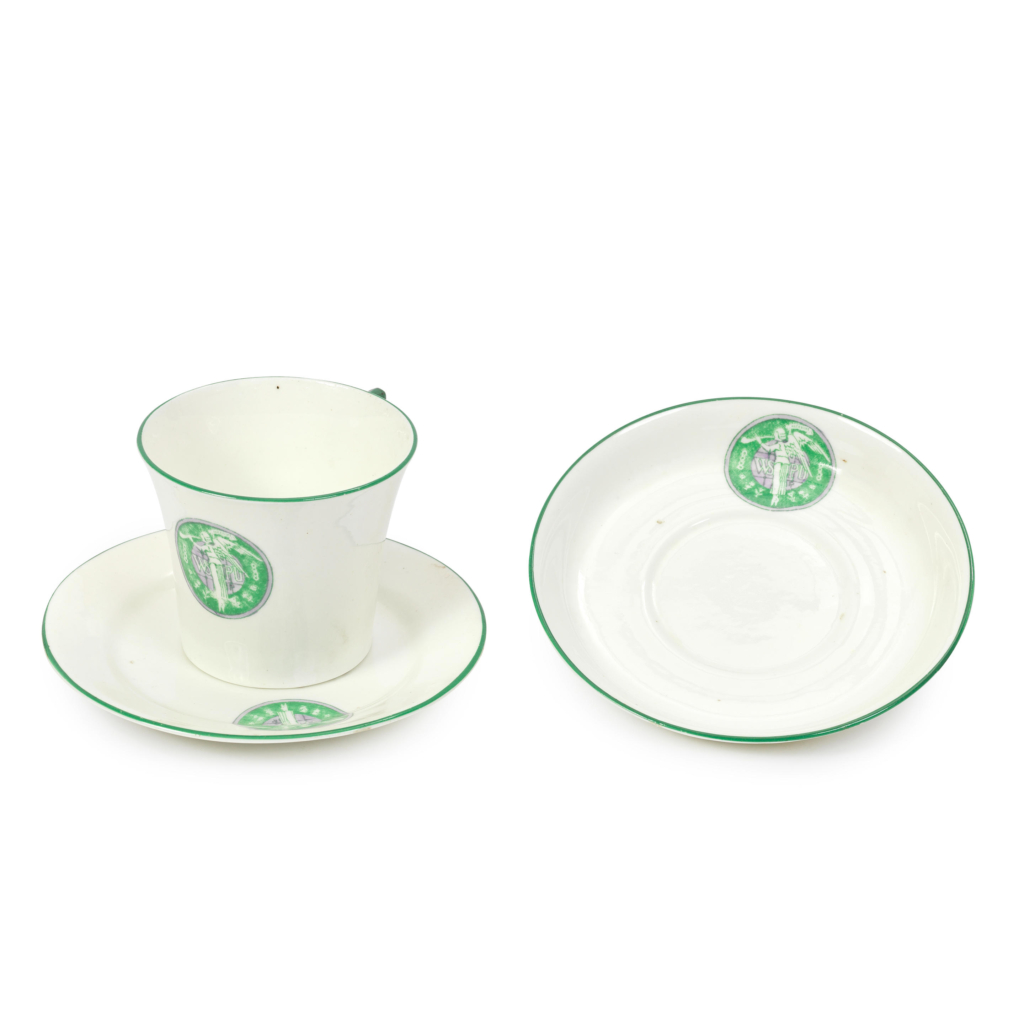
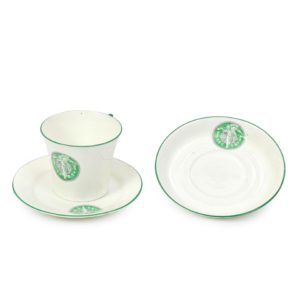
In 1909 The Women’s Exhibition used a suffragette tea service for the duration but then sold it to raise funds. Broaches and pins were also used to raise funds for support.
Why is charity merchandise so popular with us
For the charity it obviously raises funds and allows a donor to support in another (often additional) way. They may be a member but will also buy the tea towel, the mug, the baseball cap and the gin. It also offers the charity free advertising – if your donors are walking around with your tote bag or umbrella, or sending your Christmas cards.
But charity merch plays another very important role – from cups to typewriter ribbons or hankies it helps cement their supporter identity as part of your supporter tribe.Yes, the motive for the purchase may be blurred and they buy the item because it is pretty or practical but is also personal – a personal allyship with the cause. Like wearing a football shirt, a university scarf or a t-shirt with your favourite band on it – it is showing affinity and identity. Collecting and using the item reinforces their connection with your charity and a memory associated with it – perhaps with each use of the cup, the bag, the gin they are getting a microdose of dopamine (the happy chemical) and being reminded of the warm glow of giving to your charity.
For your supporter having your merchandise is a way of them signalling they are someone that cares about preserving art or fighting for justice – and literally have the t-shirt to prove it.
How can help your supporters literally wear the t-shirt of support?





Leave a Reply
Want to join the discussion?Feel free to contribute!