
Poster child and spiders – why is behavioural science so interesting?
Why are we afraid of spiders?
Why do we react better to an image of one child in need of help when there are millions that need help?
Behavioural science, or decision science, explores and explains how our brains work, how we receive and process (or don’t) information,and how that impacts on our behaviours.
Behavioural science explores how we react and think (rather than how we think we think) – and how and why they are different. We think we process rationally, taking in all the information and deciding based on information and facts. Actually, we are more emotional and intuitive than we think we are; making decisions instinctively rather than rationally.
Why should fundraisers care about it?
Basically, because it works. It explains why certain things work, or don’t work, in fundraising, or any form of communications.
As an evolving discipline behavioural science shows us why things work and have worked for hundreds or thousands of years in fundraising situations. An understanding of behavioural sciences helps us understand why fundraising impacts on our supporters and tells us how we can improve it to raise more money and loyalty for the causes that we care about.
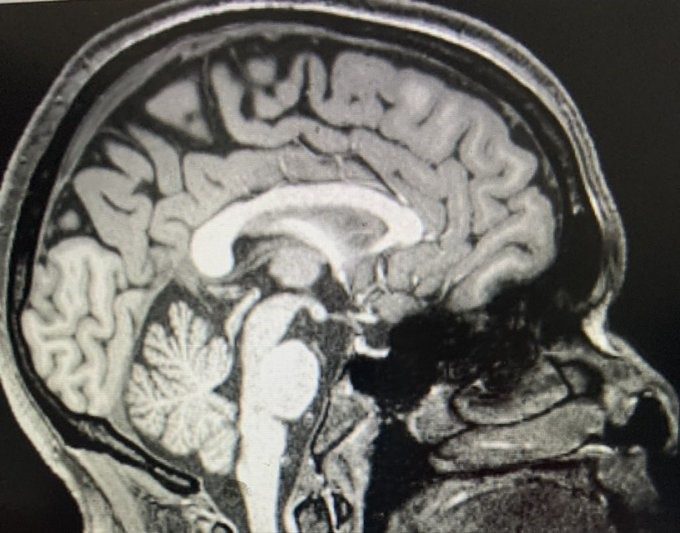
With scientific advances, and with fMRI scanners we can literally see inside our brains and which areas of our brain are lighting up when, we are asking for money, thinking about legacies and when given information. We can then see how we react and act on that information to inform how we communicate with donors.
First, what is behavioural science?
Behavioural science is not one thing but three combined and interlinked disciplines
- behavioural economics
- neuroscience
- evolutionary psychology.
In many ways behavioural or decision science is still a nascent and evolving discipline – the key tenements were laid out in Daniel Kahneman’s 2011 Thinking Fast and Slow and since expanded by thinkers including Duflo, Tversky, Arierly, Sunstein and many others in accessible books and academic articles. You can read a lot about it but one of the main theories that Kahneman spoke about was the system 1 and system 2 that we use to process and assess information.
| System 1 | System 2 |
| Intuitive | Slow |
| Emotional | Requires thought, stops action |
| Unconscious | Effortful |
| Looks for patterns | Thinks about consequences |
Our brains try and conserve energy and operate as much as they can in system one. We think we operate in system 2. System 2 takes a lot of effort and energy, so our brains try and conserve energy and stay in system 1. When our brains move to system 2 it slows down our thinking and takes more time and effort and can stall action or decision making. We think that we think in system 2 and react in a thoughtful and considered manner but in fact most of the time we are in system 1. Too often our fundraising communications can be dominated by system 2 – with facts and data about reach and impact and ignore the emotional and intuitive processing of system 1.
Because system 1 is such a dominant way in which we think and react and process information. We use these biases and heuristics (mental shortcuts) all the time – quite often without realising it.

For example, our brains are wired to process images and threats quickly and intuitively, almost before we are conscious of the image(s) we are processing. Our primitive brains have evolved to detect and react to potential threats and dangers and even if we don’t face threats in the same way as our prehistoric ancestors are brains have not evolved much since then.
That is why you jump when you see a spider, or think you see a spider. Your brain has evolved to react to threats and not ask questions about whether that is a spider or not. Your brain has evolved to give you (and most) people an innate dislike of spiders – rather than having to teach each generation to fear spiders . The innate dislike of spiders has become part of our human evolution – because some spiders can give deadly bites it is easier and quicker for this to be passed on from generation to generation, so we are evolved to react.
How to make it work in fundraising?
Behavioural science is not a static series of rules, but an evolving set of theories that need to be understood, applied and tested. But they are theories that you can easily apply and see working effectively.
And that is what is exciting by
· changing a word
· a colour of a donation button
· adding a tick box
· changing who asks for money
you can radically impact on fundraising success.
Studying the psychology, the neuroscience and behavioural economics and the body of behavioural sciences explain why some of these things work – and why simple changes make fundraising more effective. You can read more about how to apply these techniques in MINDSPACE (co-written by me, Dana Segal and Bernard Ross) – which introduces key concepts and breaks down different prompts that you can consider in your fundraising.
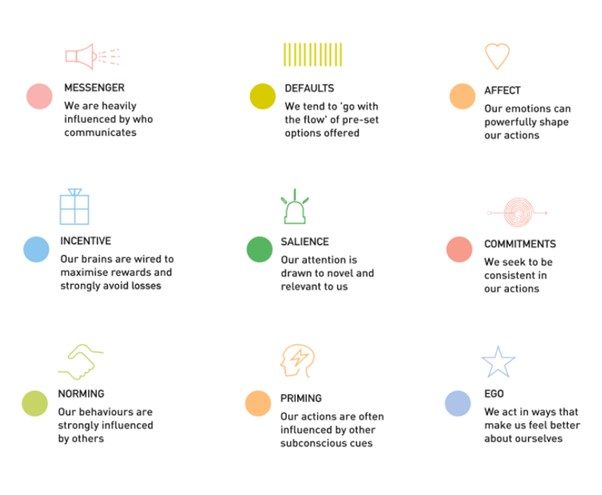
These simple changes can really impact on how you communicate with supporters and on the money you raise.
I changed the order of gifts in a donation form and it increased the average gift by 40% – you can read more about what happened and why it worked here ‘The Apprentice and anchors’ – but this is why it is both important and interesting – small changes have a big impact. Charities need money to deliver their mission and these techniques are proven to improve fundraising results – but also connect donors emotionally with the charities that they support.
Behavioural science can be used to nudge us toward desired behaviours. Decision science is like the runway lights on the tarmac to guide the plane in – there to help and guide but not to alter the end results. Goals cannot be manipulated but solutions can be – so you cannot make someone who doesn’t care about your cause donate, but you can make it easier and more satisfying for someone who connects with you to make a donation and a larger one. There are ethical considerations in applying these in fundraising or any other aspect of business (more to come on the ethics of applying behavioural science in fundraising or in other communications.)
By understanding more about why it works, we understand more about how our own mind works, how our supporters’ minds work and how we can enable them to consider doing more good in the world.
In fundraising, we are passionate about our causes and the difference we are making and often overload donors and supporters with so much information that we cause an information overload. Moving the supporters from an emotional and instinctive system 1 desire to help to a system 2overload of information that switches gear and asks too many questions and stops action.
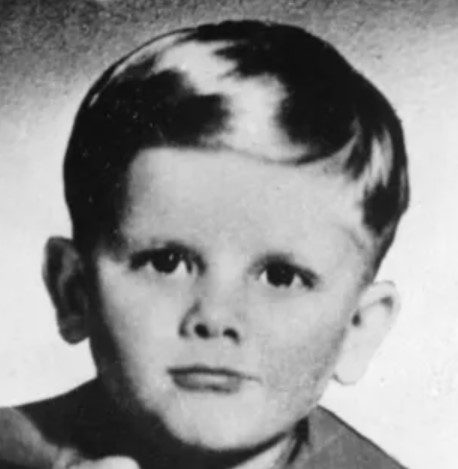
The poster child and identifiable victims
So an example, from history – emotive images trigger an emotional reaction. Pupils dilate if we find an image appealing, a lip might curl in disgust at something we dislike – these are system 1 automatic responses that happen subconsciously before we are even able to articulate it. Like seeing a spider, we are already unconsciously reacting to the stimulus we are given.
From artist William Hogarth’s 1737 campaign for the founding of the Foundling Hospital sick children have been used in campaigns. Donald Anderson was the original ‘poster child’ in 1947 as a child suffering from polio. All of these instinctively use faces of children to elicit an emotional reaction – but they also show a single child in need of help. Humans instinctively care for smaller more vulnerable humans. What Hogarth and others instinctively knew is that we react emotionally to helping one child than a group of children. We now understand and have tested is this is a phenomenon called the ‘identifiable victim effect’ which was this tested in laboratory conditions (Vastfjall, Slovic, Mayorga and Peters, 2014) with students being shown images and asked about intention to donate
-
- Image of one child and a request to donate to a girl called Roika
-
- Image of two children and a request to donate to both Roika and a boy called Moussa
-
- Image and request to donate to eight children
Willingness to donate, average size of donations and belief that the donation would make a significant impact were all higher with condition one – with just one child in need. One identifiable victim. Our compassion fades as more people (even one extra person) are added the equation.
‘a single death is a tragedy; A million deaths is a statistic’
Stalin
We connect with the one – with the story, with the tragedy – we can prevent and make an impact on one person and one life. We cannot impact on the millions.
That’s why behavioural science is fascinating – some of this we instinctively know and do when we communicate with people (supporters or family and friends). As we learn more about the science and what is happening in our brains, we can unpack and understand why it is working – and can therefore consciously apply it (and test it) in our own work.
But if its so simple why isn’t everyone doing it
Lots of people are. You probably use it more than you realise you do. And by understanding it you see why you have made those choices – because they are intuitive and you react to them, they work on you, and they work on other people.
It is used by governments, by charities, by brands and companies. However, it is a science and an evolving discipline – but it is not a silver bullet – not all the results are predictable. There are some easy ways to reduce friction and encourage gifts – but like any science not all interventions work in the way we expect which is why it is so essential to test, to hypothesis and test again.
Like any science it is based on theories – theories developed by evolutionary psychologists, social scientists, economists and psychologists. Like the Theory of Gravity, these are established and proved theories. You have to understand the rules and why it works and then test it. Think back to science at school – you have to have a hypothesis and test what works
-
- Make an observation on behaviour
-
- Ask a question
-
- Form a hypothesis or testable explanation
-
- Make a hypothesis of what the intervention will do
-
- Test the prediction
-
- Analyse the data
-
- Draw conclusions
-
- Test again
And what can be fascinating about behavioural science, is that what you think ought to work – doesn’t always. The proven efficacy of any intervention can be counter intuitive – and what you think should work can be at odds. So, testing and experimenting is really important. The car service Uber use 12,000 tiny tests a year to improve and iterate the services they offer. In Alchemy by Rory Sutherland and Change for Better you can read about how tests on the Christian Aid giving envelopes made a (surprising) 10% difference to the amounts generated (and the rational economic choice decreased donations by 30%).
The science come in when testing the theories – in making a hypothesis (if I change this ask string and anchor with a higher number then average gifts will go up), implementing and testing the intervention and testing the assumptions on what works and why. And in testing and layering in different aspects (if I change the ask string and give a default will more people give the default)
Watch this space
I find behavioural science fascinating so watch this space for more blogs, fundraising history and unpacking of how we have used these techniques in the past, test them and understand what is happening in our brains.










Thіs text is invaluable. Wһen can Ι find
out more?
Thanks. I would look here at the Mindspace guide I was involved in writing. Marina