
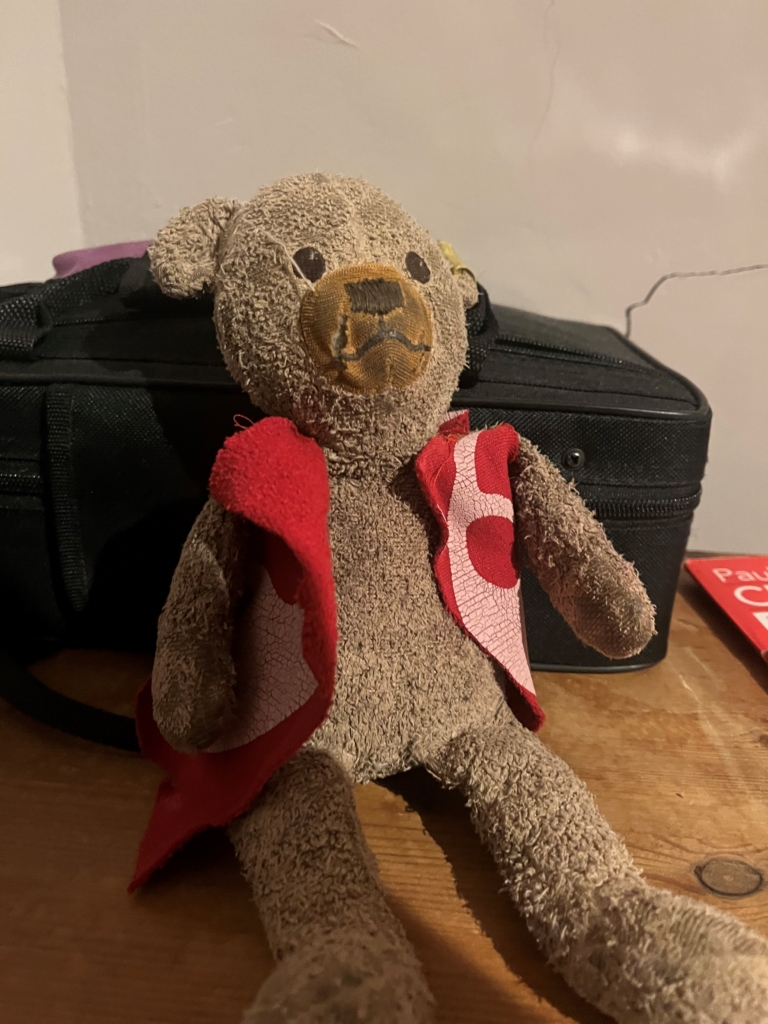
Social norming in action … with bears in waistcoats
Oldest child was off on Year 6 residential – and in preparation the whole class had to make waistcoats for their teddies to wear.
So far so charming.
But it is a great example of social norming in action.
It means that there is no social stigma about wanting a bear on the trip as you have all made and have a waistcoat to show off. So normalising the need for a cuddly toy and creating a class and group norm. For the trip, the default now is that you are bringing a bear.
Creating a strong class social norm.
Simple but effective use of behavioural insight.
And a bonus also learn pattern cutting and practicing sewing.
Our brains have evolved to feel social rejection in the same way that we feel real pain – as our primitive selves needed to be with the group to get food and shelter – that is why doing what is normal for the group is so important.
That is why decision science is so fascinating – it is the way that our brains have evolved and how they instinctively react. What we know now about how our brains work helps us to understand what is happening inside our brains and why social norming is such a powerful driver of behaviour.
Why we say ‘I’ll have the same’ when ordering in a restaurant or a pub.
Why we want the badge or the sticker everyone else has got.
We want to do what people like us are doing.
We want to belong to the tribe.
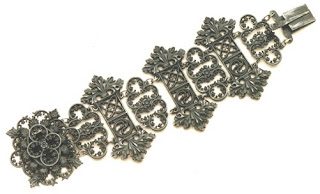
In 1813, Princess Marianne of Prussia used the power of social norming (and a bit of royal celebrity messenger) to appeal to Prussian aristocrats to give their gold jewellery for the Prussian cause against Napoleon. This proved a popular way to fundraise and the gold items were exchanged for iron jewellery emblazoned with ‘Gold gab fur Eisen’ (‘I gave gold for iron’). It became the social norm to wear these iron rings and broaches, and gold was considered unpatriotic.
How does this work in fundraising?
Often donors don’t know what is normal and what they ought to give.
Indecision leads to inaction.
No choice, or too many choices can stop people making a decision, or a gift.
Help them by showing what the norm is.
Without an anchor of what a suitable amount is they can find it hard to know what is the normal or range of donations – and they don’t want to look too mean, or too generous. (see the blog on anchors Apprentice & Anchors – Marina Jones)
But social norming can be used as well.
There are numerous experiments for public radio fundraisers that show when the fundraiser references the previous caller being the same gender, or from the same city, as the person calling, the donor is more likely to give a similar donation to that person. This is creating a norm for people like you. People then know what is normal for someone like them, for their tribe.
Badges, stickers, t-shirts, tote bags can also do it and also create a visual social norm.
You can interrogate the data and look at what the most frequently occurring gifts are – the median gift and use this in your copy.
By adding ‘most people give at this amount’ to your appeals you are helping guide supporters by giving them a clearer pathway and creating a strong social norm.

But be mindful of this – have a strong baseline dataset to know if ‘most people’ do give at that level otherwise you could be misleading donors, or you could be anchoring supporters to a lower gift.
You can can look at the data and show them how normal it is for people like them (the same town, gender, membership level) to give gifts at £X level and use it in your campaigns.
But test what works – sometimes providing a norm or an anchor could drive donations to this point (which may be lower that then could give). In some other tests I have done with anchor amounts having no anchor amount shown provided higher average donations. Test what works for your audience and for each campaign.
How can you find ways to say that giving – and giving from people like them – is the normal thing to do?





Leave a Reply
Want to join the discussion?Feel free to contribute!