
Fundraising and royalty – a few historical royal fundraisers
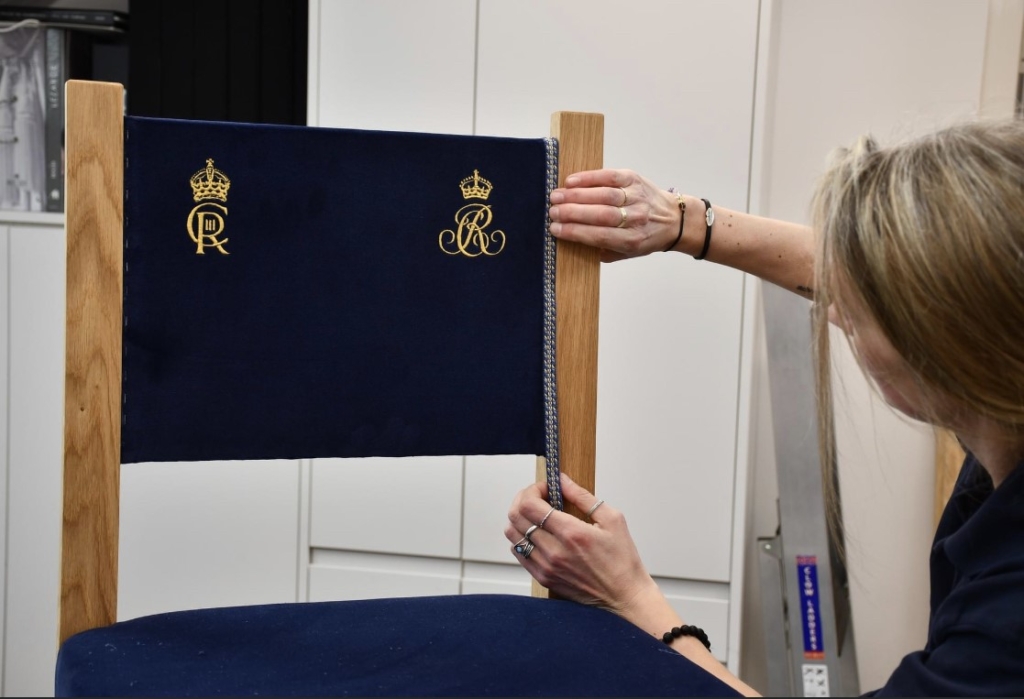
With the congregational chairs from the coronation of HRH Charles III being auctioned for charity it made me think about some historical examples of when royalty has been involved in fundraising. So I teamed up with fellow fundraising history fan Jayne Lacny from Notes on Philanthropy (who is also part of the Rogare history of fundraising project) to look at some historical examples of royalty and fundraising. (This list is by no means exhaustive but just a few historical fundraising moments that caught our attention.)
Why are royal patrons so important to fundraisers?
In decision science we often think about the messenger and who is asking us to help in a campaign. For a museum it could be a curator, for an international development charity an aid worker or someone who has had their life changed. We react strongly to who asks us to help – so consider who the messenger is. We are more likely to respond to someone we respect and trust. Therefore, a royal patron – as a symbol of the nation during war or as the ideal of patriotism, Christian charity– can be the perfect messenger for a fundraising campaign.
So a few #fundraisinghistory examples from 100 or more years ago.
The benefits of royal patronage
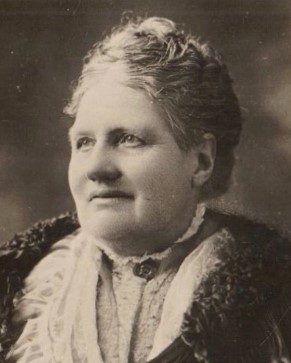
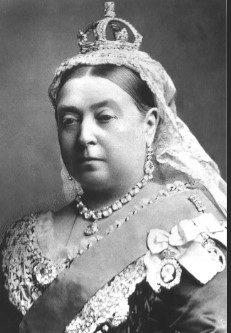
The royal family has always been notoriously cautious when selecting charities for patronage (and currently have 2862 patronages – of which 1187 are to registered charities). However, Queen Victoria and her family members were keen supporters of work being carried out during the 19th century with the Armed Forces in terms of temperance and spreading the evangelical word. Royal visits to sailors’ rests run by Dame Agnes Weston in Portsmouth and Plymouth were not unusual and were always welcomed.
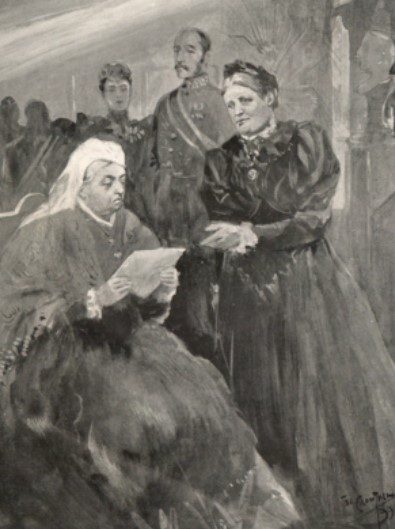
On a visit in 1895 to the rest at Devenport, Queen Victoria asked to sponsor a ‘cabin’ for sailors to stay in when ashore. Later, a sailor on hearing that the Queen had paid for the sponsorship out of her ‘own privy purse’ remarked to Weston –
‘I’ve sailed all over the world, and I have never come across such a thing before; the Queen’s my Queen and I’d die for her any day; but now she’s my Friend’’.
Weston told the Queen about this conversation when she was invited later to meet with her at Windsor. With tears running down her face, Queen Victoria replied, ‘Thank you so much for telling me this. I shall never forget it.’
Reference – Weston, A. (1909). My Life Among the Bluejackets. London: James Nisbet and Company Ltd, pp.211-225.
Healthcare and royalty intertwined
Over the decades, royalty has devoted itself to supporting healthcare in this country (pre- and post-NHS) and many of our large – and not so large – hospitals have benefited hugely from the family’s connections. Dorset County Hospital is no different, for example, Queen Adelaide, widow of William IV, became patroness of the hospital’s 1841 bazaar and generously donated items for the occasion. The hospital has another fascinating link with royalty.
British surgeon and anatomy expert, Sir Frederick Treves (1853-1923), known for befriending the Elephant Man (Joseph Merrick), had been Surgeon Extraordinary to Queen Victoria. When returning home to Dorchester to receive the freedom of the borough, he donated a new operating table to Dorset County Hospital, ‘the best he could find’. However, things took an unexpected turn as in 1902, just days before the coronation of Edward VII, Treves had to perform a life-saving appendectomy on the seriously ill future King. The successful pioneering op involved draining an abscess that was sitting on the appendix through a small incision. The coronation went ahead without delay as a result.
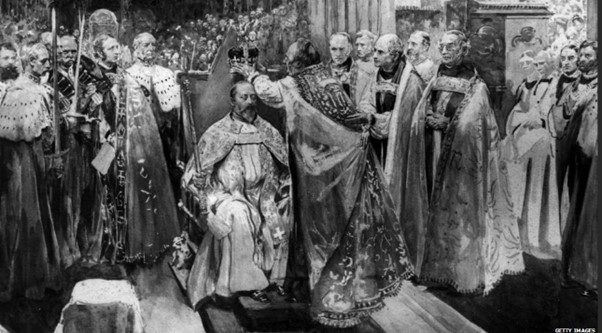
Reference booklet on Dorset County Hospital, 175 years of rural healthcare, 1840-2015.
Alexandra Rose Days
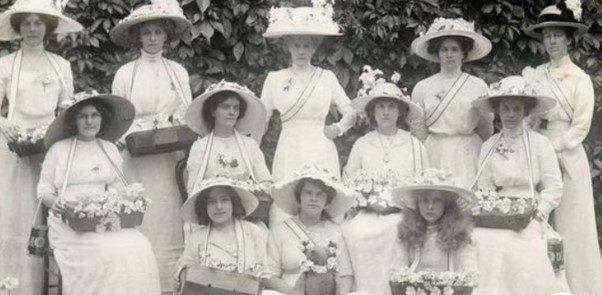
In 1912, the Dowager Queen Alexandra and her court were trying to find a way to mark the 50th anniversary of her arrival in England. Princess Alexandra had toured the country on her arrival in England in 1862 before marrying Edward VII – with photography and train travel more widespread she became a well-known figure who was held in high esteem by the British public. A procession was proposed to celebrate the anniversary, but the Queen wanted something that would benefit the charities that she cared about. Inspired by a priest from her homeland, Denmark, who sold the roses in his garden to raise funds for the hospitals, the Queen evolved the idea to sell flowers – silk and paper ones to raise funds for her favourite charities– and the Alexandra Rose day was formed.
The artificial flowers were made by young women from the John Groom’s Cripplegate and Flower Girls Mission which homed destitute, orphaned and disabled young people.
The first event raised over £32,000 (more than £2.5m in today’s money). The funds supported many of Queen Alexandra’s favourite charities and it became an annual fundraiser each June. By tradition the Prime Minister bought the first flower. The charity is still working today and focuses on food poverty.
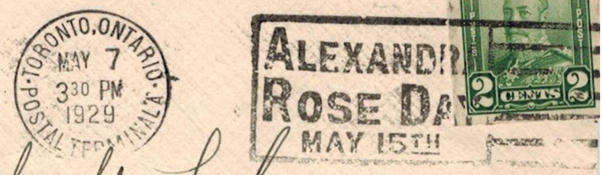
To promote Alexandra Rose Day they used a variety of methods from Players cigarette cards (the illustration below) and stamping notices on letters to highlight the forthcoming annual fundraiser.
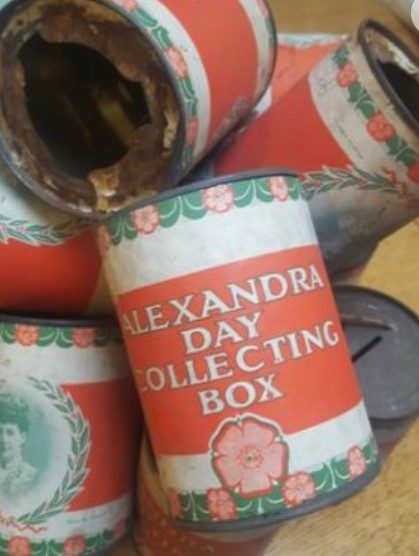

You can see some vintage footage of Alexandra Rose day here:
Queen Alexandra Rose Day: London flowersellers (1920) – YouTube
ALEXANDRA ROSE DAY IN SHEFFIELD | Yorkshire Film Archive (yfanefa.com)
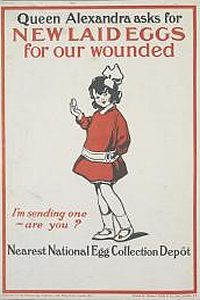
Queen Alexandra was actively involved in other campaigns and became the Royal Patron for the National Egg Collection during World War One – which asked British subjects to donate eggs to send to soldiers on the front and wounded soldiers recovering in the UK and Europe. The posters were emblazoned with ‘Queen Alexandra asks for new laid eggs for the wounded.’ Her involvement in the campaign rocketed its popularity and success and over a million eggs were collected thanks to her involvement. You can read more about the campaign in this blog.
Princess Mary Christmas Box campaign
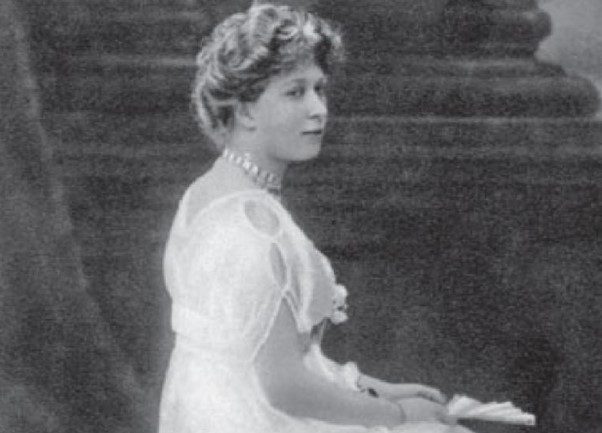
On Christmas Day 1914 400,000 Christmas boxes were distributed to serving frontline soldiers – this was a morale boosting fundraising campaign led by Princess Mary (the 17 year old daughter of George V). The Princess initially wanted to pay for a gift for each soldier from her own allowance but this was not deemed practical so a public appeal was launched. This is the appeal that Princess Mary wrote in early October 2014:
“I want you now to help me to send a Christmas present from the whole nation to every sailor afloat and every soldier at the front. I am sure that we should all be happier to feel that we had helped to send out little token and love and sympathy on Christmas morning, something that would be useful and of permanent value and the making of which may be the means of providing employment in trades adversely effected by the war. Could there be anything more likely to hearten them in their struggle than a present received straight from home on Christmas Day?
Letter from Princess Mary to the British Public
Please will you help me?”
A very charming plea. The British public were told to send their donation to HRH Princess Mary, Buckingham Palace, S. W. and mark their envelopes ‘Sailors and Soldiers Christmas Fund’
The Times listed those that had already contributed in late October and the campaign was very popular and £162,591 and 12 shillings and 5 d was raised. In The Illustrated War News Princess Mary was described as the ‘royal Santa Claus’
What was in the box?
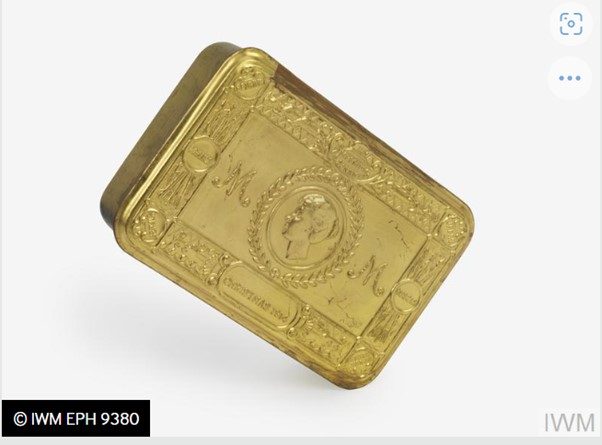
The boxes contained cigarettes, a card from Princess Mary and a picture of the King and Queen. And the committee even considered non-smokers and an alternative was box with acid tablets and a khaki writing case with a pencil and envelopes was provided. Nurses were were given chocolates instead and there were special boxes with spices or sweets created for Sikhs, Gurkhas and other regiments.
Now anyone who has been involved in organising sending out Christmas cards for donors knows how long it takes … and although 400,000 boxes were delivered that first Christmas many did not get them in time. Because of this delay the cards read wished them a Victorious New Year.
The success of the campaign and demand meant that it was extended from soldiers and sailors to all those in uniform as well as parents of the fallen and those who were prisoners of war had them saved until they returned home.
The fund closed in 1920 and over 2.6 million boxes were distributed. And there was still a surplus of funds which was donated to Queen Mary’s Maternity Hospital for wives and children of the RAF.
Going once, going twice …
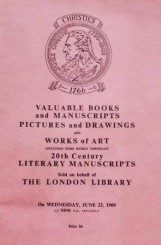
It was not always leading the campaign as the asker that was important, sometimes just donating an item to an auction could be as beneficial. The London Library was threatened with bankruptcy after Westminster removed their exemption from the business rates – Winston Churchill wrote a letter to The Times about it – the Queen donated a book on Cellini from Queen Victoria’s library and the Queen Mother donated a silver wine cooler. Other literary figures also contributed including a bronze from Henry Moore, a Barbara Hepworth painting, T S Eliot’s personally transcribed ‘The Waste Land and manuscripts from Graham Greene and John Betjeman. The auction at Christie’s raised over £25,000 and the library was saved.
The methods used by royal patrons in their support of charities mirror the patterns and common fundraising techniques of the day.
Find out more about Jayne’s work here https://notesonphilanthropy.co.uk/







Leave a Reply
Want to join the discussion?Feel free to contribute!