• Link to X
  • Link to Instagram
  • Link to LinkedIn
Marina Jones
  • My Thoughts
  • What I’m Reading
  • About Me
  • Contact Me
  • Home Page
  • Click to open the search input field Click to open the search input field Search
  • Menu Menu

Tag Archive for: money

Sackler Sludge and Purdue Priming

January 10, 2024/0 Comments/in What I'm Reading/by admin

Nudges encourage us to change our behaviour for the better, but when nudges are used for nefarious reasons e.g. to get more money or do something not in our best interests, then it is called sludge.

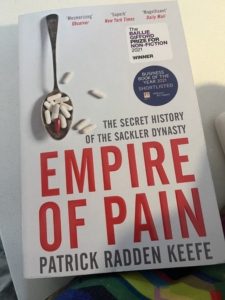
Having read Patrick Radden Keefe’s ‘Empire of Pain’ on the Sackler dynasty (which was a great charity shop find) I was struck by the uses of these sludge techniques in the Sackler’s Purdue Pharma’s marketing from the 1950s onwards. The understanding of what nudges are, and how they can be used, or abused, may have only been codified in the past few decades with the emerging field of behavioural science, but humans have always had an innate understanding of what motivates behaviours, and how to manipulate it.

The Sackler story is a timely reminder that nudges need to be used ethically and appropriately. 
So what nudges did the Sacklers and Purdue Pharma use, and why were they effective?

Authority messenger

We react to who is telling us information – the messenger –  they can be an authority figure or have authority in their field. This creates an authority bias, and we want to do what we are asked to because it reduces the cognitive load for our lazy brains to trust the person in authority.

In the 1950s, Arthur Sackler recruited doctors to sell medicines to other doctors.

“Seeing that physicians were most heavily influence by their own peers, he enlisted prominent doctors to endorse his products”

Patrick Radden Keefe ‘Empire of Pain’

Doctors trust and respect other doctors so using doctor as a messenger is effective as it uses their positional and medical authority, and the social norm of other peers doing it.

Authority messengers in a fundraising campaign might be the Chair of the Board, the CEO or a known figure with authority on your subject area (a teacher, a social worker), or a frontline worker.

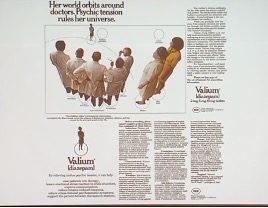
When launching Librium tranquilliser (a precursor to Valium), Purdue sent vinyl records to doctors with recordings of other doctors talking about how well the drugs worked.
Many doctors were anxious about prescribing opioids and concerned about the addictive nature, so Purdue and the advertising campaign really focussed on doctors endorsing the product. These trusted messengers could cut through these concerns and if your peers were also prescribing it was creating a strong social norm for other doctors to follow. Doctors were incentivised to be paid speakers to promote OxyContin at conferences and pain management seminars. 

Made up doctors

However, sometimes this authority bias was entirely misused and abused, for example, in the 1956 adverts for the new antibiotic Sigmamycin produced by the Arthur Sackler’s marketing firm MacAdams. These adverts were in the form of a brochure entitled ‘More and More Physicians Find Sigmamycin the Antibiotic Therapy of Choice’. In the brochure, eight doctors were quoted giving testimony about the effectiveness of the drug and how it was clinically proven. The doctors were from across the country including Tucson, Miami, Massachusetts – as well as authority messengers, we react to what is relevant and salient to us – so if our local doctor has said we are more likely to trust them than one from another state. Investigative reporter John Lear wrote, rang and tried to reach these eight doctors – his letters were returned, the phones went unanswered – the doctors did not exist – they had been made up: 

“it looked so plausible, so real with the special patina of authority conferred by eights MDs. The ad was polished, impressive and fundamentally deceptive” 

Patrick Radden Keefe ‘Empire of Pain’

Blinded by the white coat 

As well as being blinded by the title of doctor, we are susceptible to visual clues about authority – someone in a high vis jacket, a smart suit, with a clip board, wearing a lanyard, or a white coat signal to us their position of authority or their job. In the Milgram experiment (1961), 66% of people would shock a ‘patient’ with 450 volts (enough to kill them) if told to do so by a man in a lab coat – the visual signal of the white coat gives them authority and we trust that authority.

When the opioid court cases were dominating the news in the US, Purdue Pharma moved to the other emerging markets using a subsidiary called Mundipharma and they continued their focus on the authority bias –

“Mundipharma reps in hospitals actually donned white coats and pretended to be doctors themselves” 

Patrick Radden Keefe “Empire of Pain’

This is an AI generated image of a doctor – the white coat bias persists and we listen to and follow instructions of those in perceived positions of authority.

Note in this case it was the sales reps not the doctors in the white coat. The visual clue is a shortcut for our brains as to the authority of the messenger – but again fundamentally deceptive.

Who might be the authority messengers that you are susceptible to? The white coat? The suit? The status? The blue tick?

Experience messenger

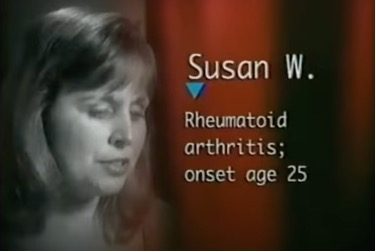
Messengers are not always those with positional authority, sometimes a messenger who has direct experience and their personal testimony can speak powerfully to the audience. They need to be likeable and believable and may have the authority of experience. In 1997 Purdue Pharma created a video called ‘I Got My Life Back’ which featured real life testimonials from those whose lives had been changed by taking OxyContin. 
Incentives

Incentives motivate us to do something – they can be financial or moral, subtle or overt. 

At Purdue, they used financial incentives for the pharmacy reps who worked on commission, and unlike other agencies, Purdue had no caps on bonuses for reps, so the financial incentive for them to get doctors prescribing OxyContin was a strong motivation. 

FREE 
One of the best known incentives is the free trial.

The word ‘free’ excites our brain and we fear that we are missing out on something. Purdue inherently knew this and used free trials to get doctors and patients to try the product (additionally concerning with a highly addictive painkiller, and a tactic often used by illegal drug dealers). Free monthly prescriptions and samples formed part of the marketing strategy for Valium and for OxyContin– with over 82 million free samples of Valium given in 1970s in Canada. 

Reciprocity  

When someone does something for you there is a natural human impulse to reciprocate and return the favour, and this builds relationship and can increase liking.  

In the 1950s various pharmaceutical companies used free products to incite the reciprocal impulse with doctors – Eli Lilly gave free stethoscopes to students and Roche free text books. 

When Purdue were launching Oxycontin they delivered over 7,000 fully paid weekend pain management seminars in exotic in five years. They gave out branded free merchandise including fishing hats, plush toys, luggage tags, music CDs and a Percocet mug that says Pain and when hot liquid is added changes to Relief.
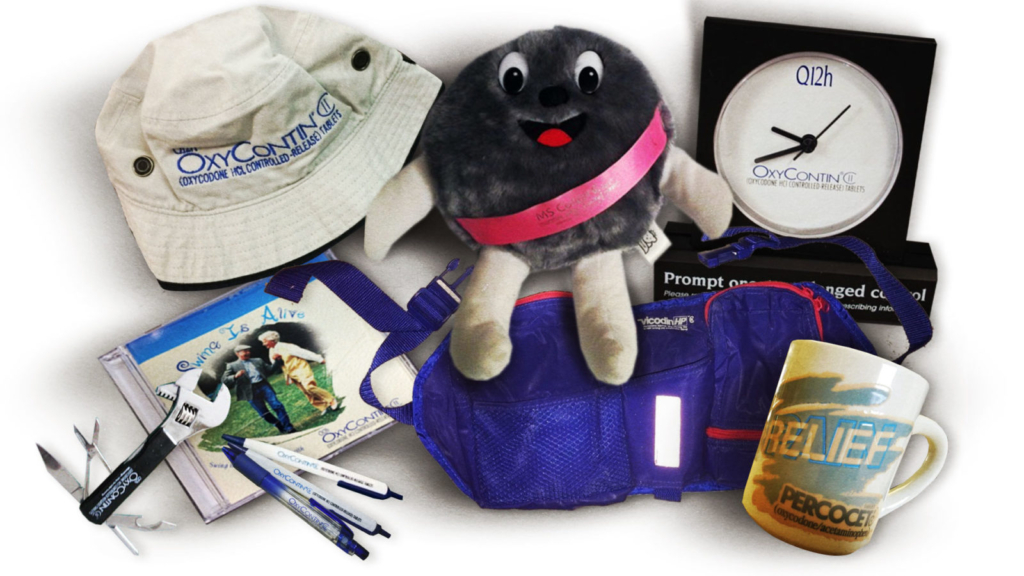
A selection of opioid related swag

There’s no such thing as a free lunch? 

Free is not just about free products and swag. If someone does something nice for us. like buys us lunch, the same human impulse to reciprocate is triggered. In one year Purdue allocated a budget of $9m on food for physicians and an internal email in 1996 noted how effective these incentives were:

“physicians who attended dinner programs wrote more than double the number of new Rxs [prescription] for Oxycontin compared to the control group” 

Patrick Radden Keefe ‘Empire of Pain’

Salience

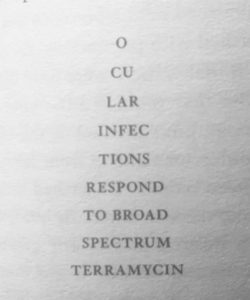
We pay more attention to things that are relevant to us. To make the adverts for antibiotics more relevant and noticeable to optometrists the 1950s MacAdams adverts were made to look like eye charts.
Linguistic relativity 

Giving something a name makes it more real. The Sapir Whorf hypothesis says if you give something a name, you fundamentally alter the way it’s perceived. ‘Designated driver’ is one example of a phrase that was introduced when trying to promote safer approaches to alcohol and driving. It was introduced in Scandinavia in the 80s, and when it was used in the US they got $100m of donated airtime to cement the concept in the language by using it in over 100 TV shows like Cheers.  

MacAdams advertising agency created the name ‘broad spectrum’ to cover the impacts of the new antibiotic Terramycin (above) in the 1950s. Previously antibiotics had been narrow spectrum and targeted at specific infections, by changing the name it changed how the drug was perceived and encouraged physicians to prescribe for a multiple of conditions.

How did the Sacklers respond to concerns about their marketing practices? 

Arthur Sackler dismissed concerns about biasing physicians with marketing saying they were too smart to be biased by these endorsements and would follow the science.

“a cornerstone of Arthur Sackler’s world view; the notion that doctors are priest like figures, immune to flattery or temptation or greed, forced exclusively on the narrow dictates of appropriate medical care”

Patrick Radden Keefe ‘Empire of Pain’

In 1997 Dr Arthur Sackler was inducted into the Medical Advertising Hall of Fame with the citation “No one single individual did more to shape the character of medical advertising than the multi talented Dr Arthur Sackler”

The marketing practices used by Purdue were heavily criticized by the U.S. Government Accountability Office in a 2003 report.

So when we apply nudges …

We need to make sure that they are there to help people make better choices.

Sometimes in the charitable sector there can be a suspicion about applying behavioural science interventions to our work as it feels too commercial practices or like marketing. Charities can feel that the value of their work ought to speak for itself, and because the need is so great, or so obvious, charities should not need to resort to these ‘commercial tricks’. Perhaps there is a concern about a double standard, that using these nudges for business and profit is allowable, but charities with their desire to change the world for the better, ought to be somehow purer.

Nudges are powerful but must be used suitably, ethically and in a way that is aligned to the values of your organisation (and your own personal values) and ensure that the donor still has autonomy to make choices.

By not adopting what is known to work, and used to effect in the commercial sector, could the charitable sector be doing itself a disservice if it does not engage in these practices? 
https://marinajones.uk/wp-content/uploads/2024/01/plushie.jpg 164 270 admin https://marinajones.uk/wp-content/uploads/2022/12/f2b903e010104f5aa61ea1821a685913.png admin2024-01-10 08:14:412024-01-10 08:14:42Sackler Sludge and Purdue Priming

The history of fundraising is more complex than our simple narratives  suggest 

November 9, 2023/0 Comments/in Uncategorized/by admin

Fundraisers and historians have at least one thing in common. They both love a story. For the fundraiser, stories allow them to get a case across simply and effectively – eliciting sympathy, driving action, empathy, and action preferably in monetary, form.  

Conferences are full of workshops on how to tell better and more compelling stories. We know it can be more effective to keep the story simple, info-lite, and negative-but-solvable. Yet the complexity of the needs that our charities try to address, and the efficacy of the solutions offered, do not fit into a neat narrative or case study. Too much information can overwhelm supporters, slow down the decision-making processes, and make our asks less effective. The donor can be placed in the centre of the story as the hero who can provide the solution so we keep it simple, and focus on the story.  

For the historian, stories are about condensing complex social, cultural and political movements of people, power and place into compelling narratives. We want a narrative arc. We want to link an assassination here with a coup there (wider history not fundraising history), or we want to trace the origins of this war in the peace treaty 20 years beforehand. We know it is more complex, and that correlation is not causation, but to make it understandable we tell it as a shorthand of events and moments. As the Cambridge history professor  John H Arnold  says: “History is to society what memory is the to the individual.”  

“When we come to explore to the history of fundraising, we often grasp for the unusual – the fundraising ‘firsts’ – and try to weave them into a narrative arc (the fundraiser’s need for a story dominates!).” 

Both fundraisers and historians stitch together the elements of the available facts that serve the story’s purpose – to raise funds; to try and tell us what has happened and how we got there.  

Is it any wonder, then, that the history of fundraising to date has hooked on to a ‘great story’ – the origin myth of the evolution of fundraising being led by Charles Sumner Ward as the modern father of fundraising. And if you want a recap/reminder (from our  timeline of the 20th and 21st centuries): 

Charles Sumner Ward (1858-1929) is widely credited as the founding father of modern fundraising. In 1900 he was general secretary of a YMCA branch in Michigan, where he spent much of his time fundraising using what we would recognise as standard major donor practices. However, in 1905, given the task of raising $90,000 for a new YMCA building in Washington DC, he decides to achieve this through an ‘intensive’, or ‘whirlwind’ mass appeal public fundraising appeal. He masterminds and oversees many other similar appeals for other cities, using what became known as the ‘Ward Plan’. He repeats his success in England, and throughout World War One he repeats this campaign model for the American Red Cross and United War Works. In 1920 he founds the fundraising firm Ward, Dreshman and Reinhardt in New York. 

Even when we do not have a coherent historical narrative to tell (as is arguably the case with fundraising), we nonetheless like to have a story to tell – both as fundraisers and humans. Stories are stickier and easier to remember. Perhaps that is why the Sumner Ward story has stuck.  

But as with all history, the history (or histories) of fundraising is not that simple. Is there a different story we can tell? 

An alternative historical narrative – women to the fore 

In 1893, it was estimated that there were half a million women working semi-professionally in a full-time capacity in auxiliary societies in the UK. Around 20,000 were paid officials supporting fundraising and soliciting funds. Auxiliary societies were democratic voluntary associations that worked together to finance philanthropic work (from missions to temperance movements). The auxiliary was a regional branch  of a large ‘parent’ society and members paid subscriptions to support the work and additionally raised funds to support the cause they cared about. In America, 30,000 African-American women were active in church-associated clubs similar to auxiliaries.  

Tyrone McKinley Freeman’s book looks at the role of African-American women through a fundraising lens – one of the few to do so. 

The limited scholarly exploration and the glimpses that we see gives a richer, more nuanced and more female-led approach to raising funds and running charities. This extensive involvement of women in the fundraising in the 18thand 19th centuries calls into question the standard origin myth of modern fundraising as having been driven by a few ‘great men’, such as Charles Sumner Ward and Lyman Pierce, in the early 20th century. 

The alternative historical narrative that emerges from the second fundraising timeline we have constructed as part of  Rogare’s fundraising history/historiography project  (covering the period 1500-1899) shows the much more active role of women to raise funds – as evidenced by the charity bazaar movement (see the entry for 1685) and that the first charity shop was established to sell goods made by women (see 1859). 

Collating entries for this second fundraising history timeline has revealed a much more nuanced, sophisticated and complex fundraising practice existing in the UK and the US. Many of the methods attributed to as firsts by Pierce and Sumner Ward had been used in other campaigns throughout the 18th and 19th centuries by active fundraising professionals in the UK and the US, including segmentation, mass publicity campaigns, short-focused appeals raising big gifts for capital projects, utilising mass printing of pamphlets, and mass mailing.  

As an aside from someone who has been involved in several major capital projects, the level of excitement, size of gift, and ‘noise’ that capital campaigns make may have aided Sumner Ward’s success. Capital projects create physical buildings that come with naming rights and are different to the ongoing and continuing revenue/business-as-usual funding requests. 

“By 1893, there were half a million women working in auxiliary societies in Victorian England – a huge number that bears repeating: Half a million! And 20,000 of them were working and supporting themselves as semi-professional fundraisers.” 

And as with the study of philanthropy, the same is true of fundraising – money talks! We tend to bias our attention towards the major amounts fundraised and the philanthropists who gave those amounts, and ignore the hundreds and thousands of smaller gifts from hundreds and thousands of donors who were asked to give by thousands of fundraisers. Campaigns preceding the major YMCA appeals and British Red Cross of Ward and Pierce were incredibly successful and widely supported (which does not to dismiss or diminish the success of Sumner Ward and his evolution of campaigns and establishment of practice). 

Now to return to the half a million women working in auxiliary societies in Victorian England – a huge number that bears repeating: Half a million! And 20,000 of them were working and supporting themselves as semi-professional fundraisers.  

The challenge with the history of fundraising, as Beth Breeze pointed out in her 2017 book The New Fundraisers, is that too often it is only the fruits of the labour of fundraising are known and recorded – the ultimate outcomes such as the laws changed and the votes won – but not the fundraisers. But this dismisses the work to feed, clothe, educate, and care for those in need, and the lives saved or transformed. 

There are also wider questions of what, and who, has archived this knowledge, and where we can find the evidence for it.  

Suffragettes Annie Kenney and Christabel Pankhurst. It has been argued that well-organised women-led fundraising at the start of the 19th century paved the way for the suffrage movement. 

The substantial literatures on the suffrage movement, the education reform bill, the temperance movement, or the anti-corn law movement have been studied as history and politics, informing us about our political, social and cultural past. But that same literature has not been as systematically studied for what it tells us about the history of fundraising. And that’s despite renowned British social historian Frank Prochaska arguing that the sophisticated organisation of female-led charity collections in the early 19th century paved the way for the suffrage movement.  

Fundraising is seen perhaps an adjunct, a means to an end, and not the focus of the academic or scholarly work to date on this archive. We need to use these well-archived areas to explore our fundraising history.  

But to keep and develop an archive you need to have the power and resources to store and keep records. In the USA, the so-called  Jim Crow Laws banned the right of association, restricted education and curtailed literacy for African Americans. This had a huge impact on the records that were kept about African-American clubwomen, and their role, influence and legacy has been under-explored and under-valued as a result. 

Some of these records of the clubwomen have been explored through the lens of Black studies, women’s studies, and economics, but an explicit fundraising lens or academic practise has not been established or analysed (although that is changing – do read of Tyrone McKinley Freeman’s  Madam CJ Walker’s Gospel of Giving – Black Women’s Philanthropy during Jim Crow). 

One of the reasons for creating the timelines of the histories of fundraising as a first step in Rogare’s  history of fundraising project  is to highlight these missing stories. The stories that are not documented. The stories that are not archived. Issues of intersectionality further enhance the discrepancy of what is recorded and studied.  

As with all historians gathering information, we are drawn to what is novel (the parrot taught to ask for donations in the collecting box), our own time interest, cultural understanding of philanthropy and the importance of philanthropists, and so we find what we were looking for.  

As a result, when we come to explore to the history of fundraising, we often grasp for the unusual – the fundraising ‘firsts’ – and try to weave them into a narrative arc (the fundraiser’s need for a story dominates!).   

Yet it would be as easy to create another timeline of all the under-researched and unknown aspects of fundraising – the missing stories, the lost, the hidden, the non-literate, those working in secret or fearing persecution. This of course includes the aspects of women’s active role in fundraising, which we are trying to correct. But often we lack the points of entry to that research by our own limits and biases, or what has previously been recorded and studied. As Tyrone McKinley Freeman of the Lilly Family School of Philanthropy says: “There is so much more to them and the history they give us access to if we can ask deeper and more historical questions.” 

Embrace the historical complexity 

As we publish the second part of the history of fundraising timeline, it is important to acknowledge its inadequacies and the cultural absences and silences. The short version you can see is only a snapshot, and the whole ever-growing timeline runs to hundreds of entries. It will be shared so you can see it (including the parrot example), and add your own items.  

We’ll continue to include those fundraising firsts – because they are interesting in their own right. But, as we continue exploring our histories of fundraising, let us find ways to find more points of entry to finding these stories. Let’s not shy away from the complexity of these stories in building up a picture of the histories of fundraising and let’s keep asking better and deeper questions about how fundraising has got to where it is now, what the past tells us about our present, and how it should or might develop.  

I’ve already quoted Tyrone McKinley Freeman as saying we need to ask deeper historical questions, and to direct those questions in different areas than we currently do. British historian John H Arnold (who I also quoted previously) says that “history both begins and ends with questions; which is to say it never really ends, but is a process”. 

We often want simplicity in fundraising, which is why we adopt the KISS (Keep it Simple Stupid) approach, because this simplicity often works in our day-to-day practice. We can’t be so simple in our approach to fundraising history. The answer to many historical questions we ask is likely to be “it’s complicated”. Our role as fundraising historians is to acknowledge and embrace that complexity, and to keep asking questions.  

First published November, 2023 on https://criticalfundraising.com/2023/11/07/fundraising-history-is-more-complex-than-we-think/

https://marinajones.uk/wp-content/uploads/2022/12/f2b903e010104f5aa61ea1821a685913.png 0 0 admin https://marinajones.uk/wp-content/uploads/2022/12/f2b903e010104f5aa61ea1821a685913.png admin2023-11-09 13:01:492024-04-09 13:02:22The history of fundraising is more complex than our simple narratives  suggest 

10 things legacy and in memory fundraisers can learn from Madam C J Walker

October 27, 2023/0 Comments/in Thoughts/by admin

“wills are not only legal documents but also personal stories and lasting legacies. They are personal narratives and direct instructions.”

Tyrone McKinley Freeman

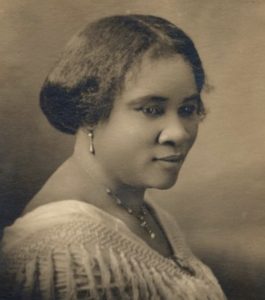
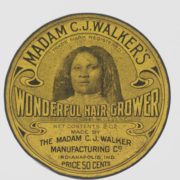
Madam C J Walker was a noted philanthropist, activist and business entrepreneur becoming American’s first self-made female millionaire. Her will has often been used to discuss her attitude and approach to philanthropy, but the will only records the monetary gifts and her philanthropic approach was much broader than just giving donations – you can read more about her philanthropy here as “her life was her treatise on philanthropy”. 

Looking through her will, here are ten things to think about in your legacy and in memory fundraising.

1. Giving as identity and looking back

When making a legacy gift to a charity, donors are often looking back over a lifetime and selecting the causes or charities that have been important, that have helped them and that they want to say thank you to and pay back in some way. The importance of family, faith and the causes Madam Walker supported in her life are well represented in the 19 charities that received charitable bequests in her will.

Supporting a charity in life is a strong indicator of where legacy supporters might choose to give gifts, but it is the ones that link with their personal story and life events that might be the stickiest. Madam C J Walker had been an orphan, widow and a poor washerwoman, supported fed and educated by a range of female led African American clubs and her in life and in death giving reflect these causes. 

  • How do you connect with your donor’s life story? How can you empower to tell that story and connect their giving to you as part of their identity?

2. Looking forward – an extension of self

Legacy gifts are also about how someone wants to be remembered and the gifts in wills can be seen as  “a desire to invest one’s substance in forms of life and work that will outlive the self” (Kotre, 1996) and extend the self forwards in the gifts being made. With the choice of charities to receive bequests Madam Walker was extending herself and her values forward. 

  • What is your legacy vision? How are you helping a donor to extend themselves forward through the vision of your charity?

3. Wills – as public or private documents 

In the UK we tend to think of wills as personal and private documents and do not ask legacy pledgers to disclose the details of what is in a will. 

But a will tells a life story, and although a private document in life, on death it becomes more public and the contents known by the beneficiaries – family or charities.  

Madam C J Walker knew that her will would be a public document and the distributions and gifts she chose to make public. 

“women have historically used their wills to portray their respectability, honor and social status to society as well as to generate their public image” 

Tyrone McKinley Freeman

There were deliberate choices about the charities and the bequests made that aligned with her approach to philanthropy and the causes that were important to her. 

4. The power of codicil 

When Madam Walker knew she was unwell in 1919, she amended her 1917 will with a codicil. She used this to add in additional pecuniary gifts to charities already supported but also to add in financial gifts to more charities especially those run by other African American women and less supported by other philanthropists. 

  • Adding a codicil is a way to formally and legally add additional bequests to a will that reflect changes. It is useful for gifting money but not residual gifts (it messes up the maths!) As we can see from Madam Walker they reflect additional gifts to charities that she cared about in her life and how these evolved over her lifetime. Donors can also add a letter of wishes is a more informal way to capture the changes that they might wish to make. With either a codicil or a letter of wishes it might be a great way for a donor to add in a financial gift in their will. 

5. Too much money can be an issue

Booker T Washington’s Tuskegee Institute received a legacy pledge but in her codicil she notes that because it is “so bountifully provided for” she will not add in another gift. At the time it had an endowment of $2million.

  • How can you show you need the money and will spend it wisely if you already have large endowments and funds?

6. You can’t always get what you want…

In her will, all of Madam Walker’s  unallocated stocks and shares were gifted to create a Tuskegee Institute in Africa and if no such Institute existed at the time of her death then $100,000 was pledged to establish it. No such Institute did exist when she died and during probate this clause was deemed null and void because of it. 

7. Ambition vs reality 

Madam Walker wanted one third of her estate to go to charity but debts and Walker Company expenses meant that in the end only 10% went to the causes in the will. 

  • Remember – you cannot count on the bequest gift until other items in the will have been given. With a residual gift this could work in your favour.  

8. But if you try sometimes, you get what you need …

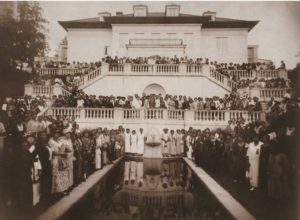
In her will she wanted to endow Villa Lewaro – her mansion – to be a “a monument to success” and give it to the NCAAP (National Association of the Advancement of Coloured People) as a memorial. Her will states she never wanted it to become an orphanage, old people’s home or school. The Villa was sold during the Depression due to rising costs and was actually used as an old people’s home. However, in 2018 Richelieu Dennis bought the villa and established an African American think tank there – Richelieu Dennis’s company Sundial had bought up the Walker Company. 

  • Donors can sometimes suggest legacy gifts that cannot be honoured – if you can encourage discussions as they make your will you can discuss what might be possible and get them to work with legal representatives to look at how this is wording. Or you can work with executors after the will is enacted to find ways to honour the wishes and intentions and in keeping with the spirit of the gift. 

9. Unknown futures

‘Mme Walker lives on in the organizations whose progress she forwarded’

Willard Ransom, Manager, Walker Comopany, 1952

When someone makes a legacy gift in their will they do not know what their gift will achieve or what will happen to the charity they support. At the time of her gifts her manager had concerns about her supporting the NAACP but she was believed in it. The Secretary of the NAACP Walter White said in the 1950s that ‘Madam Walker’s generosity virtually saved the NAACP in the dark days of depression.’

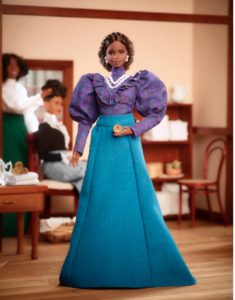
Madam Walker was immortalised as a Barbie
  • Sharing and celebrating what other legacy gifts have helped your charity to achieve can normalise legacy gifts and make people realise that it is usual to leave gifts to your charity. They can also demonstrate the impact that gifts like these can have way into the future.  

10. In memory fundraising & donor recognition 

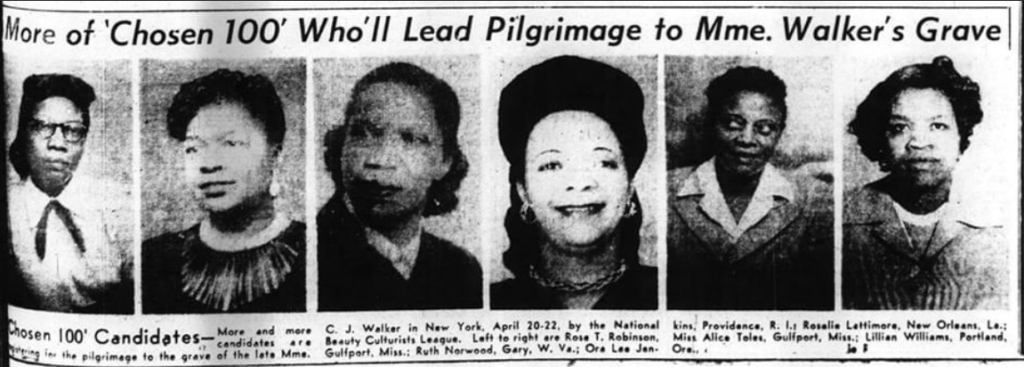
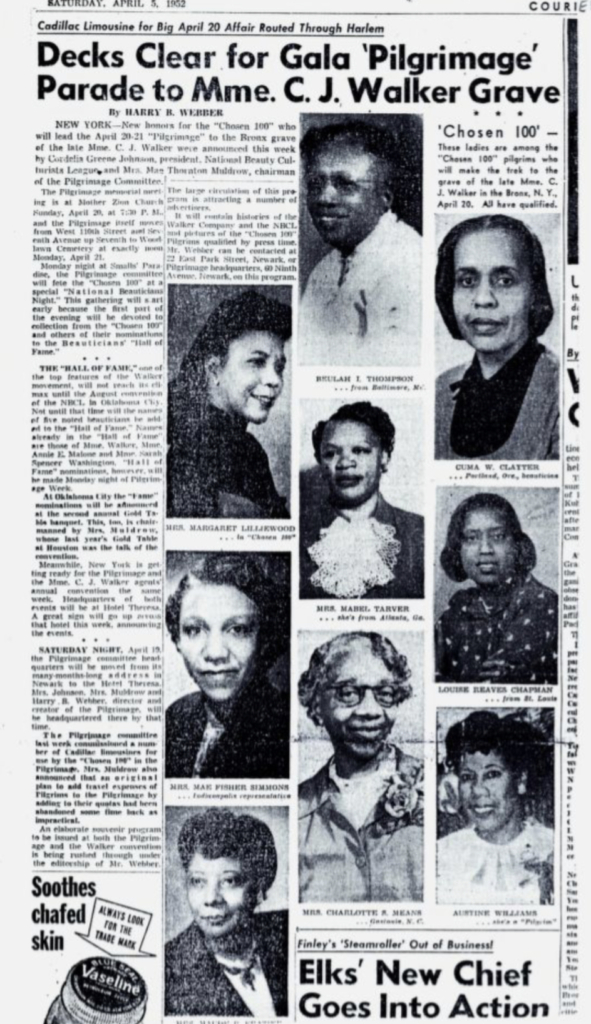
In 1952, 33 years after Madam C J Walker had died a 4 day celebration of her life and work took place with a pilgrimage to her grave. This memorial was in itself a fundraiser, and it had the aspiration to pay off the mortgage of the National Beauticians Home in Washington. At the front of the procession to the tomb were the ‘Chosen 100’. One hundred women who had raised at least $100 to support the event. They wore insignia and sashes – the more stars they had on the sashes the quicker they had raised the money. Following the Chosen 100 were the Platinum, Pearl, Diamond, Gold, Silver, Copper, Red and Blue divisions – all categorised by how much they had made.

Raising funds to complete a legacy associated project of a loved one can be a powerful inspiration. 

  • 33 years after Madam Walker’s death was not using the hook of an anniversary ending in a 0 or a 5 – but an opportunity to fulfil an ambition 
  • How can you ignite the passion they have to do more and get involved?
  • How can you give you donors status and recognition?
  • How can you group them together as like-minded people? Is a legacy club a good idea?
  • Those that give in memory gifts for loved ones are more likely to make a gift in their own will how can you help donors celebrate memories of loved ones and bring them closer to what you do?
https://marinajones.uk/wp-content/uploads/2023/10/IMG_9008.jpeg 950 920 admin https://marinajones.uk/wp-content/uploads/2022/12/f2b903e010104f5aa61ea1821a685913.png admin2023-10-27 10:19:172023-10-27 10:19:1710 things legacy and in memory fundraisers can learn from Madam C J Walker

Cash or card?

May 22, 2023/0 Comments/in Thoughts/by admin

New research shows how people choose to pay strategically with cash or card. And that people use cash to forget ‘guilty’ purchases. How could this research apply to giving to charity?

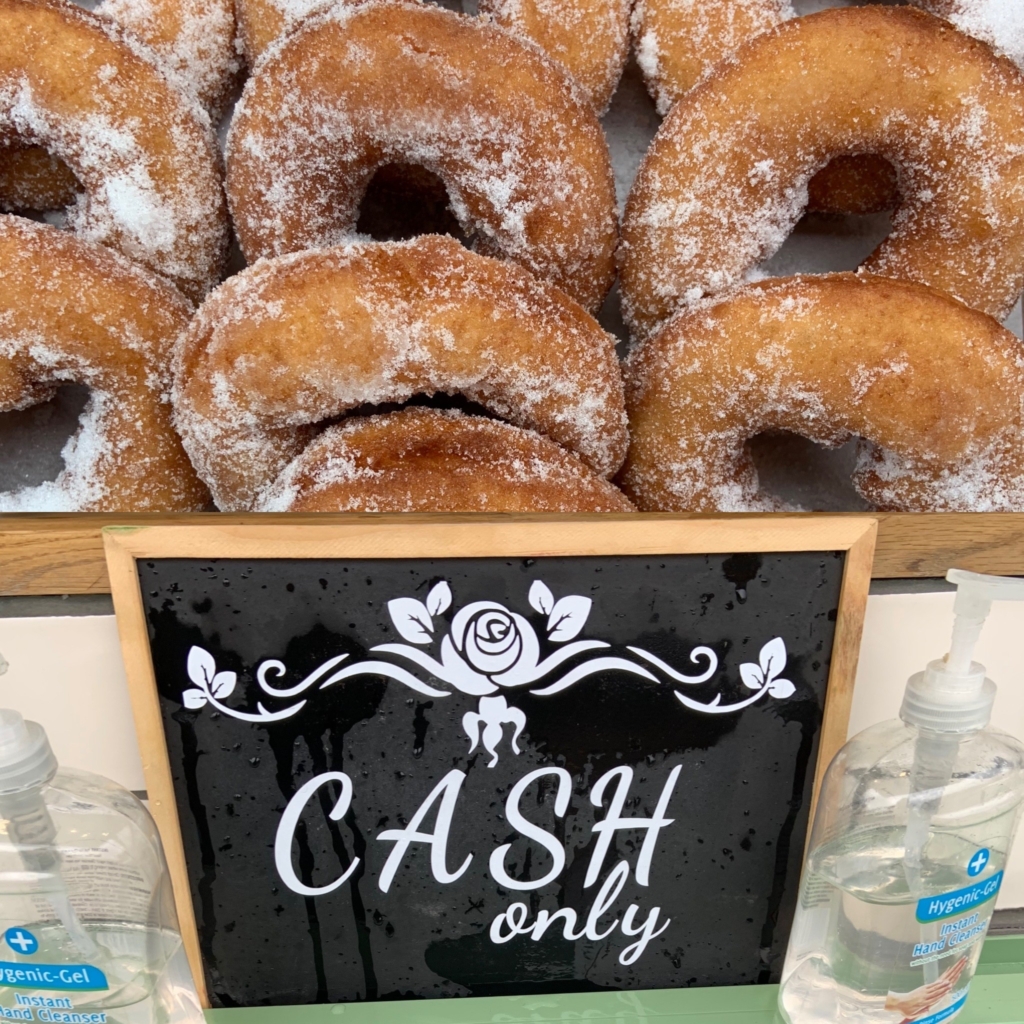
The research from the Notre Dame found that when people were paying for things that they found difficult to justify (a donut, an expensive bottle of water) or felt a bit guilty about they preferred to pay cash – this was less traceable, and they could forget the indulgent purchase. When there was no need to justify the purchase, they were happy to pay on a more traceable method (card/cheque).

This research was used data from over 100,000 transactions and then was verified in laboratory experiments.

Mental accounting

Richard Thaler, one of the founding behavioural scientists developed the concept of ‘mental accounting’ – that individuals classify pots of money differently according to their own systems and therefore are prone to irrational decision-making about money. Essentially all money is money and could be treated the same, but we create mental pots to spend on certain things and in certain ways.  Thaler gives the example of how we think about a tax rebate as a windfall – as extra ‘found money’ that can be used for treats. We do not allocate it to tax refund for taxes we have already paid.

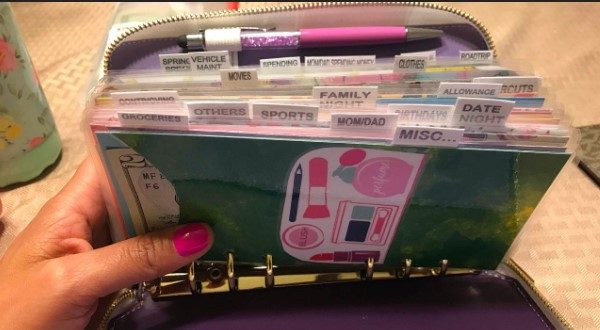
A recent TikTok sensation known as ‘cash stuffing’ saw people take the mental accounting literally – and take their salary out and put amounts in different envelopes for different reasons (rent, treats, food etc.,)

This research suggests that the classification system seems to extend into the form the money takes – ‘real/cash’ or ‘plastic/digital’. We think about it differently. We use it differently.

It suggests that vendors who are in the ‘guilty treat’ category could benefit from being cash only (or cash dominant.)

With the pandemic and advances in technology use of contactless payment methods increased. Jenny Roper, Head of Insight at Kinetic said at Nudegstock that for a behavioural change to become normal the disruption has to be significant and long lasting. When major terrorist incidents disrupted the public transport network the changes in transport uses were short-lived. It seems that the pandemic was a not a significant enough disruptor to totally change our attitude to and use of cash.

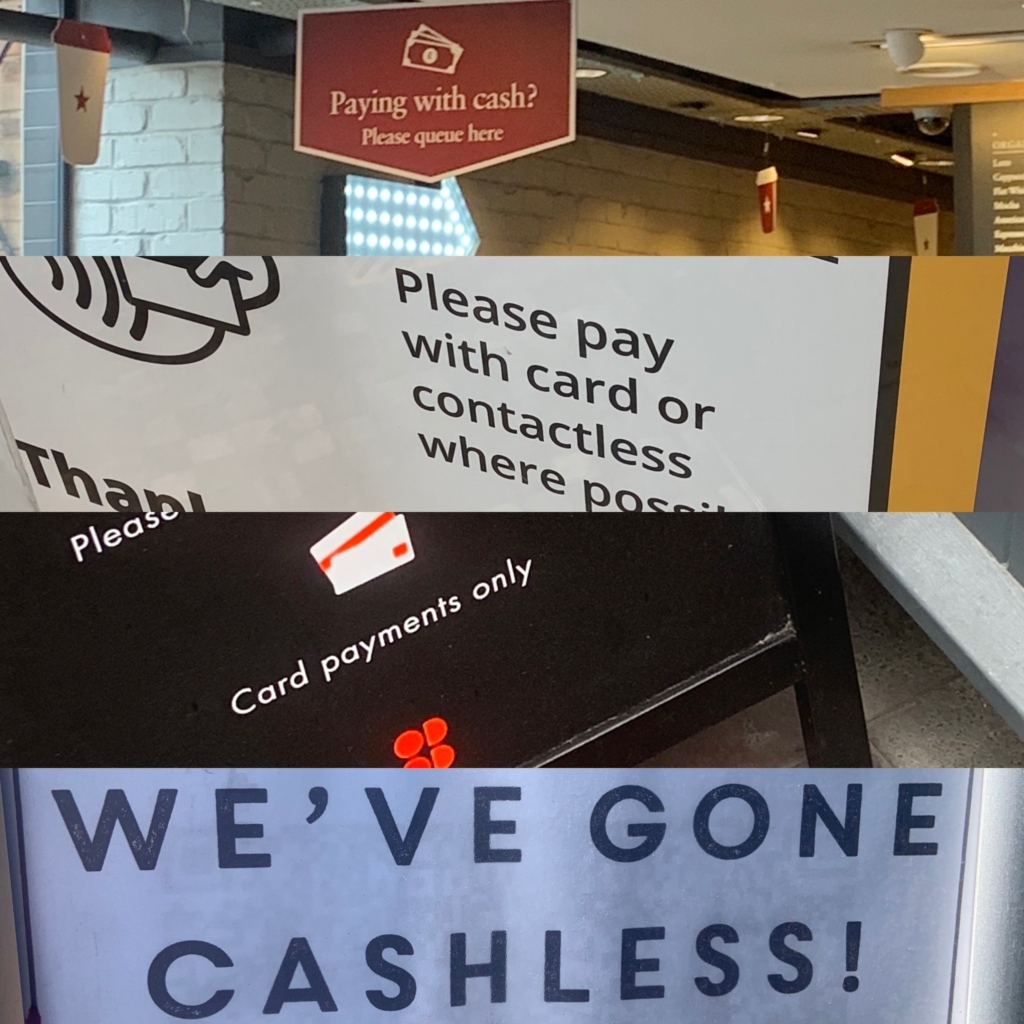
Many places are resolutely cashless.

But is that helping or hindering us as charities?

And how people can choose to make donations.

How is cash or card working for charities – a real world example

We recently did a post-show collection at the theatre. Participants from our award-winning ENO Breathe programme which uses opera singing techniques to help people recover from long Covid were performing lullabies that they had written on stage before a performance. Afterwards two participants spoke about the personal impact of the programme on their lives and journey towards recovery. Audience members were invited to support the programme with a donation – there were flyers on all seats, with a QR code, a vanity/slug URL to donate and cheerful staff inviting them to tap to donate on the way out.

But people still wanted to give cash (and we are fundraisers so of course we took it!)

About a tenth of the financial value of the donations that night was in cash. We had made it as easy and as friction free as possible to donate digitally – but people still wanted to give cash. To give cash was harder, they had to ask ‘do you take cash?’ and become involved in a more substantive interaction than simply tapping a contactless box. Those wanting and donating cash were generally older than those who tapped to donate.

How does the strategic choice of payment work when donating to charities?

It would be interesting to see this University of Notre Dame research could be extended and how strategy about payment method (cash/contactless) applies when people think about donating to charity? And how it plays into our mental accounting of our spending?

Are cash donations to charity the impulse guilty ‘treats’ that we don’t want traced? Like the ‘reward’ of a donut are they giving us that dopamine hit? This could imply a more instinctive ‘system one’ approach to the gift – and maybe for smaller amounts. Is cash more like Thaler’s ‘found money’ and able to be used on a whim? Or is cash in our mental accounting already a sunk cost that we have somehow mentally spent it as soon as we have taken it out of the ATM?

The need for it to be a traceable and receipt transaction perhaps implies it is a more effortful and thought through decision (a more system two reaction?) and might apply for more to more significant financial gifts.

Risks of annonymous giving

Of course, one side of cash giving is anonymity – the risk of money laundering, the foreign billionaire with a suitcase full of cash seeking to curry favour, or the risk of anonymous cryptocurrency. Fundraisers need to know the source of the funds for due diligence and acceptance of gifts.  With both cash or a tap-to-give way we are not building a relationship with our donors. Building that relationship is so important for fundraisers as we want to thank our supporters, thank them, tell them about the impact of their gift, stay in touch and build a relationship with them, and ask them to continue supporting.

There is much more than can be explored, tested and learnt about the strategies people use to pay or donate.

When you donate – do you donate cash or contactless?

See previous blog on reactions to cash during the pandemic.

https://marinajones.uk/wp-content/uploads/2023/05/cash-donuts-.jpeg 2048 2048 admin https://marinajones.uk/wp-content/uploads/2022/12/f2b903e010104f5aa61ea1821a685913.png admin2023-05-22 16:14:582023-05-24 08:16:35Cash or card?

What do 200 boxes of kippers, one girl’s comic collection, handbags, blankets, 1,000 bears and 14 cows have in common? Stuff not cash

February 8, 2023/0 Comments/in Thoughts/by admin

When disaster strikes like the earthquakes in Turkey and Syria our natural urge is to help to send coats to warm, blankets to comfort but charities ask for cash – the #CashNotStuff hashtag has highlighted this. But why do we want to give stuff not cash?

What do 200 boxes of kippers, one girl’s comic collection, handbags, blankets, 1,000 bears and 14 cows have in common?

They were all items sent to help people suffering from floods, fires, natural disasters, grief and terrorist attacks

  • 200 boxes of kippers, 10 cases of Campbell’s soup, two lorries of apples, clothes, blankets and one girl’s comic book collection were all sent to the victims of the Gresford Colliery disaster in 1943
  • Clothes and toys were donated from across the country including handbags from the WI to the Lynmouth flood disaster in 1952. You can see British Pathe footage of the Relief Fund here Aid Presented To Lynmouth Flood Victims – British Pathé (britishpathe.com)
  • When the Los Angeles library burnt down people wanted to donate books, but also donated items including a pair of bookends shaped like sphinxes or a letter opener shaped like the library.
  • When the Queen died in September last year, over a thousand Paddington bears were left in mourning tribute.  
  • With hurricanes, earthquakes, fires or natural or man made disasters people donate blankets and clothes.
  • After the Grenfell Fire thousands of tons of clothes and household items were donated.
  • After 9/11 the Masai tribe donated 14 cows following 9/11. Cows were a sacred animal to the tribe and as one elder Mzee ole Yiamboi remarked “We did what we knew best. The handkerchief we give to people to wipe their tears with is a cow”

Beth Breeze ‘In Defence of Philanthropy’ cites the Masai tribe example describing it and philanthropy as ‘practical allyship’ by giving (money or gifts) we are saying we are with you, this matters and standing in support. (‘I stand with’ has recently been adopted by a few charities as a way of creating community)

Philanthropy is how we use our time, talent and treasure to enact our version of the public good. Too often we think of it in terms of treasure only as hard cash – we feel a very real and very human desire to give things – our personal treasure. Handing over our treasures may also involve more of our time and effort – as clothes are washed, packed and taken to the collection drop off (something known as the Ikea effect – we value things we have invested more time in). By donating items we therefore demonstrate our deep desire to help in a meaningful and personal way.

What happens to these items?

  • Some do help in the immediate aftermath if people can get sleeping bags to people to keep them warm, phone chargers to those who left a burning building or nappies and baby food.
  • Some are repurposed – not used directly to help those suffering in the way intended but indirectly helping
    • the Paddington Bears were cleaned, labelled to show their provenance  and given to children supported by Barnardo’s to be gifts for children
    • the Red Cross sold items donated to Grenfell to raise funds for the community
    • the Masai tribe cows were in limbo for a while – but were eventually stamped with a twin towers brand on their ears and have been used to start an endowment of the children of the Enoosaean
  • However most of it ends up in landfill, wasted, clogs up ports, delaying the right aid getting through and is known as ‘second disaster’ by those trying to help. For example, in 2016, after Tropical Cyclone Winston the donated goods was enough to fill 33 Olympic sized winning pools  

But fundraiser Derek Humphries said – fundraising is an emotional transaction not a financial one.

And cash is transactional – blankets, bears, cows and even kippers are emotional.

Culturally for many of us in the West cash feels impersonal and detached.

We prefer to be giving a tangible thing – and something personal like a blanket that has kept us warm feels more personal than £20 buys a blanket, or £20 will be given to where it is most needed.

When people are primed to think about money, they become less helpful and less moral so maybe the giving of money doesn’t make us feel as helpful and moral as giving things and the time taken to do it.

But philanthropy and money are the product of their time and culture . In Western culture we tend to give wedding gifts from a list rather than money, but at at Chinese New Year or at a wedding it is culturally normal to put crisp new bank notes into red envelopes and make cash gifts.

It probably also speaks to an inherent suspicion of how charities spend our money and a distrust of it reaching the beneficiaries and being used how we would choose to use. When we give an item, we have an agency in what we are doing to help.  

Gifts of clothes, toys and kippers are not those that are sought by the charities working on the ground. But has become a social norm for people and our default brain sees a disaster and people without clothes and cold and wants to send them things that help that problem.

Trying to get people to stop giving cash fights against this natural urge and is explored in a great chapter by Crawford Hollingworth in Change for Better- behavioural science lessons in fundraising from the world’s top practitioners: on tests and behavioural science interventions they used to encourage more cash gifts and less stuff.

With bequests you also see people try and distribute their physical treasure – a family heirloom – a painting, a tea pot, an item of clothing worn by someone famous, a signed programme (I was once offered a foot of hair). Because it has been valuable to you doesn’t mean it will be valuable to the charity you want to give it to. You have endowed it with emotion and pass on that sentiment when you want to pass the gift on. With legacies it is why (unless it fits with the collecting policy, is missing from the archives and the history) pecuniary gifts tends to be more appreciated as we cannot anticipate what the needs of the charity might be at the future point when the legacy is realised.

So, why is cash better in a crisis?

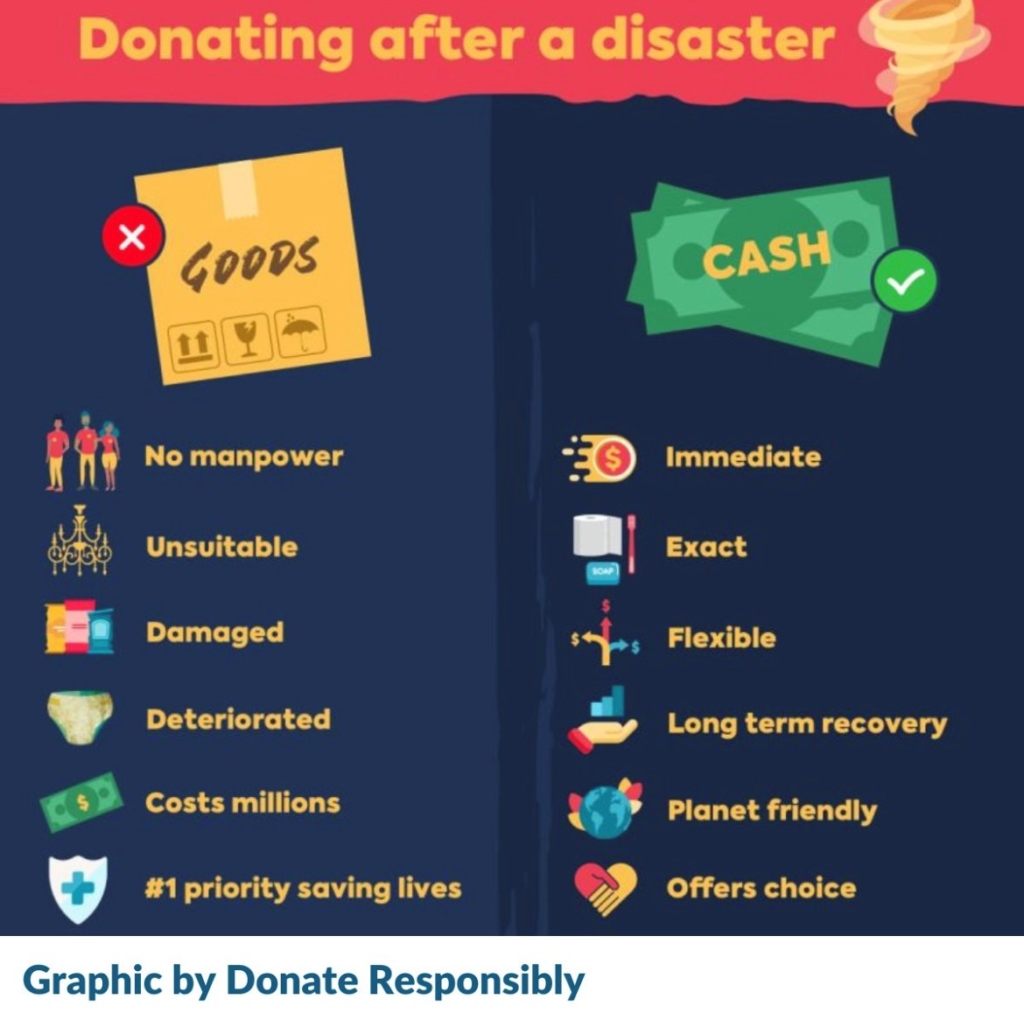
This graphic from Donate Responsibly demonstrates why cash is more appropriate

You can donate cash here

Turkey and Syria Earthquake Appeal – Donate Now | Oxfam GB

People want physical cash at times of emergency and during the pandemic, in the 2008/9 recession and with the fear of the Millennium bug cash withdrawals spiked. As a species something in our reptilian brain wants the physical and tangible cash – to have and to hold (or to store under the mattress). Marky Philips’ research has highlighted that donors are desperate for agency in times of crisis and perhaps having the physical notes in our hands at home gives donors that. How could we apply that sense of agency and control to disaster relief cash donations?

And here is a bit of talent from Yo-Yo Ma sharing some treasure and talent, standing in solidarity and providing the handkerchief that might be needed to some at this time

To our friends in Turkey and Syria — our love, thoughts, and prayers are with you all. This is for those who are suffering and for the helpers that are working tirelessly to save lives and bring hope.
__
Partita by Adnan Saygun #songsofcomfort pic.twitter.com/WnqoaNfruq

— Yo-Yo Ma (@YoYo_Ma) February 7, 2023
https://marinajones.uk/wp-content/uploads/2023/02/masai-cattle-peter-chadwickscience-photo-library-e1675888521838.jpg 265 544 admin https://marinajones.uk/wp-content/uploads/2022/12/f2b903e010104f5aa61ea1821a685913.png admin2023-02-08 20:41:562025-07-25 19:03:39What do 200 boxes of kippers, one girl’s comic collection, handbags, blankets, 1,000 bears and 14 cows have in common? Stuff not cash

Ten things a drag show can teach you about fundraising

December 13, 2022/0 Comments/in Thoughts/by admin

First published on Apollo Fundraising 10 things a drag show can teach us about fundraising – Apollo Fundraising 13 December 2022

1 – Don’t be afraid to ask

When the show starts the first thing the hosts of the show ask is ‘What’s the first rule of drag?’

The answer – “Tip your artists, dancers, servers and hosts”.

This ‘pre’-suasion or priming is setting the scene right from the start, and for the rest of the night – you will be asked to contribute.

Giving is expected, normal, encouraged and celebrated. The message is, if you care about the art form and want to enjoy it you need to be part of funding it and making it happen. Your support has a direct impact on the work you see on stage. Donors want to see the impact of their gift – seeing the impact live on stage makes it immediate.

Often in the arts we can shy away from articulating the ‘art for arts sake’ or for the pure enjoyment but a drag show connects immediately and says to you ‘if you want this it costs money and you need to give to make it happen’. Sometimes fundraisers also delay asking, missing out on the opportunity when people are feeling and experiencing all the emotions of connecting with our art forms.

At a drag show, there is no fear of asking and making it clear that funds are needed.

2 – Make it easy

Now, a bit of background if it’s a while since you went to drag show or have yet to go … Tipping your artists involves putting dollar bills into whatever their fabulous outfits they are wearing.

If there are barriers to giving people won’t do it – it needs to be easy and friction free. If there are obstacles to making the gift it creates friction. Overcoming this friction uses too much brain power so we don’t do it. Your brain moves from the intuitive and automatic system one to system two and your rational brain kicks in and stops you completing the action.

So make it easy to give – anticipate the friction points and barriers that your donors have in that giving journey. Have they got what they need to donate?  For example, at the drag show you need a dollar bill to tip but you only have a $20. No problem – they have thought of that! The hosts come out and offer change – so you can change that $20 for twenty $1 dollar bills so you can easily make your contributions directly (and repeatedly) to the artists.

By thinking about what your donors need you are helping them give by making it easy for them.

3 – Encourage repeat gifts

An additional bonus of having lots of dollar bills is that it makes it easy to make repeat gifts to a preferred artist or many artists.

4 – Giving makes us happy

Each time you give a gift your brain gets a hit of the happy chemicals (dopamine, oxytocin, serotonin and endorphins). By making it easy and encouraging more gifts you are making people happier.

5 – Make it a social norm

We are motivated to do what others are doing. Repeatedly seeing people make donations establishes giving as socially normal and encourages others to participate.

6 – Make it joyful and celebrate contributions

Every time a note is given the crowd cheers and celebrates the donation. Each contribution is celebrated. Celebrate that your donors are choosing to voluntarily give you to you to make the world better.

7 – Adapt to technology

In an increasingly cashless society the lack of cash should not be a barrier to being able to contribute. So adapt – even drag queens use QR codes!

8 – Give people different options for donating

As well as giving directly to the artist or by QR code there is also a collection bucket. This means you can give whatever way makes you feel comfortable. Whether you choose to give publicly or more privately, all gifts are cheered!

9 – Repeat the ask

Don’t shy away from asking again and again and reiterating your need for support. There are repeated asks throughout the show. The audience have been primed with the need for support and that they will be asked from the first moment the hosts walked out onto stage. Keep asking – you need the money.

10 – Build up your community of supporters

You have an audience who care about your art form and what you are doing. It is part of their identity. Celebrate it, celebrate them and give them the opportunity to celebrate their identity.

Remember – people want to give!

https://marinajones.uk/wp-content/uploads/2022/12/social-giving-scaled-1.jpg 2560 1920 admin https://marinajones.uk/wp-content/uploads/2022/12/f2b903e010104f5aa61ea1821a685913.png admin2022-12-13 20:53:002023-09-25 09:25:25Ten things a drag show can teach you about fundraising

Dirty cash I (still) want you. Money talks.

April 19, 2021/0 Comments/in Thoughts/by admin

First published on decisionscience.org.uk, 19 April 2021

This week at school my children have been learning all about coins, counting and the value of money. But in our house this has caused a challenge. We don’t have any cash, just cards! Result? We’ve scrabbling around- down the back of the sofa- trying to find coins and notes to help a six year old learn the value of money.

So cash it appears is still something useful to know about, even for children. This experience has got me thinking though- as a fundraiser- do we still want notes, coins. To paraphrase Adventures of Stevie V do we still want ‘dirty cash’?

Let’s put this into context. For years the death of cash has been forecast, and there is some evidence not just from our own family experience, that cash is less used in the current situation.  However, the reports of the death of cash are perhaps premature. At the start of the pandemic it was unclear how long the virus could live on notes and coins . As a result many shops converted to contactless payments only. To encourage this in the recent budget the Chancellor increased the limit on contactless to £100.

When venues, theatres, museums and galleries briefly opened in the summer/autumn 2020 we had all adapted to be cashless in order to keep staff and donors safe. Some of us wondered what this would mean for the charity donation box? And for the ‘spare change mentality’ of dropping in coins at the end or beginning of a visit?

So what happened when venues opened – did visitors use contactless to reduce contact and risks of infection? With no option but to use contactless donations you would assume that they would. However, as anthropologist Margaret Mead has said “what people say, what people do, and what they say they do are entirely different things” and changing behaviours is not as simple as it seems.

National Trust | Don't leave cash donations sign

Before reopening the theatre we cleared out the donation box of cash- finding a Brexit 50p, a sixpence, an English pound note and the usual assorted non-UK currencies. We had installed a new contactless donation point, and blocked the holes for cash. Within minutes of opening the building, we had to fetch the keys to the donation box to remove a £10 note. And again, and again that day we had to remove physical notes. This was happening despite the fact visitors had to physically manipulate the plastic barriers to slide a note in. However, many were determined. Catching up with colleagues from the world’s largest arts experiment in decision science this donor desire was a common experience over the summer and autumn in theatres and galleries. There were people who had cash and they were very keen to donate it. The contactless option wasn’t working for them. People still had physical money (which they could not spend) and it looks to me like many want to continue to use it in the same way.

Contactless has been heralded as a way to make it easier and quicker for people to make donations. And it can be all of that. There have been engaging examples on great contactless points  – feeding the hungry or setting the prisoners free. We have all used contactless payments a lot more in the past twelve months. After all what makes us change our behaviour, if not a global pandemic? But is the change fundamental and permanent?

We can look for insight to past disruptions to the ‘normal’ for what they tell us about human behaviour and what actually changes permanently.  Jenny Roper, Head of Insight at Kinetic, speaking at Nudgestock 2020 highlighted that even significant temporary changes do not necessarily create a new normal. Looking at historic data on the impacts of major terror attacks (9/11 and 7/7) on public transport usage shows that behaviour changes were short lived. In London after 7/7 with no trains or buses people walked, or caught the boat. But once normal service was resumed people were back on the tube and bus. And humans have been using coins (or shells) for monetary exchange for over 40,000 years so will this twelve month hiatus change us? To make a change in behaviour stick it needs to be easier and more convenient to maintain otherwise we don’t keep doing it.

As the steps for relaxation of restrictions are announced will we see the conversion to contactless stick? Is it easier to give contactless? – arguably yes. We do it now for the majority of transactions. But frequently cash is not an option. And is there a demographic of donors who prefer cash. Smaller, independent retailers often prefer cash to avoid transaction fees. So people might prefer it but is tapping the phone/the card as psychologically engaging and handing over cash? Does it give donors the same agency? Does it satisfy the same emotional need?

Interestingly, while toilet rolls were being hoarded in March 2020 so was cash. People want physical cash at times of emergency – also seen pre-Millennium with the Y2K hysteria and in 2008/9 recession. Omar Mahmoud of UNICEF has spoken about the toilet paper hoarding answering an emotional need for comfort and security- hence all the puppies and fluffy clouds on the packages. What emotional need was being answered by having cash at home? Perhaps a sense security, a feeling of independence, a an opportunity for agency. As a species something in our reptilian brain wants the physical and tangible cash – to have and to hold. (Or to store under the mattress). There is some evidence for this. In July 2020 when restrictions were reduced, cash withdrawals from ATMs in the UK went up to £1.5bn each week. Marky Philips’ research has highlighted that donors are desperate for agency in times of crisis and perhaps having the physical notes in our hands at home gives donors that.

Contactless donations often prime us to give a default amount – reducing the cognitive load with a set amount (tap to give £10 or £5). But does that make the process counter-intuitive, inciting the system 2 brain to ask ‘do I care £5 about this?’ One new version of a contactless donation point I have seen includes a hand sanitiser dispenser and alongside it tap to give. Whilst this might incite reciprocity, it seems to also be inciting system 2 and prompts you to ask ‘is it worth a £3 donation to get hand sanitiser? Hand sanitiser should be free.’ We know that psychologically being reminded about money makes us less helpful, less moral and more goal orientated. Perhaps the unanchored donation box keeps the agency with the donor, removing the transactional sense and allowing them to make a choice about how much they want to support.

Do we get the same DOSE (dopamine, oxytocin, serotonin and endorphins) of happy chemicals when donating with our phone/contactless? Does the contactless ping/vibration of the phone give us the same satisfaction of donating as physically dropping a coin in the donation box? Studies in neuromarketing indicate that sound (along with smell) is one of the two most powerful senses. The neurons in the brain fired when hearing sounds are evocative and powerful. Like Pavlov’s dogs we still default to the sound of the coin landing rather than the phone pinging for that emotional reward. Maybe if contactless donation points made the clink of a coin landing on other coins they would be more attractive?

With a physical donation box, you also get the encouragement of social proof with others visibly making donations. (Donation boxes with a visible float perform better.) This is harder to replicate on a contactless system.

Doubtless, there are many issues with physical donation boxes – their positions, their designs, their static nature, their lack of relationship with the donor. And many are not optimised to drive donation.  But if they disappear I worry we will we be making it harder for supporters to spontaneously show they care and make a donation?

And if ‘money talks’ we will need to wait and see how it talks and if behaviours change in the summer of 2021.

https://marinajones.uk/wp-content/uploads/2021/04/2.jpg 1700 2560 admin https://marinajones.uk/wp-content/uploads/2022/12/f2b903e010104f5aa61ea1821a685913.png admin2021-04-19 15:59:152023-01-31 10:54:11Dirty cash I (still) want you. Money talks.
Page 3 of 3123
Tweets by meenamtj
All content © Marina Jones 2023
  • Link to X
  • Link to Instagram
  • Link to LinkedIn
Scroll to top Scroll to top Scroll to top

This site uses cookies. By continuing to browse the site, you are agreeing to our use of cookies.

Accept settingsHide notification onlySettings

Cookie and Privacy Settings


How we use cookies

We may request cookies to be set on your device. We use cookies to let us know when you visit our websites, how you interact with us, to enrich your user experience, and to customize your relationship with our website.

Click on the different category headings to find out more. You can also change some of your preferences. Note that blocking some types of cookies may impact your experience on our websites and the services we are able to offer.

Essential Website Cookies

These cookies are strictly necessary to provide you with services available through our website and to use some of its features.

Because these cookies are strictly necessary to deliver the website, refusing them will have impact how our site functions. You always can block or delete cookies by changing your browser settings and force blocking all cookies on this website. But this will always prompt you to accept/refuse cookies when revisiting our site.

We fully respect if you want to refuse cookies but to avoid asking you again and again kindly allow us to store a cookie for that. You are free to opt out any time or opt in for other cookies to get a better experience. If you refuse cookies we will remove all set cookies in our domain.

We provide you with a list of stored cookies on your computer in our domain so you can check what we stored. Due to security reasons we are not able to show or modify cookies from other domains. You can check these in your browser security settings.

Google Analytics Cookies

These cookies collect information that is used either in aggregate form to help us understand how our website is being used or how effective our marketing campaigns are, or to help us customize our website and application for you in order to enhance your experience.

If you do not want that we track your visit to our site you can disable tracking in your browser here:

Other external services

We also use different external services like Google Webfonts, Google Maps, and external Video providers. Since these providers may collect personal data like your IP address we allow you to block them here. Please be aware that this might heavily reduce the functionality and appearance of our site. Changes will take effect once you reload the page.

Google Webfont Settings:

Google Map Settings:

Google reCaptcha Settings:

Vimeo and Youtube video embeds:

Other cookies

The following cookies are also needed - You can choose if you want to allow them:

Privacy Policy

You can read about our cookies and privacy settings in detail on our Privacy Policy Page.

Privacy Policy
Accept settingsHide notification only