• Link to X
  • Link to Instagram
  • Link to LinkedIn
Marina Jones
  • My Thoughts
  • What I’m Reading
  • About Me
  • Contact Me
  • Home Page
  • Click to open the search input field Click to open the search input field Search
  • Menu Menu

Tag Archive for: reading

Summer Reading Challenge: Fundraising edit (fiction)

August 22, 2023/0 Comments/in What I'm Reading/by admin

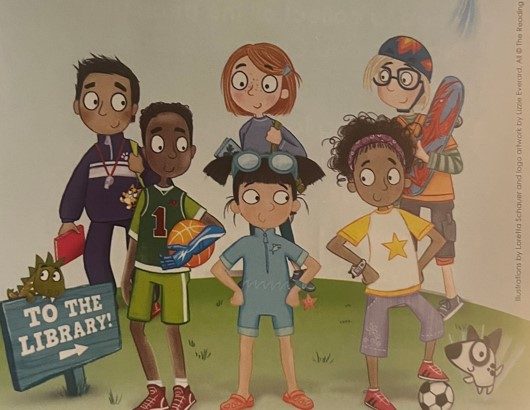
Completing the library summer reading challenge with the children – where primary school aged children need to read six books over the summer and get stickers and a medal. I was thinking about what would make a fundraising reading challenge.

Too often when fundraising appears in fiction it is a negative way – corruption, begging, ‘psychic blackmail’, self-interest, brand building, giving for guilt or spite, ‘cookie pusher’ (seen below in Lego form), attending charity events with no sense of the charity or cause, and generally reinforcing negative stereotypes about motives and efficacy of charities. They often show how charity is embedded into the fabric of our society and how we interact with them – one of the most frequent is donating unwanted things to charity shops.

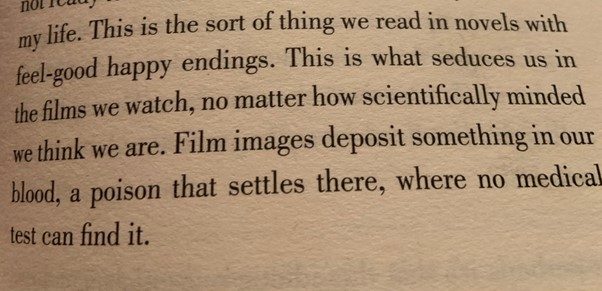
However, stories have a powerful impact on us and the way in which we see and experience the world. This is something is called cultivation theory – and our perception of the world around us is learnt from the culture we consume which we unconsciously mimic. When we are watching theatre and seeing stories come to life we have increased empathy for the people in the stories, their issues and it changes political attitudes.

We become, in a sense, what we read or consume– so a summer reading challenge to celebrate fundraising in and philanthropy fiction.

However, amongst the general negativity, there are some stories that celebrate and champion fundraisers and fundraising and what can be achieved.

Here are a few…

 ‘A fairy godmother is just another word for a philanthropist. A rich person who gives money to causes’

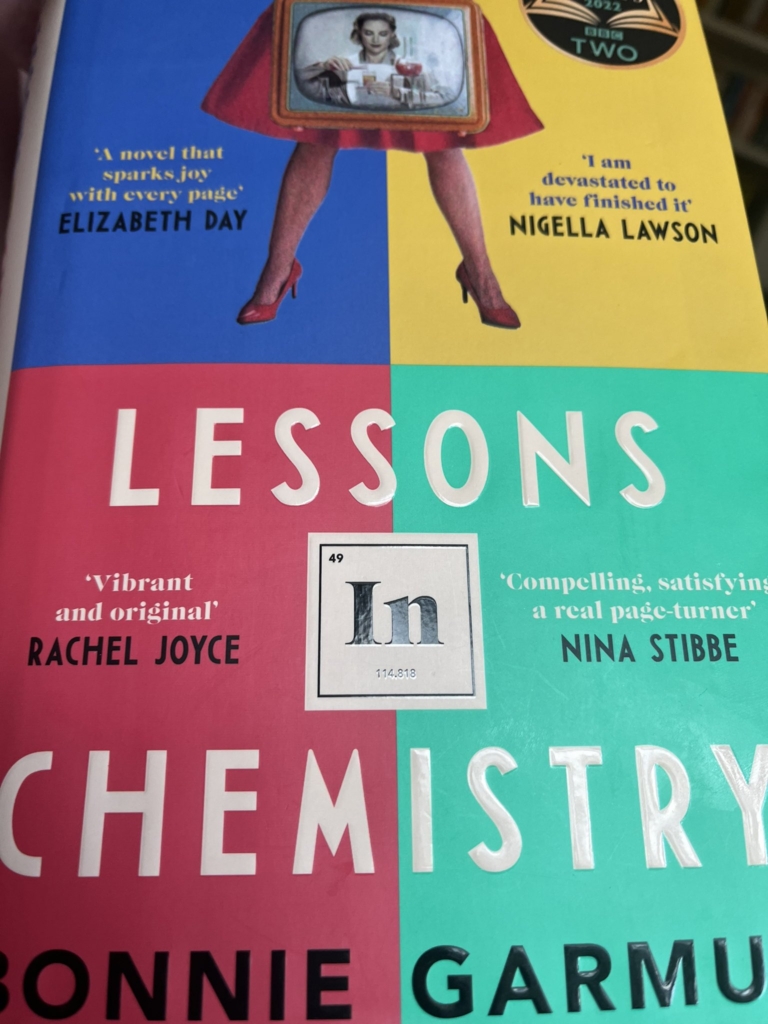
Lessons in Chemistry

  • Being described as charitable can be a shortcut to saying someone is a good person such as Lady Russell in Persuasion
  • Lessons in Chemistry and the impact of academic grants to succeed (more on that here)
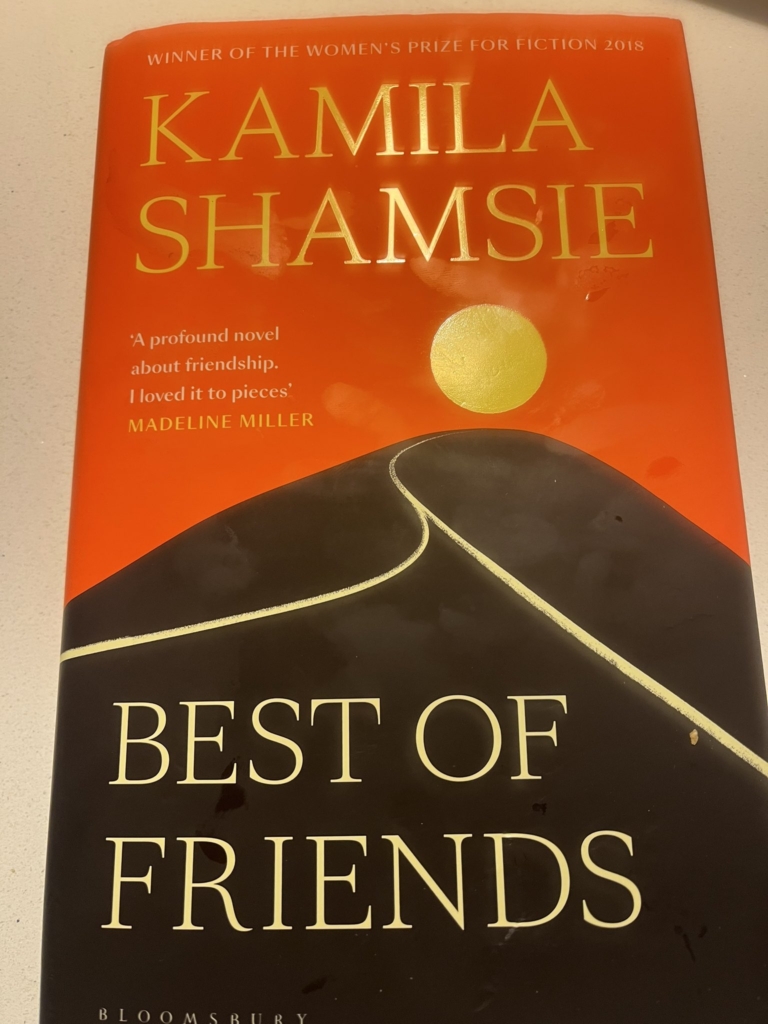
  • Great donor stewardship seen in personalised thank you notes from the CEO in Best of Friends by Kamila Shamsie
  • Positive community action and fundraising to save a local business in The Book Lovers by Emily Henry
  • Employment and opportunity by a particular legacy gift in J L Carr A Month in the Country
  • Fundraisers as charming in Death and the Penguin by Andrey Kurkov
  • Fundraisers as a job in Lost in A Good Book by Jasper Fforde
  • Hermione founding the The Society for the Promotion of Elfish Welfare and campaigning for societal change in Harry Potter and the Goblet of Fire
  • Donor care in Trust by Hernan Diaz
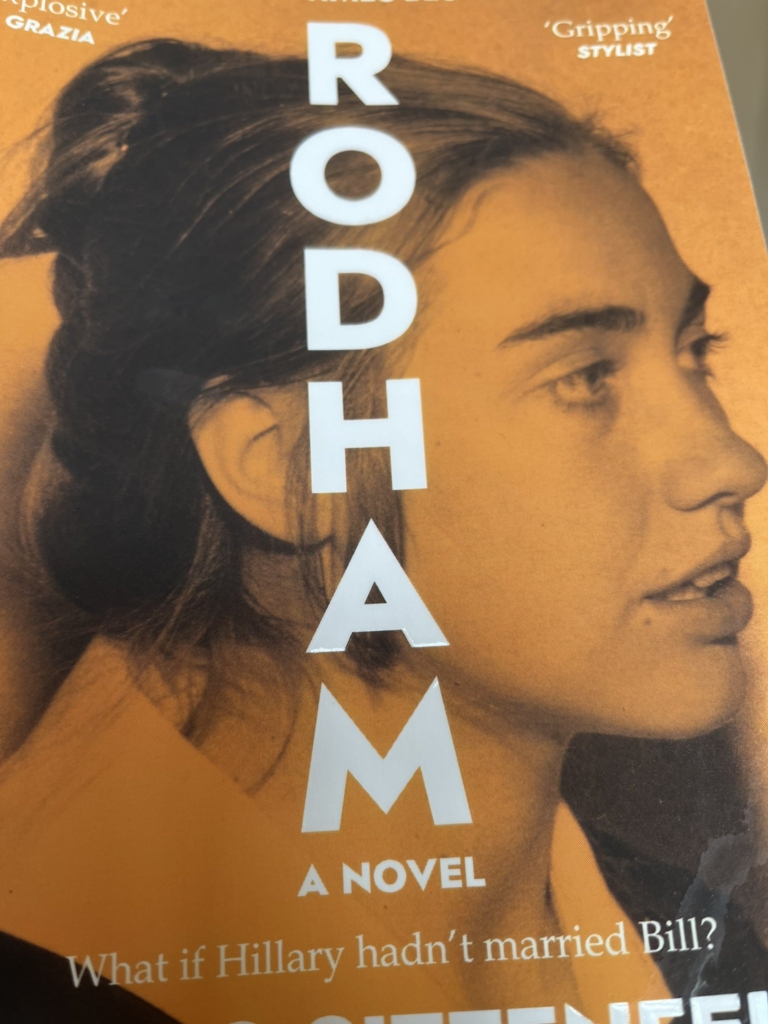
  • All gifts of whatever size being appreciated and valued in Rodham by Curtis Sittenfeld
  • A great exploration of what to do with wealth and working for a non profit in Pineapple Street by Jenny Jackson
First lines featuring fundraising

… so I am not sure these will rival dreaming of Manderley, possessing a fortune and wanting a wife, or the best of times but two stories that begin with fundraising
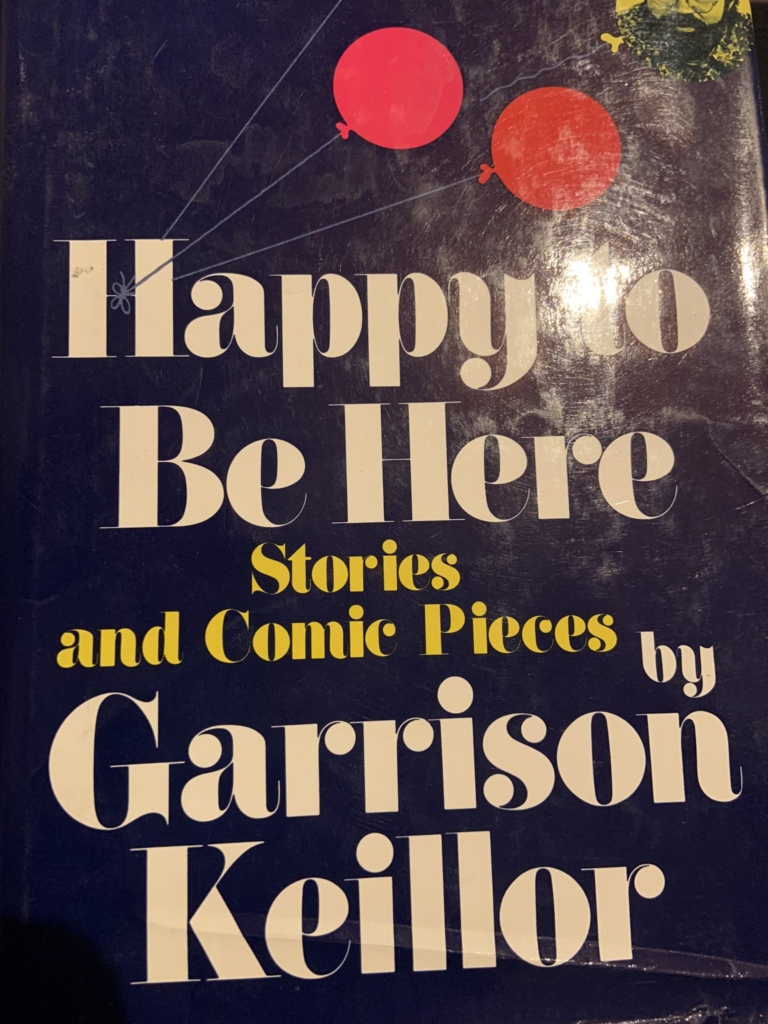
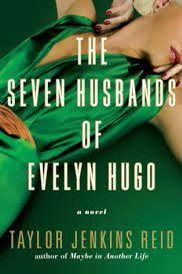
“Film legend and ‘60s It Girl Everyn Huge has just announced she will auction off 12 of her most memorable gowns through Christie’s to raise money for breast cancer research” 7 Husbands of Evelyn Hardcastle

And how’s this for a (philanthropic) first line?

‘It was one of those sweltering days toward the end of the fiscal year when Minneapolis smells of melting asphalt and foundation money is as tight as a rusted nut’ Jack Schmidt, Arts Administrator

And, a counter argument to too many books talking about high overheads

The Diamond Brothers in the Blurred Man and I know what you did last Wednesday by Anthony Horowitz

“It was hard to believe that a charity worth millions of pounds could operate from such a small, shabby place. But maybe that was the point. Maybe they didn’t want to spend the money they raised on plush offices in the West End. It’s the same reason Oxfam shops always look run down. That way they can afford another ox”  

How do we give money away … if you had millions… two literary suggestions for how to explore the issues
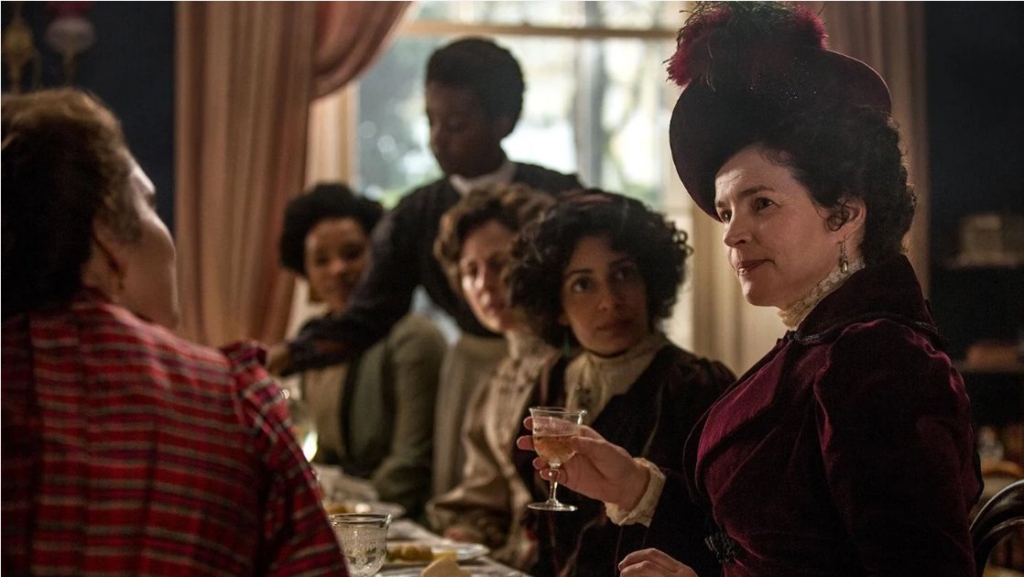
Howard’s End– as an after party diner game ‘How ought I to dispose of my money?’ with the host pretending to be a millionaire on the point of death discussing and debating how to dispose of the fortune and young Margaret Schlegel advises cash and the autonomy for individuals to choose what they need:

“Give them a chance. Give them money. Don’t dole them out poetry books and railway tickets like babies/ Give them the wherewithal to buy these things … give people cash, for it is the warp of civilisation whatever the woof may be”

Thanks to Rhodri Davis for this example.

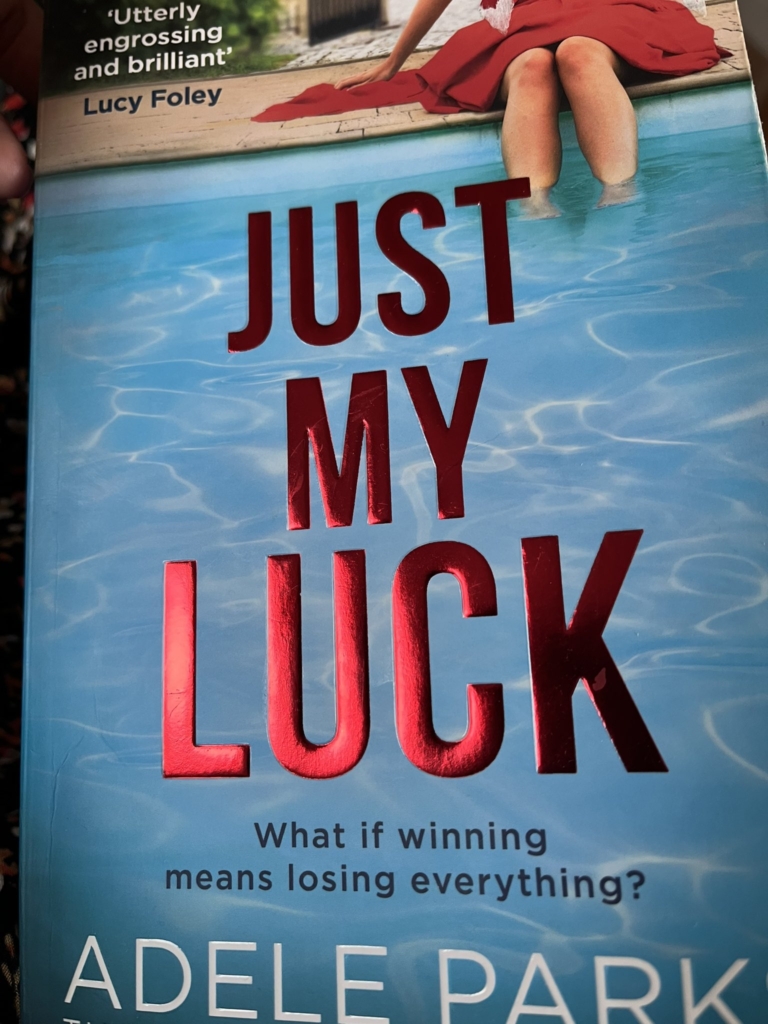
Just My Luck how much of a £12.8m lottery win do you give to charity and how do you decide which ones have the most impact

And a few bits of fundraising history unearthed through fiction
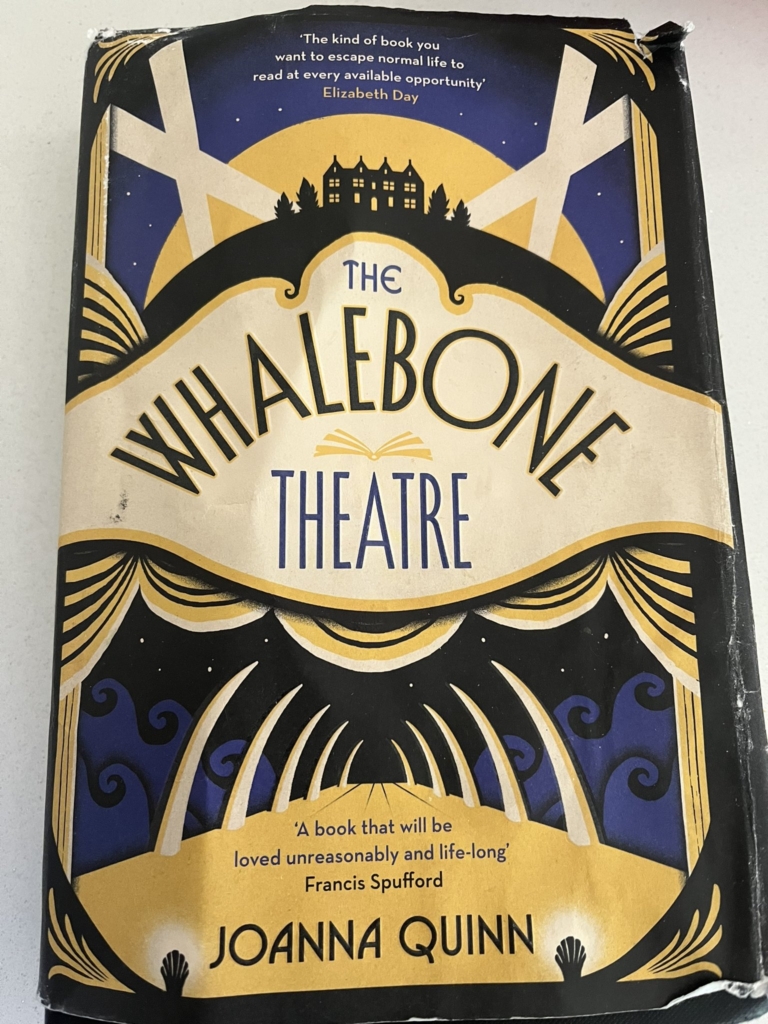
  • Spitfire Crowdfunding campaign in The Whalebone Theatre by Joanna Quinn (which you can read more about here and how a blank cheque sparked a fundraising revolution https://marinajones.uk/spitfirefund/ or listen to this to learn more Spitfire: The People’s Plane – Crowdfunding – BBC Sounds)
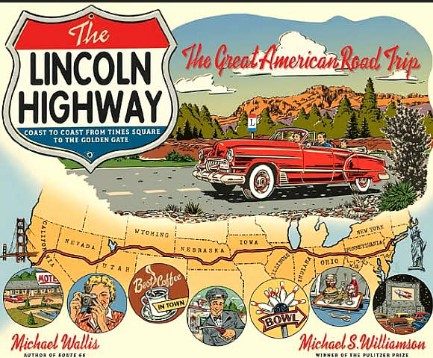
  • Raising funds for a highway from The Lincoln Highway by Amor Towles which inspired this blog It really is true everything is a project in fundraising … but could you fundraise for a motorway? – Marina Jones

In contrast to the actual summer reading challenge which for the second year in a row doesn’t have cartoon children reading (there is at least a book in the picture this year). Here I am reading….


So … If we saw more positive portrayals of fundraising and charities in novels would it improve more people’s perception of fundraising and the good we do?

If you want to read more about how what you watch and read impacts you, here are three further sources.

  • Theatre making us more philanthropic and empathetic The Science of Live Theatre | Psychology Today
  • An academic analysis of volunteering on TV Portrayals of Volunteering on U.S. Television: A Textual Analysis – Kimberly Wiley, Marissa Evans, 2022 (sagepub.com)
  • How children learn about charity, philanthropy and voluntary action an assessment of the literature Philanthropic tales: A critical analysis of how philanthropic citizenship is represented in children’s picture-books – problems and possibilities – Alison Body, Jayne Lacny, 2023 (sagepub.com)

For more examples of how fundraising, charity and philanthropy appears in fiction and in films and tv, you can follow my other account on twitter/X under ‘Philanthropy in fiction’ and follow a rather haphazard approach to interrogating what stories tell us about fiction.
https://marinajones.uk/wp-content/uploads/2023/08/cookie-eyes.jpg 32 180 admin https://marinajones.uk/wp-content/uploads/2022/12/f2b903e010104f5aa61ea1821a685913.png admin2023-08-22 18:12:252024-07-23 18:13:21Summer Reading Challenge: Fundraising edit (fiction)

What do 6,000 appeal letters show us about fundraising 100 years ago?

July 2, 2023/0 Comments/in What I'm Reading/by admin

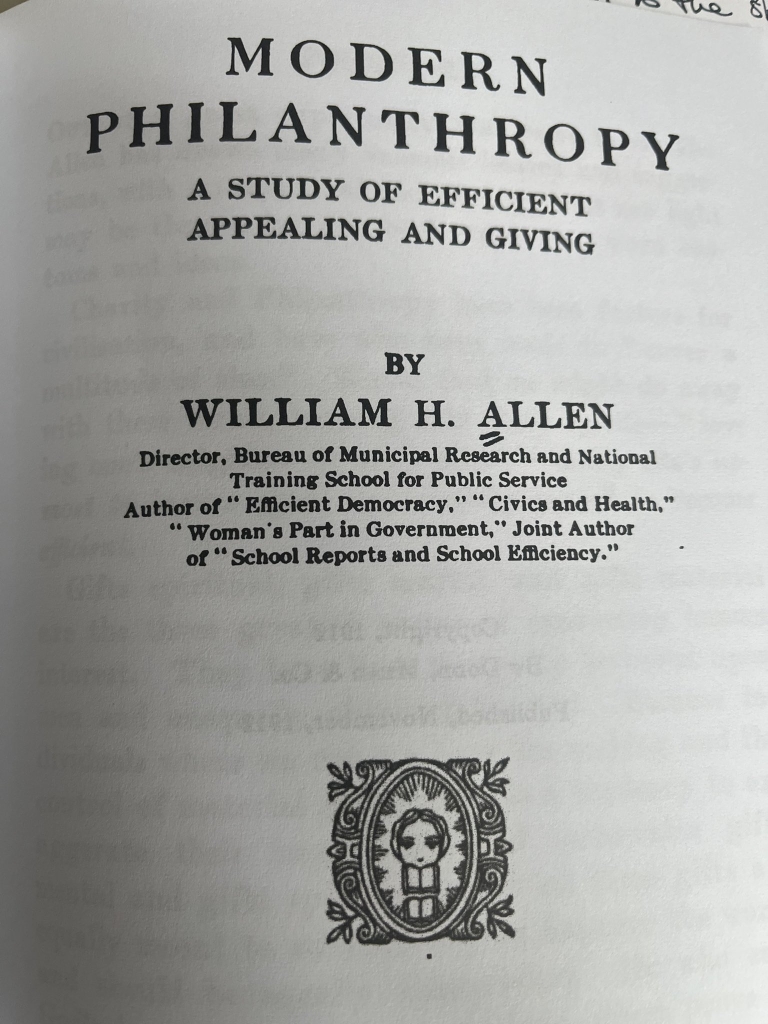
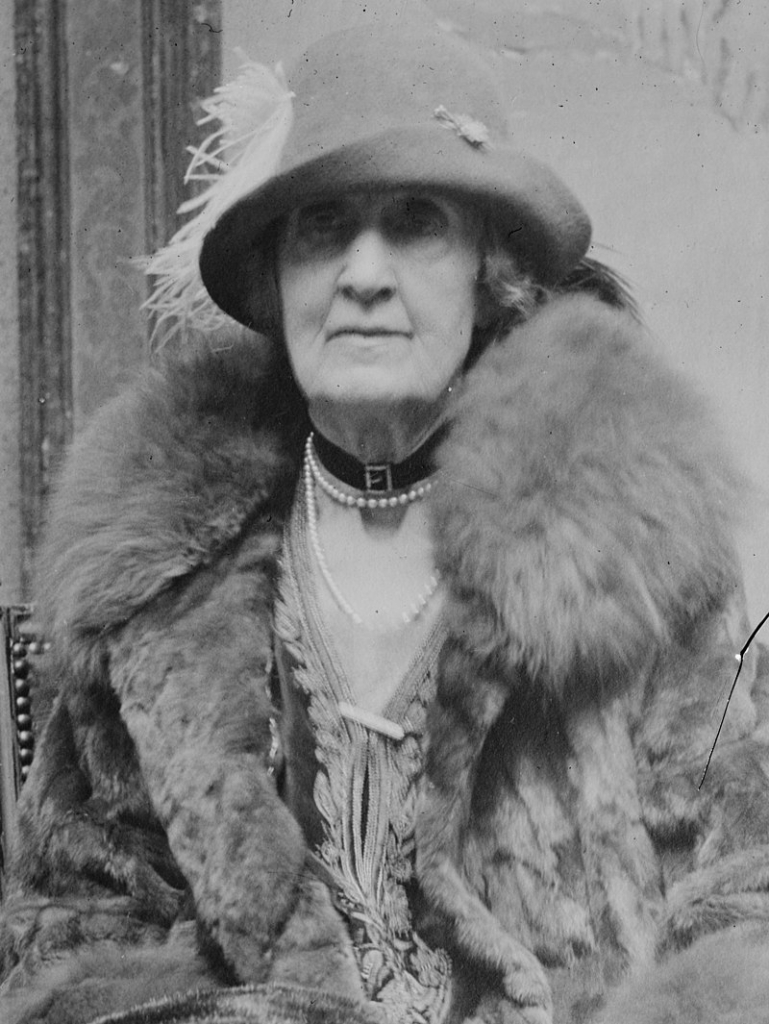
In 1912, William Harvey Allen the Director of the Bureau of Municipal Research and National Training School for Public Service examined 6,000 appeals sent to the philanthropist Mrs E H Harriman asking for $267,000,000 in charitable gifts.

After the death of her husband, the railroad executive, Mrs Harriman became a noted and active philanthropist supporting a variety of causes. Read more about her here Mary Williamson Harriman – Wikipedia

These are detailed in the book Modern Philanthropy A Study of Efficient Appealing and Giving

To give a bit of context in 1911, reports show that $270,000,000 worth of donations were given in the US of which $30,635,647 was bequeathed to charity in wills.

  • What do they show us about the concerns of the time that we still care about?
  • How advanced or not was fundraising?
  • What guidance did they have for the writer of appeals that we can apply to our fundraising today?
  • Has much changed or have we always worried about the same issues and made the same mistakes?

Philanthropy and what is deemed charitable is always based in time, place and culture. The vast majority of requests would still be deemed charitable today (health, disease, children, education) but there are a few more time specific ones – a national crusade against polygamy and celestial marriage (?!), home for aged Swedes and a museum of safety and sanitation.

So, what do the letters and an analysis of them show us about the concerns of the time that are still challenges for us today?

There is no way of finding where the money is most needed & who ought to fund what

In 1912, there was a lack of interconnectivity of what charities and agencies existed, and who is helping who. There are not clear distinctions over whether something should be funded by the state or philanthropy, and debates about the role of both in trying to provide solutions. The Bureau of Municipal Research often wrote back to petitioners with advice and guidance on the best place to get financial or practical help, for example, state provided support.

To provide greater efficiency about how decisions are made, the Bureau of Municipal Research suggests developing a central clearing house for the assessment of what is actually needed. This clearing house would be tasked with looking at duplications of provision, and signposting other appropriate services (both philanthropic and state). They wanted to create a directory of private philanthropy in each city to map what is provided and who is supporting each causal area.

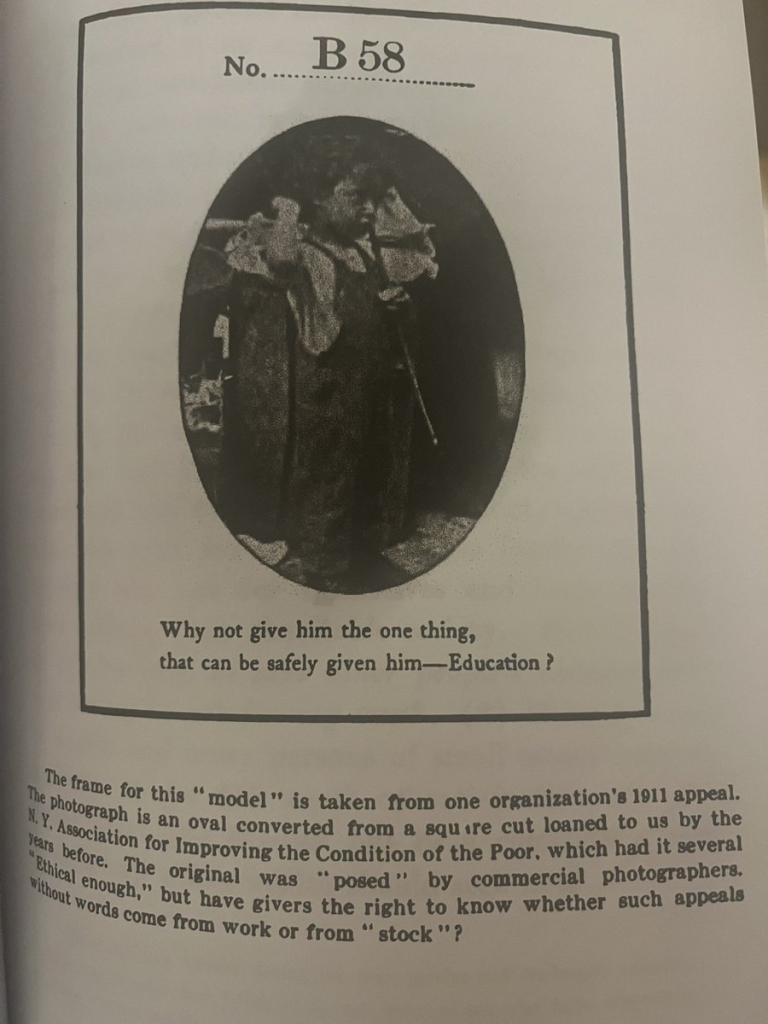
Questions about ethics of the images used in fundraising

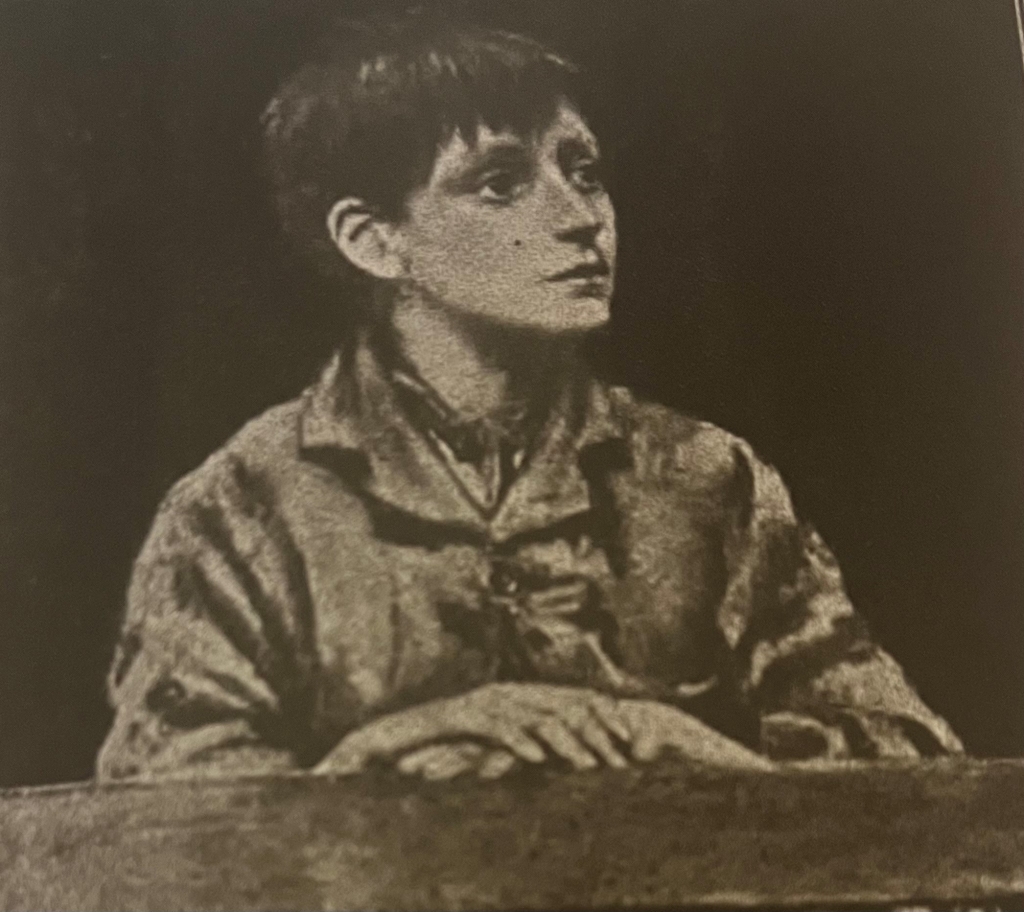
There were concerns about the images used to generate sympathy and funds for the cause. The fact that the image below for an appeal for the New York Association for Improving the Condition of the poor was created in a photographer’s studio was questioned as it does not show the real beneficiaries or make clear that it is a created image.


These concerns have been mirrored more recently with questions about who and how beneficiaries ought to be depicted in an ethical. Some charities have started using AI to generate images for campaigns (see this article AI-generated images raise money for charity. What’s wrong? | The Star).

So the debate about the best way to represent visually those that need support continues to this day.

The challenge of core costs

It seems fundraisers have always shied away from talking about the core costs, the cost of raising the funds and running the charity as these quotes demonstrate:

“No appeals have stated what part of the gift would be used to pay for appealing”

“few agencies keep a careful record of the postage, stationary and printing of appeals”

Although ROI on appeals seems not to be noted as standard it does cite a 1910 New York Association for Improving the Condition of the Poor spent $1,500 on adverts in newspapers and got a return of $11,500.

Worries about donor fatigue

Concerns about donor and compassion fatigue are not just current ones it was cited in 1912 as a concern:

“unfortunately for the starvation-broken-leg-blind-widow-with-five-children appeal, our nervous system requires ever increasing doses of sympathy drug, beyond the capacity of the English language or human suffering to supply”

First do no harm

“Giving away money without wasting it and without harming anyone is pretty hard work”

There was a real concern about how unthoughtful philanthropic activity can end up harming those it tried to help. They describe this as ‘vagrant giving’ as without thought and giving in the wrong way more harm is done.

Why are philanthropists motivated to give

“The rich give for the same reason the near rich or the never rich give, because they like to or because they like it less than they dislike the alternatives presented”

“if our appeals aim at motives we shall get more money than if we aim at their money”

  1. Instinct – save a baby’s life
  2. Comfort – Fresh air contribution before leaving for mountain or seashore
  3. Commerce – give or advertise trade discounts to orphan asylums
  4. Anti nuisance – Give to an importunate appealer for a day nursery
  5. Anti slum – Free vaccination for slum babies
  6. Pro slum – House to house nursing for the babies’ sake
  7. Recognition of rights – 100% of health protection for 100% of babies, not as a gift but as their right”

A century later Bekkers & Wiepking (2010) described eight major reasons why people donate to charity which are  (1) awareness of need; (2) solicitation; (3) costs and benefits; (4) altruism; (5) reputation; (6) psychological benefits; (7) values; (8) efficacy. We can see some overlap between the two lists of motivations but the older ones has no recognition of the role of the fundraiser and that someone needs to make the ask.

Giving ought to be joyful and meaningful

“that those who give ‘without missing’ are sure to miss it in their giving”

Too often in society circles they see the “endless chain reaction” of “give me $25 today for my charity and tomorrow I will gladly give you $25 for yours”. (With certain sets of donors has much changed?)

But fundraisers have the opportunity to “delight [donors]in making others happy”

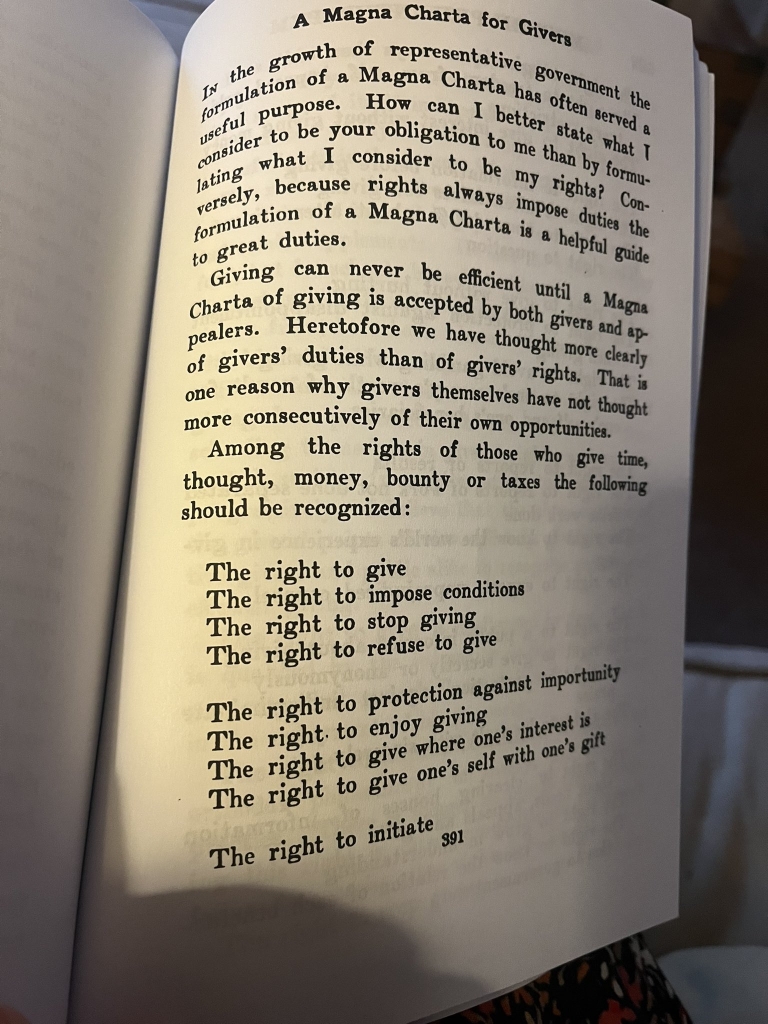
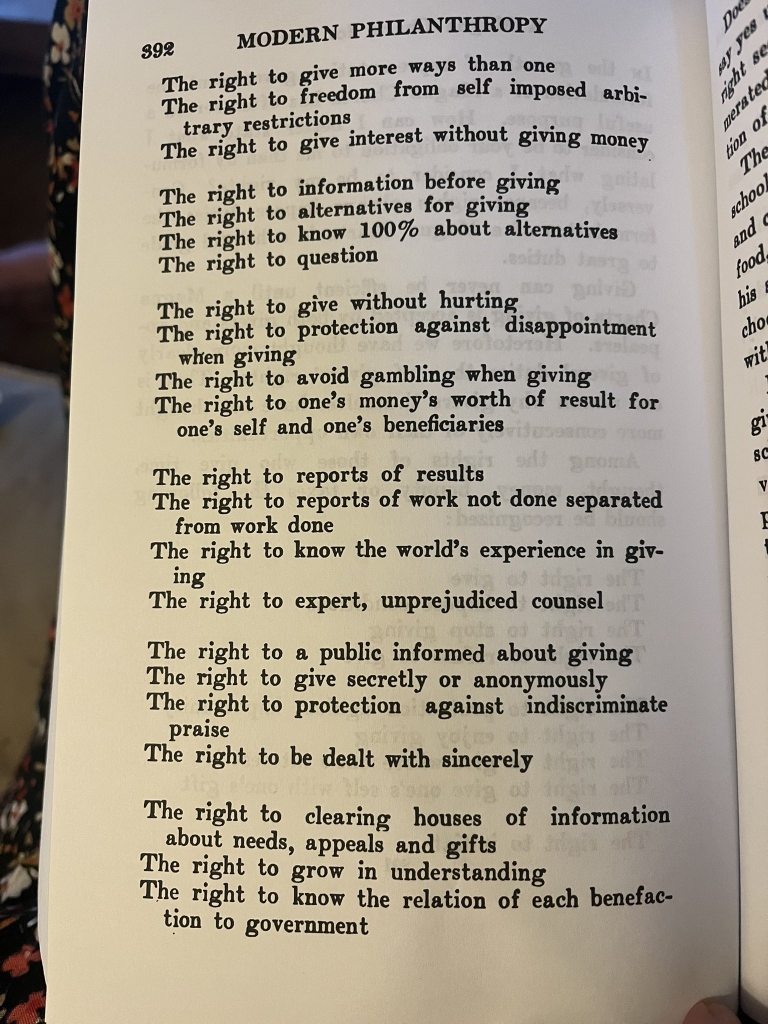
A charter for givers

William Harvey Allen, author of the book, proposes a Magna Carter for Givers about how those that are asked ought to look and give which includes

“guarantee a sympathetic reading of letters”

“organise and conduct a national museum that will do for the fields of efficient giving”

“– the right to give

– the right to enjoy giving

– the right to reports of results

– the right to grow in understanding“

This image has an empty alt attribute; its file name is Magna-C-2-768x1024.jpg

The Garfield Weston Foundation has a Charter which is a modern foundation’s version of this.

Weston Charter – Garfield Weston Foundation

Role of charities in educating people about needs

Fundraising and the appeals we create do more than raise vitally needed funds they help us society to understand the challenges faced and why such conditions exist.

“Appeals have done more to teach this country sociology than have all the universities”

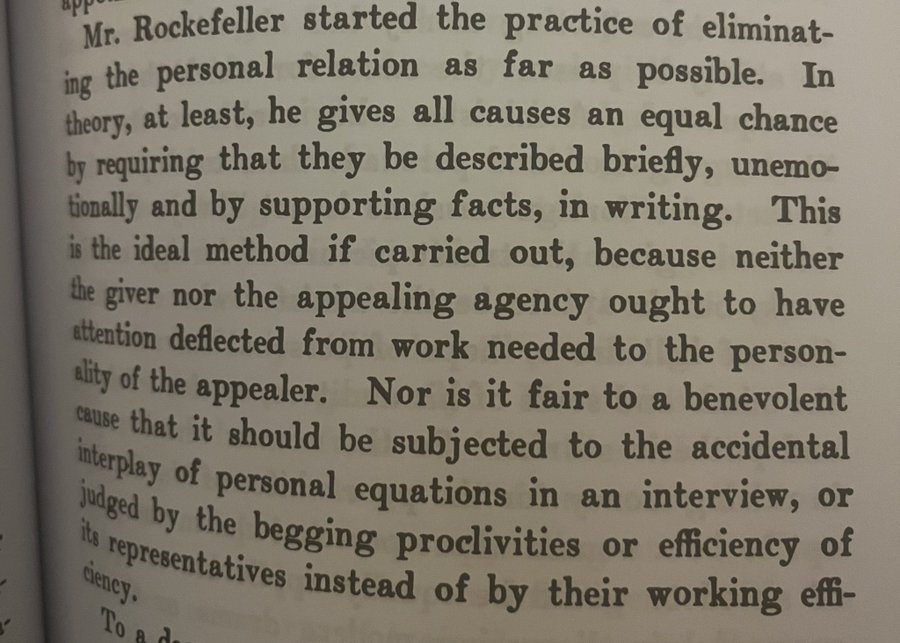
Introducing new trends– the first grant proposal form

Rockefeller is cited as introducing a new way of deciding on where funds are given – this could be the first grant application form?

“he gives all causes an equal chance by requesting that they be described briefly, unemotionally and by supportive facts in writing”

Embracing new technology

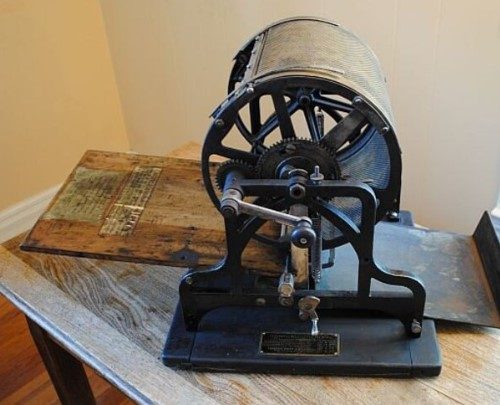
Fundraising always keeps up with new trends and embraces new technologies in its appeals. The same was true in 1912. and “like the largest and best organisations we have been compelled to adopt the mechanical follow up” The mimeograph was an early copying machine and they created multiple printed copies which were used as to follow up original appeal letters. There were concerns that this lacked the personal touch as letters would be hand addressed (Dear Mrs Harriman) with the rest a mimeograph.

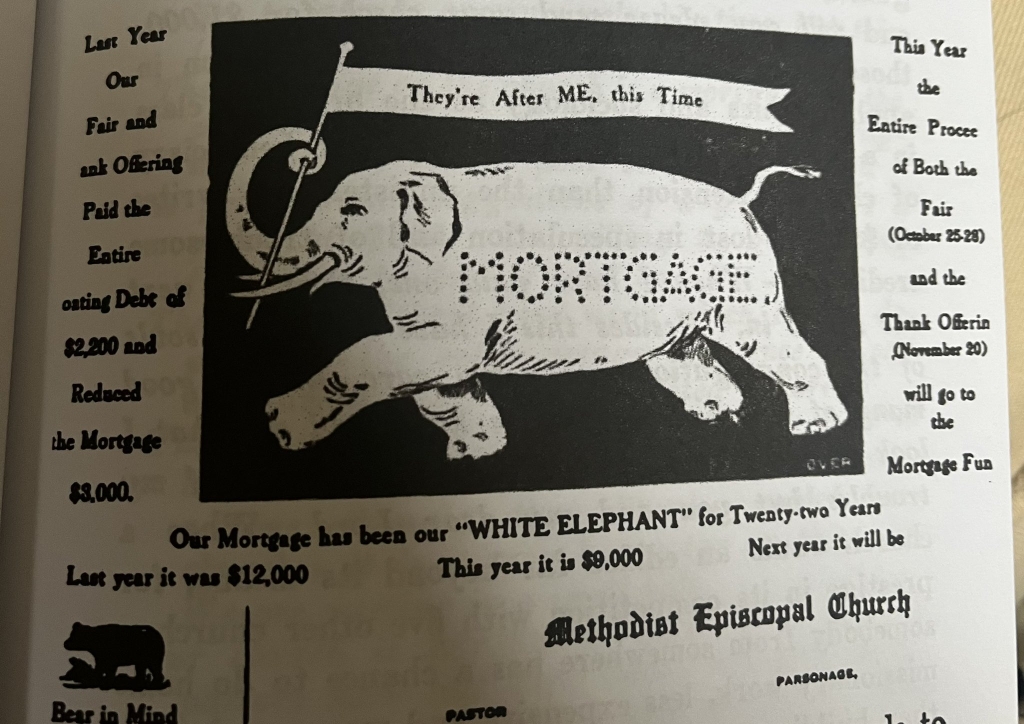
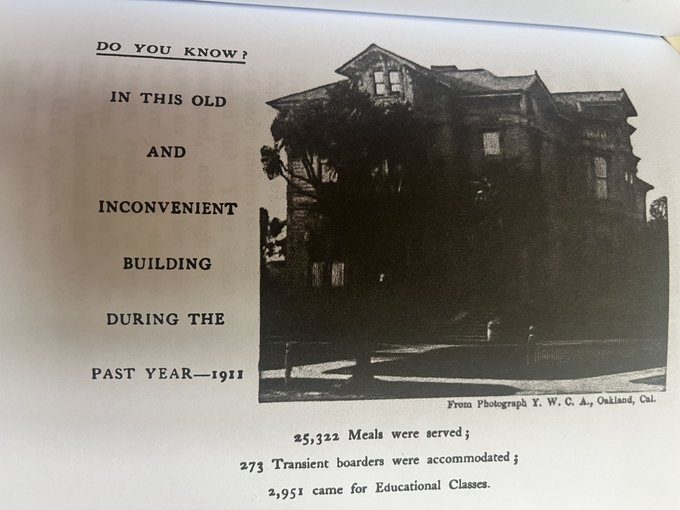
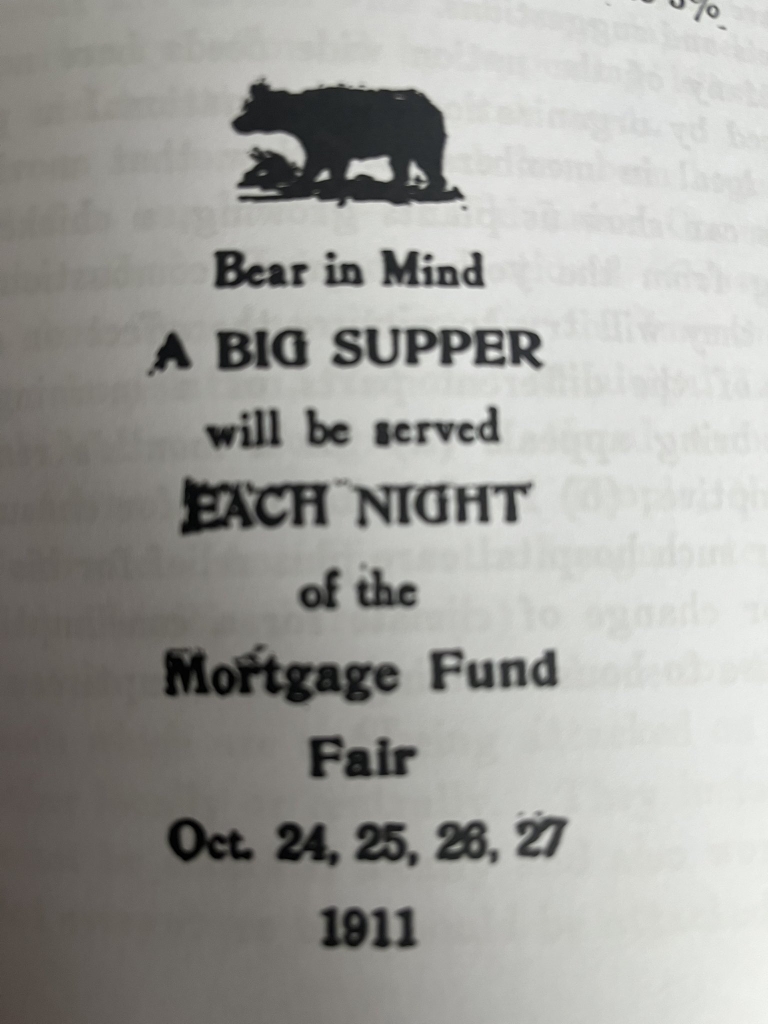
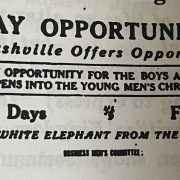
And finally a few examples of charity adverts from 1911

Reading Modern Philanthropy A Study of Efficient Appealing and Giving was a fascinating insight into the state and concerns around fundraising from over one hundred years ago and interesting to see how little has changed and how we continue to have the same issues and debates.

To read more about the analysis of these 6,000 letters and what is can teach us as fundraisers about asking for money read What does reading 6,000 appeals from 1912 teach us about how fundraisers ought to be asking for money? – Marina Jones

https://marinajones.uk/wp-content/uploads/2023/06/Charity-adverts3.jpg 614 2048 admin https://marinajones.uk/wp-content/uploads/2022/12/f2b903e010104f5aa61ea1821a685913.png admin2023-07-02 19:38:432023-07-02 20:33:31What do 6,000 appeal letters show us about fundraising 100 years ago?

What does reading 6,000 appeals from 1912 teach us about how fundraisers ought to be asking for money?

July 2, 2023/0 Comments/in Thoughts/by admin

“philanthropy’s mailbag has lessons of tremendous importance to the giver and not-yet-giver, to the individuals and organised appealer”

From the analysis of the 6,000 appeal letters requesting $267m worth of assistance from philanthropist Mrs Harriman in 1912, William Harvey Allen from the Bureau of Municipal Research draws out the best ways to make the ask and some of the most common mistakes.

The author suggests “That there is a need for a correspondence school in the art of appealing and the art of giving.” Some of­ the first fundraising guides might have been written by fourteenth century monks, but it took many more decades to develop fundraising training via higher education courses, specialist training organisations and fundraising associations.

Many of the suggestions from 1912, we know and show that the same advice to fundraisers has been given for over a century.

Here are 10 lessons/reminders about how to make better appeals

1. Get the basics right

Name, address, spellings & actually ask for money

“You misspelled her name, you addressed her at the wrong place, you misspelled a number of words which indicates carelessness”

These are some of the mistakes listed in applications received:

  • “(a) inserting intimate greeting as conclusion in an obviously circular letters; (b) failing to give any idea of the amount of money needed, or the nature of the work; (c) writing for purposes known to have been adequately provided for”
  • Letters claiming that beneficiary numbers were increasing when the accompanying annual report show numbers of those helped decreasing
  • Misspelled Carnegie and Carbegie
  • And budgets – asked for wild numbers with no back up of what was actually needed. When the Bureau asked for clarification and details of what the money would be spent on they could not account for the amount.

Paying attention to details and getting the basics right remains really important

Appearances matter

How your appeal is presented is also important. You need to make it easy for your reader to read and understand what you are asking for.

“The outward appearance of an appeal makes a greater difference than its actual importance justifies. Scrawly hand, blotted envelopes, crooked lines, lack of margins etc, establish a prejudice before the letter is opened…. Of course, content may offset bias but readers of ‘begging letters’ are only human and are willing to pay for a pleasant letterhead or a real appeal”

Tailor the ask to your audience

Details matter and it is important to tailor your writing style to the person you are writing to. In 1912, writing the date as ‘Sept 8 1911’ implies a business correspondence says William Harvey Allen (who knew?), whereas ‘September eight Nineteen hundred and eleven’ implies a social correspondence.   

Too many appeals used congratulations of publicly known news (birth of grandchild or death in the family) to make an excuse for correspondence and this was viewed as disingenuous.

Write for the audience of the appeal.

Length of the ask –the one page fetish

In the 6,000 applications they ranged from 1/3 of a page  to 19 pages but they note that the “the points stand out clearly if the letter is brief and would appeal to class and the aesthetic taste.”

Allen says they “value[d] proposals for their brevity as well as the content” but he had a particular horror of the “one page fetish” when organisations or individuals try to cram all the information onto one page. This means that the margins disappear, there are no headings, and the text is badly spaced (hands up if you have ever adjusted the margins to fit the proposal onto two sides of A4).

Make it easy for the reader to read and understand – William Harvey Allen suggests double or even triple spacing and wide margins are appreciated by those reading your appeals. 

2. Costly signalling – paper stock matters

When you choose to use the heavy paper weight with the embossed letter head you are giving your reader unconscious signals about your charity – its experience, budgets and ability to succeed.

This is known as ‘costly signal theory’ – demonstrating the value of the proposition, or the organisation. It can show that you are credible, successful and can afford to invest in good stationary.

In a restaurant, if you are given a menu on thicker paper stock (for paper fans 570 gsm vs 210 gsm) you will perceive the restaurant as more upscale and having given you better service (Maginini & Kim, 2016) (the same is also true of weight of cutlery.)

There is often an internal debate about whether you ought to be seen to be spending money on appeals. And whether 80gsm paper or light/cheap paper stock shows you cost conscious and investing in the work rather than appeals or whether good paper stock and a fancy donation pack and full colour letters demonstrates credibility and professional approach. This is not a new discussion, in 1912, for William Harvey Allen it worked against the appealers:

“Engraved letterheads are apt to drive away rich men who began their fortunes by small economies. A very neat type imitation of engraving however may produce a pleasant impression while still advertising economy”

However, this might be a bias of the writer of the report, a how people behave in the real world is often different to how they predict they will – and the subconscious cues that we get from the paper stock have an impact on how we react to appeals, and how much we give.

A decision science experiment run by Ogilvy with Christian Aid envelopes found that paper stock (90 gsm to 150 gsm) produced a higher mean level of gift – read more about the different tests and surprising results in Change for Better.

Loving #nudgestock2020 @Ogilvy most increased donations for Christian Aid by reorientating envelope to portrait and using a better quality paper. Fascinating. Thanks Sam Tatam pic.twitter.com/gCNusQyb1m

— Sarah Lethbridge (@sarahlethbridge) June 12, 2020

3. Key ingredients of case for support

William Harvey Allen offers key “ingredients of an effective statement of any cause” which include:

  • ‘summary to tell the story in a nutshell’
  • Cost
  • Making it about people not abstract concepts ‘infants, not infancy, students not education’
  • ‘Show the differences’

4. Multiple (& effective) messengers

Like appeal packs today, requests came with what we now call ‘lift letters’ with supporting statements and endorsements from bishops and other notable figures or institutions to add credence to the appeal. Who makes the ask and how likeable or how much authority they have on the subject have impacts our reactions – having multiple messengers can appeal to different sections of your supporters.

5. Make it more impactful by focussing on the one not the many

“by focussing attention upon one child”

This is called the ‘identifiable victim effect’ and means our asks our more powerful if we focus our supporters onto one person that they can help. We can identify and see the impact of our gift on that individual and once more people are added gifts decrease.

The identifiable victim effect was not formally described until 1968, and its efficacy only proved in charitable appeals in the last twenty years. As fundraisers we often instinctively know what makes a powerful appeal, but the more recent evolutions in behavioural science unpack and explain why they work in appeals.

6. Make it easy to reply

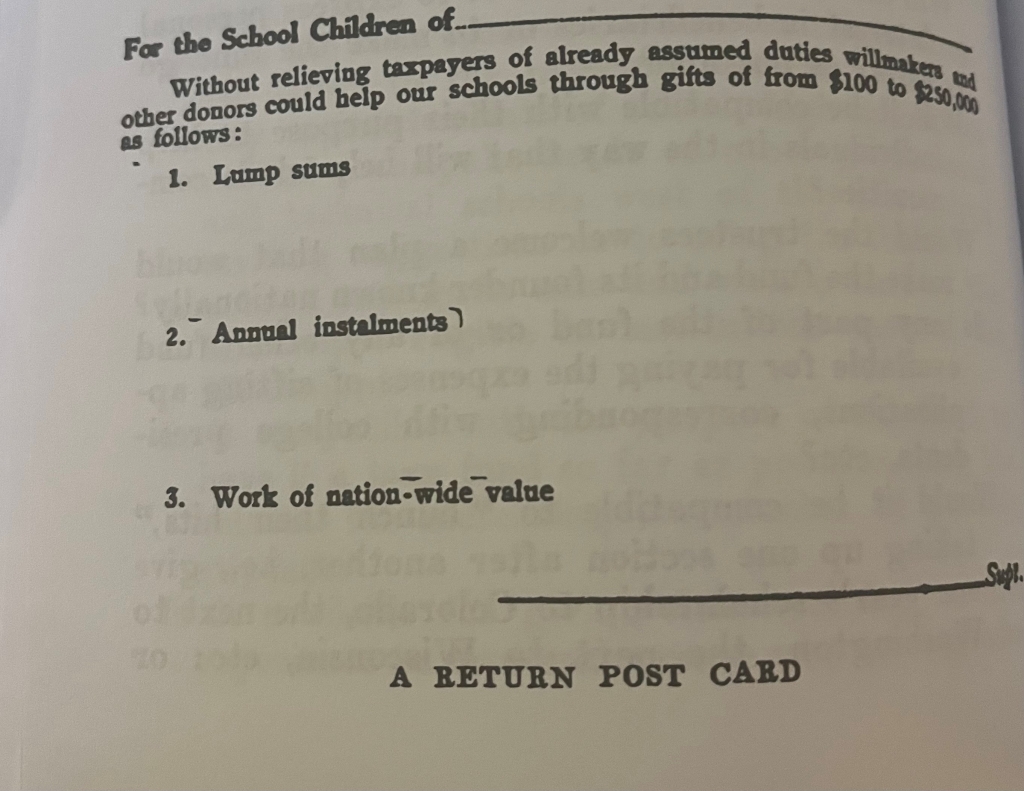
Pre-printed reply postcards were used in the appeals to make it easier for people for people to reply and give them agency and options about how and where they want their gift to go.

7. Beware of overclaiming

Lots of charities claiming to ‘the only’ one working in the field – rescuing girls from the street or rehoming boys. Those making the decisions are aware of the diversity of offers and charities working in the field.  These overclaims were described as ‘Like cosmetics this rise seems to require putting on thicker and thicker in order to give the desired effect”

8. How successful you ought to appear? Can being successful be a hindrance rather than a help?

Sometimes appearing too successful at solving the problem can work against grant seekers, William Harvey Allen notes “and one turns away with the thought ‘I would like to help somebody that has some work still to be done.”

But you must also show that you have a successful track record;

“Pennies go to the hard luck story man but larger sums to for the man who seems either prosperous or on the road to prosperity”

The fundraiser must find the middle ground between demonstrating a successful track record but making the case for the work that still needs to be done, and how they are uniquely placed to provide a solution.

challenge is you need to demonstrate your successful track record without alienating the giver

9. Making contact with a potential donor – the spider’s web

How to reach the donor’s once you have identified them can be tricky. William Harvey Allen likens it to a spider’s web

“spider web philosophy is about different accesses – the secretary access, the family access, the lawyer access, the doctor access, the minister access, the news item access, the paid advertisement access, the social function access … butler access, lady’s maid access”

We have all tried to map out how we can reach that potential donor – asking does someone on the board know them (how many of these spider web connections have you ever used? Lawyer, doctor, family, staff, social, …?)

It was no different over a hundred years ago.

Although some of their methods seem a little more intense than ours – William Harvey Allen notes: 

“Agencies/organisations which notifies you of its intention to pursue you – in your mail, at your dinner parties and operas, on steamboats until you have made a contribution”

10. Where we find new donors hasn’t changed

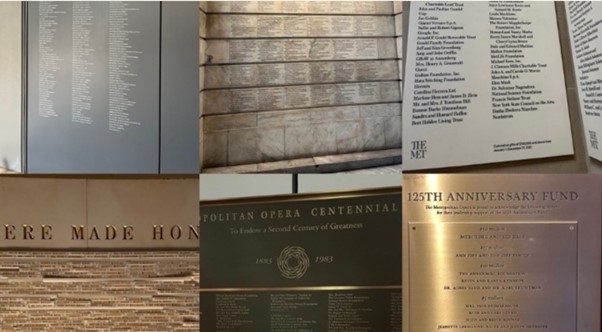
Nowadays we might look at annual reports or donor walls to see which philanthropists are active in a cause area. This was the same a century ago:

“we crib from each others list of contributors”

And finally

This guidance shows that not much has changed about how we think about how to communicate with donors and make appeals for funds.

And finally, finally ….Fundraisers have always been charming and well informed …


“so the woman who is expert in raising money for the poor Whites of the South is apt to be a woman whose personal charm and power of anecdote would be equally applicable or equally successful in discussing modern drama or the pilgrimages of Peter the Hermit”

To read more about what else we see from the 1912 analysis of the 6,000 letters and what that tells us about fundraising and philanthropy and the concerns about giving read What do 6,000 appeal letters show us about fundraising 100 years ago? – Marina Jones

https://marinajones.uk/wp-content/uploads/2023/06/Victim-header.jpeg 459 1024 admin https://marinajones.uk/wp-content/uploads/2022/12/f2b903e010104f5aa61ea1821a685913.png admin2023-07-02 19:36:272023-07-02 20:31:36What does reading 6,000 appeals from 1912 teach us about how fundraisers ought to be asking for money?

Something sensational to read on the train …

April 6, 2023/0 Comments/in What I'm Reading/by admin

I recently found and re-read my diary from the early 2000’s – well one should always have something sensational to read on the train. Safe to say interesting to see what has changed and what is the same. If you knew me back then and wondering whether you’re mentioned I can promise you are 😊

A few (edited) highlights

Some rather brutal theatrical assessments – I like to think I’m kinder now in my reviews!

·       ‘Went to see Patrick Stewart and Joshua Jackson in A Life in Theatre David Mamet – did not improve my opinion of his work! Although the Chekhovian piss take was fun’

·       ‘Then saw Adam Bede @ OTT very good standard OTT’

·       Kneehigh show tonight good but long

·       ‘Saw dreadful RSC Hecuba with Vanessa Redgrave so bad it was funny in places – but what a waste of 2 hours’

·       ‘Saw Julius Caesar tonight at the Barbican with a star cast. Brutus – Anton Lesser. Cassius – Simon Russell Beale. Mark Anthony – Ralph Fiennes. Portia – Fiona Shaw. +100 plus crowd. Crowd scenes good. Noticeable different in diction with AL and SRB v good Ralph less so. Fiona Shaw. And the Iraq war thing a bit hackneyed.’

·       ‘V good 2 hander Importance of Being Earnest – talking to wigs and stand up Lady Bracknell costume.’

Very little on job and career but a few things

·       ‘I miss studying things’

·       ‘Saw a job at the ROH which I am very tempted with’ (five years before I started working there)

·       ‘Getting 153 applicants for a Development Officer role 30/40 could do it – and lots earning £20k or £25k applying for a £15k job’

·       Career advice I didn’t quite take (sorry!) – ‘He said to stay in the arts need to go the major donor route – but that to be a Director of Development in the arts would ruin me for the mainstream as the way the arts raise money is so weird which I guess is true.’

A few signs of the times

·       Eating my first Krispy Kreme donuts when they were new and a sensation

·       The dominance of MSN messenger as a way of communicating with people

And some rather Marina like comments

·       ‘Reduced to listening to G&S as an antidote to my life’ (now my day job!)

·       ‘I feel like I’m in a Jane Austen novel and my sense of the dramatic/occasion demands Thomas Hardy’

·       ‘I was going to give up all my boys for Lent – maybe that is what I need’ (was thinking the same this year but my son and husband objected)

·       ‘Have eaten so much cheese’ (#pluscachange!)

And the sweetest chronicle of Robin and I falling in love full of incredible soppy segments (‘I think he is so wonderful’) and angst (‘I wish I knew what he thought’, and  ‘So want to say ‘what are you thinking’, ‘do you like me’, ‘do you know how crazy I am about you’ and ‘So we kissed last night’ and next day ‘why hasn’t he called’…)

Reader, I married him.

https://marinajones.uk/wp-content/uploads/2023/04/Diary2.png 149 225 admin https://marinajones.uk/wp-content/uploads/2022/12/f2b903e010104f5aa61ea1821a685913.png admin2023-04-06 14:02:002023-06-27 13:48:17Something sensational to read on the train …

The reading list 2023

January 22, 2023/0 Comments/in What I'm Reading/by admin

I don’t usually count the books I read but thought I would try this year. Having just taken bag loads to Oxfam and reordered the bookshelves it is probably more than I realise.

Finished from 2022

‘Opera or the undoing of Women’ by Catherine Clement

‘Women and Philanthropy in 19th century England’ by Frank Proshaka

‘Art, Theatre and Women’s Suffrage’ by Ireme Cockroft and Susan Croft

‘Best of Friends’ by Kamila Shamsie

2023 Books I have read

‘The Reading List’ by Sara Nisha Adams

‘The Lamplighters’ by Emma Stonex

‘Lily’ by Rose Tremain

‘Carmen’ by Propser Merimee

‘Alchemy’ by Rory Sutherland

‘Bad Actors’ by Mick Herron

‘Engaged’ by W S Gilbert

‘Mrs March’ by Virginia Feito

‘Opera in the Jazz Age Cultural Politics in 1920s Britain’ by Alexandra Wilson

‘Great Circle’ by Maggie Shipstead

‘The Reader on the 6.27’ by Jean-Paul Didierlaurent

‘Dollar Dash the behavioural economics of peer-to-peer fundraising’ by Katrina VanHuss & Otis Fulton

‘Westwood’ by Stella Gibbons

‘The Neuroscience of You’ by Chantel Pratt

‘Bruges-la-morte’ by Georges Rodenbach

‘Daughters of Sparta’ by Claire Heywood

‘Medusa’ by Jessie Burton

‘What is Philanthropy for?’ by Rhodri Davies

‘The Empire’ by Michael Ball

‘Lear’s Wife’ by JR Thorp

‘Trilby’ by George du Maurier

‘When the dust settles’ by Lucy Easthope

‘The Mysterious Case of the Alperton Angels’ by Janice Hallett

‘The Museum of Ordinary People’ by Mike Gayle

‘The Illusion of Choice’ by Richard Shotton

‘The Maidens’ by Alex Michaelides

‘Evolutionary Ideas: Unlocking Ancient Innovation to Solve Tomorrow’s Challenges’ by Sam Tatam

‘Cleopatra and Frankenstein’ by Coco Mellors

‘The Figaro Trilogy: The Barber of Seville, The Marriage of Figaro, The Guilty Mother’ by Pierre-Augustin Canon de Beaumarchais

‘No Season but Summer’ by Matilda Leyser

‘The Lincoln Highway’ by Amor Towles

‘On Being Unreasonable: Breaking the Rules and Making Things Better’ by Kirsty Sedgman

‘The Razor’s Edge’ by Somerset Maugham

‘One Hundred Years of Solitude’ by Gabriel Garcia Marquez

‘The Trickster of Seville and the Stone Guest’ by Tirso de Molina

‘Cheese’ by Willem Elsschot

‘The Motive and the Cue’ by Jack Thorne

‘Transport for humans – are we nearly there yet?’ by Pete Dyson and Rory Sutherland

‘Pericles’ by William Shakespeare (and disputed others)

‘The Midnight Library’ by Matt Haig

‘Men Without Women’ by Haruki Marukami

‘The Light at the end of the day’ by Hannah Wasserman

‘Still Life’ by Sarah Winman

‘Trust’ by Hernan Diaz

‘Theatre Audiences: A Theory of Production and Reception’ by Susan Bennett

‘Hags’ by Victoria Smith

‘The Reasonable Audience Theatre Etiquette and Behaviour Policing, and the Live Performance Experience’ by Kirsty Sedgman

‘Demon Copperhead’ by Barbara Kingsolver

‘Sorrow and Bliss’ by Meg Masion

‘Just My Luck’ by Adele Parks

‘Marina’ by Carlos Ruiz Zafron

‘Traces of Enayat’ by Iman Mersal

‘Love on the Beach’ by Jessica Gilmore

‘Persuasion’ by Jane Austen

‘Stone Cold’ by Peter May

‘Have you got anything stronger?’ by Imogen Edwards-Jones

‘The Glass Blowers’ by Daphne du Maurier

‘No One Writes to the Colonel’ by Gabriel Garcia Marquez

‘Ghost Lover’ by Lisa Taddeo

‘No worries if not’ by Lucy Nichols

‘Happy Place’ by Emily Henry

‘A Death in the Parish’ by Richard Coles

‘Rouge’ by Mona Award

‘It ends with us’ by Colleen Hoover

‘Ultima’ by LS Hilton

‘The Salt Path’ by Raynor Winn

‘Memories of My Melancholy Whores’ By Gabriel Garcia Marquez

‘Divine Might’ by Natalie Haynes

‘Madam C J Walker’s Gospel of Giving Black Women’s Philanthropy during Jim Crow’ by Tyrone McKinley Freeman

‘The Posthumous Memoirs of Bras Cubas’ by Machado de Assis

‘Romantic Comedy’ by Curtis Sittenfeld

‘Yellowface’ by Rebecca F Huang

‘Prep’ by Curtis Sittenfeld

‘The Handmaid’s Tale’ by Margaret Atwood

‘The Charity Market and Humanitarism in Britain, 1870-1912’ by Sarah Toddy, Julie-Marie Strange and Bertrand Taithe

‘All Souls’ by Javier Marais

‘The Year of the Locust’ by Terry Hayes

‘The Old Gods’ by Sebastian Barry

‘Influence the psychology of persuasion’ by Robert Cialdini

‘Matrix’ by Lauren Goff

‘May we be forgiven’ by A M Homes

‘Empire of Pain’ by Patrick Radden Keefe

‘Northanger Abbey’ by Jane Austen

‘If We Were Villans’ by M L Rio

https://marinajones.uk/wp-content/uploads/2023/01/Fl3EoVnWAAIxTeX.jpeg 1350 1080 admin https://marinajones.uk/wp-content/uploads/2022/12/f2b903e010104f5aa61ea1821a685913.png admin2023-01-22 19:42:072023-12-30 11:34:51The reading list 2023

Carmen – novella and opera

January 22, 2023/0 Comments/in What I'm Reading/by admin

A while back I set myself the challenge of reading the original stories that operas are based on. Many modern operas are based on films or books – in the nineteenth century they were based on popular plays or books. The original stories often offer an insight into the characters that you don’t always see on stage – or is hinted at by the director’s interpretation.

The opera by Bizet was written first performed in Paris in 1875 and used the inspiration of Merimee’s novella published in 1845.

The book begins with a quote from Palladas:

“Every woman is bitter as gall. But she has two good moments; one in bed, the other at her death”

This reminds me of ‘Opera and the undoing of women’ that I have just finished and explore opera’s fascination with sopranos dying – and prefigures her death from the start.

Productions of Carmen can veer towards a ‘Carry on Spain’ interpretation, so it is interesting to re-read the novella. It is told in a breathless pace, with the captured and condemned Navarre (don) Jose relaying his adventures from prison to the archaeologist-narrator.

Escamillio who is a central character (the Toreador of the catchy tune) in the opera is really a bit part picador called Lucas – and one of Carmen’s several lovers.

Carmen is enchanting and enigmatic – throwing an acacia flower at Jose, making castanets from broken plates, stealing his watch  and claiming ‘I love you a little, but it can’t last’. The fate theme from the opera is played out through cards from the very start and the foreknowledge of their doomed fate.

I haven’t read it since I saw the Barrie Kosky (gorilla) production at the Royal Opera House which controversially used a voice over of narration from the Brantome which appears only briefly in the novel but more fully in the footnotes – Pierre Brantome (1540-1614) on the ‘Lives of Gallant Ladies’ with a  rule of three of the ideal features a woman ought to have (e.g. ‘three red: her lips, her cheeks, and her nails. Three long; her body, her hair and her hands’)

https://marinajones.uk/wp-content/uploads/2023/01/R.jpeg 1262 2244 admin https://marinajones.uk/wp-content/uploads/2022/12/f2b903e010104f5aa61ea1821a685913.png admin2023-01-22 18:59:202023-01-22 19:39:05Carmen – novella and opera

Philanthropy in fiction

January 1, 2023/0 Comments/in What I'm Reading/by admin

Yawning and laughter are contagious because of ‘mirror neurons’ – basically when we see an action like yawning it fires neurons in our brains that make us yawn. Do we mirror kindness we see in novels? We rarely see charitable giving… … if we saw more charitable giving and philanthropy in novels, would we be more generous?

“Novelists generally make their philanthropists fools”

F B Morey-Coutts in The Times 1884

What are we invertedly learning about philanthropy and fundraising through fiction?

Stories are memorable. People pay attention to stories and learn through stories. When engaged in a story mirror neuron ensure you feel and experience the emotions of protagonist- and add to knowledge of how you would react in real life. They are a space where we imagine, we learn how to behave, how to react, how to explore and what social norms are.

Quoted from ‘Voices of the Lost’ by Hoda Barakat

In ‘Hooked’ stories are compared to a Trojan horse – we accept the free gift of an entertaining story but also unknowingly absorb the message.

“opposable thumbs let us hang on; stories told us what to hang on to”

Wired for Story

When philanthropists and fundraising appear in novels what are we then absorbing?

Often philanthropists are fundamentally bad and there is the oft repeated trope of the villain who gives philanthropically to mask their corporate and capitalist crimes. Reputational laundering in both fiction, and the popular press, seems to be a dominating motivation for any charitable donation.   

When I started this project at the start of lockdown in March 2020 it was to capture and collate some examples of philanthropy and fundraising in fiction. It has never been a systematic undertaking but rather an odd assortment of half remembered moments from stories, books I have read, poetry and reading with the children, films, tv shows, plays and operas watched (and I am not sure why the Philanthropy in Fiction Twitter @Philanthropyin3 account started anonymously) All of them tell us something about what we think about philanthropy – about people giving time, talent or treasure voluntarily for their own version of public good.

Philanthropy in novels and tv shows tells us about how we want to the world to be, about cultural and societal expectations and understandings of charity – from Jane Austen’s Emma going on a charitable visit to the poor sick families, to Scarlett O’Hara and Melly Wilkes giving up their wedding ring at the charity fundraiser for the Cause, to Biff and Chip raising money for Comic Relief in the Oxford Reading Tree books for primary schools – we are learning about philanthropy in time, in place and aspiration.

Beth Breeze in her ‘In Defence of Philanthropy’ talks about how we don’t like those that give too much or too little (we prefer the Goldilocks effect – not too much, not too little – just right – the middle option). Breeze talks about do-gooder derogation where those that stand up publicly for their values and do them publicly and actively are derided and dismissed as having false motives. Philanthropists, like vegans are dismissed as seeking praise or doing it for the wrong motives.

There are good and selfless and well-motivated, pious, thoughtful philanthropists and acts of philanthropy in novels but they are in the minority. I want to find more.

And continue to share those that I find along the way.

https://marinajones.uk/wp-content/uploads/2023/01/Fl3EoVnWAAIxTeX.jpeg 1350 1080 admin https://marinajones.uk/wp-content/uploads/2022/12/f2b903e010104f5aa61ea1821a685913.png admin2023-01-01 22:14:312023-02-06 16:29:58Philanthropy in fiction

Finishing off 2022 …

December 29, 2022/0 Comments/in What I'm Reading/by admin

Before moving on to the what I want to read in 2023 I need to finish off the selection of mostly read and partly read list (the ‘to be read’ pile is rather large so need to operate a one in one out policy or it will get out of control!)

  • Opera or the undoing of women by Catherine Clement – a 1980s feminist critique of opera and its obsession with women dying (“an art form that demands the submission or death of the woman for the sake of narrative closure”) and the contrast with the beauty and the death – comparing opera to snuff movies(!), some deep Freudian theory and critiques of opera audiences who ‘traipse around in pseudo-aristocratic drag’. Eye opening and interesting although some of the psychoanalysis seems a bit dated – and the musicology of chromatic notes might be a bit beyond me (on page 125 of 181)
  • Women and Philanthropy in 19th Century England by Frank Proshaka which I am reading to inform the history of fundraising project which I am leading for Rogare. This is a proper academic booking on Victorian fundraising and the role of women and children in raising and organising fundraising including a girl who trained her parrot to say ‘put something in the Bible box’ and the first UK charity shop. (on page 144 of 230) .
  • Art, Theatre and Women’s Suffrage by Irene Cockroft and Susan Croft – picked up randomly at the National Theatre bookshop. An exploration the ways in which the votes for women campaign created work to art to raise awareness and raise funds. For example, £5,000 raised for Women’s Suffrage via the Women’s Exhibition of 1909 using the charity bazaar model (fundraising fair) where they had replica prisons where suffragettes were force fed in for audiences to visit and sit in (experiential immersive fundraising!) and raised money by auctioning off the suffrage themed china (see this blog for more on this Anne SebbaThe Women’s Exhibition of 1909 – Anne Sebba ) There were also suffrage operas and plays written and performed (which I want to find!) (on page 88 of 118)
  • Best of Friends by Kamila Shamsie – I loved her Home Fires novel (great for fans of modern rewrites of Greek tragedies) and this has been recommended too. So far we are in 1988 Karachi with two teenage girls experiencing teenage live and big political moments. (on page 87 on 324)
  • Opera for Everyone by Susie Gilbert – the history of the English National Opera from its roots with Lilian Baylis to 2009 – I am only at the start of World War Two so some way to go but great to get a deeper understanding of the company’s history and evolution (and the permanent fundraising challenges) (on page 63 of 585)
https://marinajones.uk/wp-content/uploads/2022/12/2022-scaled.jpg 2560 1920 admin https://marinajones.uk/wp-content/uploads/2022/12/f2b903e010104f5aa61ea1821a685913.png admin2022-12-29 20:36:452022-12-29 20:38:39Finishing off 2022 …
Page 2 of 212
Tweets by meenamtj
All content © Marina Jones 2023
  • Link to X
  • Link to Instagram
  • Link to LinkedIn
Scroll to top Scroll to top Scroll to top

This site uses cookies. By continuing to browse the site, you are agreeing to our use of cookies.

Accept settingsHide notification onlySettings

Cookie and Privacy Settings


How we use cookies

We may request cookies to be set on your device. We use cookies to let us know when you visit our websites, how you interact with us, to enrich your user experience, and to customize your relationship with our website.

Click on the different category headings to find out more. You can also change some of your preferences. Note that blocking some types of cookies may impact your experience on our websites and the services we are able to offer.

Essential Website Cookies

These cookies are strictly necessary to provide you with services available through our website and to use some of its features.

Because these cookies are strictly necessary to deliver the website, refusing them will have impact how our site functions. You always can block or delete cookies by changing your browser settings and force blocking all cookies on this website. But this will always prompt you to accept/refuse cookies when revisiting our site.

We fully respect if you want to refuse cookies but to avoid asking you again and again kindly allow us to store a cookie for that. You are free to opt out any time or opt in for other cookies to get a better experience. If you refuse cookies we will remove all set cookies in our domain.

We provide you with a list of stored cookies on your computer in our domain so you can check what we stored. Due to security reasons we are not able to show or modify cookies from other domains. You can check these in your browser security settings.

Google Analytics Cookies

These cookies collect information that is used either in aggregate form to help us understand how our website is being used or how effective our marketing campaigns are, or to help us customize our website and application for you in order to enhance your experience.

If you do not want that we track your visit to our site you can disable tracking in your browser here:

Other external services

We also use different external services like Google Webfonts, Google Maps, and external Video providers. Since these providers may collect personal data like your IP address we allow you to block them here. Please be aware that this might heavily reduce the functionality and appearance of our site. Changes will take effect once you reload the page.

Google Webfont Settings:

Google Map Settings:

Google reCaptcha Settings:

Vimeo and Youtube video embeds:

Other cookies

The following cookies are also needed - You can choose if you want to allow them:

Privacy Policy

You can read about our cookies and privacy settings in detail on our Privacy Policy Page.

Privacy Policy
Accept settingsHide notification only