

What do 200 boxes of kippers, one girl’s comic collection, handbags, blankets, 1,000 bears and 14 cows have in common? Stuff not cash
When disaster strikes like the earthquakes in Turkey and Syria our natural urge is to help to send coats to warm, blankets to comfort but charities ask for cash – the #CashNotStuff hashtag has highlighted this. But why do we want to give stuff not cash?
What do 200 boxes of kippers, one girl’s comic collection, handbags, blankets, 1,000 bears and 14 cows have in common?
They were all items sent to help people suffering from floods, fires, natural disasters, grief and terrorist attacks
- 200 boxes of kippers, 10 cases of Campbell’s soup, two lorries of apples, clothes, blankets and one girl’s comic book collection were all sent to the victims of the Gresford Colliery disaster in 1943
- Clothes and toys were donated from across the country including handbags from the WI to the Lynmouth flood disaster in 1952. You can see British Pathe footage of the Relief Fund here Aid Presented To Lynmouth Flood Victims – British Pathé (britishpathe.com)
- When the Los Angeles library burnt down people wanted to donate books, but also donated items including a pair of bookends shaped like sphinxes or a letter opener shaped like the library.
- When the Queen died in September last year, over a thousand Paddington bears were left in mourning tribute.
- With hurricanes, earthquakes, fires or natural or man made disasters people donate blankets and clothes.
- After the Grenfell Fire thousands of tons of clothes and household items were donated.
- After 9/11 the Masai tribe donated 14 cows following 9/11. Cows were a sacred animal to the tribe and as one elder Mzee ole Yiamboi remarked “We did what we knew best. The handkerchief we give to people to wipe their tears with is a cow”
Beth Breeze ‘In Defence of Philanthropy’ cites the Masai tribe example describing it and philanthropy as ‘practical allyship’ by giving (money or gifts) we are saying we are with you, this matters and standing in support. (‘I stand with’ has recently been adopted by a few charities as a way of creating community)
Philanthropy is how we use our time, talent and treasure to enact our version of the public good. Too often we think of it in terms of treasure only as hard cash – we feel a very real and very human desire to give things – our personal treasure. Handing over our treasures may also involve more of our time and effort – as clothes are washed, packed and taken to the collection drop off (something known as the Ikea effect – we value things we have invested more time in). By donating items we therefore demonstrate our deep desire to help in a meaningful and personal way.
What happens to these items?
- Some do help in the immediate aftermath if people can get sleeping bags to people to keep them warm, phone chargers to those who left a burning building or nappies and baby food.
- Some are repurposed – not used directly to help those suffering in the way intended but indirectly helping
- the Paddington Bears were cleaned, labelled to show their provenance and given to children supported by Barnardo’s to be gifts for children
- the Red Cross sold items donated to Grenfell to raise funds for the community
- the Masai tribe cows were in limbo for a while – but were eventually stamped with a twin towers brand on their ears and have been used to start an endowment of the children of the Enoosaean
- However most of it ends up in landfill, wasted, clogs up ports, delaying the right aid getting through and is known as ‘second disaster’ by those trying to help. For example, in 2016, after Tropical Cyclone Winston the donated goods was enough to fill 33 Olympic sized winning pools
But fundraiser Derek Humphries said – fundraising is an emotional transaction not a financial one.
And cash is transactional – blankets, bears, cows and even kippers are emotional.
Culturally for many of us in the West cash feels impersonal and detached.
We prefer to be giving a tangible thing – and something personal like a blanket that has kept us warm feels more personal than £20 buys a blanket, or £20 will be given to where it is most needed.
When people are primed to think about money, they become less helpful and less moral so maybe the giving of money doesn’t make us feel as helpful and moral as giving things and the time taken to do it.
But philanthropy and money are the product of their time and culture . In Western culture we tend to give wedding gifts from a list rather than money, but at at Chinese New Year or at a wedding it is culturally normal to put crisp new bank notes into red envelopes and make cash gifts.
It probably also speaks to an inherent suspicion of how charities spend our money and a distrust of it reaching the beneficiaries and being used how we would choose to use. When we give an item, we have an agency in what we are doing to help.
Gifts of clothes, toys and kippers are not those that are sought by the charities working on the ground. But has become a social norm for people and our default brain sees a disaster and people without clothes and cold and wants to send them things that help that problem.
Trying to get people to stop giving cash fights against this natural urge and is explored in a great chapter by Crawford Hollingworth in Change for Better- behavioural science lessons in fundraising from the world’s top practitioners: on tests and behavioural science interventions they used to encourage more cash gifts and less stuff.
With bequests you also see people try and distribute their physical treasure – a family heirloom – a painting, a tea pot, an item of clothing worn by someone famous, a signed programme (I was once offered a foot of hair). Because it has been valuable to you doesn’t mean it will be valuable to the charity you want to give it to. You have endowed it with emotion and pass on that sentiment when you want to pass the gift on. With legacies it is why (unless it fits with the collecting policy, is missing from the archives and the history) pecuniary gifts tends to be more appreciated as we cannot anticipate what the needs of the charity might be at the future point when the legacy is realised.
So, why is cash better in a crisis?
This graphic from Donate Responsibly demonstrates why cash is more appropriate
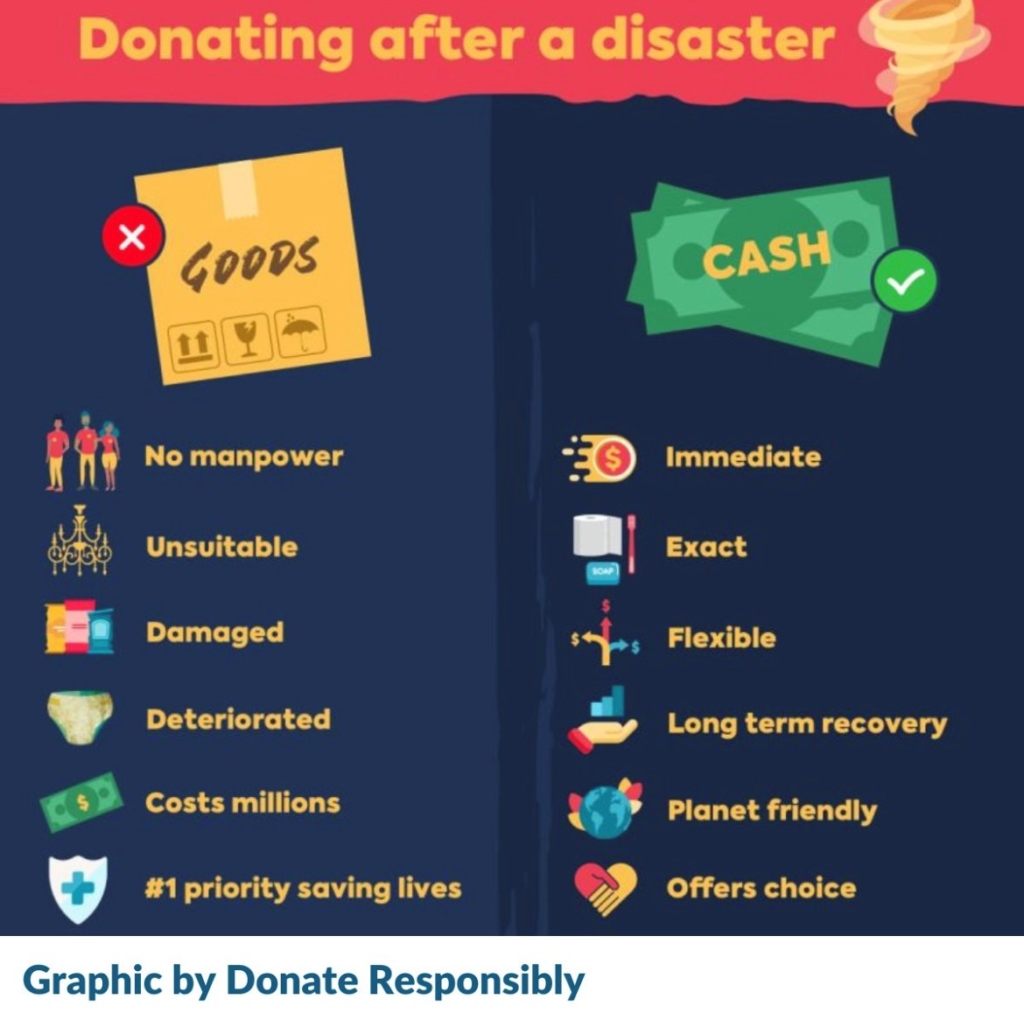
You can donate cash here
Turkey and Syria Earthquake Appeal – Donate Now | Oxfam GB
People want physical cash at times of emergency and during the pandemic, in the 2008/9 recession and with the fear of the Millennium bug cash withdrawals spiked. As a species something in our reptilian brain wants the physical and tangible cash – to have and to hold (or to store under the mattress). Marky Philips’ research has highlighted that donors are desperate for agency in times of crisis and perhaps having the physical notes in our hands at home gives donors that. How could we apply that sense of agency and control to disaster relief cash donations?
And here is a bit of talent from Yo-Yo Ma sharing some treasure and talent, standing in solidarity and providing the handkerchief that might be needed to some at this time




Leave a Reply
Want to join the discussion?Feel free to contribute!