
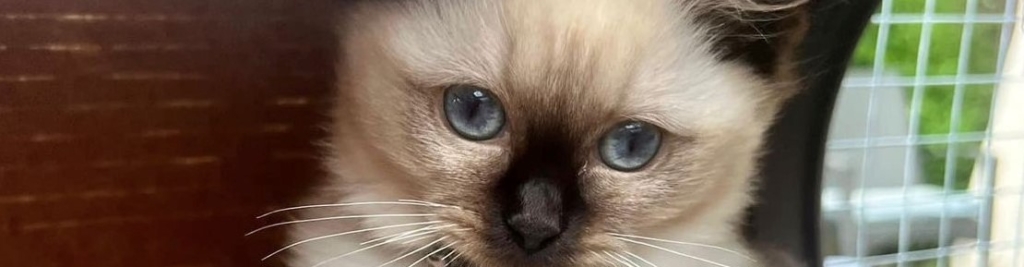
Never work with children or animals…
Part One – Animals
The quote ‘never work with children or animals‘ is attributed to W.C. Fields talking about animals and children in films and them ‘stealing’ the limelight on screen.
So, I wanted to explore a few fun and quirky historical examples of when animals or children have stolen the fundraising limelight and reflect on why it might work, and how attitudes have changed.
… now on stage I have seen shows with horses, donkeys, dogs, chickens, camels, pigeons, eagles, and some badly behaved sheep (all available to support). And they always steal the limelight, and often elicit a collective ‘aaah’ from the audience.
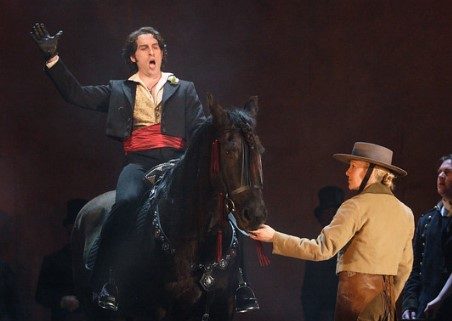
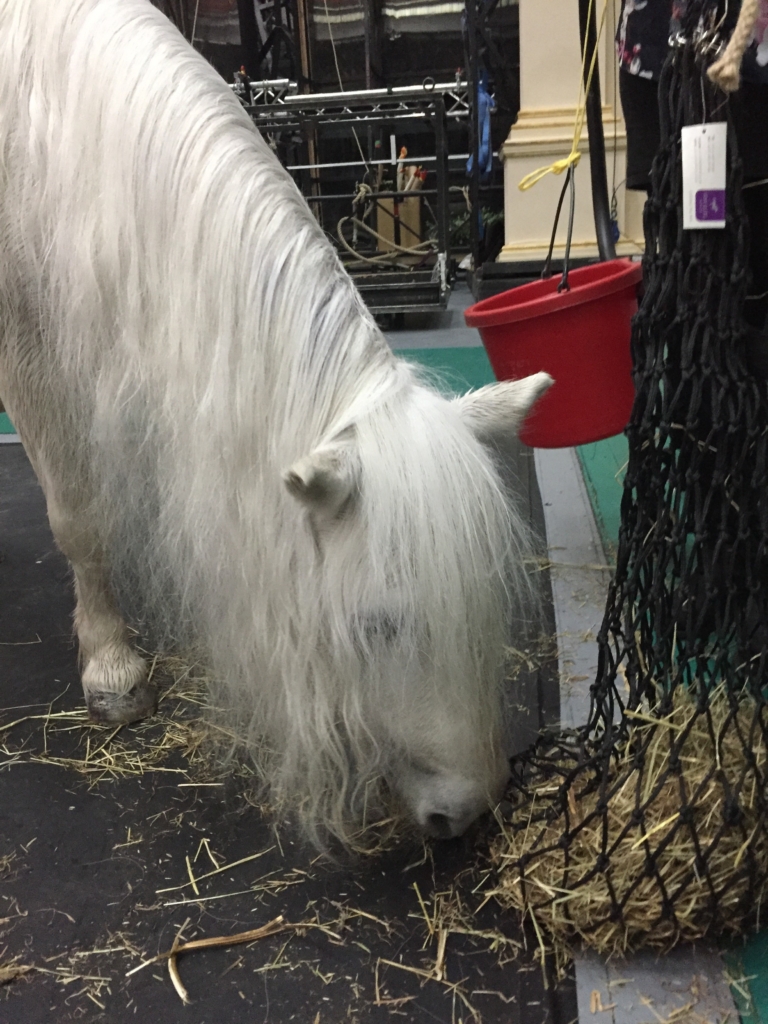
The fundraising examples I have found use enlisted chickens, a swimming pig, travelling horses and a ransomed rabbit to consider.
First animals …
Bazar enticements
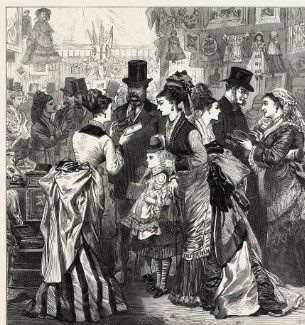
At Charity Bazaars – a sort of cross between a jumble sale and a proto charity shop – goods and food were sold for charity. Some of these were handmade handkerchiefs or pen wipers, and others were bought in bulk from department stores to sell cheaply. Charity Bazaars were not just about the goods for sale but about the day out and the whole experience – an entrance fee was paid and often celebrities, such as actors Sarah Bernhardt and Ellen Terry, opened them. Animals were often used as part of the attraction and included on the adverts enticing people to attend – wild animals and menageries – although I am not sure which animals!
The suffrage movement adopted the Charity Bazaar model and ran one for two weeks in 1909 raising over £5,000 for the cause. There were over 50 stalls selling food, cakes and books – but also suffragette merchandise and there were votes on issues of the day. One of the main attractions were mock prison cells to show how imprisoned suffrage protesters were kept with guided tours by former inmates. They had two types of cell – the male ‘first division’ cells which were much larger than the ‘second division’ cells where the suffragettes were kept. An important ‘show not tell’ fundraising tool.
Animals making the ask
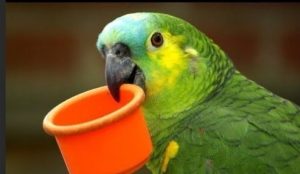
In 1878, Gleanings for the Young tells the story of a young woman who trained her parrot to say ‘put something in the Bible Box‘ and it helped raise over £10 for charity before it flew away after seven years dutiful service.
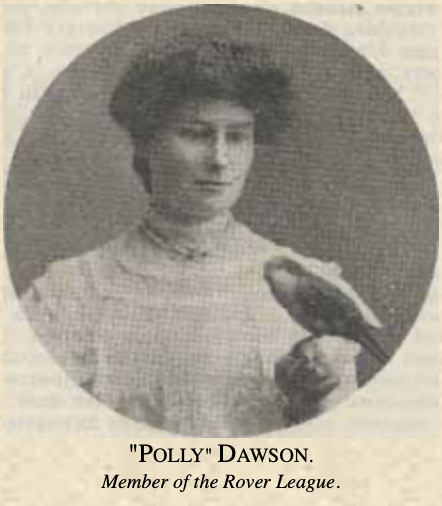
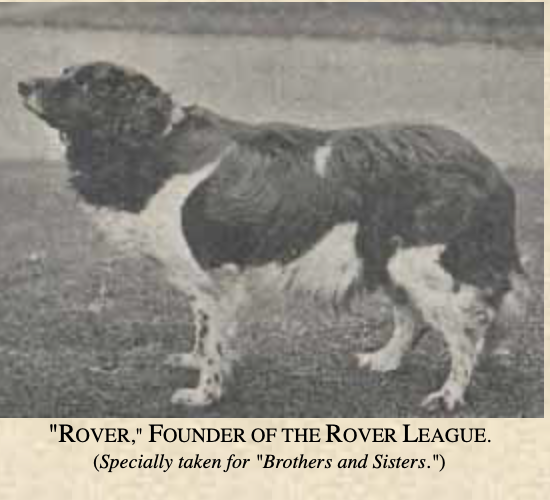
The Children’s Union developed a giving circle for pets in 1905, led by Rover it was called the Rover League. Rover wrote to the pets asking them to het their ‘masters and mistresses collect money for rebuilding the Home for disabled children at Byfleet.’ For 26d they could join the league and for an extra 2d got a badge. He suggested that they could carry collection boxes (see below) or do tricks tor help raise funds. This became a successful fundraiser with each pet ‘writing’ letters to the ‘Brothers and Sisters’ monthly magazine about why they were joining the League – each month new members flooded in from dogs and cats, to goats, a goldfish, parrots, donkeys and rabbits.
London Jack
In 1880, Help became the first railway collecting dog. He had a wooden collecting box attached to him like a saddle with a collar with the message:
‘I am Help, the railway dog of England, and traveling agent for the orphans of railway men who are killed in duty.’
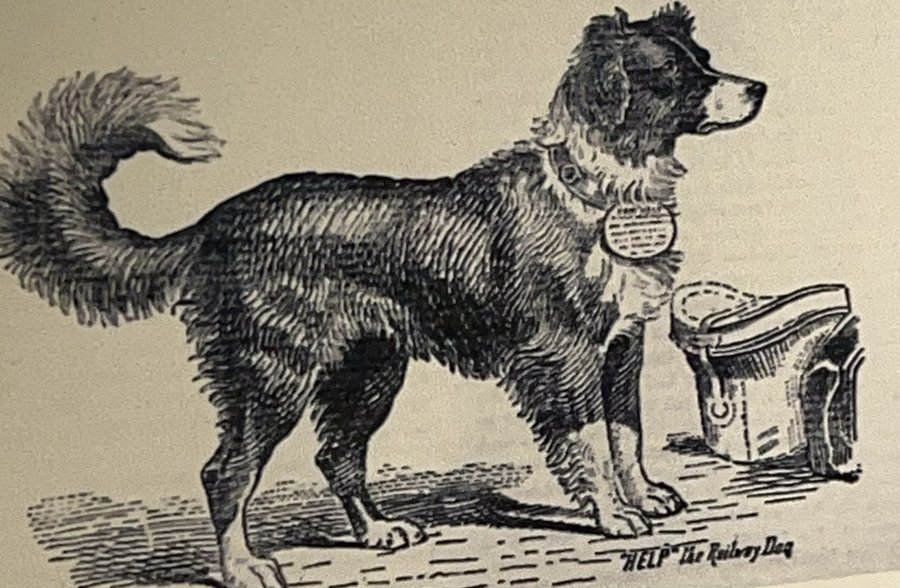
He is said to have travelled every railway line in England and twice been to France raising an additional £1000 there.
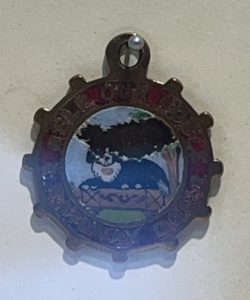
Help was clearly an institution as watch fobs were created inscribed with ‘Help out noble railway dog’. (Showcasing an early example of the importance of fundraising merch!)
Why was Help so successful?
A dog collecting donations clearly has a novelty impact – it stands out because it is unusual and causes us to pay attention.
Perhaps the reciprocity principle is also a factor – if, as many dog loving people do, you have reached down to pat the dog then you have made a connection, and want to do something in return to say thank you for the gift of the interaction with the animal.
London Jack, Wimbledon Nell & Laddie
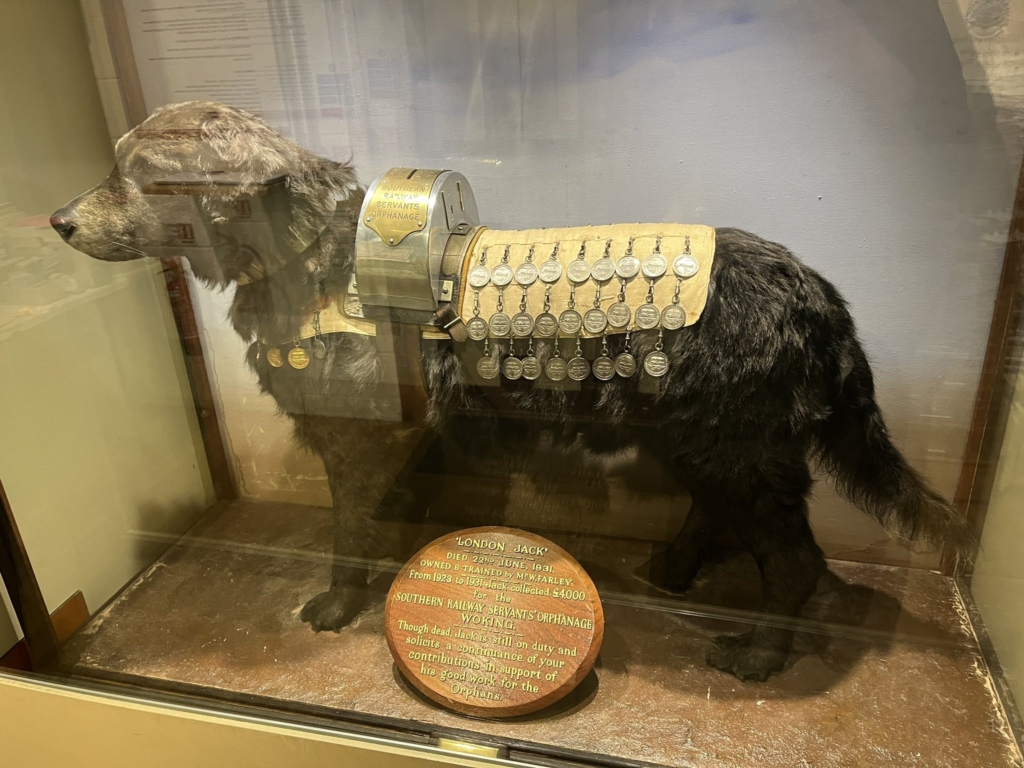
Collecting dogs enjoyed some popularity in the late Victorian period and well into the twentieth century. Above is London Jack who collected at Waterloo Station from 1923-1930 during which time he collected over £4,500 for the Southern Railway Orphanage at Woking. He was then stuffed and put on display at Brighton station (the line is immaterial) until 1967. Jack is still on duty and collecting donations (currently on display at the Bluebell Railway.)
I know people who remember a Wimbledon Nell in South West London. He was succeeded by a stuffed dog called Laddie which collected money on Platform 8 at Wimbledon Station between 1960 and 1990. He now appears on display at the National Railway Museum at York.
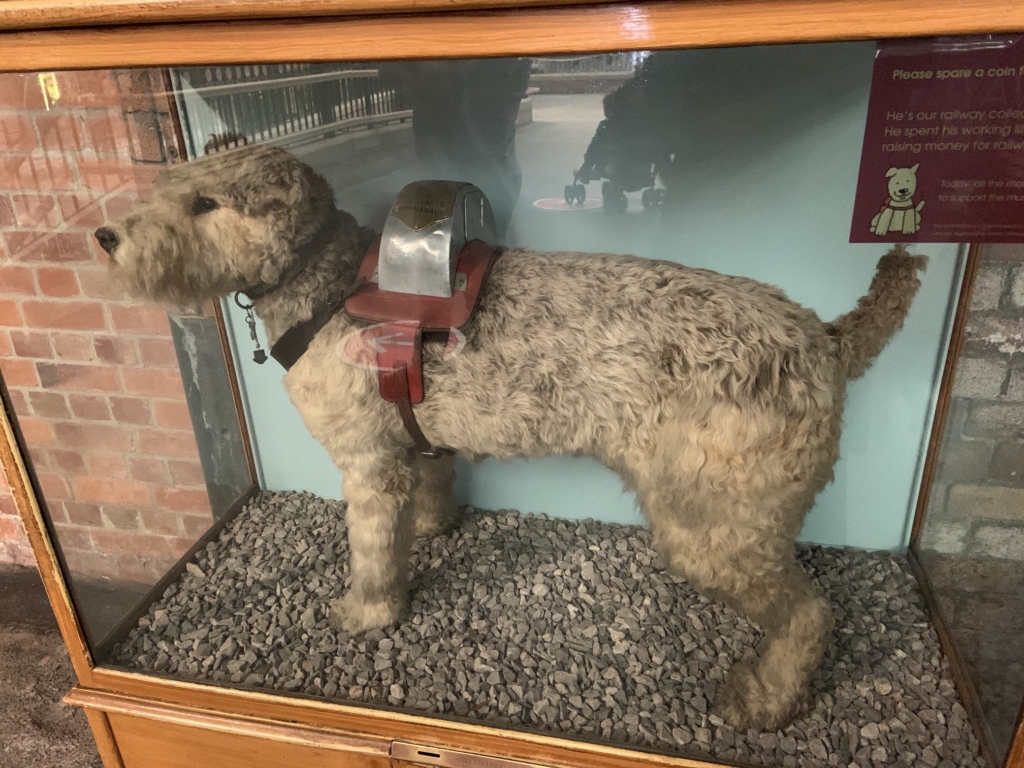
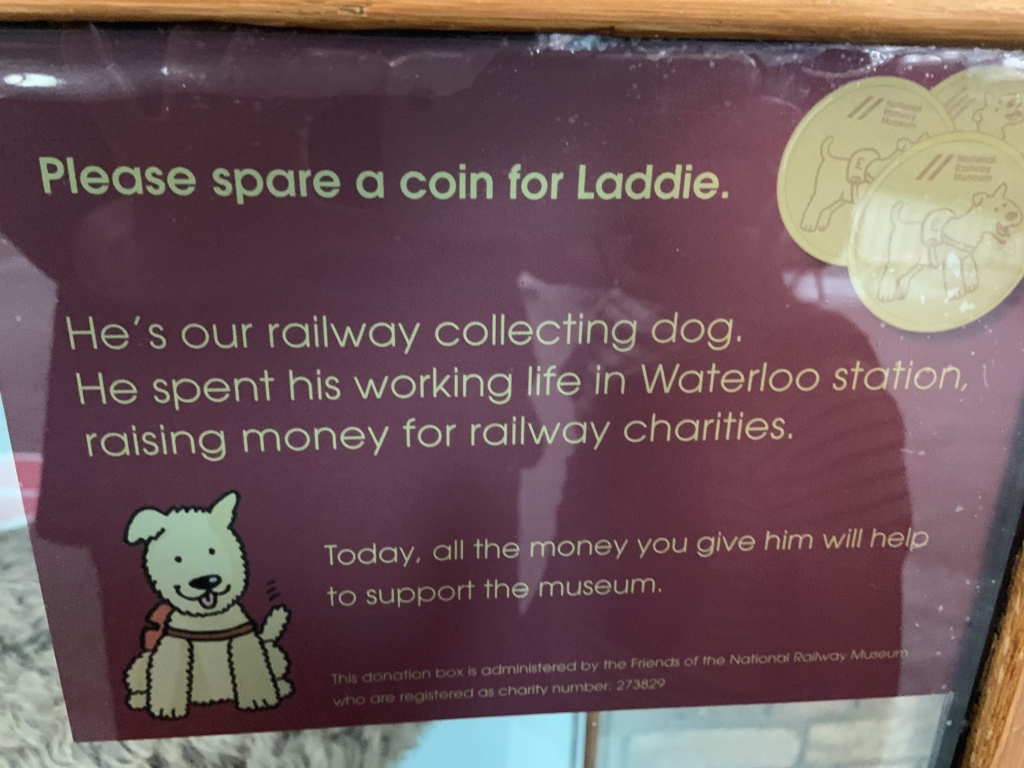
Now we wouldn’t use live (or stuffed dead) animals now to ask for money nowadays as much and our understanding of ethics and exploitation has changed.
Although the RNIB still use donation boxes shaped like Labradors which stand out (see more on donation boxes and why anthropomorphic donation boxes work so well Donation boxes – love them or loathe them they are here to stay – Marina Jones.)
A mascot pig
The German cruiser SMS Dresden was forced to surrender by the British HMS Glasgow off the coast of Chile in 1915. As it was sinking, one of the last onboard the ship was a large pig – who swam to shore and was recovered by the British Navy Ratings. She was named Tirpitz after the chief of the German navy and awarded a joke Iron Cross for being the last to abandon the German ship. She became a navy mascot until her troublesome behaviour meant she was returned to the Captain of HMS Glasgow. The Captain decided (according to a 1917 The Times article) to auction her “for the benefit of the British Red Cross.” She was on display at the stables of the Grosvenor Hotel in Chester for people to view before she went under the auctioneer’s hammer. On 11 December she went to auction and raised 400 guineas for the British Red Cross.

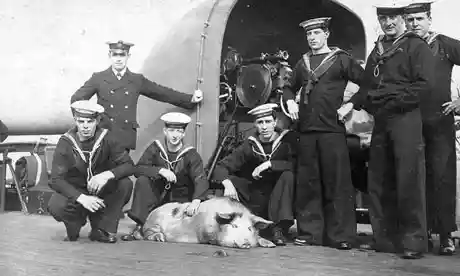
What happened next remains unclear, but it appears she may have been auctioned again as the caption at the Imperial War Museum where she is still on display, reads that she was auctioned for pork in 1919 raising £1,785 for the British Red Cross. If an auction’s worth doing once, its worth doing twice – same pig raising funds twice for the Red Cross.
The 6th Earl of Portland and owner at her death (1919) had her head mounted and donated to the Imperial War Museum where she was an object of curiosity and attraction at its opening in 1920. where she can still be seen today.
Tirpitz wasn’t the only fundraising pig the Church Mission Society auctioned a pig in 1867 raising 2l 17s. The pig had wondered onto J Pollard Esq’s land but after failing to find its rightful owner he fattened it up to raise funds for the Society. Hives of bees were maintained for honey and hens and rabbits were also sold to raise funds for the Society.
Sponsor a zoo animal – dormice or penguin?
Enlist a chicken
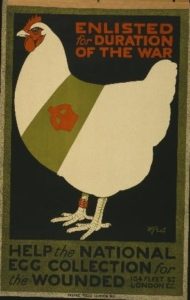
It was suggested that chickens be enlisted for the duration of the Great War as part of a campaign to send fresh eggs to soldiers and sailors on the front. During the war over 32 million eggs were donated to support the war effort – often with messages from donors to the soldiers at the front in the form of egg’o’grams. See How do you say thank you for 41 million eggs? – Marina Jones for more about this egg-strodinary campaign.
Horses for causes
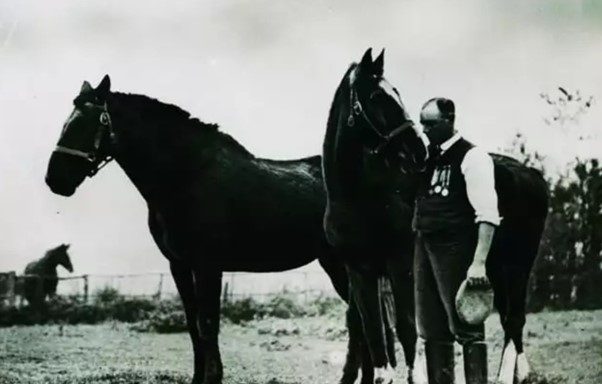
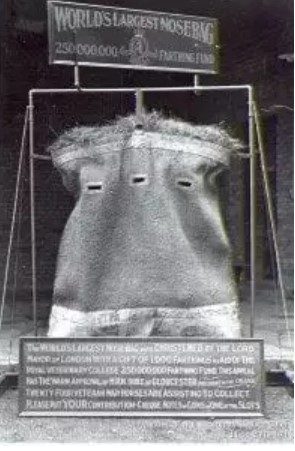
24 veteran First World War Cavalry horses were involved in raising funds to repair and refurbish the Royal Veterinary College including an animal hospital. They visited fairs and circuses up and down the country collecting funds in the World’s Largest Nosebag with a target of raising 250,000,000 farthings.
Read more about it here in John Thompson’s blog about it War Horses for Causes: the twenty four First World War cavalry horses that raised the equivalent of c£16m – UK Fundraising
And why might cute animals be a particularly effective as a fundraising tool?
Because they WC Field was right and they steal the limelight.
We pay more attention to things that are unusual and that stand out – and an animal asking you for money is more unusual than a person.
But there is also the power of ‘cute’.
Rory Sutherland in Alchemy quotes an example of a electricity company running a competition with one prize to win a year’s free electricity or to win a cute penguin light. Which won? Of course, the cute penguin won – with x 350%+ more entries than the year’s free supply of electricity that was financially worth more. (Humans are not rational economic beings!)
Why do we pay attention?
It is part of a primal instinct – our primitive unevolved brains are hard wired to pay immediate attention to our surroundings and assess everything as a potential friend or foe. In the microseconds, it takes our brains to assess whether that fluffy bunny is a threat or not, quickly and subconsciously we decide it is not a threat, and positive emotions are then triggered which makes us pay more attention, and promote careful or caring behaviours.
“Kawaii (a Japanese word meaning “cute”) things are popular because they produce positive feelings. … Kawaii things not only make us happier, but also affect our behaviour.”
The Power of Kawaii: Viewing Cute Images Promotes a Careful Behavior and Narrows Attentional Focus – Nittono, Fukushima, Yano & Moriya)
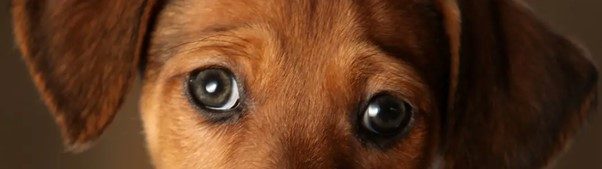
Interactions with animals, such as dogs, can also cause a biochemical reactions producing our happy chemicals (Dopamine, Oxytocin, Serotonin and Endorphins). Perhaps the strongest chemical release with animals will be a rise in oxytocin – oxytocin is one of the four feel good hormones often called the ‘love’ or ‘hug drug’. It promotes social bonding and increases empathy. It can be triggered by eye contact – between a mother and baby, between lovers – or even when looking at a beloved pet, or a random collecting dog or parrot. Eye contact matters. The bigger the eyes the bigger the hit of the oxytocin.
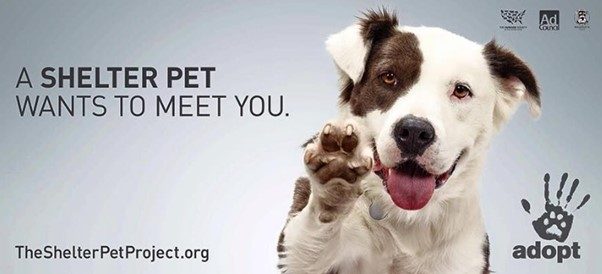
The impact of seeing animals on screen has been demonstrated with an award winning charity campaign for the Shelter Pet Project. The Shelter Pet Project used neural marketing research from Nielson to test how to optimise their adverts. Neural marketing tracks our eyes movements and uses an EEG to assess our reactions . The EEG sensors collects data 500 times a second recording emotional motivation, attention processing and memory activation to record what is happening in our brains in real time when we are watching things. When the dog appeared on screen in the advert viewers had much higher emotional engagement, remembered messages more and paid more attention. Using this research Shelter Pet Project refined the advert to make it more effective and it won an Ogilvy award Ogilvy winner The Shelter Pet Project (thearf-org-unified-admin.s3.amazonaws.com)
So connecting with animals makes us feel good and produces reward chemicals – which explains the popularity of cute animal videos on social media (for that happy reward hit) and their success in fundraising situations.
Icky examples
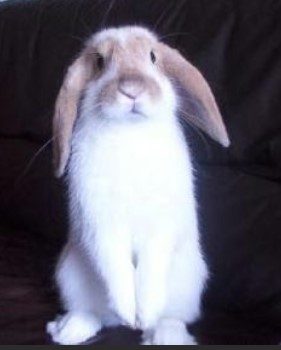
And some more modern examples which draw on the ‘ick’ factor of salience– we do pay attention to something that is unusual, but sometimes it not a delightful thing, but a thing that revolts us. There are six basic human emotions (fear, disgust, surprise, anger, happiness and sadness) and our primitive brains are hardwired to react to perceived threats and react strongly to something that disgusts or surprises it. These fundraisers used fear and disgust – cockroaches, cat’s litter trays, and potentially killing a cute bunny to makes us pay attention.
- A Valentine’s campaign at a zoo invited you to name a cockroach after your ex get it fed to an animal.
- An animal shelter solicited donations and in return for your gift the names of those annoying you were written at the bottom of a cat’s litter tray.
- And a hostage situation with a bunny called Bernd which involved raising money for charity to save the life of the bunny.
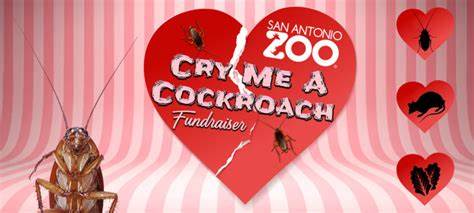
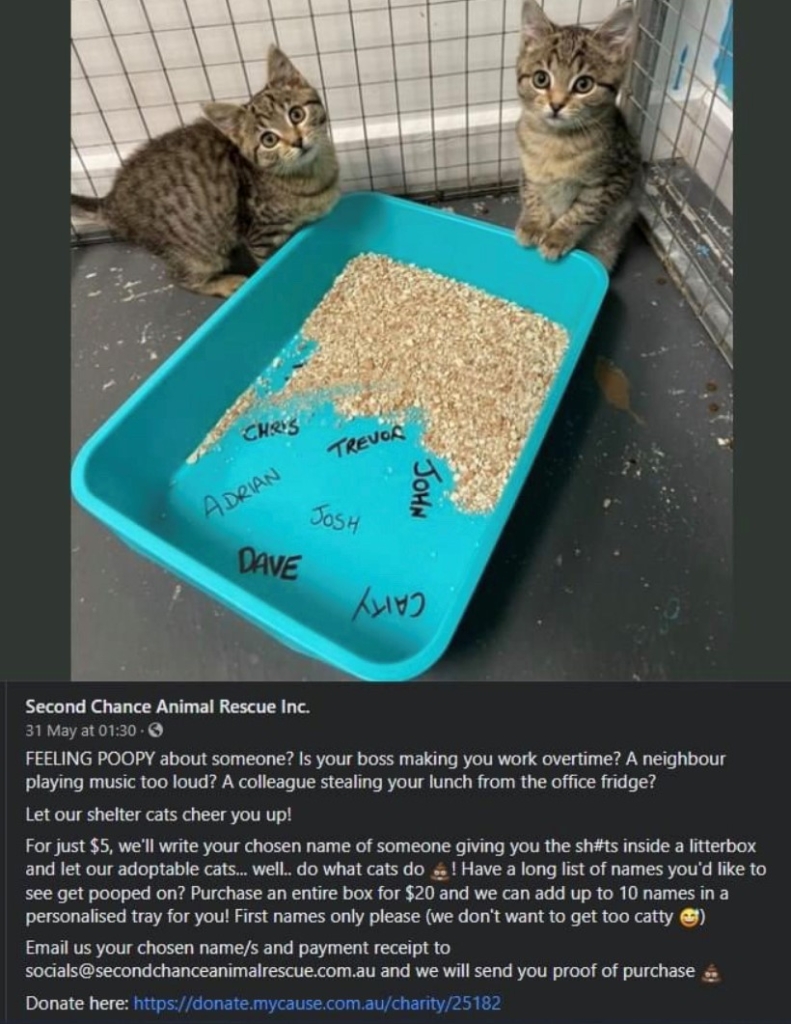
Now the first two are ‘lean out’ reaction – to move away from the object that our primitive brains react to with disgust or fear.
The third examples of the hostage rabbit is perhaps more interesting – for some donors it was a ‘lean in’ and donate to save the rabbit’s life, others offered recipes to cook the rabbit. Not all messengers or campaigns work for all donors in the way you might think!
We (or cats) don’t always give out of altruism, sometimes it is out of guilt
These two cats Quince and Quicksilver donate to RSCPA to make amends – as well as to cathedrals
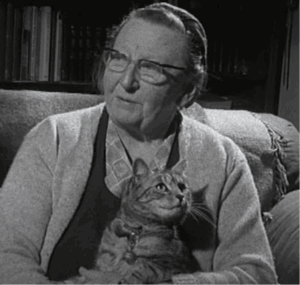
Watch the BBC footage here.
What are your favourite examples of animals being directly involved in fundraising?
And what about children as fundraisers – well, here’s looking at you kid – an exploration of children in fundraising
Move on the Rover League and its members here.



Leave a Reply
Want to join the discussion?Feel free to contribute!