
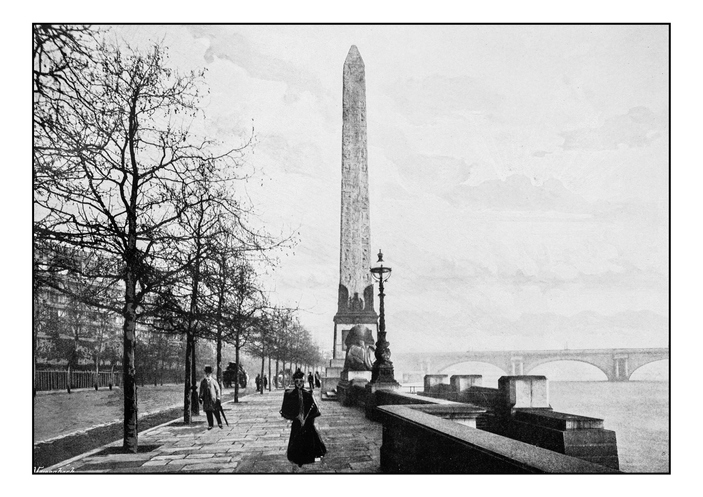
Cleopatra’s needle and donor pyramids
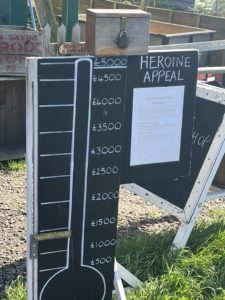
Fundraising challenge: You have a donor willing to give you something you want, but you cannot afford costs associated with the project.
It’s happened for many of us – in order to secure the thing you want – you need another fundraising campaign.
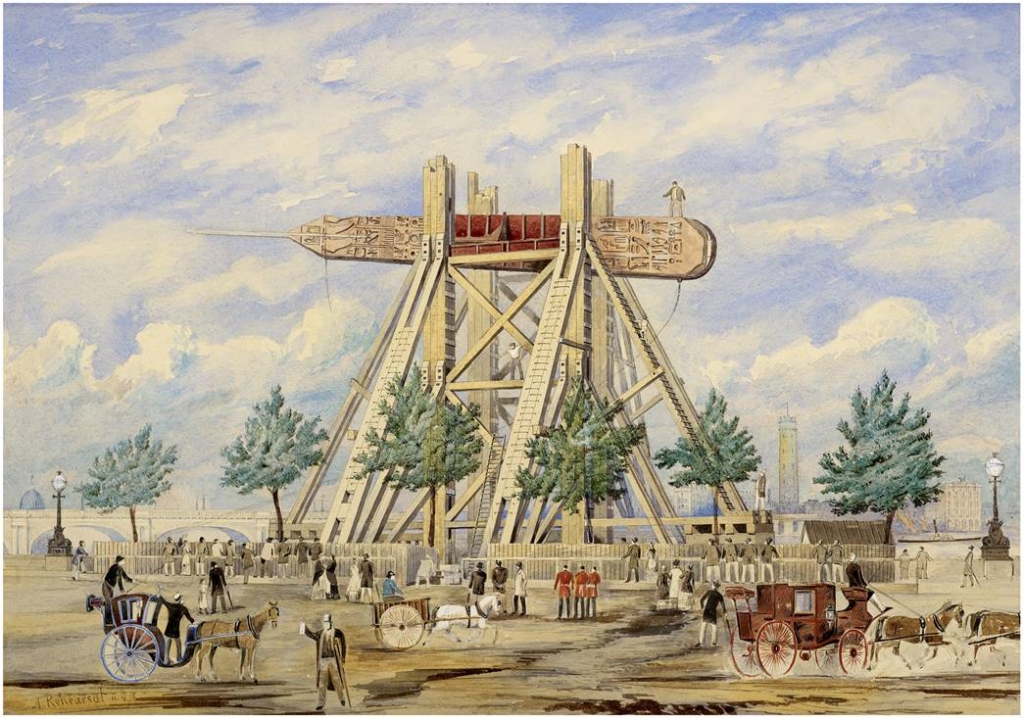
This is what happened with Cleopatra’s Needle.
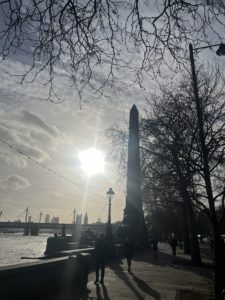
In 1819 when Muhammad Ali Pasha gifted the UK the obelisk known as Cleopatra’s Needle (which has very little to do with Cleopatra).
For 58 years the obelisk remained in Egypt, but then the land where the obelisk was stored was threatened, something had to be done. So a fundraising campaign was planned to finally bring it to England.
The negative risk of not doing something is a useful tool for any campaign – using the urgency of needing the funds before it is too late to drive action.
The major funding came from one individual – Sir William James Erasmus Wilson (a very solid Victorian name!) – a well-to-do dermatologist with a passion for Egypt. He contributed £10,000 of the £15,000 needed to bring Cleopatra’s Needle to London.
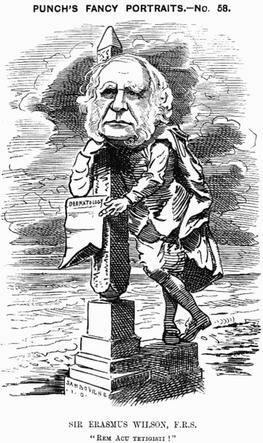
The remaining £5,000 was raised through a public campaign – made up of lots of small donations.
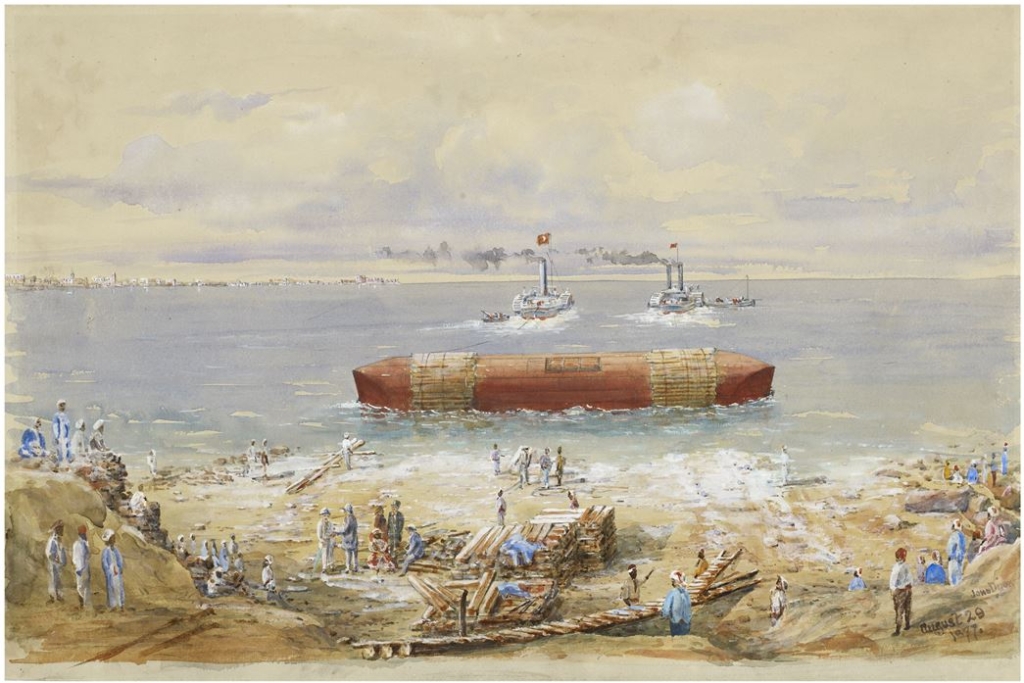
The main costs were needed to ship Cleopatra’s needle from Egypt to London and this was done in a 18 metre cigar shaped pontoon called The Cleopatra. On the journey during a storm the pontoon was cut loose to save the crew and floated around the Bay of Biscay for 60 hours before being rescued and delivered back.
Cleopatra’s Needle has now been on the north side of the Thames for 146 years – and Wilson’s contribution is recognised by a plaque which recognises his ‘patriotic zeal’ in bringing it to London but does not mention his financial contribution.
Donor Pyramids
Fittingly for an Egyptian artefact, the fundraising campaign conforms to the standard donor pyramid model. The model sees large lead gifts at the top of the pyramid, supported by many smaller gifts at the base of the pyramid. The Pareto Principle says that 80% of your gifts ought to come from 20% of your donors. In this case 75% from just one donor!

You want to secure the majority of your fundraising target and leadership gifts in this first private phase of the campaign. With a leadership gift of £10,000 in this private phase, you give confidence to the wider audience that the project will happen when your project becomes public.
This campaign represents a rather a top heavy pyramid with an over reliance on one major leadership gift. A more typical donor pyramid might look something like this:-

It is important to have lots of people you can ask – as not everyone will say yes (or say yes at the level that they are asked to support).
Being near completion also incentivises the public phase to help complete the target – when you get nearer your target and people have confidence it will be achieved, the speed of gifts often increase.
And did you know?
Inside the pedestal of the obelisk is a time capsule including a set of 12 photographs of the best looking English women of the day, a box of hairpins, a box of cigars, a baby’s bottle, a hydraulic jack and some samples of the cable used in the erection of the Needle, a portrait of Queen Victoria and a Bradshaw Railway Guide!
References
http://topicaltens.blogspot.com/2014/09/12th-september-cleopatras-needle.html
https://www.museumoflondon.org.uk/discover/victorian-cravat-pins-and-cleopatras-needle




Leave a Reply
Want to join the discussion?Feel free to contribute!