Read the will Mark Antony!
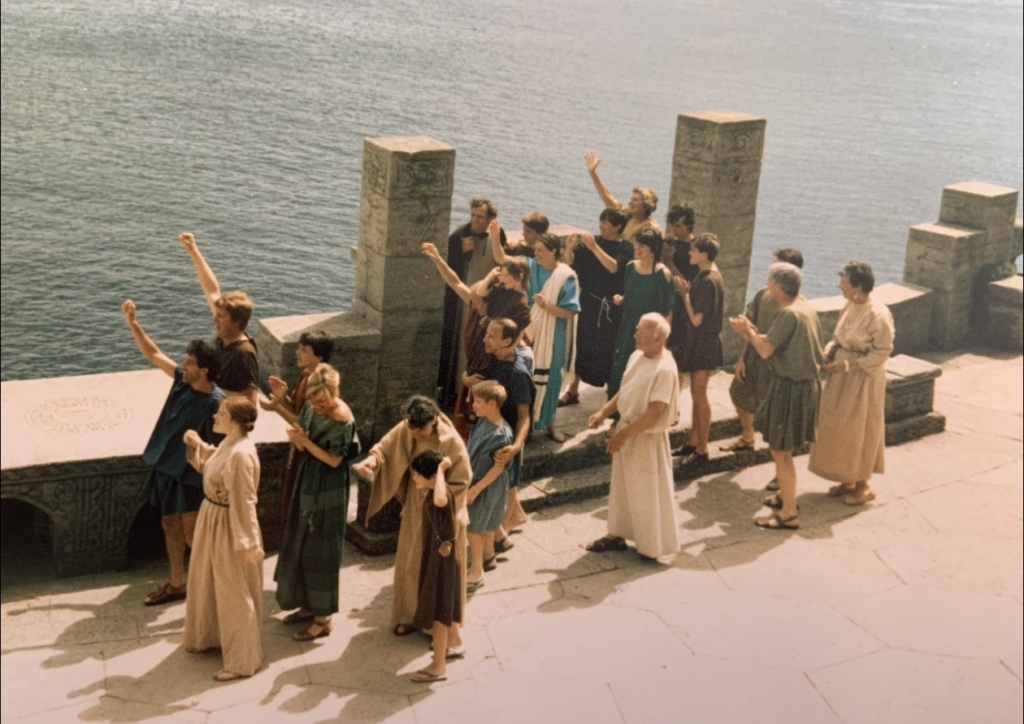
Here I am aged 6 at the Minack Theatre in Cornwall in a production of Juluis Caesar. Can you spot me? This production was directed by my father, and also in the picture is my mother, sister and grandfather.
This is taken from Act Three of Julius Caesar just after Caesar has been assassinated by the conspirators. Mark Antony has just finished the famous “Friends, Romans, countrymen, lend me your ears” speech, and the crowd are shouting to hear Caesar’s will. Mark Antony was not one of the conspirators who assassinated Caesar, and in the space of this one scene through the power of speech he changes the angry mob from thinking Caesar was a tyrant, to a champion of Rome and the people. The speech itself is a masterclass in persuasive oratory.
At this point the crowd are yelling “We’ll hear the will. Read it, Mark Antony” and “The will, the will! We will hear Caesar’s will” (notice the deliberate repetition of ‘will’ when ‘shall’ would make more grammatical sense).
So what was in Caesar’s will, how did Romans make legacy gifts, and how could you be as persuasive as Mark Antony in your fundraising?
Let’s pick three devices used by Mark Antony to persuade the crowd:
Framing
“I come to bury Caesar, not to praise him.”
Framing is the context or lens which people use to understand a message. Just as a picture frame changes how a painting is perceived, the “frame” we use alters how our audience sees the facts.
For example, an operation with a 90% survival rate sounds far more positive than one with a 10% mortality rate, even though the facts are identical.
By Mark Antony saying he has come “to bury, not to praise,” Antony appears neutral, framing his speech as respectful compliance with Brutus and the conspirators. This disarms Brutus, and the crowd’s defences.
He also reframes “ambition” which is a negative quality when Brutus uses it. Brutus and the conspirators claim that Caesar’s ambition to be emperor was cause for the assassination. Mark Antony contrasts Brutus’ claims of “ambition” with Caesar’s refusal of the crown and his generosity to the city.
In fundraising, the frame that we put around a problem can help a donor understand the issue, and drive action. So instead of “2 million starving children need help today”, we can frame the problem as “Help Ifran have a meal today” (this links into the identifiable victim heuristic where we are more likely to help one named person rather than countless millions. Our brains cannot compute the big numbers or the scale of such a large problem – but, by the frame helps adds focus and by using the lens of how we can help one child (Ifran) we can see a tangible and real impact of our gift.)
Repetition
“Yet Brutus says he was ambitious;
And Brutus is an honourable man.”
Repetition breeds familiarity and our brains often equate familiarity with truth. This is known as the mere-exposure effect. Antony deliberately repeats Brutus’ assertion that Caesar was ambitious, until it sounds hollow and insincere. By overusing it, he drains it of its original power and turns it back on its speaker.
Mark Antony calls Brutus “an honourable man” not once, not twice, but eight times.
In fundraising, we often debate how many times to repeat an ask — but repetition works. Despite how carefully you have crafted your appeal your donor will skim it (see the work of Siegfried Vögele). So although it might feel repetitious to you (or to someone else in the organisation reading it) knowing that your donor is skimming your material makes repetition powerful and effective.
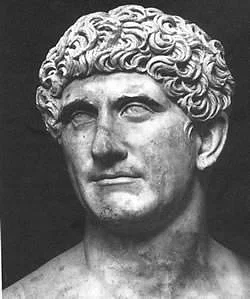
Curiosity
“I found it in his closet. ’Tis his will.”
At first Mark Antony refuses to read the will. This incites the curiosity of the crowd:
“Have patience, gentle friends. I must not read it.
It is not meet you know how Caesar loved you.
You are not wood, you are not stones, but men.
And, being men, hearing the will of Caesar,
It will inflame you; it will make you mad.”
This leverages the curiosity effect our innate drive to seek information simply because we want to know what we don’t. Curiosity triggers dopamine release, increasing engagement, memory, and motivation.
In fundraising curiosity can be in the teasers or questions you ask in your appeals and communications
“How just £1 saved 20 people in Ethiopia from certain death?”
Mark Antony’s rhetoric also feeds into reactance. When we are told that we cannot, or should not, have something it feels like our agency and autonomy is being taken away, and we rebel against it and want to do the opposite. So, by Mark Antony telling the crowd that they cannot hear the will makes them want to know what is in the will even more.
When asking for donations we need to be careful not to incite reactance in our donors making them feel that they do not have agency in the decision. A meta data study by Roger Dooley that looked at 22,000 pieces of data showed that by giving donor’s permission not to give, or not to give now by adding the phrase ‘but you are free to choose’ increased donations x2.
What does Caesar’s will tell us about Roman wills?
“Here is the will, and under Caesar’s seal:
To every Roman citizen he gives,
To every several man, seventy-five drachmas.”
The will reveals that Caesar left each Roman citizen 75 drachmas. Caesar also left his private orchards and gardens to the city to enjoy.
“Moreover, he hath left you all his walks,
His private arbors, and new-planted orchards,
On this side Tiber. He hath left them you,
And to your heirs forever—common pleasures
To walk abroad and recreate yourselves.
Here was a Caesar! When comes such another”
Although Shakespeare is known for his fabrication of historical events for political propaganda, Mark Antony is really reported to have read Caesar’s will and the contents described are accurate in the play. However, in real life, Mark Antony read it in private, but the contents were made public.
Roman wills, like wills today, were socially and culturally prescribed. The norms that we see today to gift to immediate family (prescribed through legitimate portions in some countries) date back from Roman customs. Wills were important documents for securing succession and naming official heirs.
Charitable works for the public good, like leaving the land to the city or building theatres or libraries, was a key virtue in Roman society so there was a cultural norm to make gifts like this it was a way in which powerful men (and a few women) demonstrated their civic virtue.
It was also common practice that wills gave freedom to your faithful slaves
Some other Roman legacy examples:
As with many parts of the history of fundraising and philanthropy, we rely on what survived to catch glimpses of the past and what and how fundraising and charitable giving was carried out. Inscriptions on tombs can give us clues to how philanthropy was enacted when the papyri have long since disintegrated. There are a few notable examples of legacy giving – like Caesar’s – that reflect in life commitments.
Menodora
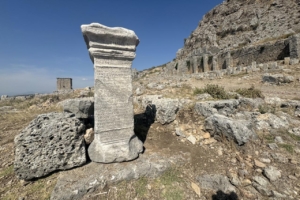
In Turkey a tomb was recently discovered with an inscription which tells of Menodora, a woman in the town of Sillyon who donated over 300,000 denarii to a children’s foundation and building public monuments (via Why Philanthropy Matters newsletter)
Pliny
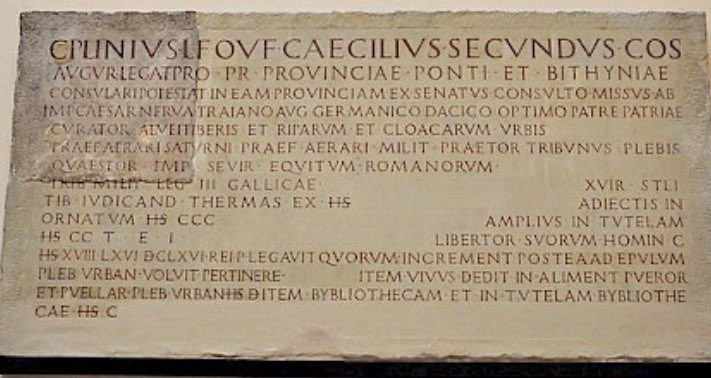
Pliny the Younger, prolific first century letter writer, lawyer, author, magistrate and sometime philanthropist, is a notable legacy donor. Pliny’s will details his bequests for the public good including gifts to the public baths and their upkeep (we like a legacy bequest that comes with maintenance costs.) In his will, he also supported Freemen of the city which included spend on an annual dinner. In his life he had been a major contributor to the library and his will does not include another gift to the library but notes his life time gifts which included 100,000 sesterii for the upkeep of the library.
To read more about legacies and history
- “Let’s choose executors and talk of wills.” – this quote from Shakespeare’s Richard II is quoted on a Salvation Army legacy brochure from 90 years https://marinajones.uk/legacy90/
- Shakespeare or Dante – what Dante can tell you about legacy fundraising https://marinajones.uk/dante/
- Legacy fundraising Middle Ages style https://marinajones.uk/legacy-fundraising-middle-ages-style/
- We have a tendency to think of wills as private documents, especially in British culture. Philanthropist and entrepreneur Madam CJ Walker was aware it is a public document and will be read and scrutinised https://marinajones.uk/legacylessons/