

“Blessed are the money raisers for in heaven they shall stand next to the martyrs”
Theologically controversial but a point being made about the good done by fundraisers and how hard they work to make mission happen.
This was said by Dwight L Moody a nineteenth century missionary and fundraising star that you have never heard of – I hadn’t.
Charles Sumner Ward is often credited as being the ‘founding father’ of modern fundraising with his intense mass campaigns. The infamous one was to raise $90,000 for the YMCA in Michigan in 1905 – instead of a protracted campaign he concentrated the campaign into a 6 day push with publicity in newspapers and solicitors across the city. With fundraising we all know that we stand on the shoulders of giants and learn the techniques of those that have become before – it seems that the lesser known (now) Dwight L Moody was using these techniques decades before Sumner Ward.
So who was Dwight L Moody?
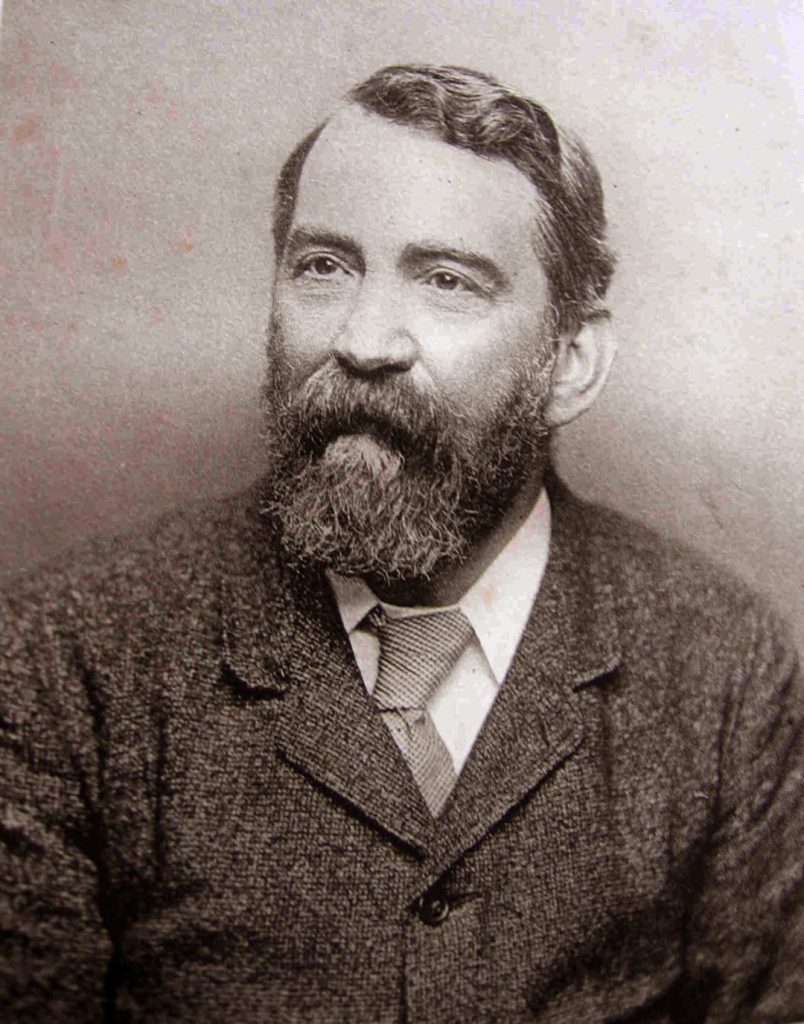
Born in 1837 he grew up as one of seven siblings to a poor family. Aged 17 he moved to Boston and worked in his uncle’s shoe shop where he demonstrated the persistence and business acumen that would stand him in good stead as a fundraiser. At the shoe shop, he used to follow customers down the street and hang out at railway stations to try and attract customers. He kept the shop open on holiday to generate funds. As we all know – persistence pays off.
In 1855 he dedicated his life to the church and used the same business skills to evangelise and secure funds.
And he knew that incentives worked.
He was not allowed to open his own Sunday school until he could guarantee enough pupils to make it worthwhile. So, he incentivised attendance with sweets and continued attendance with the prize of a squirrel in a cage (this was 1860!)
Incentives work because we are wired to maximise rewards and avoid losses. So we are motivated by the reward of the free sweets/squirrel and feel like we are missing out if we don’t claim it.
He was employed as Librarian for the YMCA and tasked with raising funds for buildings. He later became a missionary preacher raising funds for a variety of causes.
But he used his business skills and brains to develop fundraising practice – and many of these we still use today – and with a more detailed understanding of the psychology and science we understand more about why they work.
The First Before and After Picture
(or the first example I have found so far)
The ‘before and after’ picture is a staple in the fundraiser’s toolkit showing the impact and difference that a gift can make. In 1858, Dwight incentivised a group of young boys to attend weekly Sunday school with the promise of new suits if they attended every meeting until Christmas.
They did. And he bought them new suits.
But not before taking a picture of them before in their old scruffy outfits to contrast with the new suits – and he used this in publicity for the work of the church with the caption
‘Does it pay?
Yes it pays’.
An early form of a donor impact report so that they can see the difference and success a gift makes.
Messengers – encouraging support or putting supporters off
“Your name will help us through. The public will thank of you take hold of it, it must succeed”
Dwight L Moody understand the importance of the right messengers being attached to your campaign.
‘Your name will help us through’ was written as a request to Cyrus H McCormick to support a YMCA building campaign and secured a $10,000 donation. And once his name was public, other subscribers joined.
People are influenced by who else is involved in your work and supporting you, but this figurehead or messenger needs to be relatable, likeable or aspirational. If is the right messenger, people will listen and do what is asked of them– this is a type of crowding in effect.

“If we get rich men on board people will say let them pay the bills … as it is I have to keep their names of the letters that I write”
Dwight L Moody was also aware that sometime lots of rich donors can deter supporters from donating to a campaign. He specifically said not to ask one donor as he was “too old and too rich”. This is a ‘crowding out’ effect when people see too many other people supporting and say to themselves ‘well its okay for Lady So-and-so to support she has lots of money and I don’t and if they are supporting that then I don’t have to’.
Whilst high profile and wealthy messengers can be respected and encourage people to crowd in and give gifts – they can also crowd out other donors. Supporters often want a relatable peer to ask them for support – someone like them – if they can see ‘people like me’ giving they will relate more and be more likely to give.
Fundraisers always have to create the balance of showing that it is supported by significant donors but that your donation whatever size will be appreciated and that it is a social norm for people like you are giving as well. That is why it is so important to test and learn who are the best messengers for your work and for each campaign.
(whilst this rich old man who was dismissed as an unhelpful named supporter, Moody later changed his mind saying “I do not believe he will not last the winter out and now is the time to push” and did ask him to give). Timing your ask is critical.
Donor psychology in action
Philanthropic psychology is the study of how people love humankind and how giving can help us connect better with our sense of self and identity. Philanthropic psychology is an emerging field pioneered by the brilliant Dr Jen Shang.
But like behavioural science, we see it used in fundraising instinctively but are only just now able to articulate and breakdown how and why the science works. There are two principles that Moody was instinctively employing – identity activation and reactance.
Using the donor’s identity and thinking about how that identity might motivate their giving and feel more connected the cause. We all have multiple identities relational (daughter, parent, sibling), religious, personal (kind, curious person) or regional/national. By using a donor’s identity you are connecting powerfully with who they are as a person and making giving more rewarding and enjoyable.
Moody activated the parental relational identity in this appeal connects them with their true selves. He wrote
“all parents who have sons whom they love should give money to this organisation liberally”.
By connecting with their identity as parents he was making a more personal and powerful appeal – resonating with their sense of self and how they feel about their own children. This campaign worked and raised over $200,000 for the YMCA.
We often use donor’s identities and how they are linked to causes to make our propositions more attractive and appealing to donors.
Reactance
If we don’t think that we have any autonomy in a decision – any choice – then we feel our sense of self is compromised. We want control over our own lives and our decisions. Often in fundraising appeals a donor can feel that they are being told to do something – to give now, to give a certain amount. Reactance basically (as Lisa Sargeant says in Change for Better) “turns your lovely reader into a wilful teenager” – if they feel they have no control and autonomy then instead of doing what is asked they will do the opposite of what they have been asked.
You can mitigate this by telling them that they have choice over whether, and when to give, and how much they give. And giving them permission not to give, or give a lesser amount.
It might sound counter-intuitive to say that they don’t have to give but some decision science is counter-intuitive – but still works.
Roger Dooley has shown that by adding the phrase “but you are free to choose” to requests the results doubled. You are giving supporters the autonomy to choose where and how and if they give.
Moody’s use here demonstrates an understanding that they do have other causes to support and he is not trying to stop them supporting projects they already care about ( this was used in a mass direct mail appealing for funds for a school project over 9,000 letters were sent in 1895)
“I have no wish to draw from contributions to other works, but have thought that some might feel that … they could send five dollars without curtailing gifts to others”
But it recognises that there are other calls on their funds and that they have existing commitments and might choose to support additionally. It is a modified and more subtle version of ‘but you are free to choose’. It also reinforces their self-identity of being a kind and generous person and committed to contributing to good causes.
Never Waste a Good Crisis
In 1868 the Farnell YMCA hall burned down and two Englishman travelling reported
“Thousands upon thousands of dollars were subscribed without a moment’s hesitation; and it said that before the fire was out money enough had been raised to build a new hall”
This was an exaggeration and only $20,000 was raised on the day of the fire. But Moody and the YMCA team did not waste the crisis but used it as an opportunity to ask. One week after the fire Moody had arranged 5 teams of 3 men to carry out an intense week-long public campaign seeking donations through personal solicitation and supported by a prominent press campaign.
(Like the Notre Dame fire, big gifts came in immediately whilst the crisis was fresh in people’s minds)
But only raised $75,000 towards the goal and in the end they rebuilt a smaller hall.
Creating press stories around YMCA capital campaigns was essential for Moody and he always used publicity and got newspapers to cover fundraising activities. For example, when laying a new cornerstone for a YMCA building he needed to get a noteworthy person to lay the cornerstone to generate the right publicity
“I do not care who you get … if you cannot get any woman, then go for some man but what I want is to get new man or woman interested”.
Again we see the importance of the right kind of messengers to generate publicity and encourage others to give.
This intense short campaign and use of publicity seems to be a forerunner of the type of campaigns attributed to Charles Sumner Ward thirty years later.
Persistence pays ….
1885 he repeated the success of the intense campaign with a four day campaign to raise $65,000 for YMCA Scranton Pennsylvania. One of the key events was a dinner with wealthy philanthropists. However the top prospect did not turn up (plus ca change!)
What would you do?
Moody insisted on and was taken to his house and made a direct ask. The man refused to support the campaign. Although he did agree to sit on a platform at a public meeting to lend his name and reputation to the campaign. Whilst there Moody asked him directly in front of the audience to support the campaign which resulted in a $5,000 gift.
Persistence pays off when making the ask (but maybe with a little less stalking and public shaming into giving!)
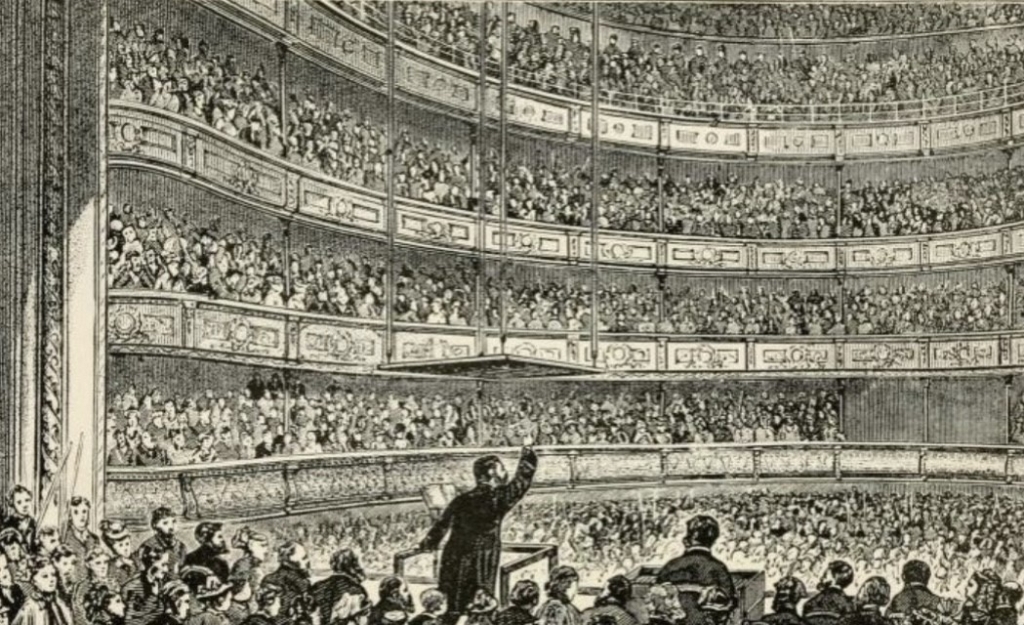
Business acumen in action in fundraising models
Moody used his business skills when fundraise to ensure that more funds could be raised in smarter ways:
- With the YMCA buildings he rented out the lower two floors to ensure earned income – the mixed funding model in action in the 1860s
- He also ensured new state charter that provided tax exemption for charitable endeavours.
- Social and heavenly returns on investment – He sold stock in his Sunday School but the dividends were redeemed by attending Sunday School. He used a 6% interest scheme for dividends in the building but noted that the ‘larger rewards in heaven than on earth’.
- When appealing to businessman Cyrus McCormick in 1880 it was an appeal to his business interests as well as his altruistic principles “all over the coast, farmers who are using your reapers (of world class fame) will feel an interest in the face that you have to start such an enterprise”
- Dedicate royalties from hymnal to use by charities he was raising funds for.
So learning from Dwight L Moody we see
- The importance of showing the impact of the gift (the before/after)
- How those supporting the campaign impact on who gifts – a well known name might attract support but ‘too old too rich’ can be off putting as they are not like the majority of donors you want to attract
- Use philanthropic psychology and activate your donor’s identity to draw them closer and more meaningfully to the cause
- Avoid reactance and give donor’s autonomy to choose (‘but you are free to choose’)
- Never waste a crisis
- Be persistent (but don’t follow them to their house when they don’t turn up!)
- Learn from business and apply it to fundraising
Charles Sumner Ward the founding father stands on the shoulders of Dwight L Moody. Many of the techniques credited as innovations by Charles Sumner Ward were used by Dwight L Moody, and doubtless others before which we have yet to discover and explore.
References
‘Honorable Beggars: The Middlemen of American Philanthropy’ by James Jowell Smith 1968 (Doctorate Dissertation)






Leave a Reply
Want to join the discussion?Feel free to contribute!