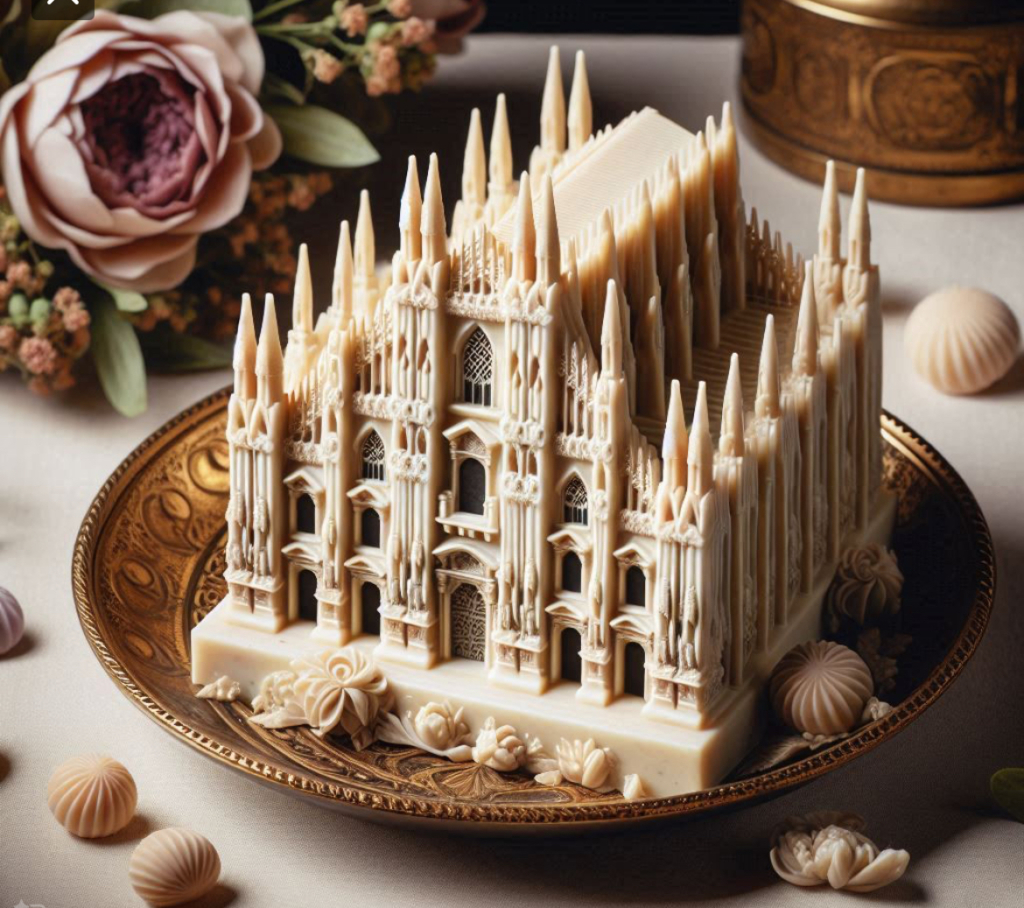
Imagine giving so much away that you have to borrow money for soap
That’s what happened to Marco Carelli, a wealthy wool merchant from Milan and Venice, who in 1393 signed over his entire fortune to fund the construction of Milan Cathedral. His extraordinary gift of 35,000 ducats left him virtually penniless for the last years of his life — a man once rich enough to shape a city, reduced to begging for the basics.
But why did Carelli make such a gift? And what can his story tell us about legacy giving and donor behaviour even today?
What made him leave this extraordinary gift, and what can the available sources tell us about him?
Marco appears to have had no children. His wills make no provision for children (they may have been married or died) but convention and custom would have dictated that they be included. Often our best legacy prospects can be those without children who do not have to adhere to these social conventions.
In Venice, there was a state requirement for citizenship of a bequest to the state church (as well as an oath of fidelity to the republic and property ownership in Venice – this had to be renewed every five years. Three years before he gifted all his property he made a will in Venice (in those days before Italy was unified each city state had its own legal system and laws).
This was a planned gift and set in motion by the liquidation of his Venetian assets three years before the final gift was made.
He made a will in 1390 for his property in Venice (which because of the organisation of the city states needed its own will)
Second will for other property in 1393 and a codicil in 1391
Where was the capital campaign for Milan cathedral?
They had laid the cornerstone for the cathedral five years ago, but the campaign had stalled.
Despite the St Luke’s Gospel cautioning “For which of you, desiring to build a tower, does not first sit down and count the cost, whether he has enough to complete it? Otherwise, when he has laid the foundation and is not able to finish it and who see it begin to mock him, saying ‘This man began to build but was not able to finish it’ – they began but did not enough to complete it.
This was common when building cathedrals – the campaign began with no definite plan of the cost, the timing or the completion date. Cathedrals needed money to build – some had a slow and steady supply and others worked in fits and starts. We all know of capital campaigns that have stalled on the way to their goal.
Goal gradient effect means that we are more likely to give at the start to be the first to give – and towards the end when success is almost guaranteed the speed of donations increases as the target approaches. But in the middle donations had stalled.
What happened after the pledge?
Marco made the gift and afterwards – rather like a proto effective altruist – lived on nothing. His will gave various properties and assets to other members of the family but he has to ask permission from the capital committee at the cathedral to realise these assets.
At this point he was so poor he had to beg money to buy soap – although this may be an apocryphal tale designed to highlight his piety. The story endures….
When did he make the gift?
Marco chose to sign the will giving his fortune away on 15th August, the Assumption. He was devoted to Our Lady, Mary, mother of Jesus to whom the cathedral was dedicated. The Assumption is the day that Mary ascended to heaven (Catholics believe she did not die but ascended). The date that we make gifts matter – they demonstrate the personal within personal gifts. Donors want autonomy about when they make gifts – linking to personal or religious or cultural dates. See more about identity giving here.
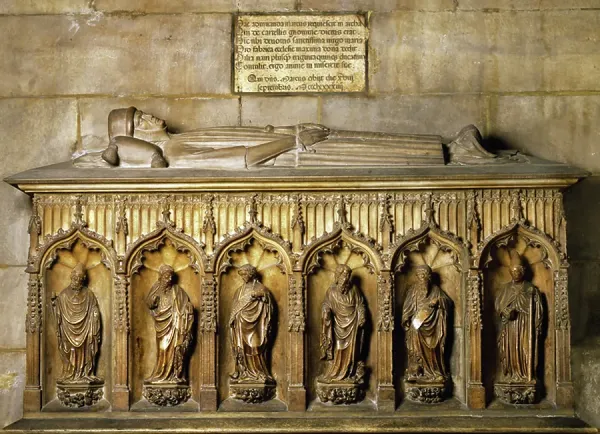
Marco died in Venice and because of plague restrictions it took a year before they could bring his body back to Milan. The funeral procession passed through all the important places, churches and home in his life in Milan.
We are all used to waiting for probate – and they had to wait 35 years to sell all the assets they were given. And it was after that a memorial (above) was erected to commemorate the gift and encourage others to be as generous.
What can we learn from it as fundraisers today?
Look to the childless: Donors without direct heirs may feel freer to leave transformational legacy gifts.
Planned giving matters: Carelli’s gift was years in the making, involving multiple wills and the liquidation of assets — a reminder that legacies are usually a long game.
Timing is powerful: Donors often align their giving to personal, cultural, or religious dates, making gifts feel deeply meaningful.
Campaigns stall: Just as in the 14th century, campaigns risk losing momentum in the middle. Smart fundraisers must plan for this – speak to donors about the timings of their gifts.
Stories endure: Whether or not he truly borrowed money for soap, the tale captures the imagination — and has carried Carelli’s name for centuries.