Every little helps …. Microphilanthropy then and now
Often we hear in appeals
Every penny counts…
Any gift you can give make whatever size makes a huge difference…
And we are asked to know what 1p, £1, or £1m could do for our cause.
What difference do these micro-donations make?
Is microphilanthropy a new thing?
First what is a microphilanthropy? The clue is in the name they are small gifts. It has been defined, in the US, as gifts from 25c to $10, and is sometimes called ‘spare change philanthropy’.
Recent technological advances claim to have revolutionised the microphilanthropy giving space – from Amazon Smile, to rounding up at the supermarket, the ways we can make frequent small donations has expanded. But from the Biblical widow’s mite, small gifts have been making a mighty impact on the philanthropic landscape – and not just on how much we raise, but how we engage with supporters.
A note on size of gift – micro in monetary value does not mean it has no meaning to your donor, or charity. In the Biblical account (Luke 21:1-4), Jesus describes a poor widow putting in two small coins to the Temple collection and says
“Truly I say to you that this poor widow has put in more than all; for all these out of their abundance have put in offerings for God, but she out of her poverty put in all the livelihood that she had.”
Just because gifts are small in monetary value does not mean that are not significant amounts to our donors.
Here are two historic examples of regular microdonations from fundraising history. They illustrate why these are powerful tools that we can use to build the philanthropic tribe, and explore why they work.
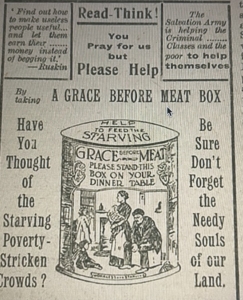
Salvation Army – Grace Before Meat
As part of its encouragement of regular and mindful giving, the Salvation Army mass produced ‘Grace Before Meat’ donation boxes in the late Victorian period. These were to be put out on the table, so that when the family was saying grace before a meal they would be reminded of those less fortunate, and develop the regular habit of putting a small donation in the box. Salvation Army collectors regularly visited houses with these boxes to collect the takings.
British Red Cross – Penny a Week
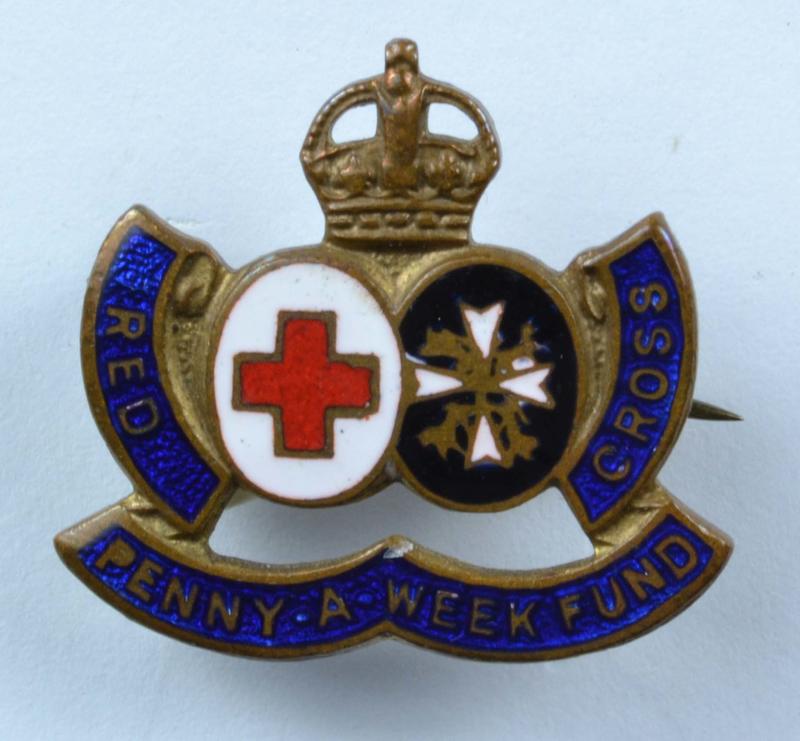
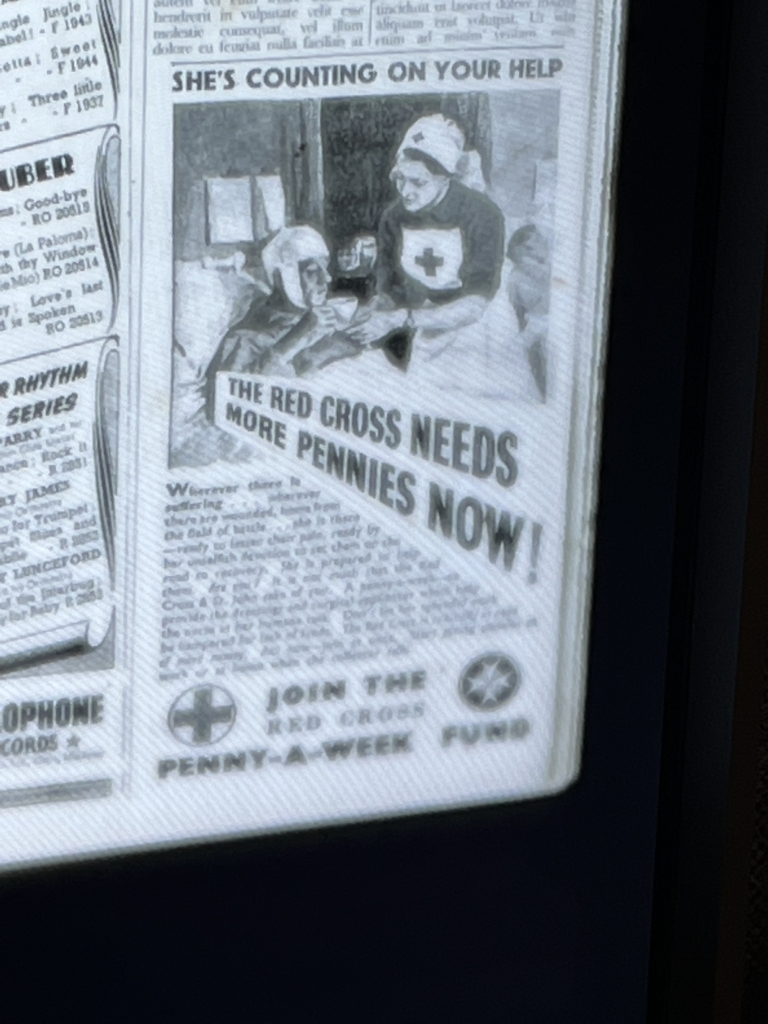
During the Second World War the Duke of Gloucester spearheaded a Penny-a-Week campaign for the British Red Cross. This worked through habitual donations, people knocking at the door to solicit the penny a week and was also via Trade Unions introduced as one of the earliest form of payroll giving.
Why do these schemes work?
- Habits and Behavioural bundling – we find it easier to do something if we do it regularly with another behaviour, for example you can only listen to your favourite podcast when you go to the gym, or treat yourself to a sweet treat when visiting with a relation you don’t like. Coupling two behaviours together helps us maintain and sustain them which is why the Salvation Army ‘Grace Before Meat’ works so well – they are linked and repeated. This form of giving also has the added bonus of linking to our natural human desire to reciprocate – we think ‘I am about to eat a lovely meal, I can do something nice for others who do not have what I have’. (Today we see it with Giving Tuesday, hot on the heels of Black Friday – the need to do something good for the world after indulging in the consumerist excess of purchasing gifts for yourself and loved ones.)
- Social signifier – the ‘Grace Before Meat’ donation box and the ‘Penny a Week’ collecting box could be put on display demonstrating to anyone visiting your house how philanthropic and charitable you were. And encouraging visitors to give as well.
- Norming and conforming behaviour – the more you see these boxes, or the thank you badges that people were rewarded with or pre printed receipts sent out by the Duke of Gloucester the more normal this behaviour was seen amongst your social group and the more you would want to imitate it by supporting, or getting your own donation box.
- Pattern completion – humans want to create and complete patterns. Have you ever done a 30 day Yoga challenge? Or filled a Smartie’s tubes with 20ps for Brownies? Or spend extra time at a museum to complete the stamp trail? We want to complete the challenge. We have made that the commitment, whether publicly or privately, and feel duty bound to stick to it. So completing a time limited giving of a ‘Penny a Week’ feels like both an achievable goal, one that we have committed to, and once we start we do not want to break the pattern!
The Goldilocks effect of friction …
The Goldilocks effect says we don’t want too much, or too little, like Golilocks and the porridge in the fairy story, we want the middle option that is ‘just right’
Often with giving we talk about reducing the friction and effort that the donor needs to make to give you a gift – if it is too hard, too many clicks, too many forms to fill in then it it is ‘too hard’. and donors lose patience and abandon the gift.
On the other hand. it can be ‘too easy’ and requires too little thought or engagement and the donor might not know what charity they gave to, how much or why.
So sometimes, like Goldilocks, you need the ‘just right’ amount of friction – what is powerful about these two historical examples is that they require a low level of repeated effort – just the right amount of friction – to engage with donating.
It is important to remember for every donation you give you get a hit of the happy chemicals (dopamine, oxytocin, serotonin and endorphins). So a microdonation of microphilanthropy = microdose of happy chemicals. Once someone is signed up for a Direct Debit – donors can forget about it. Seeing it on the bank statement doesn’t give you the ‘warm glow’ or the same rush of happy chemicals as the active act of giving. How can you keep that happy hit going by just the right amount of friction?
And remember when it comes to these small micro donations … every penny does make a difference
- The Penny a Week raised the equivalent today of £2.5bn
- Over 1million EUROS are donated through coins in the Trevi fountain each year which supports Caritas which amongst other things provides 100 families a day with access to a free supermarket.
- Taco Bell Foundation raised $42m two years ago through rounding up average donation of 44c
- When the Roman Baths in Bath banned throwing coins into the water donations went down £90,000
How could you use this in your fundraising?
- How can you remind people regularly of the joy of giving and what their donation does?
- How can you provide an option to round up?
- Interestingly rounding up helps reduce the psychological pain of paying – and as humans we prefer round numbers. At petrol pumps 56% of transactions end in a round number, we round tips up to a round number and supermarket donations.
- How can you provide regular injections of the happy chemicals to your supporters?
- How can you bundle the giving behaviour with another behaviour – a treat for them, or encourage them to give for a duration?
- How can giving help the donor signify to the wider world their identity and who they are?
- How can you help donors complete a pattern of giving? A durational gift?
- How can you include good friction into your supporter journey to connect with supporters?