Legacy fundraising – Middle Ages Style
- How did people in the Middle Ages approach legacy fundraising?
- And what kind of bequests did people make?
Solicitation
How were people asked for gifts in wills?
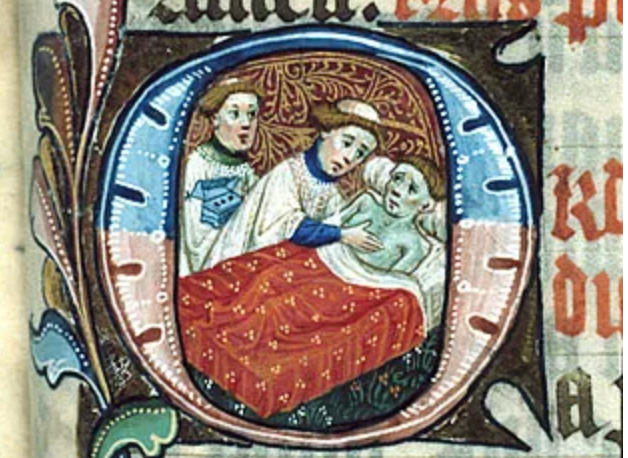
It was common for the priest to attend the dying to give last rights and the final sacrament. In the thirteenth century Paris there was an instruction that, as well as these final ministries, the priest ought to be encouraging legacy bequests to the cathedral. (With literacy rates lower, very much using the face to face ask approach!)
When you did leave a bequest, it was common that as well as the monetary gift you also left instructions for the priests to say mass for your soul – on various days after your death, and on the anniversary of your death.
Praying for the dead and benefactors would have been a slow drip feed reminder of the donors that had gone before hand – creating a strong social norm to do the same. (As well as obviously the spiritual and religious benefits of reducing the amount of time you spent in purgatory.)
Social conventions shape giving
We are social creatures and our primitive brains know that it is safest to follow the herd – and behave like others.
We have seen that the saying of masses for the dead provided a strong social norm that bequests were common and expected but how common were they really?
Local customs really dictated how much, and how frequent bequests to cathedrals were – in some areas it was common for most people to include a small gift to the cathedral amongst other bequests. The Bishop of Wells donated as much to the roads of Somerset as he did to the cathedral so it was part of a list of charitable gifts people might make. Between 1321-1460, 90/356 wills in York left gifts to the cathedral fabric and it became a standard for a few coins to be left. Bequests, like Agatha who left a house, or Marco Carelli who left his entire estate to the cathedral were unusual.
So not as common as might be expected.
Crediting the fundraiser
Often in charities we focus on thanking the donors.
We don’t always remember to credit the fundraiser.
In Utrecht Cathedral the records show the name of the priest that solicited the bequest – and their name is recorded alongside the gift.
Now this could be an early example of a CRM system showing who was in which portfolio.
With priests attending to last rights and encouraging gifts in wills there was not the lag time that we see today between a will being written and a gift being received.
Nowadays, we often need to thank a fundraiser that worked in our charity ten or twenty years ago. As the legacy pledges we received today come in addressed to former fundraisers, or in response to old campaigns. So we get to thank their hard work and foresight for investing in legacy fundraising. (After all, the best time to start a legacy campaign is twenty years ago, the second best is today!)
When reminded about our own death, mortality salience kicks in (a fear that we are going to die) and we want to distract, delay and deny that death will happen to us. When major life events happen – like other members of our family die, retirement, divorce, grandchildren or children arrive or illness – we know that we need to update, or make a will. But that fear remains and it can still take our donors years to make (or re-make a will). In the Middle Ages with shorter live expectancies death was perhaps more apparent (and therefore a shorter lag time between pledge and receipt of the gift).
Predicting your legacy income
Everyone knows that legacy income is bumpy and you can never predict what you might get, donors might not tell you what they are giving you or may change their minds, or just not be dead yet.
Notaries had to disclose to the Fabricca (Cathedral building committee) in Milan wills that included donations to the building and how much the gifts were for.
This might not tell you when to expect the gift, but gets over the modern sensibility of shying away from asking and respecting people’s privacy.
Stuff not cash
Often we want to donate items rather than cash, cash can feel impersonal and items that we have loved and cared for can feel more meaningful. We endow them with emotional connections.
It was common to bequeath items to the church. Frequently people gave their most expensive garment to the church which went to the priest to make a new vestment. But other gifts were given in wills including wood, wool, rosaries, rings, horses and a basket of cherries.
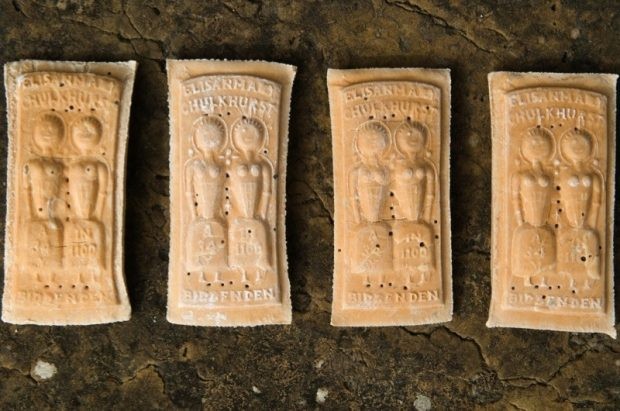
Born in 1100 conjoined twins Eliza and Mary Chulkhurst were conjoined twins. They died aged 34 within 6 hours of each other, and in their will left the church land and the means to provide a charitable dole for the poor, needy and elderly of the village. This was bread and cheese and at some point this evolved into biscuits depicting the two twins. The biscuits are reportedly very hard and not super tasty. Today as well as biscuits a church ceremony takes place and the elderly get tea, bread and cheese – as well as the biscuit.
In the legacy benchmarking research I did for arts and cultural charities, 50% had only received cash but gifts of items included:
- Royalties 5%
- Property 21%
- Paintings 25%
- Musical instruments 21%
- Archival materials 23%
- Shares 5%
- A tiara
- And two pizza shops in Derby!
Sometimes things are more meaningful, sometimes more practical, or perceived as more needed. If you do want and accept items have a clear policy about what you accept – and how to say no politely (how many programmes do you need?)
Identity shapes giving
The gifts that we make it our wills speak of our identities, to the things and causes that were important to us. On how we want to be remembered by other people – as a culture lover, a fighter for justice – the gifts tell our autobiography, our life stories.
Two of the biggest bequest gifts to the Utrecht Cathedral were from architects.
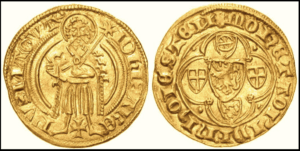
- Cornelius de Wael 1476-1505 master mason gave 156.5 rhinegulden (rhinegold is real!)
- Jacob van der Boch spent 31 years working on cathedral and donated rhinegulden
This speaks of their professional identity as architects influencing their gifts and the stories they tell.
Legacy gifts speak of our autobiographical self – what do those gifts and the choices that pledgers make speak about their final chapter and how they want to be summed up to friends and family – as someone who loved opera, fought for equal rights, was a dutiful Christian.
How can you frame your legacy proposition to align with the identity of your donors and their support of your charity?
Un-voluntary contributions
To define ‘philanthropy’ it is common to use Robert Payton and Michael Moody’s definition as ‘voluntary action for public good’. The church in the middle ages was often a little short of the voluntary aspect!
In Venice as part of the annual citizenship test which you had to complete every five years, you had to swear fidelity to the republic, own a house and make a bequest to the state church. They were also wary of the too much wealth leaving the city so you had to find loopholes if you wanted to send bequests to other non Venetian churches.
The church of San Lorenzo in Gerona from 1174-1270 imposed tariff on all church bequests 10% tax.
Nowadays we would never make giving compulsory although legal precedent and cultural custom can still dictate pledgers distributions to family and other causes.
Donor recognition
We know how important it is to thank donors for their gifts, and that donor recognition boards can encourage and normalise gifts.
As well as masses for the dead which we have talked about above. There were other ways that legacy donors could be recognised.
In the fourteenth and fifteenth centuries donors included themselves in paintings they commissioned on altar panels as part of their legacy gifts. It highlighted their contribution to the church and also their personal piety – but was very much a donor led decision about the credit!
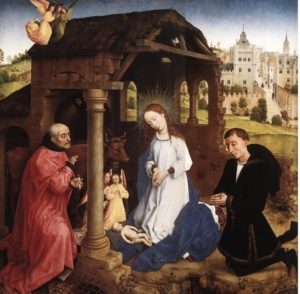
Above, Braque, the donor, is seen dressed in modern clothes and praying at the Nativity Scene. This is the central part of the triptych of an altar painted by Rogier van der Weyden in the fifteenth century.
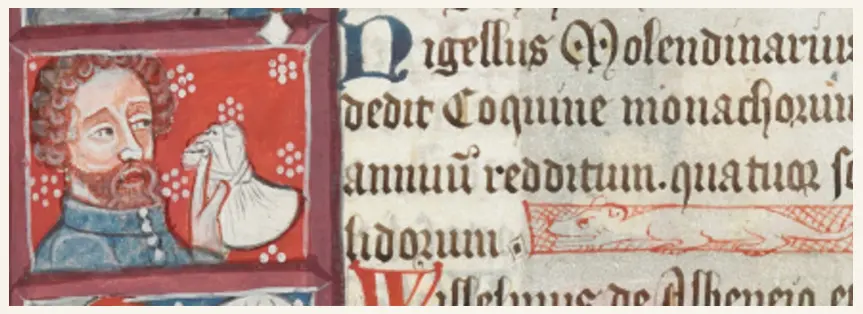
Below, Nigel the miller is recorded in the donor book at St Alban’s Abbey.
Why does donor recognition work and how might in inspire more gifts
People do more pro-social things when they are rewarded because incentives work. When we give a gift, we get a hit of happy chemicals – dopamine, oxytocin, serotonin and endorphins. And that means it gives our donors joy to be giving money to us.
It also works for us, as fundraisers. If I give a gift, and you receive that gift – the same bit of your brain is lit up. So, donor recognition should give us the same warm and fuzzy feeling that our donors get when they receive our thanks.
All of this illustrates why seeing your name on a donor wall is one of the ultimate ego strokes. It provides social reinforcement of your identity as a kind and generous person.
We’ve all seen our donors go over to a wall of recognition, scan the list with their finger, looking for their name, checking that it is there.
It’s so important to donors that they are recognised for what they do, and that fundraisers say thank you.
So how should that shape how we solicit for gifts in wills today
- Legacy giving is shaped by identity and in life connections – remind donors and supporters of their lifetime of connection and how giving to your charity reflects their identity.
- Being asked increases the number of gifts you get
- People are terrified of their own deaths and will put off these decisions as long as possible
- Donor recognition can reinforce the social norm of legacy giving.