
Pathwork quilt of local philanthropies
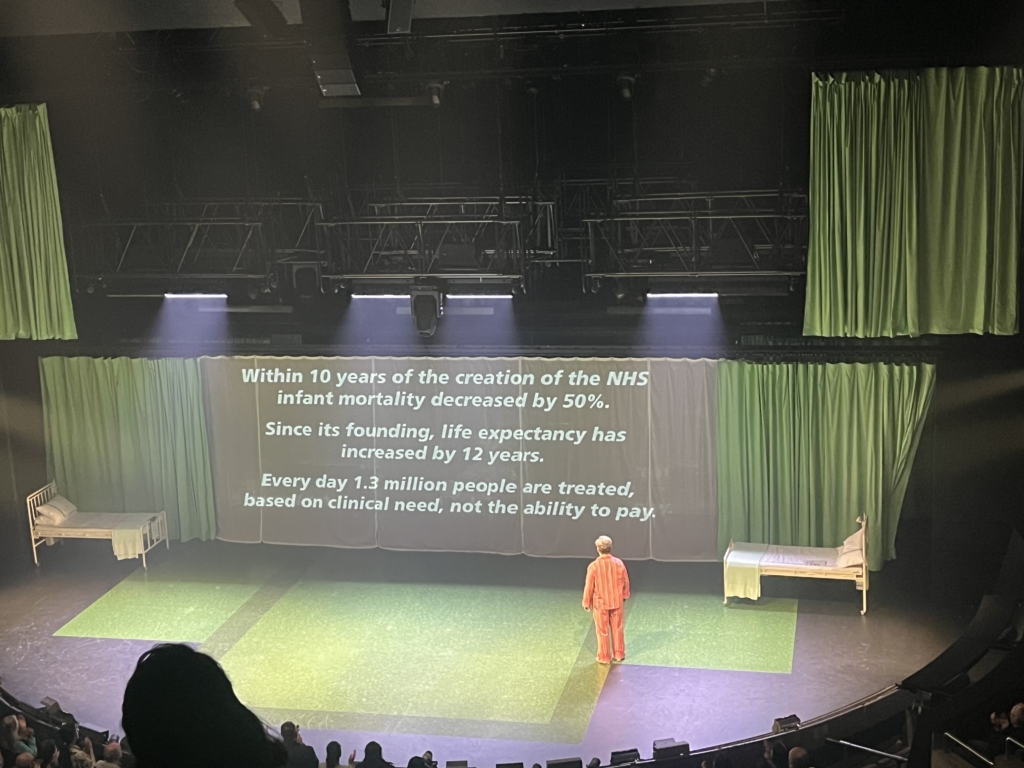
After watching Nye at the National Theatre and reading the play, I have been reflecting on the importance of philanthropy and fundraising to fund healthcare before the NHS was introduced in 1948 in the UK (and of course it has remained fundamental, but this article focuses on pre 1948 examples).

Aneurin Bevan, known as Nye said he wanted to ‘replace the patchwork quilt of local philanthropies’ with a nationalised health service.
In the play he says:
“The health service is a complete mess, it is impossible to navigate and grossly unfair. The voluntary hospitals serve the rich, and the council hospitals serve the poor. The wealthy cities have all the facilities and all the specialists. And poor regions are stuck with Victorian hospitals falling apart”
Nye was inspired by the Tredegear Medical Aid Society where (quoting Nye in the play)
“All miners pay into it every week. And it covers the cost of six doctors and six nurses who take care of the whole town … The Tredegear Medical Aid Society covesr not only those who pay into it but those that don’t. Women, children, the elderly. .. And it works.
The mutual aid model of the Medical Aid Society was a well established one, and Nye wanted to ‘Tregegarise’ the whole country so everyone got the same health service
What was that patchwork quilt of philanthropies like?
To describe the provision of healthcare as patchwork is a very apt. The provision of healthcare relied on local patronage and campaigns, an inspired local leader, guild, monastery, legacy or philanthropist.
Here are just a few of the pre-NHS patches of how fundraising and philanthropy enabled healthcare and hospitals.
- In the Bible, in the Last Judgement parable of the sheep and the goats in Matthew 25, Jesus says
Come, ye blessed of my Father, inherit the kingdom prepared for you from the foundation of the world: For I was an hungred, and ye gave me meat: I was thirsty, and ye gave me drink: I was a stranger, and ye took me in: Naked, and ye clothed me: I was sick, and ye visited me: I was in prison, and ye came unto me. Then shall the righteous answer him, saying, Lord, when saw we thee an hungred, and fed thee? or thirsty, and gave thee drink? When saw we thee a stranger, and took thee in? or naked, and clothed thee? Or when saw we thee sick, or in prison, and came unto thee? And the King shall answer and say unto them, Verily I say unto you, Inasmuch as ye have done it unto one of the least of these my brethren, ye have done it unto me.
Matthew 25, King James Bible
Caring for the sick in hospital and supporting hospitals was one of the corporal works of mercy and in Christianity, and in other faiths, a way of living out your faith. So churches, monasteries and religious communities frequently administered and raised funds for hospitals – you can read more about how here although it is frequently through an extrapolation of the existence of hospitals that we can see that some sort of organised fundraising must have been in action.
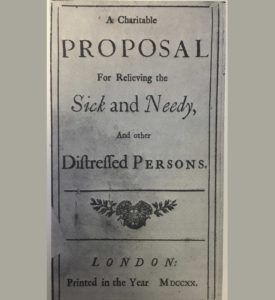
- The first hospital founded by subscriptions was in 1719. Banker ‘Good Henry’ Hoare, also know as Henry the Magnificent made a donation of £10 and with three friends they founded the Westminster Hospital with the aim to ‘provide poor sick people…with necessary food and physic during illness‘.
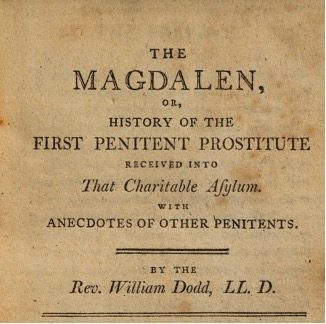
- Selling sensational novels to raise funds was another way in which money was raised to support the work of hospitals. The Magdelen – History of the First Penitent Prostitute Received Into that Charitable Asylum. With Anecdotes of Other Penitents by the Rev. William Dodd was one such novel. It told, in letter form, the story of a young woman who was seduced by an inappropriate suitor, ended up pregnant and in care of the Magdalen hospital as part of her rehabilitation. These novels were very popular both for their salacious stories, as well as, raising the money needed to run the hospitals.
- The appeal to raise the funds for the Foundling Hospital by Sir Thomas Coram took 17 years, beginning in 1728. Thomas Coram returned from his sea merchant career and was appalled by the number of children abandoned (known as foundlings) and wanted to provide for them with a new Foundling Hospital. Celebrity and well connected patrons were essential to the success and achieving his ambitions and the necessary funds. He enlisted William Hogarth the famous painter to be a Governor of the charity and he (and his celebrity painting friends – Reynolds and Gainsborough) donated paintings to be sold for the good of the hospital establishing an art gallery on site. Composer Handel also supported the Hospital with his Foundling Hospital Anthem which concludes with his famous Messiah and Hallelujah Chorus which raised over £7,000 for the hospital (there is a suggestion that ending this reflection on charitable giving with the Chorus links back to Matthew 25 and the parable of the sheep and the goats). Handel also donated an organ to the hospital which was repeatedly used for fundraising concerts. Coram is often credited with being one of the first fundraisers, but as we have been discovering there were paid and professional fundraisers much earlier. More Coram and the campaign for the Foundling Hospital here. Raising funds for the hospital’s continuing operation was an ongoing task and so public parades and public examinations of poor children such as the children from the Foundling Hospital were common place. They were used as a way to solicit contributions, thank donors and demonstrate the impact of the gifts in rehabilitating and training children (show don’t tell!) Attending Sunday lunch at the Foundling Hospital was a fashionable Sunday outing.
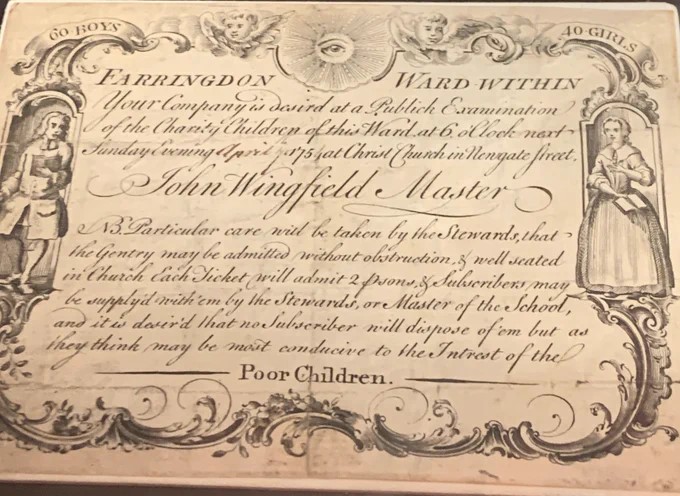
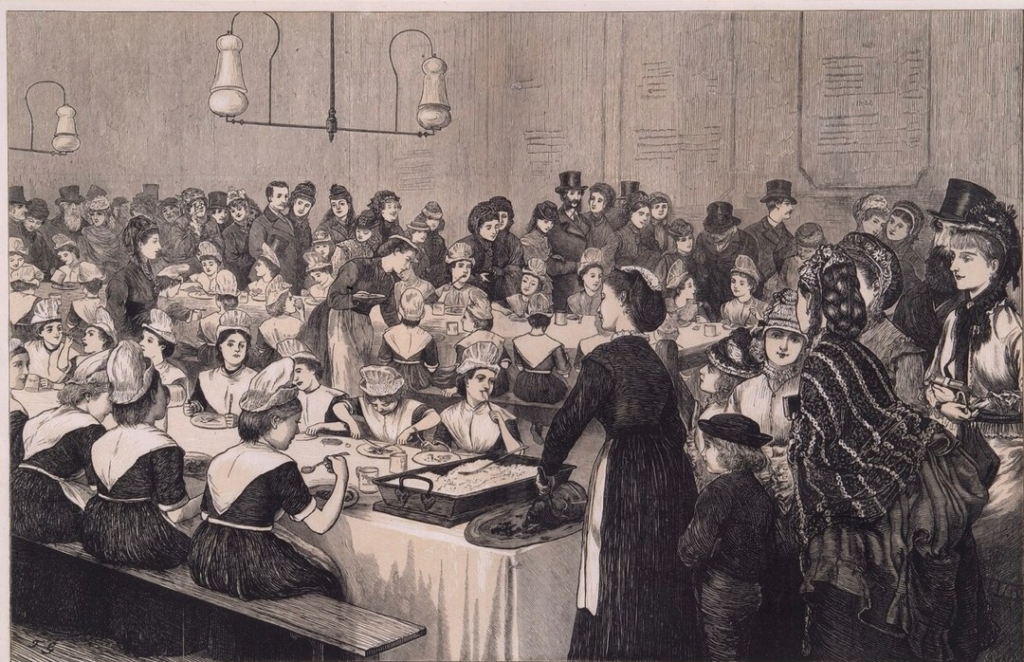
- In Birmingham in 1860s, it took just five days for Thomas Heslop’s campaign to raise the funds needed to create the Birmingham and Midlands Free Hospital for Sick Children. This shows a clear appetitive from the general public to support hospitals and the care of the sick.
- May Seacole financed herself to go to the Crimean War to assist the soldiers, running her British Hotel caring for those that could afford to pay. She was the first woman to enter Sevastopol and was praised by Lord Rokesby for her bravery. When the war finished she was left nearly bankrupt with stock, and campaigns were held to support her (by The Times and Punch). A four day festival at the Royal Albert Hall attended by over 40,000 people was so badly organised that she barely received any of the proceeds – as captured in this Horrible Histories clip
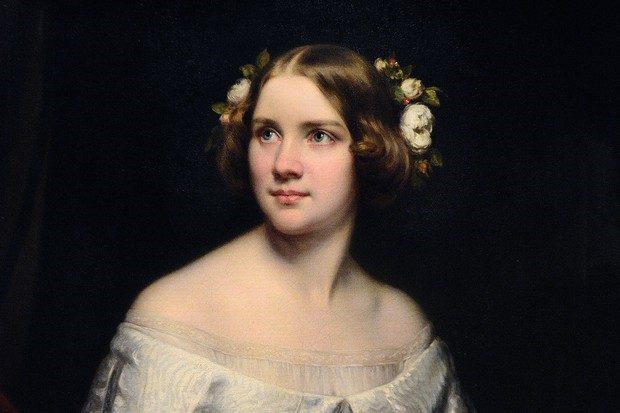
- Famous singer Jenny Lind helped raise the funds for the England’s second children’s hospital in Norwich. The Norwich Hospital was the 17th established in England in 1772 (after first being proposed in 1758) and raised funds through subscriptions and fundraising sermons at the cathedral as was common at the time. As part of her world tour, Jenny Lind visited Norwich in 1847 for two sell out concerts. She stayed with the Bishop of Norwich at the cathedral. She was performing at St Andrew Hall and added a third concert especially so that the poor of the city could attend. She developed a strong relationship with the Bishop’s family and Katherine, the bishop’s wife, became godmother to Jenny Lind’s daughter. In 1849, Jenny Lind returned to the city and raised £1,253 for the poor of the city with a concert. But this was raised with no specific purpose in mind, and the city had to decide what to do with it. One suggestion, from Jenny Lind herself, was to stand in the marketplace and throw the money to the poor (certainly a novel way to distribute charity!) However, whilst they were deciding what the funds should do Great Ormond Street Hospital was founded in 1852, and the idea of a children’s hospital in Norwich was mooted. In 1853 this was unanimously endorsed at a public meeting. The funds that the Jenny Lind concert had raised were used to purchase the two houses that would form the hospital. The hospital was known locally as The Jenny.
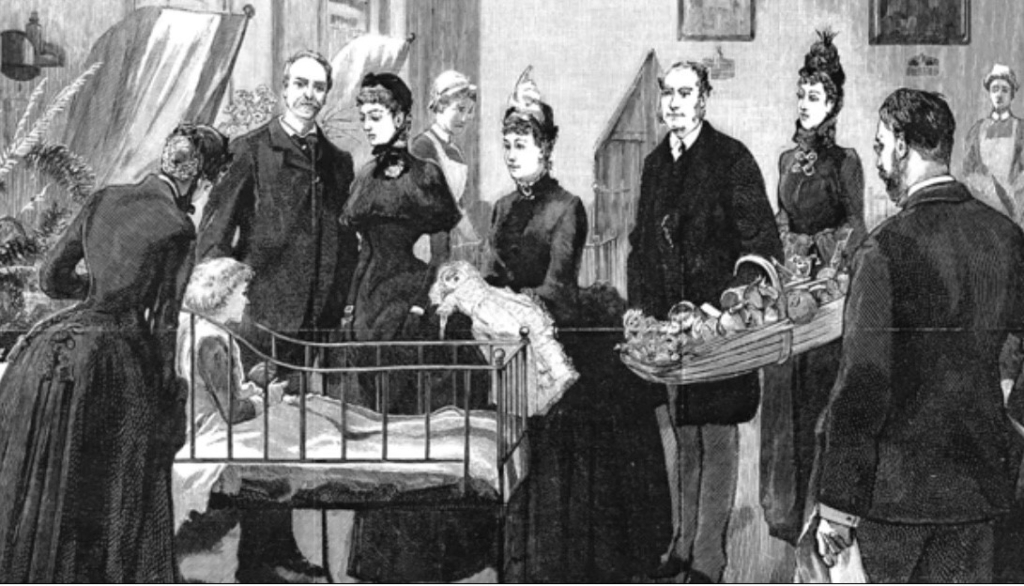
- 1859 the Kings Hospital Fund introduced Hospital Shopping Days in London on a Tuesday in November when shops and cabs had to show poster and give a % of that day’s profits to charity. The first day raised £1,027 but was not repeated as the tradespeople felt that the Hospital Shopping Day was a levy imposed on them – a reminder that those involved in fundraising must feel is there choice about how they are supporting – philanthropy is often defined as ‘voluntary action for the public good’ (Michael Moody) – so extrapolating from that fundraising must be a voluntary choice about how to support the public good rather than a tax imposed!
- Like the relic quests above, there were designated days for raising funds for certain causes and hospitals were often the recipients. In 1912 Liverpool League of Welldoers raised funds for the Hospital Saturday Fund by a ‘travelling Christmas tree’ on cart with presents and collection boxes.
- Author Thomas Hardy made a rare guest appearance at the fundraising fair for the Dorset County Hospital in 1921 – the fair included processions, bands, a “Money Trail”, stalls, dancing in the evening and a Japanese daylight firework display. This fair raised 20% of the revenue needed for the hospital that year showing how important and necessary fundraising was https://historydch.com/news/archive2014/
- It was not just hospitals for humans that with the aim of collecting 250,000,000 farthings to fund the rebuilding of the Royal Veterinary College’s campus in Camden, and the Beaumont Sainsbury Animal Hospital. Read more about the campaign here War Horses for Causes: the twenty four First World War cavalry horses that raised the equivalent of c£16m – UK Fundraising
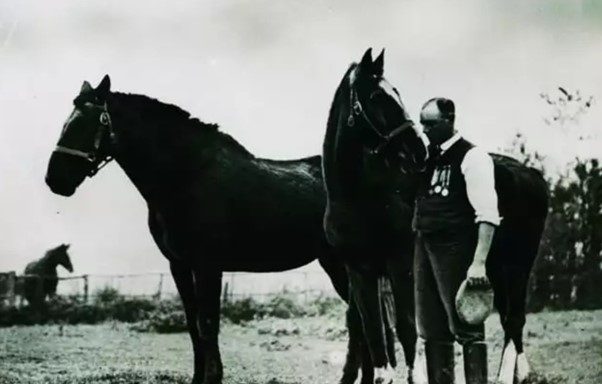
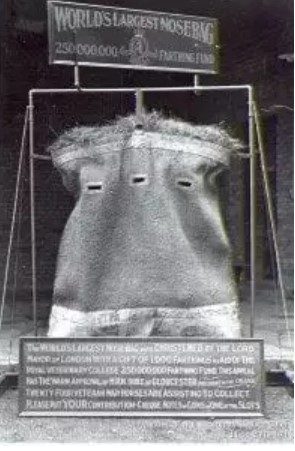
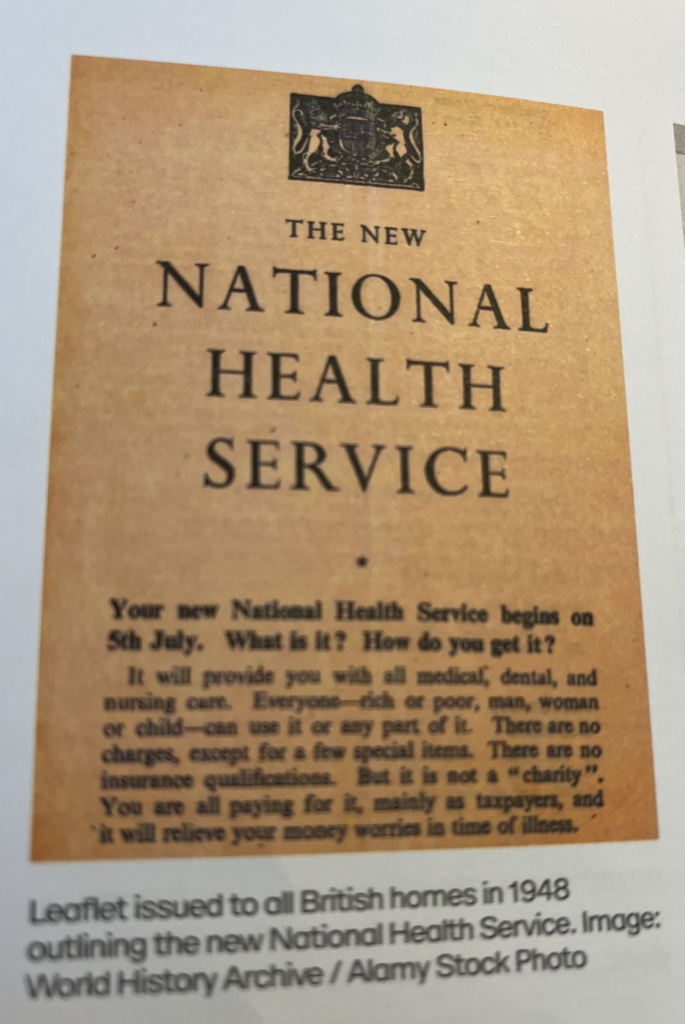
National Health Service – Not a “charity”
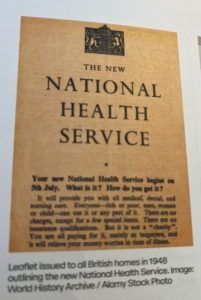
The leaflet issued to all British homes about the advent of the National Health service clearly stated:
“But it is not a “charity”. You are paying all paying for it, mainly as taxpayers, and it will relieve your money worries in times of illness”
The above examples are just a few ways in which healthcare was fundraised for and enacted pre 1948. There is much more research to be done on how funds were raised and organised for healthcare – pre and post the introduction of the NHS.




Leave a Reply
Want to join the discussion?Feel free to contribute!