Magnanimous, malicious or mysterious intentions?
Why do people give legacy gifts?
- To say thank you to a charity.
- Because of a long term personal connection and how that charity impacted their life and identity.
- To pay back a kindness.
- To continue supporting a charity that has been part of their philanthropic portfolio.
- To immortalise a loved one.
- To spite a family member.
- To secure the financial future of an institution.
- To fund a specific area of work that is meaningful to the donor.
- To make a difference beyond their lifetimes for future generations.
- Sometimes the executors decide and make in memory gifts
- Or are the motives mysterious and unknown, lost in the mist of time
The stories below explore some historic legacies and their motivations – magnanimous, malicious and mysterious
“It’s all there – beautiful sets, great costumes, great music. What more could you want?”
Within the arts and cultural space legacies that connect with someone’s passion are common. As a way of saying thank you for a lifetime of experiences and making sure that they are there for future generations (it is still there today).
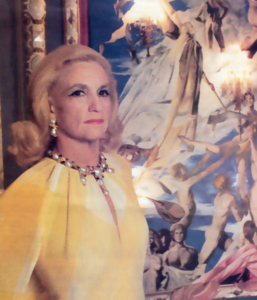
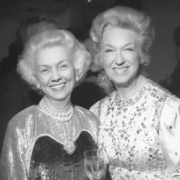
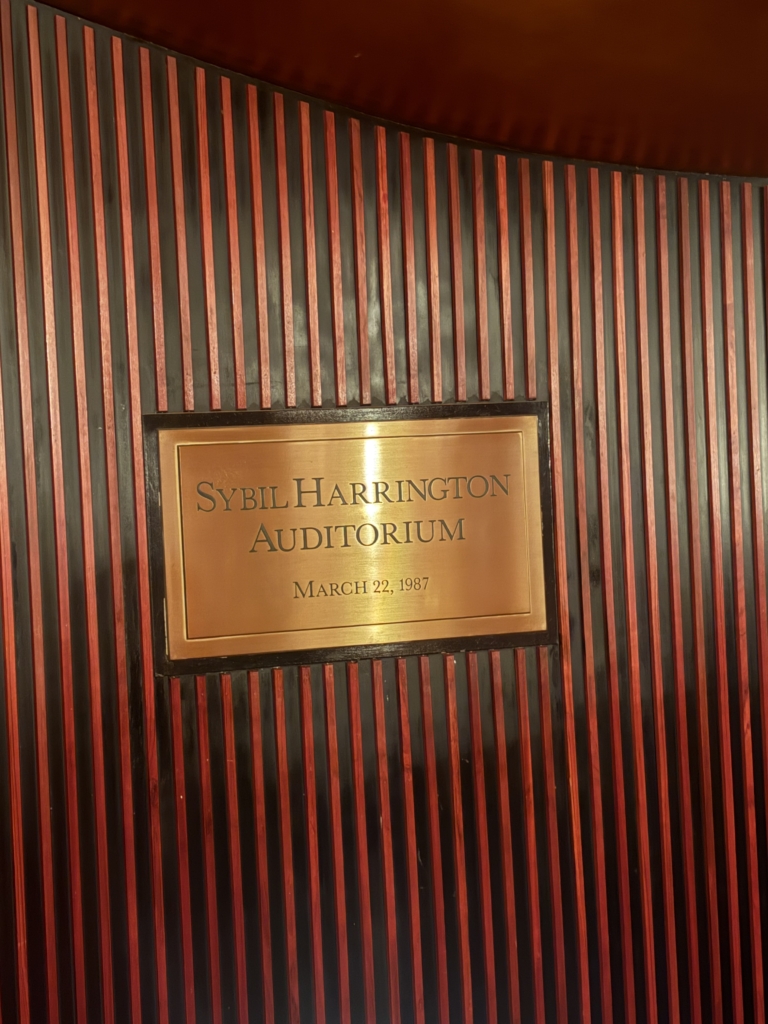
This is the case of Sybil B Harington who has been a major in life donor to the Metropolitan Opera in New York. During her life she gave c$30m to support its work, and the main hall was named in her honour in 1987.
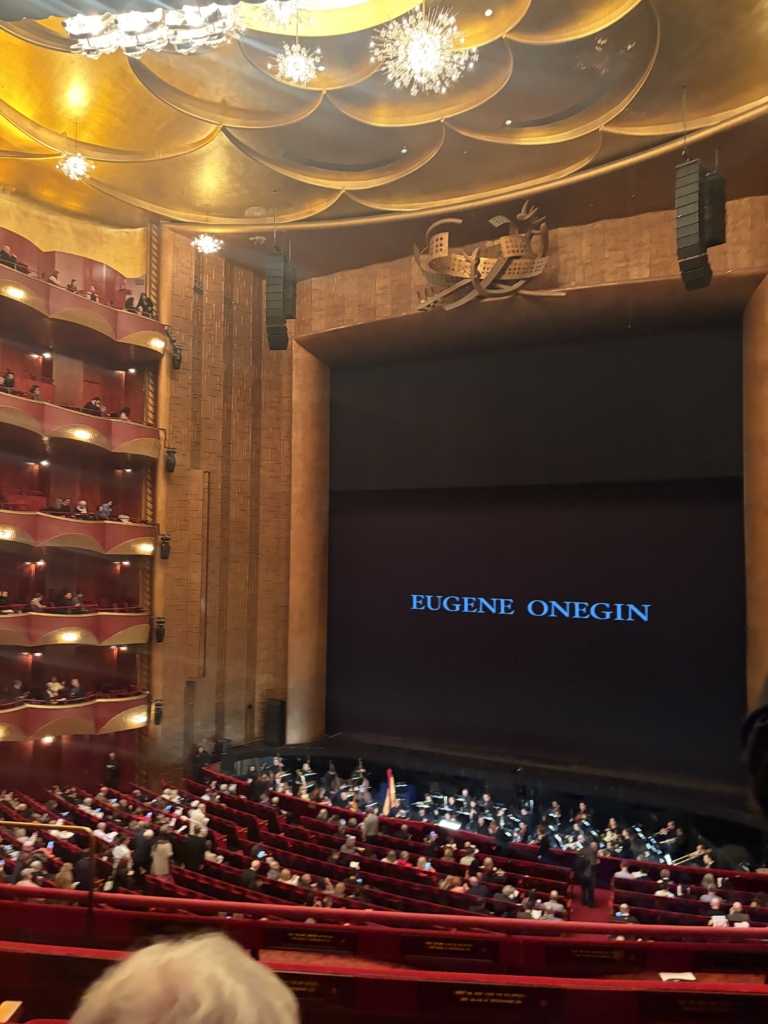
She sat on the board, and funded galas and televised performances and opera. However, she did not just fund any opera, she liked grand opera, done as the original composer and librettist would have wanted (so traditional settings, staging and costumes – think Julius Caesar set in Rome with singers in togas – not in bleak dystopian futures with combat trousers and machine guns).
Her gifts supported, amongst others, the iconic but traditional Zeffirelli’s ‘Tosca’ with Maria Callas and Tito Gobbi in the 1960s – a production that was not retired until 2006 (and which I saw several times)
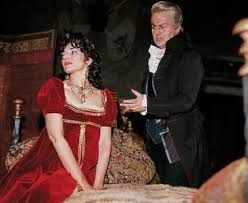
On her death she left a gift of $6m, with $1m to fund young artists, and the rest for “exclusively for the televising of traditional/grand opera productions of the Metropolitan Opera and for no other purposes” and that “these traditional/grand opera productions shall be set in a place and time and staged as the composer placed it.” Her will stipulated:
“…by composers such as Verdi, Puccini, Bizet, Wagner, Strauss and others whose works have been the core of the repertory of the Metropolitan Opera during its first century, with each such new production to be staged and performed in a traditional manner that is generally faithful to the intentions of the composer and the librettist.”
(1987 stipulation for her gift)
The money was invested and each year the Met used the funds.
Until 2001.
The Met used the fund (which had grown through investments) to televise Dieter Dorn’s production of Wagner’s ‘Tristan and Isolde’. The story is traditionally set in a medieval Celtic world and tells the story of a ship travelling from Cornwall to Brittany. Dorn’s production was minimalist focussing on the emotions and psychology of the characters rather than the ‘visual ballast’ of a boat. Those managing her estate sued the Met claiming that it had breached the terms of the gift and that the production was not traditional and in keeping with the stipulations of the bequest.

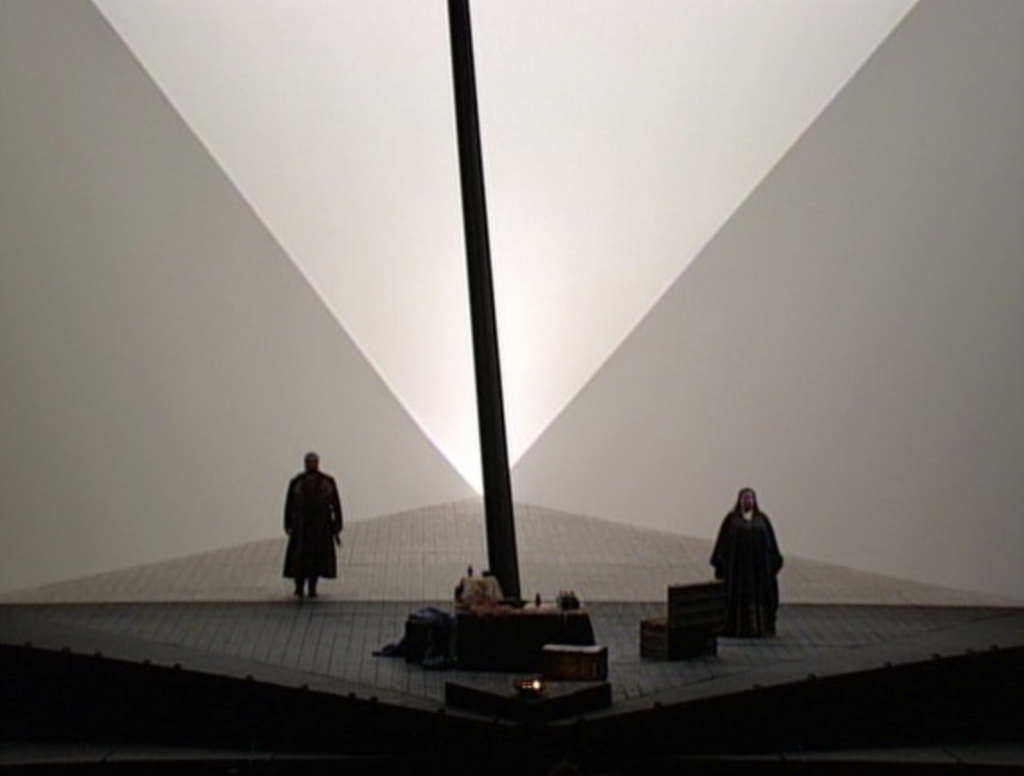
The Met said in the court papers:
“While not a traditional staging of the opera it was a traditional interpretation and the case was made to the Trust that support of this telecast was in keeping with the wishes of Mrs. Harrington and the stipulation of her estate. We are grateful that the Trustees understood the importance of the ‘Tristan’ telecast and agreed to its funding.”
The estate said: “The Met’s failure to utilize funds in accordance with Mrs. Harrington’s wishes is not inadvertent or even negligent, but is the result of a willful and calculated intent to disregard and evade Mrs. Harrington’s wishes”
General Manager of The Met, Joseph Volpe responded: “The charges are untrue and we will show them to be untrue in court. Sybil Harrington was a beloved member of the Met family and we would never do anything to dishonor her wishes or her legacy.”
Who was right?
The parties settled out of court.
But Sybil B Harrington’s legacy gift continues, and the credit ‘for her ‘Production a gift of The Sybil B. Harrington Endowment Fund’ is on streamed performances for the 2026/27 season at the Met.
Say it with flowers
Another lovely example of a way in which in life giving continued in death is the story of the flowers in the Met Museum in New York. In the late 1960s, Lila Acheson Wallace, philanthropist and founder of heir to Readers Digest set up a fund to change the flowers in the hall of the Met each week and to hold theatrical large starburst displays so that visitors would know
“We’re expecting you—welcome.”
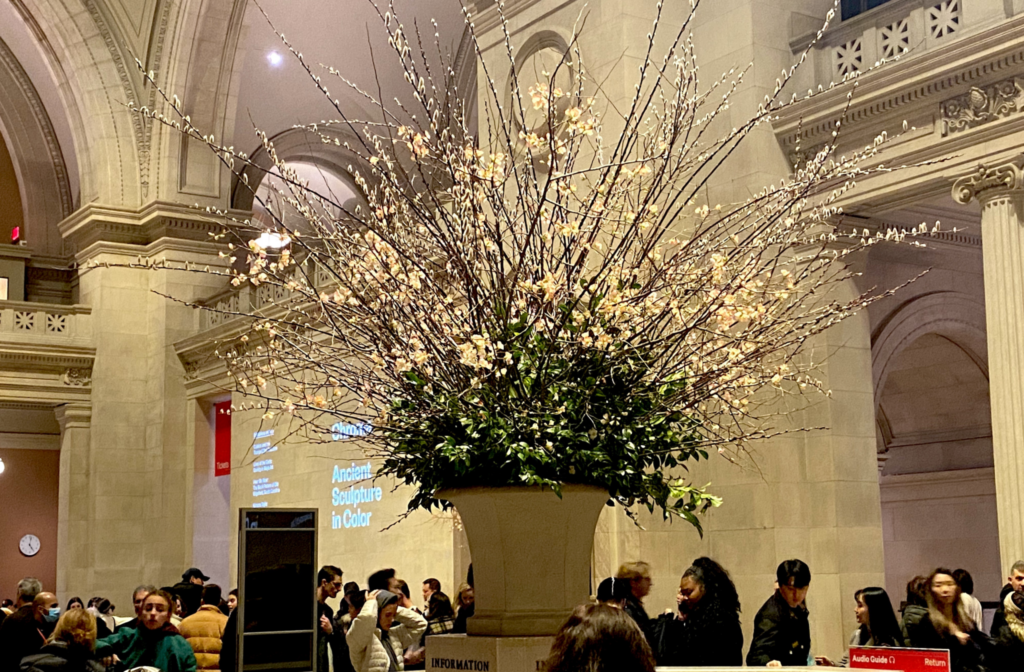
When she died in 1984, her endowment gift continued this donation and it continues to this day. (Thanks to Niamh Walshe for pointing this one out to me).
Unexpected windfalls and spite filled gifts
Sometimes legacy gifts come in and you have no known relationship or connection, this might be a CRM lacking the data, or might be that some of our pledgers engage under the radar (in a theatre, this can mean they are not the ticket buyer and always come with someone else)
In 1904 Jacob S Rogers left $5m to the Metropolitan Art Museum in New York. This was a surprising gift to the museum as he was not a known art fan; he was a wealthy and miserly locomotive entrepreneur. He had visited the Met and given his $10 annual membership fee in by hand, and asked questions about the governance of the museum. Although no one is ever sure if he visited galleries or had any interest in the art.
During his life he was known his miserly ways indeed one of his obituaries said he was an
“a pure animal man, with no sentiments born of human love or human sympathy.“
He frequently threatened to
“If I could convert all my possessions into paper and provide that this paper should be burned after my death I should do so.”
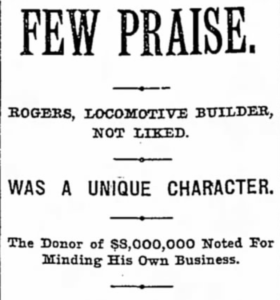
Even his friends described him as
“character was anything but loveable.”
Apparently, about 10 years before his death, he had read about a Chicago man who had left his whole estate to an educational institution and cut his family out of this will. He requested a copy of this will and it seems to have acted as an inspiration for this gift to the Met.
However, rather than leave it to the museum to do with what was most needed (often the ideal), the gift was restricted to an endowment, with the gift to remain in tact and the interest to be used to purchase paintings.
“the income only of the fund hereby created, or intended so to be, to be used for the purchase of rare and desirable art objects, and in the purchase of books for the Library of said Museum, and for such purposes exclusively, the principal of said fund is not to be used, diminished or impaired for any purpose whatever”
There was also a condition to focus on non American items which was common at the time as the American art market was considered immature and many looked to Europe for ‘proper’ and ‘collectable’ art.
The Rogers Fund is still going strong and funding the purchase of art for the museum (more than 10.000 entries appear if you search on the Met website)
In memory motivation
Did you know that MOMA in New York was founded by three women?
By Abby Aldrich Rockefeller, Lillie Bliss and Mary Quinn Sullivan.
When Abby Aldrich Rockefeller died – despite her husband, J D Rockeller Jnr, not being a fan of modern art (‘never greatly appealed to me‘ – he preferred porcelain and medieval tapestries) – he gave $4m in securities and land “to preserve for the future the important work of this institution which meant so much [to Abby]”
(Another founder Bliss died leaving a condition in her will that MOMA have enough of an endowment to be financially secure before the gift could be handed over. The executors set a challenge for the museum to raise $1m – this was in the Depression so fundraising was slow and hard. MOMA raised $600,000 at which time the executors lowered the financial threshold and handed over the legacy gift.)
Mysterious motives
In 1869, Elizabeth Lawrence, the widow of Col T Bigelow Lawrence donated his military connection to the Boston Fine Arts Museum,
“Unfortunately her motives are not recorded. Whether she acted out of a desire to memorialise her husband or simply wished to rid herself of the vestiges of his martial enthusiasm remain a matter for speculation“
Kathleen D McCarthy in ‘Women’s Culture’
As a bonus she also gave $25,000 to fund the housing of the collection (whenever you receive an item as part of a legacy it is always handy to have the money to store, conserve and protect it).
However, the collection was destroyed by fire, his widow allowed the insurance money to be used to purchase other items for the museum.
Keep family members engaged – even on the WCs!
When Maria Antoinette Evans’ husband died she wanted to honour his legacy wishes and support the Boston Fine Arts museum. She originally offered a grant to support salaries (fantastic a core costs grant!) but the museum persuaded her to support a new wing with a gift of $1m. Determined to keep her potential giving up, they involved her in the design of the wing including asking for her input on where and at what height her husband’s portrait ought to be hung, which wallpaper and fittings to use and,
“Will you find [an] opportunity some day soon to visit the new building with me and visit the ladies’ rest room? there are one or two points one which I should like your opinion’
Often the smallest details matter most.
How do you know which of these motivations are the real reason?
You can ask.
In your legacy promotional material having a ‘Tell us about why you have included us in your will..” often yields the answer
But be warned about the say:do gap. In terms of social acceptability bias we will not admit that we included charity X because we despise our family and want to disinherit them and could provide a more socially acceptable reason about that it means to us.
What else do these historic examples teach us?
Be clear about what you want and how you want it
The examples above highlight the importance of promoting gifts in will as you are never sure where and when supporters may be inspired to include a gift.
When promoting legacies or talking to potential legators it is important to consider:
- how you want to receive gifts
- how gifts ought to be worded to allow donor’s wishes to be honoured as well as the evolving needs of the charity (it is complicated to get a legacy gift to a long defunct programme or niche area)
- how any endowment gift might be structured to support changing mission over time.
- But if there are conditions stick to them and keep the family engaged