
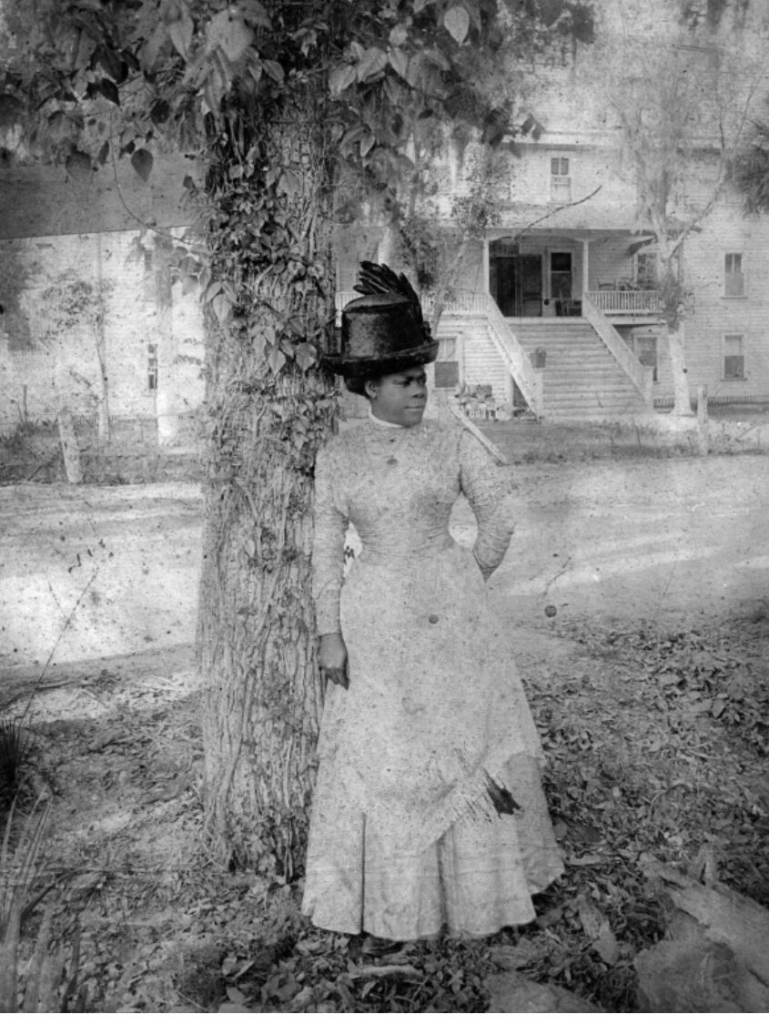
Same at is ever was, same as it ever was …
Grant restrictions?
Crediting the donor?
Rising costs?
Waiting for the next instalment or cheque in the post?
Emotional labour of fundraising?
Your cause not as exciting / easy to raise money for as another more exciting one.
How many of these ring true for you today – you are not alone! Fundraisers from 100 years ago (or three hundred years ago) experienced the same things!
Fundraising as emotional labour
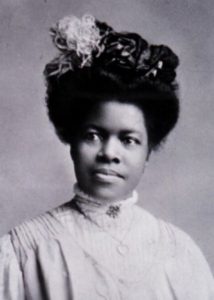
“This money getting business destroys so much of one’s real self that we cannot do our best, feeling that we need money all the time”
So said Nannie Helen Burroughs civil rights campaigner and businesswomen over one hundred years ago.
The emotional burden of fundraising has not changed – many fundraisers care deeply about the causes that they secure funds for, describing fundraising as a vocation, which means detachment from the role and cause can be hard to find. Fundraisers invest a good deal of themselves in the cause they care about, striving to make the world a better place. You need money to deliver your mission, but the efforts to secure it can also be a constant worry.
This also speaks of a time before the separation of founder and fundraiser – to ensure that mission happened was everyone’s job and the responsibility fell heavily on the head of the founder/director of the charitable endeavour. The advantage of this was that everyone understand the role and importance of fundraising to achieving mission, rather than, in some charities, where delivering mission and raising funds are seen as separate and the fundraising team as the ‘necessary evil’.
Don’t get too dependent on that one donor
‘this contribution to be no precedent‘
From 1757 charity roll of the Worshipful Company of Stationers, a grant of 3 guineas to the Farringdon charity school with the caveat ‘this contribution to be no precedent‘. It is a concern of funders that we don’t become over reliant on their grants and keep asking them to support the work, but this is the earliest example where I have seen it written down.
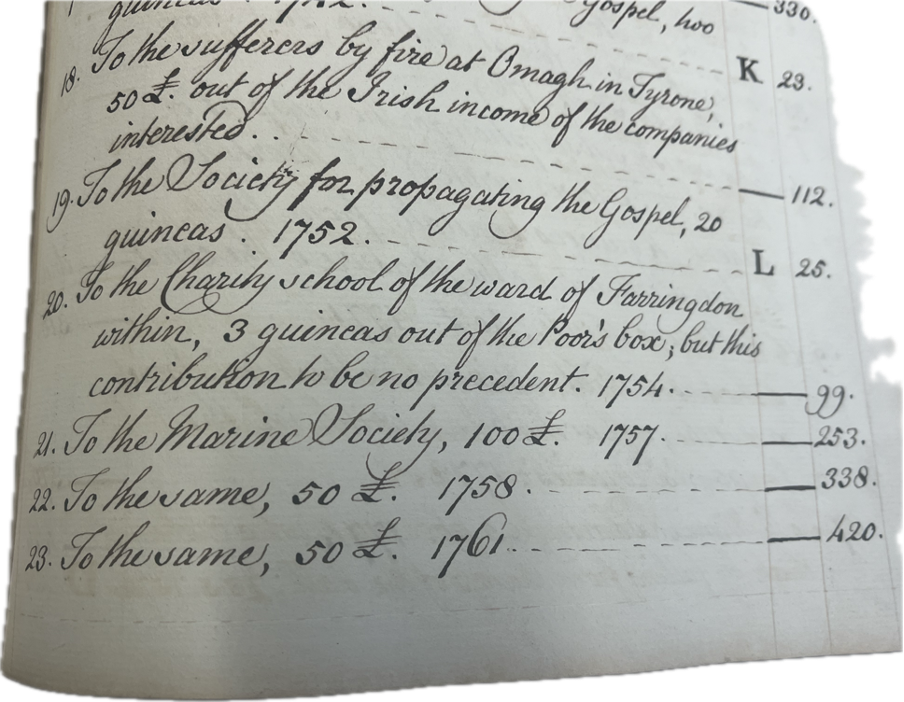
Although the charity roll shows that further grants were given to support the school despite this warning about precedent – a good reminder that funders are not always consistent with their stated policies and do make exceptions (maybe a super fundraiser built a great relationship demonstrating the impact of the gift and secured these future gifts)
Not as glamorous as other causes
Trying to raise money for the Bristol General Infirmary – after foreign missions had raised £7,000 and the hospital only £772, John Addington Symons moaned
The General had ‘few novelties connected with it; no interesting pictures of …curious customs; no terrible demonstration of savage creatures and hideous abominations of devil worship; no ladies auxiliaries; no juvenile collectors‘
Echoing the criticism of Mrs Jellaby by Charles Dickens in Bleak House he says ‘we comparatively overlook our brethren.’
Rising cost of living & waiting for the cheque
“The high cost of living has made us very anxious for us. May we hear from you now?”
Wrote Mary McLeod Bethune asking Madam Walker for support. The year 1917, how much has changed?
Or a letter to great financial supporters of her work, President and Eleanor Roosevelt
“We are now in desperate need of funds. My nights are sleepless with this load upon my heart and mind. I must have help. I believe there are friends who would want to help”.
Mary McLeod Bethune
Mary Macleod Bethune was a fantastic fundraiser and you can listen to this podcast about her life and work – raising money for her school by selling sweet potato pies to the workers on the dump, securing grants from J D Rockefeller and keeping her community of alumna close to secure regular funds.
Follow the grant guidelines and add the credit specified
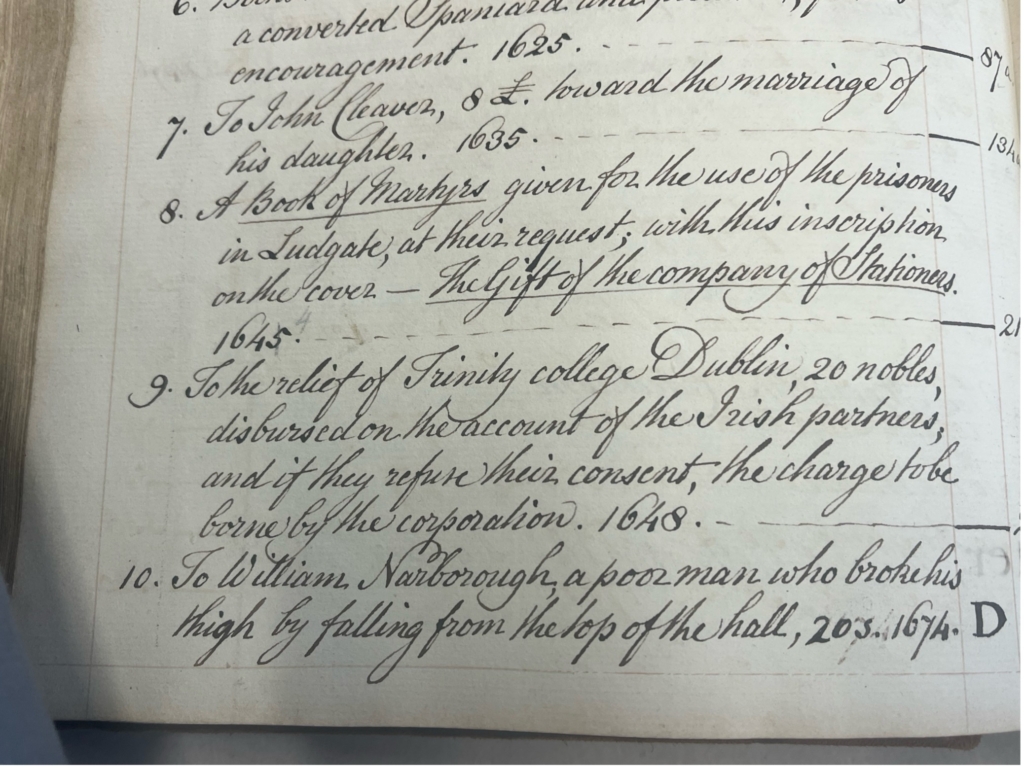
Even in 1645 funders were prescribing how their donation ought to be credited. Another from the charity roll of the Worshipful Company of Stationers this time in 1645 when ‘A Book of Martyrs’ was given for the prisoners of Ludgate Gaol following an appeal by the prisoners. The roll details that the book be inscribed on the cover ‘The Gift of the company of Stationers.’
Same as it ever was …
Although these highlight the many ways that fundraising (and fundraising woes) have not changed in the past few centuries.
Perhaps as fundraisers we can find consolation (or frustration) in the fact that ‘it was ever thus.’
Although much is the same as it always has been, charity and fundraising are conditioned by time and place and it would be just as easy to pick up examples that showed ‘the past is a different country, they do things differently there’ (raising funds for pirates or for unmarried maidens to get married).










Leave a Reply
Want to join the discussion?Feel free to contribute!