• Link to X
  • Link to Instagram
  • Link to LinkedIn
Marina Jones
  • My Thoughts
  • What I’m Reading
  • About Me
  • Contact Me
  • Home Page
  • Click to open the search input field Click to open the search input field Search
  • Menu Menu

A donor is for life, not just for Christmas…

January 6, 2026/in Thoughts/by admin

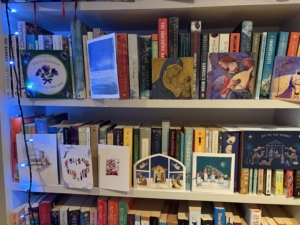
So, as it is twelfth night and Epiphany the Christmas tree, cribs and the decorations have been put away for another year. The cards taken down and recycled (and some up-cycled into new cards as part of a church fundraising project).  

Taking down the cards, made me wonder, how many cards of our Christmas cards were charity Christmas cards?  And for what causes? And, as I received several from charities I support, and we always send out cards to donors? Why do charities send them? And is it effective?
Why do we give gifts at Christmas?

The wise men bring the gifts to the baby Jesus so it is to remember the gold, frankincense and myrrh.

It is also to honour and remember St Nicholas (third century bishop of Myra) and the inspiration behind Father Christmas was notorious for delivering secret kind gifts. He put coins in shoes of poor sailors. St Nicholas threw bags of gold down the chimney of a house to rescue three daughters from being sold into prostitution as they had no dowry, with one landing in a stocking drying by the fire. This is where the tradition of stockings by fire allegedly comes from, and oranges in stockings to represent that bag of gold, and candy canes according to some sources represent bishop’s croziers.

So, gift giving has long been associated with Christmas and with that giving to those less fortunate than ourselves. This was revised with the publication of ‘A Christmas Carol‘ by Charles Dickens and its focus on giving to the poor at Christmas.

Today, there is a noted boost in giving in December for those with faith and those without Evidence shows that this December giving has a hangover into January, perhaps as we seek to maintain the Christmas spirit (or in a Dickensian way named the Carol Philosophy – ‘to honour Christmas in my heart and to keep it the whole year round’). 

When was the first Christmas card?

The first commercial mass-produced Christmas card was in 1843 from civil servant Sir Henry Cole. It includes an image of celebrating but also shows giving to the poor at Christmas. 
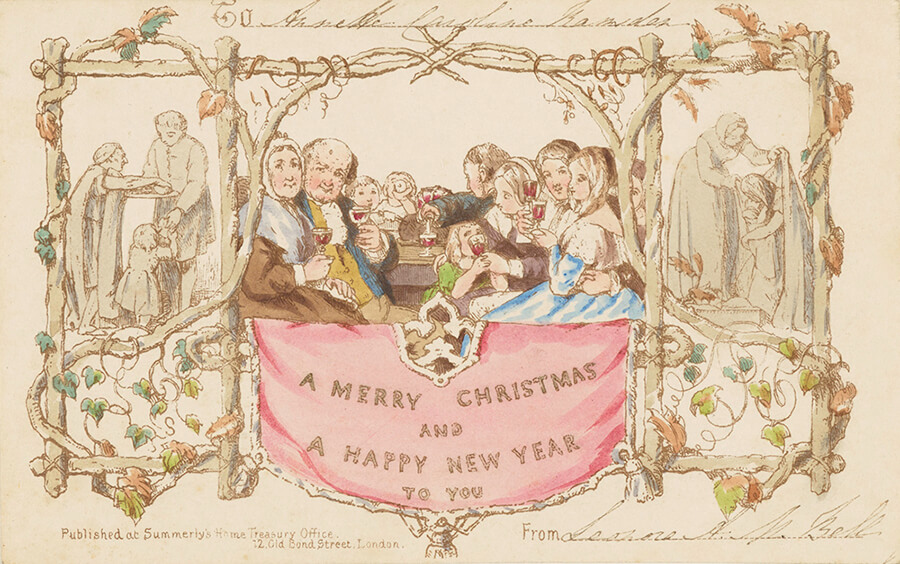
The first commercial mass produced Christmas card

Today 60% cards sold in UK are Christmas cards 

And the first charity Christmas card?

The first charity Christmas card was in 1898 for RSPB and sold 4,500  copies, the RSPB now sell 2.5m cards a year

How much do charity Christmas cards raise?

Upwards of £50m+ is raised for charity.

Reports vary on how much of the revenue goes to the charity – with some suggesting that 80% goes to the charity if you buy their cards to less than 5% if bought through third parties like supermarkets. 

Why charities send you cards at Christmas?

  • Another way to say thank you
  • Strengthen donor relationship
  • Feel seen, known appreciated
  • Another way to share the impact of your gift or invite another gift. 

Planning for Christmas cards begins months in advance for many fundraising teams and can be an epic undertaking for a charity – ensuring that the data is up to date and the ‘right’ people receive or sign the card. Do we segment by type of gift, amount, relationship, potential? One fundraiser recently told me that since she had signed so many donor cards she had stopped sending her own. 
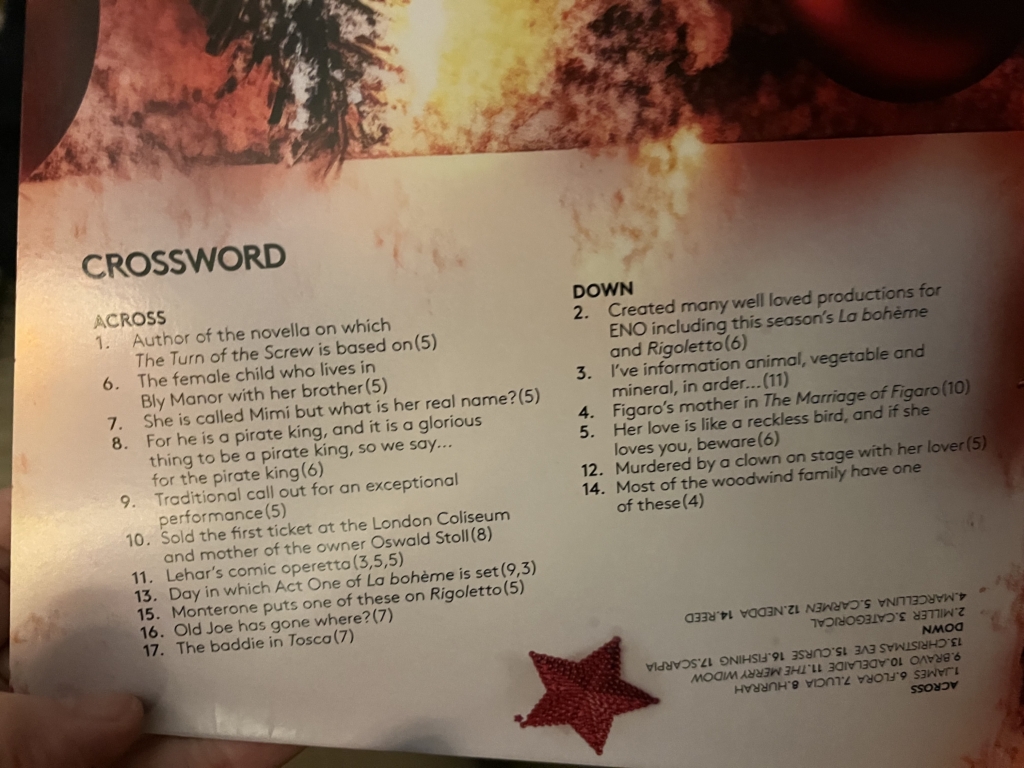
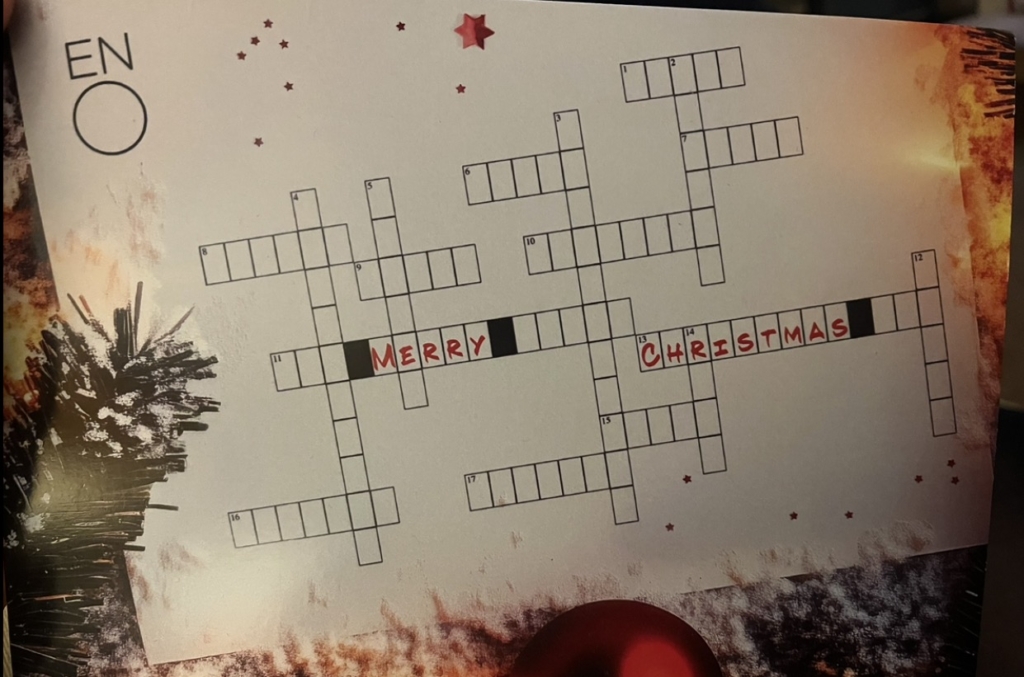
ENO opera themed Christmas crossword card (2024)

Why a physical card?

Physical materials are more real to the brain.  It has a meaning, and a place. The cards have been displayed and seen daily – even subconsciously whilst celebrating. These cards ought to be better connected to memory, the physical connects to emotional processing.

The impact of real paper-based marketing is from a study sponsored by Canada Post and performed by Canadian neuromarketing firm TrueImpact. The study compared the effects of paper marketing (direct mail pieces, in this case) with digital media (email and display ads). Using EEG wave measurement and eye tracking software they analysed cognitive load (ease of understanding), motivation (persuasiveness), and attention (how long subjects looked at the content). Physical pieces are processed faster and recalled better. 

So a physical card vs a digital card will be better remembered. (Most, but not all, charities that I support also sent digital festive greetings and/or thanks)

Hand signing vs printed? 

Most charity cards I received were pre-printed. Even having a pre-printed signature feeds into the labour illusion – a decision science heuristic – that means we value something more if we feel someone has spent time and effort on it. Even though we know it is a mass-produced card the signatures tap into this effect. 


The ones that are hand signed further enhance that connection of the effort taken to appreciate me the donor. 

Half had images clearly associated with the charity and its work – only one detailed the projects that were supported. Clearly these are being used to highlight and enhance the relationship rather than clearly link to the work done, or as an opportunity to ask.

However, it did make me question whether this is a good use of time and resources?

For a few of these charities I do not consider myself a major donor and would be an average supporter. Having a hand signed card made me question whether this is a good use of time and resource for the fundraiser – who I have never met –– to be signing all these hundreds or thousands of cards. For me it moves away from an instinctive (system one) how lovely they have sent a card, to a system two, why have they wasted time and resource on sending me one?

Are Christmas cards going to be generational? And should we send them to Boomers and older? Or those we deem have the best life time potential, or legacy value? (yikes is that how I am being profiled?)

Does it matter? Will it impact?

To paraphrase a saying – donors are for life and not just for Christmas – how will the continued engagement throughout the year connect with me and make me seen and valued and know that my gift is having impact in the world?
One charity I support, the wonderful SOFII (Showcase of Fundraising Inspiration and innovation) sends a Valentine card. Each year Trustees across the world send hand signed cards to thank supporters (my husband raised questions of who was sending a card from Amsterdam!). During the pandemic we sent Valentine’s to all our supporters and people appreciated the novelty – what ways can you find to make your donors feel thanked and appreciated beyond the thank you at the time of the gift? What events in their life, or seasonal events can give you an excuse to creatively thank and send them a card?  

And the scores on the doors? 68% were from charities (43% from charities, and 25% from multiple charities/supermarkets), 13% were purely commercial and 9% were commissioned especially from an individual/family. Of the ones from a single charity the local Hospice was the most frequent cause, followed by the British Library and the National Gallery (there were over 20 individual charities). The others were handmade, from schools, and from charities I support.

References:

https://www.sciencedirect.com/science/article/abs/pii/S0167268118301811

https://www.forbes.com/sites/rogerdooley/2015/09/16/paper-vs-digital
https://www.rspb.org.uk/about-us/our-history

https://marinajones.uk/wp-content/uploads/2026/01/ChatGPT-Image-Jan-4-2026-at-03_39_28-PM.png 1024 1536 admin https://marinajones.uk/wp-content/uploads/2022/12/f2b903e010104f5aa61ea1821a685913.png admin2026-01-06 09:03:412026-01-06 09:03:56A donor is for life, not just for Christmas…

Read the will Mark Antony!

November 10, 2025/in Thoughts/by admin

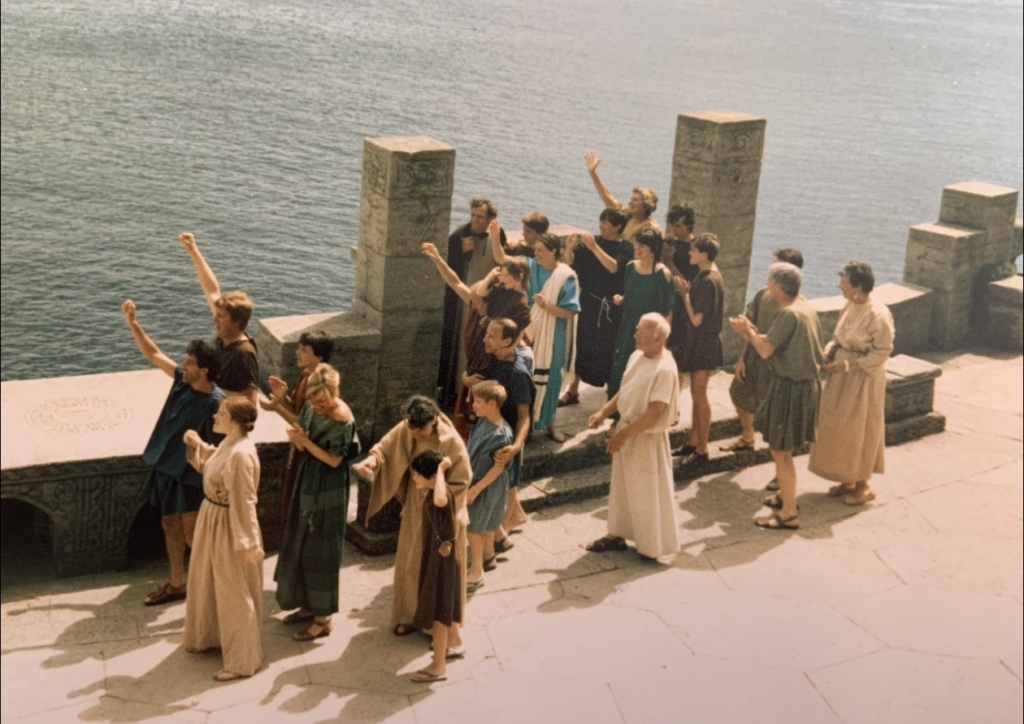
Here I am aged 6 at the Minack Theatre in Cornwall in a production of Juluis Caesar. Can you spot me? This production was directed by my father, and also in the picture is my mother, sister and grandfather.

This is taken from Act Three of Julius Caesar just after Caesar has been assassinated by the conspirators. Mark Antony has just finished the famous “Friends, Romans, countrymen, lend me your ears” speech, and the crowd are shouting to hear Caesar’s will. Mark Antony was not one of the conspirators who assassinated Caesar, and in the space of this one scene through the power of speech he changes the angry mob from thinking Caesar was a tyrant, to a champion of Rome and the people. The speech itself is a masterclass in persuasive oratory. 

At this point the crowd are yelling  “We’ll hear the will. Read it, Mark Antony” and “The will, the will! We will hear Caesar’s will” (notice the deliberate repetition of ‘will’ when ‘shall’ would make more grammatical sense).

So what was in Caesar’s will, how did Romans make legacy gifts, and how could you be as persuasive as Mark Antony in your fundraising?

Let’s pick three devices used by Mark Antony to persuade the crowd:

Framing 

“I come to bury Caesar, not to praise him.”

Framing is the context or lens which people use to understand a message. Just as a picture frame changes how a painting is perceived, the “frame” we use alters how our audience sees the facts.

For example, an operation with a 90% survival rate sounds far more positive than one with a 10% mortality rate, even though the facts are identical.

By Mark Antony saying he has come “to bury, not to praise,” Antony appears neutral, framing his speech as respectful compliance with Brutus and the conspirators. This disarms Brutus, and the crowd’s defences.

He also reframes “ambition” which is a negative quality when Brutus uses it. Brutus and the conspirators claim that Caesar’s ambition to be emperor was cause for the assassination. Mark Antony contrasts Brutus’ claims of “ambition” with Caesar’s refusal of the crown and his generosity to the city.

In fundraising, the frame that we put around a problem can help a donor understand the issue, and drive action. So instead of “2 million starving children need help today”, we can frame the problem as “Help Ifran have a meal today” (this links into the identifiable victim heuristic where we are more likely to help one named person rather than countless millions. Our brains cannot compute the big numbers or the scale of such a large problem – but, by the frame helps adds focus and by using the lens of how we can help one child (Ifran) we can see a tangible and real impact of our gift.) 

Repetition 

“Yet Brutus says he was ambitious;
And Brutus is an honourable man.”

Repetition breeds familiarity and our brains often equate familiarity with truth. This is known as the mere-exposure effect. Antony deliberately repeats Brutus’ assertion that Caesar was ambitious, until it sounds hollow and insincere. By overusing it, he drains it of its original power and turns it back on its speaker.

Mark Antony calls Brutus “an honourable man” not once, not twice, but eight times.

In fundraising, we often debate how many times to repeat an ask — but repetition works. Despite how carefully you have crafted your appeal your donor will skim it (see the work of Siegfried Vögele). So although it might feel repetitious to you (or to someone else in the organisation reading it) knowing that your donor is skimming your material makes repetition powerful and effective. 

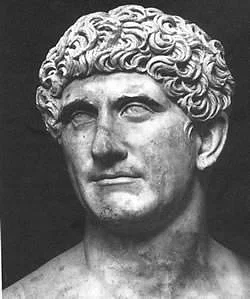
Mark Antony

Curiosity 

“I found it in his closet. ’Tis his will.”

At first Mark Antony refuses to read the will. This incites the curiosity of the crowd:

“Have patience, gentle friends. I must not read it.
 It is not meet you know how Caesar loved you.
 You are not wood, you are not stones, but men.
 And, being men, hearing the will of Caesar,
 It will inflame you; it will make you mad.”

This leverages the curiosity effect our innate drive to seek information simply because we want to know what we don’t. Curiosity triggers dopamine release, increasing engagement, memory, and motivation.

In fundraising curiosity can be in the teasers or questions you ask in your appeals and communications 

“How just £1 saved 20 people in Ethiopia from certain death?”

Mark Antony’s rhetoric also feeds into reactance. When we are told that we cannot, or should not, have something it feels like our agency and autonomy is being taken away, and we rebel against it and want to do the opposite. So, by Mark Antony telling the crowd that they cannot hear the will makes them want to know what is in the will even more. 

When asking for donations we need to be careful not to incite reactance in our donors making them feel that they do not have agency in the decision. A meta data study by Roger Dooley that looked at 22,000 pieces of data showed that by giving donor’s permission not to give, or not to give now by adding the phrase ‘but you are free to choose’ increased donations x2.

What does Caesar’s will tell us about Roman wills?

“Here is the will, and under Caesar’s seal:
 To every Roman citizen he gives,
 To every several man, seventy-five drachmas.”

The will reveals that Caesar left each Roman citizen 75 drachmas. Caesar also left his private orchards and gardens to the city to enjoy. 

“Moreover, he hath left you all his walks,
 His private arbors, and new-planted orchards,
 On this side Tiber. He hath left them you,
 And to your heirs forever—common pleasures
 To walk abroad and recreate yourselves.
 Here was a Caesar! When comes such another”

Although Shakespeare is known for his fabrication of historical events for political propaganda, Mark Antony is really reported to have read Caesar’s will and the contents described are accurate in the play. However, in real life, Mark Antony read it in private, but the contents were made public.

Roman wills, like wills today, were socially and culturally prescribed. The norms that we see today to gift to immediate family (prescribed through legitimate portions in some countries) date back from Roman customs. Wills were important documents for securing succession and naming official heirs.  

Charitable works for the public good, like leaving the land to the city or building theatres or libraries, was a key virtue in Roman society so there was a cultural norm to make gifts like this it was a way in which powerful men (and a few women) demonstrated their civic virtue. 

It was also common practice that wills gave freedom to your faithful slaves 

Some other Roman legacy examples:

As with many parts of the history of fundraising and philanthropy, we rely on what survived to catch glimpses of the past and what and how fundraising and charitable giving was carried out. Inscriptions on tombs can give us clues to how philanthropy was enacted when the papyri have long since disintegrated. There are a few notable examples of legacy giving – like Caesar’s – that reflect in life commitments.

Menodora

Menodora’s tomb

In Turkey a tomb was recently discovered with an inscription which tells of Menodora, a woman in the town of Sillyon who donated over  300,000 denarii to a children’s foundation and building public monuments (via Why Philanthropy Matters newsletter)

https://www.turkiyetoday.com/culture/roman-era-philanthropist-menodoras-tomb-discovered-in-antalyas-sillyon-3207766

Pliny

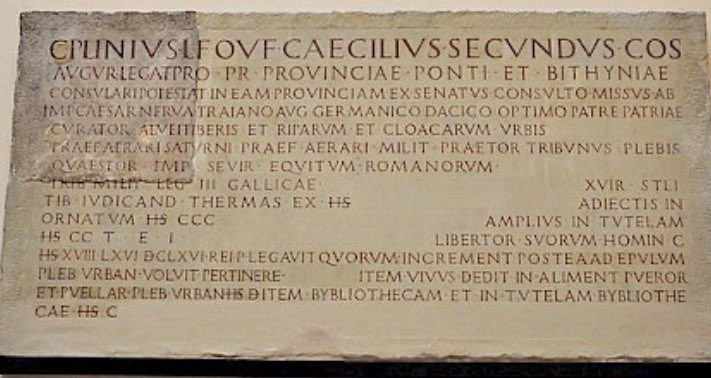
Pliny the Younger, prolific first century letter writer, lawyer, author, magistrate and sometime philanthropist, is a notable legacy donor. Pliny’s will details his bequests for the public good including gifts to the public baths and their upkeep (we like a legacy bequest that comes with maintenance costs.) In his will, he also supported Freemen of the city which included spend on an annual dinner. In his life he had been a major contributor to the library and his will does not include another gift to the library but notes his life time gifts which included 100,000 sesterii for the upkeep of the library.

To read more about legacies and history

  • “Let’s choose executors and talk of wills.”  – this quote from Shakespeare’s Richard II is quoted on a Salvation Army legacy brochure from 90 years https://marinajones.uk/legacy90/

  • Shakespeare or Dante – what Dante can tell you about legacy fundraising https://marinajones.uk/dante/

  • Legacy fundraising Middle Ages style https://marinajones.uk/legacy-fundraising-middle-ages-style/

  • We have a tendency to think of wills as private documents, especially in British culture.  Philanthropist and entrepreneur Madam CJ Walker was aware it is a public document and will be read and scrutinised https://marinajones.uk/legacylessons/
https://marinajones.uk/wp-content/uploads/2025/11/IMG_0318.jpeg 891 1260 admin https://marinajones.uk/wp-content/uploads/2022/12/f2b903e010104f5aa61ea1821a685913.png admin2025-11-10 19:53:012025-11-10 19:53:12Read the will Mark Antony!

Extraordinary How Potent Cheap Music is  – sensory priming

October 19, 2025/0 Comments/in Thoughts/by admin

Our brains are wired to emotionally respond to music which is why certain songs have a power to transport us physically and emotionally to a moment – a university bar, a crush, a city, a holiday, a road trip, childhood, someone we love. Familiar music, especially music with vocals, causes a psychological response (increased heart rate & blood pressure) – music is wired to our memory.

Sounds can prime our moods and emotions. Research has shown that listening to ‘Hakuna Matata’ from The Lion King primed a good mood and people were more generous.

Working in opera I often ask audiences to remember a particular musical moment, or their favourite moments in communications.

Sound is one of the most powerful senses we have, but one often under used in fundraising. 

Listening to music can give you thrills and produces endorphins and activates the brains reward circuits. 

“Music does a lot of things for a lot of people. It’s transporting, for sure. It can take you right back, years back, to the very moment certain things happened in your life. It’s uplifting, it’s encouraging, it’s strengthening.”

Aretha Franklin

The power and embodiment of music can be seen in this former ballet dancer with Alzheimer’s hearing Swan Lake and recreating the steps

Mood music 

The cues music can give us are subliminal nudges, that can impact our mood, but also our behaviour, how fast and what we eat, and what we buy.

Music with a faster tempo makes us eat faster, and people tend to spend more money and eat slower when jazz or classical music is played. Think about the ambient background music you might have in a restaurant – fast and pop for somewhere that wants to turn tables, and more mellow and chilled for a restaurant that wants to encourage you to spend longer, spend more and enjoy the experience. (Although music can also be used as a deterrent, a Welsh branch of MacDonalds plays classical music after 17.00 to deter anti social behaviour)

This real life experiment in an East Midlands supermarket shows how the background music has more impact that we might think it would

  • When French music was played 75% bought French wine
  • When German music was played 73% bought German wine

When asked about their choice of wine, and whether the music had impacted their choice, only one of those surveyed noted the impact. (North, A. C., Hargreaves, D. J., & McKendrick, J. (1999))

What does your brand sound like?

Brands use sounds, known as sonic branding, to help us readily recognise them:-

MacDonalds has ‘I’m lovin’ it’ https://www.youtube.com/watch?v=tfhlEP8LT4k and Intel has the ping https://www.youtube.com/watch?v=-ihRPi4wcBY

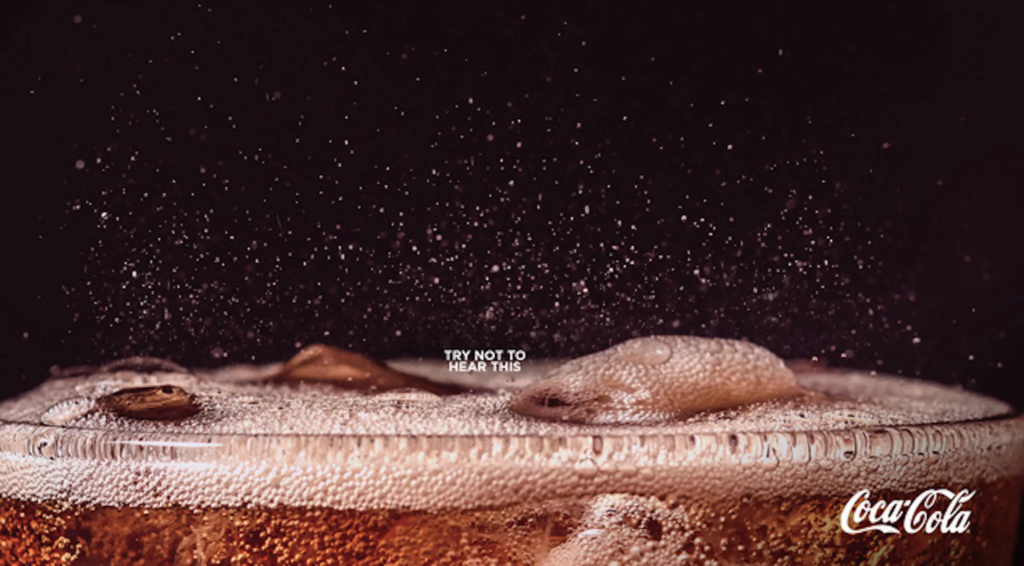
Coca Cola used this image and the slogan ‘try not to hear this’ to evoke the sound of the fizz of the bubbles (there were also adverts showing a detailed close up of the ring pull being pulled back, and a bottle opener opening a bottle). The advert invites us to hear the remembered sound and trick our brains to almost hear it.

What does your charity brand sound like?

The RNIB has recently released  a sonic identity https://www.rnib.org.uk/about-us/sonic-logo/

But what has it got to do with fundraising?

We know sound (and taste/smell – think Proust and the madeleines) are some of the most powerful senses but unless you have the budget for a TV ad (or create a ‘scratch’n’sniff appeal) they can be underused in fundraising appeals (in direct mail or adverts.)

We know that we and our supporters receive information in many ways – that the words are only part of it, and that the real and imagined images we use have an impact – as does the weight of the paper, the design of the piece, the feel of appeal in the hand, the order we present information (touching something soft primes us to be kinder). We know that appealing to many of the donor’s senses can make our appeals more vivid and effective. So, we might appeal to donors to remember a sound (children crying) or imagine a future sound (children laughing), but we largely rely on the words and the visual of the design of the pack – letter, the lift letter, response mechanism, the call to action.

For someone working in opera and fundraising, the sounds created and remembered are key – the emotions they stir in audiences from the dopamine of anticipating what it will feel like to hear that music again, to the oxytocin of the emotional engagement with the story – music is so important. And not just the music, but the whole holistic and acoustic experience of the performance, of being together, with an audience, inside a theatre.  The hubbub in the bars before hand, the orchestra tuning up as you take your seats, the silent anticipation with the audience holding its breath before the curtain rises and the applause at the end.

How can we integrate soundscapes into an appeal?

  • How can we create appeals that bring more of the sound world – real, remembered or future created by the donor’s action into our appeals?
  • How can technology help us integrate and create an immersive sound world?
  • How could we use sound to provide a richer and deeper connection with our donors? To their memory? To their identity?
  • What segments of donors will this soundscape be most effective with?

https://marinajones.uk/wp-content/uploads/2024/01/heaer.png 94 178 admin https://marinajones.uk/wp-content/uploads/2022/12/f2b903e010104f5aa61ea1821a685913.png admin2025-10-19 20:36:282025-10-19 20:36:29Extraordinary How Potent Cheap Music is  – sensory priming

The 9 nos of refusing a charitable gift

October 3, 2025/in Thoughts/by admin

You may know the well known “9 Nos of fundraising” and therefore understand that in fundraising no rarely means no.

But what if we reframed this for when charities should say no a donation? 

It may feel counterintuitive to consider when to say no—fundraisers exist to build relationships, and raise money for social good. Money is mission after all. 


But sometimes we must say no. Just as there are many kinds of “no” in fundraising, there are also many kinds of “no” in refusing gifts.

Let’s explore them and how you might respond. 

How might these manifest themselves, and how might you move forward (or pivot) the conversation?


First the most obvious

No, go away – no means no

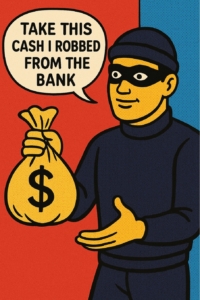
Offer: Hi I’m a bank robber and would like to give you the proceeds of the bank robbery to your charity.

What the charity really thinks: Yikes. Run away.

With the needs for funds ever more acute the decision to refuse a gift is a complex one for a charity. The Charity Commission gives clear guidance on when to say no and in our bank robber example it is clear cut. (so if Robin Hood did offer you swag stolen from the rich you would have to say no!) Any donation from an illegal source should be refused and reported to the authorities, as it would directly harm your beneficiaries or compromise your mission. 


For other decisions it is not always as black and white, and despite the infamous saying of William Booth about the problem with tainted money being there ‘taint enough of it’ we are not often overwhelmed with offers. Sometimes we enter a greyer area.

In 2024, the Charity Commission issued new guidance stating that trustees must not reject donations based on “personal views” or “external pressures” if doing so is not in the organisation’s best interests. The guidance also stresses that trustees should exercise “sound judgement” and, as a default position, accept donations.

But, as value and missional organisations, how mission intersects with wealth, and how it was made is complex.  Having a robust acceptance of gifts polices, clarity over where your red flags are around source of wealth or reputational risk becomes crucial. Balancing whether accepting a gift would deter other donors, staff or volunteers and working in the best interests of the charity is critical. The key test is legal and reputational risk. Having a leadership team and board who support the essential need for fundraised income whilst balancing these risks is key.  

Each charity might have companies or areas of business that are against their views, for example, Greenpeace does not solicit any corporate sponsorship. Save the Children have a ‘no-go list’ which includes pornography, tobacco, arms manufacturing and export, carbon intensive fossil fuels and breast-milk substitutes. Many won’t take money from crypto currency. What are yours?

Also, be wary as things can change very quickly. The donor that supported every charity can overnight become toxic due to unfolding events (hope at this point that their name is not etched into the building!) 

Response: Say no thank you and back away.

If money is obtained illegally the Charity Commission makes it clear when a donation can be refused and proceeds of crime is a clear-cut case. 

No, not for this

Offer: I’d like this money used for something working with rescue donkeys.

What the charity really thinks: We don’t work with donkeys; we are a health research charity. We cannot create a project about donkeys just to please you.

Sometimes donors offer gifts that are not helpful, or do not align with what you do, or are not helpful to furthering your mission. Charity Commission guidance says that donations, “for purposes that fall outside your charity’s purposes”, are among cases where trustees will need to refuse or return a gift.  

A library in Missouri said no to $3m from an anonymous donor who wanted to build the library on a site not suited to their purposes and they already had a donated site https://nonprofitquarterly.org/three-million-no-thank-restricted-gift-declined/  – sometimes it is just not a match.

How you might respond: Thank you —we can’t use funds for donkeys, but we would be happy to talk to you about the ways you could support our charity to fulfil its mission

No not, you 

Reason the donor gives: You are such an important part of my life I would like to leave you my house in my will

What the charity really thinks: How generous but we have concerns about the donor’s mental capacity because we have had a call from the donor’s son who has warned that they have early onset dementia.

Under Charity Commission guidance the person making the gift must have the mental capacity to do so. (Of course, there is a big difference between someone offering a gift in their will, and them going to a legal professional and adding that gift.)  If you have concerns, or have been informed by relations about their mental capacity, then you should follow your internal safeguarding processes about dealing with vulnerable adults. 

How you might respond: Thank you that is very kind and we are so glad that we are such an important part of your life.

You may then have additional safeguarding steps to follow – but this would be on a case by case basis.

No, not me

Reason the donor gives: I want to fund research to cure this disease

What the charity really thinks: We are a support service not a research charity. We don’t do research.

You cannot alter the mission of your charity just because a donor wants to fund it!

How you might respond: We support people impacted by this disease, but it is beyond our charitable mission to research its cure and we cannot accept gifts which fall outside of our charitable mission. If you’re interested in funding research, we can help you connect with charities whose purpose is research, or show how your gift could support people we work through existing projects

No, not unless

Reason the donor gives: I want to be Chair of the Board and will make this substantial gift if I get this role

What the charity really thinks: No way. You cannot buy a seat at the board table – that breaches our governance and Charity Commission guidance. 

Whilst 100% board giving is desirable, and lead gifts from a Chair always a bonus. it should never be a position you can purchase. Board positions are voluntary, and donating is not mandatory. Many charities stipulate in the terms of reference that trustees that are expected to give at a level that is meaningful to them, and their resources.

Trustees have a duty to remain independent, and the Charity Commission has a clause that donations with conditions, “may undermine your charity’s independence,” – buying a seat at the board table and having a donor make key organisational decisions at trustees’ level undermines that independence. 

How you might respond: We welcome gifts and your offer. We can’t accept with those conditions, but we’d love to show you how unrestricted or lightly restricted funding achieves accountability.

No, not in this way

Reason the donor gives: A disaster has happened; this blanket has kept me warm and now I want you to have it to keep you warm 

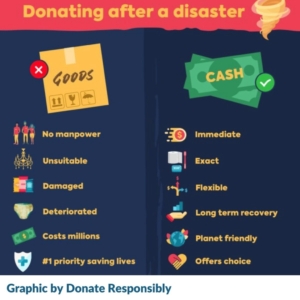
What the charity really thinks: We don’t need stuff that has to be transported thousands of miles. We need cash to buy the resources to respond to the crisis on the ground with what is actually needed. 

When disasters happen, we want to help by offering practical assistance – in the wake of the Grenfell fires thousands of donations were received of clothes and toys. The community was overwhelmed and sorting through and managing the donations was impossible. Culturally we find cash impersonal and items we care about can be a more meaningful gift – fundraising is an emotional transaction not a rational fiscal one. In emergencies, most charities accept only money, since buying needed supplies locally is more efficient. In the Grenfell case the items were sold by the Red Cross and the proceeds used to support the community. 

Trustees can refuse gifts if it places an unacceptable burden on the charity. 

How you might respond: Awareness campaigns like #CashNotStuff to promote cash gifts rather than stuff

Have contingency plans for the use of donated items and a clause about how they might be sold to support those in need rather than directly go to those impacted. 

No, not now 

Reason the donor gives: I have just done my spring cleaning and have some clothes, books and toys to take to the charity shop

What the charity really thinks: We don’t have the capacity to accept and process this now the volunteer who was scheduled to come in today is sick. 

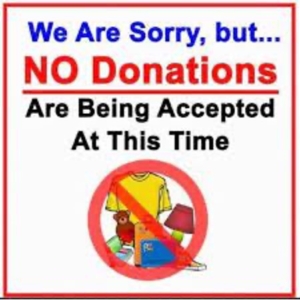
Often you see charity shops have signs outside saying no more donations today, or we don’t need any more books– as they have too many. 

Here is a historic example of a ‘no – not now’ donation

One of the earlier properties that the National Trust acquired was Barrington Court in Sussex – a Tudor mansion and estate. It came on the market in 1904 and there was concern it would be dismantled and the stones used for other building projects.  The National Trust was founded in 1895 and owned only a few properties at this point – including the Alfriston Clergy House and a fourteenth century manor house and old post office. They did not have the money or membership to support many acquisitions.  In 1904 they were offered a substantial capital gift by Miss Julia Woodward of Clevedon (who had inherited wealth from her parents and uncle) to fund the purchase.   A survey of the property was undertaken to see if it could be saved. It could. 
Even then the Trust were still concerned about taking the gift and being able to afford it. But by 1907 they accepted the gift and bought the property (three years after the offer!) It was further rescued, restored and expanded by Lt Colonel Lyle (of the sugar fortune), invalided out of the army who became a tenant and invested hugely in restoring the buildings, bringing in celebrity garden designer Gertrude Jekyll to redesign the gardens. Sometimes you have to say no – or no – not yet to a gift. But it is worth the wait.

How you might respond: Thank you. We’re not in a position to accept today but could we explore this at a time when it’s more viable for us. 

No, too much

Reason the donor gives: Your cause is so important to me. I know you need money. Here is a cheque for £25,000 for that project. 

What the charity really thinks:  Fantastic but we just received a grant last week from another foundation for the same project. This is awkward. 

It happens (it honestly does!). When making multiple applications and asks you can reach a point when you overfund a project. 

The Fundraising Regulator states that you “you must include a statement saying what will happen to funds you receive if the total amount raised is not enough to reach (or is more than) the target.“
You need to be open and transparent with the donor about the situation. 

How you might respond: Thank you – be honest and transparent about the other money received and see if they will part support the programme, or support the programme next year, or does their gift enable you to expand the programme and do more. 

No, too little 

Reason the donor gives: We’ll support you with just £5,000

What the charity really thinks: We have done our prospect research and know that you can give more than £1m why do we get £5k?

Donors have the autonomy to give what they want in response to the offer that is made. 

There are several factors that could be at play 
This could be a go away gift – sometimes generous donors make small contributions to a large variety of causes out of politeness because a peer asked and this is a thank you, but they do not want a relationship. 
This could be a test gift. They could be testing the waters building towards a bigger gift and using this first contribution to assess your charity, the impact you make and how you make them feel. If you prove impactful with a small gift it could lead to a bigger conversation. 

Historically, when the Carnegie Foundation were building libraries left, right and centre, each community had to prove the need for the library AND the public commitment by raising matched funds. Several libraries were turned down because the local community raised too little to demonstrate impact. 

An urban myth example of when a small gift has been challenged and changed. A donor gave a cheque to a leader in the organisation which they tore up in front of them, and told them to double it. They did.  Not an approach many would take or get results from and definitely against guidance. 

Coercion is strictly forbidden, and the Fundraising Regulator’s Code explicitly bans, “putting undue pressure on a person to donate”, or using, “unreasonably persistent approaches”, with supporters.

Giving money makes you feel good; it triggers your happy chemicals– like completing a run, or any hard physical challenge. By giving a big gift you can release an extra rush of endorphins producing feelings of pleasure, satisfaction and wellbeing. Gently encouraging a bigger gift gives that endorphin and dopamine hit of pushing through a pain barrier or completing a run.

How you might respond: Thank them sincerely and explore through conversations what kind of gift it is and seek to understand their interest and capacity (without implying they should give) 

Conclusion 

Saying no is rarely easy. The key is to have a clear Acceptance of Gifts policy, defined thresholds for due diligence, a transparent process for trustees, and ready scripts so refusal is respectful and relationship-preserving.

Disclaimer: This article is only intended to explore the issues around the refusal and acceptance in the UK interpreting guidance from the Charity Commission, Fundraising Regulator and Chartered Institute of Fundraiser. It is not a definitive guide to when charities should refuse or accept gifts. Each charity needs to decide in line with the guidance when they would accept or refuse a gift.

If you don’t know the 9 nos of fundraising they were written about by Bernard Ross and Clare Segal in ‘The Influential Fundraiser‘ (2010) and can read more about it here.

https://marinajones.uk/wp-content/uploads/2025/10/no.png 602 904 admin https://marinajones.uk/wp-content/uploads/2022/12/f2b903e010104f5aa61ea1821a685913.png admin2025-10-03 13:26:422025-11-25 13:35:54The 9 nos of refusing a charitable gift

Imagine giving so much away that you have to borrow money for soap

September 7, 2025/in Thoughts/by admin

That’s what happened to Marco Carelli, a wealthy wool merchant from Milan and Venice, who in 1393 signed over his entire fortune to fund the construction of Milan Cathedral. His extraordinary gift of 35,000 ducats left him virtually penniless for the last years of his life — a man once rich enough to shape a city, reduced to begging for the basics.

But why did Carelli make such a gift? And what can his story tell us about legacy giving and donor behaviour even today?

What made him leave this extraordinary gift, and what can the available sources tell us about him?

Marco appears to have had no children. His wills make no provision for children (they may have been married or died) but convention and custom would have dictated that they be included. Often our best legacy prospects can be those without children who do not have to adhere to these social conventions.

In Venice, there was a state requirement for citizenship of a bequest to the state church (as well as an oath of fidelity to the republic and property ownership in Venice – this had to be renewed every five years. Three years before he gifted all his property he made a will in Venice (in those days before Italy was unified each city state had its own legal system and laws).

This was a planned gift and set in motion by the liquidation of his Venetian assets three years before the final gift was made.

He made a will in 1390 for his property in Venice (which because of the organisation of the city states needed its own will)

Second will for other property in 1393 and a codicil in 1391


Where was the capital campaign for Milan cathedral?

They had laid the cornerstone for the cathedral five years ago, but the campaign had stalled.

Despite the St Luke’s Gospel cautioning “For which of you, desiring to build a tower, does not first sit down and count the cost, whether he has enough to complete it? Otherwise, when he has laid the foundation and is not able to finish it and who see it begin to mock him, saying ‘This man began to build but was not able to finish it’ – they began but did not enough to complete it.

This was common when building cathedrals – the campaign began with no definite plan of the cost, the timing or the completion date. Cathedrals needed money to build – some had a slow and steady supply and others worked in fits and starts. We all know of capital campaigns that have stalled on the way to their goal.

Goal gradient effect means that we are more likely to give at the start to be the first to give – and towards the end when success is almost guaranteed the speed of donations increases as the target approaches. But in the middle donations had stalled.

What happened after the pledge?

Marco made the gift and afterwards – rather like a proto effective altruist – lived on nothing. His will gave various properties and assets to other members of the family but he has to ask permission from the capital committee at the cathedral to realise these assets.

At this point he was so poor he had to beg money to buy soap – although this may be an apocryphal tale designed to highlight his piety. The story endures….

When did he make the gift?

Marco chose to sign the will giving his fortune away on 15th August, the Assumption. He was devoted to Our Lady, Mary, mother of Jesus to whom the cathedral was dedicated.  The Assumption is the day that Mary ascended to heaven (Catholics believe she did not die but ascended). The date that we make gifts matter – they demonstrate the personal within personal gifts. Donors want autonomy about when they make gifts – linking to personal or religious or cultural dates. See more about identity giving here.

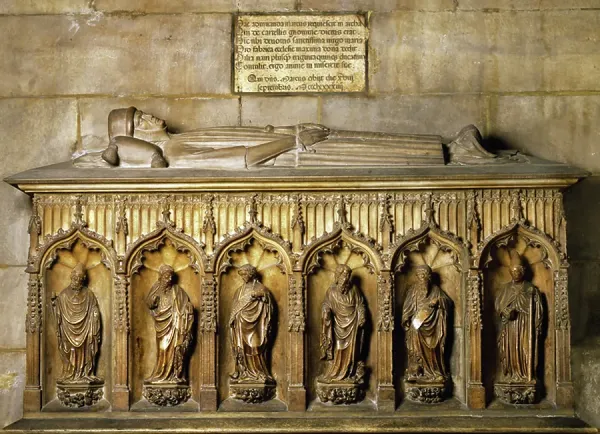
Memorial to Marco in Milan cathedral which was built decades after the gift as a way to encourage other donors to be as generous

Marco died in Venice and because of plague restrictions it took a year before they could bring his body back to Milan. The funeral procession passed through all the important places, churches and home in his life in Milan.

We are all used to waiting for probate – and they had to wait 35 years to sell all the assets they were given. And it was after that a memorial (above) was erected to commemorate the gift and encourage others to be as generous.

What can we learn from it as fundraisers today?

Look to the childless: Donors without direct heirs may feel freer to leave transformational legacy gifts.

Planned giving matters: Carelli’s gift was years in the making, involving multiple wills and the liquidation of assets — a reminder that legacies are usually a long game.

Timing is powerful: Donors often align their giving to personal, cultural, or religious dates, making gifts feel deeply meaningful.

Campaigns stall: Just as in the 14th century, campaigns risk losing momentum in the middle. Smart fundraisers must plan for this – speak to donors about the timings of their gifts.

Stories endure: Whether or not he truly borrowed money for soap, the tale captures the imagination — and has carried Carelli’s name for centuries.

https://marinajones.uk/wp-content/uploads/2025/08/IMG_6296.jpeg 1037 1170 admin https://marinajones.uk/wp-content/uploads/2022/12/f2b903e010104f5aa61ea1821a685913.png admin2025-09-07 18:27:572025-09-07 18:28:10Imagine giving so much away that you have to borrow money for soap

Legacy fundraising – Middle Ages Style

September 2, 2025/in Thoughts/by admin
  • How did people in the Middle Ages approach legacy fundraising?
  • And what kind of bequests did people make?

Solicitation 

How were people asked for gifts in wills?

It was common for the priest to attend the dying to give last rights and the final sacrament. In the thirteenth century Paris there was an instruction that, as well as these final ministries, the priest ought to be encouraging legacy bequests to the cathedral. (With literacy rates lower, very much using the face to face ask approach!)

When you did leave a bequest, it was common that as well as the monetary gift you also left instructions for the priests to say mass for your soul – on various days after your death, and on the anniversary of your death.

Praying for the dead and benefactors would have been a slow drip feed reminder of the donors that had gone before hand – creating a strong social norm to do the same. (As well as obviously the spiritual and religious benefits of reducing the amount of time you spent in purgatory.)

Social conventions shape giving

We are social creatures and our primitive brains know that it is safest to follow the herd – and behave like others.

We have seen that the saying of masses for the dead provided a strong social norm that bequests were common and expected but how common were they really?

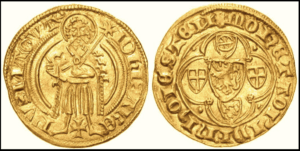
Local customs really dictated how much, and how frequent bequests to cathedrals were – in some areas it was common for most people to include a small gift to the cathedral amongst other bequests. The Bishop of Wells donated as much to the roads of Somerset as he did to the cathedral so it was part of a list of charitable gifts people might make. Between 1321-1460, 90/356 wills in York left gifts to the cathedral fabric and it became a standard for a few coins to be left. Bequests, like Agatha who left a house, or Marco Carelli who left his entire estate to the cathedral were unusual.  

So not as common as might be expected.

Crediting the fundraiser 

Often in charities we focus on thanking the donors.

We don’t always remember to credit the fundraiser.

In Utrecht Cathedral the records show the name of the priest that solicited the bequest – and their name is recorded alongside the gift.

Now this could be an early example of a CRM system showing who was in which portfolio.

With priests attending to last rights and encouraging gifts in wills there was not the lag time that we see today between a will being written and a gift being received.

Nowadays, we often need to thank a fundraiser that worked in our charity ten or twenty years ago. As the legacy pledges we received today come in addressed to former fundraisers, or in response to old campaigns. So we get to thank their hard work and foresight for investing in legacy fundraising. (After all, the best time to start a legacy campaign is twenty years ago, the second best is today!)

When reminded about our own death, mortality salience kicks in (a fear that we are going to die) and we want to distract, delay and deny that death will happen to us. When major life events happen – like other members of our family die, retirement, divorce, grandchildren or children arrive or illness – we know that we need to update, or make a will. But that fear remains and it can still take our donors years to make (or re-make a will). In the Middle Ages with shorter live expectancies death was perhaps more apparent (and therefore a shorter lag time between pledge and receipt of the gift).

Predicting your legacy income 

Everyone knows that legacy income is bumpy and you can never predict what you might get, donors might not tell you what they are giving you or may change their minds, or just not be dead yet.

Notaries had to disclose to the Fabricca (Cathedral building committee) in Milan wills that included donations to the building and how much the gifts were for.

This might not tell you when to expect the gift, but gets over the modern sensibility of shying away from asking and respecting people’s privacy.

Stuff not cash

Often we want to donate items rather than cash, cash can feel impersonal and items that we have loved and cared for can feel more meaningful. We endow them with emotional connections.

It was common to bequeath items to the church. Frequently people gave their most expensive garment to the church which went to the priest to make a new vestment. But other gifts were given in wills including wood, wool, rosaries, rings, horses and a basket of cherries.

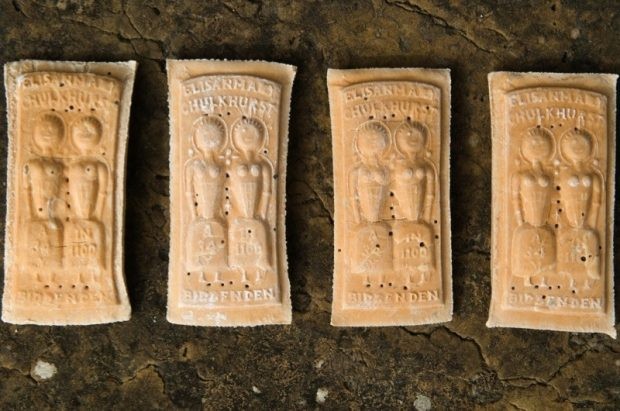
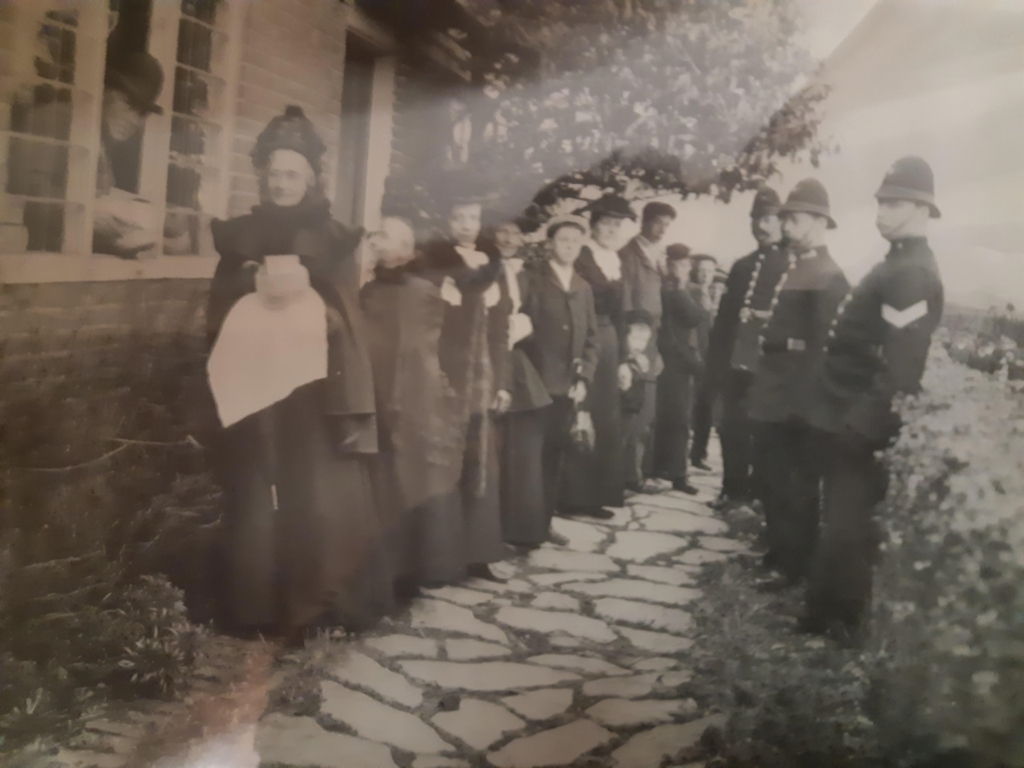
Born in 1100 conjoined twins Eliza and Mary Chulkhurst were conjoined twins. They died aged 34 within 6 hours of each other, and in their will left the church land and the means to provide a charitable dole for the poor, needy and elderly of the village. This was bread and cheese and at some point this evolved into biscuits depicting the two twins. The biscuits are reportedly very hard and not super tasty. Today as well as biscuits a church ceremony takes place and the elderly get tea, bread and cheese – as well as the biscuit.

Biscuits
1902 queue for the Bibbendum dole

In the legacy benchmarking research I did for arts and cultural charities, 50% had only received cash but gifts of items included:

  • Royalties 5%
  • Property 21%
  • Paintings 25%
  • Musical instruments 21%
  • Archival materials 23%
  • Shares 5%
  • A tiara
  • And two pizza shops in Derby!

Sometimes things are more meaningful, sometimes more practical, or perceived as more needed. If you do want and accept items have a clear policy about what you accept – and how to say no politely (how many programmes do you need?)

Identity shapes giving

The gifts that we make it our wills speak of our identities, to the things and causes that were important to us. On how we want to be remembered by other people – as a culture lover, a fighter for justice – the gifts tell our autobiography, our life stories.

Two of the biggest bequest gifts to the Utrecht Cathedral were from architects.

  • Cornelius de Wael 1476-1505 master mason gave 156.5 rhinegulden (rhinegold is real!)
  • Jacob van der Boch spent 31 years working on cathedral and donated rhinegulden 

This speaks of their professional identity as architects influencing their gifts and the stories they tell.

Legacy gifts speak of our autobiographical self – what do those gifts and the choices that pledgers make speak about their final chapter and how they want to be summed up to friends and family – as someone who loved opera, fought for equal rights, was a dutiful Christian.

How can you frame your legacy proposition to align with the identity of your donors and their support of your charity?

Un-voluntary contributions 

To define ‘philanthropy’ it is common to use Robert Payton and Michael Moody’s definition as ‘voluntary action for public good’. The church in the middle ages was often a little short of the voluntary aspect!

In Venice as part of the annual citizenship test which you had to complete every five years, you had to swear fidelity to the republic, own a house and make a bequest to the state church. They were also wary of the too much wealth leaving the city so you had to find loopholes if you wanted to send bequests to other non Venetian churches.  

The church of San Lorenzo in Gerona from 1174-1270 imposed tariff on all church bequests 10% tax.

Nowadays we would never make giving compulsory although legal precedent and cultural custom can still dictate pledgers distributions to family and other causes.

Donor recognition 

We know how important it is to thank donors for their gifts, and that donor recognition boards can encourage and normalise gifts.

As well as masses for the dead which we have talked about above. There were other ways that legacy donors could be recognised.

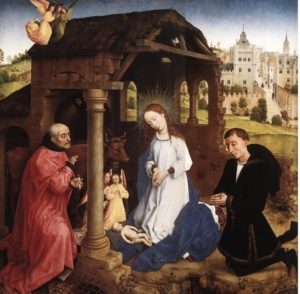
In the fourteenth and fifteenth centuries donors included themselves in paintings they commissioned on altar panels as part of their legacy gifts. It highlighted their contribution to the church and also their personal piety – but was very much a donor led decision about the credit!

Above, Braque, the donor, is seen dressed in modern clothes and praying at the Nativity Scene. This is the central part of the triptych of an altar painted by Rogier van der Weyden in the fifteenth century.

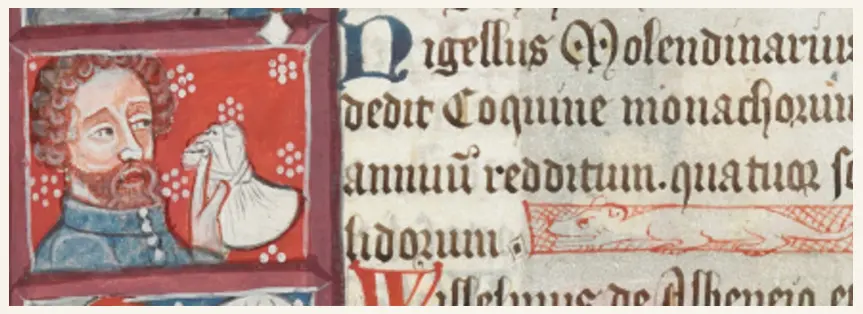
Below, Nigel the miller is recorded in the donor book at St Alban’s Abbey.

Why does donor recognition work and how might in inspire more gifts

People do more pro-social things when they are rewarded because incentives work. When we give a gift, we get a hit of happy chemicals – dopamine, oxytocin, serotonin and endorphins. And that means it gives our donors joy to be giving money to us.  

It also works for us, as fundraisers. If I give a gift, and you receive that gift – the same bit of your brain is lit up. So, donor recognition should give us the same warm and fuzzy feeling that our donors get when they receive our thanks. 

All of this illustrates why seeing your name on a donor wall is one of the ultimate ego strokes. It provides social reinforcement of your identity as a kind and generous person. 

We’ve all seen our donors go over to a wall of recognition, scan the list with their finger, looking for their name, checking that it is there. 

It’s so important to donors that they are recognised for what they do, and that fundraisers say thank you. 

So how should that shape how we solicit for gifts in wills today

  • Legacy giving is shaped by identity and in life connections – remind donors and supporters of their lifetime of connection and how giving to your charity reflects their identity.
  • Being asked increases the number of gifts you get
  • People are terrified of their own deaths and will put off these decisions as long as possible
  • Donor recognition can reinforce the social norm of legacy giving.

https://marinajones.uk/wp-content/uploads/2025/08/Picture-1.png 458 628 admin https://marinajones.uk/wp-content/uploads/2022/12/f2b903e010104f5aa61ea1821a685913.png admin2025-09-02 20:03:572025-09-07 18:30:05Legacy fundraising – Middle Ages Style

What can the bins of Bristol show us about how decision science is used to change people’s behaviour, and how does that apply to your fundraising?

August 30, 2025/in Thoughts/by admin

When trying to change people’s behaviour there are some key questions to ask …Do they have the 

  • Physical, skills and stamina to be capable of the action? and psychological capability to do the behaviour
  • Physical and social opportunity to do the behaviour?
  • automatic or reflective motivation to do the behaviour?

((based on the COM-B model designed UCL, Centre for Behaviour Change by Susan Michie, Maartje M van Stralen, and Robert West) 

So when trying to reduce littering on the street and encourage bin use … which of these did Bristol address?

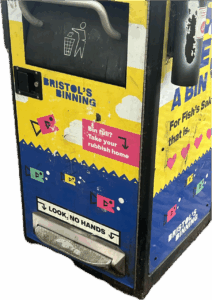
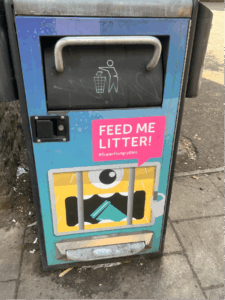
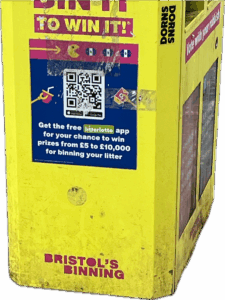
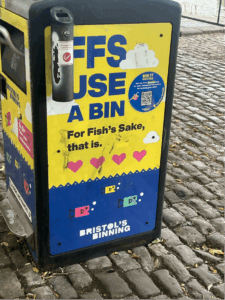
  • Physical opportunity – simply add more bins and make them more obvious. This is what Bristol did just adding more bins to give people more opportunity to use them. And not just plain black bins but bright colours so they stand out more. Our eyes are drawn to bright colours.
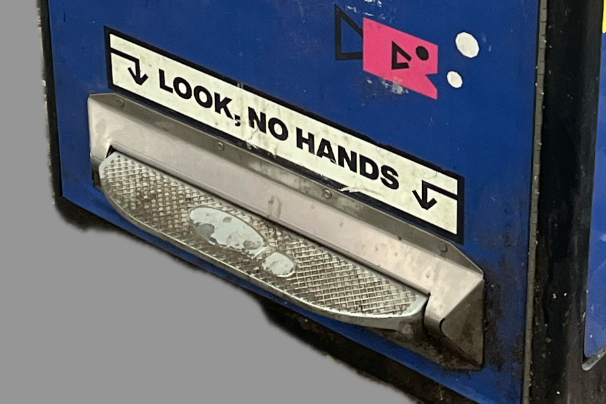
  • Physical capability– look no hands – often people don’t want to touch dirty rubbish in bins – the hands-free option of using your feet helps make it easier to use. 

When designing fundraising appeals don’t neglect how physically easy it is for your donor to complete the action – from the size of the font, to the colour of the text and the background, to the reply form – can they read it? and physically write (comfortably and easily) in the boxes provided? As we get older our eyes sight, even with glasses, can decline – think about the audience for the appeal and their age and what they need to make it easy to read and respond.

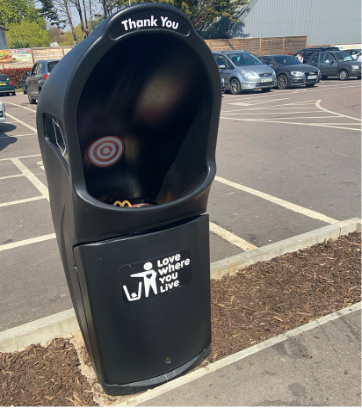
(Another non Bristol example here from MacDonalds – to encourage more people to put the rubbish in the bin and make it fun – they have added a target to the bin giving you something to aim at and make it easier for you to know what to do) 

  • Feed the monster – makes it fun and salient – our attention is drawn to novelty.  Our primitive brains are also drawn to eyes and faces. Our brains have not evolved that much in 200,000 years and we still automatic scan faces trying to work out if it is friend or foe and we process eyes and emotions in eyes quicker. Big friendly monster eyes attract our attention. It is more fun and novel to ‘feed’ a monster that put rubbish in a bin.  
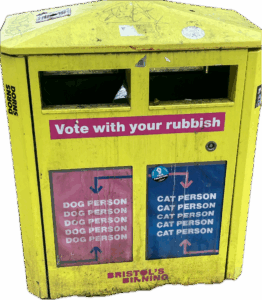
  • Psychological Motivation – Instead of lots of statistics about the volume of litter and what it was doing to the environment and the city they focussed in on the negative impact on pets.

(There are over 27m pets in the UK and British people spend more on their pets than dating, and many care more about their pet’s welfare than other humans in their life)

By creating this frame of the issue – they made it personal to animals and to the negative impact on people’s beloved pets. This is framing  – instead of focussing on the whole issue frames it around something that people care about. This framing also adds emotional dimension. Talking about the damage and harm to pets focuses on one tangible negative aspect of littering. 

In fundraising we often try to add to much detail our case for support – we want to detail the geo-political situation, the scale of the programme but by focussing attention on a more human, or in this case feline story, by creating an emotional frame, focusses in on one aspect, we can grab more attention and create more emotional impact. 

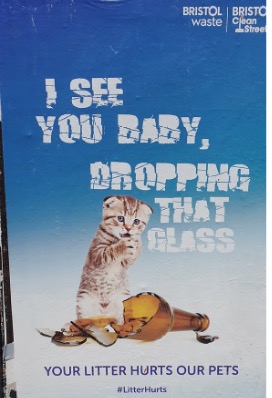
With this emotional framing we also see the power of faces again, and the power of cute. We have an innate tendency to look at faces and the emotion of the eyes – and want to protect and look after those smaller and more defenceless than us. This kitten and the puppy are looking up at the adult size viewer with pleading eyes. It is part of a primal instinct – our primitive unevolved brains are hard wired to pay immediate attention to our surroundings and assess everything as a potential friend or foe. In the microseconds, it takes our brains to assess whether that fluffy kitten or puppy is a threat or not, quickly and subconsciously we decide it is not a threat, and positive emotions are then triggered which makes us pay more attention, and promote careful or caring behaviours.

Interactions with animals, such as dogs and cats, can also cause a biochemical reactions producing our happy chemicals (Dopamine, Oxytocin, Serotonin and Endorphins). Perhaps the strongest chemical release with animals will be a rise in oxytocin – oxytocin is one of the four feel good hormones often called the ‘love’ or ‘hug drug’. It promotes social bonding and increases empathy. It can be triggered by eye contact – between a mother and baby, between lovers – or even when looking at a beloved pet, or a random kitten or dog on a bin. Eye contact matters. The bigger the eyes the bigger the hit of the oxytocin.

Bristol bins have also added  gamification –using game like techniques in a non-gaming setting can make the experience more rewarding. Offering the choice between being a cat person or dog person when putting rubbish in the bin gives the litter depositor the choice to identify as cat person or a dog person, it makes the act of putting the litter into the actual bin more salient as it is a vote about who they care about. 

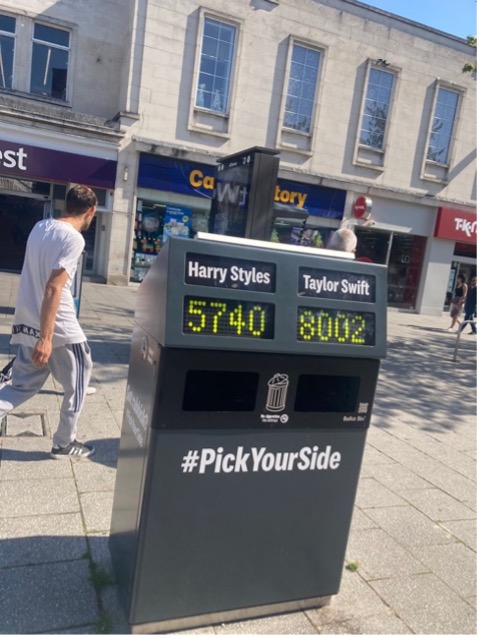
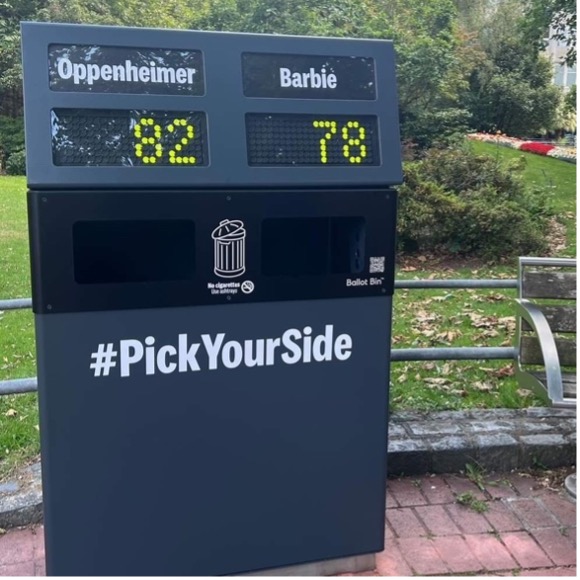
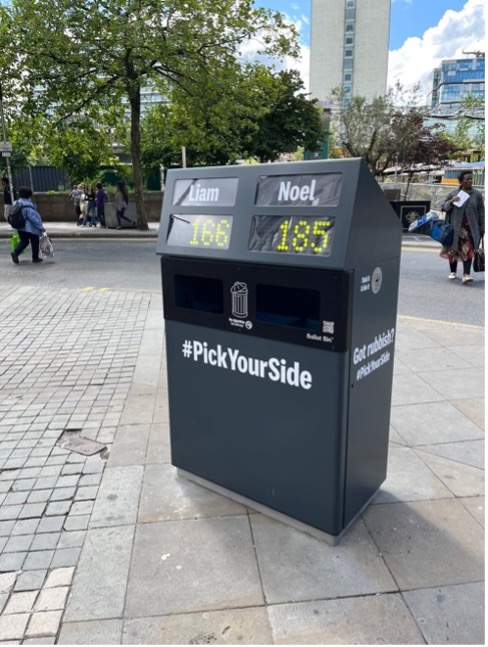
Manchester has taken this to the next level with counters to record the results using multiple ‘controversial’ issues with a score counter – Barbie vs Oppenheimer, Noel vs Liam and Harry Styles vs Taylor Swift are just some examples #PickYourSide 

With both the Manchester and Bristol campaigns a hashtag was created #PickYourSide and #LitterHurts to try and create a social sharing and social norm around these actions. 

And you can enter a competition to win prizes to adding a further incentive to dispose of your waste. 

The campaign also uses puns on the lyrics to songs from the early 2000s – with  Puns don’t kill puppies wrappers do (from Goldie Looking Chain’s Guns Don’t Kill Rappers Do and I see you baby dropping that glass (from Groove Armada ft Gram’Ma Funk) – both upbeat songs. This plays into a number of heuristics – the familiarity effect / mere exposure effect – just by repeated exposure to things we like them more and they take less mental energy to process.

It also plays into the Keats Heuristic is sometimes known as the rhyme as the reason heuristic  – our brains believe things to be more true if they rhyme (think of the old adage – an apple a day keeps the doctor away which is more believable than To avoid doctor’s visits ingest one apple every 24 hours). Also British people like puns and that makes it novel, unusual and salient and therefore more memorable (and start hearing the words on the bin to the tune of the song without trying) 

(Although the choice of song might speak to a particular demographic who remember it, or the age of the creative team behind it! I am not sure it is targeted at the demographic of most likely litter bugs)

Our lazy brains are always looking for shortcuts and patterns and what is familiar. Using the abbreviation FFS means our brain finds the shortcut for this acronym and fills in what it ought to say. Like the lyrics above it works on familiarity.

And does it work? For eight years Bristol has topped the charts in recycling statistics – so yes.

And if they can put that much effort into where you put your rubbish, imagine what more you can do to make it easier for your donors to make a gift.

So what can you apply to fundraising?

  • Frame the problem – connect with something that people deeply care about
  • Think about the use of faces and eyes on the people (or animals) involved in the campaign
  • Make it fluent – not all campaigns can (or should) have a rhyming slogan, or rewritten pop lyrics, but the phrases should scan and be simple.
  • Make it easy for people to physically take the action you want them to take – whether that is put rubbish in the bin or fill in a form – think about your audience and their needs. 
  • Make it fun – can you add a gamification angle – people love quizzes and giving their opinion. I have tested this with a giving campaign voting on favourite ice cream flavours as people donate.  
  • How could you add incentives?
  • Make it emotional
  • Link to their identity 
  • Make it visually appealing
https://marinajones.uk/wp-content/uploads/2025/08/pups.png 473 721 admin https://marinajones.uk/wp-content/uploads/2022/12/f2b903e010104f5aa61ea1821a685913.png admin2025-08-30 20:33:012025-08-31 12:33:02What can the bins of Bristol show us about how decision science is used to change people’s behaviour, and how does that apply to your fundraising?

How much do you weigh? How much do you give to charity?

July 28, 2025/in Thoughts/by admin

Rather personal questions.

What about a more socially acceptable one….

What are you doing for your birthday this year?

And what if we combine them?

Are you going to be publicly weighed and then donate the equivalent of your weight in grain or gold to charity?

What?

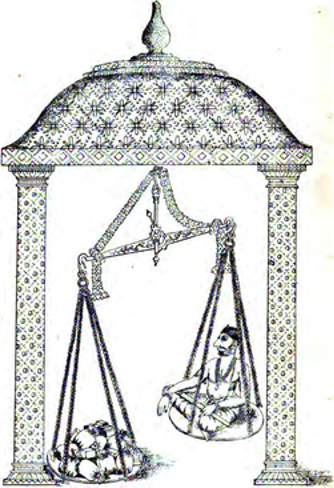
There is an ancient Hindu ritual from the first century where individuals were weighed and made a charitable donation equivalent to their weight in grain or gold – this is known as tulabhara and often people did it on their birthdays. 

There was a custom to weigh the king on his solar and lunar birthdays in precious stones (and in diamonds for a diamond jubilee) and the jewels sold and monies given to charity.

You can see the ceremony from 1946 on this newsreel https://www.youtube.com/watch?v=IEkdZlWCd4I&t=116s 

We see it in sixth century in Europe in the writings of Gregory of Tours which also records the tradition of weighing a donor for gifts (known as ponderito). This is also done as a thank offering for recovering from being sick.

A few historic birthday fundraisers 

Since Facebook introduced the birthday fundraiser in 2017 other social media platforms have followed suit, but here are a few other historical birthday fundraisers.

Charities tend to focus on their birthday and anniversary campaigns rather than the birthday of the donor, or anniversary of their giving.

Some historic birthday fundraising examples include:  

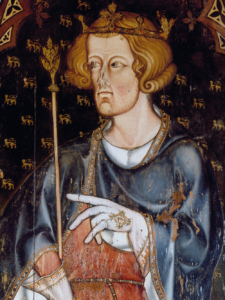
  • Edward I on his son’s fourteenth birthday fed fourteen hundred paupers, and when his son was seventeen, gave alms to seventeen hundred people  

Edward 1
  • Edward III on his 50th birthday fifty poor men get shoes to celebrate 
  • It was not just in life that birthdays were celebrated, you could specify an act of charity to occur annually on your birthday like a dole of bread to the poor, which is what Elizabeth Nickus did in her will in nineteenth century Bristol. 

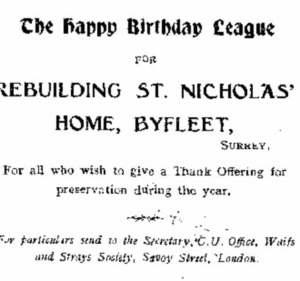
The Happy Birthday League

Celebrating your birthday with a philanthropic gift was a Children’s Union giving circle called the Happy Birthday League. It was raising funds for the rebuilding of St Nicholas’ Home begun in 1904. 

The League involved signing a form (to show your commitment) and donating 1 shilling on your birthday “as a thank-offering for your preservation during the year that has past.”

Each issue of the monthly magazine ‘Brothers and Sisters’ listed new members and the total members to date – demonstrating both the momentum of the campaign, and that it was as social norm for your peers to join. Listing celebrity patrons such as Dowager Countess and other titled people gives status to the membership as well.

You are never too young to start giving – the campaign encouraged you to sign up a baby before their first birthday. 

You were also encouraged to those that were dead – “People are and also sending offerings with tender thoughts of those who are at rest.“

With birthday cards you send to friends you were encouraged to send a leaflet inviting them to join as well – a strong peer to peer ask!

Within six months they had over 7,000 members. 

What might be going on in a donor’s brain here?

Part of this is because there are just numbers that mean something to us, and our identity – and our birthday is one key personal date, and our weight another personal part of our identity.

How can donors help construct personal stories about the gifts they give?

Sometimes as charities by not giving donor’s choice we can cause reactance – when we react against being told what to do.

So when we are talking about us, and our charity, and our anniversary we disengage our donor, and they start to ask ‘so what?’ Sometimes the list of giving options does not give us the option we want – the options are too small and not meaningful enough, or too big and beyond our capacity. 

When we give our donor autonomy and empower them to make a choice they can make gifts that are more personally meaningful to them. 

However, how this choice is presented is important. We need to provide a structure. If it is too open an offer – such as ‘pay what you feel‘ we might nudge the brain into a system two space and ask ‘how do I feel about this? and what value does that mean I should give? And by pausing to ask these questions we have no frame of reference, and increased cognitive load can stop us making any gift.

The frame of the question is important here.

  • How could you give your donor’s more autonomy and choice about how they make a gift and how much? 
  • How can you invite them to make gifts that mean more to them? How can you provide a useful frame?
  • How can you use important dates to your supporters to become giving opportunities?
  • How can you make it about them, not you the charity.
  • How can you get your supporters to be ambassadors for you? they are already super fans, and can act as great ambassadors with their networks to find others to support you.
https://marinajones.uk/wp-content/uploads/2025/07/Picture-11-e1753730425211.jpg 676 904 admin https://marinajones.uk/wp-content/uploads/2022/12/f2b903e010104f5aa61ea1821a685913.png admin2025-07-28 20:21:002025-07-28 20:21:00How much do you weigh? How much do you give to charity?

How Dante can help you with your legacy fundraising?

June 24, 2025/in Thoughts/by admin

Really?


How is a thirteenth century Italian poet can help me raise money from supporters with gifts in wills – surely that’s a stretch even for you.

Or do you mean that there is a circle of hell dedicated to the trustees that wont invest in legacy fundraising even though it has the best ROI of any fundraising and we are in the midst of the greatest wealth transfer in history, 

No – I mean here are five ways Dante could help, or help keep those fundamentals front and centre for legacy fundraising. 

1. When I move from mine, to ours

Although not a direct quote, this theme of moving from ‘mine‘ to ‘ours‘ is invoked by Virgil as he leads Dante through the many circles of hell. Virgil points out to Dante that there’s a better way to live than always clinging to “mine.” He suggests that when we move beyond self-interest and start thinking in terms of “ours,” something shifts. Life opens up. Instead of being stuck in constant battles—fueled by envy and pride—we begin to feel more connected. Virgil gently contrasts this communal mindset with the lonely, destructive cycles they’ve seen in the underworld. Choosing to share, to belong to something bigger than ourselves, leads to a deeper, richer kind of fulfilment.

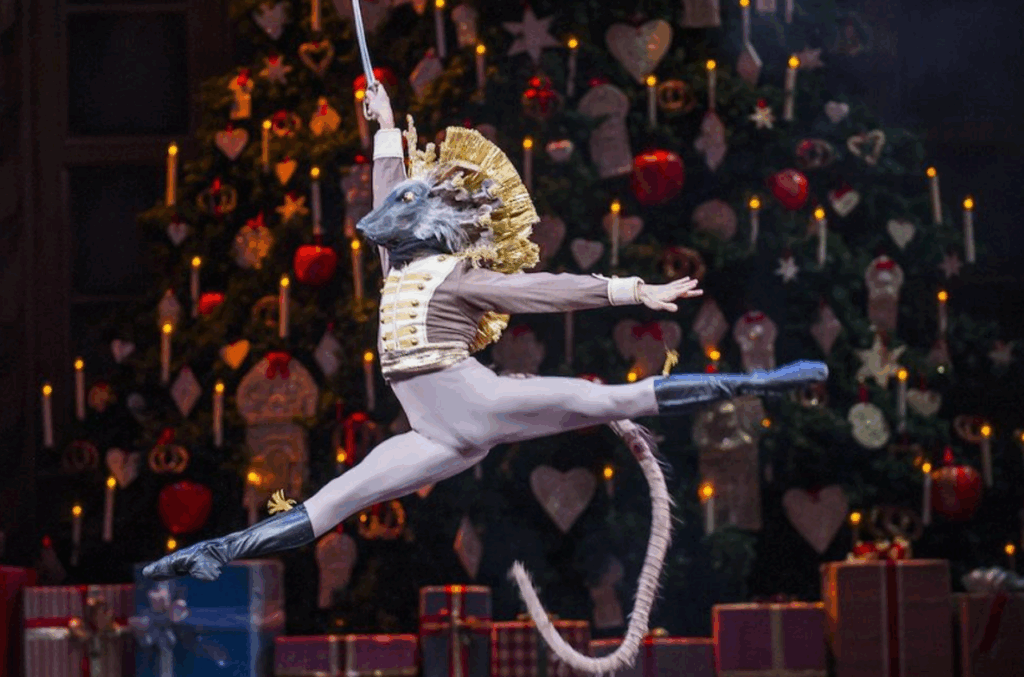
It signifies a shift, and movement from an individual experience to collective one – it reminded me of what legacy pledgers have said to me. It was about the ballet The Nutcracker

“‘we had much better mice and rats pulling the thing than anyone else does”

The shift in language and pronoun is really important here. It moves from a detached objective outside third person view of ‘the organisation’ to the collective ‘we’. It shows a shift of identity on the part of the donor implying shared ownership, commitment and belonging.

If you notice a donor has moved to say ‘we do this’ to mean you the charity then it might be time to ask them whether they have considered, after remembering family and loved ones, joining others who are passionate about your charity and making a gift in their will to support you. 

2. “Consider your origins: you were not made to live as brutes, but to follow virtue and knowledge. …“

One great way to engage with donors around a legacy conversation is to ask them how they first came to be involved and support your charity.

How did Peter Parker become Spiderman? We all know he got bitten by a radioactive spider which gave him supernatural powers.

Is your donor one who had a transformative moment that connected them to your work. In a theatre context, this is often a first visit that inspired a lifetime connection. They were they literally bitten by the bug and say things like it was an “instant addiction” and “I was hooked”.

“originating events … or memories that affirm and reinforce an ongoing interest”

(McAdams, 2001)

First memories and stories are powerful. Memories become stronger when we share them and tell others about them. By telling you about that connection, you are reinforcing the story and identity with the donor. Reinforcing these memories triggers warm and positive feelings about the charity and builds loyalty and creates a stronger bond with that charity (Merchant and Ford, 2008). The more we talk about our memories the stronger they become. They become part of our established narrative about ourselves and our identity. By giving supporters the chance to reflect and talk about their origin story you are cementing their identity as a supporter of your cause. 

In this article I have likened these origin stories to the superhero origin story and how knowing that story helps you connect with them more deeply and think about what that legacy gift means to them. 

So ask your supporters their origin story.

3. “From a little spark may burst a flame.“

Promoting legacies can involve lots of little sparks 

  • The mention in the newsletter of a new pledger or gift 
  • The crediting of legacy pledgers in the annual report
  • The inclusion of a tick box on a response form about wanting to know more
  • A question in a donor survey about legacy giving 
  • The advert in the programme
  • The mention of the legacy circle event to another supporter
  • The credit that this was made possible because of a legacy

But these little sparks have the potential to burst into flame and be the biggest gift that your donor has ever given you. 

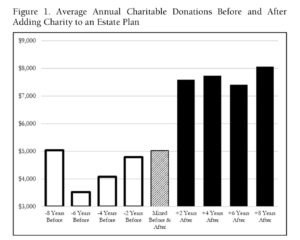
And one of my favourite legacy giving stats, once you are included in the will, giving in the years after increases up to 77% as you are already being treated as one of the family. 

The Emerging Potential of Longitudinal Empirical Research in Estate Planning: Examples from Charitable Bequests 
Russell N. James III*

Those who have already made a commitment to you with a gift in their will, have made a mental adjustment of how they see you, that you are already a more meaningful and more deeply help connection as they start to give more in their lifetime. Including that bequest has drawn you closer to them but even then you can fall out in this pruning stage

Set some sparks alight today and watch them burst into flamers

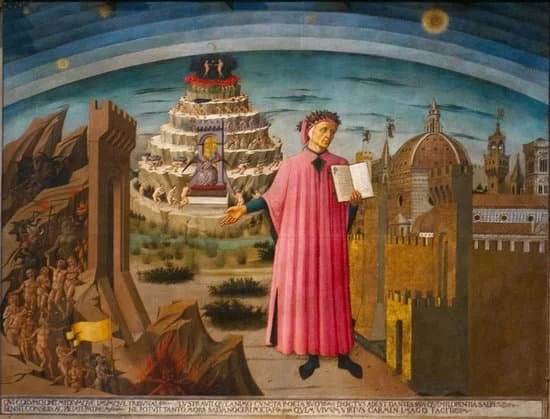
4. On the Eloquence of the Vernacular 

Dante wrote in his local Tuscan dialect to ensure more people could read, understand and engage – he even wrote a book called On Eloquence in the Vernacular. Vernacular comes from the Latin ‘vernas’ which means domestic or native and has come to speaking like the ordinary people. So if you want to inspire your supporters – don’t write in jargon – write the way you would talk to someone in your house. 

5. “The secret of getting things done is to act!“

If you want to be successful with legacy fundraising, or any fundraising, you have to act. 

In a recent arts benchmarking survey of arts fundraisers  71% agreed or strongly agreed that ‘we want to do more but budgets and capacity means we cannot at the moment.’

Too often legacy fundraising gets pushed down the arts fundraisers agenda as they focus on the in-year target and the next ask of the supporter. We let our own concerns and biases about the subject (the right language, the time, cost of care, fear of death) delay making the ask. Also because the returns are not immediate and can take a number of years to materialise it seems hard to justify the expenses and focus now.

You can read more about the benchmarking research here.

But act today – set a spark alight.

https://marinajones.uk/wp-content/uploads/2025/06/Dante_Alighieri.jpeg 600 800 admin https://marinajones.uk/wp-content/uploads/2022/12/f2b903e010104f5aa61ea1821a685913.png admin2025-06-24 08:52:522025-06-24 08:52:53How Dante can help you with your legacy fundraising?

Show Don’t tell

May 5, 2025/in Thoughts/by admin

As fundraisers and communicators it is more powerful to show than to tell – to show through actions, words, subtext and images the stories we want to share.

Chekhov said:

“Don’t tell me the moon is shining. Show me the glint of light on broken glass.”

Humans are hard wired to notice what other humans are doing. The Social Hypothesis Theory shows us that human actions are processed quicker. So if we show humans in the images we use in our fundraising it can give our audiences a short cut to show audiences a desired behaviour or action. Show don’t tell engages the reader more, and becomes a more memorable way to demonstrate the help needed, the desired behaviour and the impact of the gift.

Here are a 5 historic examples of where – show don’t tell was used to powerful effect.

1. When you want people to adopt a new behaviour – show don’t tell

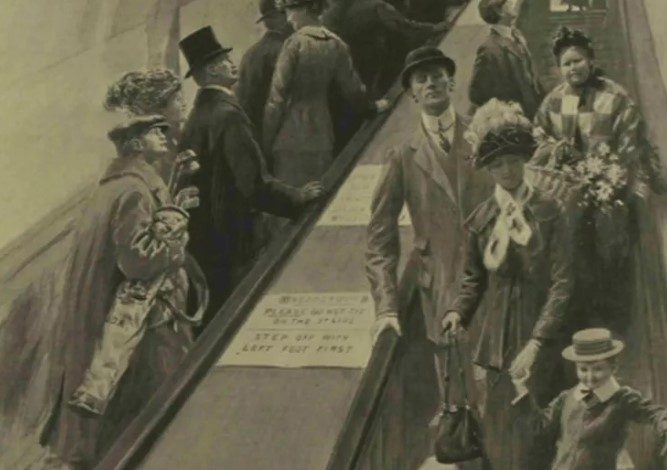
Escalators were introduced to the underground in 1911 but treated with suspicion. 

One legged engineer William ‘Bumper’ Harris was employed at Earl’s Court station to ride up and down the escalator. We take our cues from the social behaviours of others around us and mimic it – Bumper Harris demonstrating how easy and enjoyable the moving escalator was reassured passengers. If a one legged man could easily and successfully navigate this moving staircase they could do too.

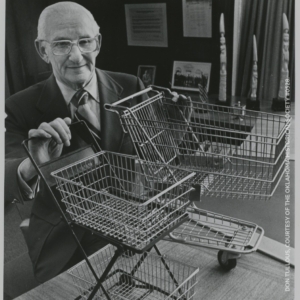
In 1937 when super market trolleys were introduced the same thing happened. People did not use them. Men thought they were unmanly. Women thought they were like baby pushchairs. Models were hired to walk around using them in the shop to make them socially acceptable.

2. When you want to get donors to give – show don’t tell

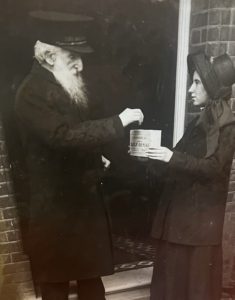
General William Booth the founder and leader of the Salvation Army was often depicted on postcards making contributions to the self denial week. Having a visual clue of what we want donors to do – put money in the donation box shows them what to do. It is also leading by example – denying self and contributing. It gives him the authority to ask others to join in supporting the cause.

A 2010 lab study verifies this and shows that when a person observes someone giving money away they are more likely to give money themselves, and that this effect ripples out to other people (from person to person to person to person), (Fowler and Christakus, 2010). It creates a powerful social norm that encourages others to join in.

3. When you want to show how awful something is – show don’t tell

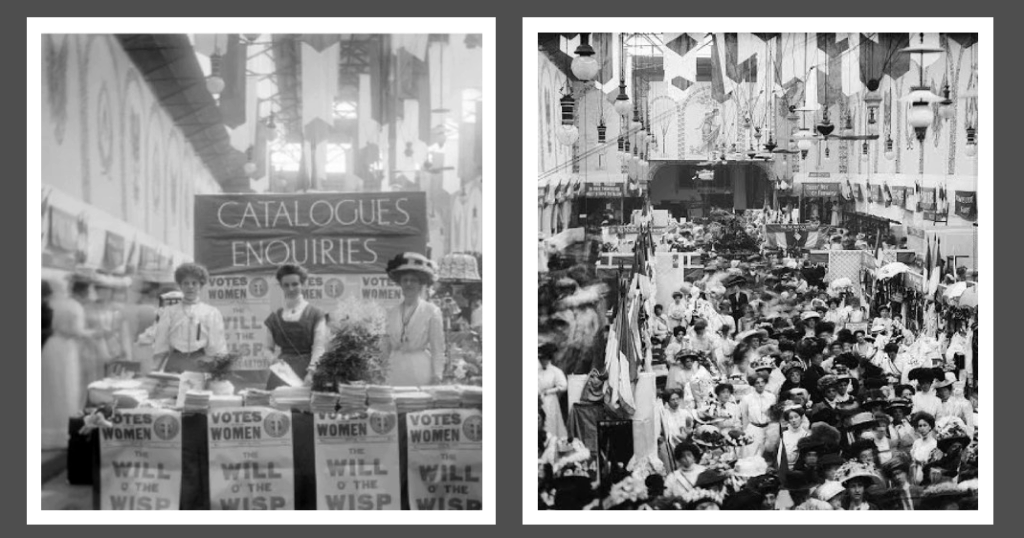
To demonstrate the horrors and trauma of being arrested and force fed the suffragettes had replica jail cells in their 1909 Exhibition.

Before the advent of VR and AR headsets the Suffragettes created an immersive and interactive experience. The tours of the cells were led by women who had been imprisoned. The cells demonstrated clearly the difference between the male and female prisoners. Men, even if imprisoned for treason or murder, had bigger cells and better treatment. Women were in smaller and treated as common criminals. By the time of this exhibition over 400 women had been imprisoned for the cause.

Bing AI generated image of a Suffragette using VR googles 

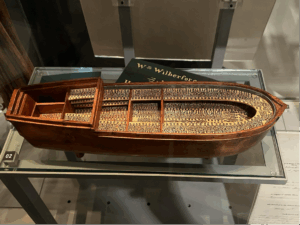
This was a model of a Liverpool slave ship created in 1780s. There is something very tangible about seeing the bodies packed in like this that words cannot capture (it was turned into a famous print).

A a copy of model this was given to prominent Abolitionist William Wilberforce  who used it in parliament to demonstrate the awful conditions of enslaved Africans on the ships. Visual impact can demonstrate more than words

4. Put the impact on display – show don’t tell

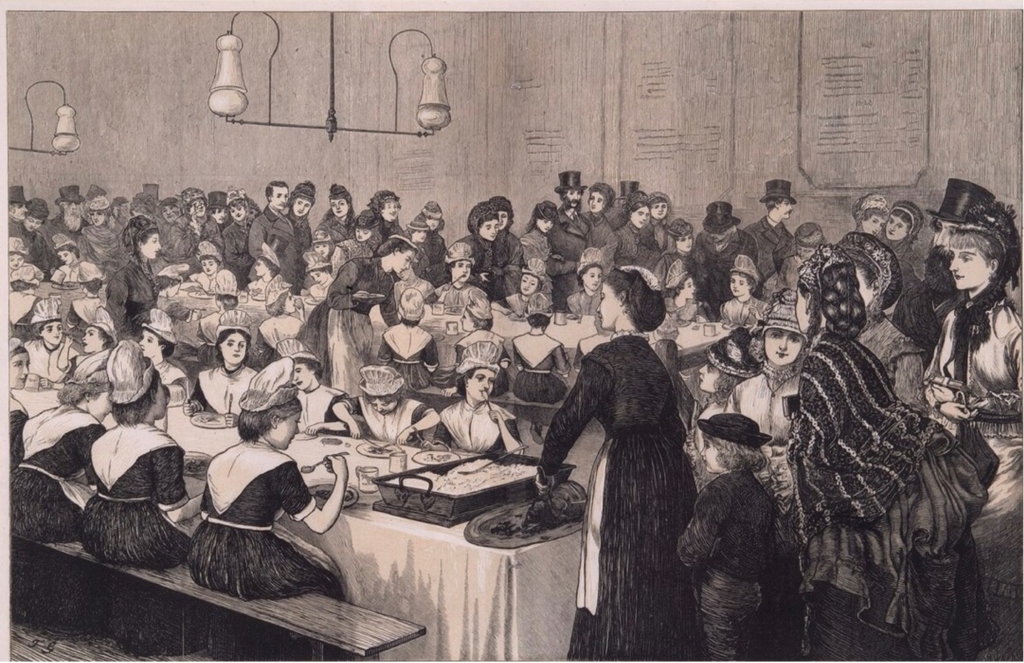
The Foundling Hospital which opened in 1739 became a fashionable place for benefactors to come and see the impact of their donations. Supporters could come and see the children sing in Church on Sunday and then buy a ticket and see formerly destitute children dressed and eating well.

In 1837 the boys of the Queen Elizabeth Hospital in Bristol processed through the city ‘The object .. was the shew off the poor children as being under the patronage of the Liberal Trustees’. They also lined the Clifton Suspension Bridge on its opening in 1864, against showing what the philanthropic support had achieved.

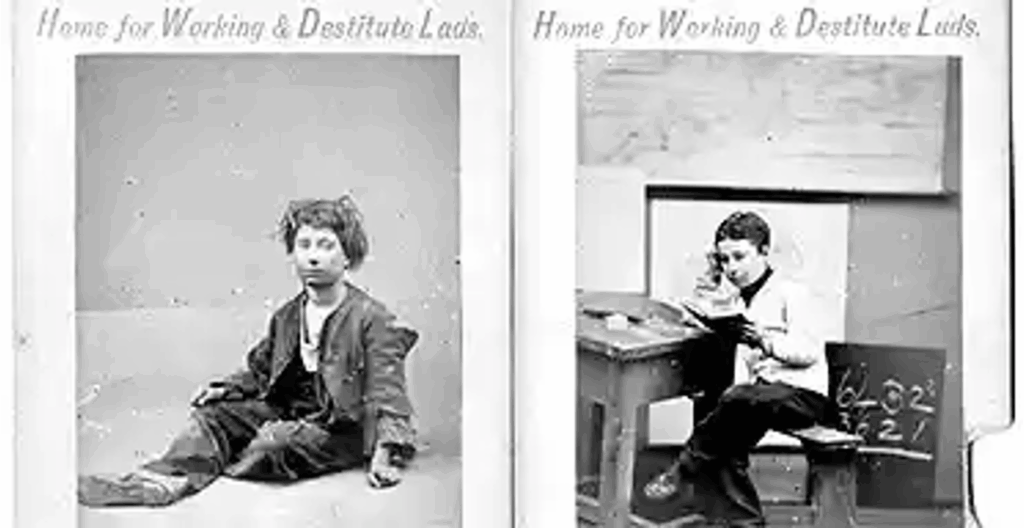
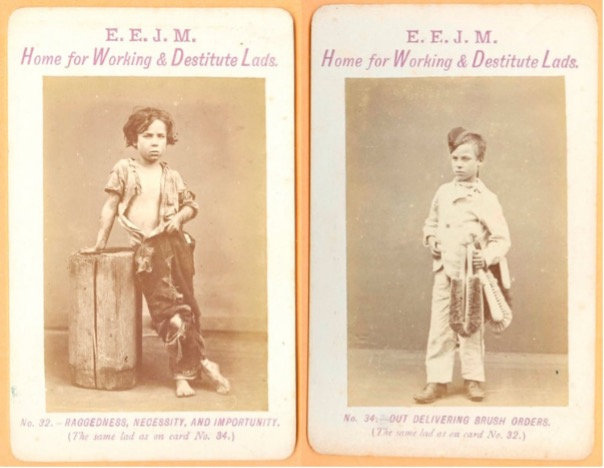
5. The before and after photograph to demonstrate your impact – show don’t tell

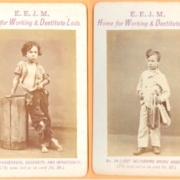
Dr Barnardo’s opened his first homes for rescued children in the 1860s with an est 30,000 destitute or orphaned children in London following a cholera outbreak – the need was urgent 

In 1874 he opened a photography studio in his Stepney Boys Home. Every child who came in was photographed when they entered for the next 30 years   

The photographs were kept as case history for the charity 

And they were also sold as postcards (twenty for 5 shillings or 6d for one) to raise funds for the charity (Salvation Army and others did as well). As well as photography being a new technology printing had become cheaper and easier and charities like Dr Barnardos and Salvation Army embraced these commercial opportunities to grow revenue. 

Dr Barnardo used photography to great effect and became a champion of the before and after  photo 

Now the before and after photo has become a fundraising staple – detailing powerfully visually what your support has done. 

The before photos showed children as they arrived at the homes 

The after demonstrated the impact of your donation and how their life had been transformed by the charity.  

But in 1877 these photographs ended up with Dr Barnardo in court.The issue – the photos – were criticised for being faked and for being exploitative of the children pictured – showing bare arms and legs and the bodies of children (we are in Victorian times)  They were criticised for being staged and emotionally manipulative. 

Why was it so controversial?

Photography was a new science and seen to reveal the truth of a situation in a more realistic way – the fact that it did not reveal but was artificial and this perceived manipoulation alarmed people. There was concern that if the photo was fake then the charity itself might also be fake. We know how important trust is to charities nowadays for donors making decisions.  

A minister -George Reynolds  criticised the pictures and the charity in a pamphlet called ‘Startling Revelations’ them saying 

“[Barnardo] tears their clothes, so as to make them appear worse than they really are. A lad named Fletcher is taken with a shoeblack’s box upon his back, although he never was a shoeblack.” 

And that this exploitation destroyed the ‘better feelings” of the children. 

In court Dr Barnardo admitted that they were portraits rather than realistic and he was using artistic licence  

This is what he said in defence of the images used:  

“we are often compelled to seize the most favorable opportunities of fine weather, and the reception of some boy or girl of a less destitute class whose expression of face, form, and general carriage may, if aided by suitable additions or subtractions of clothing … convey a truthful picture … of the class of children received in unfavourable weather, whom we could not … photograph immediately”. 

He went on to say that the images: 

 ”not intended so much to represent the individual boy or girl whose face is depicted, as a whole class of street children, of whom very many have been rescued, but from some one or other of the following causes could not at the time be photographed in the condition in which they were received.” 

Dr Barnardo was cleared of most of the charges however his methods were criticised in the judgment which said t

“This use of artistic fiction to represent actual facts is, in our opinion, not only morally wrong as thus employed, but might, in the absence of a very strict control, grow into a system of deception dangerous to the cause on behalf of which it is practised.” 

 The Times reassured the public that the homes were “real and valuable charities, worthy of public confidence and support“.

So a cautionary tale about the adoption of new technologies and ensuring that when we use it, we are transparent about how we are using it so that we don’t abuse or loose the trust of our supporters.  

So how could you apply this in your fundraising?

Show, don’t tell: It’s more powerful to demonstrate than describe.

Human behavior is contagious: We’re wired to notice and mirror others’ actions.

Social Hypothesis Theory: People process actions faster than words—seeing behavior prompts imitation.

Boost engagement: Visual cues are more memorable and emotionally impactful.

Drive action: Showing need, behavior, and impact makes fundraising messages more compelling.

https://marinajones.uk/wp-content/uploads/2025/05/Picture-1.jpg 468 604 admin https://marinajones.uk/wp-content/uploads/2022/12/f2b903e010104f5aa61ea1821a685913.png admin2025-05-05 14:07:052025-08-30 15:58:10Show Don’t tell
Page 3 of 10‹12345›»
Tweets by meenamtj
All content © Marina Jones 2023
  • Link to X
  • Link to Instagram
  • Link to LinkedIn
Scroll to top Scroll to top Scroll to top

This site uses cookies. By continuing to browse the site, you are agreeing to our use of cookies.

Accept settingsHide notification onlySettings

Cookie and Privacy Settings


How we use cookies

We may request cookies to be set on your device. We use cookies to let us know when you visit our websites, how you interact with us, to enrich your user experience, and to customize your relationship with our website.

Click on the different category headings to find out more. You can also change some of your preferences. Note that blocking some types of cookies may impact your experience on our websites and the services we are able to offer.

Essential Website Cookies

These cookies are strictly necessary to provide you with services available through our website and to use some of its features.

Because these cookies are strictly necessary to deliver the website, refusing them will have impact how our site functions. You always can block or delete cookies by changing your browser settings and force blocking all cookies on this website. But this will always prompt you to accept/refuse cookies when revisiting our site.

We fully respect if you want to refuse cookies but to avoid asking you again and again kindly allow us to store a cookie for that. You are free to opt out any time or opt in for other cookies to get a better experience. If you refuse cookies we will remove all set cookies in our domain.

We provide you with a list of stored cookies on your computer in our domain so you can check what we stored. Due to security reasons we are not able to show or modify cookies from other domains. You can check these in your browser security settings.

Google Analytics Cookies

These cookies collect information that is used either in aggregate form to help us understand how our website is being used or how effective our marketing campaigns are, or to help us customize our website and application for you in order to enhance your experience.

If you do not want that we track your visit to our site you can disable tracking in your browser here:

Other external services

We also use different external services like Google Webfonts, Google Maps, and external Video providers. Since these providers may collect personal data like your IP address we allow you to block them here. Please be aware that this might heavily reduce the functionality and appearance of our site. Changes will take effect once you reload the page.

Google Webfont Settings:

Google Map Settings:

Google reCaptcha Settings:

Vimeo and Youtube video embeds:

Other cookies

The following cookies are also needed - You can choose if you want to allow them:

Privacy Policy

You can read about our cookies and privacy settings in detail on our Privacy Policy Page.

Privacy Policy
Accept settingsHide notification only