Inspired by a blog a few years ago looking at some fun fundraising ideas from My Fair Lady with Dominic Haddock & having enjoyed the Bridge Theatre’s Guys & Dolls here are a few fun and silly ways this classic musical could inspire your fundraising …
.
1. Where to host the crap game
“The Biltmore garage wants a grand But we ain’t got a grand on hand.“
The search for where to hold your events can be problematic – as you return to the same venues year after year with the same issues.
What is their eventual solution? Hosting the crap game in the mission whilst Sky takes Sister Sarah to Havana and eventually decamping to the sewers – demonstrating the need for creative solutions to repeated problems that we have (just maybe not in a sewer!)
2. Red carnations to get into the crap game
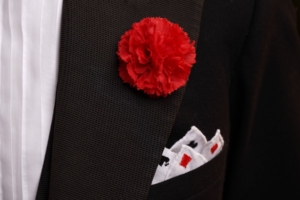
When they do decide on where to host the game, they need a signal to know who is coming to the game. The gamblers all wear red carnations and they tell Lt Branigan it is for Nathan’s Bachelor party. Identity, and signalling identity, can be really important to supporters – whether that is through the name that you give them as a group or circle of supporters, or provide other ways for them to identify themselves to other supporters or signal their status – from enamel pin badges, ties, tote bags to names on donor walls.
3. Take Back Your Mink
“Take Back your pearls, what made you think I was one of those girls…
Take Back the Hat, the shoes and the gown,
I may be down but I’m not as flat as all that.
But when I think about what you want in exchange…”
There seem to be three potential lessons here for the fundraiser … all about the importance of saying no and walking away from bad or demanding relationships.
The importance of saying no when funding expectations are too much. We have all been there when a gift is being discussed and the demands of the donors become greater and greater. No matter how far you have got in the relationship when the expectations are out of balance you need to remain true to your mission, values and the integrity of the work and walk away and refuse to cooperate is sometimes the best thing you can do
This could equally apply to the donor, and how they might experience the fundraising courtship process of soliciting a major gift and the expectations that the charity might have on the donor in terms of financial commitment, and other expectations (opening address books, networks or time), and again the need to step away from that relationship
More problematically it could apply to the power imbalance between a major donor and an individual fundraiser and inappropriate propositions made in order to secure a gift, again a time to remove yourself from the situation.
The song always end with the dancers rushing back on stage and retrieving the gown, mink, gloves, pearls etc., and challenging the audience
“Well, wouldn’t you?”
Which rather depressingly might speak to the fact that charities sometimes still accept the money despite the unreasonable the demands, or ethics of a donor. Do charities sometimes accept the money because they need it even when they have misgivings about the relationship?
And an added extra
My parents saw a production of Guys and Dolls years ago, and still have a garter thrown into the audience during this scene. Souvenirs are really important for supporters to remember those key experiences – in arts charities that can be programmes, ticket stubs but for super engaged fans they can be bit of the curtain or carpet. One donor I knew had a drawer full of these souvenirs – they funded a lots of arts education so it included mini sets created with match boxes and blood stained handkerchiefs from prop makers workshops. These tangible reminders of support help create memories, and remind us of those powerful experiences.
4. “Sit Down You’re Rocking the Boat“
A negative view means this might mean that charities stick to their knitting in the infamous words of the former MP for civil society.
But I prefer to think of this as as – always have an encore built in.
‘Sit Down You’re Rocking the Boat’ is scheduled to be the showstopper moment in the show, and has several pre rehearsed encores built into the show.
How can you build an encore into your supporter care and experience?
5. “When you see a guy reach for stars in the sky You can bet that he’s doing it for some doll.”
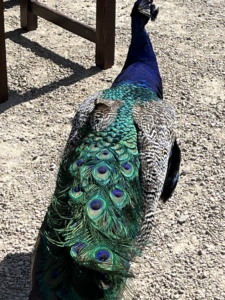
The song speaks of guys doing out of character things to impress the women in their life – a phenomena called the peacock’s tail.
In evolutionary terms, the peacock’s tail is costly signalling and is there for sexual selection – peahens have evolved to show a preference for mates with brighter feathers and bigger tails. The tail serves to advertise the health and status of the peacock. In survival terms it makes the peacock more attractive to others – but this comes at a cost – the tail is cumbersome and would slow a peacock down if under attack. It is a calculated cost risk to advertise so blatantly. So peacocks have evolved to have brighter feathers and bigger tails.
Being philanthropic or altruistic is a way in which humans can do costly signalling.
When performing in front of a female audience, in a lab setting, men have been shown to be more philanthropic and demonstrate their kindness and altruism (in lab experiments, this behaviour was not seen in females). Men’s contributions doubled when they rated the female observers as more attractive.
This behaviour is not just seen in a lab but in real life – people can be more generous in public – at a charity auction – with a ballroom full of people watching – this is known as competitive altruism – and can be used as a powerful way to enhance reputation, signal your suitability to be a caring partner and good gene quality
Researchers (Iredale & Van Vogt, 2009) have posited that the ‘altruism is sexy’ then charities could use that in communications to promote more public prosocial behaviour.
6. “Luck be a lady tonight“
Despite the best strategy, plans, introductions and aspirations there is always an element of rolling the dice and luck in fundraising.
7. “This is not a charity contribution, this is a business transaction”
Says Sky Masterson giving his marker to Sister Sarah Brown for two dozen genuine sinner – we all think about gifts in different ways – sometimes the gift is purely altruistic, sometimes fulfilling an obligation, sometimes business – to gain access, power or status. It is important to know how your donor might be thinking about their gift.
8. And the power of reinvention
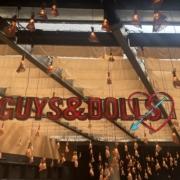
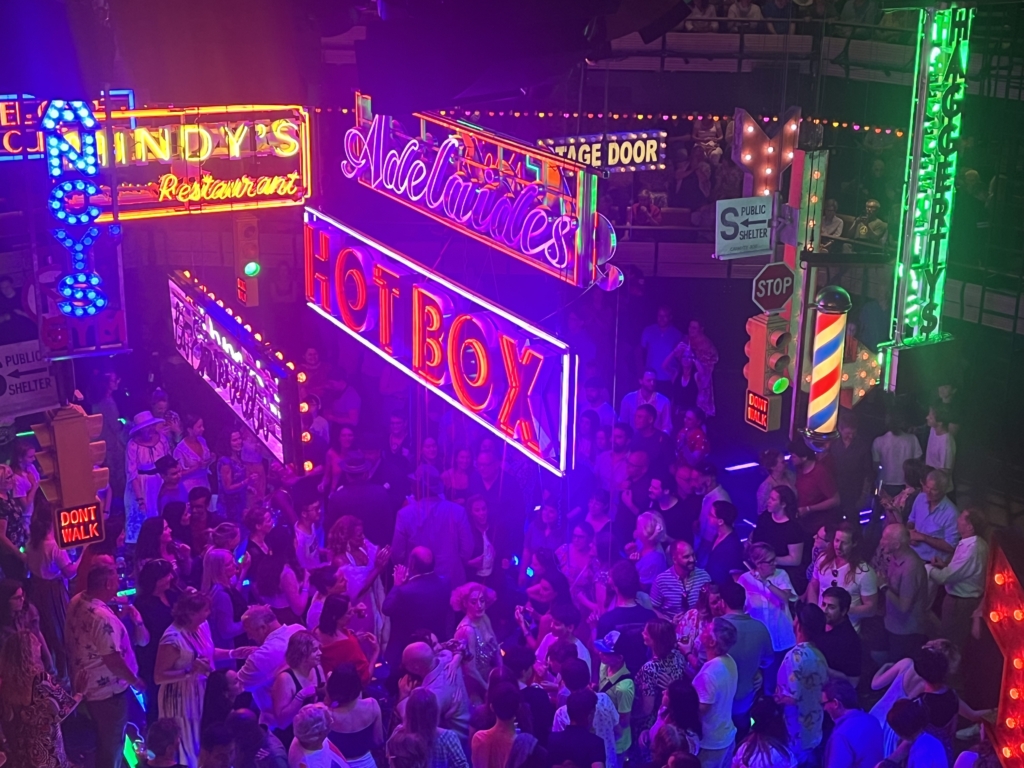
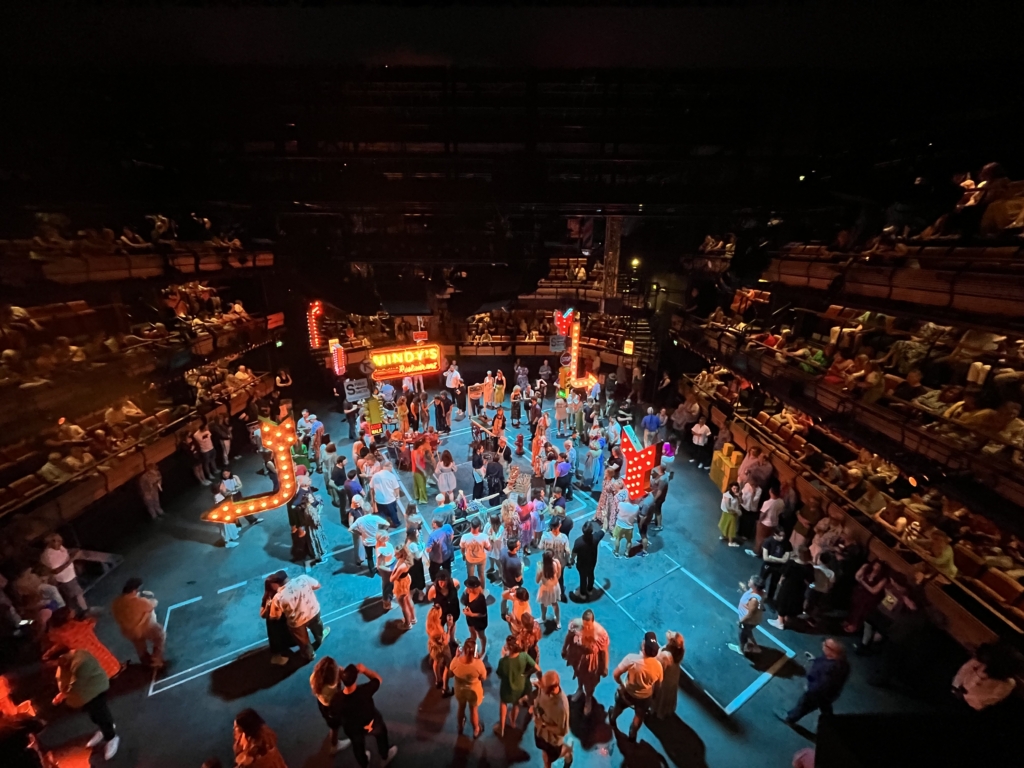
The Bridge Theatre version of the show, directed by Nicholas Hynter, has been running for over a year. It stages the musical, traditionally done in a Proscenium Arch (picture frame) theatre in a new immersive setting. The audience are on all four sides and you can buy tickets to stand, and with a standing ticket you get moved around an ever moving set with platforms rising and falling as you are guided into the right spaces by an ever dedicated team of front of house staff. At the end there is a party, with members of the cast and audience members dancing together.
To take a well known stage musical from the 1950s musical and keep its essence but reinvent for a new space – how can your fundraising learn from that?
Caveat – these are deliberately fun and slightly trivial examples – and it is not to downplay the problematic nature of a period pieces of theatre with issues of gambling addiction, alcohol abuse amongst many others.
https://marinajones.uk/wp-content/uploads/2024/06/IMG_7136-scaled.jpg19202560adminhttps://marinajones.uk/wp-content/uploads/2022/12/f2b903e010104f5aa61ea1821a685913.pngadmin2024-06-28 08:06:472024-06-28 08:06:47Take Back Your Mink! Fun fundraising lessons from ‘Guys & Dolls’
We all know that money appears in funny ways to fundraisers. Funny times and funny amounts.
We also know that donors don’t always know how much we need, what is the most appropriate amount to give, what will make a difference.
To make things easier for a donor and to reduce the brain power needed to process these decisions – we break down gifts into tangible amounts so that the donor can see the impact of what they are giving – a life changing vaccine, a warm meal, restoring a square inch of a Renaissance masterpiece, a new theatre or scanner. Their contribution to the wider problem and how they can help solve it becomes meaningful and concrete (something called then concreteness effect).
From a behavioural insight point of view, we want to keep the process friction free and easy for the donor’s brain to process and make the gift. Our brains are lazy and like to stay in the automatic system one intuitive space – it uses far more energy and slows us down to move into a more analytical space and ask questions about the amount. But sometime friction can be a good thing in the donation process.
This is a powerful and effective tool – and one that we should keep using.
However, this approach also makes it about us and what we need.
It makes it about us the charity, not them the donor.
What if we make it more about the donor?
Their choice of an amount that is meaningful to them.
When testing ask strings – I tested a £20, £50, £100 ask string and then a £100, £50, £20 knowing that the science should show that the higher anchor (starting with £100) generated a higher average donation as donor’s saw the highest number first. 97% of the time we saw people did not change from the preset defaulted numbers. But when the anchors were removed and the donation amount was left empty we saw much higher average donations.
People give in amounts that are salient to them (not always to you and the campaign)
Here are a few historic examples:
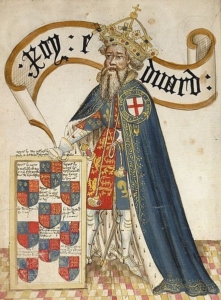
Edward I on his son’s 14th birthday fed fourteen hundred paupers, and when his son was 17, gave alms to seventeen hundred people
Edward III on his 50th birthday 50 poor men get shoes to celebrate
Worth your weight in diamonds. There is an ancient Hindu ritual where individuals were weighed against gold or grain and made a donation equivalent to their weight – this is known as tulabhara and often people did it on their birthdays. There was a custom to weigh the king on his solar and lunar birthdays in precious stones (and in diamonds for a diamond jubilee) and the jewels sold and monies given to charity. You can see the ceremony from 1946 on this newsreel https://www.youtube.com/watch?v=IEkdZlWCd4I&t=116s
We see these grain offerings in sixth century of Europe as well in the writings of Gregory of Tours which also records the tradition of weighing a donor for gifts. This is also done as a thank offering for recovering from being sick. The Abess of St Servatius was weighed at Our Lady of Buurkeerk in Amsterdam in 1444 to determine the amount the donation.
Legacy doles of food to the poor often fall on the testator’s birthday, for example, Elizabeth Nickus in c19th Bristol.
In 1393, wool merchant Marco Carelli signed over his entire fortune to the fabric fund at Milan cathedral living the last two years of his live as a pauper. The date he signed the declaration – the Assumption – the day that Mary, mother of Jesus was taken up to heaven – to reflect his donation to Our Lady that the cathedral was dedicated to. The choice of date matters.
In Liverpool, during the Second World War, funds were raised to fund Spitfires to fight the Nazis. At a police station a gift was left ‘for the Spitfire Fund’ by a “lady of the night” – the amount? £3 which was the standard fine for soliciting.
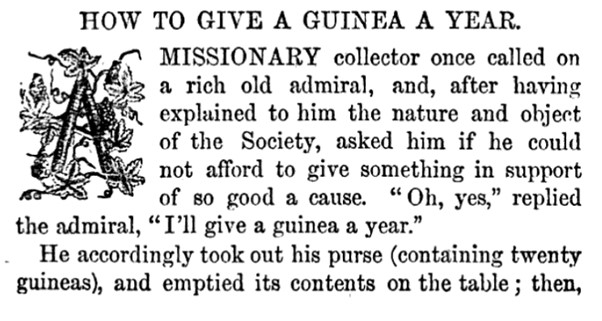
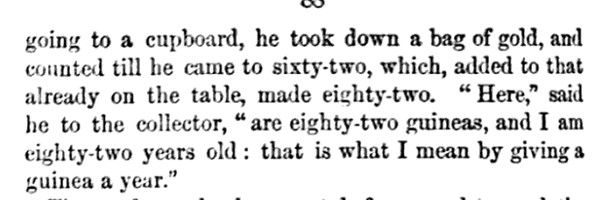
When we think about annual giving we tend to think of a gift every year – but this 82 year old admiral turned that on its head (in 1867) when asked by a missionary collector for a gift he said “a guinea a year” – he gave 82 guineas one for each year of his life. Again a number salient to him rather than the collection.
More recently we have seen Swifties (fans of Taylor Swift) support causes close to Taylor’s heart giving in $13 amounts. $13 is Taylor Swift’s favourite number so it an important way of identifying your philanthropy and allying with your ally and what they stand for. Taylor Swift also donates in $1989 amounts – linking to her album and birth date.
In the National Theatre’s campaign they proposed making annual donations on Shakespeare Day (23 April) to support the creation of the theatre.
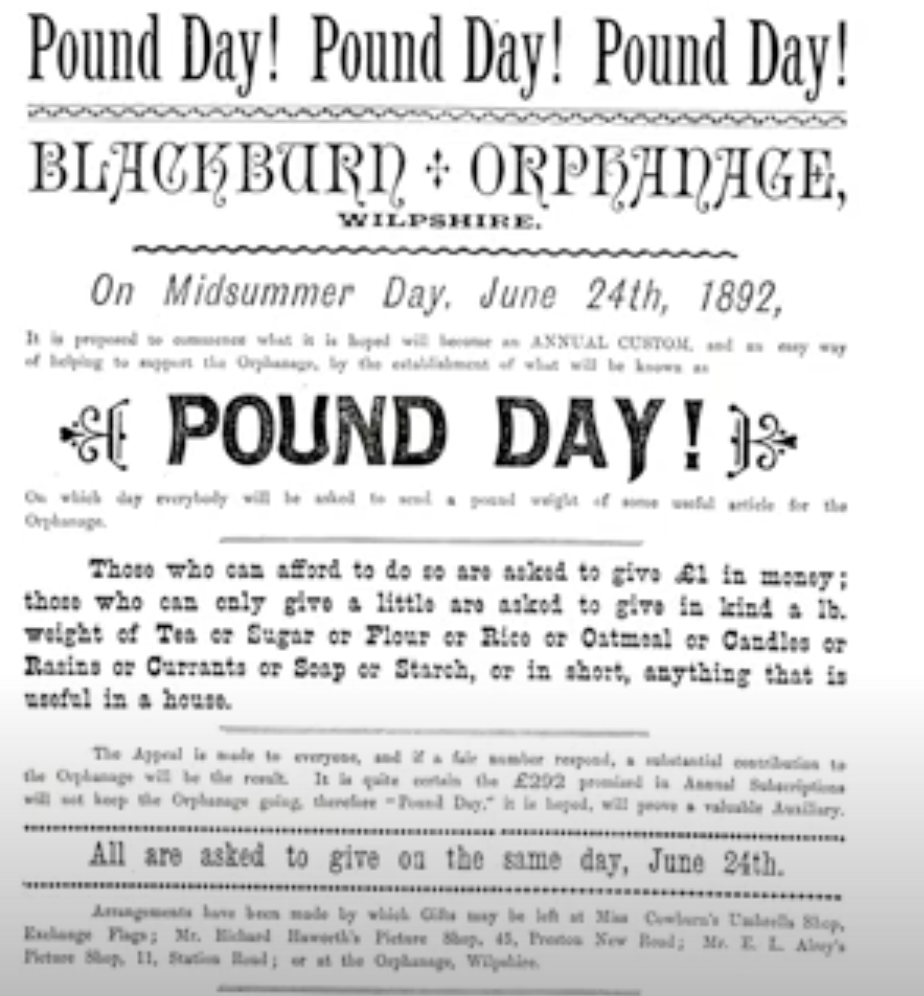
1891 Blackburn Orphanage founded and in 1892 started a Pound Day asking people to donate a £1 and those that could not afford to were asked to donate a pound of sugar, tea or flour or whatever they could afford.
What might be going on in a donor’s brain here?
Part of it is there are just numbers that mean something to us and our identity – our age, our favourite number, an important date (I have one charitable direct debit that deliberately goes on a certain date).
There is also an effect known as the Ikea effect – named after the furniture store – where we value something more because we have helped create it. So we value a Billy Bookcase more because of our involvement in constructing it.
How can donors help construct the gifts they give – the amount, the date?
Sometimes too prescriptive a list can cause reactance – when we react against being told what to do. Sometimes the list does not give us the option we want – the options are too small and not meaningful enough, or too big and beyond our capacity.
When we give donor’s the autonomy and empower them to make a choice they can make gifts that are more personally meaningful to them.
People want autonomy and agency and choosing the amount gives them that.
However, how this choice is presented is important. If it is too open an offer such as ‘pay what you feel‘ we might nudge the brain into a system two space and ask ‘how do I feel about this? and what value does that mean? And by pausing to ask these questions we have no frame of reference and can stop and not make the decision.
The frame of the question is important here.
How could you give your donor’s more autonomy and choice about how they make a gift and how much?
How can you invite them to make gifts that mean more to them?
So testing what works for your audience and donors works.
When Greenpeace in Argentina ran a telephone campaign seeking one off gifts they tested various options including Mother’s Day, National Argentina day – and the one that got the highest donations was gifts linked to their pet’s birthday.
So perhaps there is a blended way to offer a combination of the standard anchoring, defaults and social norms with some nudging towards a personally meaningful amount.
How do you make it about them?
Not about you?
https://marinajones.uk/wp-content/uploads/2024/05/its-me-1.jpg604604adminhttps://marinajones.uk/wp-content/uploads/2022/12/f2b903e010104f5aa61ea1821a685913.pngadmin2024-05-26 09:27:182026-03-20 21:07:24It’s not you, its me
Would you ever write a blank cheque? Or have you ever received a blank cheque from a donor?
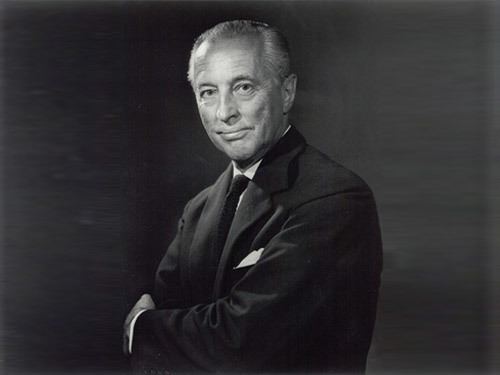
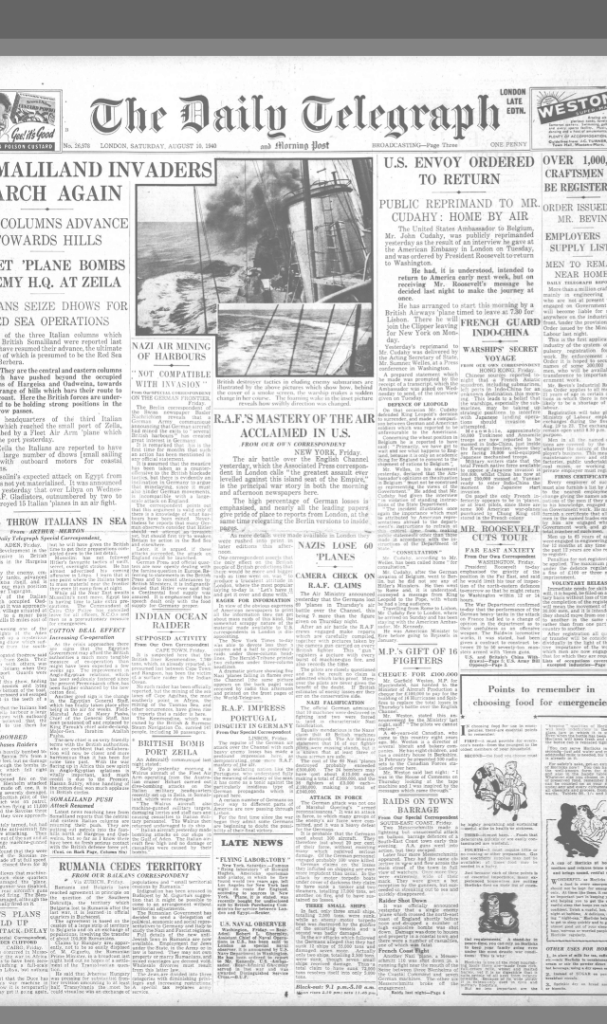
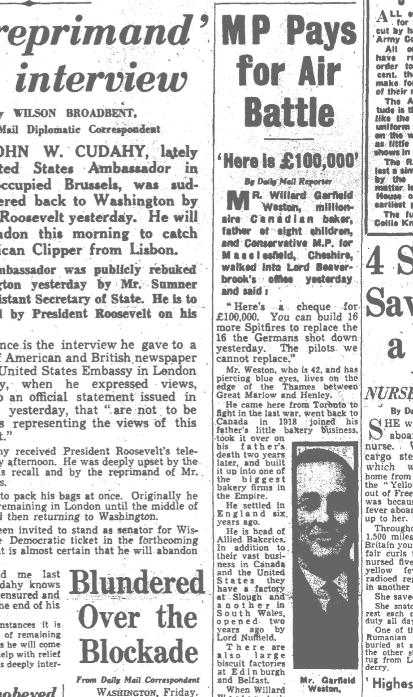
In August 1940 16 spitfires had been shot down in the English Channel and 13 pilots were killed Horrified by what he saw, Garfield Weston reacted – yes that Garfield Weston of the Garfield Weston Foundation that has given away over £2bn to good causes. At that time he was a businessman, entrepreneur and also a member of parliament in the UK.
Garfield Weston gave a blank cheque to Lord Beaverbrook saying:
‘All I can say is that I’ve a blank cheque here. You know, Max, only God can replace those boys, I’d like to replace the machines.’
Garfield Weston
This shows a total trust from a donor that we don’t always see – a complete trust that you will use the money you need for the purposes they want.
How did Lord Beaverbrook react?
He burst into tears. (who has had a gift so generous, or kind, that they have shed a little tear?)
Fundraising is, and continues to be emotional work, and we are emotionally invested in raising funds for the causes we support.
So what happened next…
First secure the gift.
Max Beaverbrook wrote in £100,000 in the cheque.
As good fundraisers know you should not waste an opportunity.
Lord Beaverbrook asked for permission to publicise the gift. Garfield Weston was reluctant and wanted the donation to remain private. But Lord Beaverbrook said “between you and me … there’s too [much] power behind this” and that if the gift was made public it would help raise over £1m. This incentive to do more good was too much to resist and so the story of this generous donation appeared in the papers (the Daily Mail mentions Garfield Weston’s ‘piercing blue eyes’).
Keeping up with the Joneses
The lead gift from Garfield Weston inspired J W McConnell another Canadian businessman to give $1m to buy a whole squadron.
We often use the inspiration of a lead gift to launch a campaign and inspire others to give.
Major philanthropists want to be seen to be supporting good causes and publicising gifts creates a powerful social norm about what your peers are doing – so publicity can help and inspire others.
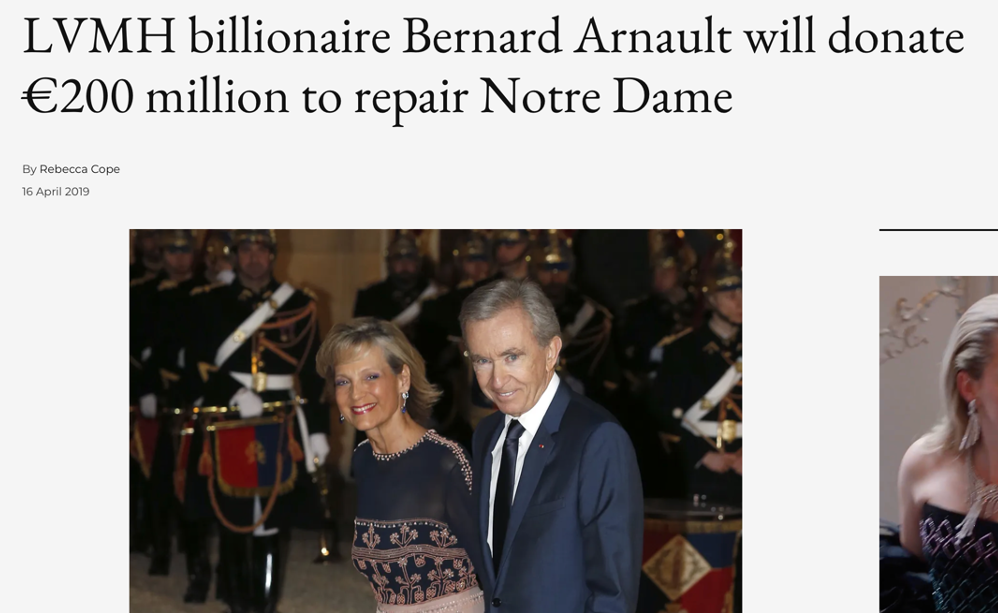
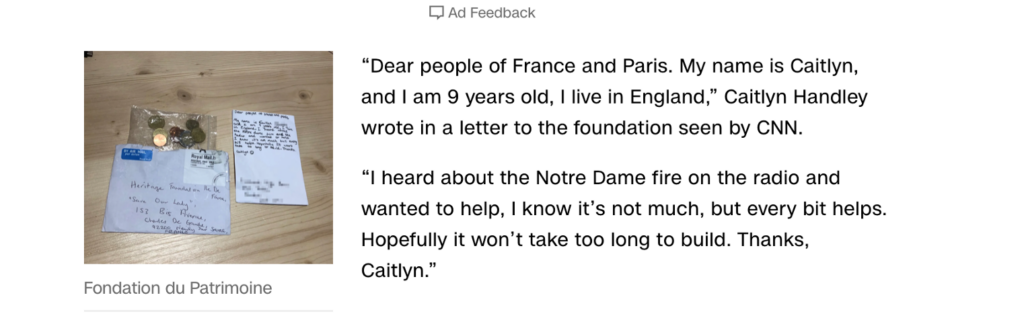
We saw similar behaviour after the Notre Dame fire. When one major donation was quickly followed by another – but as well as the big mega gifts our attention was also drawn to the smaller and more personal gifts. The two images below capture these extremes the 200 million and the 9 year old sending in her picket money. We tend to focus at both extremes of the gift spectrum. But like Notre Dame with spitfire campaigns – it was the big gifts and the small but mighty ones that attracted the attention.
Shopping list
So the promote the campaign, Lord Beaverbrook put together a price list of various engines needed but the Spitfire caught the imagination. On his list each Spitfire cost £5,000.
Now this was a made up number, the true cost was just over £12,000. So maybe not the most ethical approach.
This shopping list enabled every one to ‘do their bit’
A Merlin engine costs £2,000
Gun was £100
Spark plugs cost 8 shillings
60 screws cost 5 shillings
Rivet was sixpence
Why and how does this work?
When faced with a big target – financial or aspirational in changing the world (£10m or 2million starving children) donors can often worry that there small contribution is just a drop in the bucket and not going to make a tangible different to the cause. By breaking the total down into manageable chunks every person can see how their 8 shillings or sixpence is going to help and make a difference.
It reduces the cognitive load if we can see how one small – and real number makes the difference. And the realness and specificity of the number adds to our belief that it is a real number (we can sometimes mistrust a nice round number and have more belief that a mosquito net costs £5.20 rather than a round £5).
They can then exercise their moral imagination and see like this boy their gift in action….
Is that my rear tyre wheel mummy?
Every time one boy saw a spitfire he asked ‘Is that my rear wheel tyre?’ as he had donated his pocket money to the spitfire fund, and received a thank you from Buckingham Palace saying he had raised enough for the rear tyre.
Spitfires were constantly flying overhead so their personal donation remained salient and they were constantly reminded of the impact that they had. And to imagine that Spitfire was the one that they had contributed to. We often ask our supporters to imagine what their gift has done, but in this case they could see daily the planes in the air.
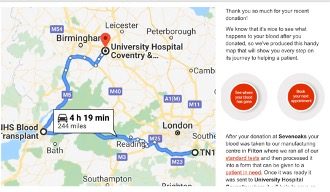
When you donate blood you get a text message after the donation to tell you where the donation has gone, with a map showing you where it is and in which hospital and that it has been used.
This is what happened to my blood after it was donated:
Isn’t that amazing? And a really powerful way to show donor’s the impact of what their gift is doing. What is the equivalent for your charity?
Receiving feedback like this floods our brain with happy reward chemicals.
As well as seeing the tangible impact of the donations we make, we like to see the progress we are making towards a goal – this is called the endowed progress effect.
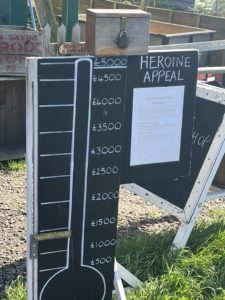
This endowed progress effect is often employed in the famous fundraising thermometer. A device used by Mayor of Islington in August 1940. He sat opposite the Nag’s Head pub raising money (only interrupted for lunch and an air raid warning) with a giant thermometer marking progress hour by hour– he eventually raised £2,500 for spitfires.
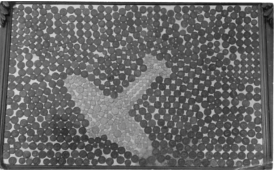
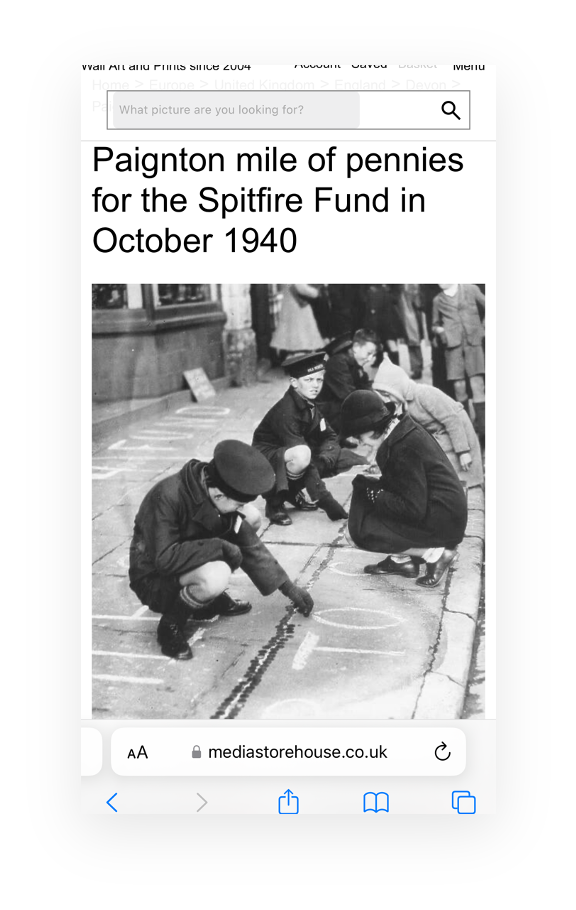
In Market Lavington – a village in Wiltshire – they created an outline of a Spitfire in the square and challenged the villagers to fill it with coins.
This image of a spitfire was created at the Green Dragon on 1941
Now we know that this uses something called the endowed progress effect.
You want some donors lined up at the start of the campaign to start donating, creating a powerful social norm, creating a bandwagon effect and showing that this is normal and anchoring people in what a normal gift looks like – if everyone is giving 6d, you will give 6d too but if others are giving two shillings you will follow suit. As we want to see our progress rewarded you would expect that the speed of donations would also increase as they near completion and people might be fighting over who gets to put that final coin down and complete the mission. Completing things is satisfying and proximity to success is motivational, as an individual realises they can make something happen.
Messengers like you
For some an authority messenger like Garfield Weston can be attractive and inspiring, but for others it can be off putting – it can make us react and say ‘well its fine for a millionaire entrepreneur to give but people like me can’t afford to’
However in this campaign they understood the power of likeable messengers who people could identify with. Donations came pouring in with testimonial messages of support such as:
“From all at No.15 Station Lane”,
“My week’s pocket money – Fred Smith aged 7″, “
“My first week’s old age pension – 10 shillings towards our Spitfire”.
Like all good fundraisers we know that testimony from real life donors helps create a powerful social norm showing other people like you are giving. This range of quotes from local areas, from children and pensioners enable people to identify with people like them.
So whether your regional identity, your gender, your employment status, your age was how you identified there was a messenger for you.
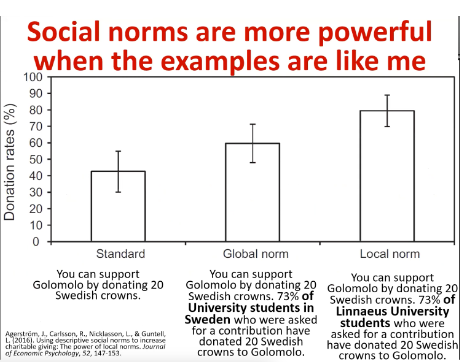
Now this might seem common sense to you and I think is one of the special things about looking into fundraising history – we see things that we instinctively know work as fundraisers, as humans interact with humans, about how we communicate – and in recent years we have the science to back that up – that might be academic papers, it might be fMRI scanners literally seeing what is happening inside our brains in certain conditions or often with lab tests with university students being studied for prosocial behaviour. This example comes from academic research and shows the real power of social norms when ‘people like me’ are used – generosity increases as the other people are identified as being nearer you – university students in Sweden are more generous than just other people, but university students from your university encourages even bigger donations.
All of these academic and other studies confirm what we know about the philanthropic psychology and human behaviour that the old wisdom from the past instinctively knew. But now we know it we can apply it rigorously and target the interventions we know work to help provide more ways to offer people ways to help change the world.
Name Letter effect
Have you ever heard your name spoken through the noise of a crowded pub or party?
In behavioural science the ‘cocktail party effect’ is essentially selective attention. At a cocktail party or any loud social setting, we can hear our own name amongst the hubbub – we are the most important to ourselves and we pay attention to things that resonate with our sense of self.
This draws on a deep identity connection to our own name. Ever since we were born our neurons have been trained to react and fire together when they hear our own name (or names similar to our own).
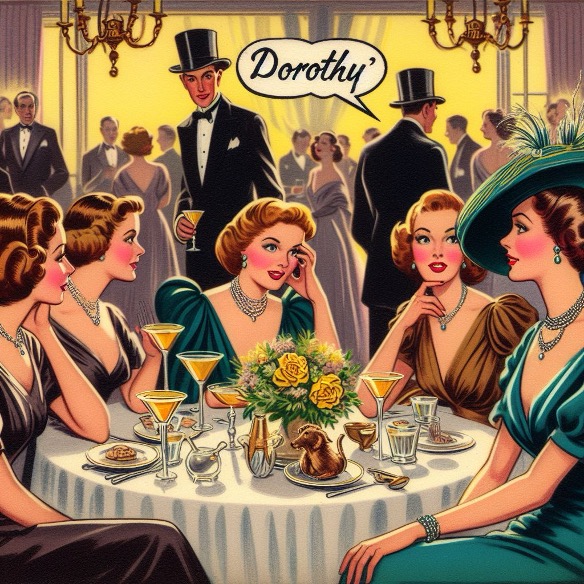
So as a Dorothy you are wired to hear and pay attention to Dorothy.
And a Canadian Dorothy used the power of her name to fundraise …
Dorothy wanted to raise funds to support the Spitfire fund, so she sold some of her evening gowns to raise money. She printed cards that said
Is your name Dorothy? If so, rally around and help buy a Spitfire for Britain.
She and her friends posted them to every Dorothy they knew and themed their fundraising around Dorothys
20,000 tea parties all hosted by someone called Dorothy
All Dorothy musical evenings
Auction of actor Dorothy Lamour’s sarong
This created momentum and they took advantage of the bandwagon and excitement to get more Dorothy’s involved – t this spread across to US with the “Vancouver chapter of the Canadian Dorothy Spitfire Fund is seeking noted Dorothys of the United States,”
“Dorothys Plan Galloping Teas,” – 25 women called Dorothy invited friends to tea charging 25 cents each – and like a chain letter they passed it onto other Dorothys of their acquaintance.
Dorothy Thompson, journalist and broadcaster donated a copy of her radio talk
Dorothy Parker was invited to write a poem
This global appeal successfully raised the funds and they bought a Spitfire which was named for the Dorothys that raised the money and called Dorothy of Great Britain and Empire .
But why does this work?
In 2008, data from seven emergency hurricane appeals were examined including Hurricanes Katrina, Mitch and Rita. Researchers Chandler, Griffin, and Sorensen found donors who shared an initial with the hurricane were overrepresented in the donors. So donors beginning with ‘K’ were 31% more likely to have given to support Hurricane Katrina relief in the 6 months after the hurricane.
‘M’ named people made up 30% more of the donor population during the two months period after Mitch devastated Honduras and Nicaragua in 1998.
Sharing the same first name or letter has also been shown to help donors identify more with fundraisers (Burger, Messian, Patel, del Prado& Anderson, 2004 and Bekkers, 2010 in an article entitled ‘George gives to geology Jane’)
A lab experiment showed a request to give to a child in need resulted in 61% giving but adding the name, age and a picture increased giving rates to 90% (Kogut, Ritow, 2005)
Learning the fundraisers’ name increased the average gift size by 50% (Bohnet and Frey, 1999) For alumni fundraisers donors were more likely to give when their first name was similar to the name of the university.
Knowing someone’s name builds a connection, a relationship, when we know the name – the name of the beneficiary – even the name of the fundraiser we are more likely to give (people give to people!)
So Canadian Dorothy knew that innate and personal connection to a name as a rallying call to donate. (This is one of the reasons why decision science is fascinating – we know these things work, we have seen them used, maybe unconsciously used them ourselves, but as our understanding of the science develops we can prove they work, and test how they work and see what is happening inside our brains as these things work)
Naming Rights
Which brings me onto naming rights. One of the components of the campaign was the joy of raising the funds was naming the Spitfire.
Now when people are not just naming it for themselves and have a little creative freedom we can see some interesting names – Boaty McBoatface being a prime example, and the Greenpeace whale Mr Splashy Pants spring to mind (as well as the names of all the Scottish Gritters) And Spitfire names were no different. Some were conventionally named for the country that funded them such as Trinidad, or Hong Kong or Sheffield.
However, a sense humour was demonstrated in the naming of the planes
The Kennel Club named theirs the Dog Fighter
The ABC cinema chain named them– Miss ABCs (there were 3 bought)
Marks & Spencer named theirs ‘The Marksmen’ following in store collection
Woolworths named theirs Nix Six Primus (which referred to their pre-war policy of keeping all prices below sixpence – don’t waste a marketing opportunity to get your corporate message into a naming opportunity!)
Some were more traditionally named. One anonymous donor named a plane Heather for his daughter.
Interestingly the RAF faced a challenge similar to fundraisers today, with donors and their naming rights demands. There was a designated space on the plane where a name ought to go (9 inches by six inches) but donors wanted their names in all sorts of shapes, font and sizes even including coats of arms!
When planes were completed donors got a photograph and a certificate acknowledging their support and so they could see their plane. These were again used for publicity and to generate further funds.
Merch
Another important identity marker can be in self branding and wearing merchandise that aligns with the band, the cause or marks you out as you.
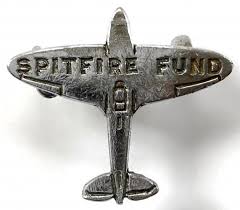
As part of the campaign an important visual symbol of your support of your local Spitfire fund was getting the badge. Some of these were your standard pin badge but many were shaped like spitfires and some were even made from the Perspex used in the windows of the planes. There were also bracelets made.
In certain towns and villages this became like not wearing a poppy on Remembrance Sunday – it would have been unpatriotic not to be seen to be supporting.
Strange how potent cheap music is
And what better than combining the power of the local identity with another powerful tool – the power of music, and rhyme.
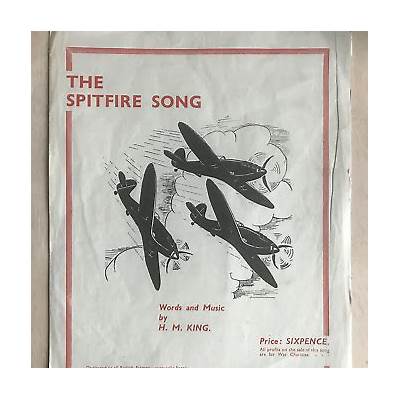
The Spitfire Song was written as a fundraising song and it was customisable so you could add your local area name into the song e.g. Hampshire or Bournemouth
Again the importance of geography and local identity in fundraising
‘We’ll make one of their number, write our name upon the wing
When the planes are flying over, you will hear old Britain sing”
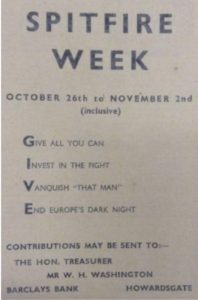
A Spitfire a Day keeps the Nazis Away – the Rhyme is the reason
The slogan of the Islington Spitfire Club was ‘each bob you pay keeps the bomber away.’
Or acrostic poems were made
Give All you can Invest in the Fight Vanquish ‘that man’ End Europe’s Dark Night
Why is that important? because we now know that we find messages more persuasive and more memorable when they rhyme and more accurate.
Using rhymes in campaigns can make them more memorable.
Creative and local fundraising
There was no centralised campaign and each community or group was empowered to fundraise and donate in ways that suited them.
We have already seen some creative examples, here are a few more … what links all of these that the methods are really linked to spitfires and the war
Penny on the red – every time the air raid siren sounded every member of the club had to donate a penny to the Shoreham Spitfire Club
6 pence was charged to view a crashed German plane in Kent to raise funds for Spitfires and in Dudley they charged sixpence to have a look at a Messerschmitt – band leader Henry Hall bought his band and they played They’ll Always Be an England and a dog called Jerry climbed on the wreck
A Mrs Clark charged a penny to see a deactivated mine and raised over £9 from 2000 visitors to it
In a London cinema, during an air raid, the manager of a cinema pushed a wheelbarrow up and down the aisle saying “the more you give, the less raids there will be” as he solicited donations.
10 a penny club – for every ten aircraft you had to donate penny – the fishmonger in Stevenage had a chalk board outside the shop to mark off shot down planes – they raised £454 in the first 5 days
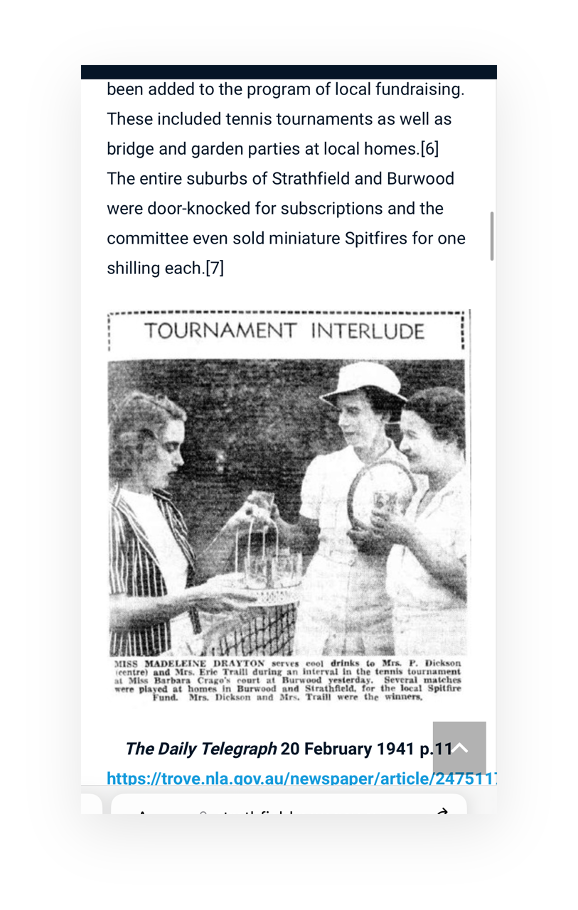
Madeline and Nanette Drayton painted 12 large posters of Spitfires and people filled them with coins – raising £3750
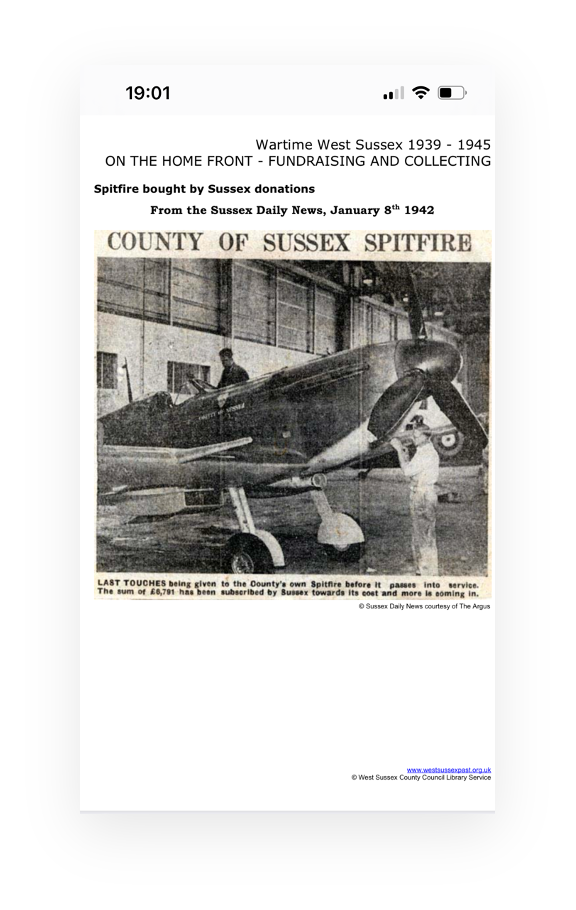
The campaign ultimately raised £13m.
What fundraising lessons are there from this Spitfire Fund campaign?
React quickly to current events
Keep the story in the news
Make it easy for donors to see their impact – chunk the campaign into small and manageable achievable goals that they can help achieve
You don’t have to do all the work – empower people to raise funds and have fun and be creatively
Use the identities that donors have – to their village, their town, to their employment status, age, gender to help connect and establish a powerful norm
This is a reduced version of a talk given at Fundraising Summer School in Dublin, May 2024.
https://marinajones.uk/wp-content/uploads/2024/05/blank.jpg7211280adminhttps://marinajones.uk/wp-content/uploads/2022/12/f2b903e010104f5aa61ea1821a685913.pngadmin2024-05-16 09:56:452024-06-06 19:50:53How a blank cheque sparked a fundraising revolution?
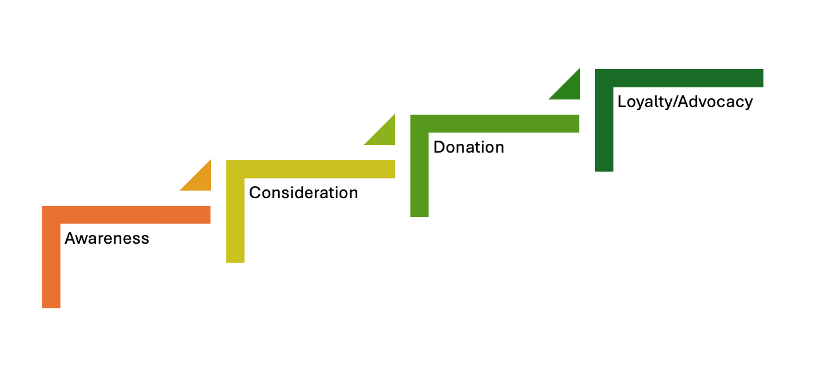
A donor journey is a map of how you reach donors and might in a simple form look like this:
Each charity has their own version (although they might call it something different) and it may have more, or fewer steps in it.
And yes, it can be an oversimplified way to describe to a more complex and intricate process. But is a useful visual aid to think about the donor’s journey.
How does it stack up when we apply it to the medieval pilgrimage & how they raised money? And, how does thinking about medieval pilgrims help us fundraise today?
Let’s take it one step at a time
1. Awareness
How do people become aware of your charity? Your needs? And how you are trying to make the world a better place?
Most donations come because someone was asked.
For medieval pilgrimages the pulpit was the place where awareness of pilgrimages was raised. Regular sermons would have told the people about the benefits, opportunities, and spiritual rewards of such a journey.
There is a useful lesson for fundraisers here about repetition. It may not be every sermon that pilgrimages were mentioned, but the benefits were often repeated, and so awareness was raised and reinforced.
Every second our brains are receiving millions of messages, but they can only hold a small number of facts at any one time. When something is repeated, we get better and quicker at processing it – our neurons rewire to process it faster as we become more familiar with it. This is called repetition priming, and it helps us process ideas better and more fluently.
Why else is repetition important?
Although you may very carefully craft your fundraising copy, or in the case of the pilgrimage – the sermon – people don’t read every word (sorry), or listen to every word you say. Repeating the message often makes sure that one of the repetitions get through. It should not be an exact word for word repetition, but a variation on the theme – as a different nuance, metaphor or example might be the thing that catches the eye, or ear, of heart of your potential donor.
So, keep repeating your messages and your asks for support in your communications to make people aware of the need. The repeated exposure to your message will make it easier for your supporter to process what you need and what you are asking of them.
Repeat the message
(did I say that already?)
2. Consideration
After a donor is aware that you exist, they start considering and researching more about you – and to understand why they should give you their time and treasure.
For a pilgrim this might be talking to other pilgrims about the experience, a donor nowadays probably uses your website, the news, your social media feed.
Now embarking on a pilgrimage was an expensive undertaking it might take days (4 days walk from London to Canterbury where St Thomas A Beckett was murdered and buried), but pilgrimages to the Holy Land could take up to a year. So, you needed to be able to afford to get there (and back) and it would involve sacrifice, planning and thought.
Donor segmentation
Certain pilgrimages routes attracted certain types of pilgrims.
In fundraising it is important to segment your donors and appeal to what appeals to them, to know your target market. The medieval church did the same and certain pilgrim sites were favoured by a subset of pilgrims – the shrine of St Foy was known for giving protection to French crusaders heading out to Spain, Walsingham in Norfolk for its royal visits with Henry III visiting twelve times (& every subsequent king of England visited including Henry VIII), whereas the Holy Rood of Bromham attracted more ordinary pilgrims.
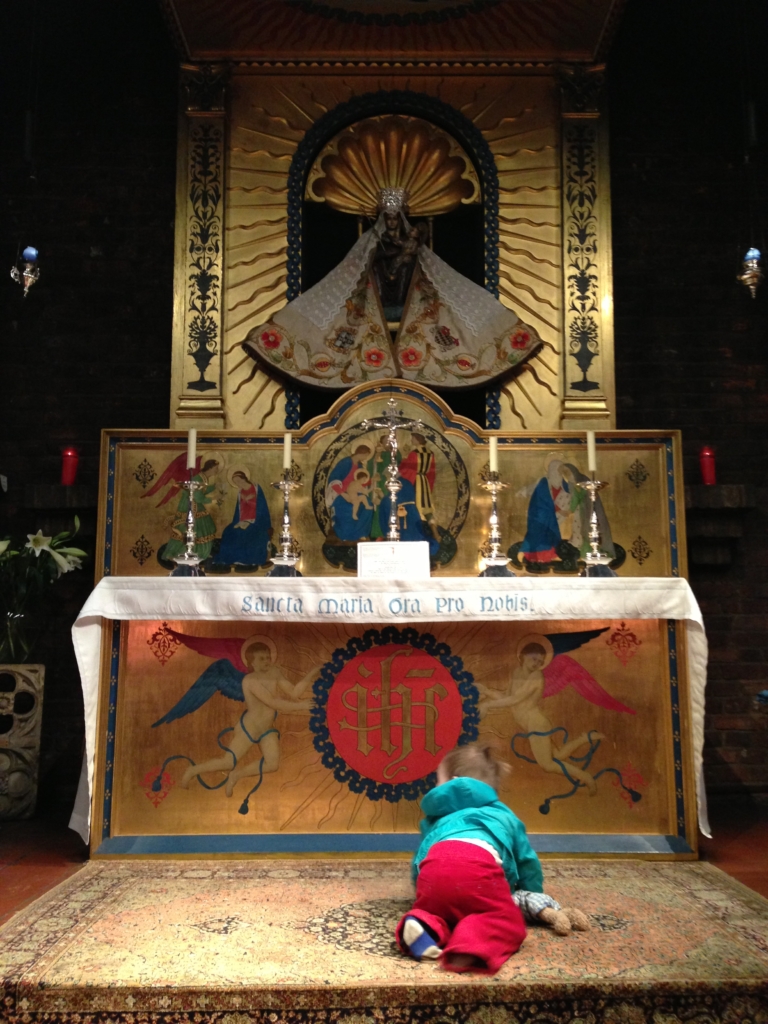
Our Lady of Walsingham (and my son)
Like deciding on the right pilgrimage and how long or expensive it might be, the donor needs to consider what is the right donation for them. In order to make a donation, your donor might need time to think about it and if it is a significant commitment then find, or save the resources necessary.
How can you segment your donors, and your asks to suit their capacity and interests?
3. Donation
By going on pilgrimage, you were committing to donate, and not just once but many times – on the journey as well as at the pilgrimage site.
The pilgrimage routes took you to, and through other churches and shrines, for example, Toulouse Cathedral made use of its location on the popular St James of Compostela pilgrimage route to maximise its donation opportunities and income.
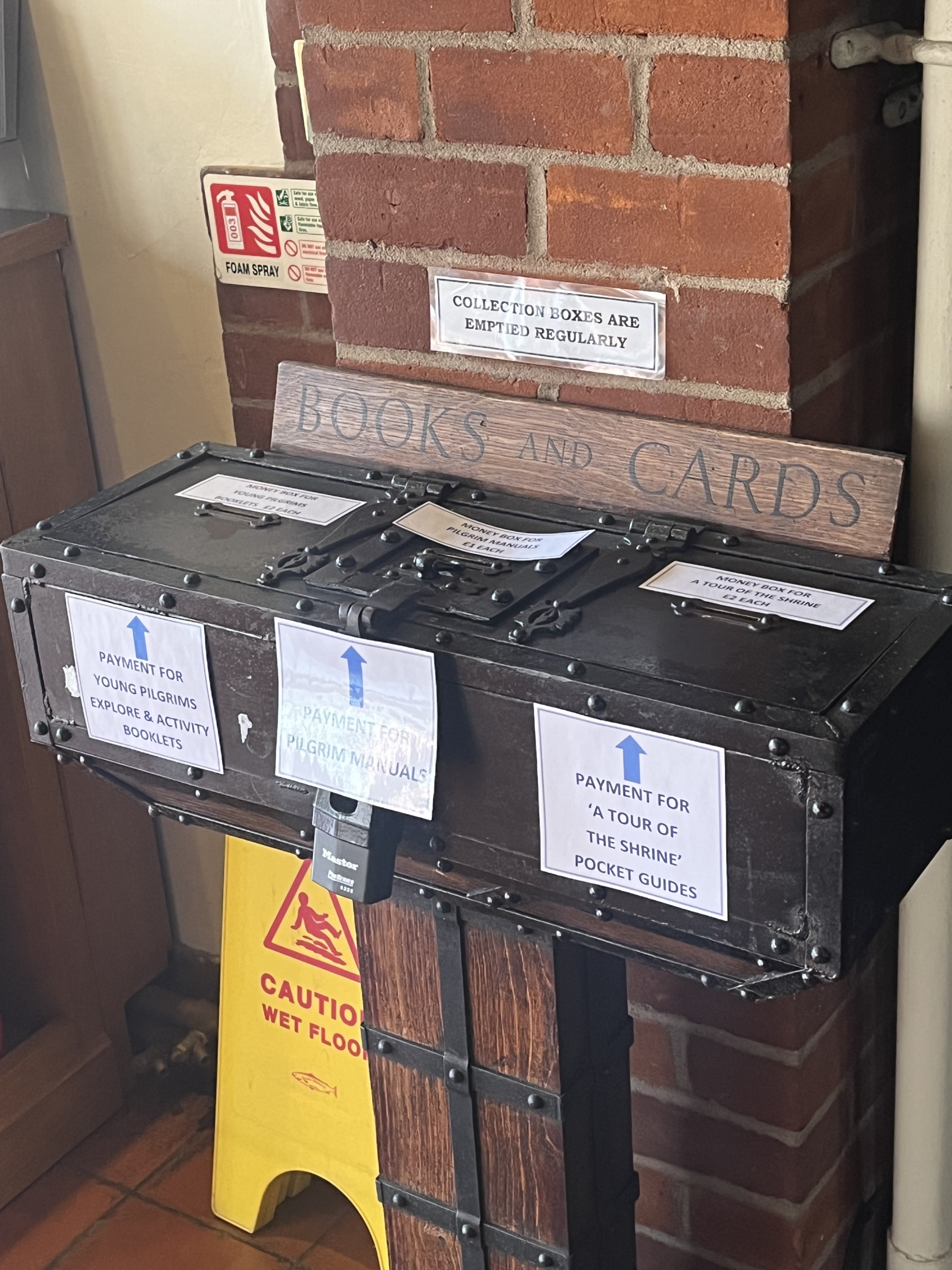
Once you reached the pilgrimage site there were plenty of opportunities and expectations to give. The East End of Canterbury cathedral had five donation boxes on the pilgrimage route around the cathedral (Again we see the importance of repetitions and mere exposure effect – we need to be reminded, repeatedly asked and exposed to the behaviours we want donors to adopt).
But also it is important to be asked for gifts and not just assume that the mere exposure effect will work – in Basel Cathedral a lay petitor would say in a loud voice when the cathedral opened ‘Donate to the construction of Our Lady and earn the great indulgence and great pardon’
How is your user journey or website reminding and giving repeated opportunities to give?
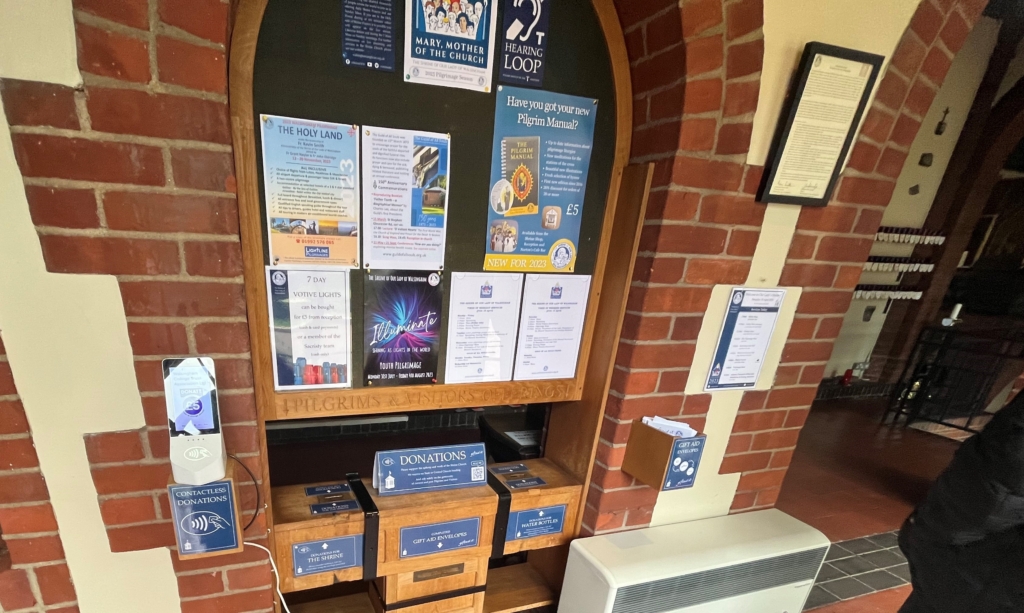
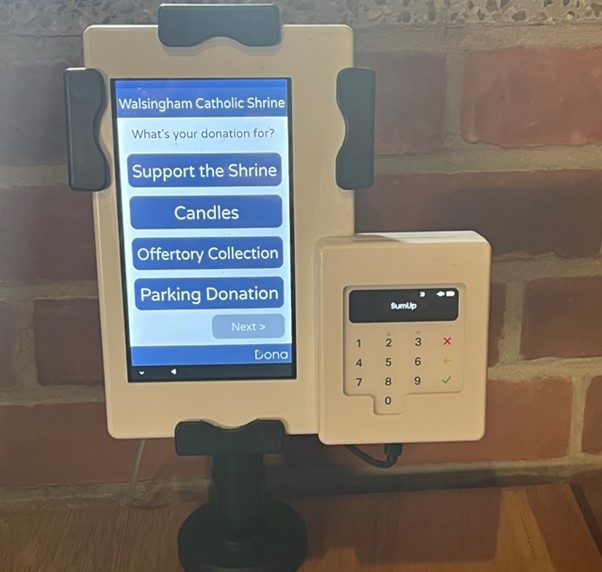
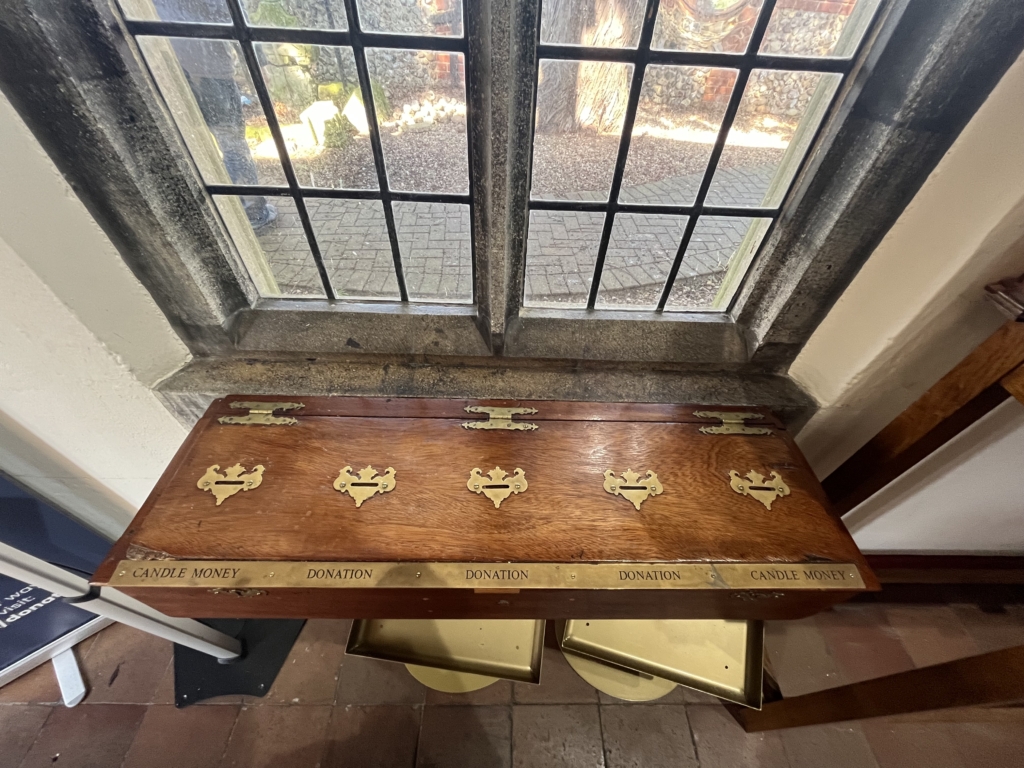
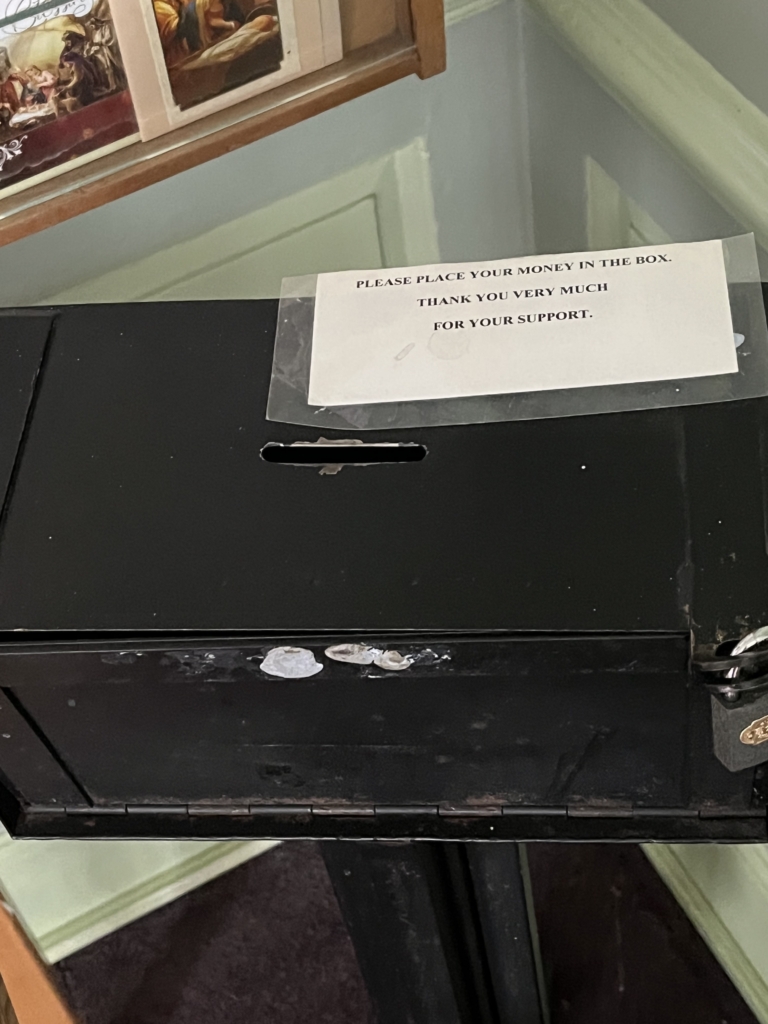
A variety of donation boxes in Walsingham today
And how do you encourage more donations at the site?
How we think about money –Mental accounting
One way to get your pilgrim to spend more money (on top of the donation) was through fairs where pilgrims could spend time, buy food and enjoy themselves. Events fundraising and paying a premium to be eating, drinking and supporting a good cause has been around for thousands of years. In 1248 there was a 15 day fair to accompany the moving of Edward the Confessor’s body to Westminster Abbey – to maximise the opportunity all other local fairs were banned (the importance of that exclusivity clause in your donor agreement!)
We use mental accounting to allocate our money – our charitable gifts, our religious duty, our food expenditure or leisure and pleasure budgets. Whilst donations on the pilgrimage route, or in the church, may have come out of the religious duty or charity mental account – additional money spent at the fair would come out of leisure and pleasure account. So you get two bites of the cherry.
How can you provide different ways for donors to give that come from different mental accounts?
Social proof by testimony
As part of the journey around the pilgrimage route around the shrine there were often individuals testifying to the power that the saints have made in their lives through cures or prayers answered. The person who delivers the story (fundraising or miraculous cure) has a huge power and influence – if we see someone like us – the same gender, from the same place, with the same accent, the same age, the same profession or identity doing something – and they are a likeable and credible person – that encourages us to believe what they say, and do what they ask. This offers a strong social norm for us to follow and be shown to work effectively in fundraising. This example comes from academic research and shows the real power of social norms when ‘people like me’ are used
If we match the messenger to the donor we will increase the success rate.
How can you tell the stories of the impact of donations to encourage more gifts?
How can we demonstrate that donors like them give?
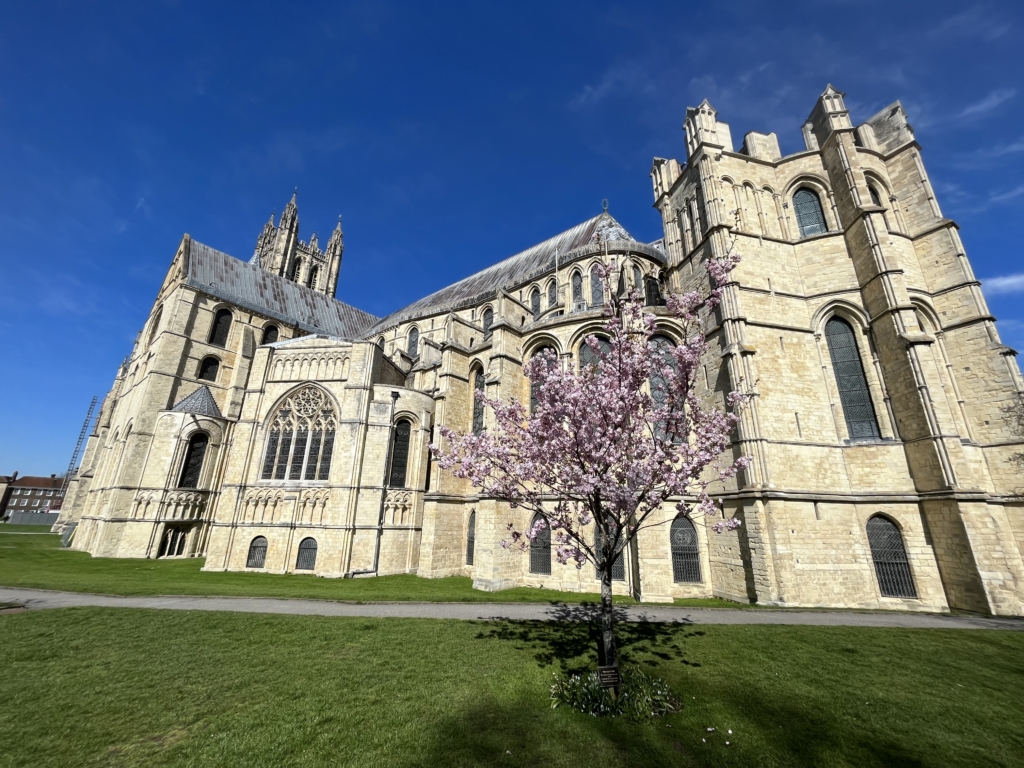
Canterbury Cathedral
4. Loyalty/Advocacy
Donors can be your best and most powerful advocates.
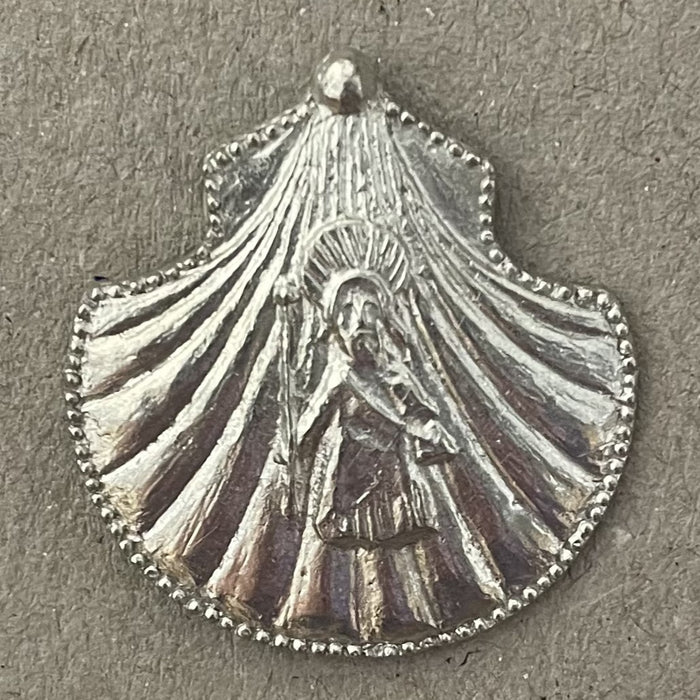
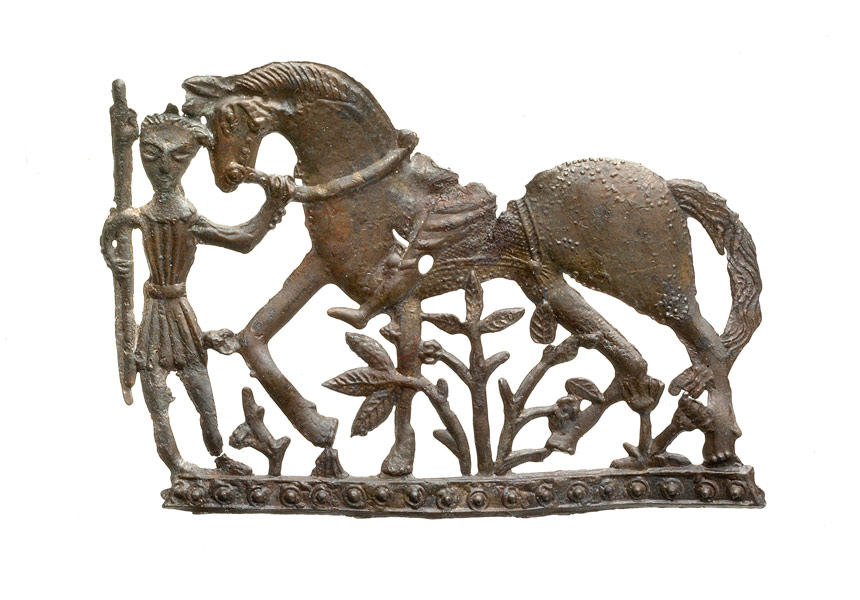
One way to help them demonstrate their loyalty and live out their identity as part of your tribe is through merchandise – and the medieval pilgrim market had this covered with pilgrim badges. These could be bought as souvenirs to demonstrate your identity as a pilgrim, to show you had been on pilgrimage and helped also raise additional funds (and come from a different mental account!) You wore them on your cloak or hat, put them in your prayer book or could nail them up at home. They showed to the world that they had been on pilgrimage and what tribe they belonged to. Each shrine had its own badges so you could collect them from various shrines demonstrating your piety and connection.
Pilgrim badge from St James of Compestella Pilgrim badge
How can you find ways for your donor tribe to demonstrate their loyalty?
By looking at medieval pilgrimages and how they raised funds, we can see some applications that can be used in our fundraising today. So
Repeat the message.
Segment your donors.
Target them with special offers.
Use powerful testimony of messengers like them.
Show the impact of gifts.
Provide opportunities for them to spend from different mental accounts.
Waiting for the next instalment or cheque in the post?
Emotional labour of fundraising?
Your cause not as exciting / easy to raise money for as another more exciting one.
How many of these ring true for you today – you are not alone! Fundraisers from 100 years ago (or three hundred years ago) experienced the same things!
Fundraising as emotional labour
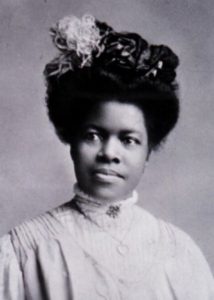
Nannie Helen Burroughs
“This money getting business destroys so much of one’s real self that we cannot do our best, feeling that we need money all the time”
So said Nannie Helen Burroughs civil rights campaigner and businesswomen over one hundred years ago.
The emotional burden of fundraising has not changed – many fundraisers care deeply about the causes that they secure funds for, describing fundraising as a vocation, which means detachment from the role and cause can be hard to find. Fundraisers invest a good deal of themselves in the cause they care about, striving to make the world a better place. You need money to deliver your mission, but the efforts to secure it can also be a constant worry.
This also speaks of a time before the separation of founder and fundraiser – to ensure that mission happened was everyone’s job and the responsibility fell heavily on the head of the founder/director of the charitable endeavour. The advantage of this was that everyone understand the role and importance of fundraising to achieving mission, rather than, in some charities, where delivering mission and raising funds are seen as separate and the fundraising team as the ‘necessary evil’.
Don’t get too dependent on that one donor
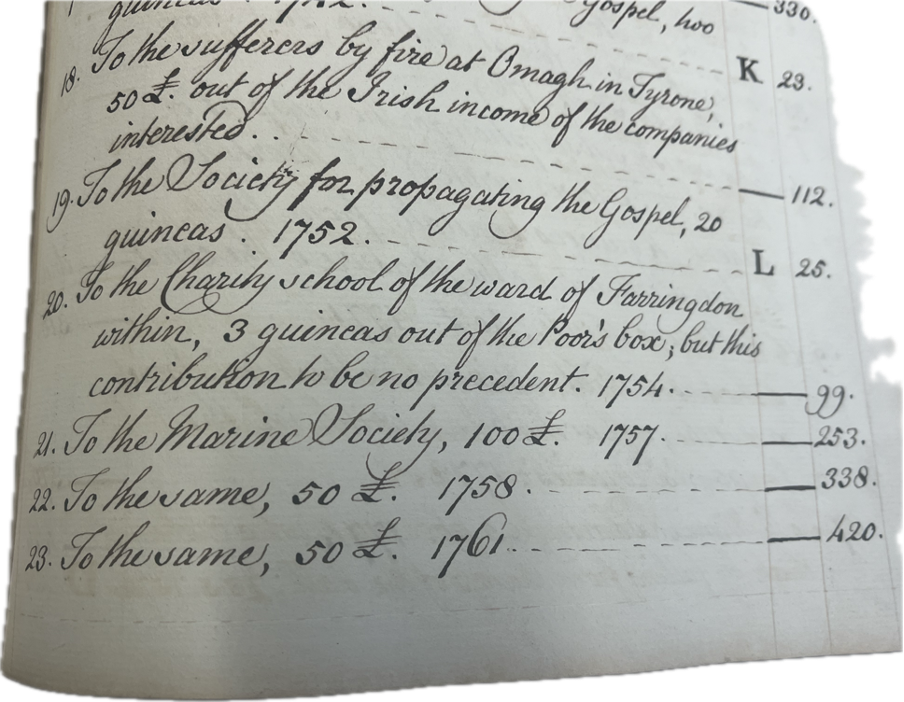
‘this contribution to be no precedent‘
From 1757 charity roll of the Worshipful Company of Stationers, a grant of 3 guineas to the Farringdon charity school with the caveat ‘this contribution to be no precedent‘. It is a concern of funders that we don’t become over reliant on their grants and keep asking them to support the work, but this is the earliest example where I have seen it written down.
Although the charity roll shows that further grants were given to support the school despite this warning about precedent – a good reminder that funders are not always consistent with their stated policies and do make exceptions (maybe a super fundraiser built a great relationship demonstrating the impact of the gift and secured these future gifts)
Not as glamorous as other causes
Trying to raise money for the Bristol General Infirmary – after foreign missions had raised £7,000 and the hospital only £772, John Addington Symons moaned
The General had ‘few novelties connected with it; no interesting pictures of …curious customs; no terrible demonstration of savage creatures and hideous abominations of devil worship; no ladies auxiliaries; no juvenile collectors‘
Echoing the criticism of Mrs Jellaby by Charles Dickens in Bleak House he says ‘we comparatively overlook our brethren.’
Rising cost of living & waiting for the cheque
“The high cost of living has made us very anxious for us. May we hear from you now?”
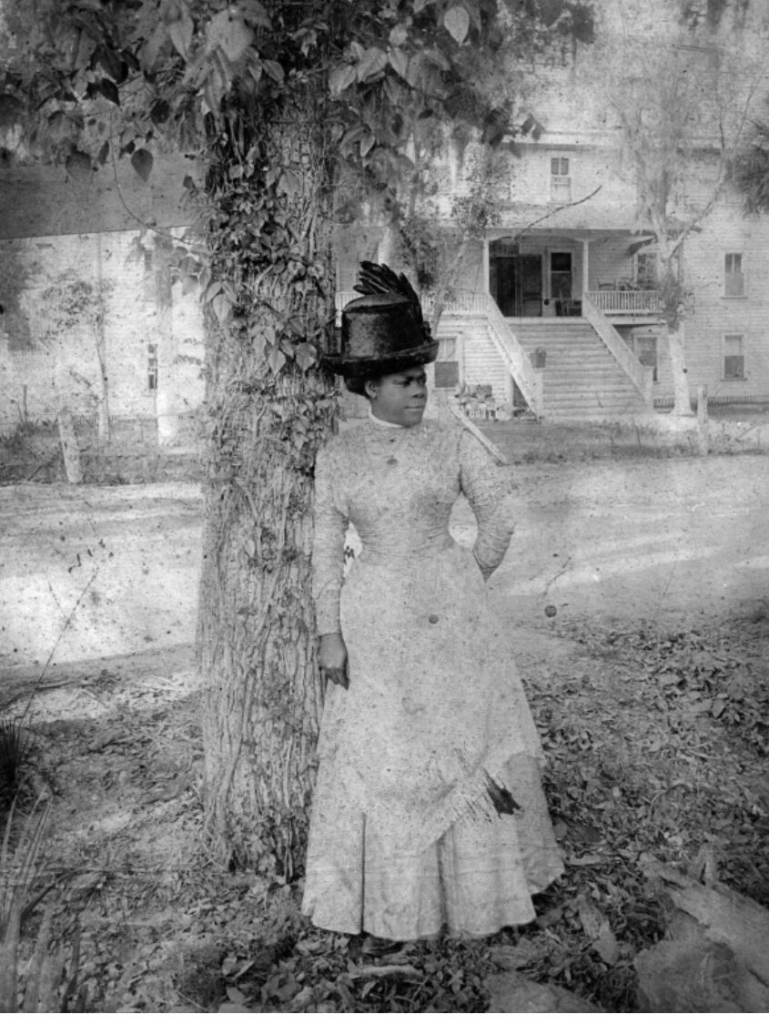
Wrote Mary McLeod Bethune asking Madam Walker for support. The year 1917, how much has changed?
Or a letter to great financial supporters of her work, President and Eleanor Roosevelt
“We are now in desperate need of funds. My nights are sleepless with this load upon my heart and mind. I must have help. I believe there are friends who would want to help”.
Mary McLeod Bethune
Mary Macleod Bethune was a fantastic fundraiser and you can listen to this podcast about her life and work – raising money for her school by selling sweet potato pies to the workers on the dump, securing grants from J D Rockefeller and keeping her community of alumna close to secure regular funds.
Follow the grant guidelines and add the credit specified
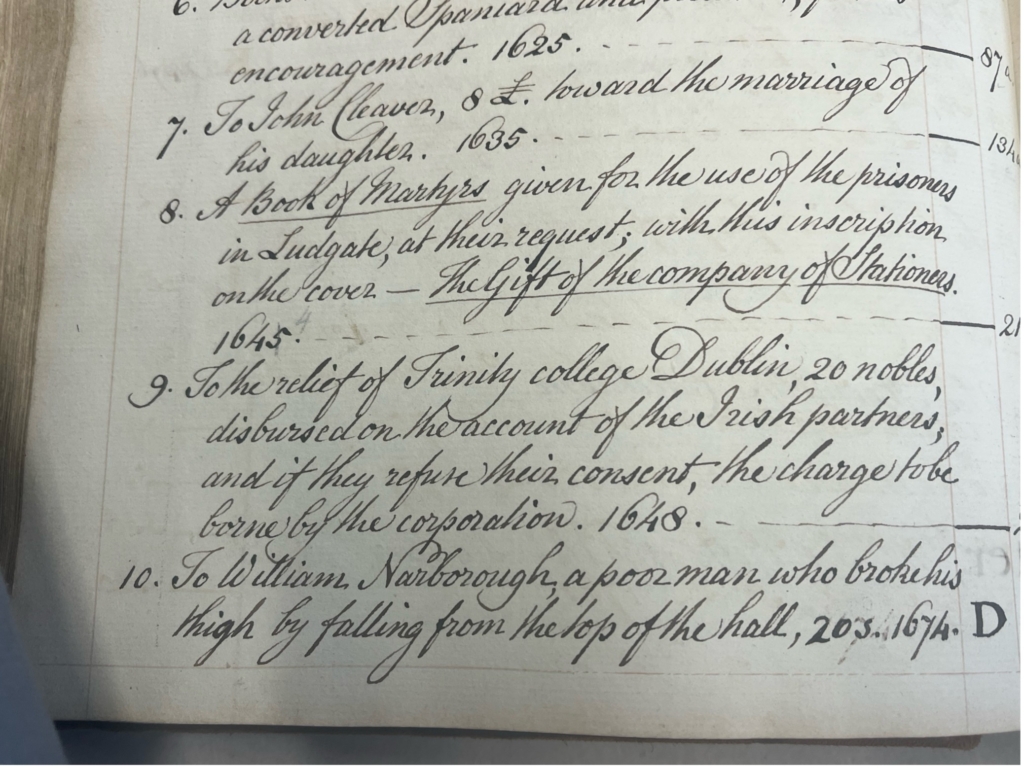
Even in 1645 funders were prescribing how their donation ought to be credited. Another from the charity roll of the Worshipful Company of Stationers this time in 1645 when ‘A Book of Martyrs’ was given for the prisoners of Ludgate Gaol following an appeal by the prisoners. The roll details that the book be inscribed on the cover ‘The Gift of the company of Stationers.’
Same as it ever was …
Although these highlight the many ways that fundraising (and fundraising woes) have not changed in the past few centuries.
Perhaps as fundraisers we can find consolation (or frustration) in the fact that ‘it was ever thus.’
Although much is the same as it always has been, charity and fundraising are conditioned by time and place and it would be just as easy to pick up examples that showed ‘the past is a different country, they do things differently there’ (raising funds for pirates or for unmarried maidens to get married).
https://marinajones.uk/wp-content/uploads/2024/03/Mary.jpeg1125845adminhttps://marinajones.uk/wp-content/uploads/2022/12/f2b903e010104f5aa61ea1821a685913.pngadmin2024-04-09 08:13:082025-07-25 17:17:29Same at is ever was, same as it ever was …
In the last few years gamification has been highlighted as a way to increase engagement with supporters – making charitable engagement more fun, and driving loyalty and community.
But it is not new in fundraising.
Competition and gaming elements can be seen in cathedral building in the thirteenth century – with areas of the city competing against each other to raise the most money (Pavia Gate vs Porta Nuevo Gate https://marinajones.uk/butter/).
But have you ever been asked to ‘winkle up’?
This is a particular request made by members of the Winkle Club in Hastings
Founded in the Prince Albert pub in Hastings in 1900 by local fisherman wanting to do something for poor local families and provide a special Christmas feast.
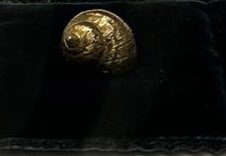
Each member is given a winkle shell (an edible sea snail – with snail removed and filled with wax) which must be produced if challenged to ‘winkle-up’ by a fellow member. If they cannot produce their winkle they are fined (originally 1 penny but now £1). The challenger must report the winkle up challenge before the week is out or pay a double fine!
They have become a local institution, in 1908
A hundred hungry men were served with dinner in the Harbour Shed, decorated with bunting, on Tuesday (31 Dec), while an estimated 750 children were given a good square meal dinner on Wednesday”.
Hastings Mail
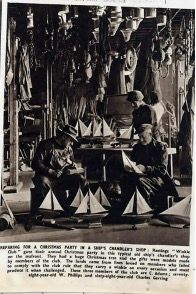
Members of the Winkle Club preparing for the annual Christmas party 1948
Pubs seem to be a fruitful place for the founding of charities as Howard Lake recently commented.
Additional fines and penalties were imposed, but all for fun, including
It is frequently easy to induce a member to ‘go over and Winkle Up old so-and-so there in the corner for a lark’, only to find that old-so-and-so is not a member. Another fine. All’s fair in Winkling-up and it all goes to charity
The Club’s rule also cite:
A favourite trick is for one member to say to another: “Put your winkle on the table for a moment; I should like to compare it with mine for colour” – or size or any other excuse. If the other fellow in a thoughtless moment puts his winkle down, he at once becomes liable for a fine. Moreover, no member may ever have two winkles in his possession. Another artful dodge is casually to invite a member to pick up and examine a second winkle with some appropriate remark – “Have you ever seen one like that?” or something of the sort. If he unthinkingly takes it, he is at once in trouble and a fine is duly levied“
The Winkle King
In the 1960s, Slogger Hoad was the Winkle King of Hastings and had special suit made out of 9,626 winkles which took six months to make (and can be seen at the Hastings Fisherman Museum)
Imitation is the sincerest form of flattery
The Winkle Club originally got the idea from the Hasting Acorn Club. This Club formed in the Royal Oak pub and has an acorn as their symbol, but the fisherman of the Prince Albert wanted something that reflected their fishing tradition so chose the winkle.
Cute local custom, yes, but also some fundraising lessons
So what can we learn from this local custom
Make donating fun – can you add gamification so that there is a fun and competitive element to your campaigns? The tricks that Winklers tried to play on each other to catch each other out and make more money aided the campaign. This can incentivise people to be involved in campaigns but also creates a sense of community which helps build loyalty. The fun element adds an extra dopamine happy chemical hit to their giving experience.
Your identity as a Winkler is important and a shared local one – recognising other supporters like you is important – whether it is asking someone to ‘winkle up’ or seeing a supporter has the tote bag or a badge identifying them as another supporter. We like to have ways to identify our support and have social proof of what others like us do.
Celebrity winklers – having famous members helps promote your cause. Famous Winkle Club members include the late Queen, the Queen Mother, Norman Wisdom, Admiral Montgomery and Winston Churchill.
Adapt your offer to target segments of your supporters – Winston Churchill was presented with a special gold monogrammed winkle as an honorary member (see below) and the Queen was given a gold winkle made into a broach form. How can you treat special members differently to honour and recognise their status?
News stories – make the most of getting press stories about ‘winkle up’ challenges especially from your famous members.
In 1953 at the dress rehearsal for the coronation Field Marshal Montgomery charged the Mayor of Dover to ‘winkle up’ – the mayor having been to several functions that day did not have his winkle in that pair of trousers and had to pay a fine (reported in the Hastings & St. Leonards Observer 6 June 1953 Pg. 0007)
In 2008, Admiral Boyce was answering questions at a government committee when an MP asked one final question – did he have his winkle with him? The Admiral did not so paid the fine – but the MP who asked the question – Hastings MP Michael Foster did not have his either so was also fined (there was also a light hearted debate about whether he ought to have been challenged when at work!) See curiosities here https://winkleclub.org/curiosities/
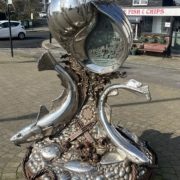
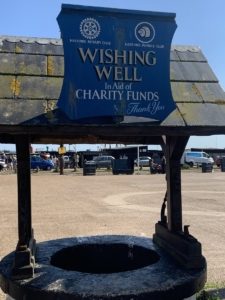
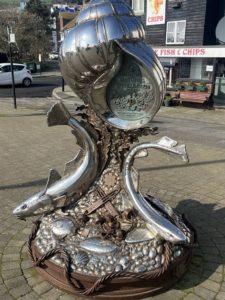
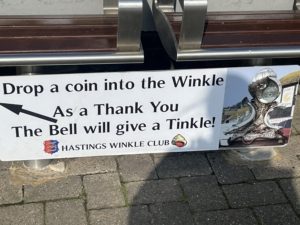
Rewards – both the current opportunities to donate that I saw to donate to the Winkle Club on a recent trip to Hastings are fun. Wishing wells and a giant winkle shell that makes a noise when you donate. Make your donation boxes fun, interactive and engaging.
Rhyme as the reason effect -using rhyming messages can make them more memorable.
To listen to more about the history of fundraising you can listen to me on the Third Sector Podcast talking to news editor Andy Ricketts and senior multimedia reporter Lucinda Rouse on the development of the fundraising profession and perceptions of charity fundraisers through the ages.
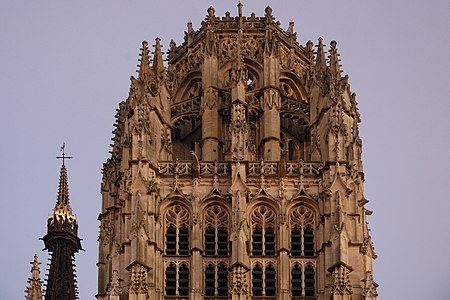
You can hear about the parallels between contemporary fundraising methods and instances of their use centuries before, as well as past mistakes that could be avoided by better knowledge of fundraising history. It includes lots of examples of fundraising history, including a cathedral tower that was constructed by incentivising donors through a reprieve on a ban on eating butter during Lent.
https://marinajones.uk/wp-content/uploads/2024/03/Sommet_de_la_tour_de_Beurre_de_la_cathedrale_de_Rouen.jpg300450adminhttps://marinajones.uk/wp-content/uploads/2022/12/f2b903e010104f5aa61ea1821a685913.pngadmin2024-03-24 12:51:542024-03-24 12:51:55Hidden History of Fundraising – Podcast
Building, maintaining and rebuilding cathedrals and monasteries was an expensive and ongoing business.
Here are just some of the ways in which funds were raised from the tenth century to the fifteenth. Many of which we see today in various forms for capital campaigns, or other appeals, and others we can adapt.
Eat Butter
What have you given up for Lent?
If you had permission to break that in exchange for a donation would you?
During Lent, the faithful were to abstain from meats, dairy and eggs, which mean that the townspeople of Rouen could not enjoy Normandy butter. However, if they made a donation of 6 deniers Tournais to Archbishop Robert de Criosmare’s fabric fund for the cathedral they would be let off their Lenten discipline and permitted to eat butter.
The fundraising by this exemption was so successful that it raised enough money for the tower of the cathedral – which is known to this day as the Tour de Beurre (Butter Tower) because of where the funds come from (and that is made of local yellow limestone that has a buttery hue!)
Butter Tower at Roeun
Sponsor a window, a pillar, a figure, a chapel, a candle, an arch, a day’s labour, a year’s labour
Basically you can sponsor anything.
We like to be able to know what our contribution did – to say to others or just to ourselves ‘I did that’. The options within cathedral buildings were endless – arches, windows, chapels, figures on a portal (at Notre Dame they originally planned to have 28 chapels but the popularity of chapel support locally meant they had over 50 chapels were installed – how’s that for donor dominance!).
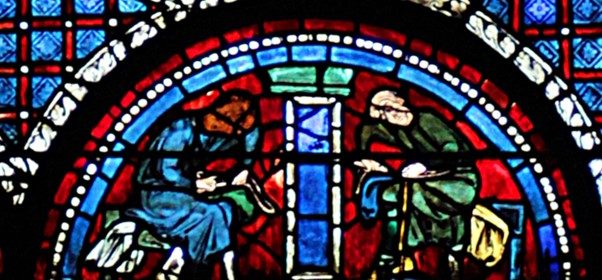
Windows proved to be one of the most popular ways that individuals or local trades could show their support and the sponsor is often shown in the window – so we see windows from fishmongers, clothshearers, leather dresses, masons and church builders.
Shoemakers guild contribution celebrated in stained glass at Chartres
(Although, the cathedral in Tournai complained about the ‘pompous trimmings’ of the excessive donor led art projects that supported additional decoration rather than the building of the cathedral – donor dominance even then!)
It was not just physical capital items that were supported. People also made donations to fund positions – for a day, for a week, for a year. Again demonstrating that every contribution can be attributed to part of the project. It is easier for our brains to process and understand – 3s pays for one day’s labour than to grasp the complexity and cost of a whole building project.
Nowadays capital campaigns allow people to do everything from name a building or a room, but also the smaller and more tangible items from a light switch to a toilet brush, well as supporting the salaries of posts.
And the church were creative and offered lots of opportunities to credit donors – from donor books, coats of arms on walls, pictures in painting and windows and many more. In Strasbourg each week they held an elaborate ceremony on Sunday after the high mass reading out the names of the donors to the fabric fund and writing their name in the Liber Donoatiorium (donation book) For more about donor recognition in churches see this earlier blog about donor recognition or the IWITOT (I wish I thought of that session) about donor recognition on SOFII’s website.
Although as well as crediting donors, these memorials could be used to name and shame. In the donor book of Milan it lists that ‘all the braiders of Milan except Giorgio Coiro‘. So poor Giorgio is forever immortalised as the one that did not pay (maybe don’t try this with your donors!)
Donating money to have the bells rung for the living or the dead could also grant you an indulgence. Indulgences could be offered, reducing the amount of time the donor spent in purgatory, and hence placing them nearer to heaven. But it was a core thing that needed to happen and be paid for – a great way of funding those core costs.
How can we chunk our campaigns into chunks so that people can know that they have supported a specific thing to happen?
How can we recognise and celebrate those gifts in creative and aligned ways?
Gamification and competition
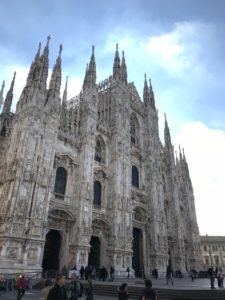
In Milan in the 1380s what galvanised the capital campaign for the cathedral was some healthy local competition. One local neighbourhood, the Porta Nuova gate started a weekly collection. The next week the Pavia Gate started, with the aim of being seen more generous than their neigbours. And the competition spread.
How can you introduce fun and friendly competition into your campaign?
Tap into supporter identity
Milan Cathedral
The competition between the Pavia Gate and the Port Nuova above highlights the importance of hyper local identity.
Every supporter has several identities that reflect who they are (or how they want to be seen as their ideal version of themselves) your fundraiser message can connect with these identities – as a Christian, as a Catholic, as a proud city resident. But identities go deeper and hyper local. In Milan there are dedications and donations from ‘the young men of the East Gate‘ – this is not just an affinity to the city, or to the cathedral, or saint, but to the local area –
Where are the identity triggers with your donors? How do you provide segments that reflect true and deep connections?
Calendar highlights
Church campaigns used high days and special holy days to enhance campaigns. For example, Assumption-tide was used as a way to galvanise campaigns. The relic quests (which you read more about here) often worked between Pentecost to Assumption (partly because of the weather).
Most religions have seasons when charitable giving is particularly encouraged like Ramadan or Lent, that can be used as times to encourage giving. Or anniversaries (of your founding, of a specific event) can be used as a hook for a campaign.
How can you use dates and moments in the year to bring life to your campaign?
Be organised
Milan cathedral had an organising committee of 12 nobles, 9 canons, 16 citizens and 3 lawyers (and 20 notaries were busy copying out the bishops letters to diocesan clergy requesting support). One hundred local citizens also oversaw the work being done checking the quality of materials and work being done. Fundraising is not a lone task of the fundraiser working away on their own or with their team it needs the whole organisation to be involved in supporting success. It also requires planning and strategy.
Milan was built relatively quickly there are other examples when fundraising stalled because of plague, war, the Crusades or other political upheavals. The most successful campaigns had a visionary champion who believed in the project and excited others and got them organised.
The Canterbury register of donors opened 8 years before the building began!
Have the structures and processes in place – budgets, targets, ROIs, LTVs are important and you need the staff infrastructure to support success.
Who are your champions that can excite your supporters and your staff?
Gifts in kind
As well as financial donations, gifts in kinds of bricks and stones from other were also welcomed.
“If I were a shepherd I would bring a lamb” (from the carol In the Bleak Midwinter)
Devotional gifts also included a horse, a basket of cherries and an egg.
How can you encourage gifts in kind of the things you need?
Authority figures
In 1171 the Bishop of Norwich sat on the cathedral entrance to accept donations from the faithful. We are influenced by the messengers that ask for gifts, but also get an extra warm glow from making the donation to someone important.
Leadership gifts
In a capital campaign you always want a leadership gift – a big gift from a significant person – with authority and integrity to lead the way for others to support. Often in the Middle Ages this would be the Bishop or the Cathedral chapter.
Going once, going twice ….
People donated and bequeathed items to the fabric funds and these were put up for public auction to raise funds. These included gowns, boots, towels. jewellery, furs, daggers, helmets, gauntlets, and silver slippers. These seem to have been sold at a commercial rate rather thank like an auction generating over the odds prices as a way to support the charity.
Employee involvement and the Ikea effect
The challenge for fundraisers can be finding an appropriate and useful way for partners to be involved in your project – it can be painting, gardening, volunteering at an event but it tends to be an important way that the employer can demonstrate their impact and charity credentials and build teams.
This was not a problem for our medieval counterparts, as using free labour was part and parcel of building a cathedral. Various guilds and confraternities would come and offer free labour for a day or a week.
As well as burly people to get the job done, this also has an added effect of creating a deeper senses of engagement and commitment to the cause. The Ikea effect means we value something more if we have been involved in its creation (like the flat pack furniture) – the involvement of the armourers or the drapers had a vested interest in the success and use of the cathedral by donating their time to building it.
How can you get people involved in the cause to make them feel more involved? They may not be able to dig a foundation but how can they feel connected to making things happen?
Donation boxes
Donation boxes are nothing new and recorded in the Temple in Jerusalem in the time of Jesus.
In Milan in the fourteenth century, a donation box was placed next to the work building the cathedral encouraging more donations.
There is always an argument about how effective they are for actually gathering donations, or whether they are more useful for the mere exposure effect of the need (and there is more about their power and persuadability here). Perhaps they were particularly effective on relic tours, when after an emotive sermon two trusted men would solicit donations.
In memory giving
Giving in memory of someone we love can elicit a bigger and more emotional gift. In Milan we see some early in memory giving for ‘by Francischino Carcano for the soul of Sempliciano Limit who formally resided with him‘.
How can we use the emotions we feel for other people (dead or alive) to inspire gifts?
Anonymity offered
Not all donors want their name, their guild or their crest displayed it is important to be able to offer donors the choice to be anonymous – this example from Milan ‘offered on the high altar by a certain illustrious and exalted lady who would not be named’
It is always a good option to allow your donor’s the choice to remain anonymous.
(But sometimes anonymous can be an excuse for even more credit and this clip from Curb Your Enthusiasm about anonymous donations)
Location, location, location
Toulouse Cathedral made use of its location on the route to the St James of Compostela pilgrimage route so its donation boxes did particularly well.
Use the power of celebrity
When Pope Innocent IV stayed in Lyon 1245-51, the lagging cathedral fabric fund had a huge boost. Using the power of celebrity can help increase donations to the campaign – with the pope you have a celebrity and an authority linked to your cause.
Make the most of bad things happening
Archbishop Richard le Scrope was executed in 1405 for his part in the Northern Uprisings. Pope Innocent VII excommunicated those that had been involved in his trial. He was buried at York and viewed as a saint and martyr by some. York had been lacking a saint, and the veneration of Scrope’s relics increased revenues and donations.
(As an aside – he is one of the traitors, along with Westmoreland, in Shakespeare’s Henry IV Part Two – where he is definitely a traitor not a saint)
Myth making and reality
There is an enduring myth that Henry II built Poitiers cathedral. He is depicted with his wife and children in the central Crucifixion window. In reality it was a much more communal effort with his contribution, the bishop, the chapter, other parishes, burghers and local craftspeople. After capital campaigns, certain myths develop about how it was funded and by who.
Questions over whether you can accept money from Prostitutes of Paris
Having a policy and concern for repetitional risk in accepting donations is nothing new – generally the church disapproved of usury (taking interest) but the clerics of Notre Dame had some interesting discussions about whether to accept donations from the guild of prostitutes – read more on concerns about tainted money below:
Make sure you know who you will accept money from, and a have a plan on how you assess their suitability
Get drunk
From the tenth century at least the use of church ales was common place to help raise much needed funds. These were social occasions with much beer, dancing and games. Parishioners allocated members of the parish to brew the beer which was sold at a premium to raise funds. These ales were also used for raising support for members of the parish who had fallen on hard times and were a form of horizontal philanthropy and mutual aid. These ales were also used to help newly married couples – which is where the word ‘bridal’ (bride-ale) comes from.
Although this practice as open to abuse and sometimes people just got drunk and claimed it was ‘for charity’.
Social fundraising like gala dinners and balls continue to be a tried and tested way to raise funds with people paying over the odds/commercial rate to support a charity and/or enjoy the social time.
Make fundraising fun and social and create events where people can come together to support you
And some practices that we will not be adopting
Confiscating property of heretics and those of other faiths (especially Jews)
Enforced taxes and tithes and contributions from other parishes
Using the confessional (in Strasbourg) to stress the importance of donation
Priest needed to be at the drawing up of wills so the importance of gifts for salvation could be stressed (in Toulouse in the thirteenth century). In Strasbourg in 1283, the city stopped all bequests to the church because of the undue pressure put on the dying and the protestations by heirs.
Arresting donors that don’t pay up – Michel de Lucy (son of the King and Archbishop of Bourges) was compelled to pay to restore the cathedral by his father the king. When he did not pay, he was arrested in Paris and forced to pay.
In St Luke’s Gospel it says “for which of you desiring to build a tower, does not first sit down and count the cost, whether he has enough to complete it” – words not taken on board by many medieval cathedral builders!
In 1544, Emperor Charles V wanted to donate a new rose window to Utrecht cathedral but they had to refuse as they could not afford the installation costs.
So what can we learn from medieval cathedral building schemes
How can you get people involved in the cause to make them feel more involved? They may not be able to dig a foundation but how can they feel connected to making things happen?
How can we chunk our campaigns into chunks so that people can know that they have supported a specific thing to happen?
How can we recognise and celebrate those gifts in creative and aligned ways?
How can you use dates and moments in the year to bring life to your campaign?
Where are the identity triggers with your donors? How do you provide segments that reflect true and deep connections?
How can you encourage gifts in kind of the things you need?
Who is receiving the gifts?
How can we use the emotions we feel for other people (dead or alive) to inspire gifts?
Make sure you know who you will accept money from, and a have a plan on how you assess their suitability
Make fundraising fun and social and create events where people can come together to support you
Who are your champions that can excite your supporters and your staff?
References
‘How a Cathedral was Built in the fourteenth century’ by E Bishop (1898)
‘Two thousand years of disreputable history’ by Redmond Mullins
‘Gold Was the Mortar The Economics of Cathedral Building’ by Henry Kraus
‘Conviviality and Charity in Medieval and Early Modern England’ Judith M Bennett Past and Present 1992
‘Financing Catherdral Building in the Middle Ages the Generosity of the Faithful’ by Wim Vroom
https://marinajones.uk/wp-content/uploads/2023/04/shoemakers.jpg280602adminhttps://marinajones.uk/wp-content/uploads/2022/12/f2b903e010104f5aa61ea1821a685913.pngadmin2024-03-15 21:09:482025-09-07 13:56:48Eat butter & get drunk: How to raise money for a cathedral
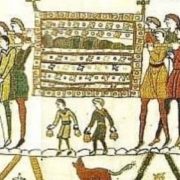
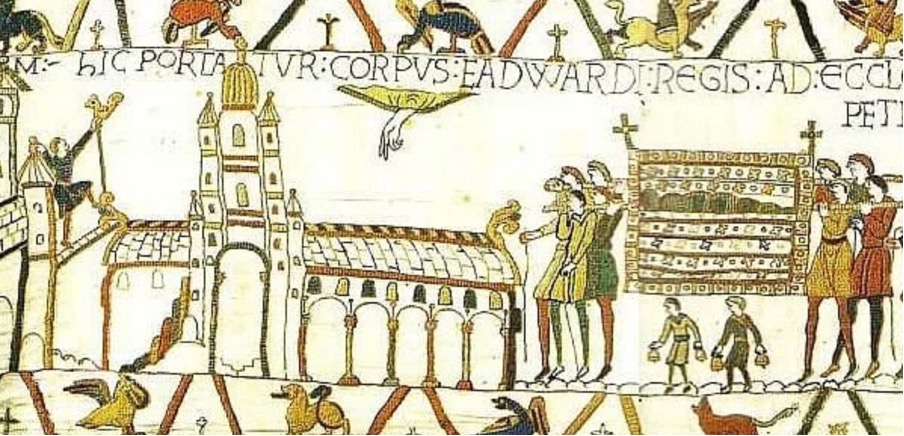
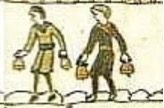
This scene depicts the funeral procession of Edward the Confessor (later a saint) on the way to Westminster Abbey. Look closely and underneath his funeral cortege are two men carrying what appear to be collecting bags for donations.
It was common from the tenth century onwards to tour saint’s relics to raise money for cathedral fabric funds, and for two men to collect the money from the crowds who had worshipped and venerated the relics and listened to emotive and inspiring sermons. Hence, the translation of Edward the Confessor’s body to the Abbey could have been used to raise funds for building his shrine and the enhancing his saintly reputation. Therefore, academics have suggested that this is fundraising in action – and in tapestry form!
What was a relic quest?
A relic quest was a reverse pilgrimage – instead of pilgrims travelling to see the saint’s relics – the saint was toured to them. The relic quest usually involved:-
The relics of a saint being toured locally, regionally, nationally or internationally in a reliquary (a specially designed ornate receptacle)
Veneration of the relics by the local people
Stories of the miracles performed by the the saint and/or their relics
A stirring sermon detailing the power of the saint, sinful nature of humanity, need for repentance and penance, and the need for funds and the project (often a cathedral or monastery building project after a fire or another disaster)
In exchange for donations to the cause, indulgences could be offered, reducing the amount of time the donor spent in purgatory, and hence placing them nearer to heaven
From the Council of Rome in 1078 there was a duty for all the faithful to donate at mass, on feast days, pilgrimages and other holy days. There was a Christian duty to give alms; the care for Christ’s body on earth, the church, was an important area where alms were encouraged.
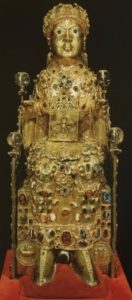
Reliquary of St Foy
Although fundraising was the primary purpose of these tours, they were also used to cement the reputation of the saint locally. Depending on the needs they could be time limited to secure funds to (re)build the cathedral or monastery or become annual calendar events.
Who did this fundraising?
Those on these tours were given the title questor seeking alms (donations) for religious purposes – this is one of the earliest titles for fundraisers. Originally these questors were canons or friars associated with the church or monastery conducting the building project, but as early as 1094 there were specially paid priests (unconnected with the institution) for these fundraising expeditions.
The preaching and collecting donations model was so popular that in the eleventh century, there were special preachers employed to raise funds for other areas of work, notably for the hospitals run by the cathedral or monastery – special preachers known as vulganter vociarus pardoner had special permission to preach and collect one Sunday a year for hospital funds.
They were contracted by the Bishop or Chapter and made contracts about how the funds earned were donated – 1/3 to the pardoner and 2/3 to the cause was common. But some times (as today) these contracts were subcontracted out.
Antonies, raising funds for the hospital of St Anthony the Abbot in the 1200s received contracts to cross diocesan boundaries to raise money. St Anthony Abbot is often shown with a pig, a Tau cross and a bell on a stick – the bell was there to attract donations.
When relic quests began they were mainly focussed on church building and conducted by canons and friars. By the fourteenth century, given their success at raising funds they were used for raising funds for hospitals, the poor, bridges, lights and a wider variety of causes areas. (For example, St Anthony’s Hospital in London received £500 of its £550 income from questors.) This could be seen as mission creep, or the success of the mechanism and the nascent professionalisation of fundraising. With this those asking for the funds stopped being ordained ministers or from the clerical class and laymen were recruited to collect. Then as now, good questors (fundraisers) were hard to find, but they were paid for their work. There were serval models – some were paid an annual fee and others were paid up to a third of the collection. Questors as a profession ran in families and they were expected to police the behaviour of other collectors.
1215 – Regulation of how fundraising could be done
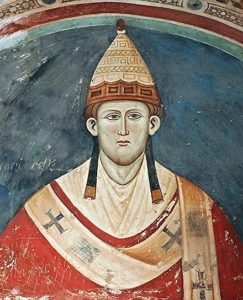
Innocent III
These relic quests became a popular way to raise funds but there were concerns about abuses of power (and fake fundraisers) so in 1215 at the Lateran Council IV, Pope Innocent III decreed that all questors needed a licence from the pope and permission from the local diocesan bishop or king to hold a relic tour. These licences generally lasted a year.
Instead of stirring emotional sermons, questers had to read out a set letter as they solicited alms. This meant that the letters got longer (from 500 words to 2,000+) which included multiple asks for alms and donations. The letter would be read out and two worthy men would collect the funds (as we see above in the Bayeux tapestry).
It also included stipulations on what the questors ought to be wearing and how they ought to behave! No taverns, modest behaviour and clean and tidy dark clothes – they should not dress like wealthy people.
The Lateran IV Council also tried to limit the indulgences that could be offered in exchange for donations – setting specific amounts of days remittance in purgatory for donations. Indulgences worked as a powerful incentive for donations, but are definitely more at the transactional/ self interested end of the giving spectrum – rather than altruistic. Indulgences were pardons for sins, giving reduced time in purgatory for those that truly repented. Although indulgences did not strictly require payment, the physical paper proof of forgiveness of sines was proof of the transaction. Their use increased and became increasingly problematic throughout the centuries (This is a gross oversimplification of a complicated and nuanced topic but to give a summary of the challenges and evolution of the issue and its problem.) By the fifteenth century the questors became known as pardoners (and the Pardoner can be seen and is mocked in Chaucer’s Canterbury Tales)
It was ever thus … a few medieval issues that we still see today
Repeat the ask – the twelfth century sermon preached at Amiens with a relic tour includes four asks for funds in the sermon. Repetition helps our brains process things more easily. The more repetition the faster we process. The more the ask is repeated – the more we are being primed to give – so it is important for our appeals to repeat the ask multiple times. Remember, donors are not paying super close attention to what we write or say – they skim read/selective hear, so a repeated message helps convey what we want them to do.
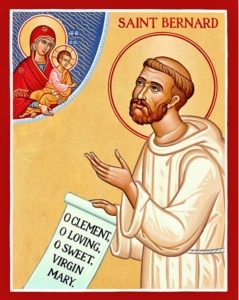
Not everyone agrees about charitable priorities, Bernard of Clairvaux said that the church collections and relic quests were too focussed on beautiful church buildings and not the poor in need (‘She dresses her stones in gold and lets her sons go naked’). There are still debates today about how philanthropic money should be spent and where it is most needed.
Fundraising is not always successful – in 1086 the Benedictine monks toured St Eusebia’s relics and lost money on the tour
Fundraising is based in time and place and what is charitable and acceptable evolves. In the tenth century, indulgences were an unproblematic way to offer a spiritual reward to donors, but as the practice evolved they become more transactional, less philanthropic and much more controversial (A few decades ago, a charity sixth form slave auction that might have run as a fundraiser, or accepting a collection from the local hunt (which the RNLI recently turned down), but what is socially, morally and ethically acceptable changes and evolves with societal norms). Fundraising for pirates ransoms used to be common – see more here. Fundraising practice, like what is charitable, evolves with time and place.
Who you take money from – the church would not take money that had been earned in certain ways particularly from usury (taking interest on loans) and prostitution. Nowadays your acceptance of gifts policy might meant that oil, tobacco, fur or arms dealers are not acceptable to your charity. What is ethically acceptable, like fundraising methods, evolve over time, but reputational risk has always been a concern….
Need for a strategy – Bernard of Clairvaux was concerned that church building projects should not be started unless the relevant funds were in place to complete the project.
Bernard of Clairvaux
What did these sermons say
Set words of a sermon for the reading out for alms from Amiens (blame Google translate, my school girl Latin is not what it was)
For as the Apostle says, we shall all stand before the judgment seat. We must receive Christ according to what we have done in our bodies, whether it has been good or badthe extreme mercy of the Messiah to prevent the works and to sow eternal ones in the earth, whichBy returning to the Lord with a multiplied fruit, we must collect in the heavens, firm hope and confidenceholding, because he who sows sparingly also reaps sparingly, and he who sows in blessings, the blessings and reaps eternal life. Since then, for the support of the brothers who were in need of such things. At the confluence hospital, the facilities are not properly available, we advise your university andwe are exhorted in the Lord and we have commanded you to forgive your sins, as far as good things a contributing to God, give them pious alms and acceptable charitable support, as by subsidizing them. Let your own poverty be consulted, and you through this and other goods which the Lord inspireshaving done this, you can reach eternal joys’.
And the Reformation changed all these practices.
So happy questing fundraisers!
Coming next … relic quests were just one way that cathedrals and churches were financed – find out how butter helps build a cathedral. Read more here https://marinajones.uk/butter/
References:
‘Relic Tours in England and France’ by Cristine Oakland (which includes quotes from my former professor)
https://marinajones.uk/wp-content/uploads/2024/03/detail1.jpg304362adminhttps://marinajones.uk/wp-content/uploads/2022/12/f2b903e010104f5aa61ea1821a685913.pngadmin2024-03-11 12:31:322025-07-25 16:38:04Look! Fundraisers on the Bayeux Tapestry
Fundraising challenge: You have a donor willing to give you something you want, but you cannot afford costs associated with the project.
It’s happened for many of us – in order to secure the thing you want – you need another fundraising campaign.
This is what happened with Cleopatra’s Needle.
In 1819 when Muhammad Ali Pasha gifted the UK the obelisk known as Cleopatra’s Needle (which has very little to do with Cleopatra).
For 58 years the obelisk remained in Egypt, but then the land where the obelisk was stored was threatened, something had to be done. So a fundraising campaign was planned to finally bring it to England.
The negative risk of not doing something is a useful tool for any campaign – using the urgency of needing the funds before it is too late to drive action.
The major funding came from one individual – Sir William James Erasmus Wilson (a very solid Victorian name!) – a well-to-do dermatologist with a passion for Egypt. He contributed £10,000 of the £15,000 needed to bring Cleopatra’s Needle to London.
The remaining £5,000 was raised through a public campaign – made up of lots of small donations.
The main costs were needed to ship Cleopatra’s needle from Egypt to London and this was done in a 18 metre cigar shaped pontoon called The Cleopatra. On the journey during a storm the pontoon was cut loose to save the crew and floated around the Bay of Biscay for 60 hours before being rescued and delivered back.
Cleopatra’s Needle has now been on the north side of the Thames for 146 years – and Wilson’s contribution is recognised by a plaque which recognises his ‘patriotic zeal’ in bringing it to London but does not mention his financial contribution.
Donor Pyramids
Fittingly for an Egyptian artefact, the fundraising campaign conforms to the standard donor pyramid model. The model sees large lead gifts at the top of the pyramid, supported by many smaller gifts at the base of the pyramid. The Pareto Principle says that 80% of your gifts ought to come from 20% of your donors. In this case 75% from just one donor!
You want to secure the majority of your fundraising target and leadership gifts in this first private phase of the campaign. With a leadership gift of £10,000 in this private phase, you give confidence to the wider audience that the project will happen when your project becomes public.
This campaign represents a rather a top heavy pyramid with an over reliance on one major leadership gift. A more typical donor pyramid might look something like this:-
It is important to have lots of people you can ask – as not everyone will say yes (or say yes at the level that they are asked to support).
Being near completion also incentivises the public phase to help complete the target – when you get nearer your target and people have confidence it will be achieved, the speed of gifts often increase.
And did you know?
Inside the pedestal of the obelisk is a time capsule including a set of 12 photographs of the best looking English women of the day, a box of hairpins, a box of cigars, a baby’s bottle, a hydraulic jack and some samples of the cable used in the erection of the Needle, a portrait of Queen Victoria and a Bradshaw Railway Guide!
We may request cookies to be set on your device. We use cookies to let us know when you visit our websites, how you interact with us, to enrich your user experience, and to customize your relationship with our website.
Click on the different category headings to find out more. You can also change some of your preferences. Note that blocking some types of cookies may impact your experience on our websites and the services we are able to offer.
Essential Website Cookies
These cookies are strictly necessary to provide you with services available through our website and to use some of its features.
Because these cookies are strictly necessary to deliver the website, refusing them will have impact how our site functions. You always can block or delete cookies by changing your browser settings and force blocking all cookies on this website. But this will always prompt you to accept/refuse cookies when revisiting our site.
We fully respect if you want to refuse cookies but to avoid asking you again and again kindly allow us to store a cookie for that. You are free to opt out any time or opt in for other cookies to get a better experience. If you refuse cookies we will remove all set cookies in our domain.
We provide you with a list of stored cookies on your computer in our domain so you can check what we stored. Due to security reasons we are not able to show or modify cookies from other domains. You can check these in your browser security settings.
Google Analytics Cookies
These cookies collect information that is used either in aggregate form to help us understand how our website is being used or how effective our marketing campaigns are, or to help us customize our website and application for you in order to enhance your experience.
If you do not want that we track your visit to our site you can disable tracking in your browser here:
Other external services
We also use different external services like Google Webfonts, Google Maps, and external Video providers. Since these providers may collect personal data like your IP address we allow you to block them here. Please be aware that this might heavily reduce the functionality and appearance of our site. Changes will take effect once you reload the page.
Google Webfont Settings:
Google Map Settings:
Google reCaptcha Settings:
Vimeo and Youtube video embeds:
Other cookies
The following cookies are also needed - You can choose if you want to allow them:
Privacy Policy
You can read about our cookies and privacy settings in detail on our Privacy Policy Page.