Watching Lessons in Chemistry on TV after reading the Bonnie Garmus’ brilliant book last year, made me reflect on the importance of the scientific method and rigour in our fundraising when testing and exploring the behavioural science, heuristics and nudges that we use.
Elizabeth Zott demonstrates in her research the need to be constantly testing, learning, and refining what we do in order to strive to get better results. For Zott cooking is chemistry and on her TV programme Supper At Six she urges tells viewers ‘Don’t be afraid to experiment’ and ‘Take risks’
So what applying a scientific method that look like in fundraising using a decision science approach.
This is the traditional scientific enquiry method:
Ask a Question
Hypothesis – predict what the answer to the problem is and what your difference your intervention will make
Test with an experiment– design a test to confirm or disprove a hypothesis
Analyse your results – record what happened during the experiment
Conclusion – was my hypothesis correct? What have you learned?
Change a variable
Test again
Analyse again etc.,
So how might that work for a campaign?
Ask a Question – How can I encourage more supporters to leave a legacy?
Hypothesis – if I use a messenger with authority with the charity this will drive legacy pledgers and enquiries
Test with an experiment– design an appeal letter from this authority figure and test with a segment of your database
Analyse your results – look at the response rate, click through, open rate, enquiries
Conclusion – was my hypothesis correct? What have you learned
Change a variable and create a new hypothesis – if I use a messenger who is a peer like them will this drive legacy pledges
Test again & anaylse again & test again
Think about all the questions and tests that you can do
If I use messenger who is a peer and evoke a social norm and and add an incentive is that more or less effective?
If I use an authority messenger and the scarcity principles is that more or less effective?
If I use a beneficiary as a messenger to talk about legacies is that more or less effective?
If I use the reciprocity principle and give a gift to potential legacy supporters, is that more or less effective?
Remember to test one thing at a time, or with each segment of data so you can see which intervention is having an impact.
As well as invoking the scientific method, Elizabeth Zott’s other advice is:
Don’t be afraid to experiment
Take risks
Sometimes because our organisations are so reliant on fundraised income we can be afraid to try something different or take risks in our fundraising. Fundraisers cannot just rely on what has worked (or not) in the past, or what is perceived to work in their sector. Many of these tiny changes are small and easy (or free) to apply and test. And tests don’t have to be big – or don’t have to be with the whole appeal – they can just be with a small segment to give you some real world data of what works with your audiences.
So lessons from Elizabeth Zott for fundraising
Fundraising is chemistry
Take risks
Don’t be afraid to experiment
https://marinajones.uk/wp-content/uploads/2023/10/IMG_9016-scaled.jpeg25601920adminhttps://marinajones.uk/wp-content/uploads/2022/12/f2b903e010104f5aa61ea1821a685913.pngadmin2023-10-30 20:13:032023-10-31 08:08:04Lessons in Chemistry – Fundraising & Decision Science
Then look no further that Donzetii’s gloriously fun and frothy opera L’elisir d’amore (The Elixir of Love)
Would you buy a love potion from this man?
Could you fall in love with this one?
The plot begins …
The opera tells the story of poor Nemerino who is desperately in love with wealthy landowner Adina who tells him she will never love him. The arrival of travelling salesman Dr Dulcamara and some universal elixir that promises to cure all ills and some cheap wine changes all of that.
Why is Dulcamara such a good salesperson?
Why does Adina fall for Nemerino?
Let’s explore some behavioural and decision science and psychological principles at work in the story and see how they could be applied to fundraising and communications.
(Now I appreciate that the centre of the Venn diagram of opera fans, Cialdini readers and behavioural psychology fans might be small, and this might be niche even for me, but there are some great heuristics at work that can be applied easily to communications and fundraising)
So lets start with Dulcamara – he is a travelling salesman who goes from town to town selling a universal potion that claims to cure all ills.
You can watch his sales pitch here – 4 mins long – (from the Royal Opera House’s production – ENO’s new production plays until 5 December 2024 and you can get tickets here)
So what makes Dulcamara so successful as a salesperson?
He employs some psychological nudges to improve his credibility, authority and make you like and trust him more including:
Authority – he assumes you have heard of him and ‘what a great doctor I am’. He has ‘certificates authentic, branded, touch and see’ for you to see as testimonials to his success – these work as powerful messengers to attest to the success of the elixir.
He celebrates his track record (‘because of me the hospitals are selling off their leases’) and lists all the diseases he can cure.
‘The asthmatics, asphitics, hysterics and diabetics, cures the tympanitis, scrofula and rickets and even liver trouble… wonderful for liver, cures the paralytic, heals the apopletic’
There are so many cures listed that everyone and anyone could see something they suffer with being improved by application of the potion.
Front cloth of the current L’elisir d’amore at the Royal Opera House with 50s style adverts for all the cures that Dulamara can provide.
Anchoring and priming
‘Now you ask; what’s its price?
How much is it per bottle?
A hundred scudi ? … no.
Thirty? …. No.
Twenty? …. Now don’t be surprised’
This anchoring technique is a common sales technique used to influence the customer perception of the value of the item you want them to buy. Steve Jobs was clearly inspired by this technique when he announced the price of the newly launched iPad in 2010. He initially said the price was $999 before revealing that the price was only $499 – the high anchor made it seem like an expensive item and enhanced the perception of the quality and value of the item – the lower price makes it seem more affordable and reasonable.
Incentive – Dulcamara was also offering a scudi cash back on any purchase which further incentivises a purchase. It also excites the reciprocity principle that the offer already has a concession made it in and therefore the natural human response is to reciprocate to the concession and accept the offer.
Likability – Dulcamara seeks to let the crowd that he is like them and we like people who are more like us. He says all over Europe I sell for 9 lire “but as it is evident, I was born in the country, For three lire I grant you … ah warm homeland”. This again ignites the reciprocity principle as a concession, for being local, has already been made.
And what could you do to be more like Dulcamara?
(when we put aside the ethics of not overclaiming – your charity may be saving the world but you probably cannot claim to be a universal solution to all society’s ills)
Authority – what testimonials or awards have you for that enhance your credibility and speak of your successful track record? Awards or testimonials from others – industry leaders, participants or press – can act as powerful messengers.
Anchoring and priming – often supporters do not know what is appropriate to give so anchoring them and priming them with a number helps them know what to give. The Girl Guide cookie seller example if often cited with asking for thousands of dollars of cookie sales, which makes the follow up concession offer of $100 worth of cookies seem more reasonable and increases sales. How can you use larger numbers to help encourage bigger donations? Can you talk about the total cost of a programme, and then the cost of helping one child, one cat, save one square metre? The smaller number will seem more reasonable after the bigger number.
Likability– we like people who are like us. Highlighting his local connection makes Dulcamara more appealing. How can we show supporters that we are like them (or other people like them do this)? Fundraising research has shown in real world tests (with a public radio station in America) that if the person asking for money mentions the gender or location of the last donation e.g. when talking to a donor from Penzance saying, ‘I was just talking from someone from Penzance and she gave £50’ increases the donation rate. It highlights our identity – as a member of a place-based community – and also creates a powerful social norm of what people in our group, and our area do (one of the best ways to reduce electricity use was showing what other local people had already done). How can you highlight the local connection as a community?
Reciprocity – what gift or offer can you give your supporters before hand? Is it a free pen, a sticker, a postcard, bookmark or are there are non-tangible warm glow affects you can give them about the impact of their previous work that makes that want to return the favour and reciprocate with a philanthropic gift?
And the plot continues …
Nemerino is desperately in love with Adina and after she has dismissed his suit he approaches Dulcamara for a love potion that will transform her affections. Dulcamara sells him the potion – which is in fact a cheap bottle of claret – Nemerino believing it will work its magic on Adina’s affections drinks it all and is dismissive of her.
The wine is a placebo – Nemerino believes the potion is working so does not try desperately hard to impress. By taking action and using the potion Nemerino has got the illusion of control over the unrequited love situation he finds himself in. (more about placebos here)
Some more plot
Nemerino’s rich uncle dies and leaves all his money and land to Nemerino (he is unaware of this)– the town get word of this and suddenly all the women of the village see Nemerino with new eyes and want to dance and flirt with him.
Why does Adina fall in love with Nemerino?
Peer-suasian – once Adina sees all the women of the village finding Nemerino attractive and interesting she suddenly sees him in a new light. Humans are herd animals and seeing that everyone else thinks and reacts in a certain way has a powerful influence on us and our behaviours. Social ostracization is just as psychologically painful as physical pain so staying with the group is important. Adina becomes influenced by the others behaviours and questions her former apathy towards Nemerino.
FOMO – we fear on missing out on something good. Adina fears that someone else will get Nemerino. (He has also sold himself to the army to get enough money to buy more elixir and Adina buys him back but says if she cannot love him he will still go to war and the soldiers have been summoned to action – so she fears she may lose him that way as well.)
And so why does Adina fall in love with Nemerino?
Apart from the tenor’s ability to sing beautifully – a combination of the social proof that he is an attractive proposition and the fear of missing out.
So how could the implications of a love potion be used in fundraising?
Placebos – placebos are about trying to give the illusion of control – how can you more autonomy to your supporters about how they give, where they give, whether they give and when?
Peer-suasian – how can you show supporters that people like them (same age, location, demographic, gender) are supporting like you and that this is normal for people like that
Scarcity – how can a time limited match campaign or emergency situation galvanise that scarcity principles and drive action?
https://marinajones.uk/wp-content/uploads/2023/09/image-1.png10801080adminhttps://marinajones.uk/wp-content/uploads/2022/12/f2b903e010104f5aa61ea1821a685913.pngadmin2023-09-28 20:10:082024-11-10 13:57:52Want to drive attraction and sales and make supporters fall in love?
The quote ‘never work with children or animals‘ is attributed to W.C. Fields talking about animals and children in films and them ‘stealing’ the limelight on screen.
So, I wanted to explore a few fun and quirky historical examples of when animals or children have stolen the fundraising limelight and reflect on why it might work, and how attitudes have changed.
… now on stage I have seen shows with horses, donkeys, dogs, chickens, camels, pigeons, eagles, and some badly behaved sheep (all available to support). And they always steal the limelight, and often elicit a collective ‘aaah’ from the audience.
Mattador Escamillo on his stead in Carmen Perregrine backstage before La fille mal gardee
The fundraising examples I have found use enlisted chickens, a swimming pig, travelling horses and a ransomed rabbit to consider.
First animals …
Bazar enticements
At Charity Bazaars – a sort of cross between a jumble sale and a proto charity shop – goods and food were sold for charity. Some of these were handmade handkerchiefs or pen wipers, and others were bought in bulk from department stores to sell cheaply. Charity Bazaars were not just about the goods for sale but about the day out and the whole experience – an entrance fee was paid and often celebrities, such as actors Sarah Bernhardt and Ellen Terry, opened them. Animals were often used as part of the attraction and included on the adverts enticing people to attend – wild animals and menageries – although I am not sure which animals!
The suffrage movement adopted the Charity Bazaar model and ran one for two weeks in 1909 raising over £5,000 for the cause. There were over 50 stalls selling food, cakes and books – but also suffragette merchandise and there were votes on issues of the day. One of the main attractions were mock prison cells to show how imprisoned suffrage protesters were kept with guided tours by former inmates. They had two types of cell – the male ‘first division’ cells which were much larger than the ‘second division’ cells where the suffragettes were kept. An important ‘show not tell’ fundraising tool.
Animals making the ask
In 1878, Gleanings for the Young tells the story of a young woman who trained her parrot to say ‘put something in the Bible Box‘ and it helped raise over £10 for charity before it flew away after seven years dutiful service.
The Children’s Union developed a giving circle for pets in 1905, led by Rover it was called the Rover League. Rover wrote to the pets asking them to het their ‘masters and mistresses collect money for rebuilding the Home for disabled children at Byfleet.’ For 26d they could join the league and for an extra 2d got a badge. He suggested that they could carry collection boxes (see below) or do tricks tor help raise funds. This became a successful fundraiser with each pet ‘writing’ letters to the ‘Brothers and Sisters’ monthly magazine about why they were joining the League – each month new members flooded in from dogs and cats, to goats, a goldfish, parrots, donkeys and rabbits.
London Jack
In 1880, Help became the first railway collecting dog. He had a wooden collecting box attached to him like a saddle with a collar with the message:
‘I am Help, the railway dog of England, and traveling agent for the orphans of railway men who are killed in duty.’
Help the railway dogLondon Jack on display at the Bluebell Railway Museum
He is said to have travelled every railway line in England and twice been to France raising an additional £1000 there.
Help was clearly an institution as watch fobs were created inscribed with ‘Help out noble railway dog’. (Showcasing an early example of the importance of fundraising merch!)
Help – watch chain fob
Why was Help so successful?
A dog collecting donations clearly has a novelty impact – it stands out because it is unusual and causes us to pay attention.
Perhaps the reciprocity principle is also a factor – if, as many dog loving people do, you have reached down to pat the dog then you have made a connection, and want to do something in return to say thank you for the gift of the interaction with the animal.
London Jack, Wimbledon Nell & Laddie
Collecting dogs enjoyed some popularity in the late Victorian period and well into the twentieth century. Above is London Jack who collected at Waterloo Station from 1923-1930 during which time he collected over £4,500 for the Southern Railway Orphanage at Woking. He was then stuffed and put on display at Brighton station (the line is immaterial) until 1967. Jack is still on duty and collecting donations (currently on display at the Bluebell Railway.)
I know people who remember a Wimbledon Nell in South West London. He was succeeded by a stuffed dog called Laddie which collected money on Platform 8 at Wimbledon Station between 1960 and 1990. He now appears on display at the National Railway Museum at York.
Laddie on display in York’s National Railway Museum
Now we wouldn’t use live (or stuffed dead) animals now to ask for money nowadays as much and our understanding of ethics and exploitation has changed.
The German cruiser SMS Dresden was forced to surrender by the British HMS Glasgow off the coast of Chile in 1915. As it was sinking, one of the last onboard the ship was a large pig – who swam to shore and was recovered by the British Navy Ratings. She was named Tirpitz after the chief of the German navy and awarded a joke Iron Cross for being the last to abandon the German ship. She became a navy mascot until her troublesome behaviour meant she was returned to the Captain of HMS Glasgow. The Captain decided (according to a 1917 The Times article) to auction her “for the benefit of the British Red Cross.” She was on display at the stables of the Grosvenor Hotel in Chester for people to view before she went under the auctioneer’s hammer. On 11 December she went to auction and raised 400 guineas for the British Red Cross.
Tirpitz on display at the Imperial War Museum Tirpitz with the Navy
What happened next remains unclear, but it appears she may have been auctioned again as the caption at the Imperial War Museum where she is still on display, reads that she was auctioned for pork in 1919 raising £1,785 for the British Red Cross. If an auction’s worth doing once, its worth doing twice – same pig raising funds twice for the Red Cross.
The 6th Earl of Portland and owner at her death (1919) had her head mounted and donated to the Imperial War Museum where she was an object of curiosity and attraction at its opening in 1920. where she can still be seen today.
Tirpitz wasn’t the only fundraising pig the Church Mission Society auctioned a pig in 1867 raising 2l 17s. The pig had wondered onto J Pollard Esq’s land but after failing to find its rightful owner he fattened it up to raise funds for the Society. Hives of bees were maintained for honey and hens and rabbits were also sold to raise funds for the Society.
Sponsor a zoo animal – dormice or penguin?
London Zoo asks public to "adopt" animals, promising to pay for their upkeep should war with Germany break out. Prices vary: sixpence/week for dormice, 30 shillings for a penguin. pic.twitter.com/Sqeek7Nxn5
— Second World War tweets from 1941 (@RealTimeWWII) September 2, 2023
Enlist a chicken
It was suggested that chickens be enlisted for the duration of the Great War as part of a campaign to send fresh eggs to soldiers and sailors on the front. During the war over 32 million eggs were donated to support the war effort – often with messages from donors to the soldiers at the front in the form of egg’o’grams. See How do you say thank you for 41 million eggs? – Marina Jones for more about this egg-strodinary campaign.
Horses for causes
24 veteran First World War Cavalry horses were involved in raising funds to repair and refurbish the Royal Veterinary College including an animal hospital. They visited fairs and circuses up and down the country collecting funds in the World’s Largest Nosebag with a target of raising 250,000,000 farthings.
And why might cute animals be a particularly effective as a fundraising tool?
Because they WC Field was right and they steal the limelight.
We pay more attention to things that are unusual and that stand out – and an animal asking you for money is more unusual than a person.
But there is also the power of ‘cute’.
Rory Sutherland in Alchemy quotes an example of a electricity company running a competition with one prize to win a year’s free electricity or to win a cute penguin light. Which won? Of course, the cute penguin won – with x 350%+ more entries than the year’s free supply of electricity that was financially worth more. (Humans are not rational economic beings!)
Why do we pay attention?
It is part of a primal instinct – our primitive unevolved brains are hard wired to pay immediate attention to our surroundings and assess everything as a potential friend or foe. In the microseconds, it takes our brains to assess whether that fluffy bunny is a threat or not, quickly and subconsciously we decide it is not a threat, and positive emotions are then triggered which makes us pay more attention, and promote careful or caring behaviours.
“Kawaii (a Japanese word meaning “cute”) things are popular because they produce positive feelings. … Kawaii things not only make us happier, but also affect our behaviour.”
The Power of Kawaii: Viewing Cute Images Promotes a Careful Behavior and Narrows Attentional Focus – Nittono, Fukushima, Yano & Moriya)
Interactions with animals, such as dogs, can also cause a biochemical reactions producing our happy chemicals (Dopamine, Oxytocin, Serotonin and Endorphins). Perhaps the strongest chemical release with animals will be a rise in oxytocin – oxytocin is one of the four feel good hormones often called the ‘love’ or ‘hug drug’. It promotes social bonding and increases empathy. It can be triggered by eye contact – between a mother and baby, between lovers – or even when looking at a beloved pet, or a random collecting dog or parrot. Eye contact matters. The bigger the eyes the bigger the hit of the oxytocin.
The impact of seeing animals on screen has been demonstrated with an award winning charity campaign for the Shelter Pet Project. The Shelter Pet Project used neural marketing research from Nielson to test how to optimise their adverts. Neural marketing tracks our eyes movements and uses an EEG to assess our reactions . The EEG sensors collects data 500 times a second recording emotional motivation, attention processing and memory activation to record what is happening in our brains in real time when we are watching things. When the dog appeared on screen in the advert viewers had much higher emotional engagement, remembered messages more and paid more attention. Using this research Shelter Pet Project refined the advert to make it more effective and it won an Ogilvy award Ogilvy winner The Shelter Pet Project (thearf-org-unified-admin.s3.amazonaws.com)
So connecting with animals makes us feel good and produces reward chemicals – which explains the popularity of cute animal videos on social media (for that happy reward hit) and their success in fundraising situations.
Icky examples
And some more modern examples which draw on the ‘ick’ factor of salience– we do pay attention to something that is unusual, but sometimes it not a delightful thing, but a thing that revolts us. There are six basic human emotions (fear, disgust, surprise, anger, happiness and sadness) and our primitive brains are hardwired to react to perceived threats and react strongly to something that disgusts or surprises it. These fundraisers used fear and disgust – cockroaches, cat’s litter trays, and potentially killing a cute bunny to makes us pay attention.
A Valentine’s campaign at a zoo invited you to name a cockroach after your ex get it fed to an animal.
An animal shelter solicited donations and in return for your gift the names of those annoying you were written at the bottom of a cat’s litter tray.
And a hostage situation with a bunny called Bernd which involved raising money for charity to save the life of the bunny.
Now the first two are ‘lean out’ reaction – to move away from the object that our primitive brains react to with disgust or fear.
The third examples of the hostage rabbit is perhaps more interesting – for some donors it was a ‘lean in’ and donate to save the rabbit’s life, others offered recipes to cook the rabbit. Not all messengers or campaigns work for all donors in the way you might think!
We (or cats) don’t always give out of altruism, sometimes it is out of guilt
These two cats Quince and Quicksilver donate to RSCPA to make amends – as well as to cathedrals
https://marinajones.uk/wp-content/uploads/2023/09/Rocket-close-up.jpg2891110adminhttps://marinajones.uk/wp-content/uploads/2022/12/f2b903e010104f5aa61ea1821a685913.pngadmin2023-09-05 08:22:182025-07-27 09:29:06Never work with children or animals…
Restaurant menus use all sorts of nudges to encourage you to buy, eat and react in certain ways. What are they? Why do they work?
But most importantly how could these nudges be applied to fundraising, and other communications?
Starter – Emotional stories
At a birthday meal we were presented with this explanation of the course we were about to eat – a dish entitled Bread chicken butter.
A simple story – but personal one with a universal appeal to Sunday roast nostalgia.
“The best stories lead from the heart, not the mind…” Peter Guber in Tell to Win
Frequently on Great British Menu or Masterchef aspiring chefs are urged to tap into their experiences and emotions as they create dishes – but also to share that emotional connection with the diner. One restaurant gives diners a letter with the story of each of the local ingredients.
Jesus spoke in parables and however religious or not we are we can remember some parables even if we cannot remember the explanation.
As fundraisers we all know the importance of telling impactful stories that move people to action – that make our case memorable. Cheryl A Clarke quoted Joel Orosz saying
“When Charles Dickens wanted to talk about generosity, he wrote A Christmas Carol, not a grant proposal. Ultimately, the grantseeker has a story to tell in the proposal. Rather than disguise or hide it, why not just tell it?”
Joel Orosz shared by Cheryl A. Clarke.
Often these stories lean into the ‘identifiable victim heuristic’ and we can see the impact that a donation can make on one life.
So telling powerful, memorable and emotional stories comes naturally to fundraisers.
Main: Labour illusion
There is a decision science heuristic called the ‘labour illusion’ which means we value and trust something more if we can see that additional effort has been added for us. Even if a delay is fake we can see the resulting product as worth more.
On menus this might be that someone has taken the care to write out the menu by hand on a chalk board. Or that the chef’s special takes 45 minute preparation – knowing that it has been prepared just for us and takes additional time makes us value it more.
Or even knowing the names of those that have made a special effort on behalf – from the baker Antonietta who baked your bread today, to the names of the dogs who sourced the truffle.
The labour illusion can also be used in fundraising – one of the most effective and common is the handwritten envelope which numerous studies (see a list here) have shown to increase open rate and response rates by up to 300%. The handwritten signals that someone has taken the time and effort to write to us specifically and that additional effort makes us want to reciprocate that effort. It makes us feel special and that increases the likelihood we will respond positively. The handwritten envelope also stands out as unusual and interesting in post that is printed and piques our interest and makes us want to open it.
So get your volunteers involved in handwriting envelopes for your appeals.
However, it is always worth testing how it works with your audiences and in what circumstances. Ogilvy ran a decision science experiment in the field with different interventions on Christian Aid collecting envelopes. They tested the labour illusion on one of the envelopes with a banner on the collecting envelope proclaiming ‘hand delivered by local volunteers’ – hypothesising that if someone has gone to the time and effort to hand deliver something then the response rate should increase however it was not the most effective decision science intervention undertaken in this extensive series of tests. Read more about it in Change for Better.
Desert: Costly signalling
The paper that you print the menu on can also give unconscious clues to the restaurant eater. When you choose to use the heavy paper weight you are giving your diner unconscious signals about the type of restaurant you are – the experience to expect, how much they might spend and what service you might expect. A 570 gsm menu was shown to make customers perceive the restaurant as more upscale and the service better – vs a menu printed on 210 gsm, (for reference for the non paper stock geek – photocopy paper is 80gsm) (Maginini & Kim, 2016) (the same is also true of weight of cutlery and choice of font – the more cursive the more expensive.)
This is known as ‘costly signal theory’ – demonstrating the value of the organisation and using one salient factor to make a judgement about the experience you can expect. It can show that you are credible, successful and can afford to invest in good stationary.
Often in charities with budgets tight one of the first costs you cut is the paper stock with a rationale that supporters know that you are saving every penny you can to support the cause. However, supporters and people are not rational, and subconscious clues given by a higher paper stock imbue our appeals with subconscious gravitas. The paper stock shows the value of the proposition, that the charity believes in it and is prepared to invest in it.
The Ogilvy decision science experiment with Christian Aid also included envelopes on a heavier paper stock (90 gsm to 150 gsm) and found that this change in paper stock produced a higher mean level of gift – read more about the different tests and surprising results in Change for Better.
Loving #nudgestock2020@Ogilvy most increased donations for Christian Aid by reorientating envelope to portrait and using a better quality paper. Fascinating. Thanks Sam Tatam pic.twitter.com/gCNusQyb1m
Have you ever sat down in a restaurant and been handed a book for the menu with pages and pages of choices?
And then been overwhelmed by the choice – this is analysis paralysis and the more choice we have the harder we find it to make a decision.
An often quoted experiment talks about jam selections in a supermarket – when shoppers were offered the choice of found that consumers were 10 times more likely to purchase jam on display when the number of jams available was reduced from 24 to 6.
A shorter menu makes it easier for us to make a choice about what we want. It increases fluency – helping us process and retrieve the information we need.
We are bombarded with millions of pieces of information every day but can only hold about 7 at one time. So, showing less items makes it easier for customers to process.
The same has been shown to be true in fundraising – if we offer supporters too many choices of what amount to give we activate their ‘system two’ brain and they slow down and stop to think about which option they want to donate at, or worse because of analysis paralysis they don’t take any action. Tests, replicating the jam one, have shown that too many choices of how to help reduce action. If we reduce the choices we offer supporters to three we increase results.
Coffee: end on a high or a free ice cream?
How an experience ends stays with you and despite what might have happened during it – the end has a lasting impact on you. It informs how you remember the event and is called the ‘peak end rule’ and is a powerful cognitive bias.
The Flat Iron (which I have never been to) utilises this power of peak end and the power of a ‘free offer’
At the Flat Iron you get a free ice cream as you leave – talk about leaving your audience with a great memory and who doesn’t love a free ice cream.
“Flat Iron is so successful as it concentrates on doing a few things really well. Just great steaks with a small but good choice of sauces and sides, a decent wine list plus cocktails. All at great prices given the location. …You get a yummy salted caramel ice cream cone rolled in grated chocolate when you leave too. Bliss.”
Tripadvior review
And how do we leave our supporters feeling that wow and magic of a free ice cream at the end of the meal?
Is it in the thank you and stewardship opportunities?
Too often it can be an auto generated receipt useful for tax purposes but not bringing the warm glow, the joy and the memory that a free ice cream would. The real impact of the work they have helped fund – whether that is a visit to see the wildlife saved, the children enjoying life changing experiences or a personal thank you from a frontline worker?
How can we make the end of each donation like a free ice cream?
And this is just the menu…
There are many other ways that restaurants can influence your behaviour – the sounds (soundtracks influence the choice of wine), the location (fish is perceived to taste better by the seaside), the authority of the chef’s special, smells and in the priming that the waiting staff might give you about the specials or watching the chef’s cook, or being taken behind the scenes to see the kitchen in action.
The tools that decision science from evolutionary psychology, neuroscience and behavioural economics are used in restaurants. Like many behavioural science interventions they can seem obvious when you look at them but understanding the processes (or shortcuts in our brains) that make them work helps us understand why they work – and applying that to our fundraising helps us communicate better with supporters and helps them choose to support our causes.
This is the info-lite version of some of the decision science hacks that are used – read on for some amuse bouche, sides and palate cleansers of the menu and other weird and wonderful ways that decision science impacts on menus and then on fundraising.
https://marinajones.uk/wp-content/uploads/2023/08/donuts-scaled.jpg25601920adminhttps://marinajones.uk/wp-content/uploads/2022/12/f2b903e010104f5aa61ea1821a685913.pngadmin2023-08-08 12:49:122025-10-19 20:35:40What can a restaurant menu show you about how to communicate as a fundraiser?
So we started with a standard menu – a starter of an emotional story, a main of labour illusion, followed by a desert of costly signalling and a cheese course of choice architecture https://marinajones.uk/menu/
Now we move onto the amuse bouche, the snacks, the sides, the pre-desserts. and the palate cleaners – a tasting menu or tapas selection of the ways in which restaurant menus use the behavioural economics, evolutionary psychology, and neuroscience.
Cocktail: Pictures of food
Some people hate pictures of food on menus, others love them. Food like faces holds a primal allure for us and attracts our attention – it is part of our evolved psychology to pay attention to faces as they may be a friend or foe, or to food as we don’t know where our next meal may be coming from. We pay more attention to more calorific food – so cake is more enticing than salad – our primitive brains know we need more calories to fight and hunt.
We can use these evolutionary psychological principles in the images that we use to attract attention in our appeals. It might not be food but we can use the power of faces to gain the attention of would be supporters.
Amuse-bouche: FOMO and scarcity
Chalk board menus can be used to evoke the scarcity principle. We value something more if it seems less available – if there are several dishes already crossed out or a scribbled ‘two left’ we don’t want to miss out.
How does scarcity work for fundraising?
Scarcity works in fundraising to – we are motivated by the fear of missing out or that something is scarce.
Maybe it is the matched campaign is only valid for a week or 24 hours – so a final email reminder that there is 24 hours left to make your £25 gift worth £50. Can we add a clock to the email so they can literally see the time ticking down?
Or a natural disaster means that urgent aid is needed now.
Or it can be about a giving circle or membership being limited to a certain number so if you want to guarantee that you are a founding member, or supporting that project, or naming a brick then you need to act now so as not to miss out.
Snacks: Priming, anchors and decoys
First thing stays with us and the order in which the information is presented is important. As this graphic illustrates
So the order in which items are presented on a menu is
important.
Equally the things that stand out in a box or a separate colour
attract our notice – something called the isolation effect
These work just as well in fundraising – the order in which we present effect what information we retain and how important it is.
Presenting the important information first – and making it
stand out.
The isolation effect can also work with the Goldilocks
effect – we prefer a middle option – not too much, not too little, something
just right. Which is why in both choice of wine in a restaurant – we tend to
avoid the cheapest wine on the menu and the most expensive – anecdotally the most frequently chosen wine is the second cheapest (and consequentially the one with the highest mark up).
Similarly with ask strings on a donation form we tend to prime supporters with the first number they see which can be a higher number this makes the second offer seem more reasonable and desirable. The Girlscout cookie seller is often cited to demonstrate this. A girl scout selling charity cookies in the US asks if you want to buy $1000 worth of cookies, when this is
rejected as far too much, the more counter offer of $98 seems much more reasonable.
(There is an example, although I cannot find it online of a donation response form that included $/£500,000 as one of the five options to donate – using it to anchor donations higher and just to encourage those that could and might (a technique used by Make A Wish Canada and written up in this SOFII blog post)
Hors d’oeurve: Social proof
We are social animals and like to do what others do this comes from the times when we lived in more tribally and if we did not do what the group did then we would be isolated and potentially not survive. However, our brains have not evolved that much since then and we still like to go with the norm – and follow the herd. In restaurants subtle clues such as ‘our favourite dishes’ can guide people to what to choose.
(although surely ‘your favourite dishes’ would be more potent. And as my daughter commented the leaf here looks like a signal that it for vegetarians – so you need to use clear signals and visuals that help the
customer stay in system one and not go into system two and think why do I need to worry about a vegetarian pudding)
The same is true in fundraising – often supporters don’t know what a desirable or normal gift is by using clues we can help make it easier for supporters to choose by adding ‘most people donate…’ or ‘other donors in Manchester gave this’ (matching the gender or locality of the supporter reinforces the social norms for people like them)
Sides: Messengers
We listen and respect who gives us a message. The authority signalling of the chef’s special as the dish to try or the quotes – the messengers we select – here we have a restaurant dinner like us – and also a quote about good wine from Leonardo di Vinci (now I know he could paint a ceiling but I have no knowledge of his opinions on wine but as an Italian we are asked to trust his view on wine and therefore the restaurants).
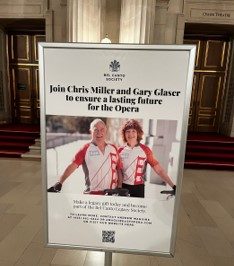
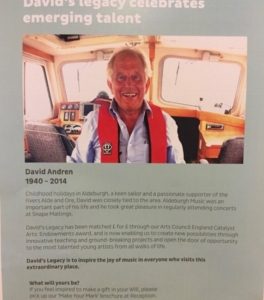
Who asks in fundraising is just as important – are they someone like us that we can relate to, are they someone with authority on the subject (a Nobel prize winner, a scientist, a curator, a field worker), are they respected, likeable, or are they are beneficiary? Often with legacies it is about a peer like them asking them to consider including a legacy as can be seen by these two examples.
Choosing who deliver the message and to which segment of our audience is important.
Sides: Autonomy – add on the bacon
We all have some foods that we don’t like or certain preferences for extra bacon or hot milk on the sides. Many restaurants as standard give us the options to add extra toppings, remove the things we don’t like or make substitutions or reasonable requests.
All this gives us autonomy and agency – we want to feel we have control over any situation and are masters of our destiny.
How can we as fundraisers give supporters more autonomy in what they are supporting and how and where it makes a difference?
Often we do this with a shopping list that shows very specific items and that we have the autonomy in choosing where our support goes.
How can we build an ask string that allows a supporter to customise (add the bacon, remove the pineapple) to their gift so it is more meaningful to them?
Palate cleanser: Removal of £ signs
The removal of the currency signifier the £ or $ or Euro removes the connection in our brains to the cost of the menu and experiments have repeatedly shown that when the signifier is removed we spend more money on the meal. So 8% increase in spend if a menu item is priced at 44 rather than $44 or 44 dollars (See Yang_202009_20__20or_20dollars.pdf
(cornell.edu))
Has it been used in charity? Not that I have seen but definitely one to test and see if it increases donation amounts.
The surprise course: What You See is All There Is
In a subversion of Daniel Kahneman’s principle of ‘What You See Is All There Is’ There is a restaurant in London and New York and their signature dish (a burger) is not listed on the menu. You need to know that it is the signature dish and ask for it.
Kahneman talks about a cognitive bias that means that with presented with credible evidence you believe what is in front of you – you do not question it. What you see is all there is.
How might leaning in to this principle or subversion of it delight our supporters?
The pre-dessert: Cause related items – £ to charity
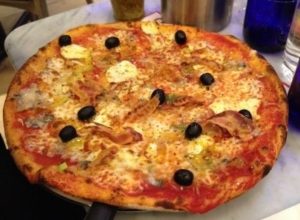
The Venezia Pizza is the most obvious example that comes to
mind and has to date raised over £2m to support Venice Fund.
Charities with cafes tend to focus on an ‘every purchase helps our work’ approach but could certain items on the menu – like the Venezia pizza – can you add an item with a £1 premium that supports an area of the work?
Final thought…..
So next time you are in a restaurant, whether MacDonalds or Michelin starred treat – look at the menu, see how these nudges are there and what impact they have on you but also pause to think how these could applied to how you fundraise and communicate with supporters.
https://marinajones.uk/wp-content/uploads/2023/08/afternoon-tea-scaled.jpeg25601920adminhttps://marinajones.uk/wp-content/uploads/2022/12/f2b903e010104f5aa61ea1821a685913.pngadmin2023-08-08 12:34:202024-12-13 07:22:48Amuse bouche and pre desserts – more ways that menu nudges help you fundraise
For what they mean, what they remind us of, special dates, anniversaries, firsts …
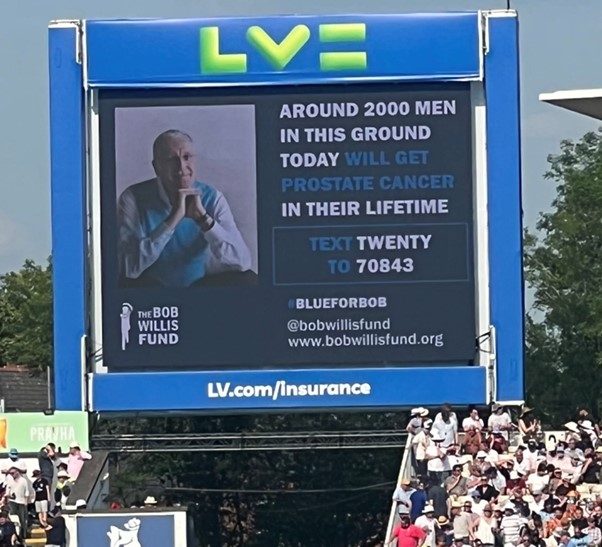
At the Edgbaston Test, on the second day of the Ashes test the ground went Blue for Bob – one of the mechanisms was text to give.
Text 70843
Why is that special? Surely it is just the generic number generated by your SMS to give provider – no the numbers matter.
70 – the age Bob Willis was when he died from aggressive prostrate cancer
843 – 8 wickets for 43 a test match saving record from Headingly in 1981 (when England became only the second team in Test Match history to win a match after being made to follow on)
This makes the number salient, sticky and easy to remember for cricket fans as it has meaning and relevance for the target group (cricket fans in this case). It is a number that connects and causes a reaction – and as our brains are bombarded with millions of pieces of information – a number needs to be salient to stick and be remembered. The use of the celebrated ‘8 for 43’ reducing the friction normally felt when trying to do a text remember the text to give number.
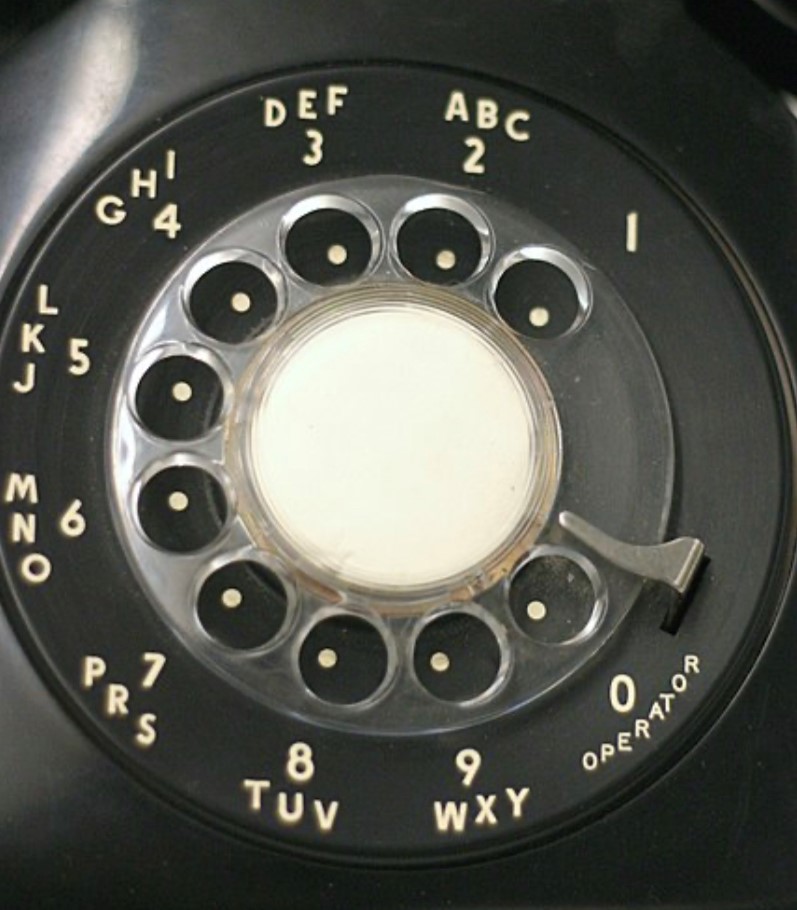
It reminds me of the old rotary phones and 80s TV shows with dial 1-800-SHOWER – make it easy to remember.
Having salient numbers matters – our attention is drawn to what is novel and what is relevant to us, or to our supporters.And we can use them in smart and fun ways in campaigns and appeals.
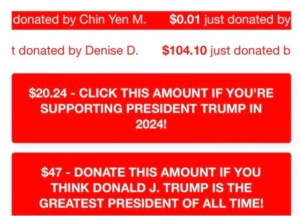
Notably in the current US election campaign – the year and the number of the president is used here (as well as social norms of what others are giving)
Every day we are overwhelmed with information and our brain uses energy processing it. Our brains are constantly filtering out what it important information and what is not – when a piece of information is unusual, simple or memorable or easy to do it helps our brains conserve energy and processes it faster.
The numbers we choose to use in an appeal matter – how do they connect with our supporters and how are they relevant to the cause? They need to be salient to our target audiences.
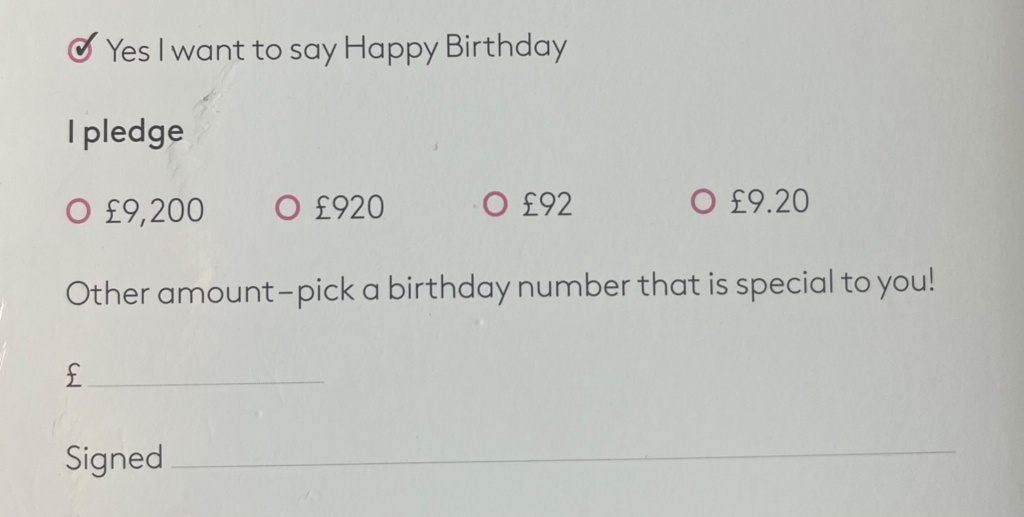
The ENO recently celebrated its 92 birthday – the 90th was during the pandemic not so celebrated so we took the opportunity to make a salient ask in our birthday celebrations. As it was our 92nd birthday the giving options were all multiples of 92
But we also wanted people to have autonomy and choose numbers and dates that were meaningful for them so one of the options was to add a year of your choice. Part of the response mechanism also included space for them to share memories and why they had chosen that year. This connected supporters with their ENO story – and some selected an amount based on the year they first went to the ENO or of a favourite production.
By asking a question you are creating a ‘generation effect‘ – when our brains have to work a bit to fill in the blanks – this little effort exerted makes the answer more memorable. The donor is tasked with giving not just an answer but their answer and therefore is in control of the answer and the action.
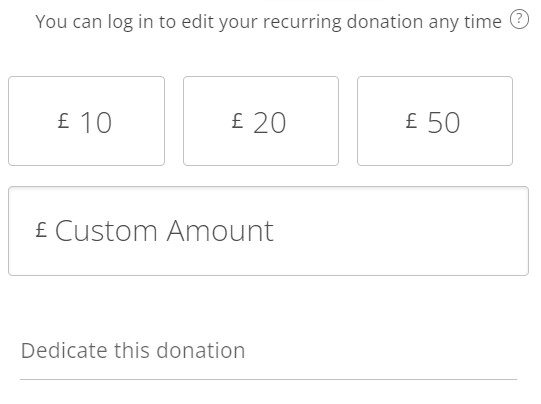
Even giving supporters autonomy over the date that a regular gift is taken can increase connection with the gifts being made. Often gifts are made on the 1st of the month or whenever your charity has a banking run – but giving people the choice about the date that a gift is taken can make it more meaningful if it connects to a significant life event or memory.
See this blog on ‘Its not you, its me‘ for more about having freedom in the gift choice.
Similarly donations in memory of someone can create powerful connections and make it a more salient gift. Can you add in an option to dedicate a gift and have a supporter explain why?
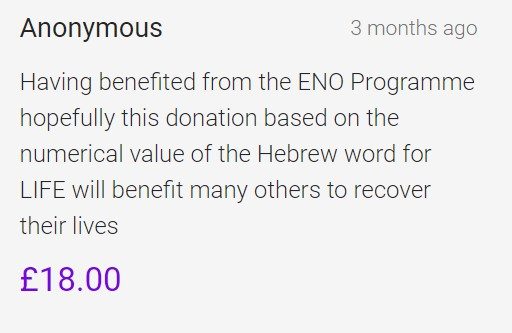
Different cultures value different numbers that are considered to represent wealth and fortune (8 for many Chinese people because its pronunciation closely resembles the phrase for 发 (fā)”making money.) In Hebrew each letter has a numerical value which means every Hebrew word has a value.
How could you use this to create more salient ways to give?
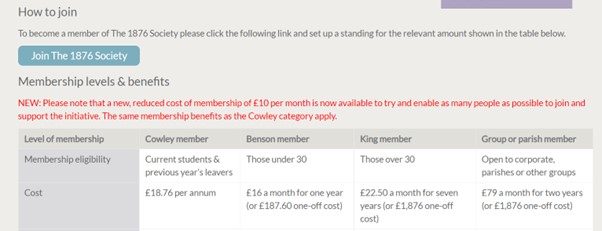
Or this membership scheme that uses the 1876 year of its founding to offer annual and monthly instalments based on the year.
When creating donation forms, as well as salience, the anchors and defaults need to be considered.
Although should it be our charity anniversary – or the donor’s anniversary? How do we frame our giving? https://marinajones.uk/bpframe/
Anchor – the order in which the values appear and the first number that someone sees having a more dominant effect on what they gift (see here for more about the power of anchors)
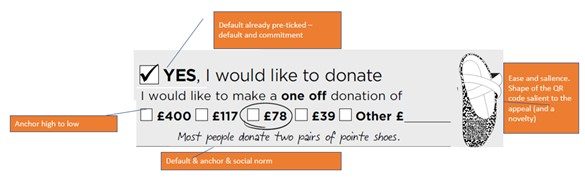
Default – our lazy brains want to think as little as possible. We like to go with the easiest option and the defaults that we are given can nudge us towards action. By making one option in an ask string the default – by changing the colour, tick we can encourage supporters to give at a certain amount as the easiest option. Defaults can also be used to reinforce a commitment made.
Norms – most people don’t know what a normal amount to give or a socially accepted one – we are herd animals and want to behave as others in our group do. If we can signpost to supporters that ‘most people’ give at this level then we can encourage them (as long as we are being ethical and truthful about what most people do)
See this example
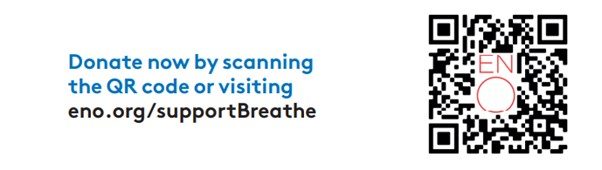
The shape of the QR codes can also be salient and shaped in more exciting and unusual ways than just a square – this one is in the shape of a pointe shoe – but they can be any shape to be more eye catching and relevant to your campaign and target audience.
Charm numbers vs price numbers vs round numbers
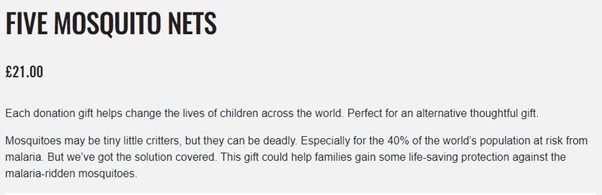
With decision science it is always useful to test what works in a real world setting. Some research shows that donors prefer whole round numbers (e.g. £5.00), whereas other research suggests we trust a very specific number as it seems more authentically linked to the cost (e.g. it costs £24 to do the thing).
Test what works with your donors and in different settings and campaigns. Do round numbers work better in tap to give? Precise numbers in campaigns? Many online retailers allow you to round up your purchase to a whole number with a charitable donation so we have made a purchase with a whole number?
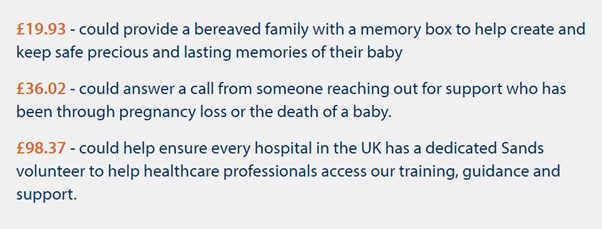
Precise numbers can be perceived as more believable and accurate – we can see £5 as a rounded up and somewhat made up number, but the 57 varieties in Heinz is seen as more specific and important to the recipe. Specific numbers used in a campaign, eg, the cost of a vaccination are more noticeable and memorable. They represent the ‘true cost’ (often just the direct cost) of the work and allow supporters to identify with what their gift achieves (‘I have helped vaccinate a child‘ evoking the identifiable victim heuristic as we see the impact of our gift on one individual.)
There is also charm pricing – when things end with a .99 they are perceived as better value. Testing whether charm numbers (those ending with 99p) had an impact on the basket donation. The hypothesis was that the use of the charm number (ending .99) would nudge up gifts as people would see the smaller number first – i.e. seeing the 5 not the 6 and increase their giving.
But it proved an inconclusive test – with the charm numbers there was a slight increase in the average donation, but it decreased donations at the higher price options so did not increase the amounts raised.
Other interventions were more effective at increasing the volume and amount of average gifts (although it was also important to look at the effects on different constituencies of supporters making gifts (loyal vs new, occasional vs frequent) and how these tests impacted on their giving)
“making out the million”
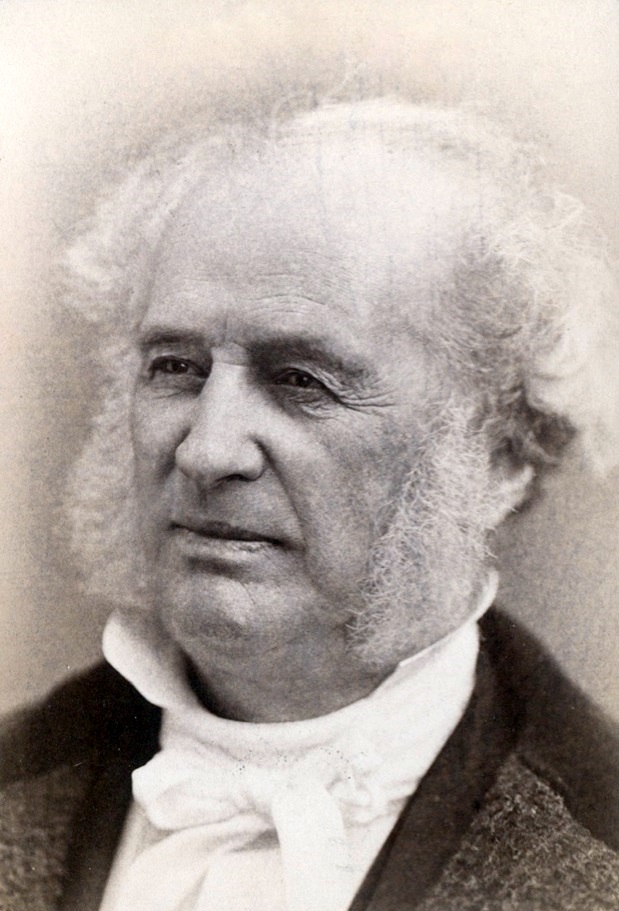
When Cornelius Vanderbilt was dying he made another gift to the university he helped found in Nashville, Tennessee. This final gift to the university made the total he had given to what became the Vanderbilt University $1million. There was a great attraction in reaching the round number.
Can you include that in your campaigns? You might not have that many people able to give a million, but how can you give them a cumulative number to aim for? £2000 over four years?
A 2013 study showed that at self service petrol pumps 56% of transactions ended with 0.00 – so humans are messy – we react to charm numbers, precise numbers and whole numbers in different settings. You need to test what works, have a hypothesis and see how supporters react and engage.
So when designing appeals think about
How can you use numbers that are meaningful to your audiences? And to sections of your audiences? (A K527 appeal for Mozart fans?)
How can you give them autonomy to select donation amounts that are meaningful for them?
How can you test and look at the data at what is more effective for your audiences?
How can you use the date of the donation to make it more meaningful?
How can the dedication of a gift increase salience?
How can defaults, anchors and social norms increase salience and your asks?
https://marinajones.uk/wp-content/uploads/2023/07/Bob-Willis.jpg312602adminhttps://marinajones.uk/wp-content/uploads/2022/12/f2b903e010104f5aa61ea1821a685913.pngadmin2023-07-08 14:11:422024-07-18 08:30:198 for 43 and the salient power of numbers
“philanthropy’s mailbag has lessons of tremendous importance to the giver and not-yet-giver, to the individuals and organised appealer”
From the analysis of the 6,000 appeal letters requesting $267m worth of assistance from philanthropist Mrs Harriman in 1912, William Harvey Allen from the Bureau of Municipal Research draws out the best ways to make the ask and some of the most common mistakes.
The author suggests “That there is a need for a correspondence school in the art of appealing and the art of giving.” Some of the first fundraising guides might have been written by fourteenth century monks, but it took many more decades to develop fundraising training via higher education courses, specialist training organisations and fundraising associations.
Many of the suggestions from 1912, we know and show that the same advice to fundraisers has been given for over a century.
Here are 10 lessons/reminders about how to make better appeals
1. Get the basics right
Name, address, spellings & actually ask for money
“You misspelled her name, you addressed her at the wrong place, you misspelled a number of words which indicates carelessness”
These are some of the mistakes listed in applications received:
“(a) inserting intimate greeting as conclusion in an obviously circular letters; (b) failing to give any idea of the amount of money needed, or the nature of the work; (c) writing for purposes known to have been adequately provided for”
Letters claiming that beneficiary numbers were increasing when the accompanying annual report show numbers of those helped decreasing
Misspelled Carnegie and Carbegie
And budgets – asked for wild numbers with no back up of what was actually needed. When the Bureau asked for clarification and details of what the money would be spent on they could not account for the amount.
Paying attention to details and getting the basics right remains really important
Appearances matter
How your appeal is presented is also important. You need to make it easy for your reader to read and understand what you are asking for.
“The outward appearance of an appeal makes a greater difference than its actual importance justifies. Scrawly hand, blotted envelopes, crooked lines, lack of margins etc, establish a prejudice before the letter is opened…. Of course, content may offset bias but readers of ‘begging letters’ are only human and are willing to pay for a pleasant letterhead or a real appeal”
Tailor the ask to your audience
Details matter and it is important to tailor your writing style to the person you are writing to. In 1912, writing the date as ‘Sept 8 1911’ implies a business correspondence says William Harvey Allen (who knew?), whereas ‘September eight Nineteen hundred and eleven’ implies a social correspondence.
Too many appeals used congratulations of publicly known news (birth of grandchild or death in the family) to make an excuse for correspondence and this was viewed as disingenuous.
Write for the audience of the appeal.
Length of the ask –the one page fetish
In the 6,000 applications they ranged from 1/3 of a page to 19 pages but they note that the “the points stand out clearly if the letter is brief and would appeal to class and the aesthetic taste.”
Allen says they “value[d] proposals for their brevity as well as the content” but he had a particular horror of the “one page fetish” when organisations or individuals try to cram all the information onto one page. This means that the margins disappear, there are no headings, and the text is badly spaced (hands up if you have ever adjusted the margins to fit the proposal onto two sides of A4).
Make it easy for the reader to read and understand – William Harvey Allen suggests double or even triple spacing and wide margins are appreciated by those reading your appeals.
2. Costly signalling – paper stock matters
When you choose to use the heavy paper weight with the embossed letter head you are giving your reader unconscious signals about your charity – its experience, budgets and ability to succeed.
This is known as ‘costly signal theory’ – demonstrating the value of the proposition, or the organisation. It can show that you are credible, successful and can afford to invest in good stationary.
In a restaurant, if you are given a menu on thicker paper stock (for paper fans 570 gsm vs 210 gsm) you will perceive the restaurant as more upscale and having given you better service (Maginini & Kim, 2016) (the same is also true of weight of cutlery.)
There is often an internal debate about whether you ought to be seen to be spending money on appeals. And whether 80gsm paper or light/cheap paper stock shows you cost conscious and investing in the work rather than appeals or whether good paper stock and a fancy donation pack and full colour letters demonstrates credibility and professional approach. This is not a new discussion, in 1912, for William Harvey Allen it worked against the appealers:
“Engraved letterheads are apt to drive away rich men who began their fortunes by small economies. A very neat type imitation of engraving however may produce a pleasant impression while still advertising economy”
However, this might be a bias of the writer of the report, a how people behave in the real world is often different to how they predict they will – and the subconscious cues that we get from the paper stock have an impact on how we react to appeals, and how much we give.
A decision science experiment run by Ogilvy with Christian Aid envelopes found that paper stock (90 gsm to 150 gsm) produced a higher mean level of gift – read more about the different tests and surprising results in Change for Better.
Loving #nudgestock2020@Ogilvy most increased donations for Christian Aid by reorientating envelope to portrait and using a better quality paper. Fascinating. Thanks Sam Tatam pic.twitter.com/gCNusQyb1m
William Harvey Allen offers key “ingredients of an effective statement of any cause” which include:
‘summary to tell the story in a nutshell’
Cost
Making it about people not abstract concepts ‘infants, not infancy, students not education’
‘Show the differences’
4. Multiple (& effective) messengers
Like appeal packs today, requests came with what we now call ‘lift letters’ with supporting statements and endorsements from bishops and other notable figures or institutions to add credence to the appeal. Who makes the ask and how likeable or how much authority they have on the subject have impacts our reactions – having multiple messengers can appeal to different sections of your supporters.
5. Make it more impactful by focussing on the one not the many
“by focussing attention upon one child”
This is called the ‘identifiable victim effect’ and means our asks our more powerful if we focus our supporters onto one person that they can help. We can identify and see the impact of our gift on that individual and once more people are added gifts decrease.
The identifiable victim effect was not formally described until 1968, and its efficacy only proved in charitable appeals in the last twenty years. As fundraisers we often instinctively know what makes a powerful appeal, but the more recent evolutions in behavioural science unpack and explain why they work in appeals.
6. Make it easy to reply
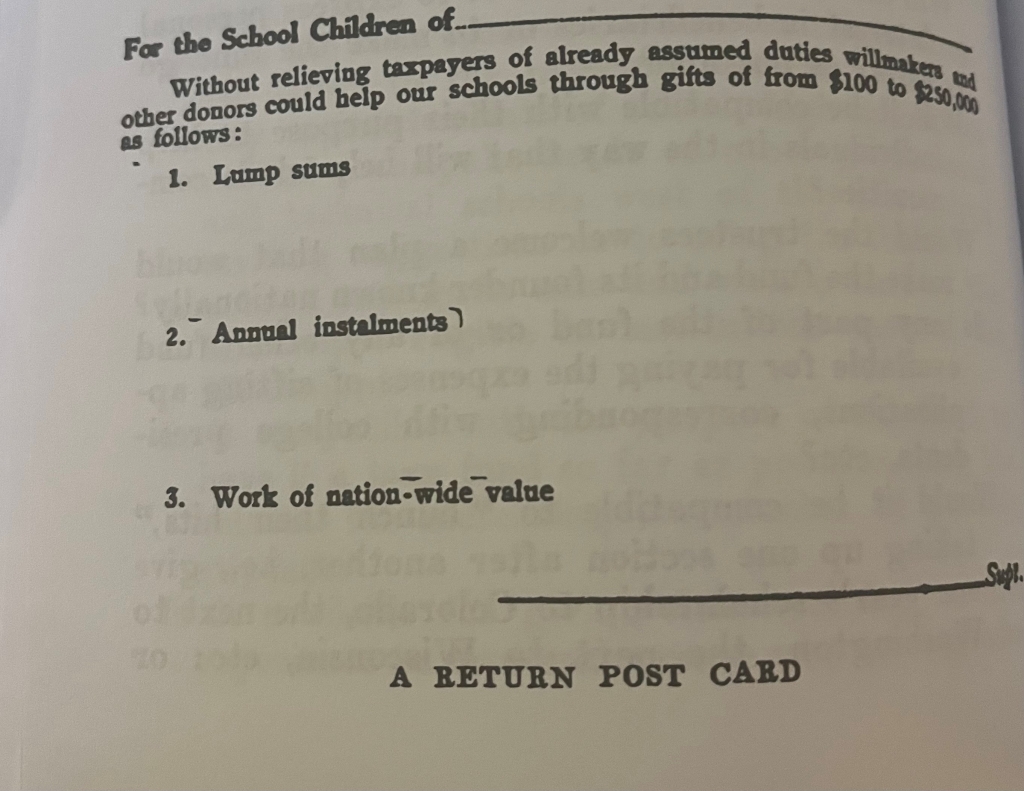
Pre-printed reply postcards were used in the appeals to make it easier for people for people to reply and give them agency and options about how and where they want their gift to go.
7. Beware of overclaiming
Lots of charities claiming to ‘the only’ one working in the field – rescuing girls from the street or rehoming boys. Those making the decisions are aware of the diversity of offers and charities working in the field. These overclaims were described as ‘Like cosmetics this rise seems to require putting on thicker and thicker in order to give the desired effect”
8. How successful you ought to appear? Can being successful be a hindrance rather than a help?
Sometimes appearing too successful at solving the problem can work against grant seekers, William Harvey Allen notes “and one turns away with the thought ‘I would like to help somebody that has some work still to be done.”
But you must also show that you have a successful track record;
“Pennies go to the hard luck story man but larger sums to for the man who seems either prosperous or on the road to prosperity”
The fundraiser must find the middle ground between demonstrating a successful track record but making the case for the work that still needs to be done, and how they are uniquely placed to provide a solution.
challenge is you need to demonstrate your successful track record without alienating the giver
9. Making contact with a potential donor – the spider’s web
How to reach the donor’s once you have identified them can be tricky. William Harvey Allen likens it to a spider’s web
“spider web philosophy is about different accesses – the secretary access, the family access, the lawyer access, the doctor access, the minister access, the news item access, the paid advertisement access, the social function access … butler access, lady’s maid access”
We have all tried to map out how we can reach that potential donor – asking does someone on the board know them (how many of these spider web connections have you ever used? Lawyer, doctor, family, staff, social, …?)
It was no different over a hundred years ago.
Although some of their methods seem a little more intense than ours – William Harvey Allen notes:
“Agencies/organisations which notifies you of its intention to pursue you – in your mail, at your dinner parties and operas, on steamboats until you have made a contribution”
10. Where we find new donors hasn’t changed
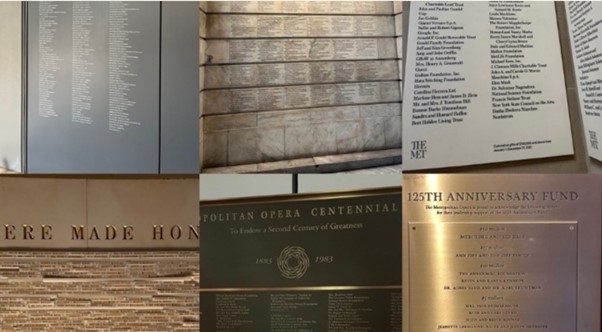
Nowadays we might look at annual reports or donor walls to see which philanthropists are active in a cause area. This was the same a century ago:
“we crib from each others list of contributors”
And finally
This guidance shows that not much has changed about how we think about how to communicate with donors and make appeals for funds.
And finally, finally ….Fundraisers have always been charming and well informed …
“so the woman who is expert in raising money for the poor Whites of the South is apt to be a woman whose personal charm and power of anecdote would be equally applicable or equally successful in discussing modern drama or the pilgrimages of Peter the Hermit”
https://marinajones.uk/wp-content/uploads/2023/06/Victim-header.jpeg4591024adminhttps://marinajones.uk/wp-content/uploads/2022/12/f2b903e010104f5aa61ea1821a685913.pngadmin2023-07-02 19:36:272023-07-02 20:31:36What does reading 6,000 appeals from 1912 teach us about how fundraisers ought to be asking for money?
There are lots of small adaptations in design that influence our behaviour and the decisions we make. These are called nudges in behavioural science – many of them are small, subtle or unnoticed but they can help reduce the cognitive load and improve our experiences, or our perception of the experience.
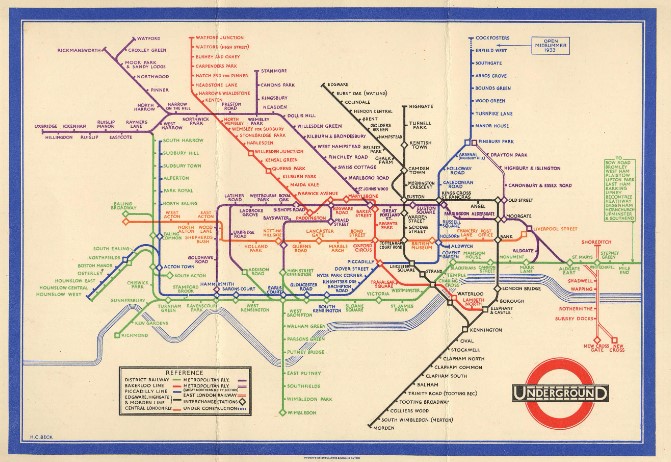
Harry Beck and a map
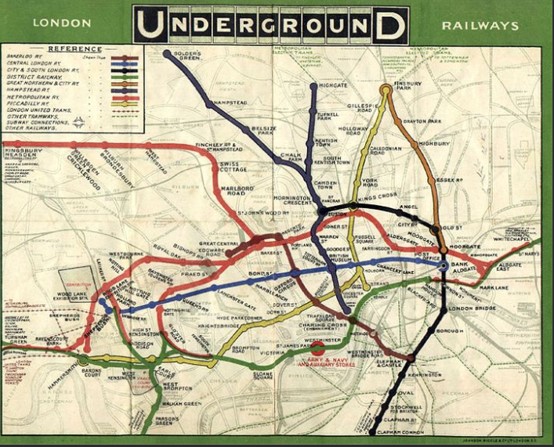
In 1933 Harry Beck re-designed the tube map. Rather than the maps that resembled to the actual geography of the city his simplified the information, and changed how we use the tubes, and even how we see the city of London.
On the left a tube map from the late 1920s and on the right 1933 Harry Beck redesign.
Why is it so effective? What can we learn from the Beck map?
Test & learn – testing with behavioural science interventions is crucial to understand what works in the real world. Only 500 copies of Harry Beck’s 1933 new design were printed as they weren’t sure it would work. However, it was such a success that it has remained the model of all London underground maps and frequently copied by other cities.
Info-lite – to reduce the cognitive load this only show tube lines. It does not include South London rail networks which would help people navigate better around South London. The choices we make about the information to include are important. By reducing the amount of information on the map, the cognitive load is reduced meaning our lazy but energy consuming brains find it easier to process and plan. By adding too much information we make it harder and more effortful to process.
Perception – we perceive vertical and horizontal journeys as quicker and faster. Subconsciously people add travel time cost onto diagonal or angular journeys. Maybe why the Central Line is always so busy – it is straight line through the middle?
Our brains are lazy and don’t want to use up energy thinking when they don’t have to. Equal spacing of the stations changes the question from ‘how far’ to the easier question of ‘how many stops?’ This is a much easier question to process.
How, and where else, can we see subtle and helpful nudges that make our journeys more friction free and enjoyable?
To paraphrase the Wombles ‘Underground, overground, its time to see how nudges shape behaviour creatively‘
Here are a few (of thousands) of nudges working on different transport networks:
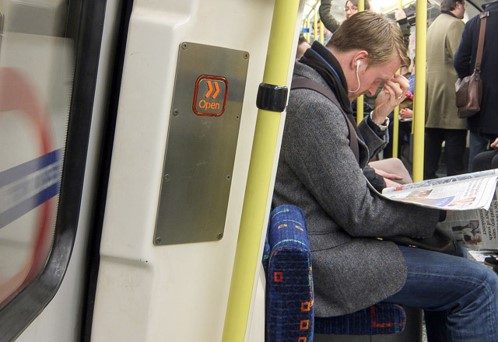
1. Placebo buttons & the illusion of control
Although removed in recent refurbishment, the buttons on the tube to open the doors haven’t worked for decades. Buttons like this (and at traffic lights) give us an illusion of control over when the doors open or the lift arrives. (The buttons used to work until the 90s when drivers took over the controls but the buttons remained to reassure passengers). As humans we want control and pressing the button gives us that sense of autonomy even if doesn’t open the door.
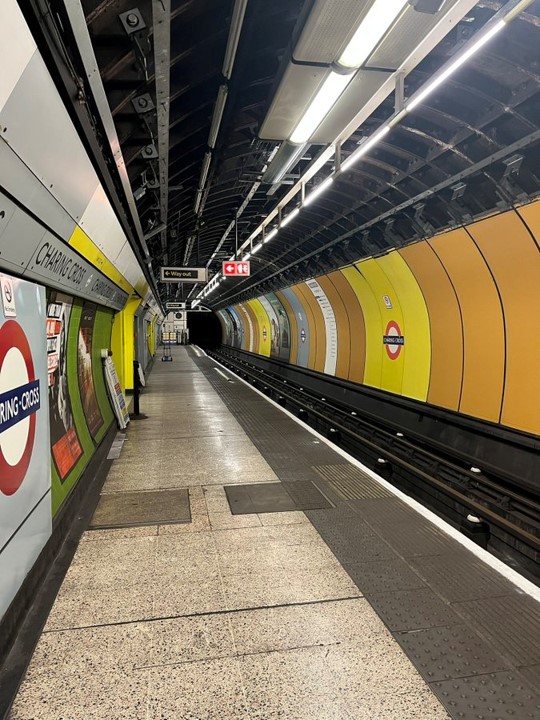
2. Reducing cognitive load with colours
Introduced in the 90s on the Jubilee line first extension to Charing Cross, the yellow ‘way out’ panels – on the left the strips of yellow above the way out door and the elongated yellow strips to guide you as well. The yellow for the way out is mirrored on the right with the big yellow panels to visually help make your journey easier and clearer.
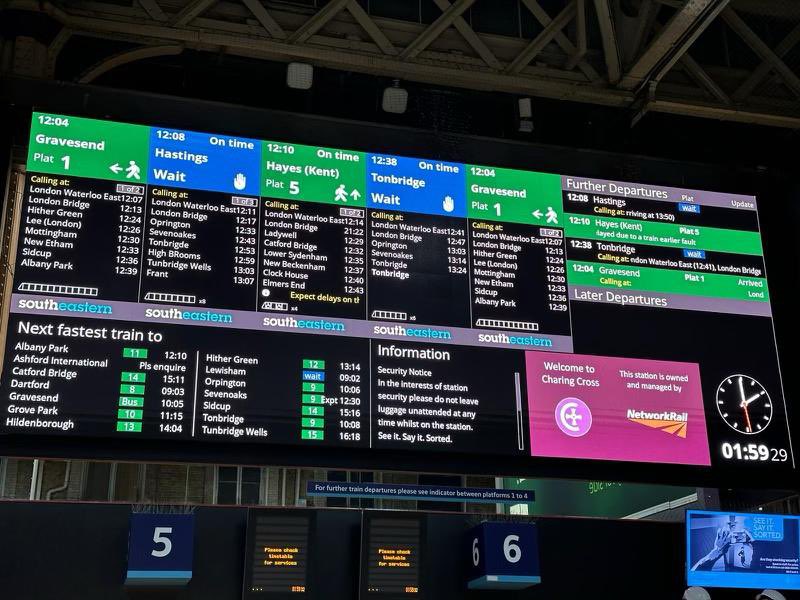
In 2021 and 2022 easier to read new behaviourally informed signage at London Waterloo and London Charing Cross.
Green as the universal signal for ‘go’ with a walking person and directional arrows. Again this reduces the cognitive load as we are subconsciously programmed to know that green means go.
A hand held up as a universal sign for wait/ stop. Blue colour – not universally recognised as wait – would amber have been better?
Colours are very powerful visual clues that catch our attention and inform our behaviour. Red and stop is used universally to signal stop or danger and draws the eye. Around Halloween orange coloured products (whether Halloween related or not) increase dramatically in sales – the colour orange for Halloween is more salient at that time of year.
3. Filling unoccupied time to speed up our internal brain clocks
And an example from the airlines.
After multiple complaints about baggage wait times at Houston airport – they investigated and introduced a simple fix.
Passengers were walking for one minute, then waiting for 7 minutes to claim their bags.
Unoccupied time causes our internal brain clock to slow down (people routinely overestimate the amount of time they’ve spent in line by 36%).
Standing and watching an empty carousel with no luggage is therefore really frustrating and feels like it is taking a very long time.
When we are occupied we feel time is moving faster. When we are moving we feel we are more in control of what is happening.
By re-routing passengers through the airport, they made the walk to baggage claim six times longer (a six minute walk) creating more occupied time. Passengers then only had to wait two minutes for the bags to arrive (reducing the idle wait. This solution convinced passengers’ brains that time was moving quickly and complaints disappeared.
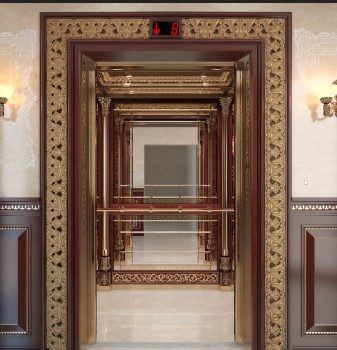
Filling unoccupied and waiting time is why mirrors were introduced to lifts in the early twentieth century when they were a relatively new invention and travelled slowly. Mirrors and checking your appearance provided a way to occupy the journey time.
4. Create new social norms – show don’t tell
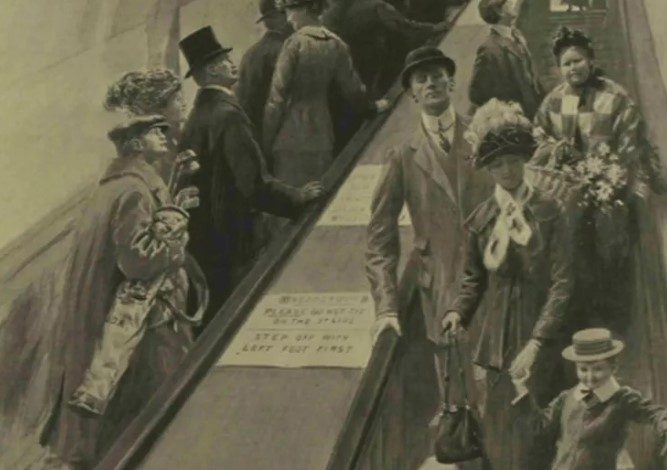
Escalators were introduced to the underground in 1911 but treated with suspicion.
One legged engineer William ‘Bumper’ Harris was employed at Earl’s Court station to ride up and down the escalator. We take our cues from the social behaviours of others around us and mimic it – Bumper Harris demonstrating how easy and enjoyable the moving escalator was reassured passengers. If a one legged man could easily and successfully navigate this moving staircase they could do.
5. Give clues about what you want them to do
The bystander effect is the idea that if you ask multiple people for help, any one individual is less likely to help (vs a direct request) because of a diffusion of responsibility
On tube trains, TFL make it clear who should offer their seat. Nice way to avoid bystander effect pic.twitter.com/0r4s3VvlzA
Test it and see if it works Decision science needs testing in real life situations – as anthropologist Margaret Mead said “What people say, what people do, and what they say they do are entirely different things.” Can you test out a new campaign with a small group to see if it works? Uber do 12,000 tiny tests a year on their App – changing the bevel on the little car to improve the experiences for users and drivers. Test and learn.
Less is more – what can you take out to make it easier for people to understand. You don’t have to include everything. We have a tendency to want to tell everyone everything we know – rather than the most useful and relevant parts. Reduce the information to make it easier to process.
Colours have a powerful effect and give people clues about what you want them to do – red for stop, or green for go. How can colours guide supporters and show them what you want them to do? Should your call to action button be green giving them the ‘go ahead’ to donate or red to draw attention because its important? or are brand colours more effective with your supporters? Test what works.
Autonomy – we feel better if we feel in control of the situation (whether pressing the button works or not) how can we give supporters autonomy over their choices?
How to occupy unoccupied time? When waiting in a queue online or in real life how can you make the waiting screen enjoyable with animation, or can you introduce, like Disney, cast actors who are interacting so that your unoccupied time becomes part of the experience?
References
‘Transport for Humans’ Rory Sutherland and Peter Dixon
Theologically controversial but a point being made about the good done by fundraisers and how hard they work to make mission happen.
This was said by Dwight L Moody a nineteenth century missionary and fundraising star that you have never heard of – I hadn’t.
Charles Sumner Ward is often credited as being the ‘founding father’ of modern fundraising with his intense mass campaigns. The infamous one was to raise $90,000 for the YMCA in Michigan in 1905 – instead of a protracted campaign he concentrated the campaign into a 6 day push with publicity in newspapers and solicitors across the city. With fundraising we all know that we stand on the shoulders of giants and learn the techniques of those that have become before – it seems that the lesser known (now) Dwight L Moody was using these techniques decades before Sumner Ward.
So who was Dwight L Moody?
Born in 1837 he grew up as one of seven siblings to a poor family. Aged 17 he moved to Boston and worked in his uncle’s shoe shop where he demonstrated the persistence and business acumen that would stand him in good stead as a fundraiser. At the shoe shop, he used to follow customers down the street and hang out at railway stations to try and attract customers. He kept the shop open on holiday to generate funds. As we all know – persistence pays off.
In 1855 he dedicated his life to the church and used the same business skills to evangelise and secure funds.
And he knew that incentives worked.
He was not allowed to open his own Sunday school until he could guarantee enough pupils to make it worthwhile. So, he incentivised attendance with sweets and continued attendance with the prize of a squirrel in a cage (this was 1860!)
Incentives work because we are wired to maximise rewards and avoid losses. So we are motivated by the reward of the free sweets/squirrel and feel like we are missing out if we don’t claim it.
He was employed as Librarian for the YMCA and tasked with raising funds for buildings. He later became a missionary preacher raising funds for a variety of causes.
But he used his business skills and brains to develop fundraising practice – and many of these we still use today – and with a more detailed understanding of the psychology and science we understand more about why they work.
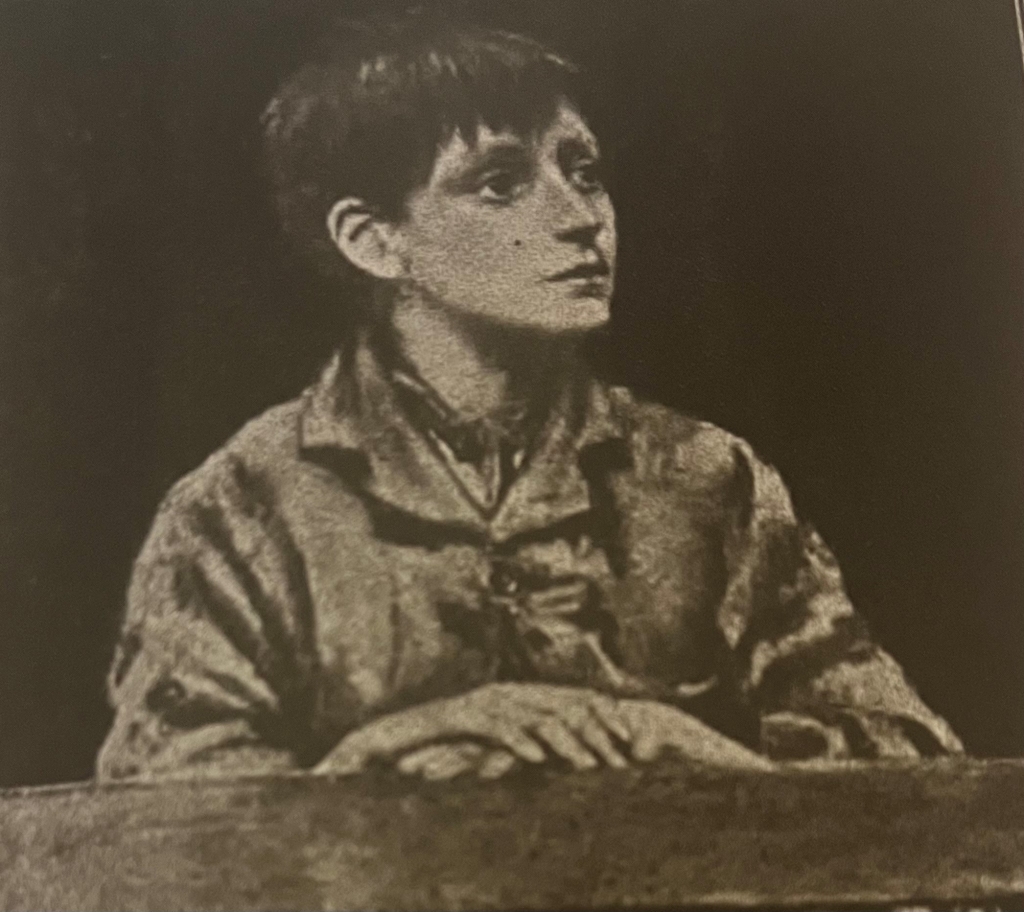
The First Before and After Picture
(or the first example I have found so far)
The ‘before and after’ picture is a staple in the fundraiser’s toolkit showing the impact and difference that a gift can make. In 1858, Dwight incentivised a group of young boys to attend weekly Sunday school with the promise of new suits if they attended every meeting until Christmas.
They did. And he bought them new suits.
But not before taking a picture of them before in their old scruffy outfits to contrast with the new suits – and he used this in publicity for the work of the church with the caption
‘Does it pay?
Yes it pays’.
An early form of a donor impact report so that they can see the difference and success a gift makes.
Messengers – encouraging support or putting supporters off
“Your name will help us through. The public will thank of you take hold of it, it must succeed”
Dwight L Moody understand the importance of the right messengers being attached to your campaign.
‘Your name will help us through’ was written as a request to Cyrus H McCormick to support a YMCA building campaign and secured a $10,000 donation. And once his name was public, other subscribers joined.
People are influenced by who else is involved in your work and supporting you, but this figurehead or messenger needs to be relatable, likeable or aspirational. If is the right messenger, people will listen and do what is asked of them– this is a type of crowding in effect.
Cyrus H McCormick (looking like a Victorian philanthropist straight from central casting)
“If we get rich men on board people will say let them pay the bills … as it is I have to keep their names of the letters that I write”
Dwight L Moody was also aware that sometime lots of rich donors can deter supporters from donating to a campaign. He specifically said not to ask one donor as he was “too old and too rich”. This is a ‘crowding out’ effect when people see too many other people supporting and say to themselves ‘well its okay for Lady So-and-so to support she has lots of money and I don’t and if they are supporting that then I don’t have to’.
Whilst high profile and wealthy messengers can be respected and encourage people to crowd in and give gifts – they can also crowd out other donors. Supporters often want a relatable peer to ask them for support – someone like them – if they can see ‘people like me’ giving they will relate more and be more likely to give.
Fundraisers always have to create the balance of showing that it is supported by significant donors but that your donation whatever size will be appreciated and that it is a social norm for people like you are giving as well. That is why it is so important to test and learn who are the best messengers for your work and for each campaign.
(whilst this rich old man who was dismissed as an unhelpful named supporter, Moody later changed his mind saying “I do not believe he will not last the winter out and now is the time to push” and did ask him to give). Timing your ask is critical.
Donor psychology in action
Philanthropic psychology is the study of how people love humankind and how giving can help us connect better with our sense of self and identity. Philanthropic psychology is an emerging field pioneered by the brilliant Dr Jen Shang.
But like behavioural science, we see it used in fundraising instinctively but are only just now able to articulate and breakdown how and why the science works. There are two principles that Moody was instinctively employing – identity activation and reactance.
Using the donor’s identity and thinking about how that identity might motivate their giving and feel more connected the cause. We all have multiple identities relational (daughter, parent, sibling), religious, personal (kind, curious person) or regional/national. By using a donor’s identity you are connecting powerfully with who they are as a person and making giving more rewarding and enjoyable.
Moody activated the parental relational identity in this appeal connects them with their true selves. He wrote
“all parents who have sons whom they love should give money to this organisation liberally”.
By connecting with their identity as parents he was making a more personal and powerful appeal – resonating with their sense of self and how they feel about their own children. This campaign worked and raised over $200,000 for the YMCA.
We often use donor’s identities and how they are linked to causes to make our propositions more attractive and appealing to donors.
Reactance
If we don’t think that we have any autonomy in a decision – any choice – then we feel our sense of self is compromised. We want control over our own lives and our decisions. Often in fundraising appeals a donor can feel that they are being told to do something – to give now, to give a certain amount. Reactance basically (as Lisa Sargeant says in Change for Better) “turns your lovely reader into a wilful teenager” – if they feel they have no control and autonomy then instead of doing what is asked they will do the opposite of what they have been asked.
You can mitigate this by telling them that they have choice over whether, and when to give, and how much they give. And giving them permission not to give, or give a lesser amount.
It might sound counter-intuitive to say that they don’t have to give but some decision science is counter-intuitive – but still works.
Roger Dooley has shown that by adding the phrase “but you are free to choose” to requests the results doubled. You are giving supporters the autonomy to choose where and how and if they give.
Moody’s use here demonstrates an understanding that they do have other causes to support and he is not trying to stop them supporting projects they already care about ( this was used in a mass direct mail appealing for funds for a school project over 9,000 letters were sent in 1895)
“I have no wish to draw from contributions to other works, but have thought that some might feel that … they could send five dollars without curtailing gifts to others”
But it recognises that there are other calls on their funds and that they have existing commitments and might choose to support additionally. It is a modified and more subtle version of ‘but you are free to choose’. It also reinforces their self-identity of being a kind and generous person and committed to contributing to good causes.
Never Waste a Good Crisis
In 1868 the Farnell YMCA hall burned down and two Englishman travelling reported
“Thousands upon thousands of dollars were subscribed without a moment’s hesitation; and it said that before the fire was out money enough had been raised to build a new hall”
This was an exaggeration and only $20,000 was raised on the day of the fire. But Moody and the YMCA team did not waste the crisis but used it as an opportunity to ask. One week after the fire Moody had arranged 5 teams of 3 men to carry out an intense week-long public campaign seeking donations through personal solicitation and supported by a prominent press campaign.
(Like the Notre Dame fire, big gifts came in immediately whilst the crisis was fresh in people’s minds)
But only raised $75,000 towards the goal and in the end they rebuilt a smaller hall.
Creating press stories around YMCA capital campaigns was essential for Moody and he always used publicity and got newspapers to cover fundraising activities. For example, when laying a new cornerstone for a YMCA building he needed to get a noteworthy person to lay the cornerstone to generate the right publicity
“I do not care who you get … if you cannot get any woman, then go for some man but what I want is to get new man or woman interested”.
Again we see the importance of the right kind of messengers to generate publicity and encourage others to give.
This intense short campaign and use of publicity seems to be a forerunner of the type of campaigns attributed to Charles Sumner Ward thirty years later.
Persistence pays ….
1885 he repeated the success of the intense campaign with a four day campaign to raise $65,000 for YMCA Scranton Pennsylvania. One of the key events was a dinner with wealthy philanthropists. However the top prospect did not turn up (plus ca change!)
What would you do?
Moody insisted on and was taken to his house and made a direct ask. The man refused to support the campaign. Although he did agree to sit on a platform at a public meeting to lend his name and reputation to the campaign. Whilst there Moody asked him directly in front of the audience to support the campaign which resulted in a $5,000 gift.
Persistence pays off when making the ask (but maybe with a little less stalking and public shaming into giving!)
Dwight L Moody preaching in a theatre in London
Business acumen in action in fundraising models
Moody used his business skills when fundraise to ensure that more funds could be raised in smarter ways:
With the YMCA buildings he rented out the lower two floors to ensure earned income – the mixed funding model in action in the 1860s
He also ensured new state charter that provided tax exemption for charitable endeavours.
Social and heavenly returns on investment – He sold stock in his Sunday School but the dividends were redeemed by attending Sunday School. He used a 6% interest scheme for dividends in the building but noted that the ‘larger rewards in heaven than on earth’.
When appealing to businessman Cyrus McCormick in 1880 it was an appeal to his business interests as well as his altruistic principles “all over the coast, farmers who are using your reapers (of world class fame) will feel an interest in the face that you have to start such an enterprise”
Dedicate royalties from hymnal to use by charities he was raising funds for.
So learning from Dwight L Moody we see
The importance of showing the impact of the gift (the before/after)
How those supporting the campaign impact on who gifts – a well known name might attract support but ‘too old too rich’ can be off putting as they are not like the majority of donors you want to attract
Use philanthropic psychology and activate your donor’s identity to draw them closer and more meaningfully to the cause
Avoid reactance and give donor’s autonomy to choose (‘but you are free to choose’)
Never waste a crisis
Be persistent (but don’t follow them to their house when they don’t turn up!)
Learn from business and apply it to fundraising
Charles Sumner Ward the founding father stands on the shoulders of Dwight L Moody. Many of the techniques credited as innovations by Charles Sumner Ward were used by Dwight L Moody, and doubtless others before which we have yet to discover and explore.
References
‘Honorable Beggars: The Middlemen of American Philanthropy’ by James Jowell Smith 1968 (Doctorate Dissertation)
https://marinajones.uk/wp-content/uploads/2023/06/squirrel.jpg320524adminhttps://marinajones.uk/wp-content/uploads/2022/12/f2b903e010104f5aa61ea1821a685913.pngadmin2023-06-11 18:00:522023-08-20 20:50:34“Blessed are the money raisers for in heaven they shall stand next to the martyrs”
New research shows how people choose to pay strategically with cash or card. And that people use cash to forget ‘guilty’ purchases. How could this research apply to giving to charity?
The research from the Notre Dame found that when people were paying for things that they found difficult to justify (a donut, an expensive bottle of water) or felt a bit guilty about they preferred to pay cash – this was less traceable, and they could forget the indulgent purchase. When there was no need to justify the purchase, they were happy to pay on a more traceable method (card/cheque).
This research was used data from over 100,000 transactions and then was verified in laboratory experiments.
Mental accounting
Richard Thaler, one of the founding behavioural scientists developed the concept of ‘mental accounting’ – that individuals classify pots of money differently according to their own systems and therefore are prone to irrational decision-making about money. Essentially all money is money and could be treated the same, but we create mental pots to spend on certain things and in certain ways. Thaler gives the example of how we think about a tax rebate as a windfall – as extra ‘found money’ that can be used for treats. We do not allocate it to tax refund for taxes we have already paid.
A recent TikTok sensation known as ‘cash stuffing’ saw people take the mental accounting literally – and take their salary out and put amounts in different envelopes for different reasons (rent, treats, food etc.,)
This research suggests that the classification system seems to extend into the form the money takes – ‘real/cash’ or ‘plastic/digital’. We think about it differently. We use it differently.
It suggests that vendors who are in the ‘guilty treat’ category could benefit from being cash only (or cash dominant.)
With the pandemic and advances in technology use of contactless payment methods increased. Jenny Roper, Head of Insight at Kinetic said at Nudegstock that for a behavioural change to become normal the disruption has to be significant and long lasting. When major terrorist incidents disrupted the public transport network the changes in transport uses were short-lived. It seems that the pandemic was a not a significant enough disruptor to totally change our attitude to and use of cash.
Many places are resolutely cashless.
But is that helping or hindering us as charities?
And how people can choose to make donations.
How is cash or card working for charities – a real world example
We recently did a post-show collection at the theatre. Participants from our award-winning ENO Breathe programme which uses opera singing techniques to help people recover from long Covid were performing lullabies that they had written on stage before a performance. Afterwards two participants spoke about the personal impact of the programme on their lives and journey towards recovery. Audience members were invited to support the programme with a donation – there were flyers on all seats, with a QR code, a vanity/slug URL to donate and cheerful staff inviting them to tap to donate on the way out.
But people still wanted to give cash (and we are fundraisers so of course we took it!)
About a tenth of the financial value of the donations that night was in cash. We had made it as easy and as friction free as possible to donate digitally – but people still wanted to give cash. To give cash was harder, they had to ask ‘do you take cash?’ and become involved in a more substantive interaction than simply tapping a contactless box. Those wanting and donating cash were generally older than those who tapped to donate.
How does the strategic choice of payment work when donating to charities?
It would be interesting to see this University of Notre Dame research could be extended and how strategy about payment method (cash/contactless) applies when people think about donating to charity? And how it plays into our mental accounting of our spending?
Are cash donations to charity the impulse guilty ‘treats’ that we don’t want traced? Like the ‘reward’ of a donut are they giving us that dopamine hit? This could imply a more instinctive ‘system one’ approach to the gift – and maybe for smaller amounts. Is cash more like Thaler’s ‘found money’ and able to be used on a whim? Or is cash in our mental accounting already a sunk cost that we have somehow mentally spent it as soon as we have taken it out of the ATM?
The need for it to be a traceable and receipt transaction perhaps implies it is a more effortful and thought through decision (a more system two reaction?) and might apply for more to more significant financial gifts.
Risks of annonymous giving
Of course, one side of cash giving is anonymity – the risk of money laundering, the foreign billionaire with a suitcase full of cash seeking to curry favour, or the risk of anonymous cryptocurrency. Fundraisers need to know the source of the funds for due diligence and acceptance of gifts. With both cash or a tap-to-give way we are not building a relationship with our donors. Building that relationship is so important for fundraisers as we want to thank our supporters, thank them, tell them about the impact of their gift, stay in touch and build a relationship with them, and ask them to continue supporting.
There is much more than can be explored, tested and learnt about the strategies people use to pay or donate.
When you donate – do you donate cash or contactless?
See previous blog on reactions to cash during the pandemic.
https://marinajones.uk/wp-content/uploads/2023/05/cash-donuts-.jpeg20482048adminhttps://marinajones.uk/wp-content/uploads/2022/12/f2b903e010104f5aa61ea1821a685913.pngadmin2023-05-22 16:14:582023-05-24 08:16:35Cash or card?
We may request cookies to be set on your device. We use cookies to let us know when you visit our websites, how you interact with us, to enrich your user experience, and to customize your relationship with our website.
Click on the different category headings to find out more. You can also change some of your preferences. Note that blocking some types of cookies may impact your experience on our websites and the services we are able to offer.
Essential Website Cookies
These cookies are strictly necessary to provide you with services available through our website and to use some of its features.
Because these cookies are strictly necessary to deliver the website, refusing them will have impact how our site functions. You always can block or delete cookies by changing your browser settings and force blocking all cookies on this website. But this will always prompt you to accept/refuse cookies when revisiting our site.
We fully respect if you want to refuse cookies but to avoid asking you again and again kindly allow us to store a cookie for that. You are free to opt out any time or opt in for other cookies to get a better experience. If you refuse cookies we will remove all set cookies in our domain.
We provide you with a list of stored cookies on your computer in our domain so you can check what we stored. Due to security reasons we are not able to show or modify cookies from other domains. You can check these in your browser security settings.
Google Analytics Cookies
These cookies collect information that is used either in aggregate form to help us understand how our website is being used or how effective our marketing campaigns are, or to help us customize our website and application for you in order to enhance your experience.
If you do not want that we track your visit to our site you can disable tracking in your browser here:
Other external services
We also use different external services like Google Webfonts, Google Maps, and external Video providers. Since these providers may collect personal data like your IP address we allow you to block them here. Please be aware that this might heavily reduce the functionality and appearance of our site. Changes will take effect once you reload the page.
Google Webfont Settings:
Google Map Settings:
Google reCaptcha Settings:
Vimeo and Youtube video embeds:
Other cookies
The following cookies are also needed - You can choose if you want to allow them:
Privacy Policy
You can read about our cookies and privacy settings in detail on our Privacy Policy Page.

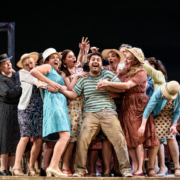


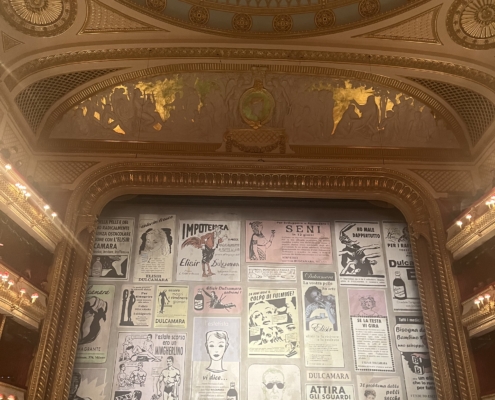

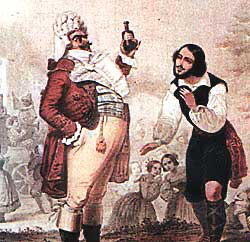
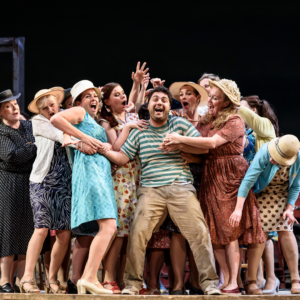
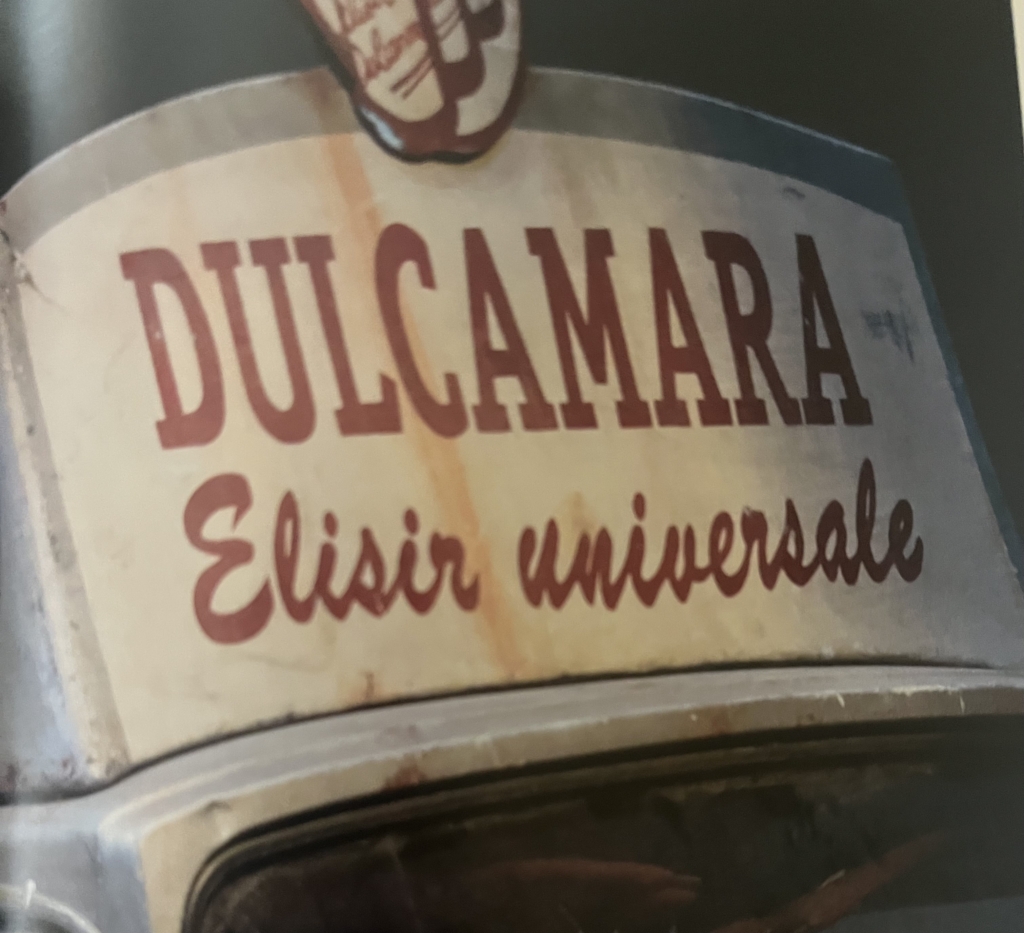


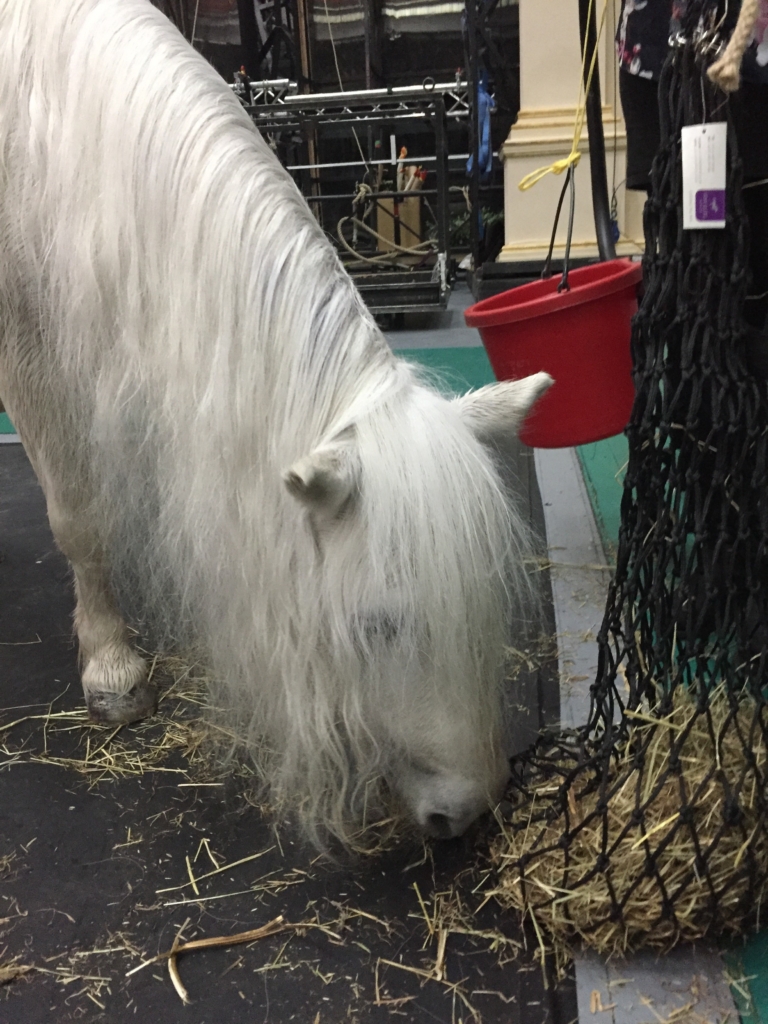
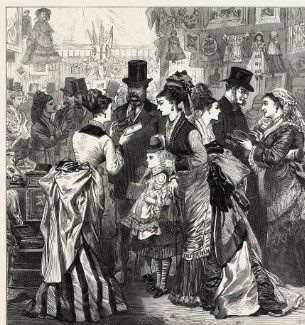

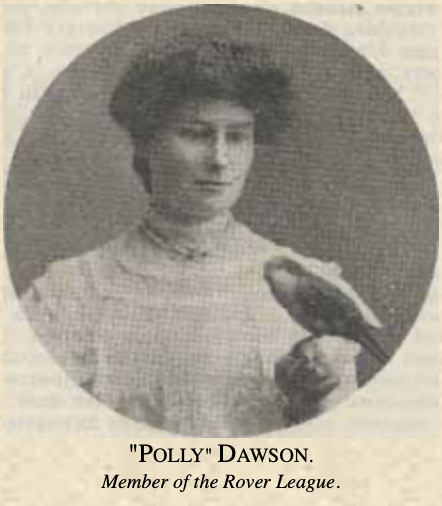
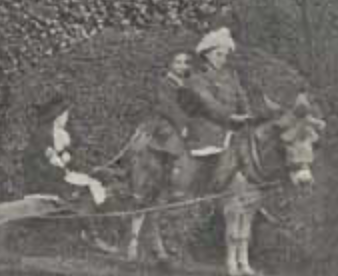
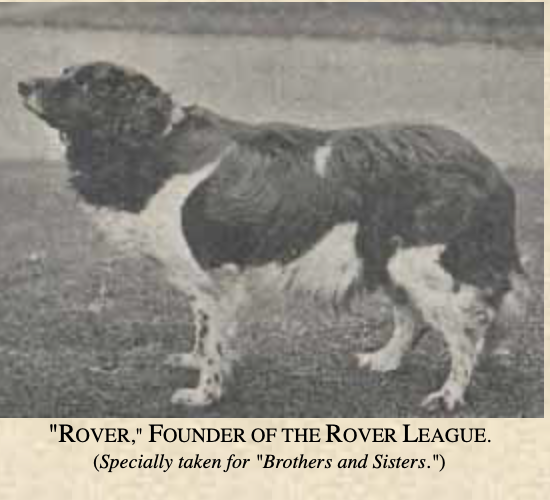
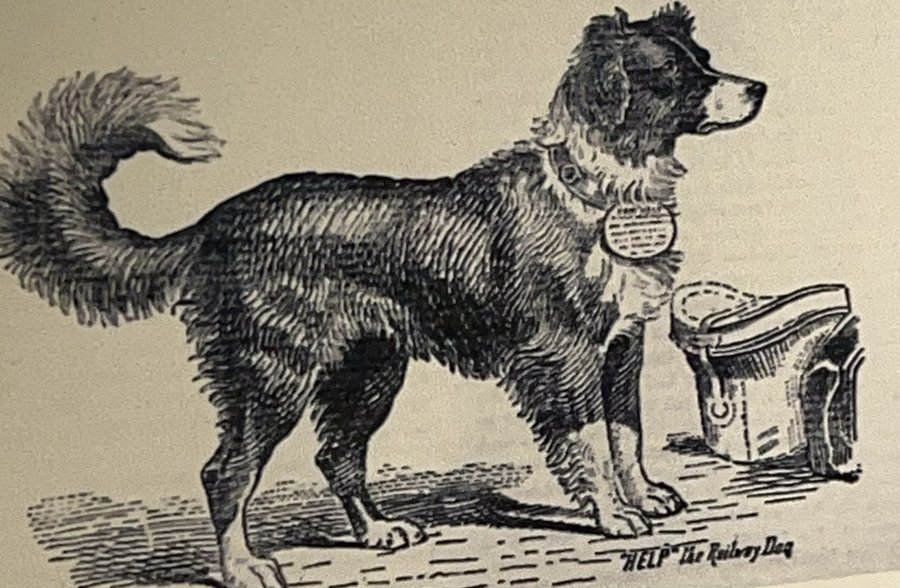
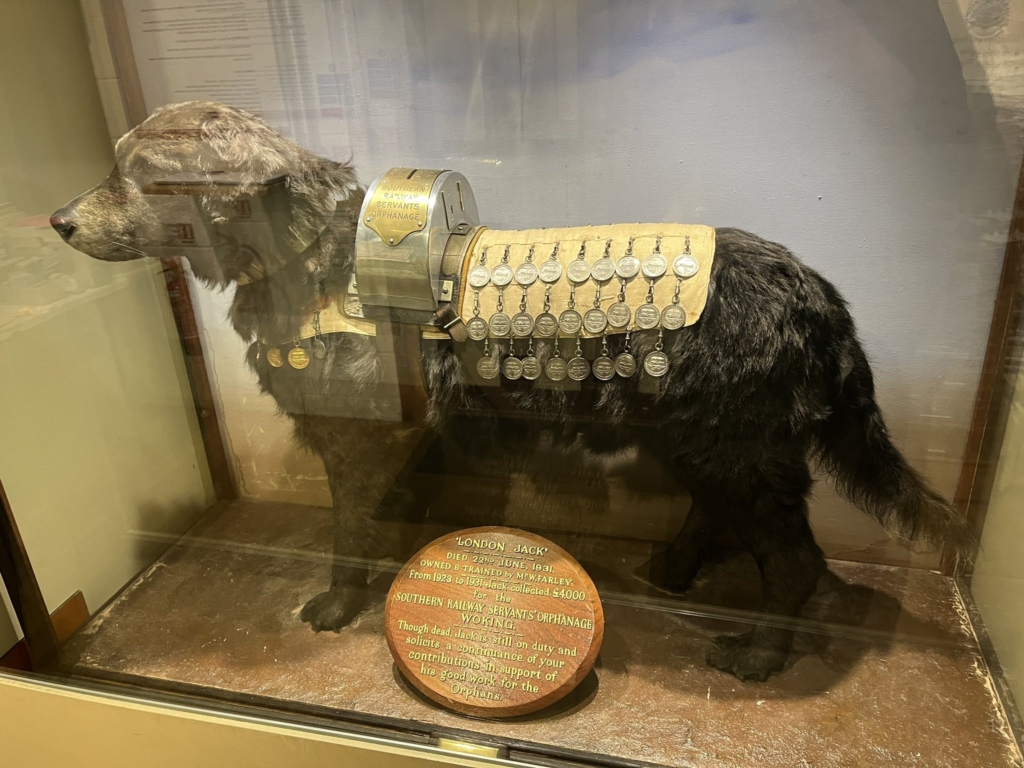
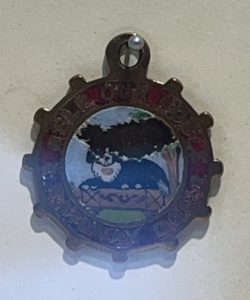
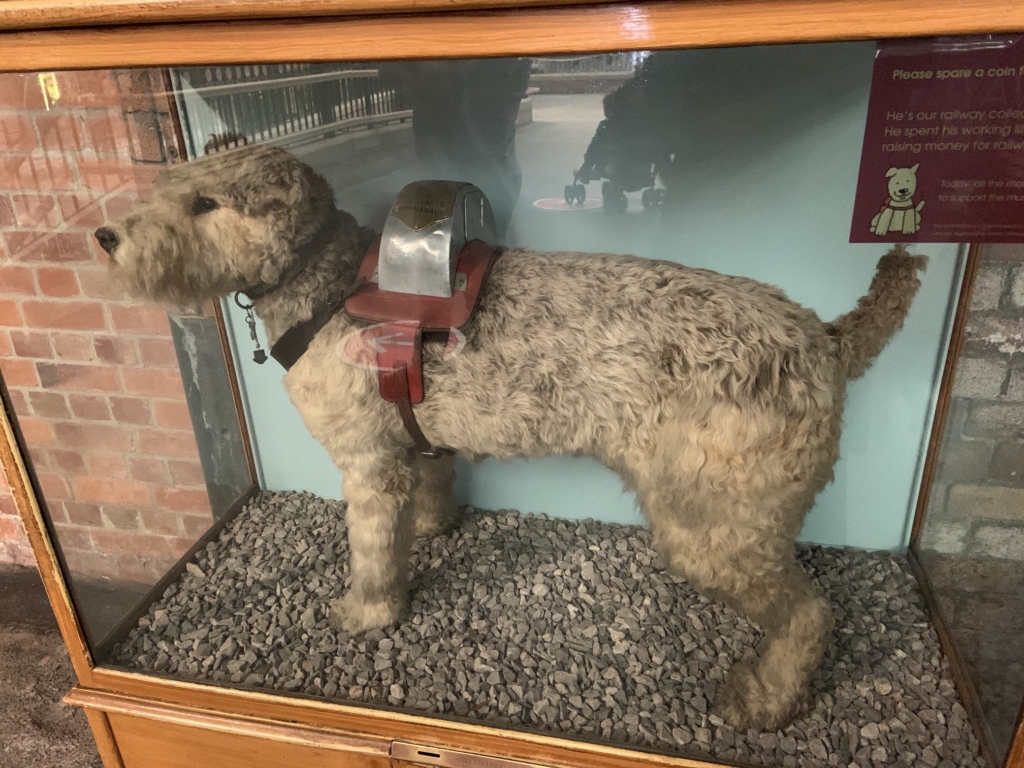
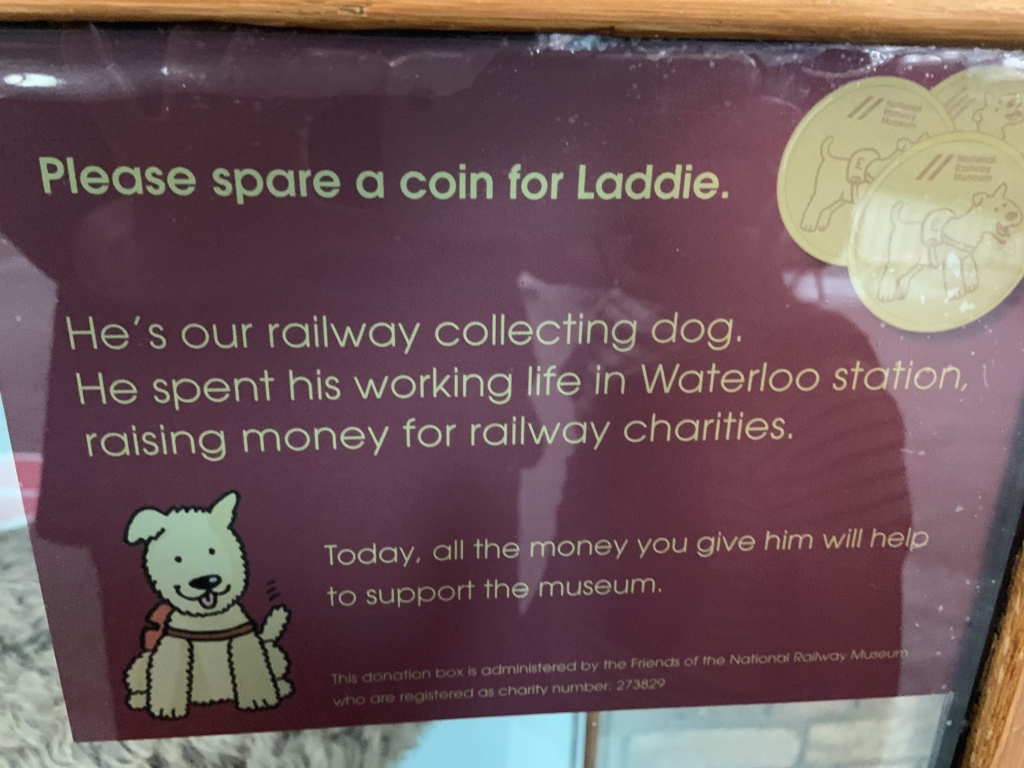

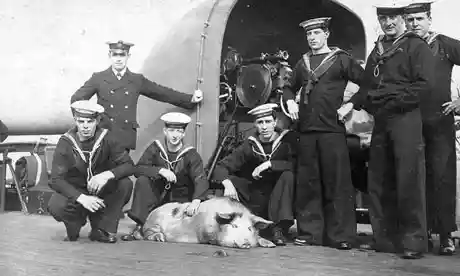

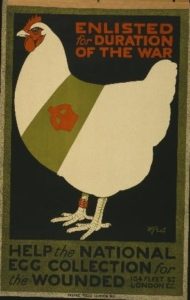
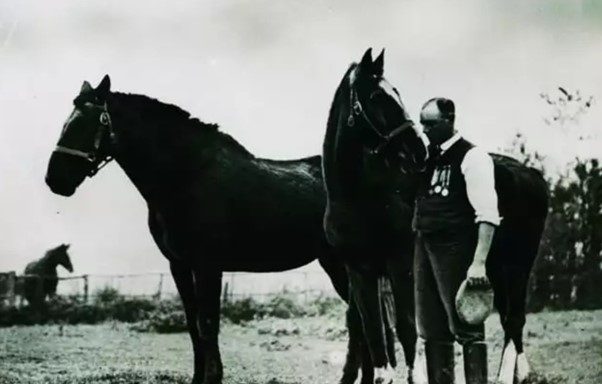
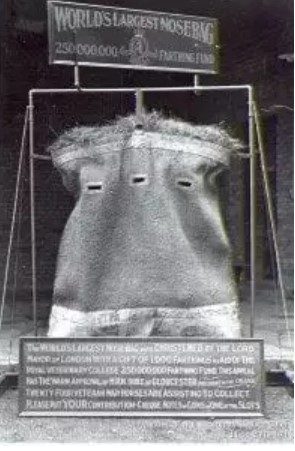


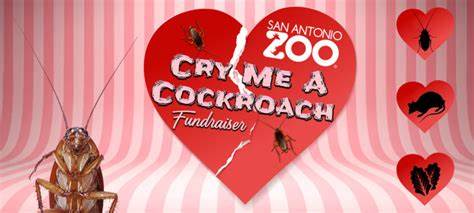
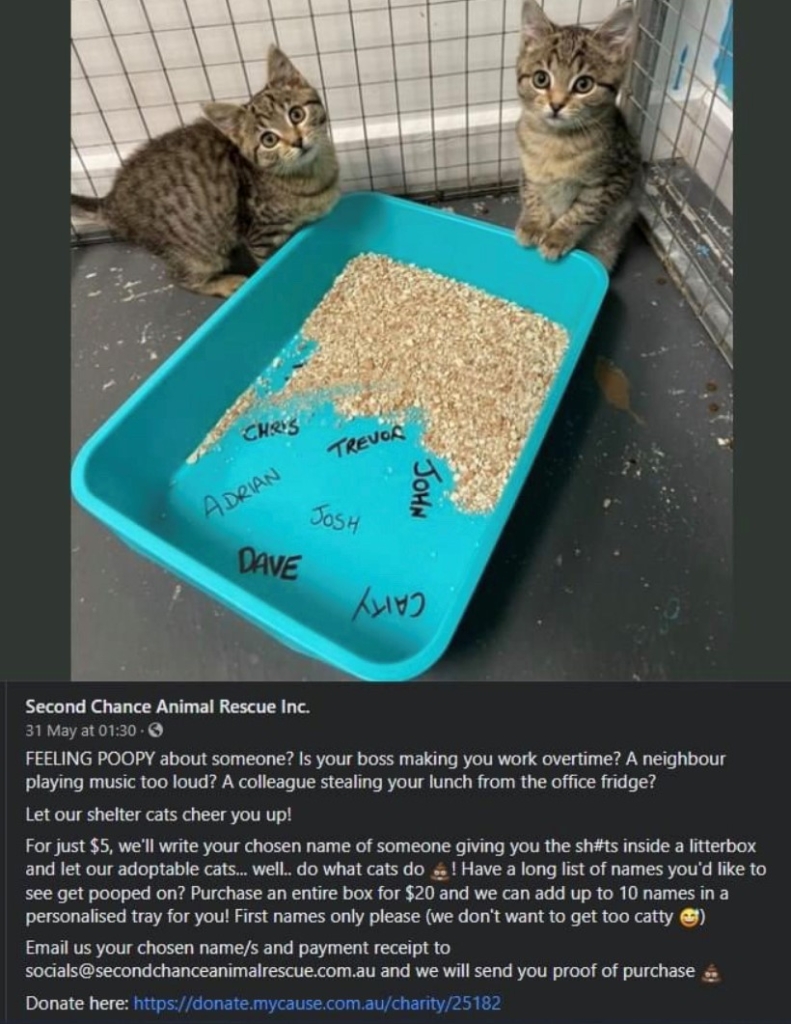

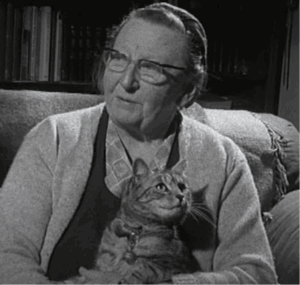

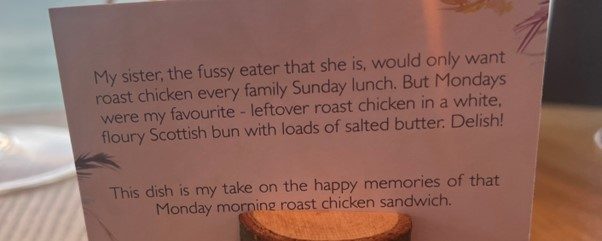
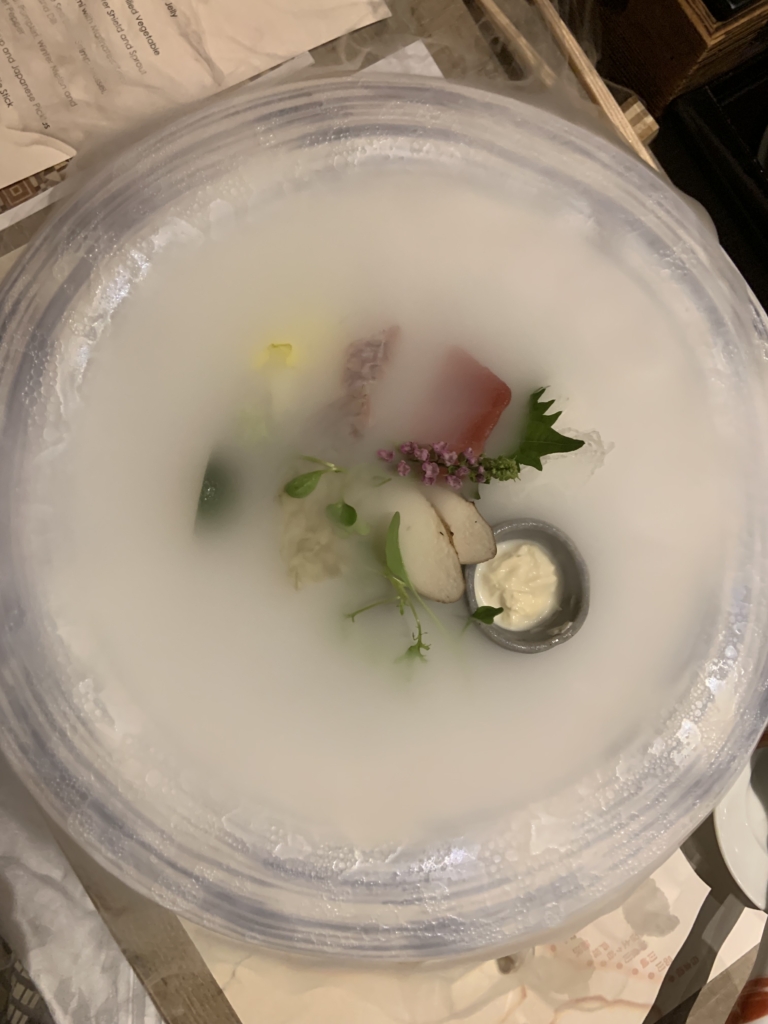
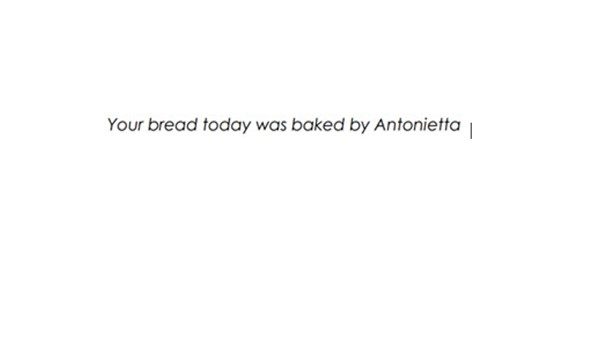
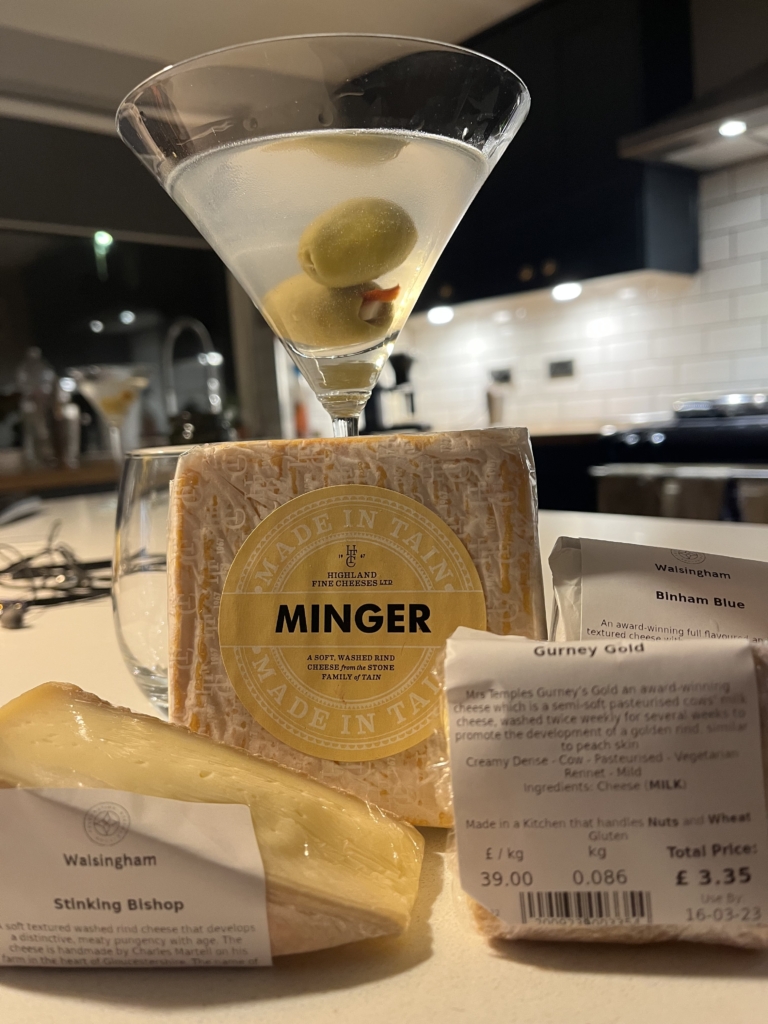


 We can use these evolutionary psychological principles in the images that we use to attract attention in our appeals. It might not be food but we can use the power of faces to gain the attention of would be supporters.


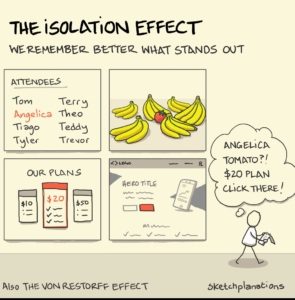

 know what a desirable or normal gift is by using clues we can help make it easier for supporters to choose by adding ‘most people donate…’ or ‘other donors in Manchester gave this’ (matching the gender or locality of the supporter reinforces the social norms for people like them)