Lessons on how to raise money for a theatre from the National Theatre archives
In five acts (with prologue and an epilogue)
The campaign for a National Theatre for England began in 1848 and often aligned with the desire for a national monument for Shakespeare, however, it was not until 1949 that an Act of Parliament established the theatre. For over hundred years various schemes and fundraisers tried to raise enough public support and funds to make it a reality
Prologue
“We few, we happy few, we band of brothers”
Henry V
Have a fan base. To get your charity and your project going you need a group of committed talented people (think of the infamous Margaret Mead quote). This is what the National Theatre had. A group refreshed over the decades that it took to secure the site(s) and build the theatre.
First you need the believers. From there you can build your tribe of supporters and champions.
Act One
“We’ll hear a play tomorrow.”
Hamlet
Use the art that people love to connect with your fundraising.
How?
Get the playwright of the day to write a fundraising propaganda play promoting your cause. That’s what George Bernard Shaw did in 1910 – a one act play called ‘The Dark Lady of the Sonnets’ which was put on to raise funds for the campaign. In the play, William Shakespeare asks Elizabeth I to create a national theatre
“But the boon I crave is that you do endow a great playhouse, or, if I may make bold to coin a scholarly name for it, a National Theatre, for the better instruction and gracing of your Majesty’s subjects.”
Elizabeth I says ..
“there be a thousand things to be done in this London of mine before your poetry can have its penny from the general purse”
[plus ca change!]
but she goes on to speak to future generations pleading:
“that if I could speak across the ages to our descendants, I should heartily recommend them to fulfil your wish”
(full play text here – https://lnkd.in/ecz2DgxG)
How can you use the art to get your donors giving and closer?
We pay more attention to things that are salient (relevant) to us. Connecting your charity with how it resonates with your supporters, their passions, interests and knowledge makes it stand out for them. They feel connected and ‘seen’ by your charity and it brings their identity and yours closer together and generates more income.
Act Two
“All things are ready if our minds be so.”
Henry V
To be able to fundraise you need to be organised.
Scene 1: Have a good CRM
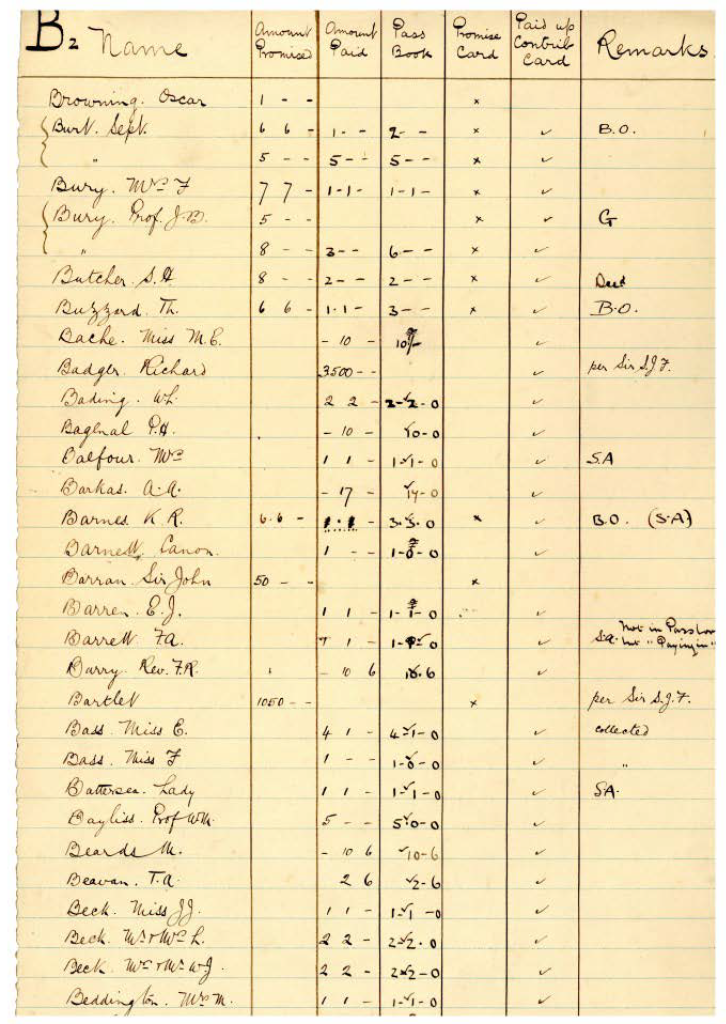
You need to know what is pledged, asked for and paid. Before complex computer systems this entry shows how they were tracking what was paid (and where) and pledged as well as the notes function to record other information.
A sample from the CRM in the 1930s showing what was promised, paid and whether they had the promise card.
Scene 2: Wait for the right time to make an ask – and trust your fundraisers to know when that is
There is a letter in the archives to Oliver Lyttelton in 1947 (after whom the Lyttelton theatre is named) about a donation that they are all waiting for. Lord Esher says that the intermediary has told him:
‘He has repeatedly told me that at the right psychological moment he is quite sure the donor will come across in a big way’
Fundraisers know when the right time in the fundraising journey to make the big ask. Asking too soon can get a no, or even, a small ‘go away’ gift. Lord Esher who is writing to Oliver Lyttelton expresses his impatience with this approach but trust your fundraiser to know when the time is right to make the best ask of each donor.
Act Three
“Is the chair empty?”
Richard III
A default often used in theatre is to run a ‘name a seat’ campaign. The committee began this decades before the theatre opened with a campaign to endow seats for £100 in the 1930s. Seats could be named for yourself, your city, or for a favourite and famous actor or even a virtue.
‘buying the right to dedicate one seat either in the name of a person, a society, a township or in the name of some historic act, ambition or ideal, in exchange for £100”
Dame Sybil Thorndike
All the records of those that named seats were lost in the war following a bombing raid during World War Two, and in the 1950s they had to advertise for their lost donors (read more about how to find your lost donors https://marinajones.uk/lostdonors/)
People love having their name on seats, and often go and visit their seat every time they go to the theatre.
Why?
Naming seats is about converting a transaction into identity and permanence.
The endowment effect (named by Richard Thaler) suggests we place higher value on things once they are ‘ours’. Our name on a seat asserts a psychological ownership – it moves from a seat in the theatre to my seat. Our identity is extended into the seat – and it becomes a social and visible symbol that I belong here, I am part of the fabric of this place. It demonstrates a commitment to the organisation. It provides social reinforcement of your identity as a kind and generous person.
How can you recognise your donors and reinforce their generosity and kindness?
Act Four
Scene One
“Lord, what fools these mortals be!”
A Midsummer Night’s Dream
We never know what the future holds and what new products come on the market that may help or hinder our fundraising. Is it cryptocurrency, NFTs or crowdfunding?
In 1954, the author of the newly published ‘Guide to Trusts and Foundations’ wrote to the Secretary of the Committee suggesting they purchase a copy to aid their fundraising. The reply:
“at the moment we are not contemplating any trusts or foundations for funds”
How times have changed.
Scene Two
“I have had a most rare vision. I had a dream, past the wit of man to say what dream it was…”
A Midsummer Night’s Dream
Financial security and endowments that support the long term investment remain a dream for most…
In 1923 the brochure raising funds states:
“a theatre should be owned by the nation and placed, by some form of endowment, above the necessity of constant and immediate profit making’
The financial plan involved £100,000 for the site, £150,000 for the building and an ambitious £250,000 for this endowment.
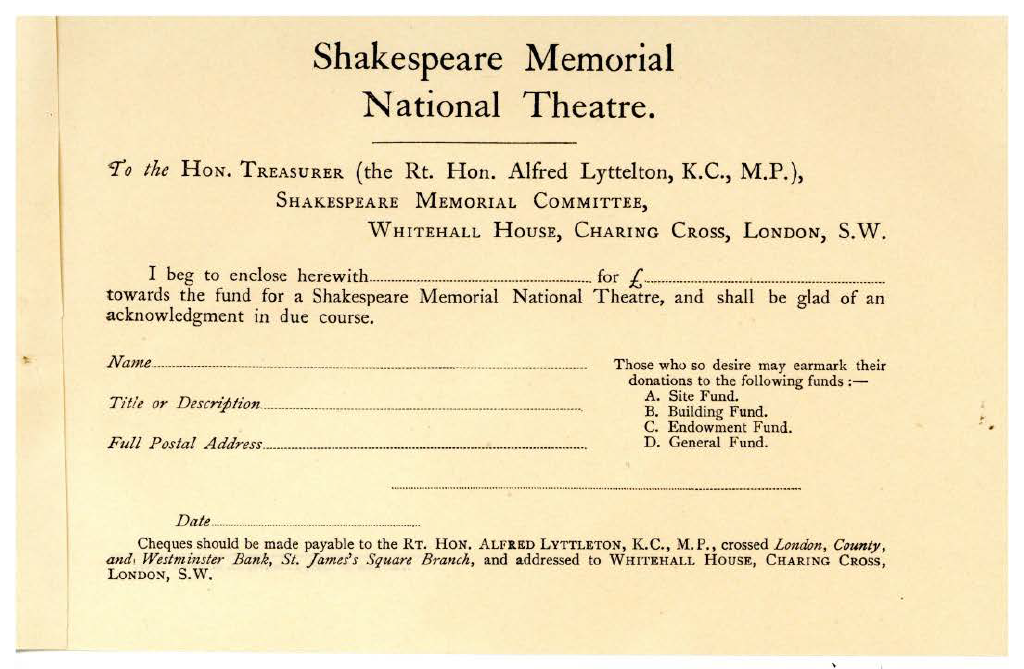
I have known several capital campaigns that begin with the dream of endowment, a dream that never materialises.
Keep dreaming big.
Act Five
“Love sought is good, but given unsought is better.”
Twelfth Night
You have fans everywhere – and you can get unexpected gifts. Throughout the campaign there were generous and often unexpected gifts. Theatre groups disbanded sent in remainder of their funds
A group of school children saw an article about the proposed theatre in 1946 and sent it £2 as the proceeds of their amateur play after seeing an article in a magazine.
Who are your fans? And how do they know what you are doing and that you need funds?
Epilogue
“Will it please you to see the Epilogue or to hear a Bergomask dance between two of our company?”
A Midsummer Night’s Dream
Like a Shakespeare play we finish with a dance – and this time a ball – proving not much has changed. George VI coronation ball was a fancy dress and a procession of theatre from Greek tragedy through medieval and Shakespeare to modern day with a setting of ‘A Midsummer Night’s Dream’. And like the 2026 a gala and star-studded celebrity affair.
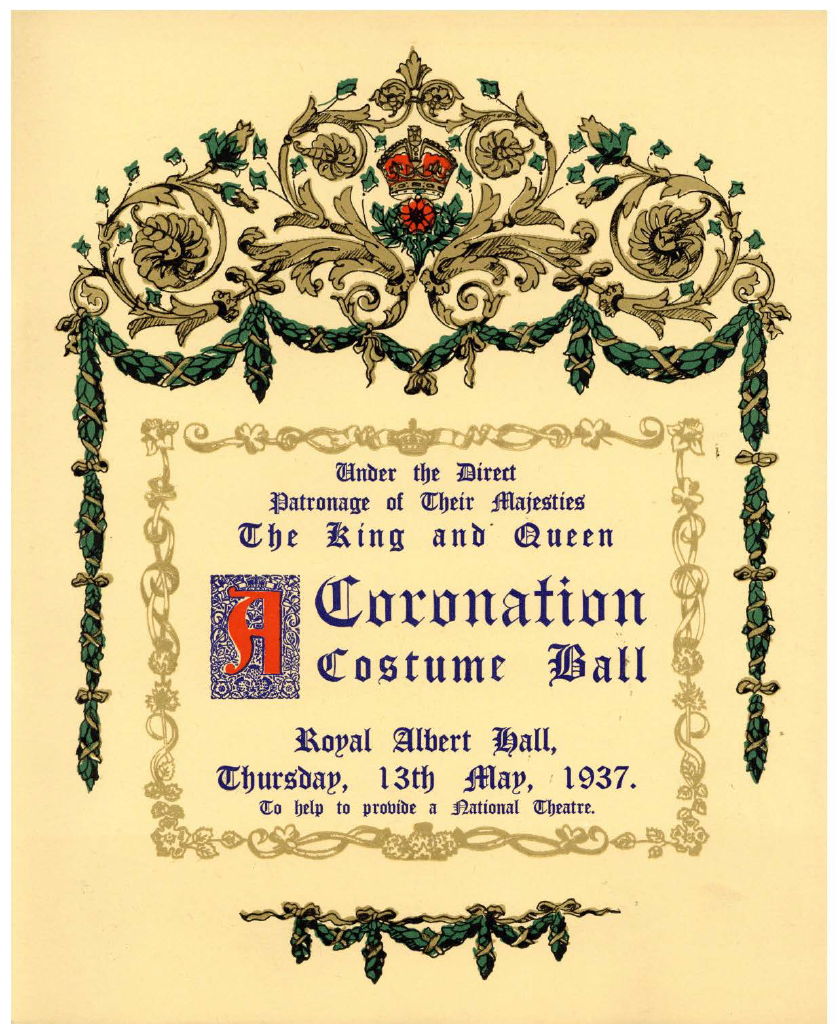
Events fundraising and celebrity connections continues to be a foundational way to raise funds.
So what does that mean for fundraisers today
- Build a core group of committed champions first.
- Fundraising is strongest when it aligns with what audiences already love – when it is emotional, relevant and compelling
- Create ways to build identity and connection – make the donors part of the fabric of the organisation
- Make it easy for anyone to feel part of the story
- The operational side also needs to work – as well as the inspiration.
- Fundraisers manage pace, patience, and psychology.
It’s never just about money – it’s about building a movement people want to belong to.