
Donation boxes – love them or loathe them they are here to stay
From the bland hole in the wall, to the wacky, or digital interactive – donation boxes have always been with us.
Like donor recognition (SOFII · Celebrating donor recognition through history and exploring why it works) having photos of donation boxes from your travels and adventures is an occupational hazard for a fundraiser.
Thinking about fundraising history, and the decision science behind why donation boxes work (or don’t) I wanted to explore a few historical examples and trends.
Many of the donation boxes that you may remember are quirkier ones, or ones that are salient with the charity they are trying to raise funds for.
What’s the earliest donation box?
The earliest donation boxes I am aware of are the ones in The Temple in Jerusalem (referenced in the Mishnah) – doubtless there were many examples before this. We can say with some certainty that these were in place at the time of Jesus, about 30AD, and plausibly a considerable time before that. Technically known as the glazophylakion there were thirteen different donation boxes.
Nine were specifically for what was owed in tax; the remaining four were for voluntary donations with specific objects carefully marked on them. So donation box three was for a burnt and sin offerings, and eight was for incense. Nine, ten, eleven and thirteen, were for voluntary donations for things such as cleansing lepers and other charitable good works.
As well as the earliest example of a donation box – it is also a really early example of giving the donor agency and choice about where their gift went. This was not ‘a drop in the ocean’ coin for general funds – no – there were thirteen different donation receptacles – you had obligations to meet – but you could also choose whether you were funding lepers or other good works.

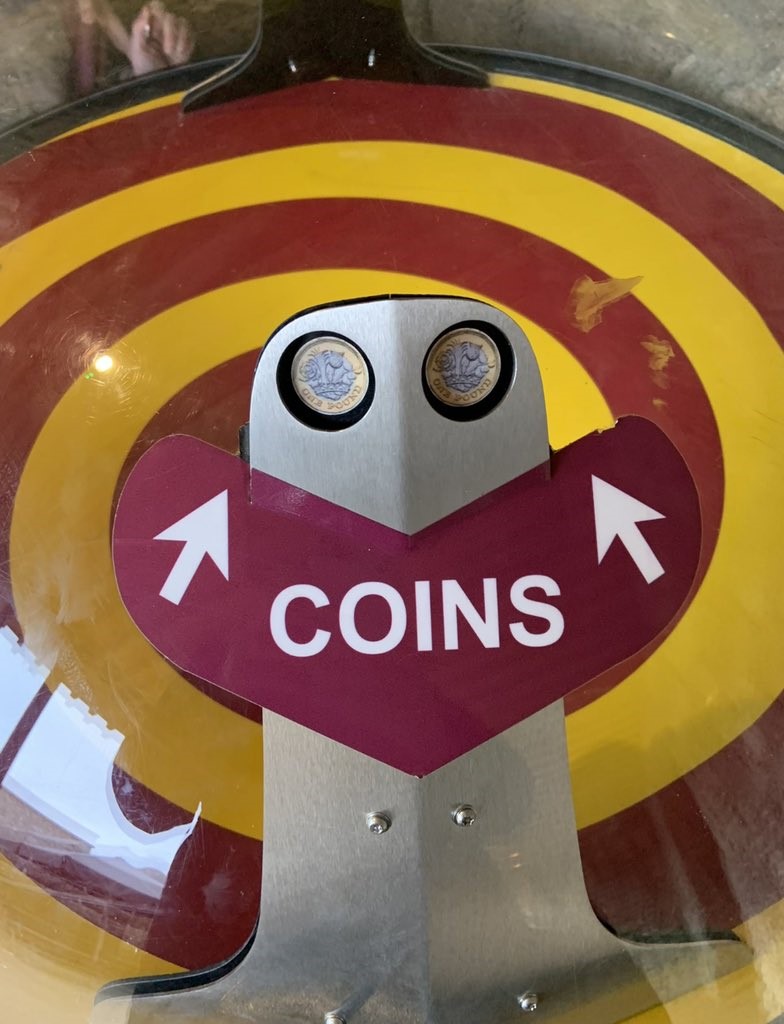
This choice, or gamification, is still used today as can be seen in the Design Museum. You could choose which aspects of their work you donate to (this can also be seen in UK supermarket Waitrose where customers got a green coin token to vote on which local charity to support). Donors want to have choice and agency over what they support.
So even thousands of years ago – we knew donors wanted to support specific aspects of the work rather than just put money in the general pot.
Salience
The Temple donation boxes were not the hole in the wall donation boxes that you might traditionally think of in church fundraising (do go down this rabbit hole of church donation boxes Donations (@churchdonationsbox) • Instagram photos and videos) – but were salient to the setting. They were shaped like trumpets – wide at the top and narrowing to the bottom. Now this had a practical function of driving the coins down to the bottom but also made them stand out visually. There are numerous Biblical references to trumpets but none that could be definitely shown to say why they were shaped this way.
The Widow’s mite and feedback loops
When we drop a coin into a donation box we get the instant feedback of the sound that the coin makes. We can hear it (other people can hear it). Putting a note into the donation box just doesn’t have the same aural power. When we hear the noise, we are reassured that the gift has been received BUT also get the dopamine (happy brain chemical) hit of hearing we have done good – rewarding us for making the donation. (The beep or vibration of a digital gift has the same impact).
There are various examples in the Bible that talk about donations to The Temple.
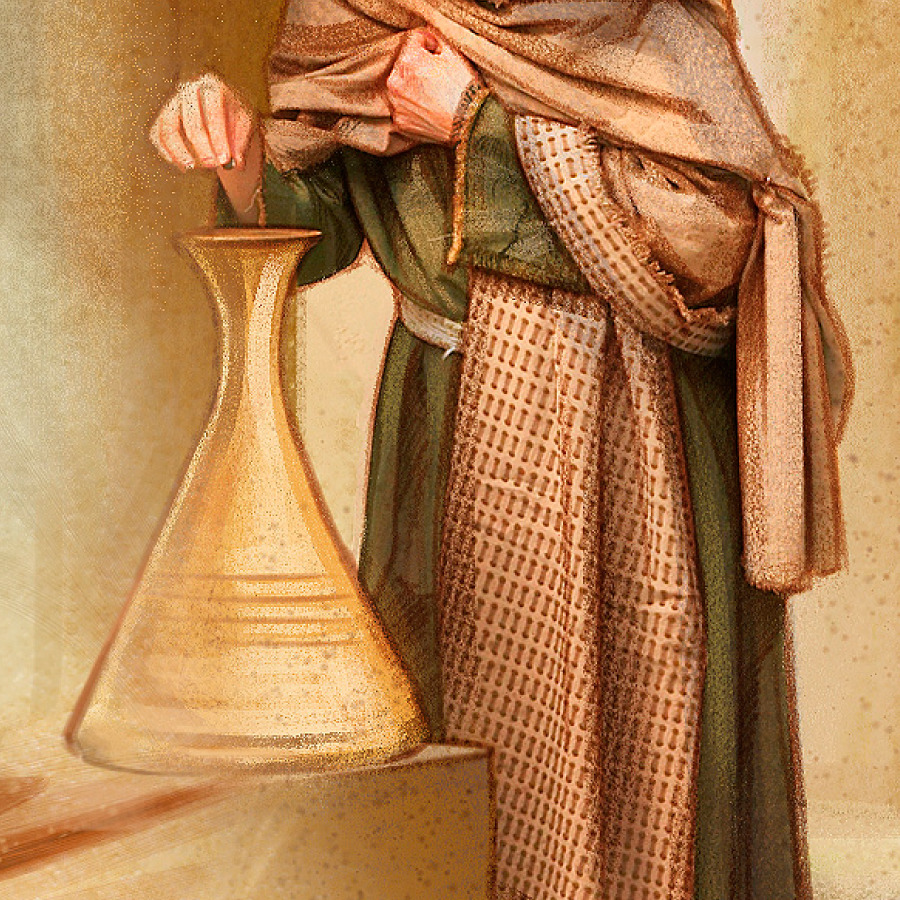
The widow’s mite is one particularly famous one – a poor widow gives two small coins to the collection box and it is all she has. You can imagine this would barely make a sound as it is dropped into the trumpet donation box.
In contrast, you have the hypocrites – Jesus criticises them for trumpeting their donations and being ostentatious about their giving – you could imagine the sound a handful of coins thrown into the donation trumpet with force would make clanging about and emphasising the size of the gift. The use of the word trumpeting is interesting here. The hypocrites want everyone to hear that they have made a big gift.
Fun ones
The ones that attract attention are often interactive in some way and involve watching the coin roll down to the bottom – an unpredictable outcome (gamification again) and encouraging the pester power of children to repeat.
These games can encourage repeat donations.
Here is a simple way to nudge bigger gifts – at this National Trust property they added a sticker that shows a £ coin and primes a default (bigger) donation – nudging away from a few coppers.
Primal power – the eyes have it
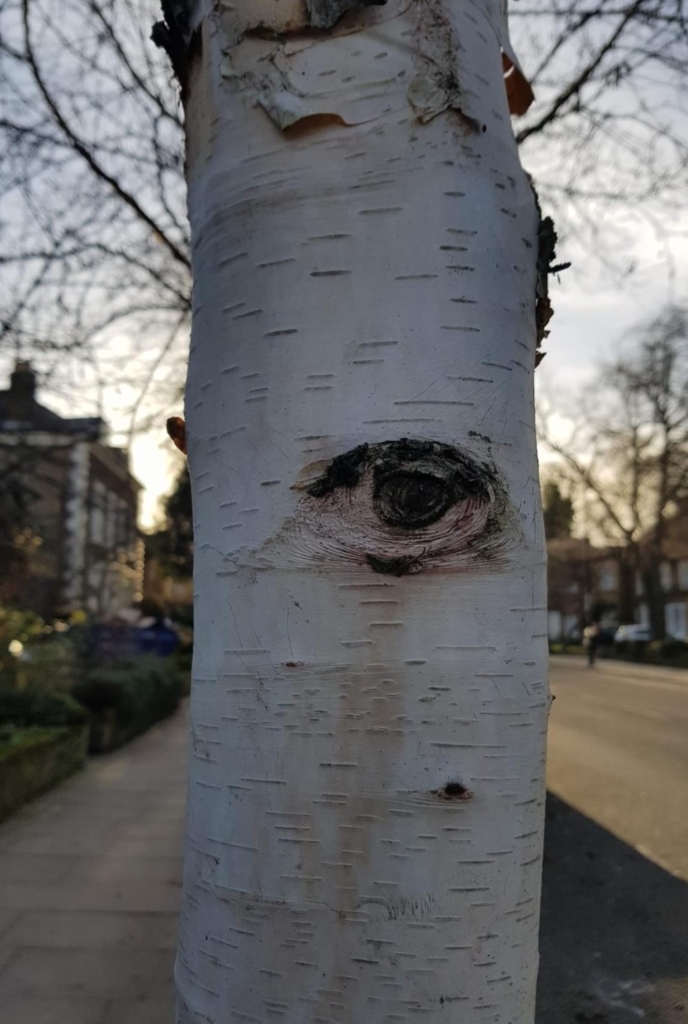
In evolutionary psychology our brains are hard wired to be attracted by primal things like faces. Faces attract that primal part of our brain and grab our attention. Our hunter gatherer ancestors learned to look out for, and potentially like other faces. We are constantly searching for threats and rewards in our peripheral vision. When we catch sight catches of a face (or face like object) we subconsciously assess whether it is friend or foe.
Our system 1 (the fast, intuitive, instinctive) area of the brain that dominates the majority of our reactions, is looking at faces and what they represent. That is why we see faces and eyes in trees and in clouds.
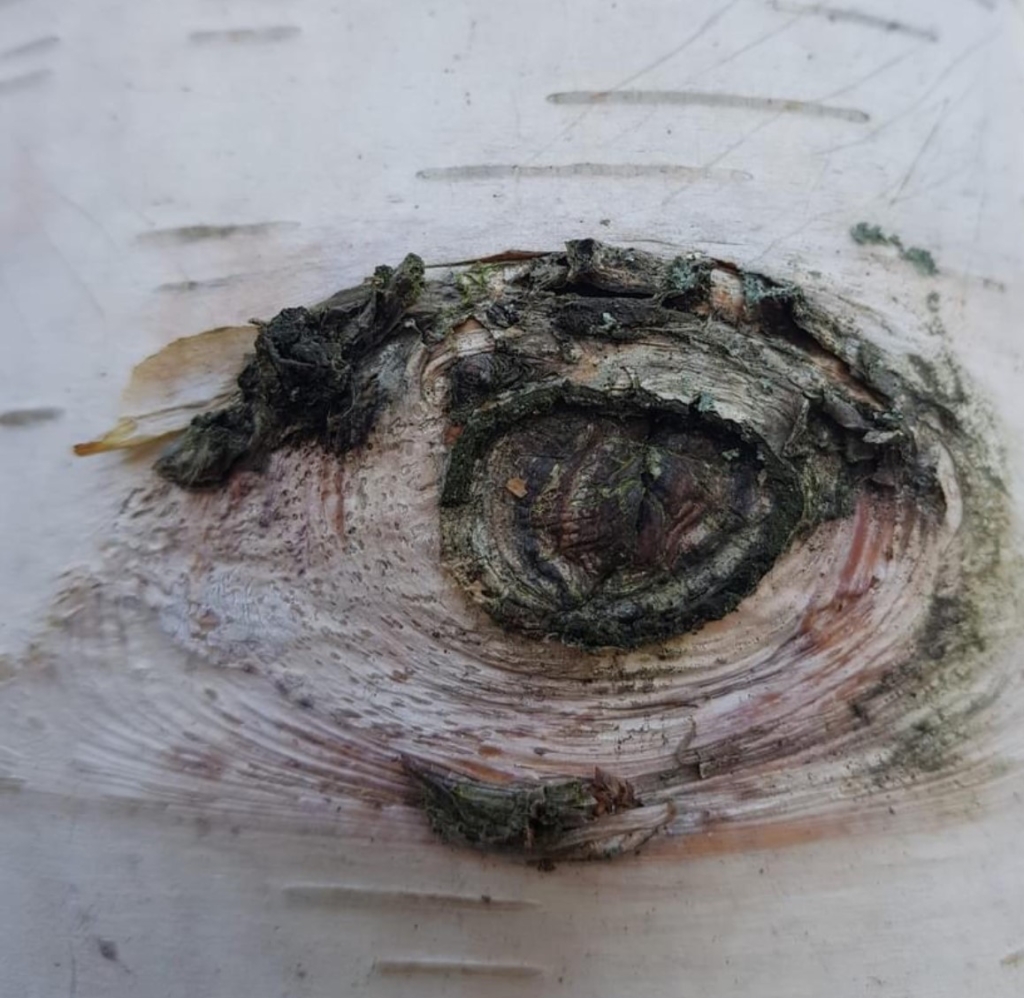
The eyes have it….
Eyes in particular attract our attention. Big eyes attract more attention.
- We follow eyes and where they are looking in adverts.
- Who are the cereal box mascots looking at?
- They are not looking at you – a grown up – they are looking at their target market – a (51cm) human child.
Look…

Check it out next time you are in the supermarket.
So eyes can have a powerful impact on donation boxes and in asking for money
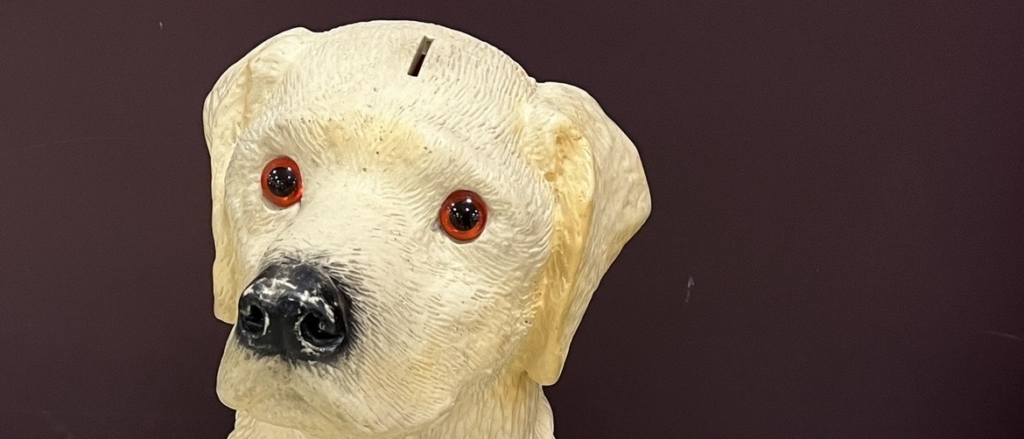
In the 1920s a dog with a collection box strapped to his back used to walk around the railway station collection donations for the Southern Railway Orphanage – his name was London Jack and he raised over £4,500. You can imagine the power of a dog looking up at you as you are asked for a donation.
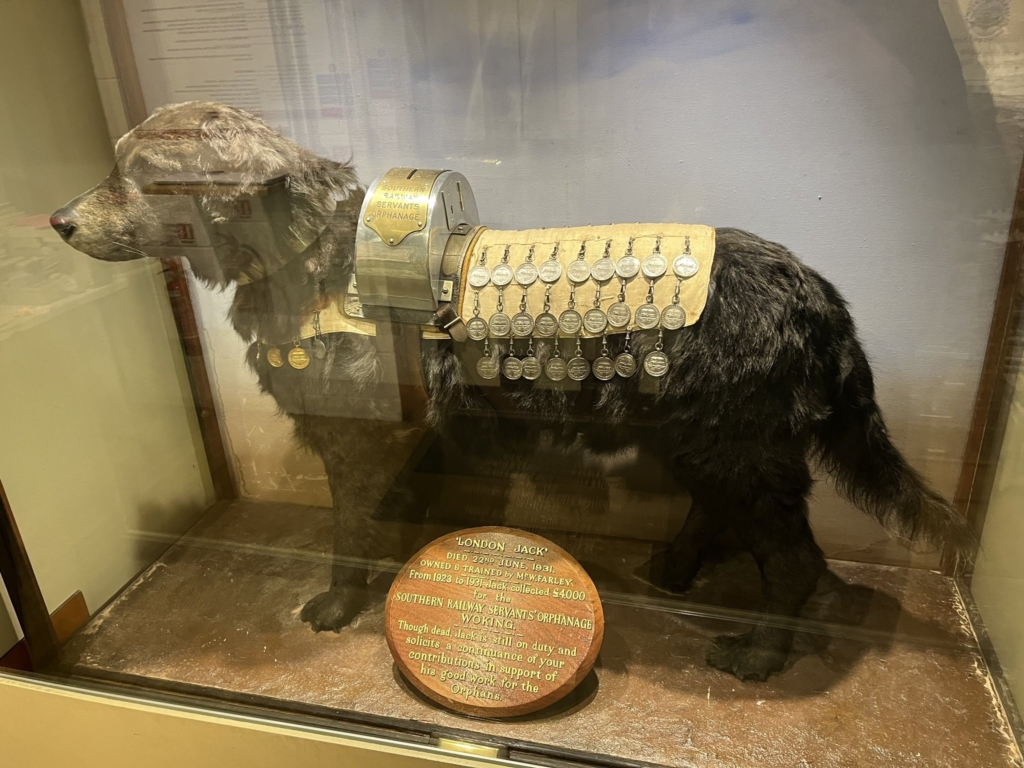
Jack died and was subsequently stuffed and put on display at Bournemouth station where he still ‘worked’ collecting donations until 1967. He is now at the Bluebell Railway Museum (and still has a donation box and continues to collect money for homes).
There was a trend (and it is hard to pin point exactly when it began) of anthropomorphic donation boxes. Some of the earliest seem to be from the Spanish Church (these examples are in the city of Avila).
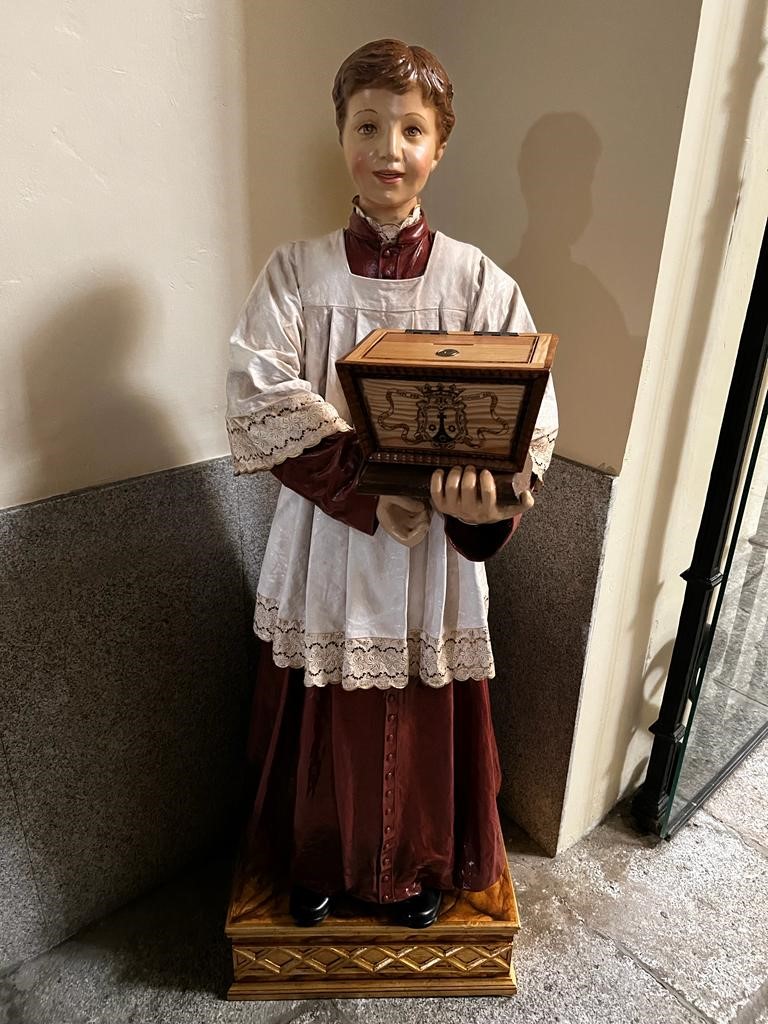
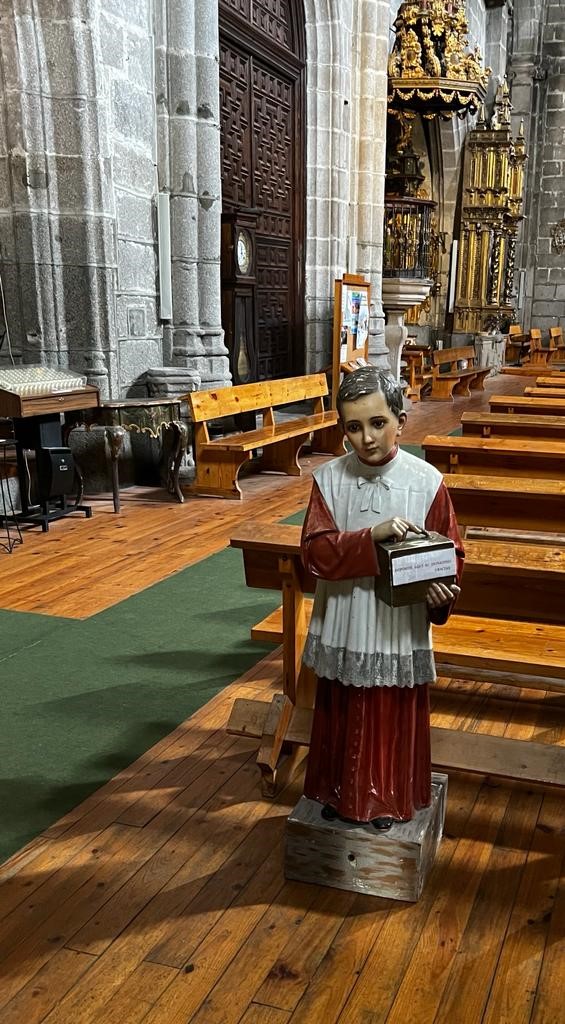
I remember from childhood, and I am sure other people remember, children shaped donation boxes, often depicting a child with a disability or who were in need holding a donation box. There were, and still are, animal shaped ones.

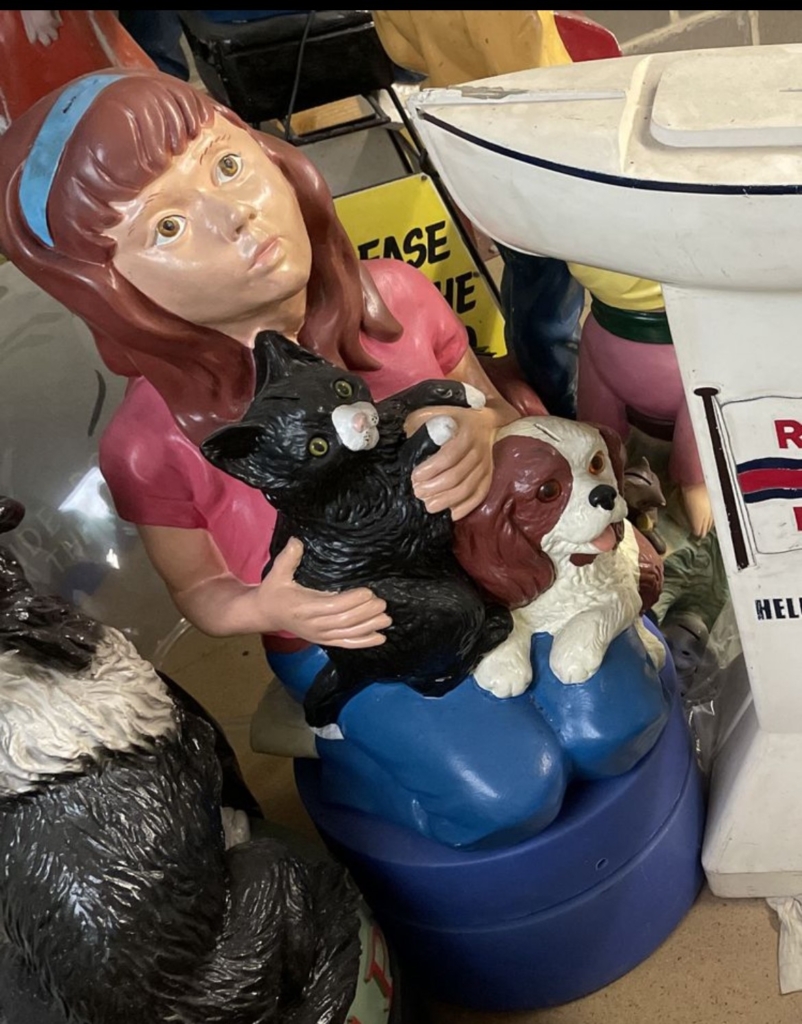
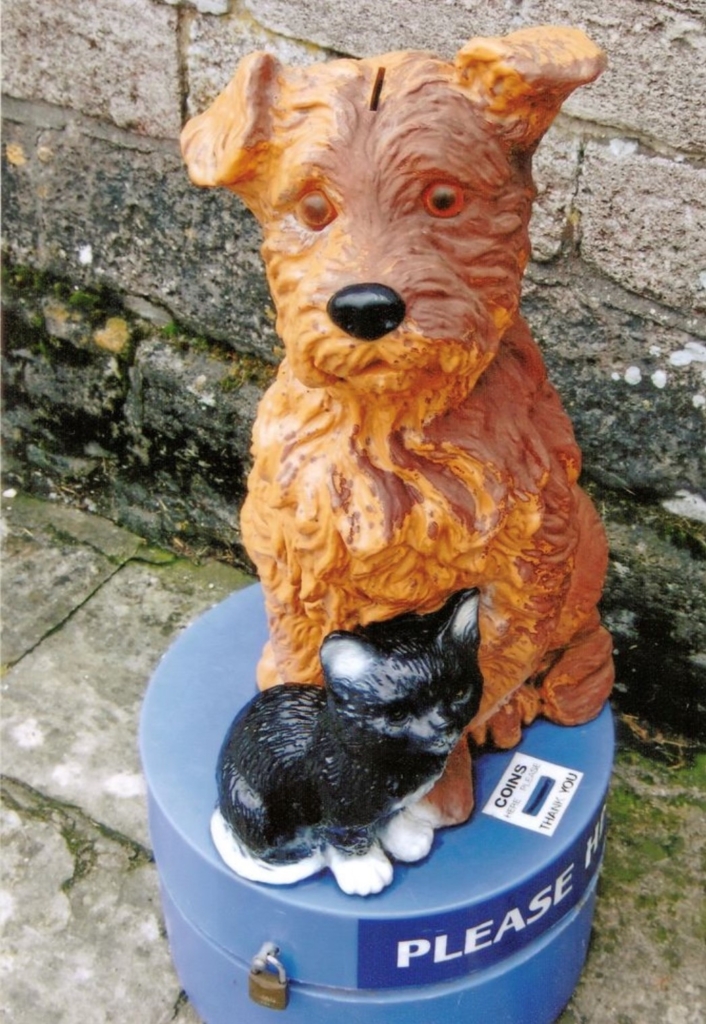
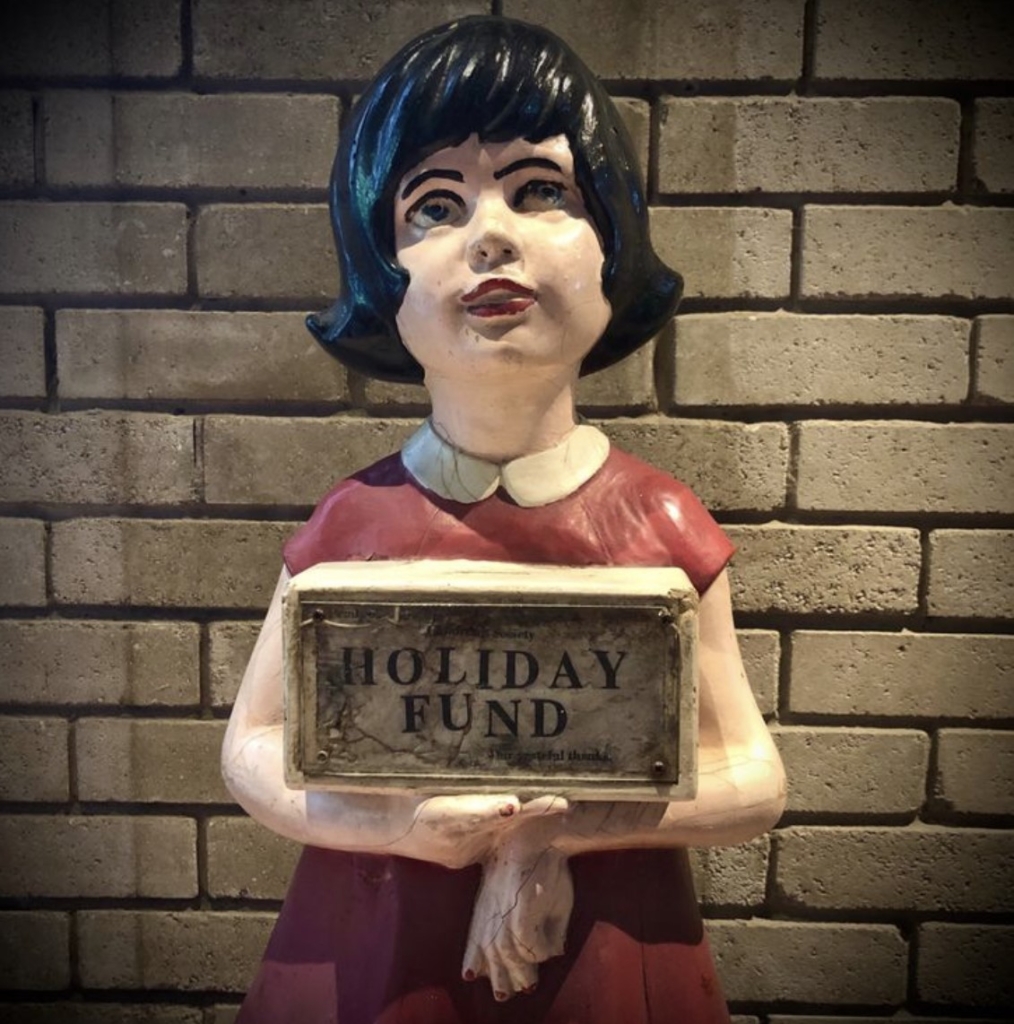
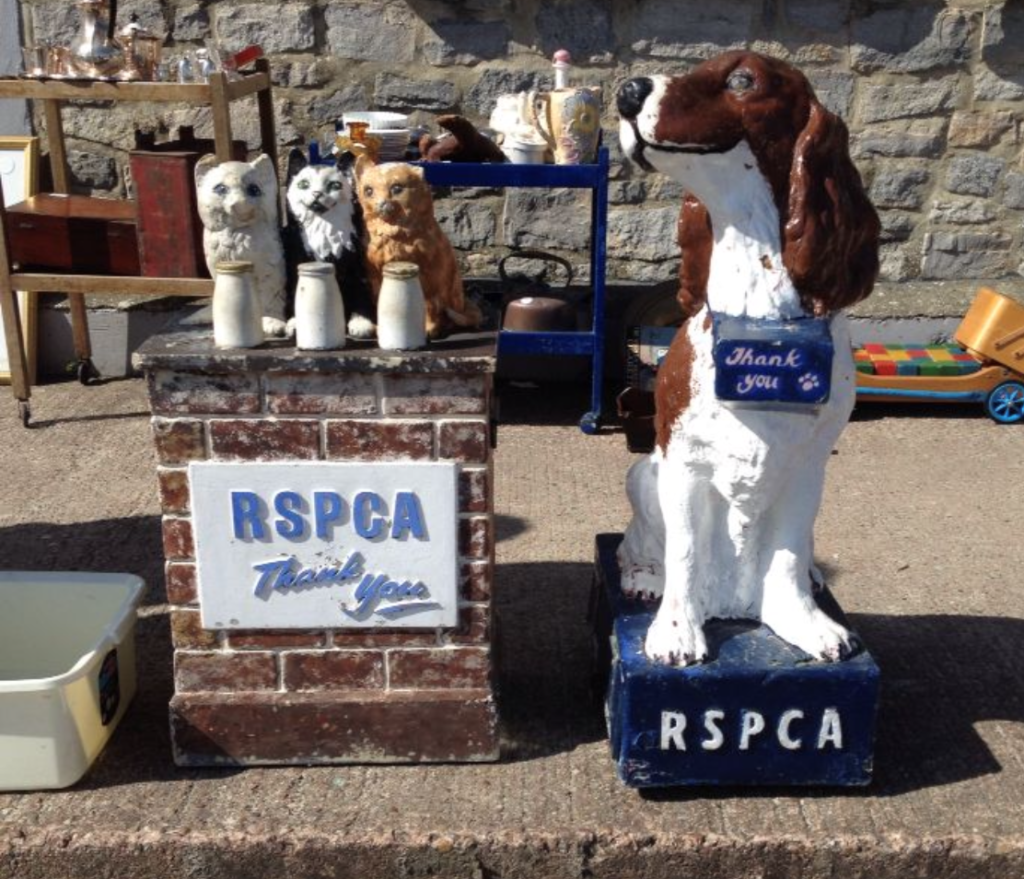
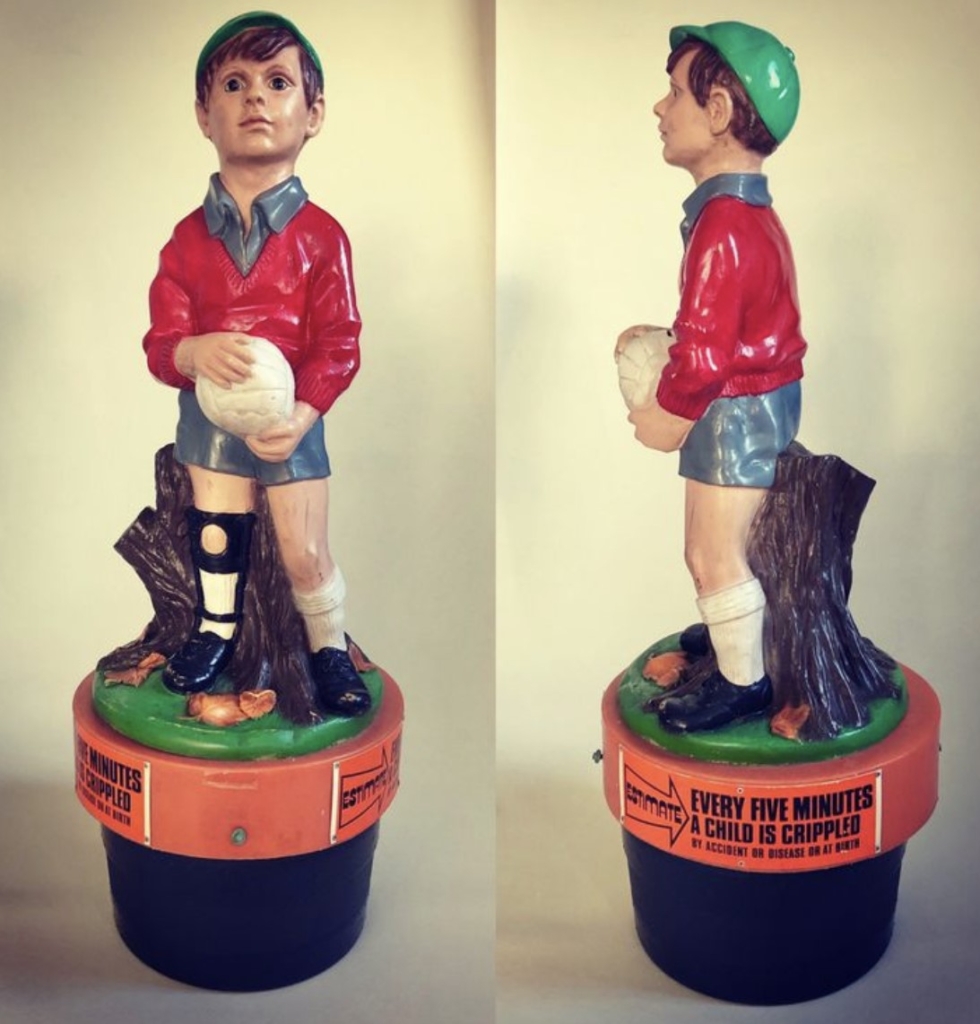
Look again at the donation boxes above – and look at the eyes and where they are looking?
- Some are looking at you directly (beseechingly).
- Some at the donation box – where you need to direct your action.
When neuro-marketing experts watch your eyes looking at adverts they see our gaze is drawn to the face in the advert and particularly the eyes.
We are programmed to pay attention and care for smaller humans so this might by why children are particularly powerful in these examples. The children or the animals are also relevant, or salient, to the charity that they are collecting money for. Viewing objectively cute images (animals or children) promotes caring behaviour and captures attention (Nittono, Fukushima, Yano Morya, 2012)
If people believe their actions are being observed they act in more moral and pro-social ways. There is a famous experiment with an honesty jar in an office for contributions from office workers to pay their tea and coffee. Next to the suggested price list, they tested the impact of different images on the amount that people paid. Pictures of flowers one week, and pictures of eyes the next. Eyes performed best and increased how honest people were in putting money in the kitty – judgemental eyes increased contributions even more. From Totem poles with deities watching, to Lord Kitchener pointing at you, eyes have made us behave better, or even park more considerately.
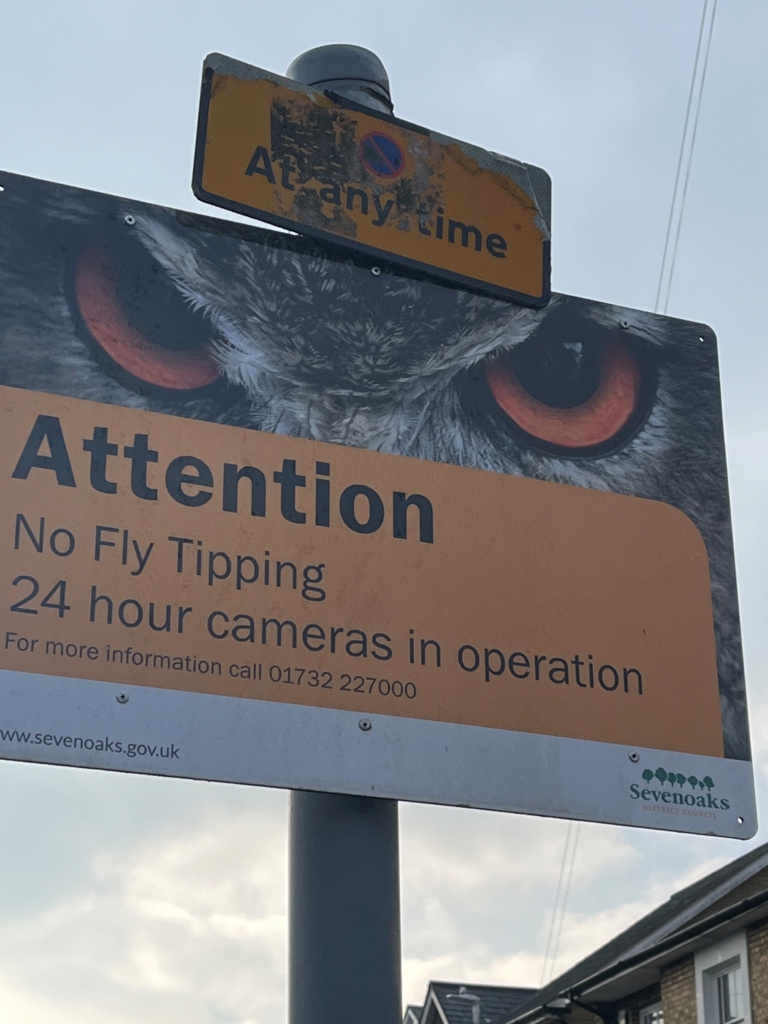
Having eyes watching increases pro-social behaviours like donating to charity – this is why these children and dog shaped donation boxes should be particularly effective.
Having just dots in an eye formation has the same impact. An experiment showed that three dots were arranged either as a “pyramid,”

or as “eyespots”:

Letters with “eyespots” generated more than three times the donations of those with a “pyramid” quoted by Russell James III from this study The differential impact of social norms cues on charitable contributions – ScienceDirect
Think about piggy banks – the eyes are looking at you – reminding you of your promise to save that money rather than spend it.
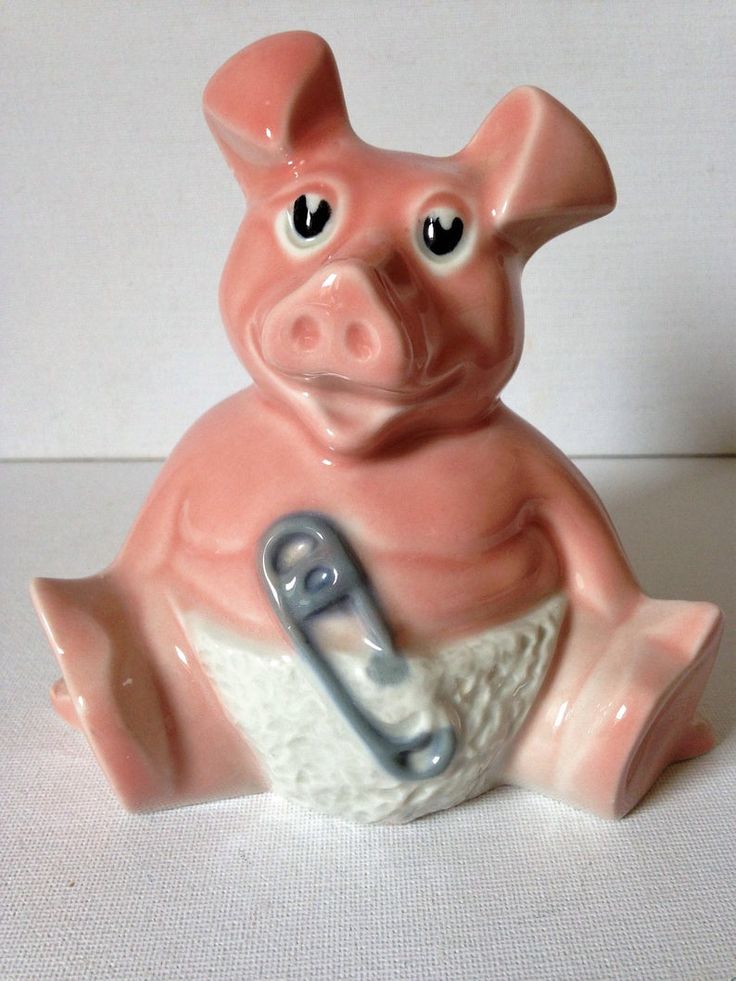
Nowadays we only tend to see dog or cat shaped donation boxes rather than children.
Having eyes on things can even save your life if you are a cow in Bostwana Painting Eyes on Cow Butts Could Save Cattle and Lion Lives | Smart News| Smithsonian Magazine
Mere exposure effect
In many charities, you spend more time and more money designing and making the donation box than it generates.
Although, it will not necessarily be a strong revenue stream, it could be a way of playing the long game and sending out messages to supporters about the need for support. As David Burgess says – your charitable status is not a case for support – but being exposed to the message repeatedly does subtly have an impact on donors. You are showing that you are a charity, that you do get support. You are promoting the social norm of giving, if you also have a ‘thank you’ sign or message on or near the box you are also showing that donors are thanked, recognised and appreciated.
Donation boxes might not be the most effective way for people to give, or to build a relationship with you and your charity – but they do fill that system one impulse to make a gift at that time and immediately (or you need a combined way to get both gifts and data – like this one based in a church).
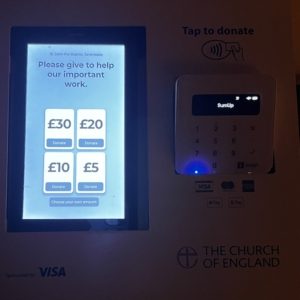
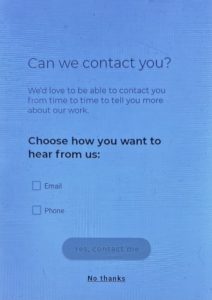
People want to give – and without a mechanism you could be missing out on that chance for people to make a difference.
During a recent campaign I led, we had donation forms, we had QR codes and we had contactless donation points – yet people still wanted to give real money – cash has a strong draw (see more about the use of cash here Dirty cash I (still) want you. Money talks. – Marina Jones)
Keep testing
As with all behavioural interventions you need to test what works for your organisation and your supporters.
In the world’s largest experiment with decision science, Bluecoats in Liverpool tested how to make their donation box more effective by applying decision science principles on defaults, anchors, reciprocity, salience, reduced friction, and a bit of primal eye power. You can read more about it in my chapter in ‘Experimenting with behavioural economics in the arts and cultural space’ chapter in Change for Better ‘Experimenting with behavioural economics in the arts and cultural space’ – on the world’s largest arts fundraising experiment and how cultural charities can use decision science.
What could you apply to your donation box, and fundraising?
- How can, and do, our modern donation boxes (especially) digital ones give that aural reward and dopamine feedback loop? Do we get a rewarding sound? A ping or vibration on the phone with contactless?
- Can you prime the types of gifts you want?
- Could you make the donation box salient to your charity?
- How can you give donors power and agency over where the gift goes and what aspect of your work they are supporting?
- Sound and smell are two of the most powerful senses but often overlooked when we think about designing donation boxes – how could you incorporate that?
- How could you use eyes – on or near – your donation box to grab attention and promote pro social behaviour?
- Can you capture their details as well as their donation without them loosing interest and reverting to system 2?
Or you can always write a novel from the point of view of the donation box
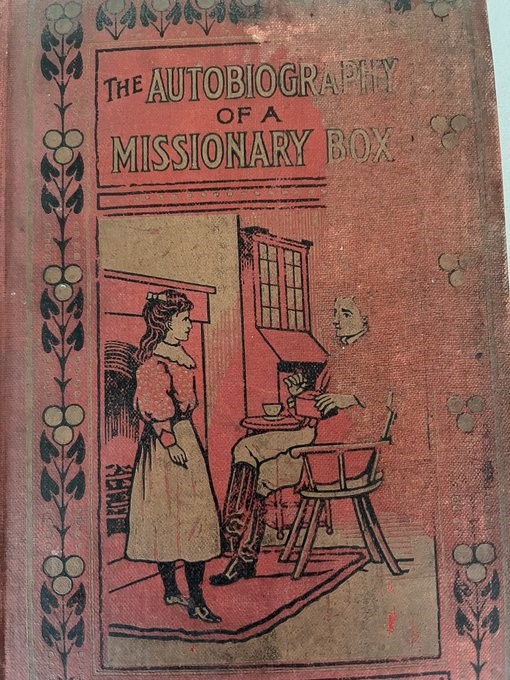
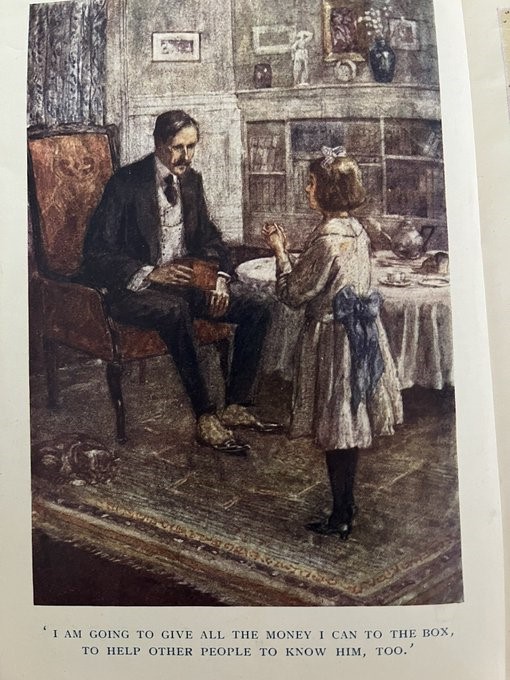
Very charming novel ‘The Autobiography of a Missionary Box’ – told from the perspective of a Juvenile Missionary Society donation box and published and raising funds for the Religious Tract Society. The box is taken by Rose who is unimpressed but through the inspiration of the maid Susan (the box reminds her of home), Rose and her family discover the joys of giving.





Leave a Reply
Want to join the discussion?Feel free to contribute!