Did you know that in the sixteenth and seventeenth century people used to raise charitable funds to pay pirates’ ransom?
It raised questions in society of who ought to pay this fee – was it for the government and the king to pay on behalf of the nation? Or should it be funded by the family and friends? Or more generally from collected charitable funds?
Pirates and brigands in Algiers and the Barbary coast would attack and capture sailors and then send demands home. Without a ransom being paid the sailors would be enslaved and made to work. Pirates often targeted those that they thought of as wealthy to get a better result.
How much was a ransom? Between 200-500 ducats.
The government refused to negotiate with pirates, so it was up to the family and friends to raise the funds to pay the ransom. But wondering from town to town asking for support could have you imprisoned for vagrancy in England so a solution was found in crown and church supported ‘briefs’ which the families of kidnapped sailors could apply for. The brief detailed the case and allowed you to petition in various locations – it is an early form of funding regulation and licence. They could then beg alms to pay the ransom – and also receive charitable donations to support their own upkeep.
There was a suspicion that these briefs were open to abuse and not really issued to those who needed them, or sold on for ready cash so these petitions could be refused.
The cause was popular in maritime towns and local authorities. Livery companies, royal decrees, legacies, published sermons and church collections also supported the impacted individuals raising funds.
Some examples:
1567 the Bishop of London, Edmund Grindal, supported a brief on behalf of the captives in Algiers.
1570s – £70-£100 a year raised by London livery companies to support the rescues.
1568 2 shillings were given by the churchwardens at Ashburton in Devon ‘to one that gathered them for them that be in Turkey’ in response to a brief
1619 – 9d given by County Durham Churchwardens for ransom and 12d for the maintenance of the wife of the ransomed sailor
1636 – a series of Charles FitzGeffrey’s sermons were published to raise funds to save enslaved and captured sailors – saying it was their Christian duty to free the captives as Jesus has redeemed mankind from the bondage of sin.
1669 – £100 a year forever was left in Alice, Duchess Dudley’s will to free captives (I wonder what happened to that)
1686 – £3000 left in the will of former Admiralty officer Sir William Coventry to redeem captives.
1683 – £1 towards the £100 ransom was raised when widow Elizabeth Newman appealed directly to the Earl of Bedford
What is charitable and what you can raise and do raise money for is historically and culturally situated and evolves over time.
What might happen with a pirate’s ransom now? A crowdfunder?
https://marinajones.uk/wp-content/uploads/2023/09/pirates-band-of-misfits.png172400adminhttps://marinajones.uk/wp-content/uploads/2022/12/f2b903e010104f5aa61ea1821a685913.pngadmin2023-09-19 15:54:422024-12-05 16:06:14Pirate ransoms and fundraisers
WC Fields said never work with children or animals.
Part one looked at quirky historical animal fundraisers and how and why they grab our attention.
This second part looks at children – and how they have been used as fundraisers.
Children like animals also steal the limelight in fundraising moments – but why?
Our primitive brains are primed to pay attention to two things – faces and food.
More than 50% of the brain’s cortex is used to interpret and process visual stimuli. So, faces – human or animal – attract our attention and automatically we are assessing subconsciously whether that face represents a friend or foe. When seeing a baby or child’s face we can speedily assess that it is not a threat but a member of our species that is smaller, more vulnerable, and perhaps in need of care, protection, or support. Maybe this is why it is hard to say no to a child fundraiser?
Now the UK’s Fundraising Regulator’s Code of Practice Section 6 deals with fundraising to do with children. It states that no child under 16 should handle money, and in the UK there are country (and even City of London specific) age restrictions on what age young people can solicit charity funds for door-to-door collections and parent/carer permission must be sought to use images of children in fundraising.
But that is a relatively modern introduction. So here are a few (mostly) Victorian ways in which children were actively involved as fundraisers themselves including the guidance they were given, and how they raised money. And a brief exploration of how children have been used in photographs and other images in fundraising campaigns and the evolving ethics of it.
In Victorian times – apart from training parrots to solicit donations (see part one – on animals stealing the fundraising limelight) – children were much more active in actively fundraising. To continue with the animal theme, children auctioned pigs, sold rabbits and hens, hived bees to sell honey for funds and held working parties to make items to sell at Charity Bazars. But they also sought gifts, collected money and ran fundraising organisations.
Show don’t tell – demonstrating the impact of your charity gift
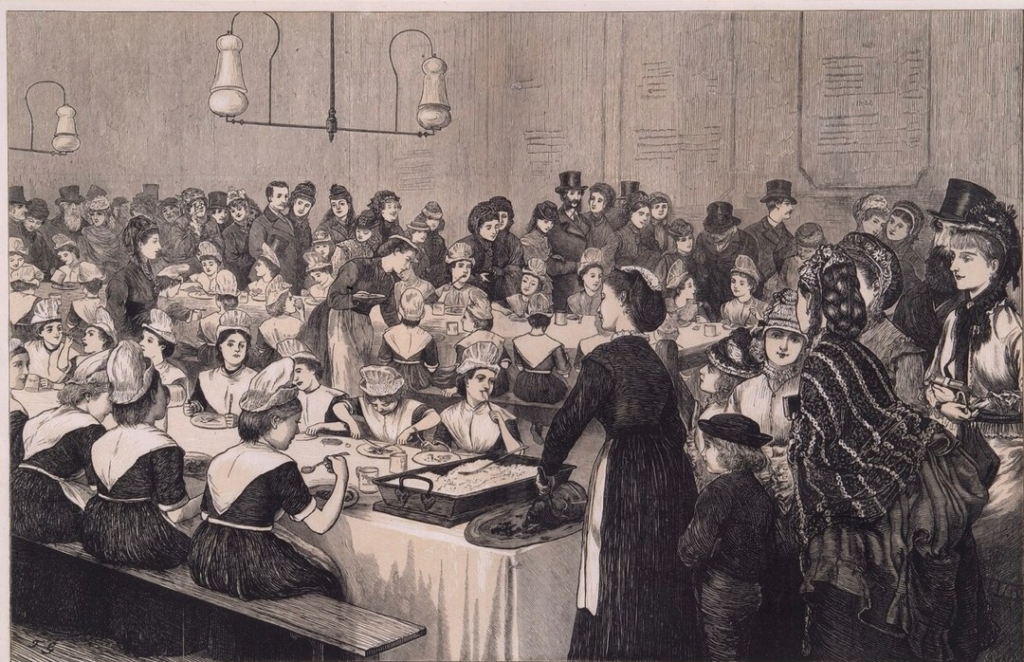
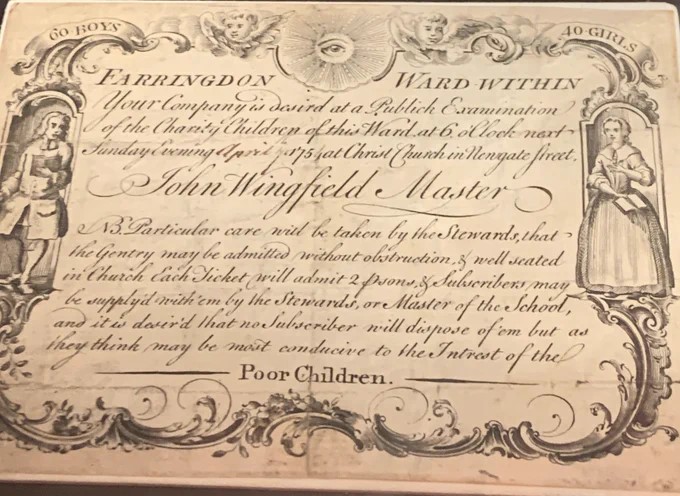
Public parades and public examinations of poor children such as the children from the Foundling Hospital were common place. They were used as a way to solicit contributions, thank donors and demonstrate the impact of the gifts in rehabilitating and training children. Attending Sunday lunch at the Foundling Hospital was a fashionable Sunday outing. Male children were trained to enter military service and patrons were invited to watch demonstrations of military prowess (like assembling a canon).
Sunday lunch at the Foundling Hospital with donors watchingAn invitation to examine the charity children
Child labour
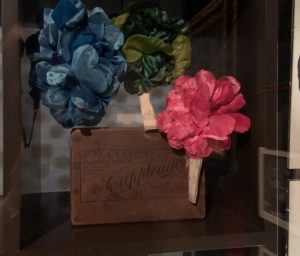
Children in these hospital or homes were often put to work creating ‘useful’ items – such as paper flowers or toys that could be sold to support their care. Below you can see paper flowers made by children from the Watercress & Flower Girls Christian Mission to raise funds to support their care. These were on display at the Museum of London before it closed for refurbishment.
Learn with mother, and Sunday School
In Victorian Britain, children’s philanthropy mirrored the patterns of their parents’ philanthropy. Charity as a key Christian virtue was part of a children’s education. Mother’s in particular were in charge of the domestic sphere and instilling faith and values and for many Victorian women charity work and philanthropy gave them agency, influence and access to a life away from the domestic sphere. These charitable values were reiterated through Sunday school education which for many children was their only formal education. With the church dominating the delivery of education in these values there was a corresponding link to the charities supported, and missions, domestic and overseas were commonly supported.
1804 is the earliest cited young people association when Catherine Elliott, aged 15, gave a penny for Bibles for the poor and with her friends formed the Sheffield Juvenile Society. There were Junior Associations of Missionary Societies and other charities established where children regularly went door to door collecting asking for support.
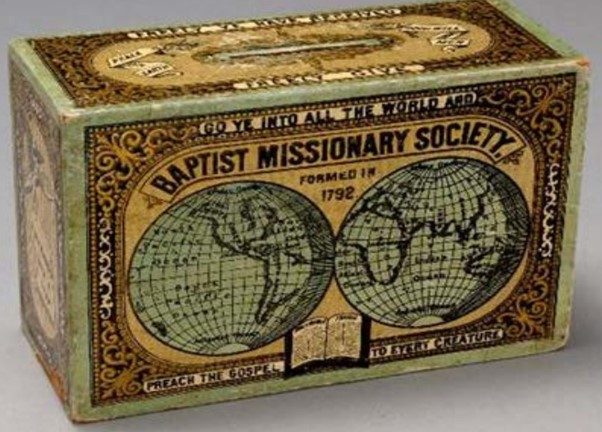
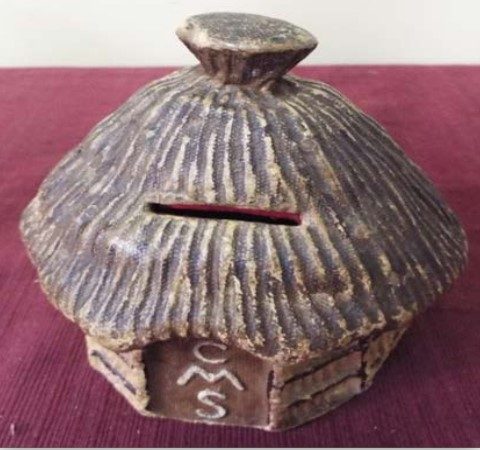
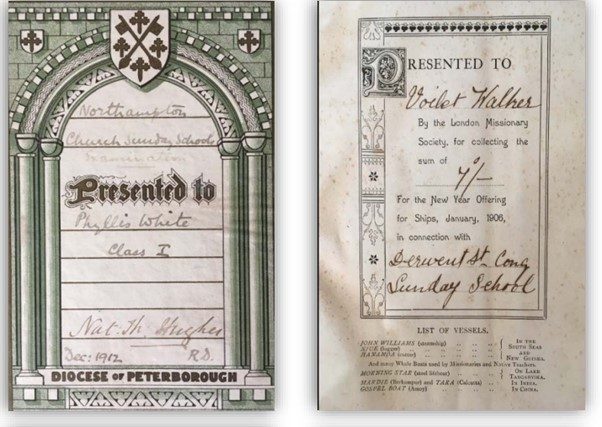
At Sunday Schools children were also taught (and it was practically an obligation) to become contributors (1d a week) to various schemes. Talks from speakers each week introduced campaigns that needed their support. The Sunday Schools and Juvenile societies were armed with missionary boxes, pledge cards and subscription lists – mirroring the many Victorian charities run by adults. The donation boxes were shaped like the missionary ships they were fundraising for. Reward certificates were issued to children.
The work of the Juvenile Societies were supported by mass publications (45,000 copies of the Baptist Missionary Society magazine for young people were sold in 1846). These journals had articles, hymns and stories promoting giving, the virtue of charity and also advice for young fundraisers, including:
“you are not a beggar” The Juvenile Missionary Herald
“Be courteous to your subscribers” A Quarterly Token for Juvenile Subscribers
“collect early and you are sure to collect well” The Juvenile Missionary Herald
How much were they raising? It is often hard to differentiate their collections from general church collections but in 1841-5 children raised £16,451 Methodist Missionary Society, and by 1901, 20% of their annual income came from children.
Nowadays we would not invite supporters to a ‘public examination of the charity children’ but there is always an interesting internal discussion about how, and when it is appropriate, to show donors the impact of their work with young or vulnerable people – that keeps the dignity of the beneficiaries.
It also applies to how we use images of children and people supported by our work today, and what and how they should be depicted and how that, and is, evolving.
So how have children been depicted in campaigns:-
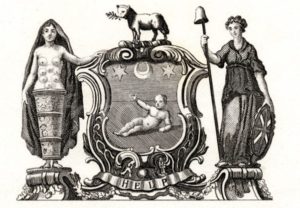
In 1737 painter William Hogarth designed the Foundling Hospital’s logo with a vulnerable baby surrounded by Britannia and Nature with the words ‘Help’ emblazoned on it aiming to elicit sympathy and support from wealthy donors.
In 1858, missionary fundraiser Dwight L Moody used a before and after picture of young people who had been impacted by attending Sunday School. He bribed them to attend a whole term of Sunday school with the promise of new suits if they attended every session. The incentive worked and they did – but before they got their new suits he took a before picture, and then used the ‘after’ of them in their new suits to demonstrate the impact of Sunday schools on the youth with the caption ‘does it pay?’ ‘yes it pays’
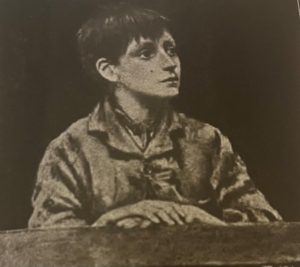
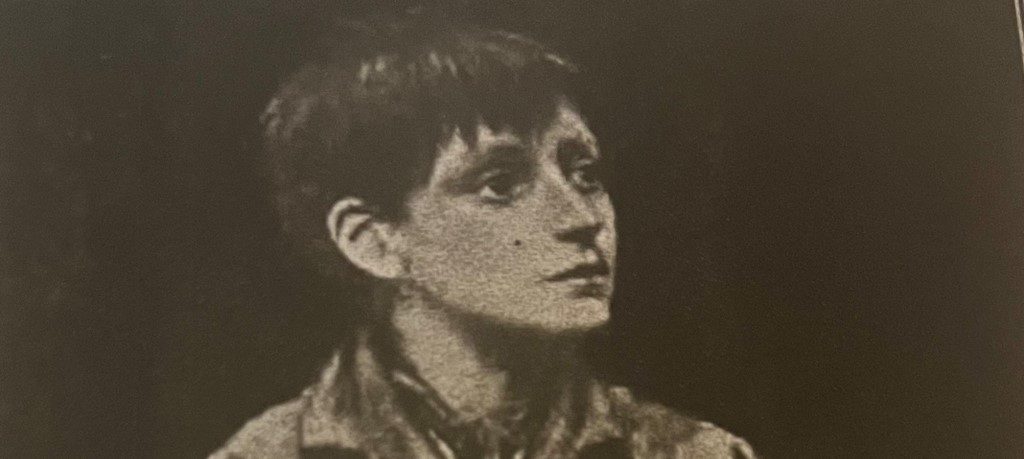
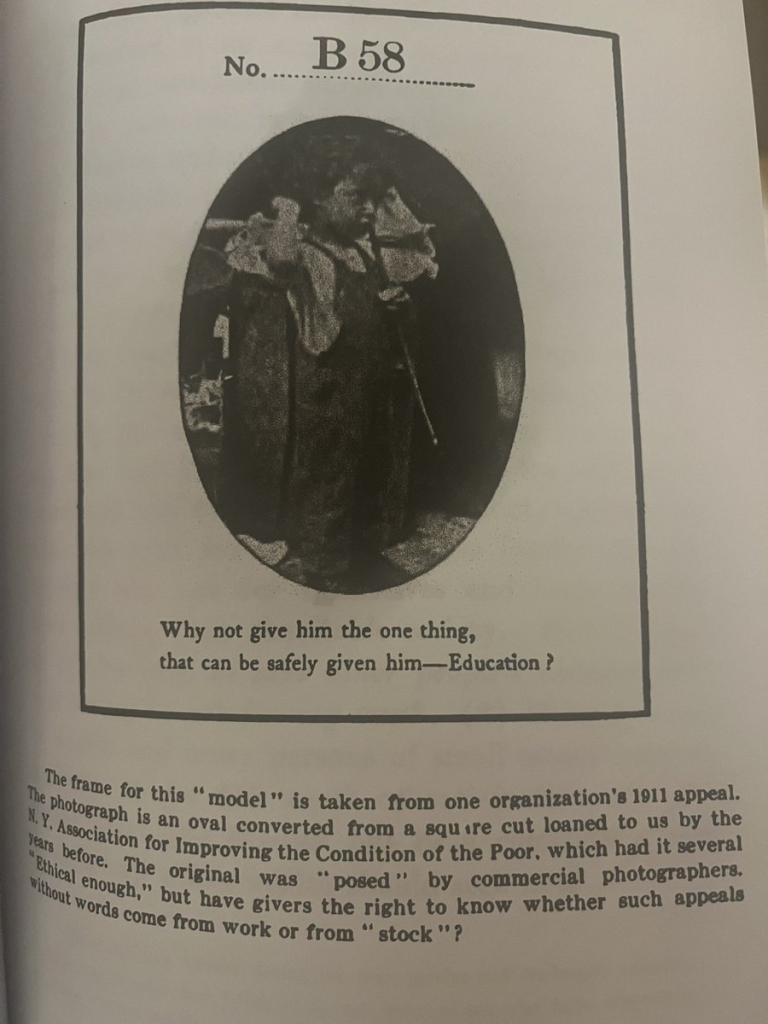
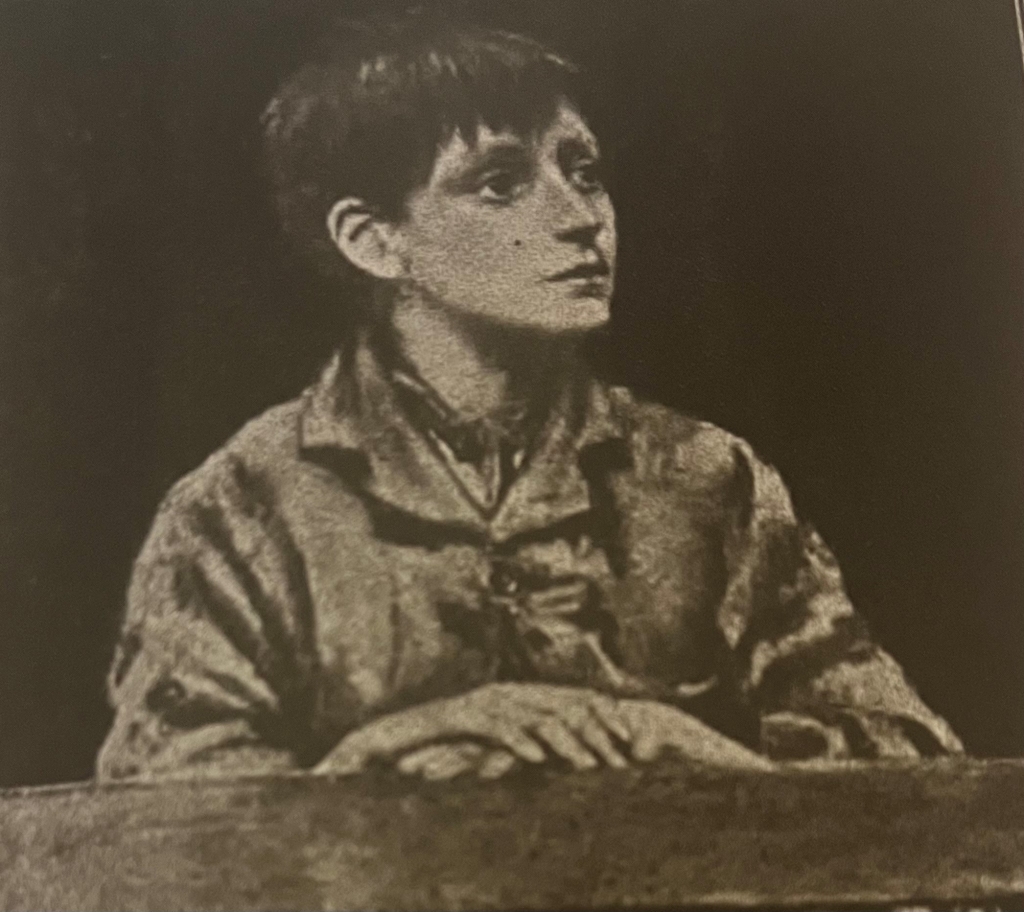
In 1902 this image was used by the New York Association for Improving the Condition of the Poor. It was criticised as being created in a photographer’s studio rather than depicting a real poor and needy child. However, they did recognise the importance of focussing the attention of the potential donor on one child they could help
“by focussing attention upon one child”
This is called the ‘identifiable victim effect’ and means our asks our more powerful if we focus our supporters onto one person that they can help. We can identify and see the impact of our gift on that individual and once more people are added gifts decrease. The identifiable victim effect was not formally described until 1968, and its efficacy only proved in charitable appeals in the last twenty years. As fundraisers we often instinctively know what makes a powerful appeal, but the more recent evolutions in behavioural science unpack and explain why they work in appeals.
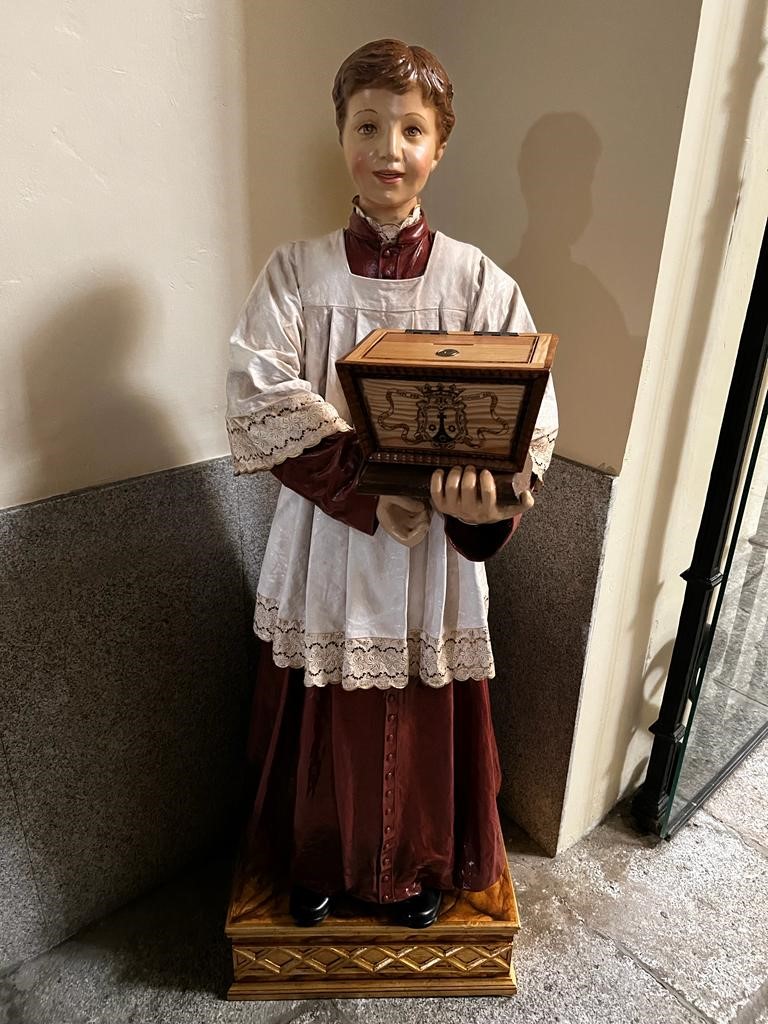
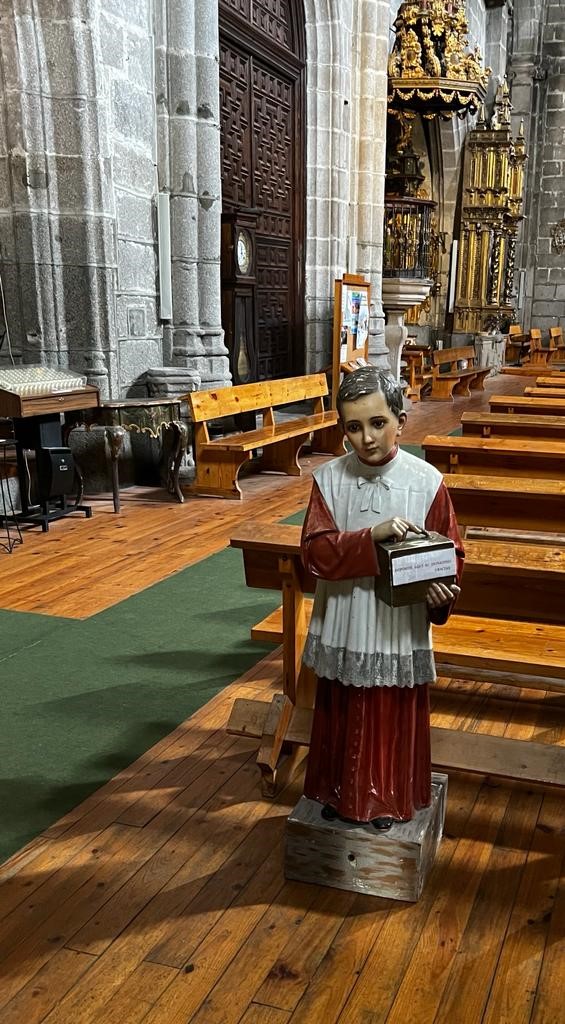
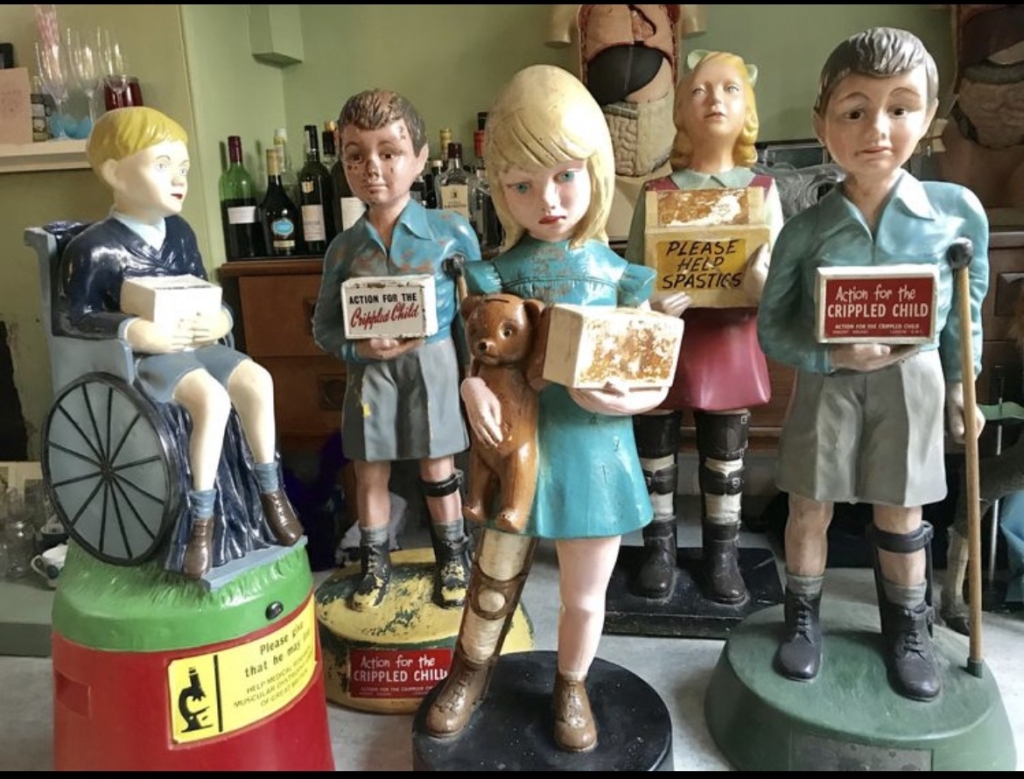
Donation boxes themselves can be anthropomorphic and look like a child – these from Spain are hard to date but used in multiple locations, and are reminiscent of donation boxes that were used in the UK until the 80s or 90s.
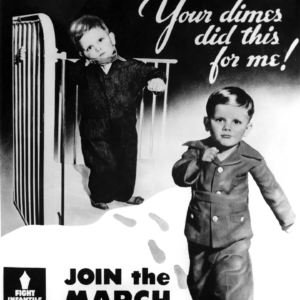
The one identifiable victim, or beneficiary, model was used in 1947 for the first ‘poster child’ campaign. Poster child has become a commonly used phrase, and not just in fundraising. The first was Donald Eugene Anderson who was featured in a March of Dimes campaign raising funds to cure polio – the poster demonstrates the impact of your gift showing Donald first in a cot with a collar around his neck supporting him and with the slogan ‘your dimes did this for me’ a healthy Donald is striding out towards the viewer. A before and after picture demonstrating the impact of their gift.
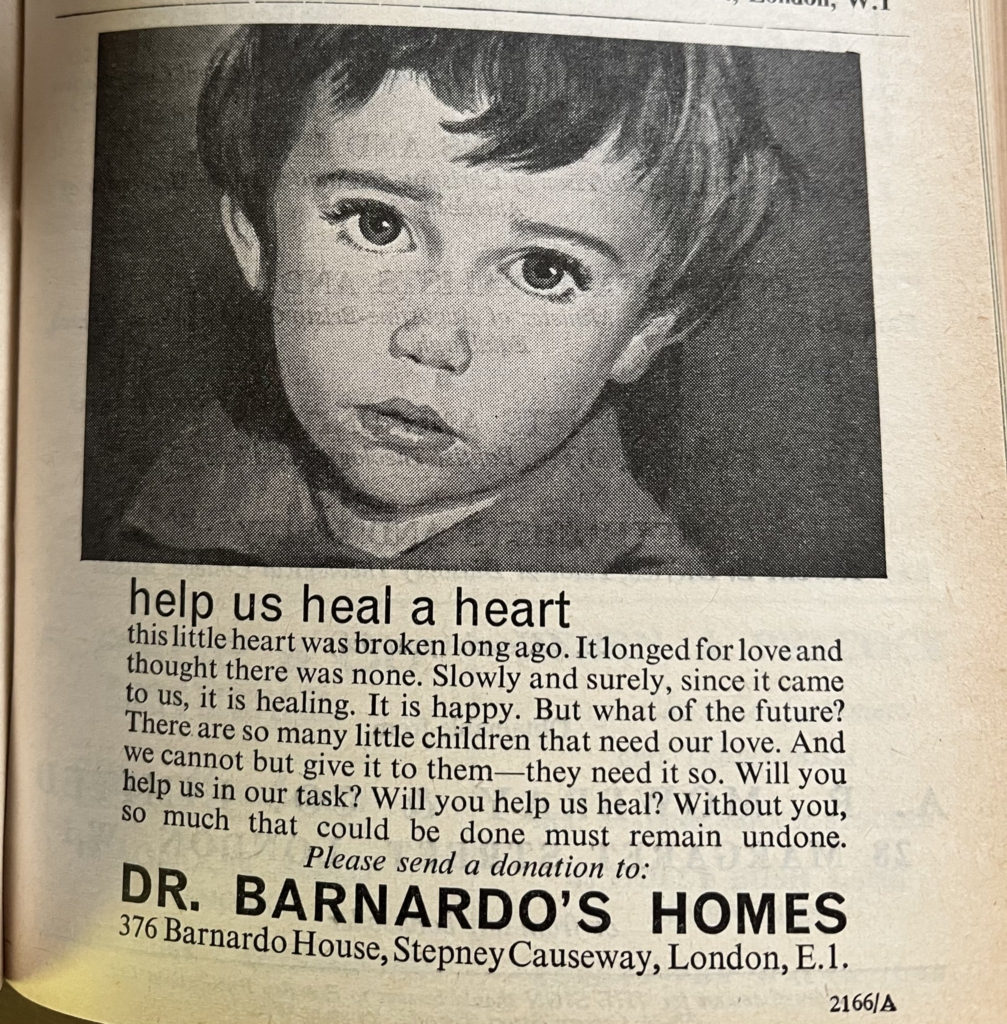
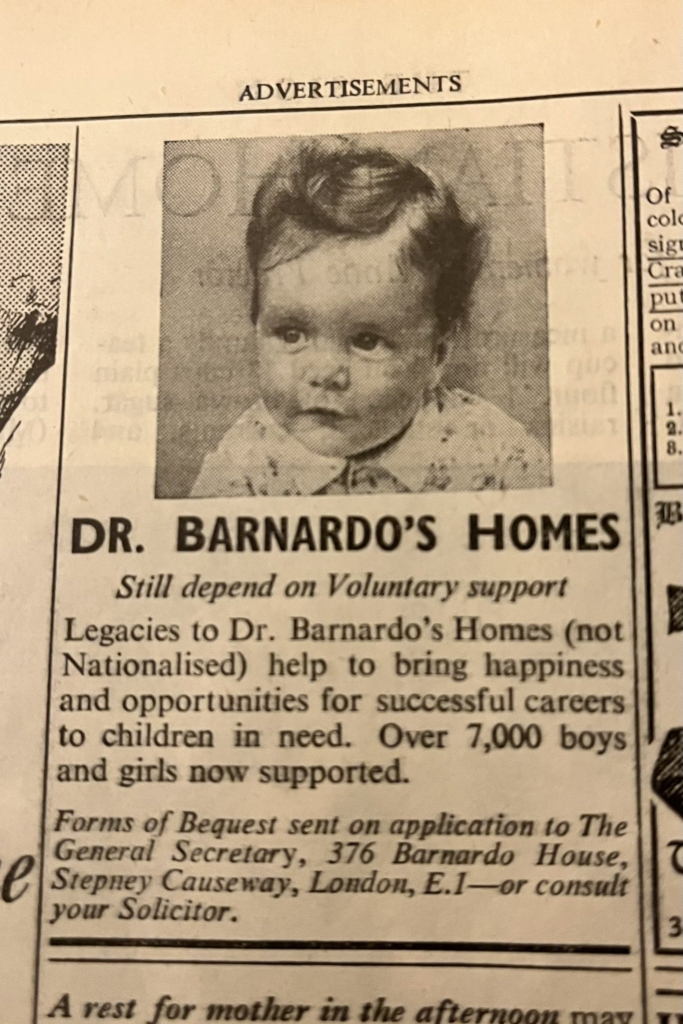
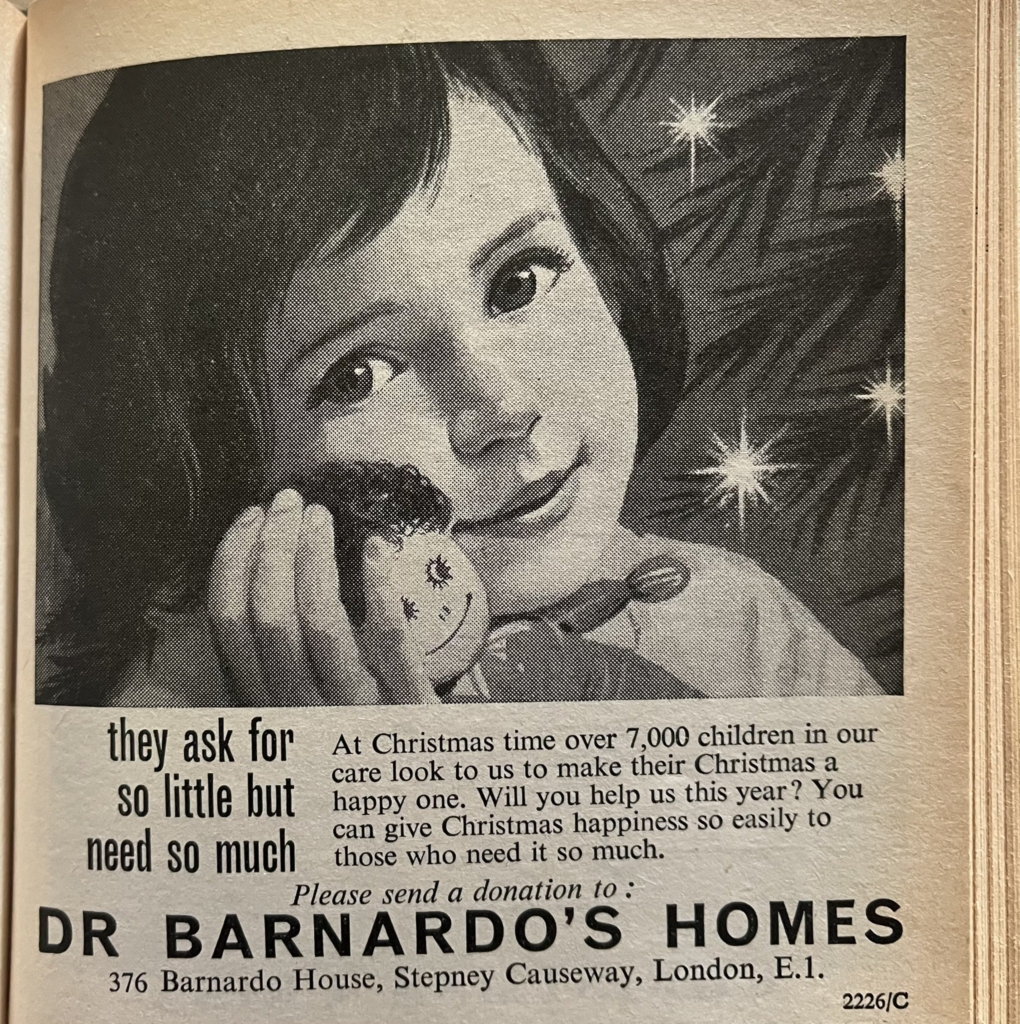
Images focusing on one child in need (photographs and illustrations) have continued to be popular with children’s charities.
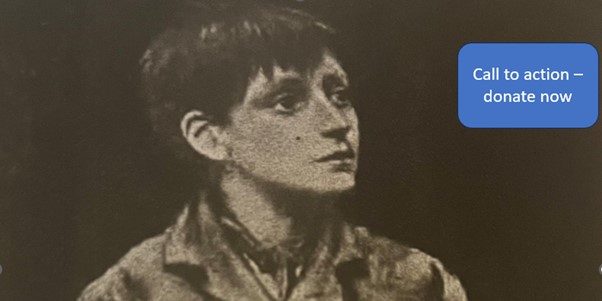
Most of these images focus on a single child looking directly at you. When humans see faces they look to the eyes first. The direct gaze elicits an emotional and sympathetic response – direct eye contact produces oxytocin (one of the happy chemicals) and promotes trust.
However, eye tracking in neuro marketing labs shows that naturally our eyes look first at the eyes in the picture (human or animal) and then our gaze is drawn to look to where the eyes are looking.
So a child looking at a ‘donate now‘ button on a website would draw the eye first to its face, its eyes and then the gaze would follow to the button where the child is looking. As demonstrated below:
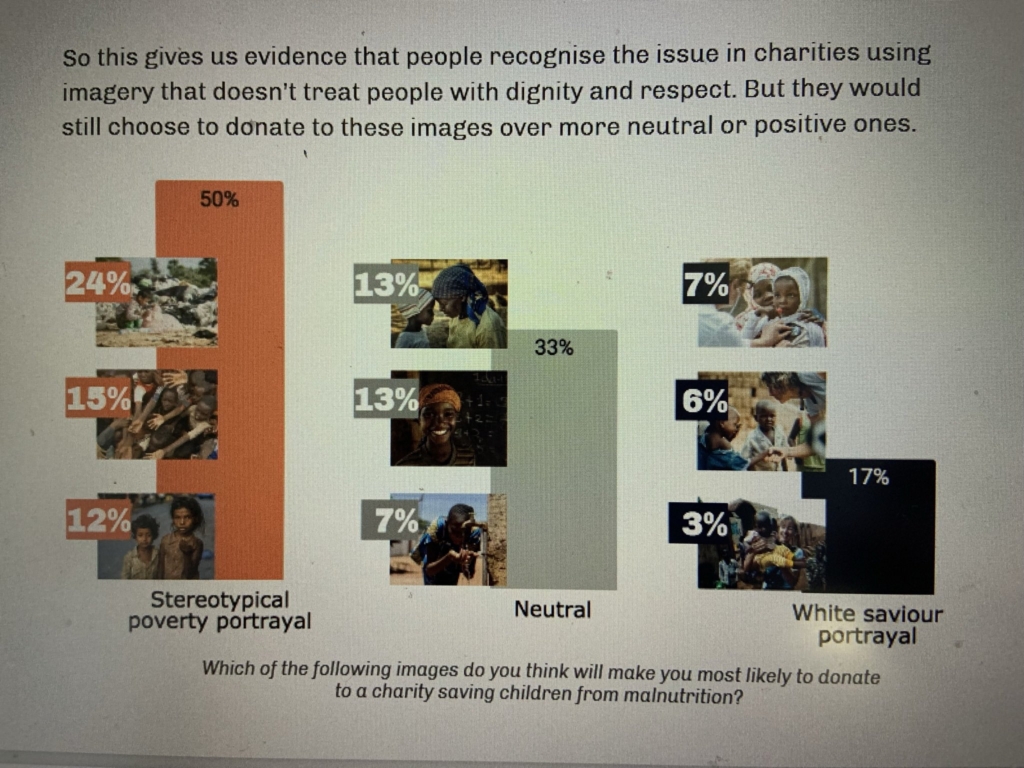
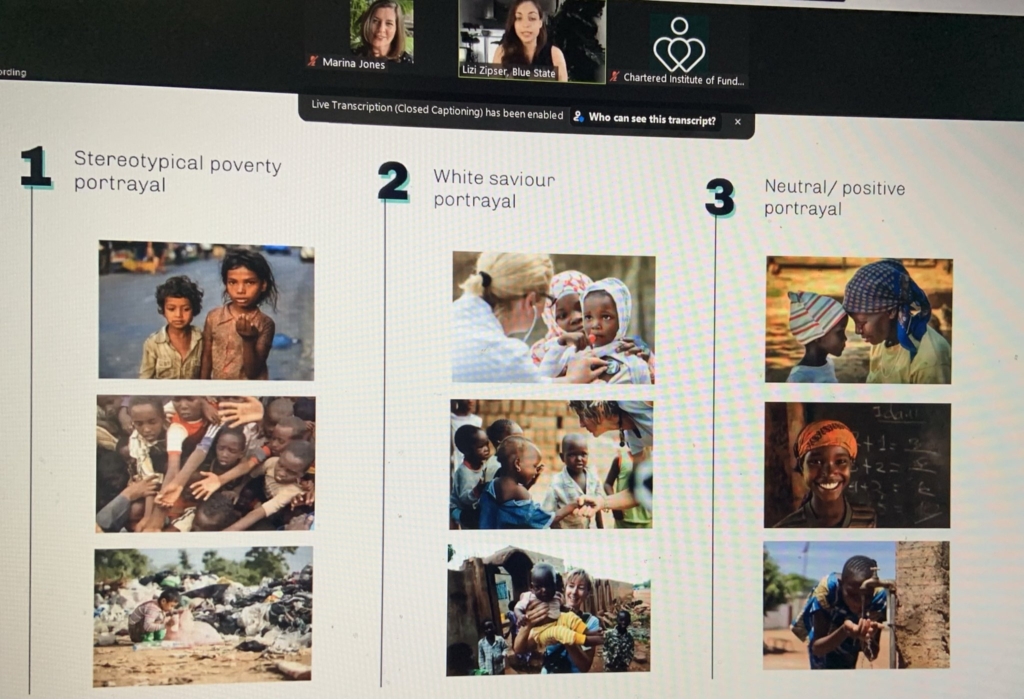
In 2021 Blue State research explored the images that were used to depict beneficiaries for international development charities. Many international charities feature children heavily in their campaigns. The research explored reactions to traditional poverty issues and images, testing reactions to stereotypical poverty portrays, white saviour depictions and more neutral issues. The research explored whether people could identify problematic issues with the images used – but went further to explore which images were more likely to elicit a donation. Despite having moments ago identified the images as stereotypical and removing dignity and agency from those portrayed the negative stereotypes generated more intent to give. The full report can be accessed here. So changing the images we use could have a detrimental impact on the amounts of money raised by a campaign…
Medecins san frontiers took an ethical stance on the images it used in its fundraising and actively stated that they would not be using traditional stereotypical images or white saviour medical personnel in its adverts – although I have not seen a public assessment on the impact of fundraising.
And else what might be possible in AI now? Could it tailor specifically targeted images to each individual? Knowing that we react to people who look like us, could AI generate specifically targeted fundraising marketing where the children in need look like you?
Since the first children were used in the 1850s in publicity images the debates and discussions about the ethics of the images we use and why need careful and thoughtful consideration – and our understandings and approaches continue to evolve.
What can we learn from all of this?
Using single images of one child can have a powerful effect – it attracts attention of supporters.
What reaction do you want from your audience? Do you want to elicit sympathy or drive action? Where should the eyes be looking.
The ethics of those used in any situation need consideration and it is easy to fall into stereotypes.
https://marinajones.uk/wp-content/uploads/2023/09/B-crop.jpg387602adminhttps://marinajones.uk/wp-content/uploads/2022/12/f2b903e010104f5aa61ea1821a685913.pngadmin2023-09-11 21:45:192023-09-12 08:29:57Here’s Looking at you Kid
The quote ‘never work with children or animals‘ is attributed to W.C. Fields talking about animals and children in films and them ‘stealing’ the limelight on screen.
So, I wanted to explore a few fun and quirky historical examples of when animals or children have stolen the fundraising limelight and reflect on why it might work, and how attitudes have changed.
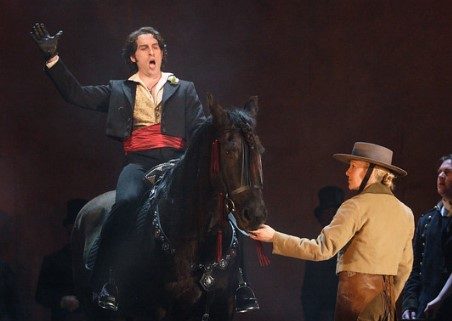
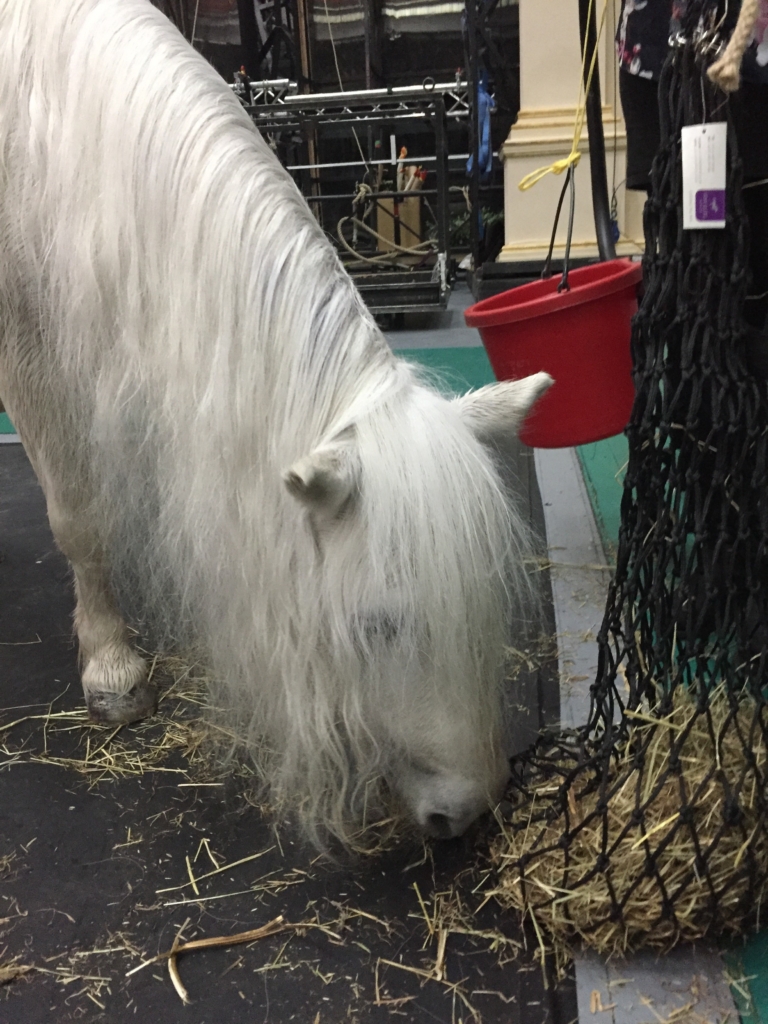
… now on stage I have seen shows with horses, donkeys, dogs, chickens, camels, pigeons, eagles, and some badly behaved sheep (all available to support). And they always steal the limelight, and often elicit a collective ‘aaah’ from the audience.
Mattador Escamillo on his stead in Carmen Perregrine backstage before La fille mal gardee
The fundraising examples I have found use enlisted chickens, a swimming pig, travelling horses and a ransomed rabbit to consider.
First animals …
Bazar enticements
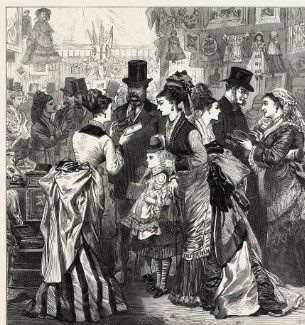
At Charity Bazaars – a sort of cross between a jumble sale and a proto charity shop – goods and food were sold for charity. Some of these were handmade handkerchiefs or pen wipers, and others were bought in bulk from department stores to sell cheaply. Charity Bazaars were not just about the goods for sale but about the day out and the whole experience – an entrance fee was paid and often celebrities, such as actors Sarah Bernhardt and Ellen Terry, opened them. Animals were often used as part of the attraction and included on the adverts enticing people to attend – wild animals and menageries – although I am not sure which animals!
The suffrage movement adopted the Charity Bazaar model and ran one for two weeks in 1909 raising over £5,000 for the cause. There were over 50 stalls selling food, cakes and books – but also suffragette merchandise and there were votes on issues of the day. One of the main attractions were mock prison cells to show how imprisoned suffrage protesters were kept with guided tours by former inmates. They had two types of cell – the male ‘first division’ cells which were much larger than the ‘second division’ cells where the suffragettes were kept. An important ‘show not tell’ fundraising tool.
Animals making the ask
In 1878, Gleanings for the Young tells the story of a young woman who trained her parrot to say ‘put something in the Bible Box‘ and it helped raise over £10 for charity before it flew away after seven years dutiful service.
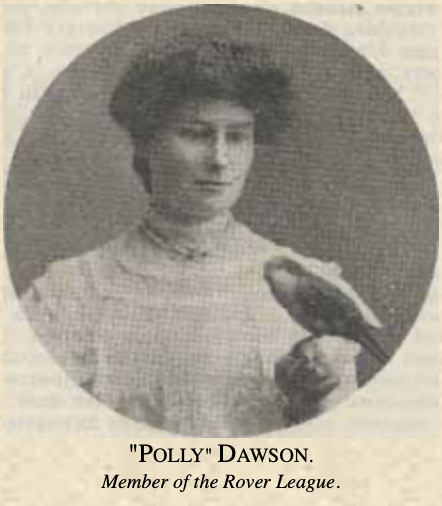
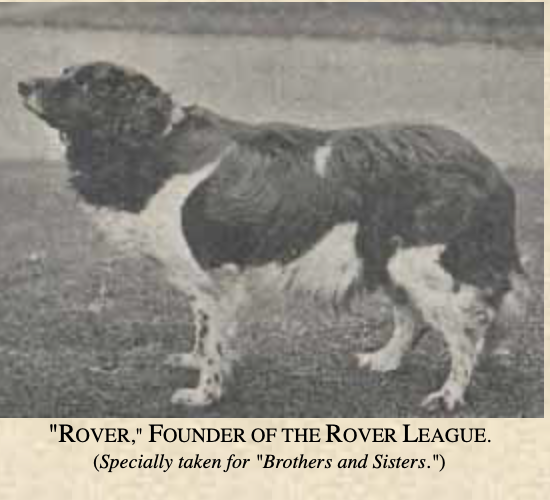
The Children’s Union developed a giving circle for pets in 1905, led by Rover it was called the Rover League. Rover wrote to the pets asking them to het their ‘masters and mistresses collect money for rebuilding the Home for disabled children at Byfleet.’ For 26d they could join the league and for an extra 2d got a badge. He suggested that they could carry collection boxes (see below) or do tricks tor help raise funds. This became a successful fundraiser with each pet ‘writing’ letters to the ‘Brothers and Sisters’ monthly magazine about why they were joining the League – each month new members flooded in from dogs and cats, to goats, a goldfish, parrots, donkeys and rabbits.
London Jack
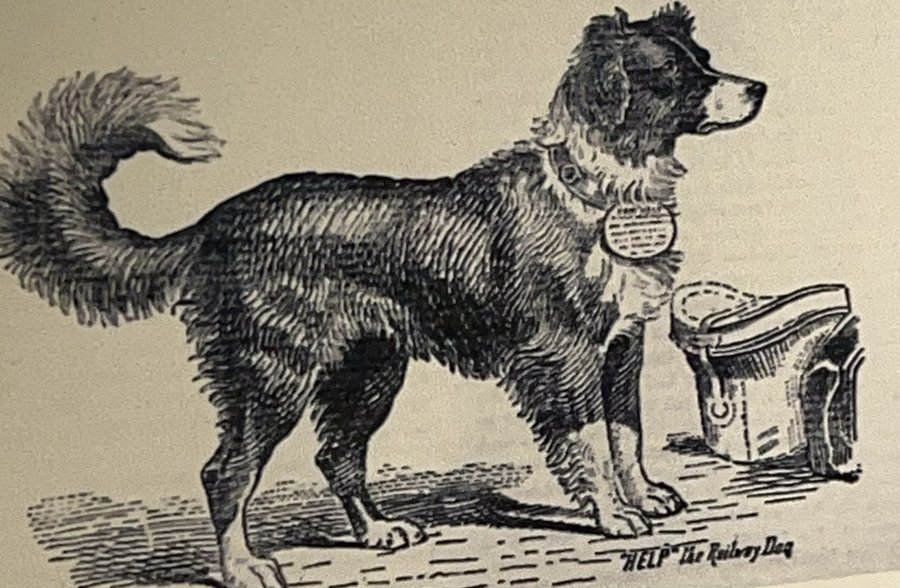
In 1880, Help became the first railway collecting dog. He had a wooden collecting box attached to him like a saddle with a collar with the message:
‘I am Help, the railway dog of England, and traveling agent for the orphans of railway men who are killed in duty.’
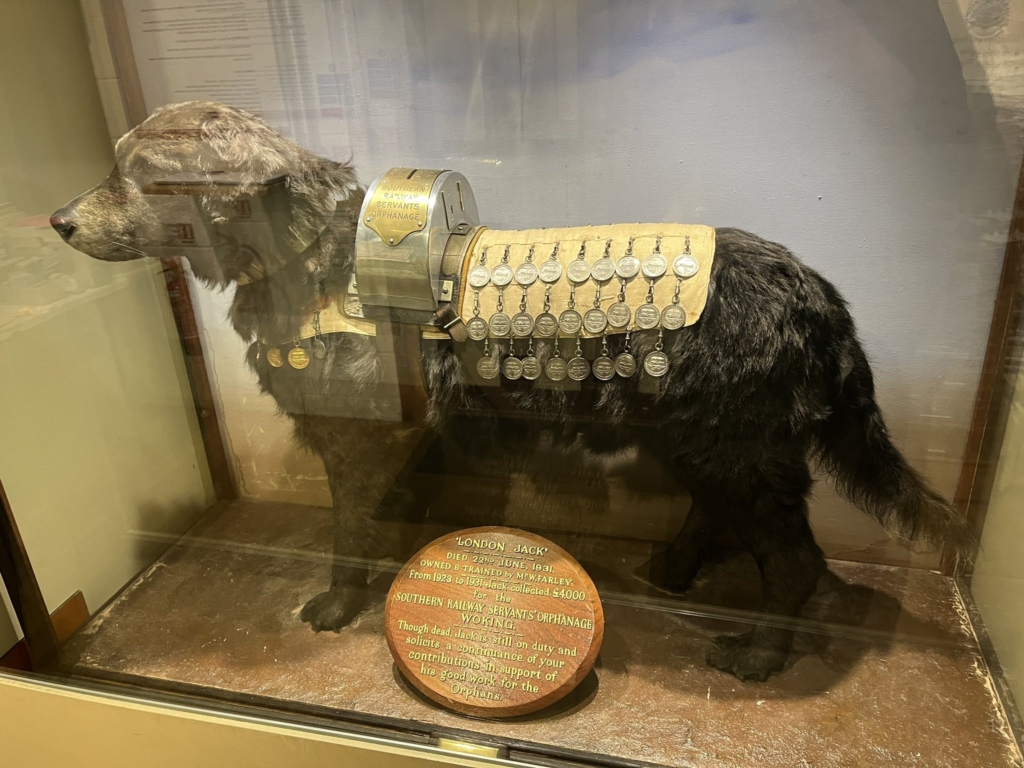
Help the railway dogLondon Jack on display at the Bluebell Railway Museum
He is said to have travelled every railway line in England and twice been to France raising an additional £1000 there.
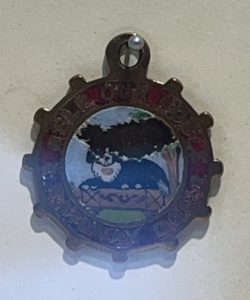
Help was clearly an institution as watch fobs were created inscribed with ‘Help out noble railway dog’. (Showcasing an early example of the importance of fundraising merch!)
Help – watch chain fob
Why was Help so successful?
A dog collecting donations clearly has a novelty impact – it stands out because it is unusual and causes us to pay attention.
Perhaps the reciprocity principle is also a factor – if, as many dog loving people do, you have reached down to pat the dog then you have made a connection, and want to do something in return to say thank you for the gift of the interaction with the animal.
London Jack, Wimbledon Nell & Laddie
Collecting dogs enjoyed some popularity in the late Victorian period and well into the twentieth century. Above is London Jack who collected at Waterloo Station from 1923-1930 during which time he collected over £4,500 for the Southern Railway Orphanage at Woking. He was then stuffed and put on display at Brighton station (the line is immaterial) until 1967. Jack is still on duty and collecting donations (currently on display at the Bluebell Railway.)
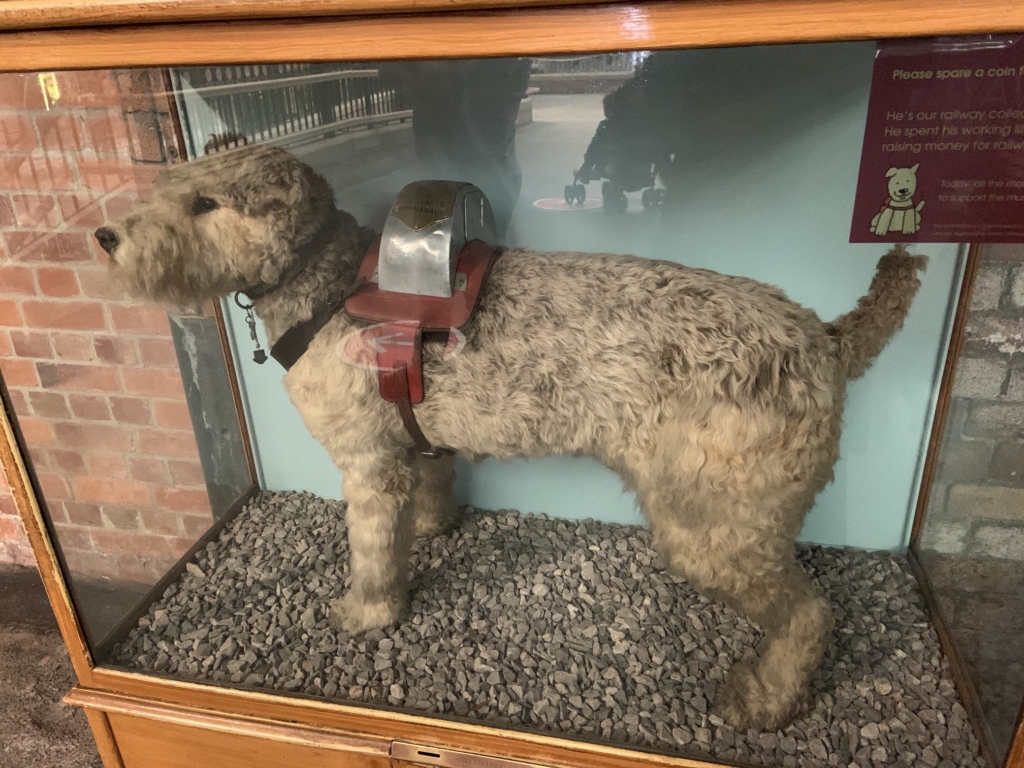
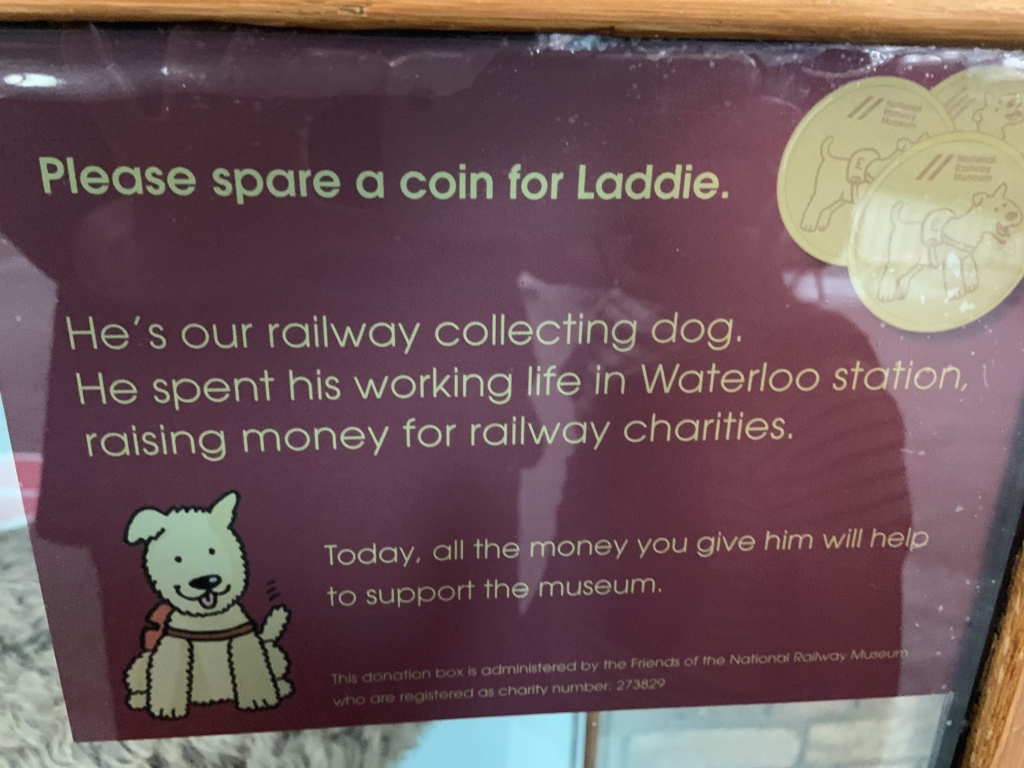
I know people who remember a Wimbledon Nell in South West London. He was succeeded by a stuffed dog called Laddie which collected money on Platform 8 at Wimbledon Station between 1960 and 1990. He now appears on display at the National Railway Museum at York.
Laddie on display in York’s National Railway Museum
Now we wouldn’t use live (or stuffed dead) animals now to ask for money nowadays as much and our understanding of ethics and exploitation has changed.
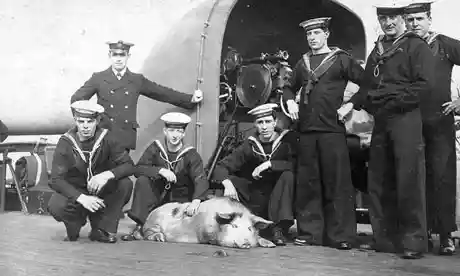
The German cruiser SMS Dresden was forced to surrender by the British HMS Glasgow off the coast of Chile in 1915. As it was sinking, one of the last onboard the ship was a large pig – who swam to shore and was recovered by the British Navy Ratings. She was named Tirpitz after the chief of the German navy and awarded a joke Iron Cross for being the last to abandon the German ship. She became a navy mascot until her troublesome behaviour meant she was returned to the Captain of HMS Glasgow. The Captain decided (according to a 1917 The Times article) to auction her “for the benefit of the British Red Cross.” She was on display at the stables of the Grosvenor Hotel in Chester for people to view before she went under the auctioneer’s hammer. On 11 December she went to auction and raised 400 guineas for the British Red Cross.
Tirpitz on display at the Imperial War Museum Tirpitz with the Navy
What happened next remains unclear, but it appears she may have been auctioned again as the caption at the Imperial War Museum where she is still on display, reads that she was auctioned for pork in 1919 raising £1,785 for the British Red Cross. If an auction’s worth doing once, its worth doing twice – same pig raising funds twice for the Red Cross.
The 6th Earl of Portland and owner at her death (1919) had her head mounted and donated to the Imperial War Museum where she was an object of curiosity and attraction at its opening in 1920. where she can still be seen today.
Tirpitz wasn’t the only fundraising pig the Church Mission Society auctioned a pig in 1867 raising 2l 17s. The pig had wondered onto J Pollard Esq’s land but after failing to find its rightful owner he fattened it up to raise funds for the Society. Hives of bees were maintained for honey and hens and rabbits were also sold to raise funds for the Society.
Sponsor a zoo animal – dormice or penguin?
London Zoo asks public to "adopt" animals, promising to pay for their upkeep should war with Germany break out. Prices vary: sixpence/week for dormice, 30 shillings for a penguin. pic.twitter.com/Sqeek7Nxn5
— Second World War tweets from 1941 (@RealTimeWWII) September 2, 2023
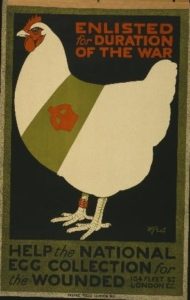
Enlist a chicken
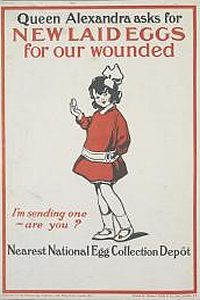
It was suggested that chickens be enlisted for the duration of the Great War as part of a campaign to send fresh eggs to soldiers and sailors on the front. During the war over 32 million eggs were donated to support the war effort – often with messages from donors to the soldiers at the front in the form of egg’o’grams. See How do you say thank you for 41 million eggs? – Marina Jones for more about this egg-strodinary campaign.
Horses for causes
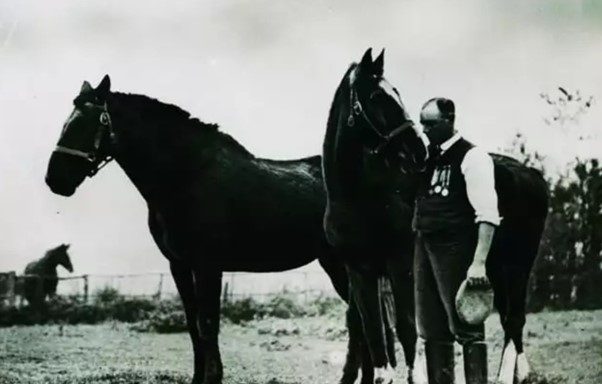
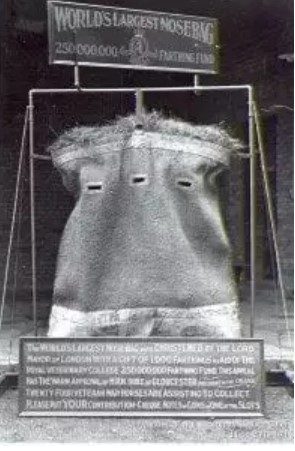
24 veteran First World War Cavalry horses were involved in raising funds to repair and refurbish the Royal Veterinary College including an animal hospital. They visited fairs and circuses up and down the country collecting funds in the World’s Largest Nosebag with a target of raising 250,000,000 farthings.
And why might cute animals be a particularly effective as a fundraising tool?
Because they WC Field was right and they steal the limelight.
We pay more attention to things that are unusual and that stand out – and an animal asking you for money is more unusual than a person.
But there is also the power of ‘cute’.
Rory Sutherland in Alchemy quotes an example of a electricity company running a competition with one prize to win a year’s free electricity or to win a cute penguin light. Which won? Of course, the cute penguin won – with x 350%+ more entries than the year’s free supply of electricity that was financially worth more. (Humans are not rational economic beings!)
Why do we pay attention?
It is part of a primal instinct – our primitive unevolved brains are hard wired to pay immediate attention to our surroundings and assess everything as a potential friend or foe. In the microseconds, it takes our brains to assess whether that fluffy bunny is a threat or not, quickly and subconsciously we decide it is not a threat, and positive emotions are then triggered which makes us pay more attention, and promote careful or caring behaviours.
“Kawaii (a Japanese word meaning “cute”) things are popular because they produce positive feelings. … Kawaii things not only make us happier, but also affect our behaviour.”
The Power of Kawaii: Viewing Cute Images Promotes a Careful Behavior and Narrows Attentional Focus – Nittono, Fukushima, Yano & Moriya)
Interactions with animals, such as dogs, can also cause a biochemical reactions producing our happy chemicals (Dopamine, Oxytocin, Serotonin and Endorphins). Perhaps the strongest chemical release with animals will be a rise in oxytocin – oxytocin is one of the four feel good hormones often called the ‘love’ or ‘hug drug’. It promotes social bonding and increases empathy. It can be triggered by eye contact – between a mother and baby, between lovers – or even when looking at a beloved pet, or a random collecting dog or parrot. Eye contact matters. The bigger the eyes the bigger the hit of the oxytocin.
The impact of seeing animals on screen has been demonstrated with an award winning charity campaign for the Shelter Pet Project. The Shelter Pet Project used neural marketing research from Nielson to test how to optimise their adverts. Neural marketing tracks our eyes movements and uses an EEG to assess our reactions . The EEG sensors collects data 500 times a second recording emotional motivation, attention processing and memory activation to record what is happening in our brains in real time when we are watching things. When the dog appeared on screen in the advert viewers had much higher emotional engagement, remembered messages more and paid more attention. Using this research Shelter Pet Project refined the advert to make it more effective and it won an Ogilvy award Ogilvy winner The Shelter Pet Project (thearf-org-unified-admin.s3.amazonaws.com)
So connecting with animals makes us feel good and produces reward chemicals – which explains the popularity of cute animal videos on social media (for that happy reward hit) and their success in fundraising situations.
Icky examples
And some more modern examples which draw on the ‘ick’ factor of salience– we do pay attention to something that is unusual, but sometimes it not a delightful thing, but a thing that revolts us. There are six basic human emotions (fear, disgust, surprise, anger, happiness and sadness) and our primitive brains are hardwired to react to perceived threats and react strongly to something that disgusts or surprises it. These fundraisers used fear and disgust – cockroaches, cat’s litter trays, and potentially killing a cute bunny to makes us pay attention.
A Valentine’s campaign at a zoo invited you to name a cockroach after your ex get it fed to an animal.
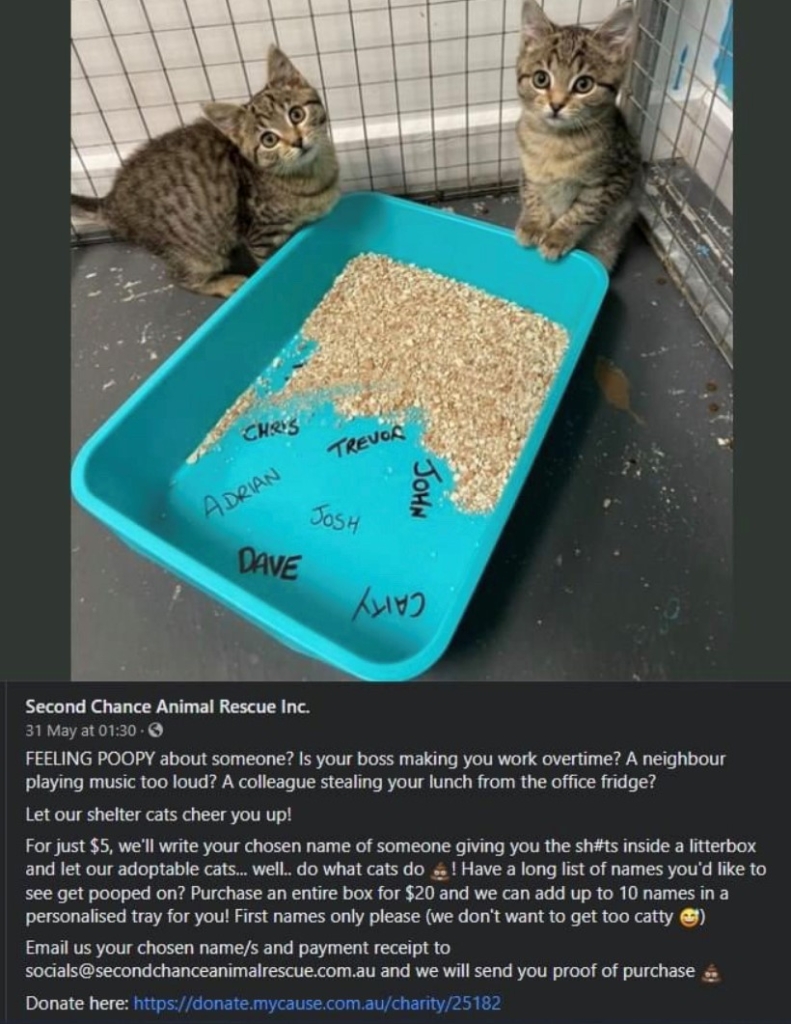
An animal shelter solicited donations and in return for your gift the names of those annoying you were written at the bottom of a cat’s litter tray.
And a hostage situation with a bunny called Bernd which involved raising money for charity to save the life of the bunny.
Now the first two are ‘lean out’ reaction – to move away from the object that our primitive brains react to with disgust or fear.
The third examples of the hostage rabbit is perhaps more interesting – for some donors it was a ‘lean in’ and donate to save the rabbit’s life, others offered recipes to cook the rabbit. Not all messengers or campaigns work for all donors in the way you might think!
We (or cats) don’t always give out of altruism, sometimes it is out of guilt
These two cats Quince and Quicksilver donate to RSCPA to make amends – as well as to cathedrals
https://marinajones.uk/wp-content/uploads/2023/09/Rocket-close-up.jpg2891110adminhttps://marinajones.uk/wp-content/uploads/2022/12/f2b903e010104f5aa61ea1821a685913.pngadmin2023-09-05 08:22:182025-07-27 09:29:06Never work with children or animals…
Cue – eye roll from the fundraiser, and a back-to-basics explanation of how fundraising works to the well-meaning Development Committee member who suggested it.
It is a truth universally acknowledged that billionaire in a possession of a good fortune must be in want of making a donation to your charity … to badly paraphrase Jane Austen.
But what happens when the 3Cs (capacity, commitment and connection) are in place and you do ask actually the wealthiest and most generous philanthropist of your generation for financial support for your cause?
That’s what another Gates did – Frederick T Gates who secured a major gift from the biggest philanthropist of his day – John D. Rockefeller.
Following his success, he wrote 19 maxims on how to ask for charitable donations to causes.
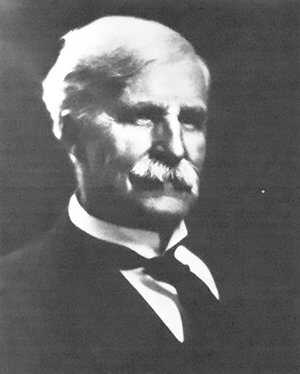
Frederick T Gates
So what do these ‘Rules of Procedure’ say and do they still apply today?
“every gift… will depend not a little on their estimation of the importance of the canvasser.”
Who makes the ask remains a crucial factor in fundraising success, and one of the skills of the fundraiser is to decide who the right person to make the ask is – and to match it to the donor.
‘The importance of the canvasser’ is subjective – often it is the fundraiser who asks but for some donors the CEO or Chair of the Board is going to be the person they think is the most important person to ask them for the gift, for others it might be a peer-to-peer ask from another donor like them who asks them to join them in supporting the cause, for others it might be the Project Manager, the Curator or the Artist.
And sometimes a combination of all of these – and the skill of the fundraiser is to choreograph the dance between the various parties and pick the right canvasser for the right donor.
“Keep absolutely and serenely good humoured! …. Never argue with a man, never contradict him”
This speaks to the emotional labour a fundraiser has to perform– like customer service, hospitality staff or flight attendants the fundraiser is generally expected to manage their behaviour, emotional response and personal presentation in a certain way to ensure that the job is done smoothly and gifts secured.
The power dynamics in the donor/fundraiser relationship have ever been present.
Although, Gates speaks of making yourself as charming as possible to potential donors there are moments when we have to challenge the potential supporter, he says
“Never oppose anything which he says, that you are not absolutely bound to oppose by the very essence of your mission, in all else yield”
With the power dynamics in play at what point do we stop, and disagree based on mission, personal or organisational values, cause or other beliefs? And does our organisation support us if and when we do?
Gates goes on to speak about a values driven fundraising approach:
“do not ask a man for a dollar until you are in the depths of your soul satisfied that, viewed from the highest motives your cause fully justifies all the gifts and sacrifices you ask. Allow nothing to induce you to undertake a canvas that does not possess you through and through”
Do we need to believe in what we are asking for?
Gates was a Baptist Minister and asking for funds to support religious and wider education. For him the fundraising part of the role was a vocation, not a profession.
Are we asking for projects that we are passionate about? that you know where the money will be spent, the impact it will have, and the difference you are enabling the donor to make? That you, as the fundraiser, are informed and trust in the charity that you work for. Would we ever recommend another charity, or way to give the support the donor wanted?
“Dress well. Put on your best clothes and let them be costly … People size up one’s importance and dignity very largely by personal appearance and the size of their gifts … People are judged by these apparent trifles of personal appearance far more often than is expected”
Yes, when making the ask you want to wear your ‘best clothes’. To feel confident and different outfits might engender this confidence – and a subjective application of your ‘best’ clothes for the job – for some that is lipstick and heels, for others formal business attire, and for others it will be jeans and a t-shirt, or appropriate work clothes. Clothes often act as a placebo to help us feel more in control of the situation – read more about the placebo effect here. It depends on the ask, the cause, the charity, ourselves and the donor.
Are we judged by what we wear? Often, but there is a greater understanding perhaps from billionaire donors, or any other type of donor, that the person asking can come as their authentic self – whether that is the fundraiser or the CEO – in jeans or in heels (or both).
Sometimes a donor might want to meet you in a venue that has a particular dress code or expectation. Other times, like when visiting a building site for a capital project you might have to specify the dress code for the donor.
“Provide yourself with an elegant personal card .. cut off all your titles and do let the card even indicate your business”
Now Gates was writing at a time when those tasked with fundraising were in other organisational positions – the title of fundraiser did not appear on the payroll – he was an ordained minister and working for the Baptist Education Board trying to found a new university for Chicago.
Russell James III has done research on job titles used across fundraising teams and what works or doesn’t to help donors know who to talk to when considering gift. The title Director of Advancement was the worst performing title most disliked by donors – with only 7% saying they would contact someone with this title – however, more than 21% indicated that they “would definitely contact” a Director of Donor Advising. Often our job titles reflect our institutions and structures and are not helpful to supporters. Whilst removing them might be a step too far – do we need to rethink titles that are more meaningful to our supporters?
And when you fear a no …
“It is a good plan never to allow a man to give a final ‘no’ or to commit himself in words definitely and finally against your cause. If you see it coming … excuse yourself before the fatal word has come out and withdraw so as to give your excuse of coming again”
Fundraisers can often be frightened of receiving a no from a donor, and here Gates implies that we should leave before that ‘fatal word comes out’. However, but there are said to be 9 types of no and knowing what kind of ‘no’ you have got can help you shape the next conversation and ask…
“But though he declined, do not regard or let him regard the mater as closed. You will be near him again in a few days and things may look different to him. And how you have enjoyed the call and would like to call again”
Keeping the possibility of another conversation is important – that you can find the right project, area of work, amount, canvasser or hook that makes saying yes right for the donor.
“you should keep your enterprise well exploited to the public through the daily press. Never let a week pass without some public notice of your work”
Now with social media this sort of thing is not an issue, and multiple communications a day could appear in the feed of your potential donor. Continuing to champion your message on social media, in the traditional press and with other opinion formers remains important and how those outside your direct spheres of influence can hear about the impact of your work. Having the top five stories or facts about your charity that your board or development committee can share at a dinner party might have the same impact.
Making the ask
And when in the making the ask Gates has move advice … now a word of caution on the language – some of it is not how we would talk about donors now (victim and fish) but the focus on active listening, body language and allowing the donor to decide are important.
“Go straight to your subject without palaver … awaken the happy anticipation that your stay will be brief .. by going straight to the point at once”
“You must keep you victim, if I may so call him …. Good natured”
“give your fish the reel and listen with the deepest interest to every syllable”
(Active listening good – referring to your potential supporter as a hooked fish maybe not so good)
“If you find him big with gift, do not rush him too early to the birth”
“Make him feel that he is making the gift, not that it is being taken from him by violence”
“Appeal only to the noblest motives”
“Your victim will, himself, unconsciously and instinctively decide”
“if he is taciturn.. keep your own mill going, while you watch his face”
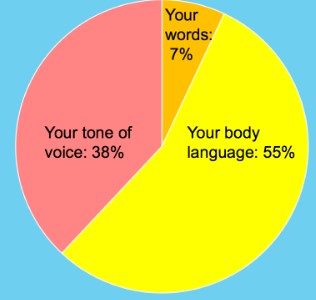
It is important to remember how we receive information and that the words are only 7% – the body language of your donor can give you 55% of what they are thinking so focussing on the non verbal clues is an important skill for a fundraiser.
And rather alarmingly…
“People bleed more easily after a vein has been opened”
Although there does seem to be truth in this – it is a device called the Benjamin Franklin method or the ‘foot in the door method’. Once someone has done something once for you, however small, they are more inclined to do something bigger for you. Is it Ken Burnett who says that a person who donates once is a responder but does not become a donor until a second gift.
And a bit more about Frederick Gates, his fundraising career & success with Rockefeller
Frederick T Gates, like his father before him was a Baptist minister and worked with the Baptist Academy and the American Baptist Education Society to raise funds for schools and seminaries.
They wanted to create a new university in Chicago but received ‘no encouragement’ from Rockefeller in this undertaking.
Gates and the team undertook methodical fundraising “arranging them [potential donors] in order of their ability and to indicate in connection with each name the amount that they might fairly be expected to give him some idea of the man in a series of brief remarks attached to each name”
What did these proto prospect research notes look like?
Well, this was definitely in pre GDPR/data protection days and not designed to be read by the donor! The notes include:
“ignorant man. Will perhaps show you his fine horse and library”
“He will be glad to see you and talk freely but you will need all your wit and wisdom to land him”
All of these conversations were used to get pledges of those that might be interested in supporting the scheme.
A previous scheme for a Baptist University in Chicago had failed and Rockefeller was suspicious of getting involved in another. Demonstrating how important trust is in the donor relationship is.
Civic and religious pride was also invoked in the campaign – and there was a debate over whether the great Baptist University ought to be in Chicago or NYC. There was also competition between the Baptists, Presbyterians and Methodists on which denomination might found one in Chicago first.
Gates worked to understand what was important to Rockefeller. Rockefeller’s background and interest in education and shaped the proposal accordingly (now this might be a bit too donor centric for today’s taste) but the university expanded to support feeder schools and the systemic change to the system. After reading through detailed plans in a ‘confidential’ board paper entitled ‘The Need of A Baptist University in Chicago as Illustrated by a Study of Baptist Collegiate Education in the West’ ‘found’ its way to Rockefeller.
Rockefeller was starting to get keen to meet Gates and know more about his plans, but his wife got a cold and it had to be rescheduled. But Rockefeller was also keen to know public opinion. So Gates galvanised a press campaign championing the virtues of the university scheme.
In 1899 Gates was introduced to Rockefeller, but Rockefeller said he was ‘very busy’ and that Gates could write to him. Gates used this invitation to his full advantage.
“I can now write with very great care choosing all my words and making proper qualifications and reservations where needed and fortifying my points as tactfully as possible”
Rockefeller was impressed by the business minded approach of the letter and the solutions to the education issues proposed and the understanding it showed of the complexity of the problem and its solution. It demonstrates the importance to know your field and respect the expertise of those funding and working in the area.
Gates wrote to Rockefeller on the Sunday.
On the Tuesday, he was invited to lunch with Mr Rockefeller on the Wednesday.
At that first lunch on the Wednesday, they did not even discuss the funding proposal but talked about general topics.
On the Thursday Mr Rockefeller invited him to accompany him to Cleveland on a business trip.
This all happened in January, in February Rockefeller was publicly on board and suggesting names of useful committee members and donors (just the kind of donor we like!)
Don’t be afraid to ask for what you need – and don’t always take the first offer
In a reverse of the traditional nos of fundraising – this time it was the fundraiser who said no.
Rockefeller offered $400,000 towards the Chicago University project
Gates said ‘no – that’s not enough’
Rockefeller raised it to $500,000
But Gates kept going
$600,000 was agreed on (towards the target of $1m for the project)
Sometimes we need to be braver in the ask – what we need to thrive, not just survive.
The celebrity support of Rockefeller helped bring in the other gifts and a further $200,000 in matched gifts was raised shortly after.
“even the ‘hard nuts’ are coming into line’
Once a campaign is perceived to have prominent and influential support others are more likely to join. Supporters often want to know ‘who else is giving?’ so they feel that their gift is a normal and desirable thing for people like them.
And the rest is history….
In 1892 Rockefeller asked Gates to be his personal agent and help him decide on where to give
Gates notoriously told Rockefeller
“Your fortune is rolling up, rolling up like an avalanche! You must keep up with it! You must distribute it faster than it grows! If you do not, it will crush you and your children and your children’s children.”
Gates helped Rockefeller develop his approach to giving and look at the root causes of issues like education and medicine rather than just providing relief. In 1901 Rockefeller Institute for Medical Research was founded looking into disease prevention and Gates’ advice led to the creation of the Rockefeller Foundation in 1913.
So if you do have the capacity, commitment and connection with a billionaire remember
Who asks is important
Set your charm on stun – but don’t forget your integrity
Wear your ‘best clothes’ – whatever that means for you
https://marinajones.uk/wp-content/uploads/2023/08/gates-eyes.jpg109495adminhttps://marinajones.uk/wp-content/uploads/2022/12/f2b903e010104f5aa61ea1821a685913.pngadmin2023-08-16 20:37:032024-10-27 13:10:45Why don’t you ask Bill Gates?
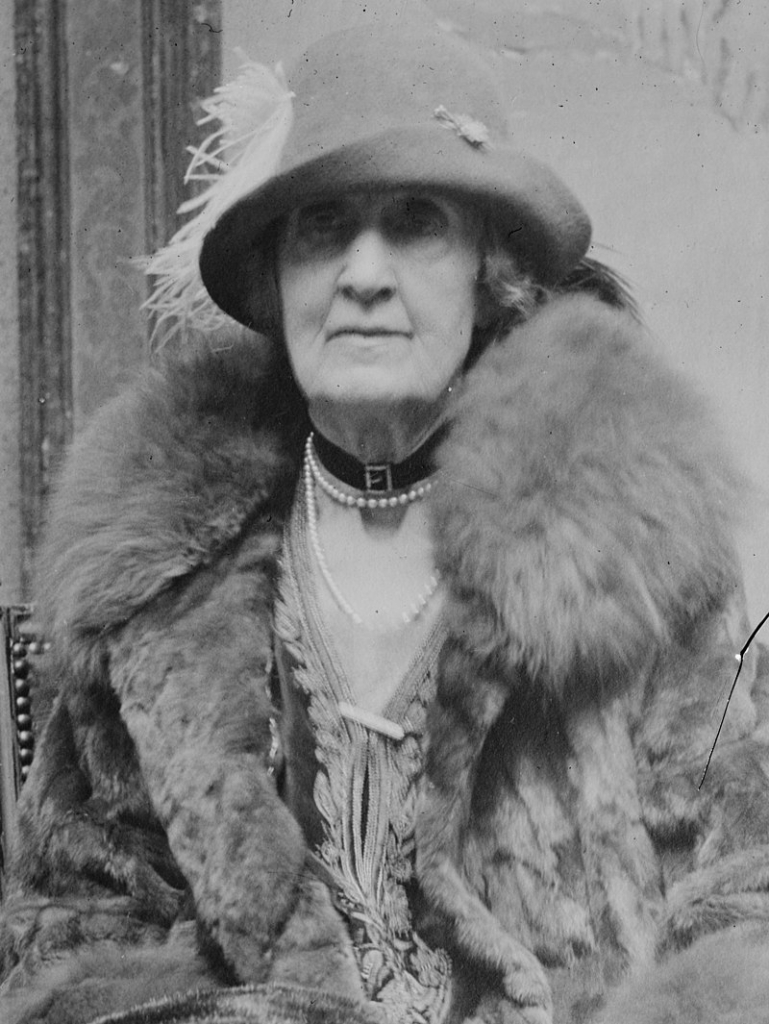
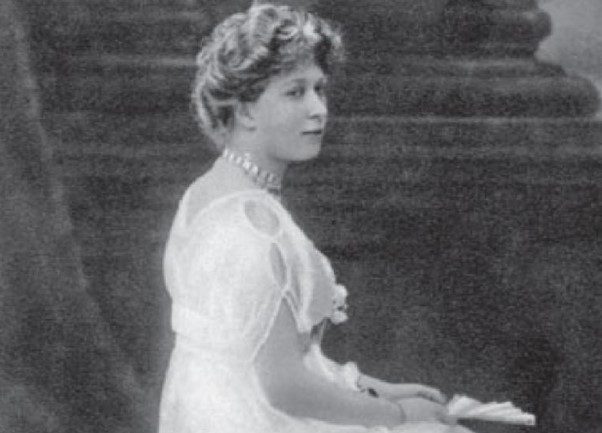
In 1912, William Harvey Allen the Director of the Bureau of Municipal Research and National Training School for Public Service examined 6,000 appeals sent to the philanthropist Mrs E H Harriman asking for $267,000,000 in charitable gifts.
After the death of her husband, the railroad executive, Mrs Harriman became a noted and active philanthropist supporting a variety of causes. Read more about her here Mary Williamson Harriman – Wikipedia
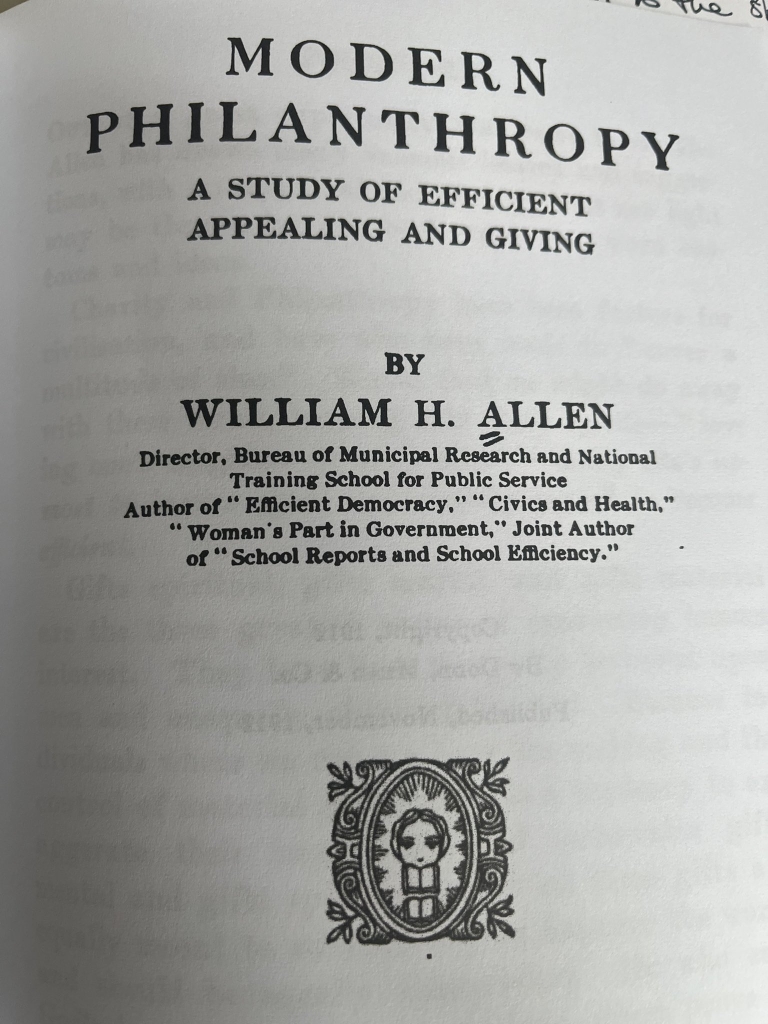
These are detailed in the book Modern Philanthropy A Study of Efficient Appealing and Giving
To give a bit of context in 1911, reports show that $270,000,000 worth of donations were given in the US of which $30,635,647 was bequeathed to charity in wills.
What do they show us about the concerns of the time that we still care about?
How advanced or not was fundraising?
What guidance did they have for the writer of appeals that we can apply to our fundraising today?
Has much changed or have we always worried about the same issues and made the same mistakes?
Philanthropy and what is deemed charitable is always based in time, place and culture. The vast majority of requests would still be deemed charitable today (health, disease, children, education) but there are a few more time specific ones – a national crusade against polygamy and celestial marriage (?!), home for aged Swedes and a museum of safety and sanitation.
So, what do the letters and an analysis of them show us about the concerns of the time that are still challenges for us today?
There is no way of finding where the money is most needed & who ought to fund what
In 1912, there was a lack of interconnectivity of what charities and agencies existed, and who is helping who. There are not clear distinctions over whether something should be funded by the state or philanthropy, and debates about the role of both in trying to provide solutions. The Bureau of Municipal Research often wrote back to petitioners with advice and guidance on the best place to get financial or practical help, for example, state provided support.
To provide greater efficiency about how decisions are made, the Bureau of Municipal Research suggests developing a central clearing house for the assessment of what is actually needed. This clearing house would be tasked with looking at duplications of provision, and signposting other appropriate services (both philanthropic and state). They wanted to create a directory of private philanthropy in each city to map what is provided and who is supporting each causal area.
Questions about ethics of the images used in fundraising
There were concerns about the images used to generate sympathy and funds for the cause. The fact that the image below for an appeal for the New York Association for Improving the Condition of the poor was created in a photographer’s studio was questioned as it does not show the real beneficiaries or make clear that it is a created image.
These concerns have been mirrored more recently with questions about who and how beneficiaries ought to be depicted in an ethical. Some charities have started using AI to generate images for campaigns (see this article AI-generated images raise money for charity. What’s wrong? | The Star).
So the debate about the best way to represent visually those that need support continues to this day.
The challenge of core costs
It seems fundraisers have always shied away from talking about the core costs, the cost of raising the funds and running the charity as these quotes demonstrate:
“No appeals have stated what part of the gift would be used to pay for appealing”
“few agencies keep a careful record of the postage, stationary and printing of appeals”
Although ROI on appeals seems not to be noted as standard it does cite a 1910 New York Association for Improving the Condition of the Poor spent $1,500 on adverts in newspapers and got a return of $11,500.
Worries about donor fatigue
Concerns about donor and compassion fatigue are not just current ones it was cited in 1912 as a concern:
“unfortunately for the starvation-broken-leg-blind-widow-with-five-children appeal, our nervous system requires ever increasing doses of sympathy drug, beyond the capacity of the English language or human suffering to supply”
First do no harm
“Giving away money without wasting it and without harming anyone is pretty hard work”
There was a real concern about how unthoughtful philanthropic activity can end up harming those it tried to help. They describe this as ‘vagrant giving’ as without thought and giving in the wrong way more harm is done.
Why are philanthropists motivated to give
“The rich give for the same reason the near rich or the never rich give, because they like to or because they like it less than they dislike the alternatives presented”
“if our appeals aim at motives we shall get more money than if we aim at their money”
Instinct – save a baby’s life
Comfort – Fresh air contribution before leaving for mountain or seashore
Commerce – give or advertise trade discounts to orphan asylums
Anti nuisance – Give to an importunate appealer for a day nursery
Anti slum – Free vaccination for slum babies
Pro slum – House to house nursing for the babies’ sake
Recognition of rights – 100% of health protection for 100% of babies, not as a gift but as their right”
A century later Bekkers & Wiepking (2010) described eight major reasons why people donate to charity which are (1) awareness of need; (2) solicitation; (3) costs and benefits; (4) altruism; (5) reputation; (6) psychological benefits; (7) values; (8) efficacy. We can see some overlap between the two lists of motivations but the older ones has no recognition of the role of the fundraiser and that someone needs to make the ask.
Giving ought to be joyful and meaningful
“that those who give ‘without missing’ are sure to miss it in their giving”
Too often in society circles they see the “endless chain reaction” of “give me $25 today for my charity and tomorrow I will gladly give you $25 for yours”. (With certain sets of donors has much changed?)
But fundraisers have the opportunity to “delight [donors]in making others happy”
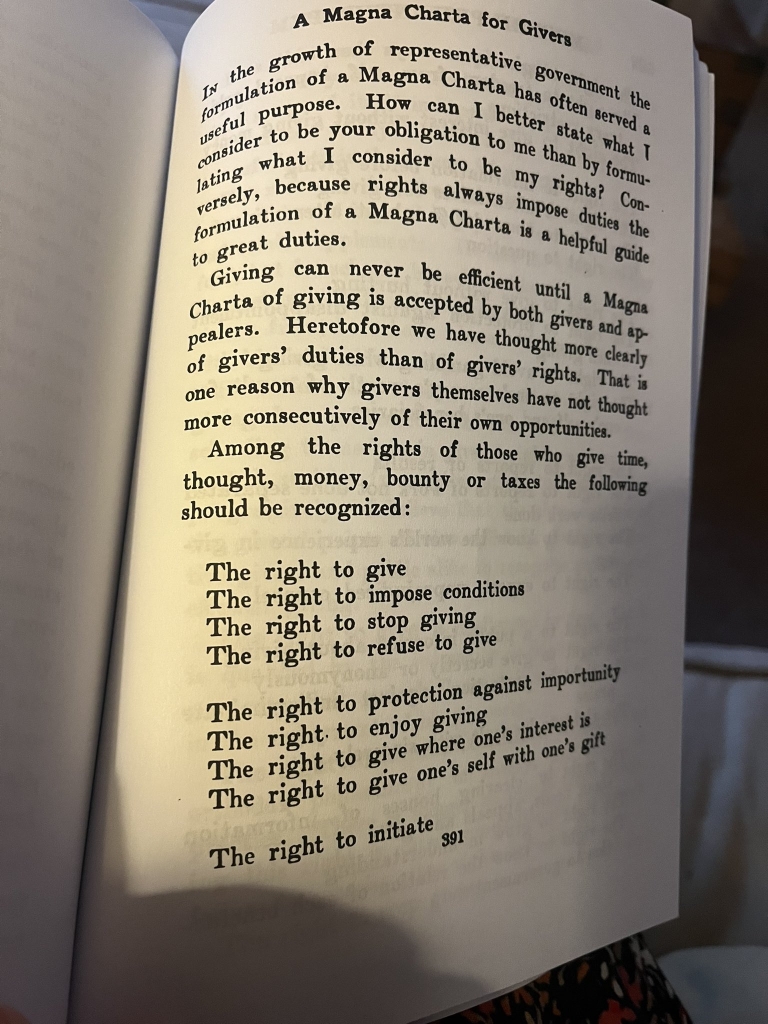
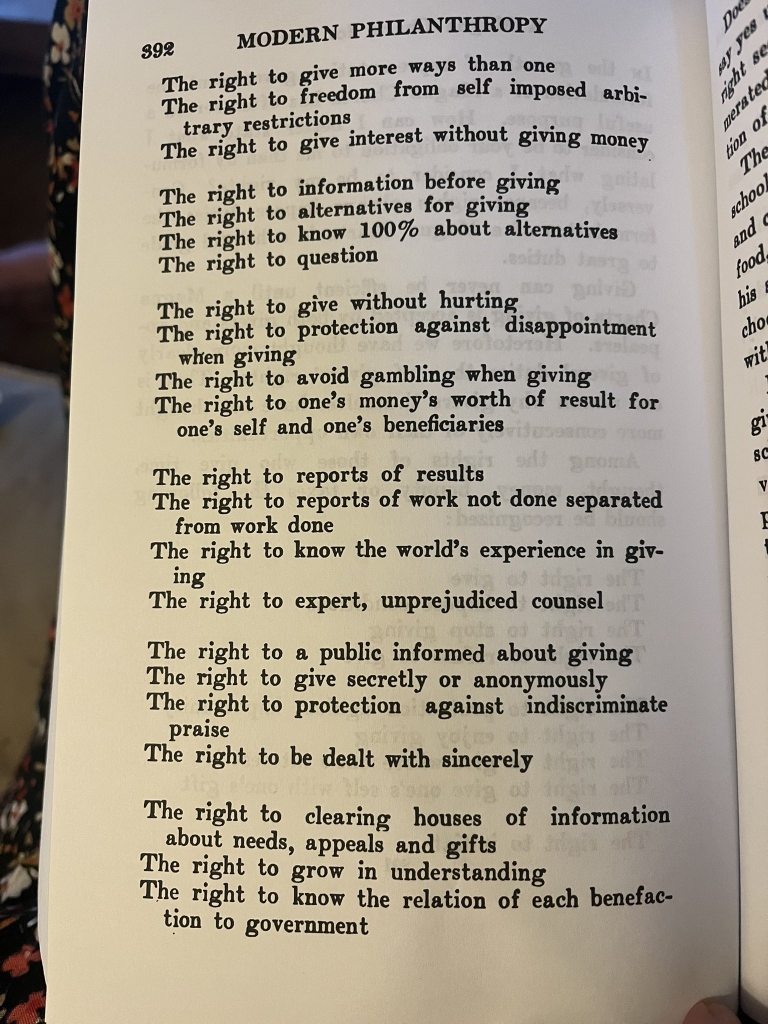
A charter for givers
William Harvey Allen, author of the book, proposes a Magna Carter for Givers about how those that are asked ought to look and give which includes
“guarantee a sympathetic reading of letters”
“organise and conduct a national museum that will do for the fields of efficient giving”
“– the right to give
– the right to enjoy giving
– the right to reports of results
– the right to grow in understanding“
The Garfield Weston Foundation has a Charter which is a modern foundation’s version of this.
Fundraising and the appeals we create do more than raise vitally needed funds they help us society to understand the challenges faced and why such conditions exist.
“Appeals have done more to teach this country sociology than have all the universities”
Introducing new trends– the first grant proposal form
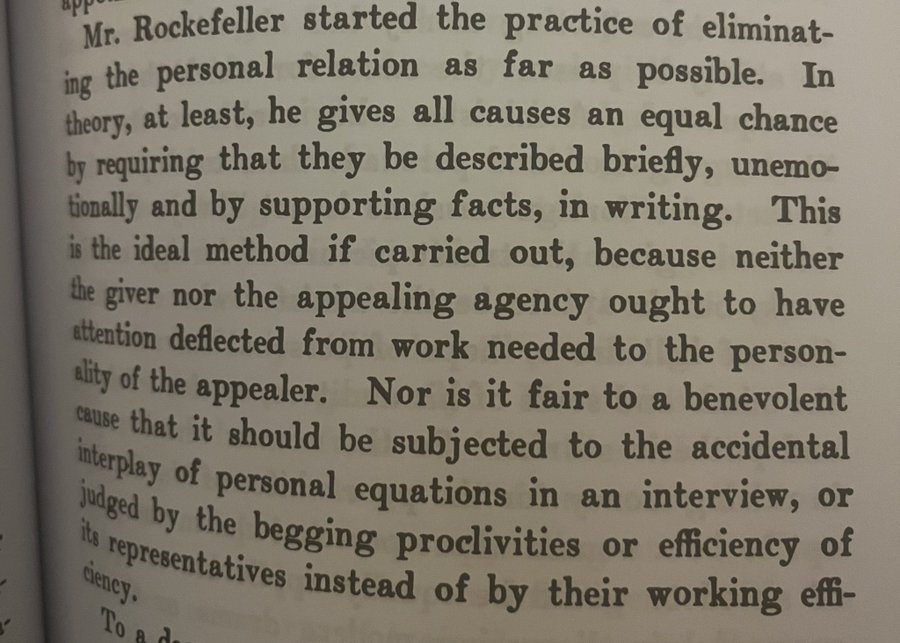
Rockefeller is cited as introducing a new way of deciding on where funds are given – this could be the first grant application form?
“he gives all causes an equal chance by requesting that they be described briefly, unemotionally and by supportive facts in writing”
Embracing new technology
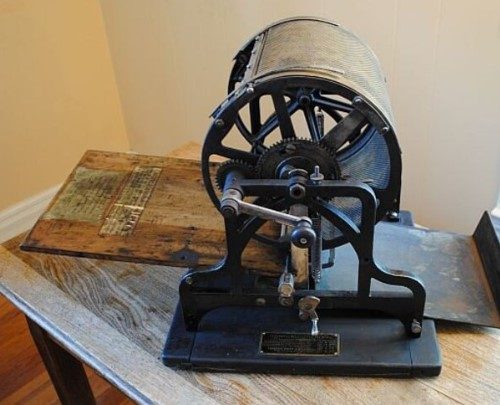
Fundraising always keeps up with new trends and embraces new technologies in its appeals. The same was true in 1912. and “like the largest and best organisations we have been compelled to adopt the mechanical follow up” The mimeograph was an early copying machine and they created multiple printed copies which were used as to follow up original appeal letters. There were concerns that this lacked the personal touch as letters would be hand addressed (Dear Mrs Harriman) with the rest a mimeograph.
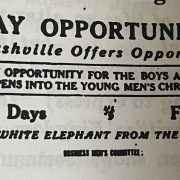
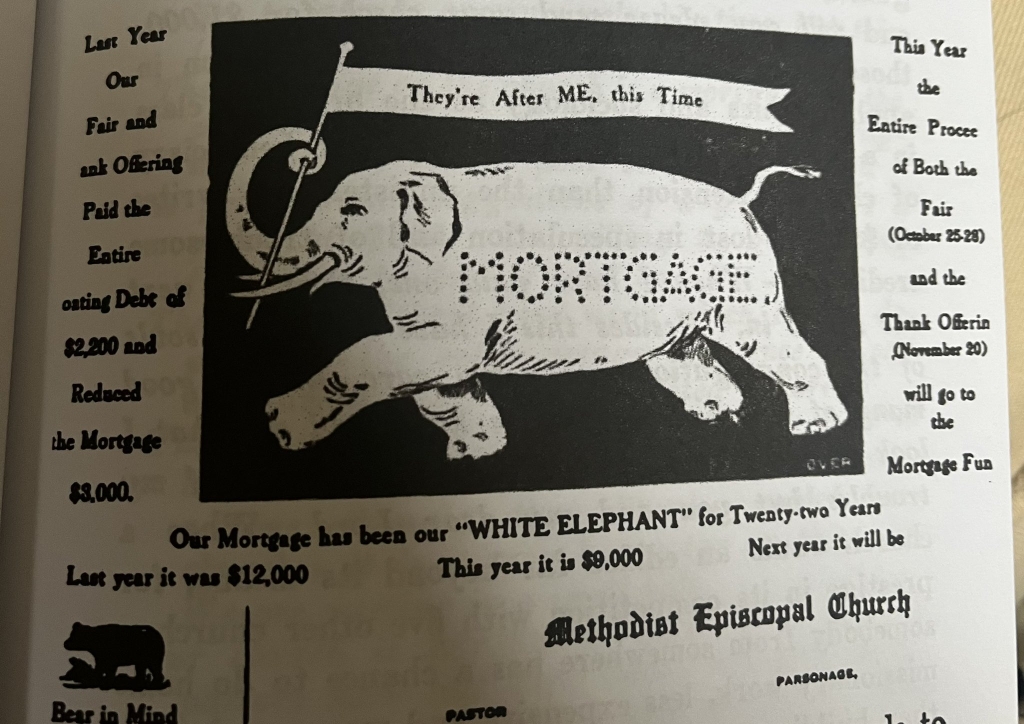
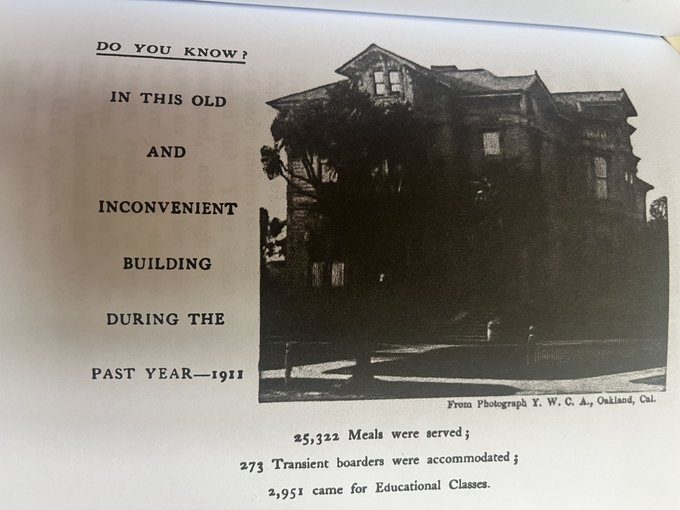
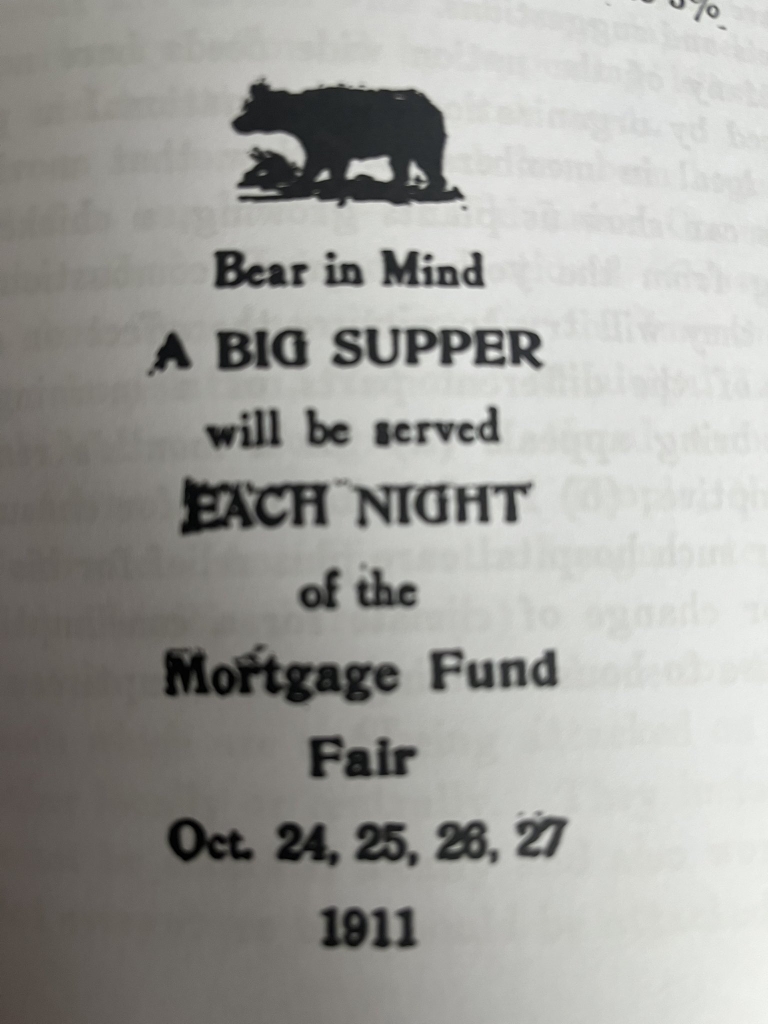
And finally a few examples of charity adverts from 1911
Reading Modern Philanthropy A Study of Efficient Appealing and Giving was a fascinating insight into the state and concerns around fundraising from over one hundred years ago and interesting to see how little has changed and how we continue to have the same issues and debates.
https://marinajones.uk/wp-content/uploads/2023/06/Charity-adverts3.jpg6142048adminhttps://marinajones.uk/wp-content/uploads/2022/12/f2b903e010104f5aa61ea1821a685913.pngadmin2023-07-02 19:38:432023-07-02 20:33:31What do 6,000 appeal letters show us about fundraising 100 years ago?
“philanthropy’s mailbag has lessons of tremendous importance to the giver and not-yet-giver, to the individuals and organised appealer”
From the analysis of the 6,000 appeal letters requesting $267m worth of assistance from philanthropist Mrs Harriman in 1912, William Harvey Allen from the Bureau of Municipal Research draws out the best ways to make the ask and some of the most common mistakes.
The author suggests “That there is a need for a correspondence school in the art of appealing and the art of giving.” Some of the first fundraising guides might have been written by fourteenth century monks, but it took many more decades to develop fundraising training via higher education courses, specialist training organisations and fundraising associations.
Many of the suggestions from 1912, we know and show that the same advice to fundraisers has been given for over a century.
Here are 10 lessons/reminders about how to make better appeals
1. Get the basics right
Name, address, spellings & actually ask for money
“You misspelled her name, you addressed her at the wrong place, you misspelled a number of words which indicates carelessness”
These are some of the mistakes listed in applications received:
“(a) inserting intimate greeting as conclusion in an obviously circular letters; (b) failing to give any idea of the amount of money needed, or the nature of the work; (c) writing for purposes known to have been adequately provided for”
Letters claiming that beneficiary numbers were increasing when the accompanying annual report show numbers of those helped decreasing
Misspelled Carnegie and Carbegie
And budgets – asked for wild numbers with no back up of what was actually needed. When the Bureau asked for clarification and details of what the money would be spent on they could not account for the amount.
Paying attention to details and getting the basics right remains really important
Appearances matter
How your appeal is presented is also important. You need to make it easy for your reader to read and understand what you are asking for.
“The outward appearance of an appeal makes a greater difference than its actual importance justifies. Scrawly hand, blotted envelopes, crooked lines, lack of margins etc, establish a prejudice before the letter is opened…. Of course, content may offset bias but readers of ‘begging letters’ are only human and are willing to pay for a pleasant letterhead or a real appeal”
Tailor the ask to your audience
Details matter and it is important to tailor your writing style to the person you are writing to. In 1912, writing the date as ‘Sept 8 1911’ implies a business correspondence says William Harvey Allen (who knew?), whereas ‘September eight Nineteen hundred and eleven’ implies a social correspondence.
Too many appeals used congratulations of publicly known news (birth of grandchild or death in the family) to make an excuse for correspondence and this was viewed as disingenuous.
Write for the audience of the appeal.
Length of the ask –the one page fetish
In the 6,000 applications they ranged from 1/3 of a page to 19 pages but they note that the “the points stand out clearly if the letter is brief and would appeal to class and the aesthetic taste.”
Allen says they “value[d] proposals for their brevity as well as the content” but he had a particular horror of the “one page fetish” when organisations or individuals try to cram all the information onto one page. This means that the margins disappear, there are no headings, and the text is badly spaced (hands up if you have ever adjusted the margins to fit the proposal onto two sides of A4).
Make it easy for the reader to read and understand – William Harvey Allen suggests double or even triple spacing and wide margins are appreciated by those reading your appeals.
2. Costly signalling – paper stock matters
When you choose to use the heavy paper weight with the embossed letter head you are giving your reader unconscious signals about your charity – its experience, budgets and ability to succeed.
This is known as ‘costly signal theory’ – demonstrating the value of the proposition, or the organisation. It can show that you are credible, successful and can afford to invest in good stationary.
In a restaurant, if you are given a menu on thicker paper stock (for paper fans 570 gsm vs 210 gsm) you will perceive the restaurant as more upscale and having given you better service (Maginini & Kim, 2016) (the same is also true of weight of cutlery.)
There is often an internal debate about whether you ought to be seen to be spending money on appeals. And whether 80gsm paper or light/cheap paper stock shows you cost conscious and investing in the work rather than appeals or whether good paper stock and a fancy donation pack and full colour letters demonstrates credibility and professional approach. This is not a new discussion, in 1912, for William Harvey Allen it worked against the appealers:
“Engraved letterheads are apt to drive away rich men who began their fortunes by small economies. A very neat type imitation of engraving however may produce a pleasant impression while still advertising economy”
However, this might be a bias of the writer of the report, a how people behave in the real world is often different to how they predict they will – and the subconscious cues that we get from the paper stock have an impact on how we react to appeals, and how much we give.
A decision science experiment run by Ogilvy with Christian Aid envelopes found that paper stock (90 gsm to 150 gsm) produced a higher mean level of gift – read more about the different tests and surprising results in Change for Better.
Loving #nudgestock2020@Ogilvy most increased donations for Christian Aid by reorientating envelope to portrait and using a better quality paper. Fascinating. Thanks Sam Tatam pic.twitter.com/gCNusQyb1m
William Harvey Allen offers key “ingredients of an effective statement of any cause” which include:
‘summary to tell the story in a nutshell’
Cost
Making it about people not abstract concepts ‘infants, not infancy, students not education’
‘Show the differences’
4. Multiple (& effective) messengers
Like appeal packs today, requests came with what we now call ‘lift letters’ with supporting statements and endorsements from bishops and other notable figures or institutions to add credence to the appeal. Who makes the ask and how likeable or how much authority they have on the subject have impacts our reactions – having multiple messengers can appeal to different sections of your supporters.
5. Make it more impactful by focussing on the one not the many
“by focussing attention upon one child”
This is called the ‘identifiable victim effect’ and means our asks our more powerful if we focus our supporters onto one person that they can help. We can identify and see the impact of our gift on that individual and once more people are added gifts decrease.
The identifiable victim effect was not formally described until 1968, and its efficacy only proved in charitable appeals in the last twenty years. As fundraisers we often instinctively know what makes a powerful appeal, but the more recent evolutions in behavioural science unpack and explain why they work in appeals.
6. Make it easy to reply
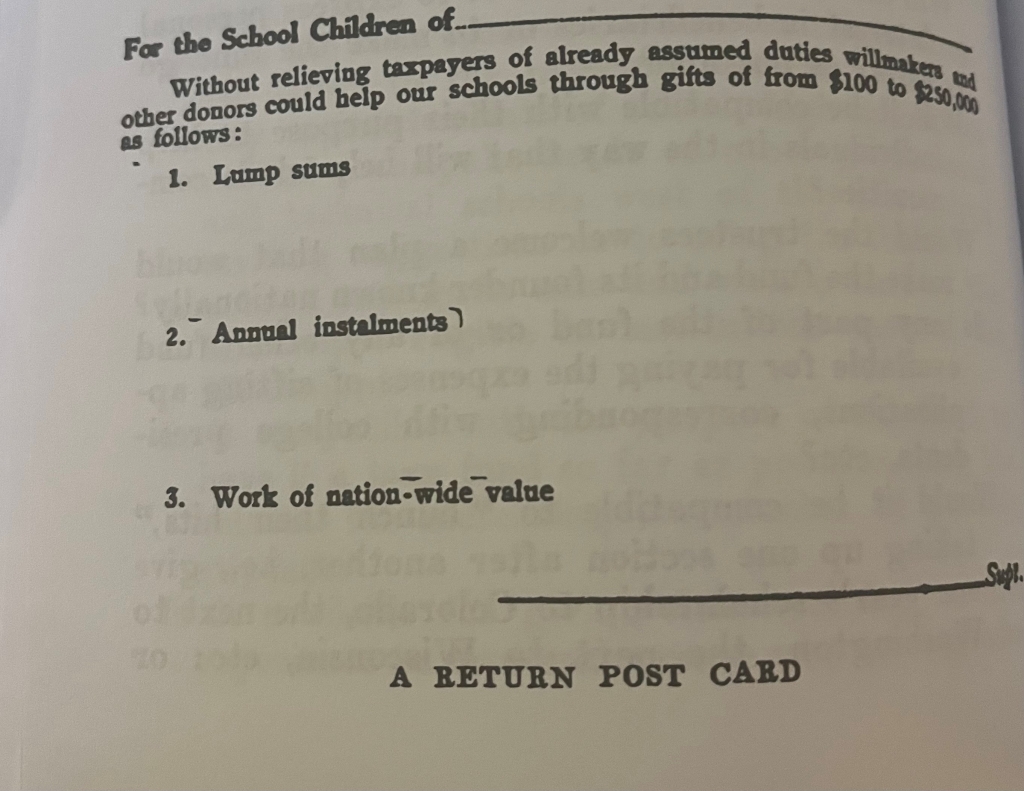
Pre-printed reply postcards were used in the appeals to make it easier for people for people to reply and give them agency and options about how and where they want their gift to go.
7. Beware of overclaiming
Lots of charities claiming to ‘the only’ one working in the field – rescuing girls from the street or rehoming boys. Those making the decisions are aware of the diversity of offers and charities working in the field. These overclaims were described as ‘Like cosmetics this rise seems to require putting on thicker and thicker in order to give the desired effect”
8. How successful you ought to appear? Can being successful be a hindrance rather than a help?
Sometimes appearing too successful at solving the problem can work against grant seekers, William Harvey Allen notes “and one turns away with the thought ‘I would like to help somebody that has some work still to be done.”
But you must also show that you have a successful track record;
“Pennies go to the hard luck story man but larger sums to for the man who seems either prosperous or on the road to prosperity”
The fundraiser must find the middle ground between demonstrating a successful track record but making the case for the work that still needs to be done, and how they are uniquely placed to provide a solution.
challenge is you need to demonstrate your successful track record without alienating the giver
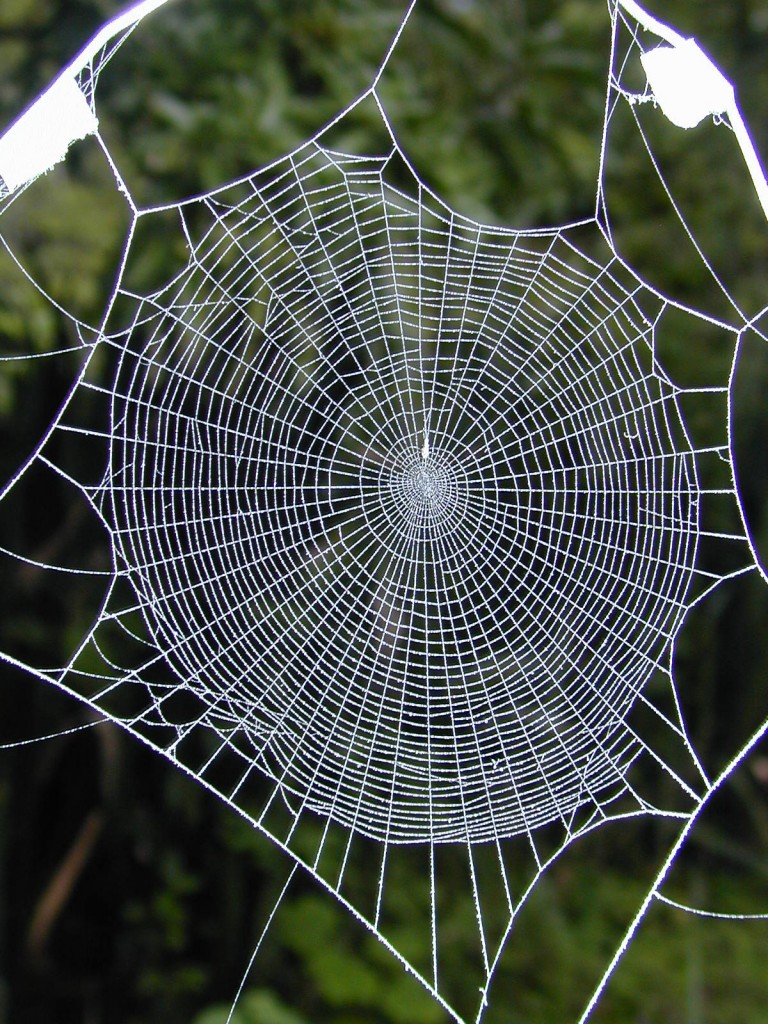
9. Making contact with a potential donor – the spider’s web
How to reach the donor’s once you have identified them can be tricky. William Harvey Allen likens it to a spider’s web
“spider web philosophy is about different accesses – the secretary access, the family access, the lawyer access, the doctor access, the minister access, the news item access, the paid advertisement access, the social function access … butler access, lady’s maid access”
We have all tried to map out how we can reach that potential donor – asking does someone on the board know them (how many of these spider web connections have you ever used? Lawyer, doctor, family, staff, social, …?)
It was no different over a hundred years ago.
Although some of their methods seem a little more intense than ours – William Harvey Allen notes:
“Agencies/organisations which notifies you of its intention to pursue you – in your mail, at your dinner parties and operas, on steamboats until you have made a contribution”
10. Where we find new donors hasn’t changed
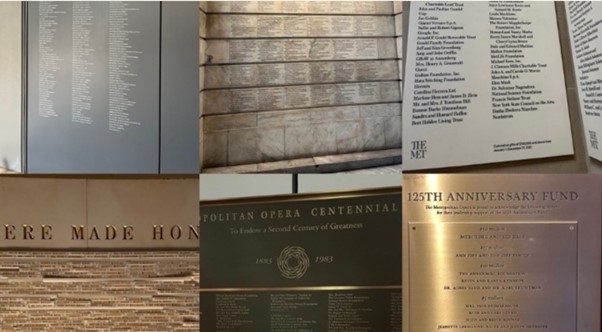
Nowadays we might look at annual reports or donor walls to see which philanthropists are active in a cause area. This was the same a century ago:
“we crib from each others list of contributors”
And finally
This guidance shows that not much has changed about how we think about how to communicate with donors and make appeals for funds.
And finally, finally ….Fundraisers have always been charming and well informed …
“so the woman who is expert in raising money for the poor Whites of the South is apt to be a woman whose personal charm and power of anecdote would be equally applicable or equally successful in discussing modern drama or the pilgrimages of Peter the Hermit”
https://marinajones.uk/wp-content/uploads/2023/06/Victim-header.jpeg4591024adminhttps://marinajones.uk/wp-content/uploads/2022/12/f2b903e010104f5aa61ea1821a685913.pngadmin2023-07-02 19:36:272023-07-02 20:31:36What does reading 6,000 appeals from 1912 teach us about how fundraisers ought to be asking for money?
Theologically controversial but a point being made about the good done by fundraisers and how hard they work to make mission happen.
This was said by Dwight L Moody a nineteenth century missionary and fundraising star that you have never heard of – I hadn’t.
Charles Sumner Ward is often credited as being the ‘founding father’ of modern fundraising with his intense mass campaigns. The infamous one was to raise $90,000 for the YMCA in Michigan in 1905 – instead of a protracted campaign he concentrated the campaign into a 6 day push with publicity in newspapers and solicitors across the city. With fundraising we all know that we stand on the shoulders of giants and learn the techniques of those that have become before – it seems that the lesser known (now) Dwight L Moody was using these techniques decades before Sumner Ward.
So who was Dwight L Moody?
Born in 1837 he grew up as one of seven siblings to a poor family. Aged 17 he moved to Boston and worked in his uncle’s shoe shop where he demonstrated the persistence and business acumen that would stand him in good stead as a fundraiser. At the shoe shop, he used to follow customers down the street and hang out at railway stations to try and attract customers. He kept the shop open on holiday to generate funds. As we all know – persistence pays off.
In 1855 he dedicated his life to the church and used the same business skills to evangelise and secure funds.
And he knew that incentives worked.
He was not allowed to open his own Sunday school until he could guarantee enough pupils to make it worthwhile. So, he incentivised attendance with sweets and continued attendance with the prize of a squirrel in a cage (this was 1860!)
Incentives work because we are wired to maximise rewards and avoid losses. So we are motivated by the reward of the free sweets/squirrel and feel like we are missing out if we don’t claim it.
He was employed as Librarian for the YMCA and tasked with raising funds for buildings. He later became a missionary preacher raising funds for a variety of causes.
But he used his business skills and brains to develop fundraising practice – and many of these we still use today – and with a more detailed understanding of the psychology and science we understand more about why they work.
The First Before and After Picture
(or the first example I have found so far)
The ‘before and after’ picture is a staple in the fundraiser’s toolkit showing the impact and difference that a gift can make. In 1858, Dwight incentivised a group of young boys to attend weekly Sunday school with the promise of new suits if they attended every meeting until Christmas.
They did. And he bought them new suits.
But not before taking a picture of them before in their old scruffy outfits to contrast with the new suits – and he used this in publicity for the work of the church with the caption
‘Does it pay?
Yes it pays’.
An early form of a donor impact report so that they can see the difference and success a gift makes.
Messengers – encouraging support or putting supporters off
“Your name will help us through. The public will thank of you take hold of it, it must succeed”
Dwight L Moody understand the importance of the right messengers being attached to your campaign.
‘Your name will help us through’ was written as a request to Cyrus H McCormick to support a YMCA building campaign and secured a $10,000 donation. And once his name was public, other subscribers joined.
People are influenced by who else is involved in your work and supporting you, but this figurehead or messenger needs to be relatable, likeable or aspirational. If is the right messenger, people will listen and do what is asked of them– this is a type of crowding in effect.
Cyrus H McCormick (looking like a Victorian philanthropist straight from central casting)
“If we get rich men on board people will say let them pay the bills … as it is I have to keep their names of the letters that I write”
Dwight L Moody was also aware that sometime lots of rich donors can deter supporters from donating to a campaign. He specifically said not to ask one donor as he was “too old and too rich”. This is a ‘crowding out’ effect when people see too many other people supporting and say to themselves ‘well its okay for Lady So-and-so to support she has lots of money and I don’t and if they are supporting that then I don’t have to’.
Whilst high profile and wealthy messengers can be respected and encourage people to crowd in and give gifts – they can also crowd out other donors. Supporters often want a relatable peer to ask them for support – someone like them – if they can see ‘people like me’ giving they will relate more and be more likely to give.
Fundraisers always have to create the balance of showing that it is supported by significant donors but that your donation whatever size will be appreciated and that it is a social norm for people like you are giving as well. That is why it is so important to test and learn who are the best messengers for your work and for each campaign.
(whilst this rich old man who was dismissed as an unhelpful named supporter, Moody later changed his mind saying “I do not believe he will not last the winter out and now is the time to push” and did ask him to give). Timing your ask is critical.
Donor psychology in action
Philanthropic psychology is the study of how people love humankind and how giving can help us connect better with our sense of self and identity. Philanthropic psychology is an emerging field pioneered by the brilliant Dr Jen Shang.
But like behavioural science, we see it used in fundraising instinctively but are only just now able to articulate and breakdown how and why the science works. There are two principles that Moody was instinctively employing – identity activation and reactance.
Using the donor’s identity and thinking about how that identity might motivate their giving and feel more connected the cause. We all have multiple identities relational (daughter, parent, sibling), religious, personal (kind, curious person) or regional/national. By using a donor’s identity you are connecting powerfully with who they are as a person and making giving more rewarding and enjoyable.
Moody activated the parental relational identity in this appeal connects them with their true selves. He wrote
“all parents who have sons whom they love should give money to this organisation liberally”.
By connecting with their identity as parents he was making a more personal and powerful appeal – resonating with their sense of self and how they feel about their own children. This campaign worked and raised over $200,000 for the YMCA.
We often use donor’s identities and how they are linked to causes to make our propositions more attractive and appealing to donors.
Reactance
If we don’t think that we have any autonomy in a decision – any choice – then we feel our sense of self is compromised. We want control over our own lives and our decisions. Often in fundraising appeals a donor can feel that they are being told to do something – to give now, to give a certain amount. Reactance basically (as Lisa Sargeant says in Change for Better) “turns your lovely reader into a wilful teenager” – if they feel they have no control and autonomy then instead of doing what is asked they will do the opposite of what they have been asked.
You can mitigate this by telling them that they have choice over whether, and when to give, and how much they give. And giving them permission not to give, or give a lesser amount.
It might sound counter-intuitive to say that they don’t have to give but some decision science is counter-intuitive – but still works.
Roger Dooley has shown that by adding the phrase “but you are free to choose” to requests the results doubled. You are giving supporters the autonomy to choose where and how and if they give.
Moody’s use here demonstrates an understanding that they do have other causes to support and he is not trying to stop them supporting projects they already care about ( this was used in a mass direct mail appealing for funds for a school project over 9,000 letters were sent in 1895)
“I have no wish to draw from contributions to other works, but have thought that some might feel that … they could send five dollars without curtailing gifts to others”
But it recognises that there are other calls on their funds and that they have existing commitments and might choose to support additionally. It is a modified and more subtle version of ‘but you are free to choose’. It also reinforces their self-identity of being a kind and generous person and committed to contributing to good causes.
Never Waste a Good Crisis
In 1868 the Farnell YMCA hall burned down and two Englishman travelling reported
“Thousands upon thousands of dollars were subscribed without a moment’s hesitation; and it said that before the fire was out money enough had been raised to build a new hall”
This was an exaggeration and only $20,000 was raised on the day of the fire. But Moody and the YMCA team did not waste the crisis but used it as an opportunity to ask. One week after the fire Moody had arranged 5 teams of 3 men to carry out an intense week-long public campaign seeking donations through personal solicitation and supported by a prominent press campaign.
(Like the Notre Dame fire, big gifts came in immediately whilst the crisis was fresh in people’s minds)
But only raised $75,000 towards the goal and in the end they rebuilt a smaller hall.
Creating press stories around YMCA capital campaigns was essential for Moody and he always used publicity and got newspapers to cover fundraising activities. For example, when laying a new cornerstone for a YMCA building he needed to get a noteworthy person to lay the cornerstone to generate the right publicity
“I do not care who you get … if you cannot get any woman, then go for some man but what I want is to get new man or woman interested”.
Again we see the importance of the right kind of messengers to generate publicity and encourage others to give.
This intense short campaign and use of publicity seems to be a forerunner of the type of campaigns attributed to Charles Sumner Ward thirty years later.
Persistence pays ….
1885 he repeated the success of the intense campaign with a four day campaign to raise $65,000 for YMCA Scranton Pennsylvania. One of the key events was a dinner with wealthy philanthropists. However the top prospect did not turn up (plus ca change!)
What would you do?
Moody insisted on and was taken to his house and made a direct ask. The man refused to support the campaign. Although he did agree to sit on a platform at a public meeting to lend his name and reputation to the campaign. Whilst there Moody asked him directly in front of the audience to support the campaign which resulted in a $5,000 gift.
Persistence pays off when making the ask (but maybe with a little less stalking and public shaming into giving!)
Dwight L Moody preaching in a theatre in London
Business acumen in action in fundraising models
Moody used his business skills when fundraise to ensure that more funds could be raised in smarter ways:
With the YMCA buildings he rented out the lower two floors to ensure earned income – the mixed funding model in action in the 1860s
He also ensured new state charter that provided tax exemption for charitable endeavours.
Social and heavenly returns on investment – He sold stock in his Sunday School but the dividends were redeemed by attending Sunday School. He used a 6% interest scheme for dividends in the building but noted that the ‘larger rewards in heaven than on earth’.
When appealing to businessman Cyrus McCormick in 1880 it was an appeal to his business interests as well as his altruistic principles “all over the coast, farmers who are using your reapers (of world class fame) will feel an interest in the face that you have to start such an enterprise”
Dedicate royalties from hymnal to use by charities he was raising funds for.
So learning from Dwight L Moody we see
The importance of showing the impact of the gift (the before/after)
How those supporting the campaign impact on who gifts – a well known name might attract support but ‘too old too rich’ can be off putting as they are not like the majority of donors you want to attract
Use philanthropic psychology and activate your donor’s identity to draw them closer and more meaningfully to the cause
Avoid reactance and give donor’s autonomy to choose (‘but you are free to choose’)
Never waste a crisis
Be persistent (but don’t follow them to their house when they don’t turn up!)
Learn from business and apply it to fundraising
Charles Sumner Ward the founding father stands on the shoulders of Dwight L Moody. Many of the techniques credited as innovations by Charles Sumner Ward were used by Dwight L Moody, and doubtless others before which we have yet to discover and explore.
References
‘Honorable Beggars: The Middlemen of American Philanthropy’ by James Jowell Smith 1968 (Doctorate Dissertation)
https://marinajones.uk/wp-content/uploads/2023/06/squirrel.jpg320524adminhttps://marinajones.uk/wp-content/uploads/2022/12/f2b903e010104f5aa61ea1821a685913.pngadmin2023-06-11 18:00:522023-08-20 20:50:34“Blessed are the money raisers for in heaven they shall stand next to the martyrs”
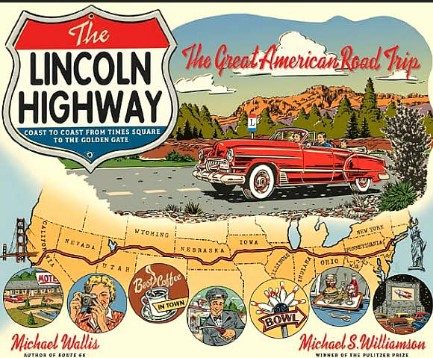
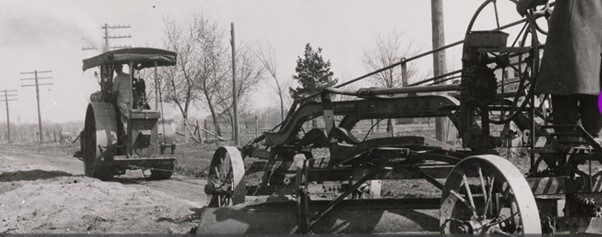
In 1912 he had an idea – as cars were becoming increasingly popular he wanted there to be a proper tarmacked road that would stretch from coast to coast of the USA. As there was no federal funding available at the time he needed to raise the funds.
Is it really philanthropic to build a road?
Payton and Moody give a definition of philanthropy as voluntary action for the public good and talk about moral imagination and that we are motivated to act:
Because things go wrong
Because the world can be better
A motorway might not be righting wrongs or feeding the hungry but as an enactment of Fisher’s moral imagination it was how he could see the world as a better place. Fisher’s vision came from a desire to reduce a journey of around 90 days on small and not linked dirt tracks that could not easily be navigated by cars – to 30 days on a continuous and metalled road.
Raising money for a motorway raises the question of who ought to be providing roads – is it the state? The market? Philanthropy?
Fisher asked Henry Ford over a pig pen at the Detroit Fair if he would support the highway, and he said come tomorrow and I will sign up but later changed his mind. Ford is a noted philanthropist but it was a ‘no – not me’ and ‘no- not this’ for this project. Henry Ford refused to support the highway as he thought that government not the public or industry ought to pay for roads.
How did Fisher raise funds for a highway and what can we learn / do we still do today?
Secure some lead gifts at the start of the campaign
Before you go public with a big appeal, you want to have some supporters lined up. This is sometimes known as the ‘private phase’ of a campaign when you talk to those nearest and dearest to you and get them to give big lead gifts. It is important to know you could raise the total and that you have people on board who support your vision.
In 1912 Fisher held a dinner for auto mobile industry friends to secure support and got $300,000 in pledges that night and then later $300,000 from Goodyear tyres and others. So in the first month he had secured $1m towards the project. And then could promote this success as he tried to secure more support.
FOMO
One of the greatest incentives to act is our fear of missing out. We react to the threat of loosing something. That is why the incentive of a ‘free offer’ motivates us – we feel we are missing out on something if we do not claim the ‘free thing’. This is called the loss aversion heuristic – and one of Fisher’s tag lines to his first friends and supporters evokes this loss aversion heuristic:-
‘Lets build it before we’re too old to enjoy it’
We don’t want to miss out so we act.
Messengers, identities and norms
Fisher himself was a powerful and respected person to ask for support of this scheme – he was a record breaking racing car driver and successful entrepreneur making his money via car headlights. So he was respected by others in the industry.
We are heavily influenced by who asks us to help.
We are also heavily influenced by who else is involved – we want to be with our group and do what the rest of our group is doing.
Fisher was great at tailoring the norms to his audience – and activating their shared identities as he asked them to commit.
We can also be primed by our identity – in this instance Fisher leant in heavily on the automobile ‘tribe’ and activating their commonality.
By getting these key automobile industry people on board he was lining up some pretty powerful messengers and creating a group norm. He created a group social norm for the car and accessory business to be involved in supporting this. As humans we are group animals and want to stay with the herd and the behaviour of others like us. Our brains have not evolved that much since we were tribes and hunting and gathering and needing to stay together.
What does your PESTLE analysis come up with? Grab an opportunity
Look outside your organisation and vision and see what is happening in the wider world. A PESTLE analysis (Political, Environmental, Social, Technological, Legal and Ethical opportunities) is often used to explore other factors that might help or hinder your work.
At the time when the highway was proposed, the US Congress were looking at how they could memorialise President Lincoln and had $1.5m set aside for a marble memorial. This project gave them a patriotic opportunity to name the highway after the 16th President.
Power of celebrity messengers
The public campaign was launched after the major donations were made by individuals and businesses.
Members of the public were invited to subsribe to me members of the Lincoln Highway Association with certificates of $5 to $100 available. Theodore Roosevelt and Thomas Edison both contributed and the press were alerted to help generate more support.
President Woodrow Wilson sent in a private cheque for $5 and was awarded with Highway Certificate #1 which was publicised and published in the press.
Certificates of membership are a great way to thank you supporters and for them to create a supporter identity.
They stalled in their fundraising target and used publicity to generate more funds and put pressure on state legislatures to support investment in the infrastructure.
Every Little helps …
14 pennies were sent from children in Anvik, Alaska after their teacher told them about the highway being in honour of President Lincoln. This inspired them to send this donation and their letter and patriotism was widely publicised. (Often the small or the large gifts can attract our attention – like after the catastrophic fire at Notre Dame the multi million donations from corporations caught the headlines but so did the story of a child who sent their pocket money– we are attracted by the extremes). Publicizing both the big and small shows that every little helps.
An element of competition
The exact route of the highway was kept secret. Keeping it secret meant that all the states that the highway could pass through remain highly engaged and involved in the process – competition can generate more publicity and interest.
Additional and helpful donations
There is always one donor who agrees with the vision but wants to do something different and special and personal. Can you include that?
One pledge was received to fund 17 drinking fountains in honour of mother is route passed through Illinois and they were added to the route.
The Lincoln Highway was dedicated in 1913 and federal funds were acquired to fund the highway – as philanthropy and fundraised income did not cover the whole cost.
So what does this tell us about campaigns today
Get key supporters signed up before you ask others
Who are your messengers? You can have different messengers for different target markets – for car fans you have a different messenger than patriotic school children. Campaigns can use the most appropriate messenger for each part of the supporter base.
How can you tailor your norms to your audience? And create shared social identities?
How can you demonstrate that it is normal for them to support? Can you show that others they like and respect have supported? How can you activate their identity as car fans/animals lovers/fighters for justice to suggest it is what people like them are doing?
How can you make your supporters feel that they would be missing out if they were not supporting?
Look at the wider world for what is happening and combine with other issues
Competition or gamification can keep supporters interested and involved in a campaign
How can the way you thank your supporters create an identity as a supporter?
How you can show the tangible value and impact of gifts big and small? What do 14 pennies by vs $300,000 from a big company donor?
Publicity is important – who else is supporting you and what stories can you tell and share about who is involved?
P.S. How do you even find about these sort of things?
Fundraising history can be discovered in all sorts of strange and unusual places. It is not collated together in a neat history book through the Rogare history project a volunteer team have tried to gather and curate a timeline (the first edited highlight is published here and the full timeline of over 300 entries will be open access soon)
So, I found out about this in a novel called ‘The Lincoln Highway’ by Amor Towles where Billy (an eight year old boy describes the origins of the Lincoln Highway)
“It was invented by Mr Carl C Fisher in 1912…. He believed American people should be able to drive from one end of the country to the other. He built the first sections in 1913, with the help of donations”
“People gave him money to build it?” asked Duchess in disbelief.
The Lincoln Highway
So keep your eyes peeled, you never know where you might come across a piece of forgotten fundraising history…
https://marinajones.uk/wp-content/uploads/2023/05/highway.jpg230526adminhttps://marinajones.uk/wp-content/uploads/2022/12/f2b903e010104f5aa61ea1821a685913.pngadmin2023-05-17 21:17:162023-05-18 09:33:08It really is true everything is a project in fundraising … but could you fundraise for a motorway?
With the congregational chairs from the coronation of HRH Charles III being auctioned for charity it made me think about some historical examples of when royalty has been involved in fundraising. So I teamed up with fellow fundraising history fan Jayne Lacny from Notes on Philanthropy (who is also part of the Rogare history of fundraising project) to look at some historical examples of royalty and fundraising. (This list is by no means exhaustive but just a few historical fundraising moments that caught our attention.)
Why are royal patrons so important to fundraisers?
In decision science we often think about the messenger and who is asking us to help in a campaign. For a museum it could be a curator, for an international development charity an aid worker or someone who has had their life changed. We react strongly to who asks us to help – so consider who the messenger is. We are more likely to respond to someone we respect and trust. Therefore, a royal patron – as a symbol of the nation during war or as the ideal of patriotism, Christian charity– can be the perfect messenger for a fundraising campaign.
So a few #fundraisinghistory examples from 100 or more years ago.
The benefits of royal patronage
The royal family has always been notoriously cautious when selecting charities for patronage (and currently have 2862 patronages – of which 1187 are to registered charities). However, Queen Victoria and her family members were keen supporters of work being carried out during the 19th century with the Armed Forces in terms of temperance and spreading the evangelical word. Royal visits to sailors’ rests run by Dame Agnes Weston in Portsmouth and Plymouth were not unusual and were always welcomed.
On a visit in 1895 to the rest at Devenport, Queen Victoria asked to sponsor a ‘cabin’ for sailors to stay in when ashore. Later, a sailor on hearing that the Queen had paid for the sponsorship out of her ‘own privy purse’ remarked to Weston –
‘I’ve sailed all over the world, and I have never come across such a thing before; the Queen’s my Queen and I’d die for her any day; but now she’s my Friend’’.
Weston told the Queen about this conversation when she was invited later to meet with her at Windsor. With tears running down her face, Queen Victoria replied, ‘Thank you so much for telling me this. I shall never forget it.’
Agnes WestonQueen Victoria meeting Agnes Weston at WindsorQueen Victoria
Reference – Weston, A. (1909). My Life Among the Bluejackets. London: James Nisbet and Company Ltd, pp.211-225.
Healthcare and royalty intertwined
Over the decades, royalty has devoted itself to supporting healthcare in this country (pre- and post-NHS) and many of our large – and not so large – hospitals have benefited hugely from the family’s connections. Dorset County Hospital is no different, for example, Queen Adelaide, widow of William IV, became patroness of the hospital’s 1841 bazaar and generously donated items for the occasion. The hospital has another fascinating link with royalty.
British surgeon and anatomy expert, Sir Frederick Treves (1853-1923), known for befriending the Elephant Man (Joseph Merrick), had been Surgeon Extraordinary to Queen Victoria. When returning home to Dorchester to receive the freedom of the borough, he donated a new operating table to Dorset County Hospital, ‘the best he could find’. However, things took an unexpected turn as in 1902, just days before the coronation of Edward VII, Treves had to perform a life-saving appendectomy on the seriously ill future King. The successful pioneering op involved draining an abscess that was sitting on the appendix through a small incision. The coronation went ahead without delay as a result.
Coronation of Edward VII
Reference booklet on Dorset County Hospital, 175 years of rural healthcare, 1840-2015.
Alexandra Rose Days
In 1912, the Dowager Queen Alexandra and her court were trying to find a way to mark the 50th anniversary of her arrival in England. Princess Alexandra had toured the country on her arrival in England in 1862 before marrying Edward VII – with photography and train travel more widespread she became a well-known figure who was held in high esteem by the British public. A procession was proposed to celebrate the anniversary, but the Queen wanted something that would benefit the charities that she cared about. Inspired by a priest from her homeland, Denmark, who sold the roses in his garden to raise funds for the hospitals, the Queen evolved the idea to sell flowers – silk and paper ones to raise funds for her favourite charities– and the Alexandra Rose day was formed.
The artificial flowers were made by young women from the John Groom’s Cripplegate and Flower Girls Mission which homed destitute, orphaned and disabled young people.
The first event raised over £32,000 (more than £2.5m in today’s money). The funds supported many of Queen Alexandra’s favourite charities and it became an annual fundraiser each June. By tradition the Prime Minister bought the first flower. The charity is still working today and focuses on food poverty.
To promote Alexandra Rose Day they used a variety of methods from Players cigarette cards (the illustration below) and stamping notices on letters to highlight the forthcoming annual fundraiser.
You can see some vintage footage of Alexandra Rose day here:
Queen Alexandra was actively involved in other campaigns and became the Royal Patron for the National Egg Collection during World War One – which asked British subjects to donate eggs to send to soldiers on the front and wounded soldiers recovering in the UK and Europe. The posters were emblazoned with ‘Queen Alexandra asks for new laid eggs for the wounded.’ Her involvement in the campaign rocketed its popularity and success and over a million eggs were collected thanks to her involvement. You can read more about the campaign in this blog.
Princess Mary Christmas Box campaign
On Christmas Day 1914 400,000 Christmas boxes were distributed to serving frontline soldiers – this was a morale boosting fundraising campaign led by Princess Mary (the 17 year old daughter of George V). The Princess initially wanted to pay for a gift for each soldier from her own allowance but this was not deemed practical so a public appeal was launched. This is the appeal that Princess Mary wrote in early October 2014:
“I want you now to help me to send a Christmas present from the whole nation to every sailor afloat and every soldier at the front. I am sure that we should all be happier to feel that we had helped to send out little token and love and sympathy on Christmas morning, something that would be useful and of permanent value and the making of which may be the means of providing employment in trades adversely effected by the war. Could there be anything more likely to hearten them in their struggle than a present received straight from home on Christmas Day? Please will you help me?”
Letter from Princess Mary to the British Public
A very charming plea. The British public were told to send their donation to HRH Princess Mary, Buckingham Palace, S. W. and mark their envelopes ‘Sailors and Soldiers Christmas Fund’
The Times listed those that had already contributed in late October and the campaign was very popular and £162,591 and 12 shillings and 5 d was raised. In The Illustrated War News Princess Mary was described as the ‘royal Santa Claus’
What was in the box?
Christmas boxPrincess Mary
The boxes contained cigarettes, a card from Princess Mary and a picture of the King and Queen. And the committee even considered non-smokers and an alternative was box with acid tablets and a khaki writing case with a pencil and envelopes was provided. Nurses were were given chocolates instead and there were special boxes with spices or sweets created for Sikhs, Gurkhas and other regiments.
Now anyone who has been involved in organising sending out Christmas cards for donors knows how long it takes … and although 400,000 boxes were delivered that first Christmas many did not get them in time. Because of this delay the cards read wished them a Victorious New Year.
The success of the campaign and demand meant that it was extended from soldiers and sailors to all those in uniform as well as parents of the fallen and those who were prisoners of war had them saved until they returned home.
The fund closed in 1920 and over 2.6 million boxes were distributed. And there was still a surplus of funds which was donated to Queen Mary’s Maternity Hospital for wives and children of the RAF.
Going once, going twice …
It was not always leading the campaign as the asker that was important, sometimes just donating an item to an auction could be as beneficial. The London Library was threatened with bankruptcy after Westminster removed their exemption from the business rates – Winston Churchill wrote a letter to The Times about it – the Queen donated a book on Cellini from Queen Victoria’s library and the Queen Mother donated a silver wine cooler. Other literary figures also contributed including a bronze from Henry Moore, a Barbara Hepworth painting, T S Eliot’s personally transcribed ‘The Waste Land and manuscripts from Graham Greene and John Betjeman. The auction at Christie’s raised over £25,000 and the library was saved.
The methods used by royal patrons in their support of charities mirror the patterns and common fundraising techniques of the day.
https://marinajones.uk/wp-content/uploads/2023/05/Coronation-chairs.jpeg7631117adminhttps://marinajones.uk/wp-content/uploads/2022/12/f2b903e010104f5aa61ea1821a685913.pngadmin2023-05-05 16:53:112023-05-05 16:56:02Fundraising and royalty – a few historical royal fundraisers
As you may know, I love a good bit of donor recognition and I may have found a new favourite – a boss with your donor’s face on – a very special way to credit that important supporter.
Bosses are usually seen in church and are protrusions of wood, stone, or metal – in churches they are often decorated with faces or stories (or astronauts at York Minister following the Blue Peter competition in the 80s). The bosses you can see below have been used to commemorate key donors and benefactors – a very personal thank you and suited to the setting.
These are from the Shrine of Our Lady of Walsingham where we were recently on pilgrimage. The Shrine was founded in 1061 by a noble patron, Richeldis de Faverches, and philanthropy, patronage and fundraising have always played a part in its ability to deliver its mission (more about that in a future blog).
But this got me thinking (and in the week when the CAF 2022 Giving Report came out and religious organisations continue to get 17% of all UK donations and the highest average gift) about how churches as the innovators of many of ways that we acknowledge donors that we still see today. And a few that have fallen out of fashion…
Your face here …
The donors who made cathedrals or churches possible were often included in the fabric of the building as a way of acknowledging their gift.
In glass
Glass was very expensive and the windows were frequently sponsored. Many of the local guilds supported a window and they are immortalised in the windows often with the tools of their trade. See below for close up of the carpenters, wheelwrights and coopers in the Life of Noah window (left) and the shoemakers who supported the Parable of the Good Samaritan (right) from Chartres cathedral in France (and common in many cathedrals and churches). They offer a personal and high profile social reinforcement of the charitable commitment.
Although, not all gifts were welcome … when Notre Dame was being built in the twelfth century there was a controversy when the local group of prostitutes wanted to pay for a window in honour of the Virgin Mary (not showing the guild they belonged to as was traditional!) The gift was turned down by the embarrassed bishop. (Thanks to Rhodri Davies for this example)
And it was not just glass, but frescos and painted into altars.
In the fourteenth and fifteenth centuries donors included themselves in paintings they commissioned on altar panels. It highlighted their contribution to the church and also their personal piety – but was very much a donor led decision about the credit! Many of these portraits came as part of generous bequests to ensure that their souls would be prayed for in perpetuity for a double motivation.
Below, Braque, the donor, is seen dressed in modern clothes and praying at the Nativity Scene. This is the central part of the triptych of an altar painted by Rogier van der Weyden in the fifteenth century.
And a thirteenth century example of donor recognition with the donor painted into a fresco in Sant’Ambrogio in Milan alongside the Madonna and Child.
Future proof your credits – c15th style
What do you do if you have already had a donor portrait painted and you get married?
Or members of your confraternity die?
Simple – just add or remove them from the painting.
Which is what happened in this painting attributed to the Tournai workshop of Robert Campin. This painting was completed in 1425 and shows the donor Peter Engebrechts kneeling on the left. After his marriage his kneeling wife, Margarete Scrynmaker, was added in behind him and their coat of arms can be seen in the stained glass window in the central panel.
(When altar paintings were decommissioned and acquired as art the donors are frequently adapted into saints!)
Using a coat of arms might seem like just a medieval practice but was used again during a recent chapel restoration at the Shrine of Our Lady of Walsingham – see the coat of arms on the wall.
And as a donor you could also include your dog
In this altar painting of the Raising of Lazarus the donor, his noble family and even his dog and commemorated and immortalised in this fifteenth century painting by the Dutch painter Geertgen tot Sint Jans .
I explored the 1140 Benefactors Book from St Alban’s Abbey in an ‘I Wish I Thought of That’ talk and you can read more about the importance of donor recognition and why it works see this article I wrote for SOFII SOFII · Celebrating donor recognition through history and exploring why it works) and you can see the Walsingham Benefactors’ Book below.
And back to Walsingham and donor credits
A very brief history of Walsingham
Richeldis had a vision of the Virgin Mary who instructed her to build a replica of the Holy House (Mary’s house in Nazareth where she was told that she would give birth to Jesus – the Annunciation happened).
Following this vision Richeldis used her funds and influence to create the Holy House. Walsingham became a pilgrimage destination where prayers were answered and healing miracles occurred.
Visited by many kings including Edwards I, II and III and Henrys VI, VII and VIII (with two of the six wives). Wills from the time show legacy bequests being received to give thanks for prayers answered at the site.
Pilgrimages resumed in 1897 following the destruction of the monasteries and the creation of the Shrine was led by Fr Hope Patten who through noble patrons (land donated by Sir William Milner) and mass involvement of committed pilgrims raised the money to make it happen.
Double naming
One challenge that can occur in fundraising is that things are named in perpetuity so you can’t change them, or do not have the contact details of the donor’s next of kin to ask about future use. With many legacy gifts to church they come with the request that the soul of the deceased is prayed for in perpetuity so an added moral imperative to honour the donor’s request.
What do you do?
Leave it forever, or discreetly remove the plaque?
Why not name twice as has been done here on the outdoor stations of the cross… the original in blue and the brass plaque below acknowledging the support of the donor who helped with a more recent restoration.
Ticking off the list
Walking through the grounds of the Shrine, you can play tick off all the usual suspects on your ‘donor recognition checklist’ and like the bosses, there are some unusual ways to solve some of the challenges that can face fundraisers trying to recognise multiple donors over decades.
So …we have donor recognition on benches, trees, candles, stained glass windows, plaques (institutional and personal), rooms and a benefactors’ book (I think the only thing missing was a name a brick!)
Legacy
Walsingham like many charities is one that relies on legacy gifts and sometimes legacy gifts don’t just come with money but with items that are connected to the charity and that have deep meaning for the givers that they want to gift to the charity. Having accommodation for pilgrims means there is ample room to have these treasures on display.
Keep asking
And throughout there are ways to give now, give in your will and be connected to projects. Don’t forget to keep asking.
Donation boxes remain an important tool for fundraisers – read more about why they work or don’t in this previous blog.
Explore the past to inspire the future
Often when we look to the past in fundraising, we see that things have been done the same way for many centuries which can be reassuring that we are doing it right. But we can also find interesting examples that can inspire how we thank donors today. It doesn’t have to just be a wall with names on it – you can be fun, you can connect with your cause, your building and integrate their donor and their gift into the very fabric of what they are doing in creative and personal ways.
https://marinajones.uk/wp-content/uploads/2023/04/head.jpg830865adminhttps://marinajones.uk/wp-content/uploads/2022/12/f2b903e010104f5aa61ea1821a685913.pngadmin2023-04-21 16:26:582024-04-28 15:35:41A boss – my new favourite donor recognition
We may request cookies to be set on your device. We use cookies to let us know when you visit our websites, how you interact with us, to enrich your user experience, and to customize your relationship with our website.
Click on the different category headings to find out more. You can also change some of your preferences. Note that blocking some types of cookies may impact your experience on our websites and the services we are able to offer.
Essential Website Cookies
These cookies are strictly necessary to provide you with services available through our website and to use some of its features.
Because these cookies are strictly necessary to deliver the website, refusing them will have impact how our site functions. You always can block or delete cookies by changing your browser settings and force blocking all cookies on this website. But this will always prompt you to accept/refuse cookies when revisiting our site.
We fully respect if you want to refuse cookies but to avoid asking you again and again kindly allow us to store a cookie for that. You are free to opt out any time or opt in for other cookies to get a better experience. If you refuse cookies we will remove all set cookies in our domain.
We provide you with a list of stored cookies on your computer in our domain so you can check what we stored. Due to security reasons we are not able to show or modify cookies from other domains. You can check these in your browser security settings.
Google Analytics Cookies
These cookies collect information that is used either in aggregate form to help us understand how our website is being used or how effective our marketing campaigns are, or to help us customize our website and application for you in order to enhance your experience.
If you do not want that we track your visit to our site you can disable tracking in your browser here:
Other external services
We also use different external services like Google Webfonts, Google Maps, and external Video providers. Since these providers may collect personal data like your IP address we allow you to block them here. Please be aware that this might heavily reduce the functionality and appearance of our site. Changes will take effect once you reload the page.
Google Webfont Settings:
Google Map Settings:
Google reCaptcha Settings:
Vimeo and Youtube video embeds:
Other cookies
The following cookies are also needed - You can choose if you want to allow them:
Privacy Policy
You can read about our cookies and privacy settings in detail on our Privacy Policy Page.