Why did five million people wear the same bracelet?
Wear What You Feel
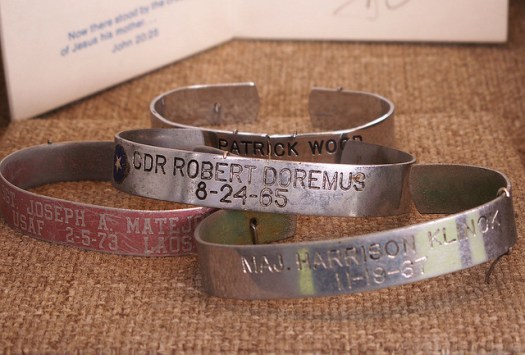
In the early 1970s, millions of Americans wore thin aluminium bracelets engraved with the name of a man they had never met.
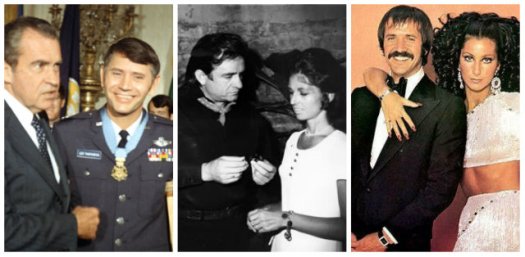
They wore them in classrooms, on television, on red carpets and at kitchen tables. Johnny Cash wore one. Sonny and Cher wore them. John Wayne wore one. So did Princess Grace of Monaco. So did students who could barely afford the $2.50 donation that came with it.
Each bracelet carried the name and date of capture of a single prisoner of war or missing serviceman in Vietnam. You wore the bracelet until the man named on it returned, or until the truth of his fate was known.
The bracelets worked because they exploited something deeply human: a personal connection. It connected you with one individual, one missing serviceman – they became yours. This is called the identifiable victim effect the tendency to feel greater empathy and act more decisively when a single, specific person is identified, rather than an anonymous group. The POW/MIA bracelets replaced a collective of anonymous prisoners with one named individual.
Development of the idea …
Congressman Bob Dornan wore a bracelet made from scrap aluminium, given to him by a Montagnard tribesman in the Vietnamese highlands in 1966. It came with the plea – ‘do not take it off until my people are free‘.
Bob did not take it off. He wore it every day. Every time his arm hit a wall the bracelet clinked, every time he saw it, every time it got caught in his sleeve – he was reminded of the suffering and why he was wearing it.
The story of Bob Dornan’s bracelet inspired Carol Bates and other students involved in Voices in Vital America (VIVA) to do something to raise awareness of the prisoners of war in the Vietnam war. The first batch of bracelets was intended for students, priced to match the cost of a cinema ticket.
Visibility as commitment
Behavioural economics tells us that public commitments change behaviour. Once we signal who we are, and especially when we do that visibly with an outward sign, like a bracelet or badge, we want to stay consistent to that identity. The bracelet didn’t just express alignment, it showed and embodied commitment.
What started as a kitchen table enterprise caught the imagination.
Demand jumped from hundreds a week, to tens of thousands. Nearly five million were eventually sold raising over $7m.
This is the behavioural hinge – once support becomes visible, it stops being individual and starts being social.
Wearing the bracelet did three things at once.
- It personalised an abstract war.
- It signalled allegiance to others.
- And it made non-participation noticeable.
When objects become norms
The POW/MIA bracelets didn’t just raise money. They changed the atmosphere.
The bracelet turned support into a default behaviour. If everyone else was wearing one, not wearing one became a decision.
It was not just a fundraiser. It became social norming made tangible.
This is the same dynamic we use as charities with badges, donor walls, name plaques, digital badges and public thank yous. Visibility creates legitimacy. Legitimacy creates momentum.
The difference is that the bracelet didn’t say I donated.
It said I’m part of this.
Wearing as giving
Psychologists call this social proof. Fundraisers call it recognition. Donors experience it as belonging.
We know from decades of research that people give more, and more often, when generosity is visible. Donation boxes that show visible gifts drive more donations – the social proof of others donating reassures us that this is the normal thing to do and encourages more gifts, more belonging. Public donor lists can increase participation by crowding in support (although be careful not to crowd it out). Badges, ribbons and pins turn our private values and identities into shared social norms.
But the bracelet did something more sophisticated. It fused identity, sacrifice and time.
You didn’t just buy a bracelet. You lived with it. Every day reminded of your soldier, your prisoner of war, your connection and your commitment.
From bracelets to badges
This logic has repeated itself across centuries. The bracelet was not a new way to belong and to embody commitment and identity.
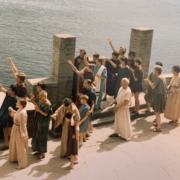
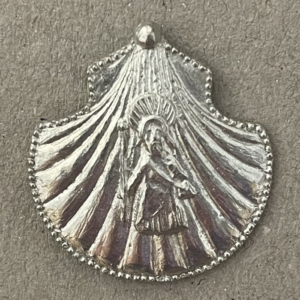
Medieval pilgrims wore badges showing the shrine they had visited. These could be bought as souvenirs to demonstrate your identity as a pilgrim, to show you had been on pilgrimage (and helped also raise additional funds). You wore them on your cloak or hat, put them in your prayer book or could nail them up at home. They showed to the world that they had been on pilgrimage and what tribe they belonged to. Each shrine had its own badges so you could collect them from various shrines demonstrating your piety and connection.
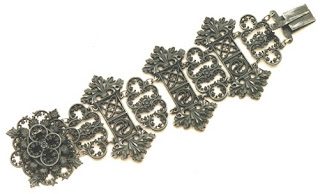
In 1813, Princess Marianne of Prussia used the power of social norming (and a bit of royal celebrity messenger) to appeal to Prussian aristocrats to give their gold jewellery for the Prussian cause against Napoleon. This proved a popular way to fundraise and the gold items were exchanged for iron jewellery emblazoned with ‘Gold gab fur Eisen’ (‘I gave gold for iron’). It became the social norm to wear these iron rings and broaches, and gold was considered unpatriotic.
Our brains have evolved to feel social rejection in the same way that we feel real pain – as our primitive selves needed to be with the group to get food and shelter – that is why doing what is normal for the group is so important. What we know now about how our brains work helps us to understand what is happening inside our brains and why social norming and embodied commitment are such a powerful drivers of behaviour.
Why we want the badge or the sticker everyone else has got.
We want to do what people like us are doing.
We want to belong to the tribe.
From tote bags to pin badges, from poppies to daffodils and forget-me-nots – charities continue to give supporters the chance to demonstrate their belonging and identity as a supporter. To belong to that supporter tribe. Each turns the body into a message, and the donor into a carrier.
Wear what you feel
Objects work when they carry emotional weight. When they ask something of the wearer. When they make values visible without making them performative.
The most powerful fundraising symbols don’t reward generosity — they enrol it.
They say:
If you care, wear it.
If you wear it, live up to it.
If enough of us do, it becomes normal.
And once something is normal, it no longer needs to shout. It just needs to be seen.
References:
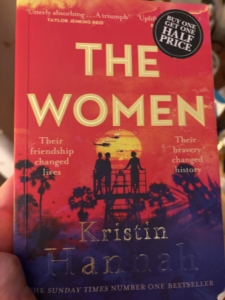
I found out about these bracelets by reading ‘The Women’ by Kristin Hannah – which tells the powerful story of American female nurses working in Vietnam, friendship and the aftermath of the war.
https://reneebeck.com/2013/11/11/did-you-sport-a-vietnam-war-pow-bracelet-70s-ladies/
https://issuu.com/coronadomagazine/docs/aa_-_comag_05-23/s/24254205
https://www.krcu.org/show/telling-history/2024-08-26/telling-history-pow-mia-bracelets
https://www.pow-miafamilies.org/powmia-bracelet#:~:text=In%20Vital%20America,chairmen